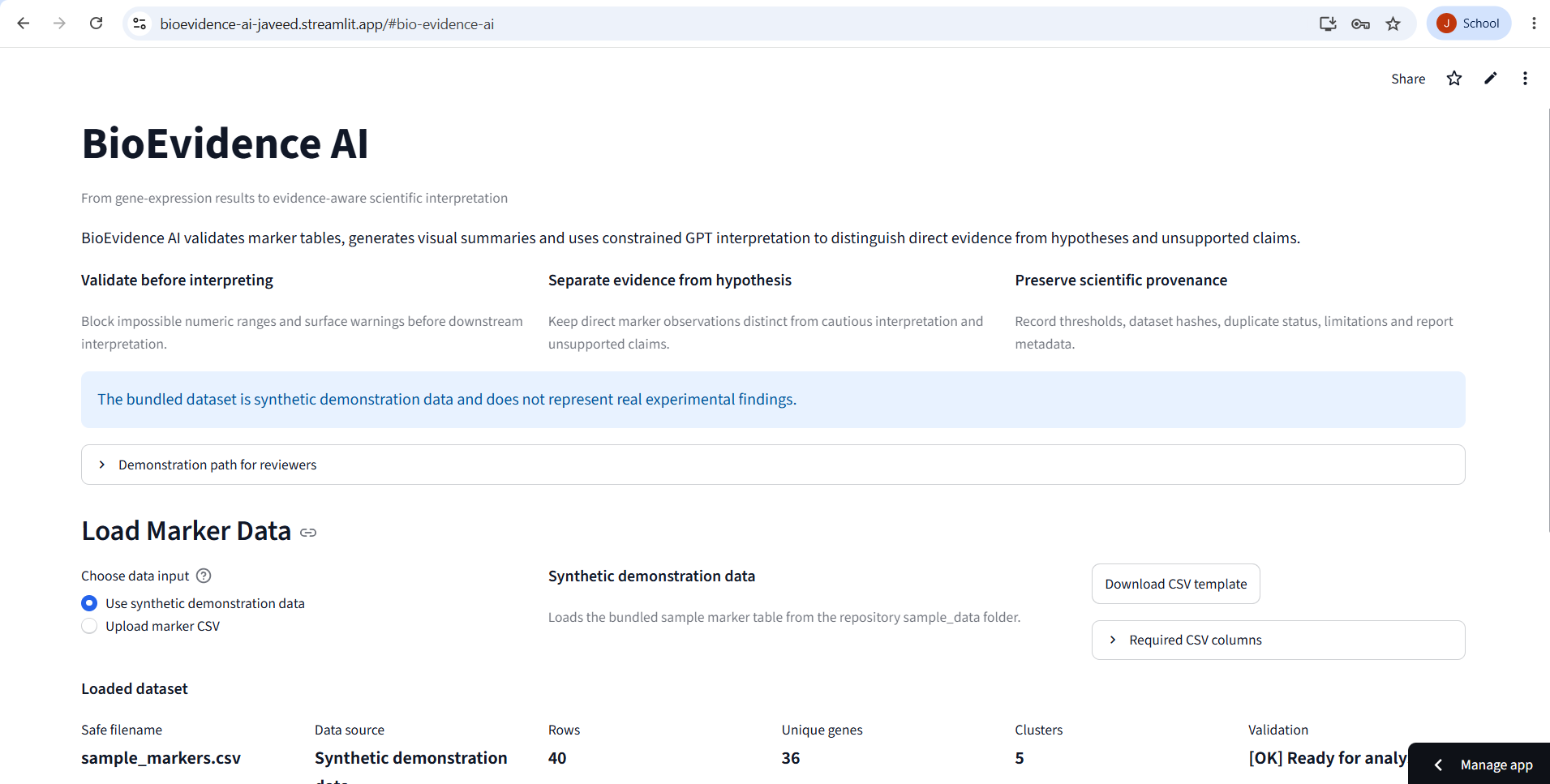
Inspiration Large marker-gene tables are produced by single-cell and single-nucleus RNA sequencing, although statistical enrichment does not always demonstrate cell identity, gene activity, regulation, or causation. After continuously observing how easily marker results might be exaggerated during biological interpretation, I developed BioEvidence AI.
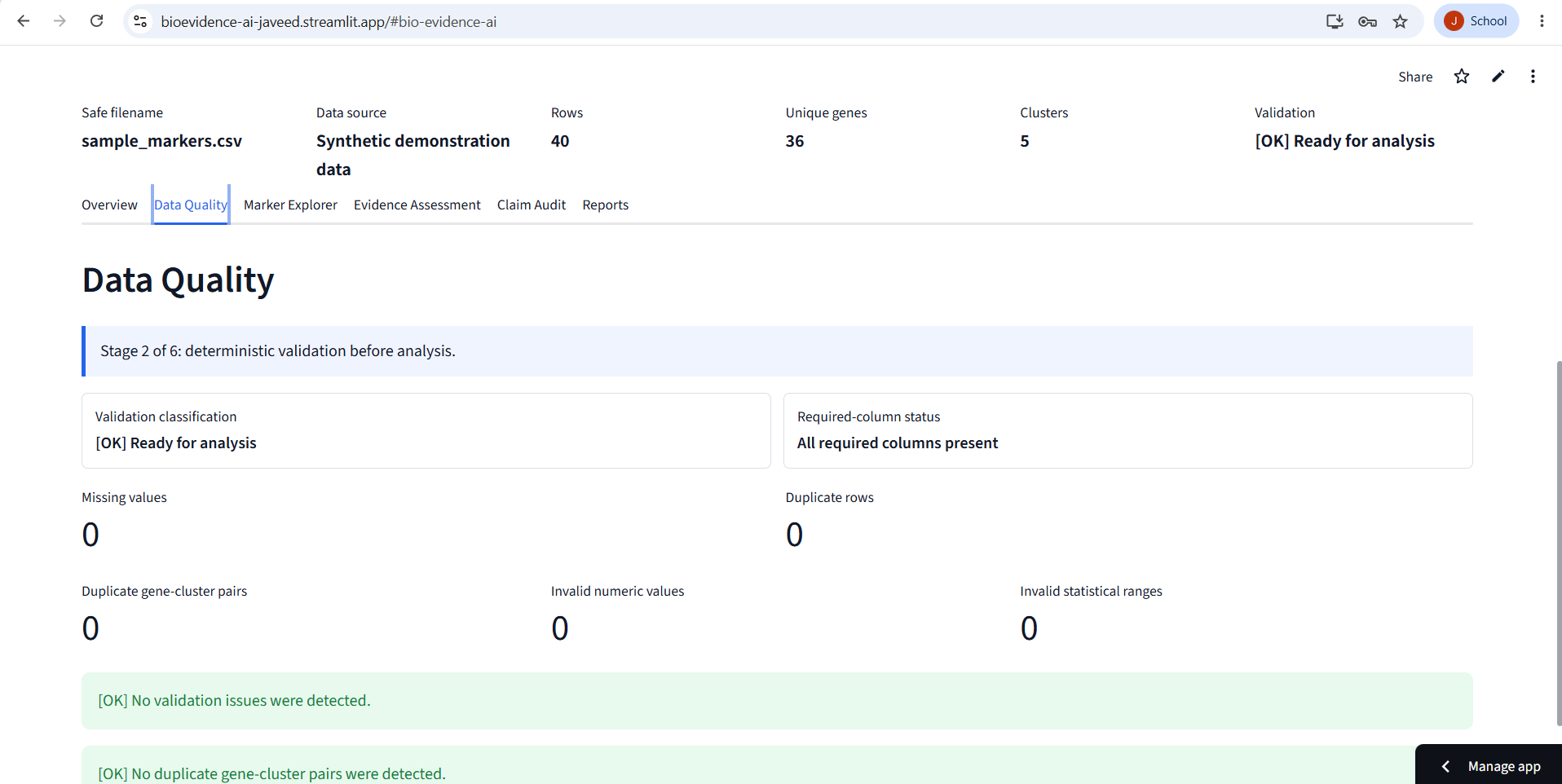
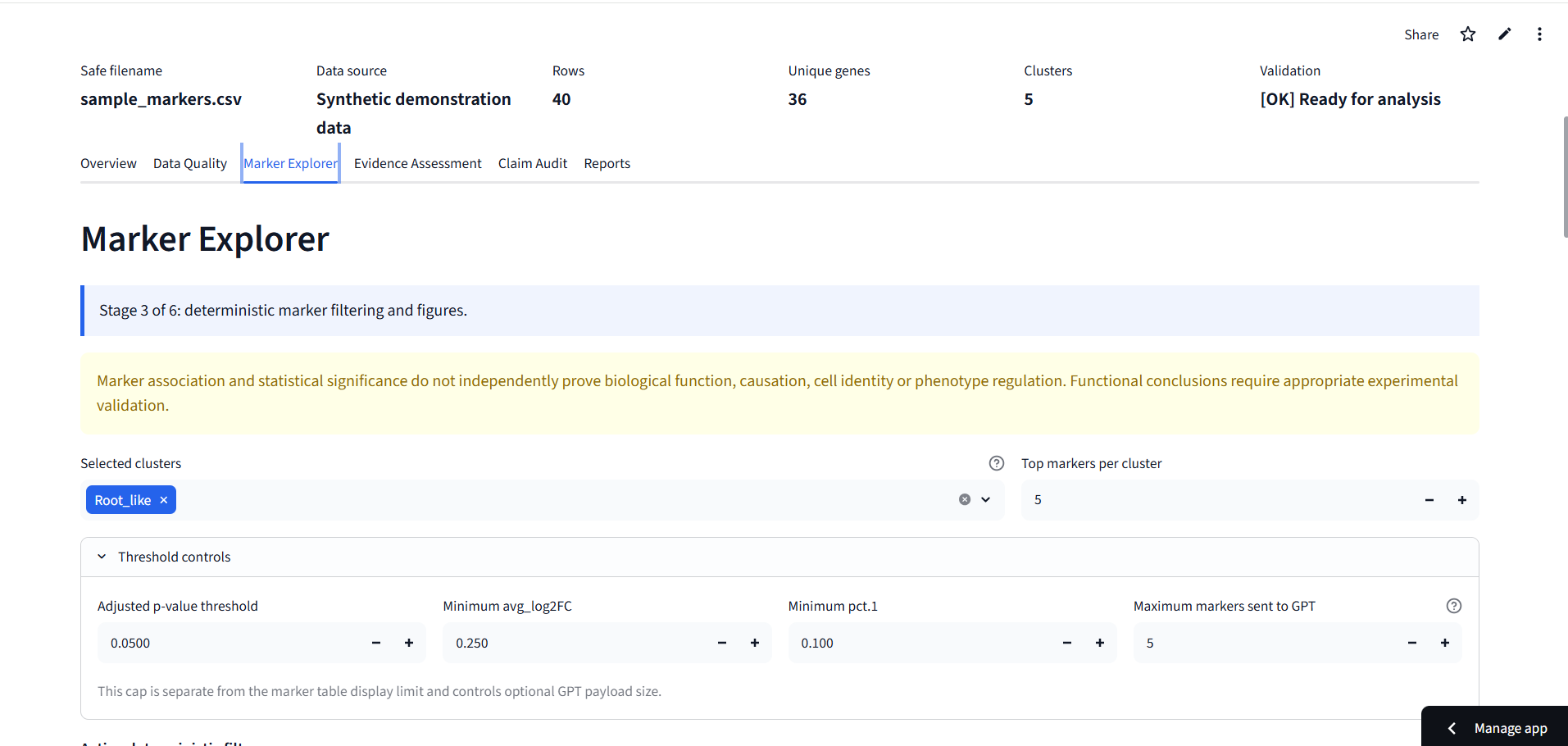
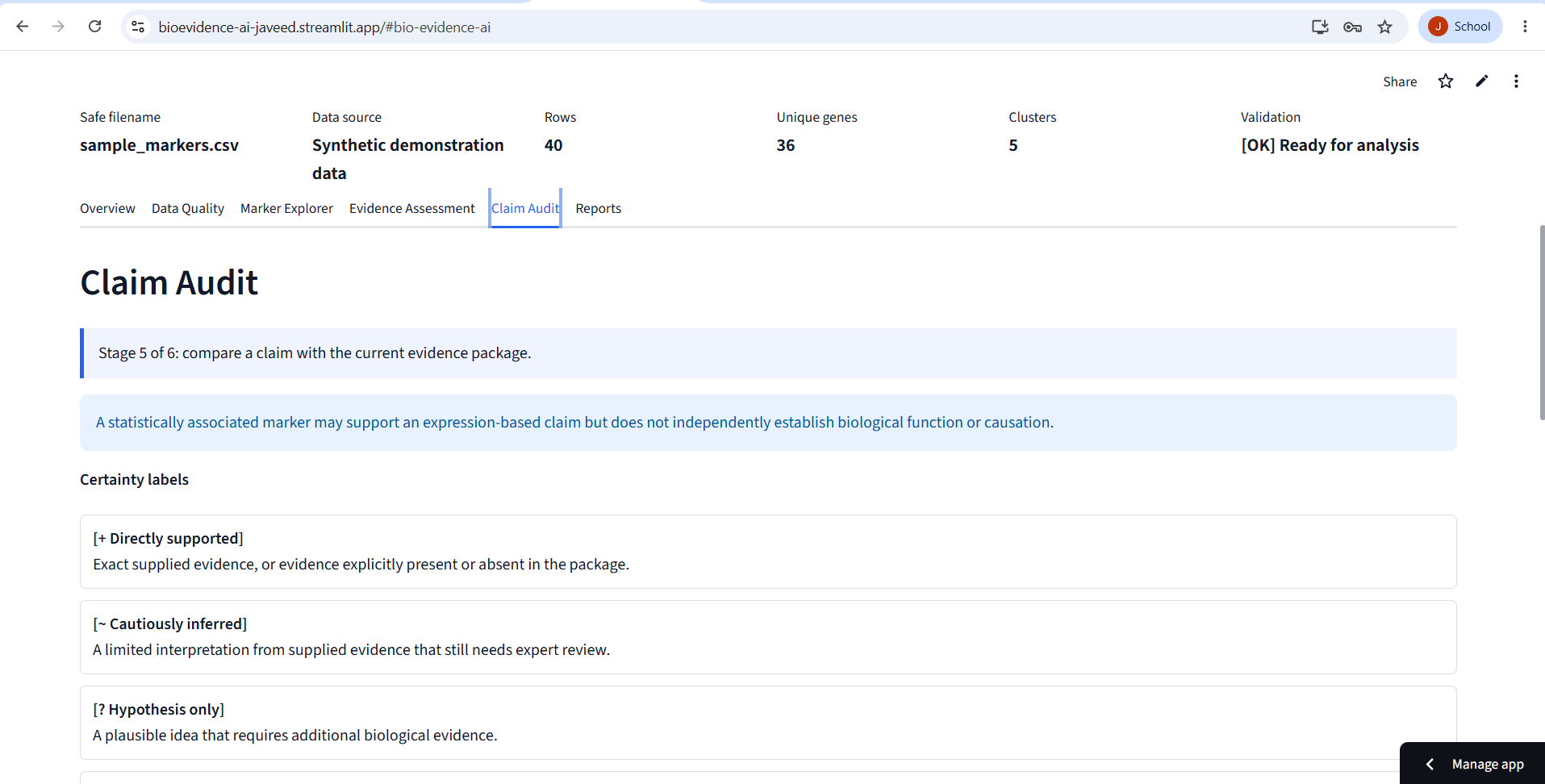
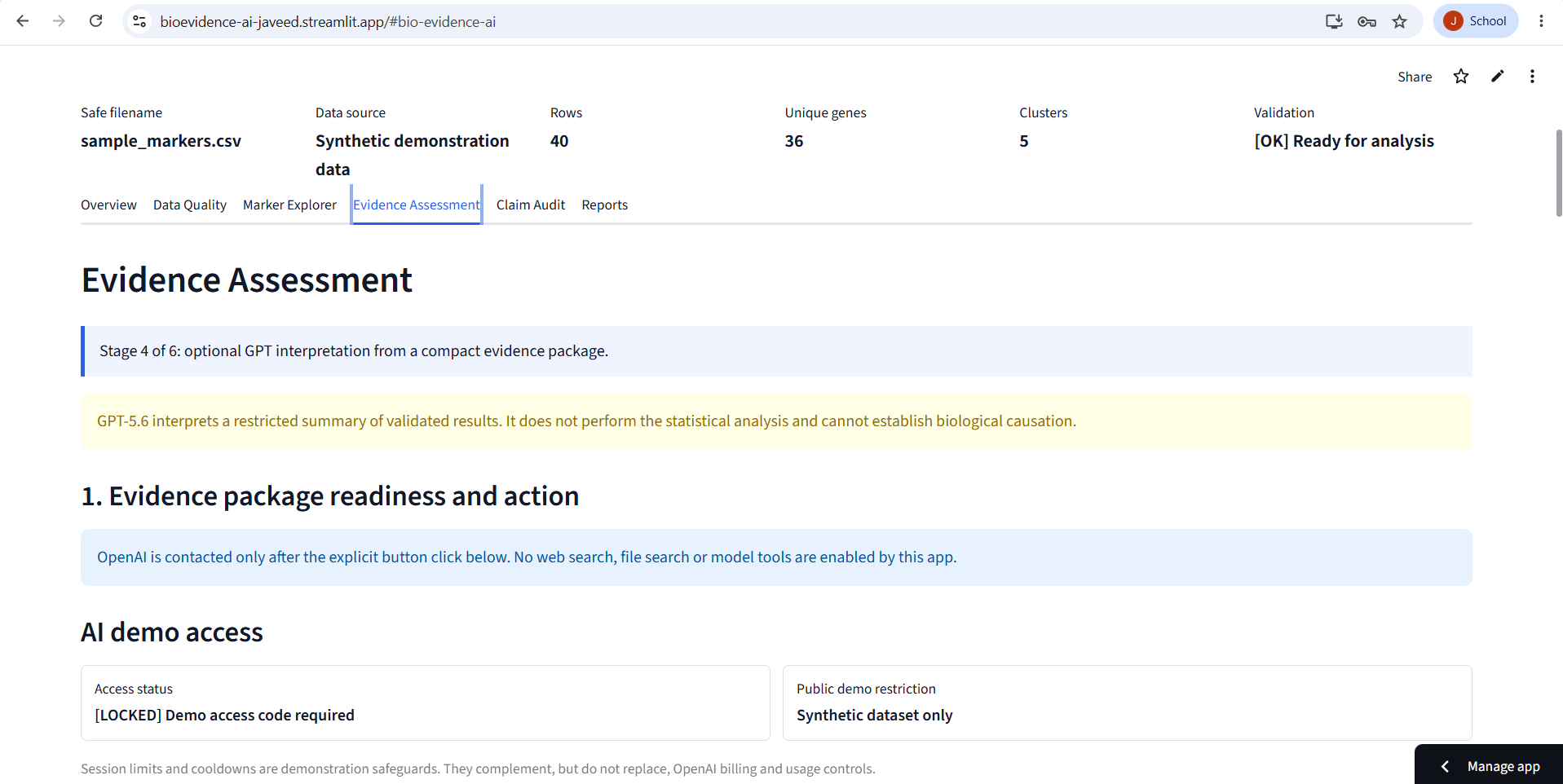
What it does Prior to any AI interpretation, BioEvidence AI verifies and examines marker-gene CSV data. It looks for duplicate gene-cluster records, missing values, inappropriate ranges, and necessary columns. Users can view ranking plots, heatmaps, and gene-level profiles after filtering markers by cluster, adjusted p-value, log2 fold change, and expression %. Its Evidence Assessment divides findings into: • Directly assisted • Carefully deduced • Just a hypothesis • Not supported Additionally, the Claim Audit offers safer scientific terminology and determines whether a researcher's proposed conclusion is stronger than the evidence at hand.
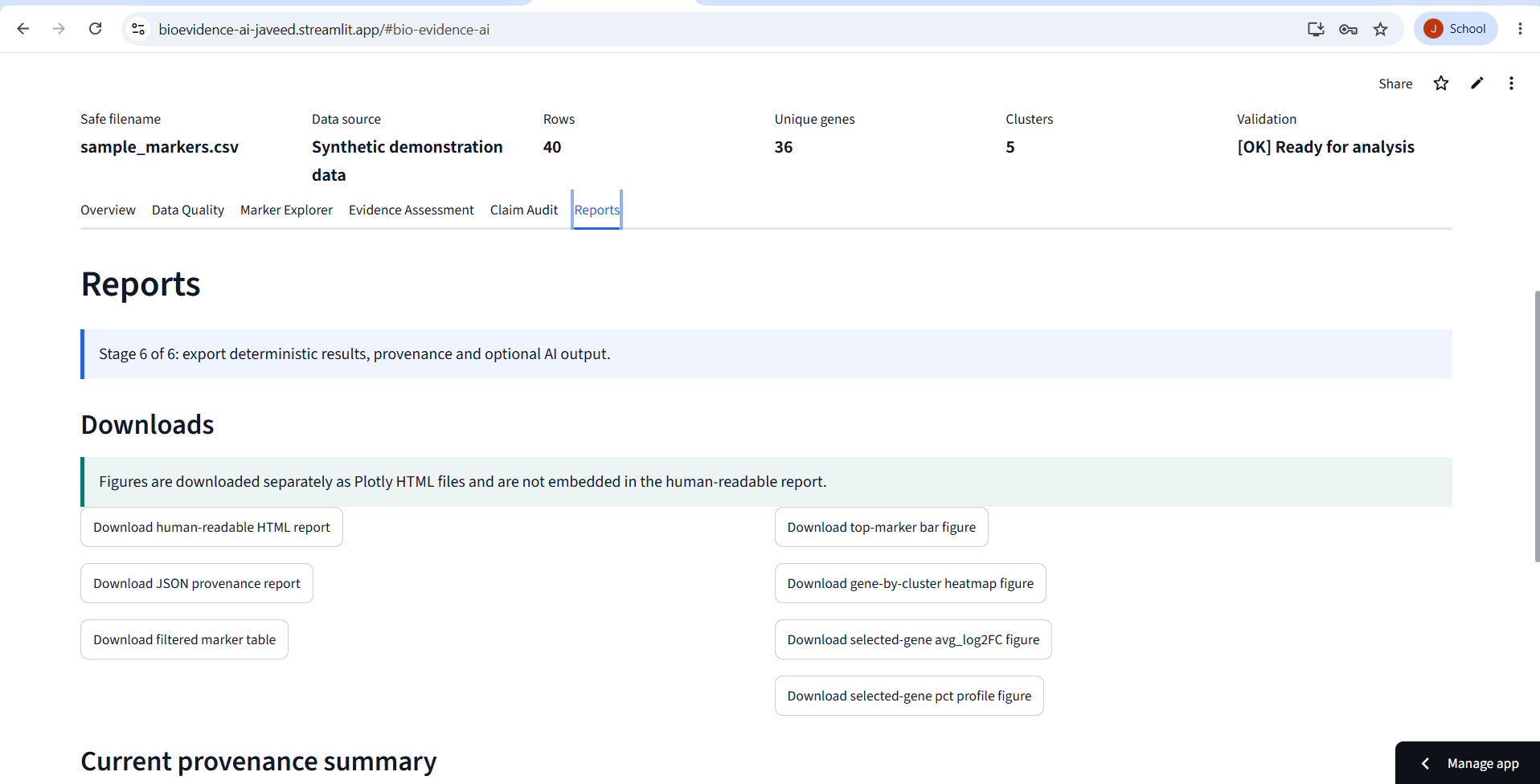
How I built it Python, Pandas, NumPy, Plotly, Pydantic, Pytest, the OpenAI Responses API, GPT-5.6 Terra, GitHub, and Streamlit Community Cloud were all utilized by me. Calculations in statistics are deterministic. The entire dataframe is not sent to GPT; just a condensed validated evidence package is. Challenges and accomplishments Preventing credible AI explanations from turning into unsubstantiated biological claims was the primary problem. Streamlit reruns, stale AI outputs, dataset fingerprinting, access control, request restrictions, cooldowns, and synthetic-demo verification were among the other tasks I managed.. The final application includes protected GPT access, downloadable reports, provenance, interactive figures, and 68 automated tests, all passing. What I learned and what’s next I discovered that evidence, interpretation, uncertainty, and unsubstantiated assertions must all be clearly distinguished in acceptable scientific AI. More analysis formats, richer information, replicate comparisons, literature-assisted interpretation, and more robust collaborative review will all be supported in future iterations.

Log in or sign up for Devpost to join the conversation.