-
-
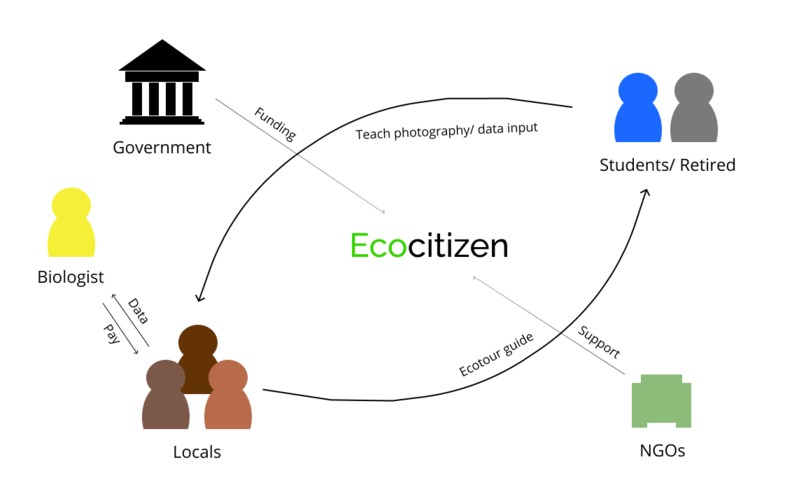
Stakeholders
-
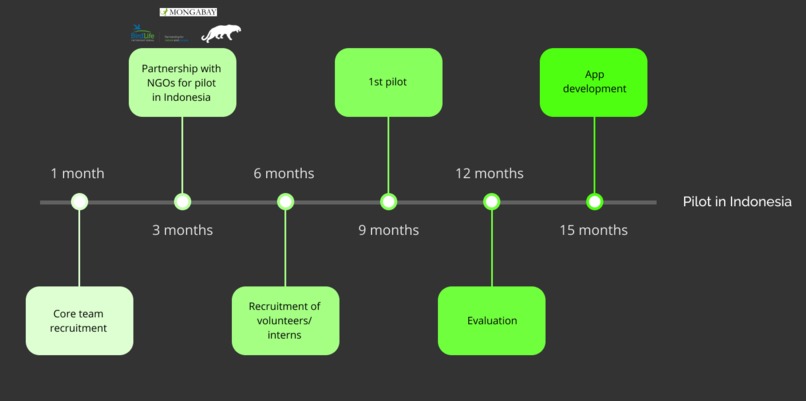
Roadmap
Inspiration
Conservation is about politics and economics; culture may play a part in affecting politics and economics, and science is to give suggestions on how things should be done. There are usually conflicts between development and conservation, and we need to provide solutions and alternatives rather than simply asking people not to do something.
There is an example given by a researcher from Burung Indonesia. She mentioned that native people in the forests are being exploited by incomers, and they are the ones usually being blamed. Native people were being asked to trap birds in the forest (and those birds became endangered) in exchange for goods from the modern society, such as refrigerators or smartphones, but these goods are not functional as there is neither electricity nor internet in their villages.
“It is impossible to ask them to return to their original living, and we must provide a solution or an alternative to the bird trappers.”
Problem statement
Tropical rainforests would never be the same without the biodiversity of their fauna and flora. It establishes a stable and sustainable ecosystem (i.e. secure symbiotic relationships between organisms). Unfortunately, it is currently being threatened by various factors, including habitat destruction, wildlife poaching, and an introduction of invasive species. Therefore, it’s essential for us to engage multiple stakeholders in conserving these invaluable rainforests, specifically through educating, empowering, and enabling a stronger relationship between the local community and experts.
In this proposal, we’re going to tackle the following issues:
- Locals (i.e. people living near rainforests) don’t have sufficient knowledge about sustainability and rainforest conservation
- Locals have limited career options/ job opportunities
- Locals yearn for community development and a better life
- There is a constant demand for wildlife products (which leads to wildlife trafficking)
- Wildlife research usually have limited funding, manpower, and most of the work is conducted by volunteers (citizen science)
Solution
A collaborative community-wide program that seeks to foster scientific research and secure local job opportunities that promote rainforest biodiversity conservation
a. Primary goals
- Provide an alternative career route/opportunity for locals living near rainforests
- Educate people about rainforest conservation and biodiversity
- Development of eco-tourism culture at rainforests
- Aid wildlife research on rainforests
b. Involved parties
Locals (including underrepresented populations) living near rainforests
- Eco-tour guide/ Paid citizen scientist/ Wildlife photographer
After NGO-certified training, locals can become an eco-tour guide or a paid citizen scientist. The training for an eco-tour guide will consist of acquiring a thorough understanding of the ecosystem in their local rainforest (ex: where and when certain animals can be seen easily, endangered species). The training will advise prospective eco-tour guides to prohibit tourists from certain behaviors, such as littering trash in rainforests and feeding foreign food to wild animals (which may introduce invasive species to rainforests). For those who choose to become paid citizen scientists, they will have the chance to aid in scientific research based on their acquaintance with rainforests. Alternatively, locals can learn from overseas interns/ volunteers through the community program (such as photo-taking/ English).
Positive outcome: Job opportunities and skillsets can be acquired simultaneously - Underrepresented local populations (i.e. women, low-income people, retired people) will have the chance to receive education on rainforest conservation, photography, and foreign language
- Leads to employment and entrepreneurial opportunities. ex) wildlife monitoring professional, ecotour guide, photographer, translator between tourists and locals, etc.
- Acquiring photography skills allow locals to take and post photos of rainforest wildlife -> raises the public’s awareness of rainforest biodiversity
- In communities where cell phones are in ubiquitous use, launch a mobile application that encourages locals who have access to technology to:
- post about rainforest wildlife conservation
- communicate with and educate international app users about rainforest biodiversity
- attract tourists around the world to travel with local tour guides
- Eco-tour guide/ Paid citizen scientist/ Wildlife photographer
Students from overseas or local communities
- There will be opportunities for students from overseas and local communities to participate in an internship/volunteer/ambassador program that takes place at or near the rainforest
- The program will allow them to acquire real-life experiences on rainforest biodiversity conservation and network with rainforest professionals and locals
NGOs/ biologists Provide direct support for the locals
- Pay the eco-tour guides and citizen scientists
- Design the training curriculum for eco-tour guides and citizen scientists
- Provide career advice to locals post-training
Monitor the entire program - Aid in reaching out to locals about this community-wide program
- Aid in raising awareness of this program at an international level
- Provide venues, funding, and marketing materials for the internship/volunteer/ambassador program for students
Rationale
- Locals yearn for development and a better life, it is impossible to ask them to return to their original living, and we must provide a solution or an alternative.
- Boosts employment and financial opportunities for locals
- Encourages conservation by providing financial benefits in its favor
- Builds awareness (cultural and environmental)
Stakeholders
- Locals, students, retirees (living near rainforests/ in that area)
Through this program, they’ll acquire a better knowledge of local rainforest animals and plants and develop different ways to benefit the rainforests - Government (NGOs might receive funding or assistance from the government)
- NGOs
Implementation


Assumptions
- The skills that locals acquire through this program can help them/are sufficient to make their living
- There is a constant demand for the skill sets that this program offers
- Most locals are willing to switch their careers (ex: from wildlife trafficking such as poaching to ecotourism)
- Language barrier between international interns/volunteers vs. locals (who might use native languages) can be overcome
Intended outcomes
- Provide job opportunities to locals living in cities near rainforests. ex) tour guides, translators, photographers, etc.
- Poachers and farmers may be encouraged to work as ecotourists (to prevent poaching and cutting rainforest trees for agricultural purposes)
- Provide research/internship/volunteer experience for international & local students => strengthen local and global education on rainforest biodiversity conservation
- Establish a collaborative platform for locals, scientists, and students who share a common interest in rainforest biodiversity conservation
- Raises the public’s awareness of ecotourism in rainforests
- Foster scientific research on rainforest biodiversity
- Prevent the loss of biodiversity in rainforests
Built With
- figma



Log in or sign up for Devpost to join the conversation.