



🌍 About the Project — BioCyclic HealthNet
💡 Inspiration
Battery waste is often discussed as an environmental issue—but we approached it from a different lens: human health.
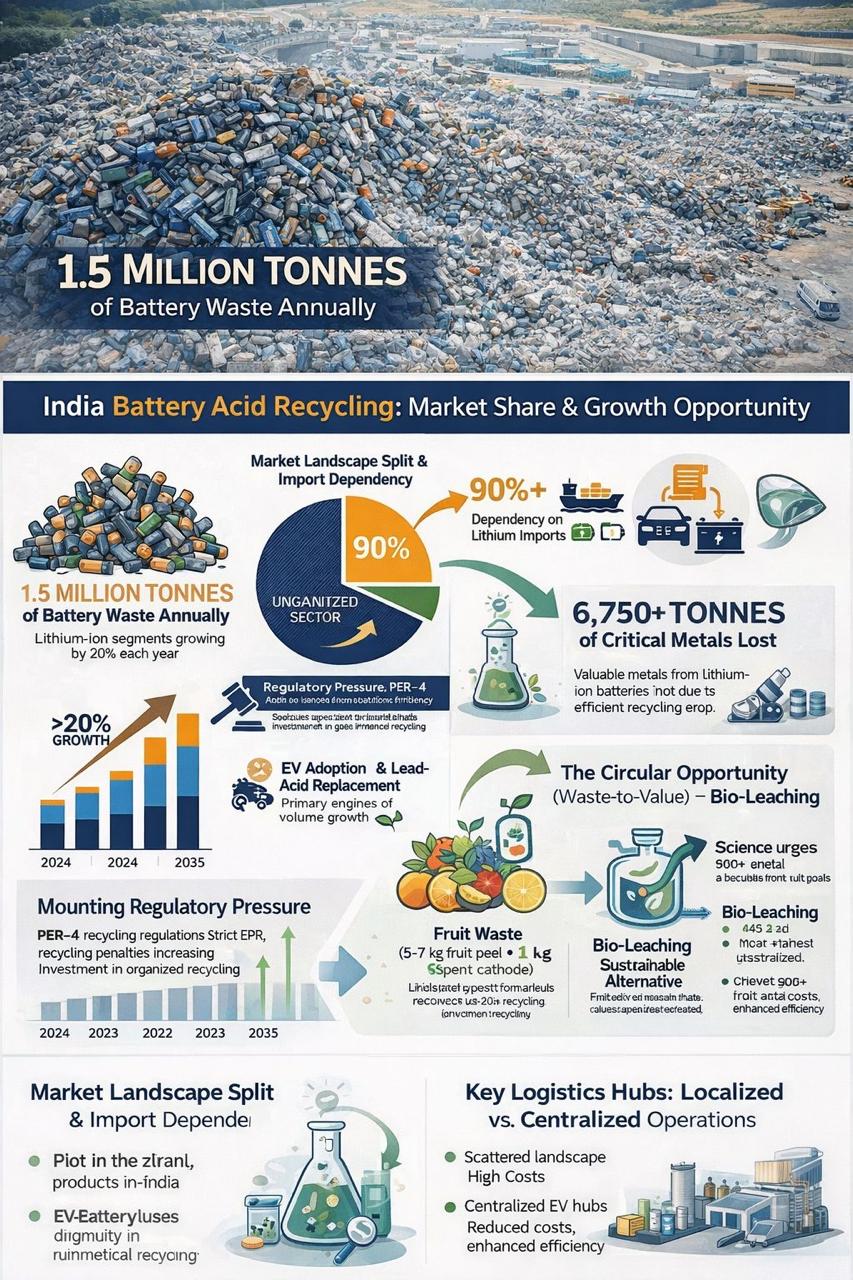
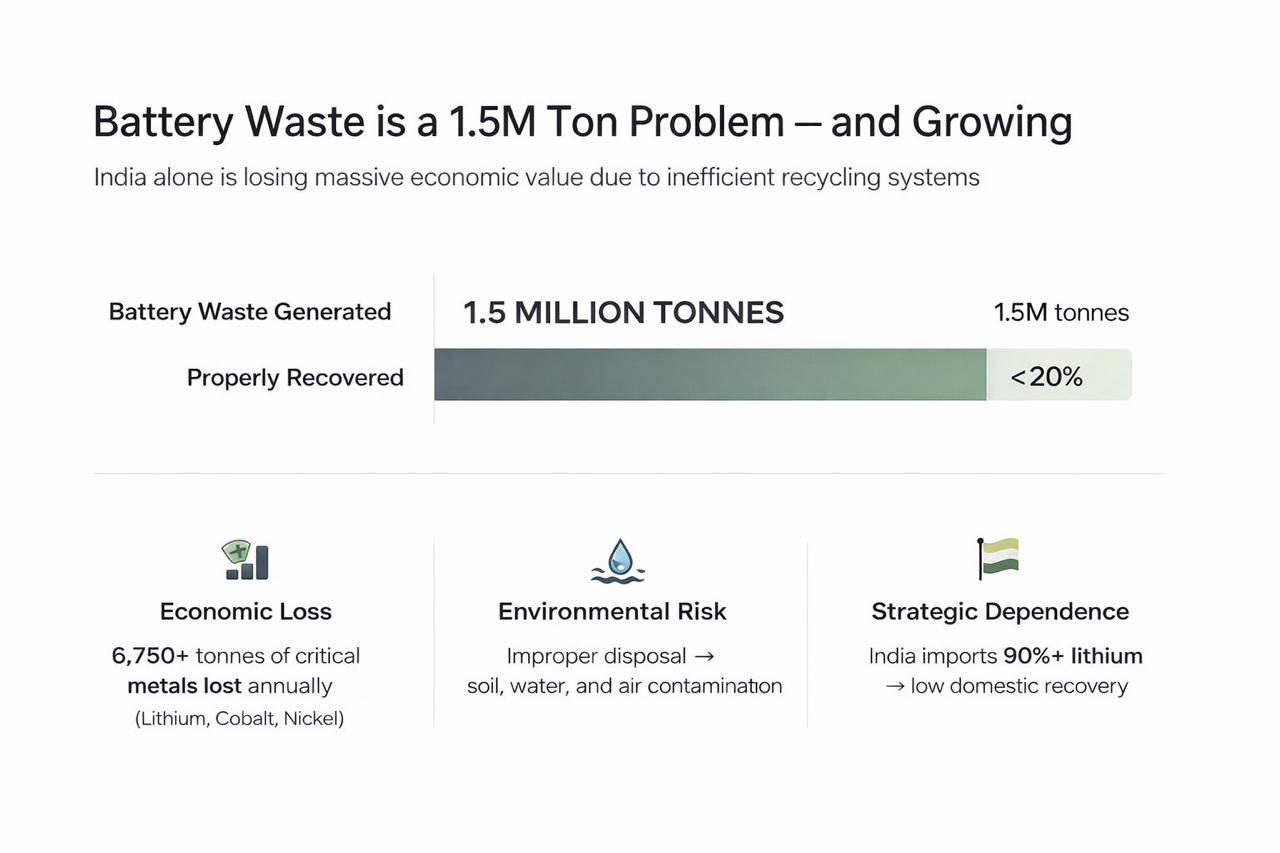
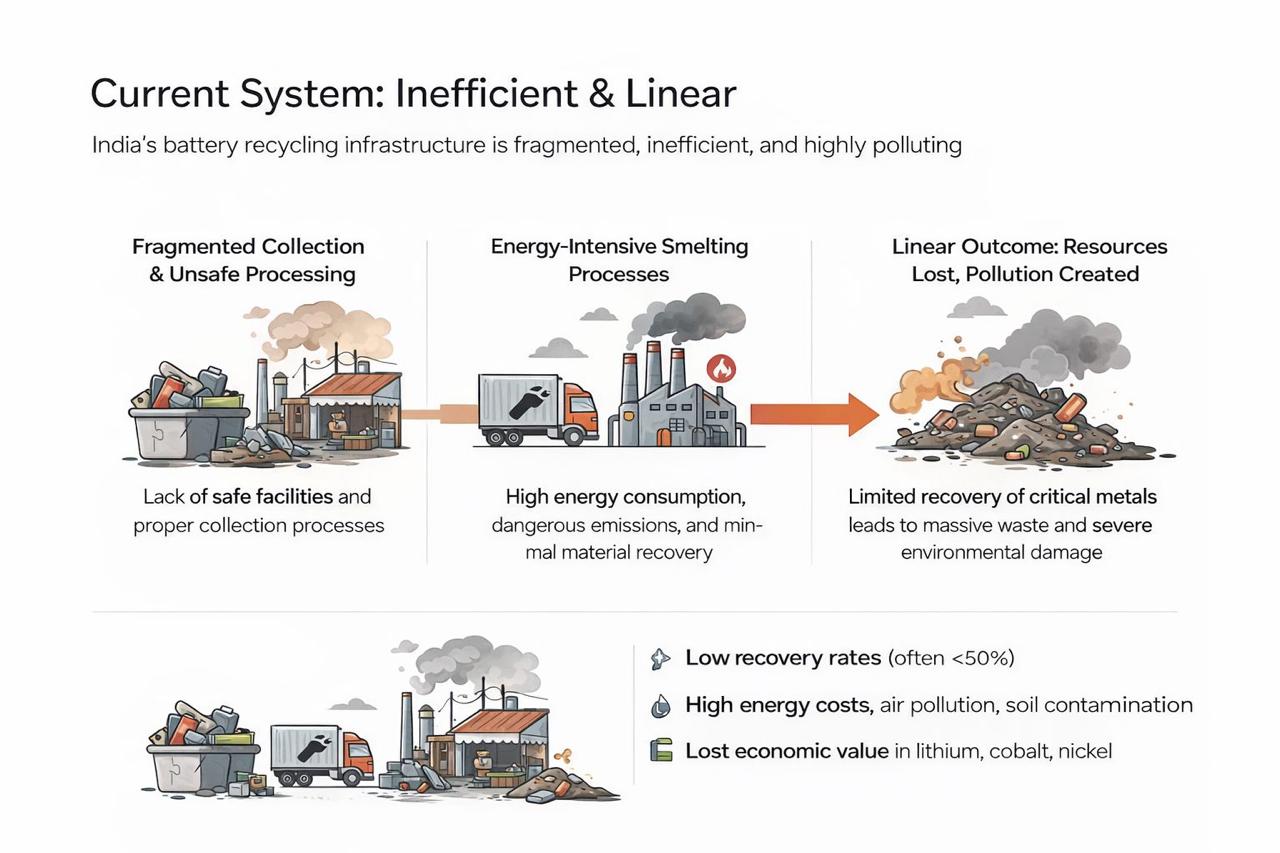
During our research, we discovered that over 1.5 million tonnes of battery waste are generated annually, with a majority processed through unsafe, informal systems. This leads to toxic exposure, groundwater contamination, air pollution, and long-term health risks, especially in dense urban regions.
At the same time, we observed another overlooked problem—organic waste, particularly citrus peels, being discarded despite containing valuable biochemical potential.
This sparked a key question:
Can we design a system where one waste stream solves another—while directly improving public health?
That idea became BioCyclic HealthNet.
🧠 What We Built
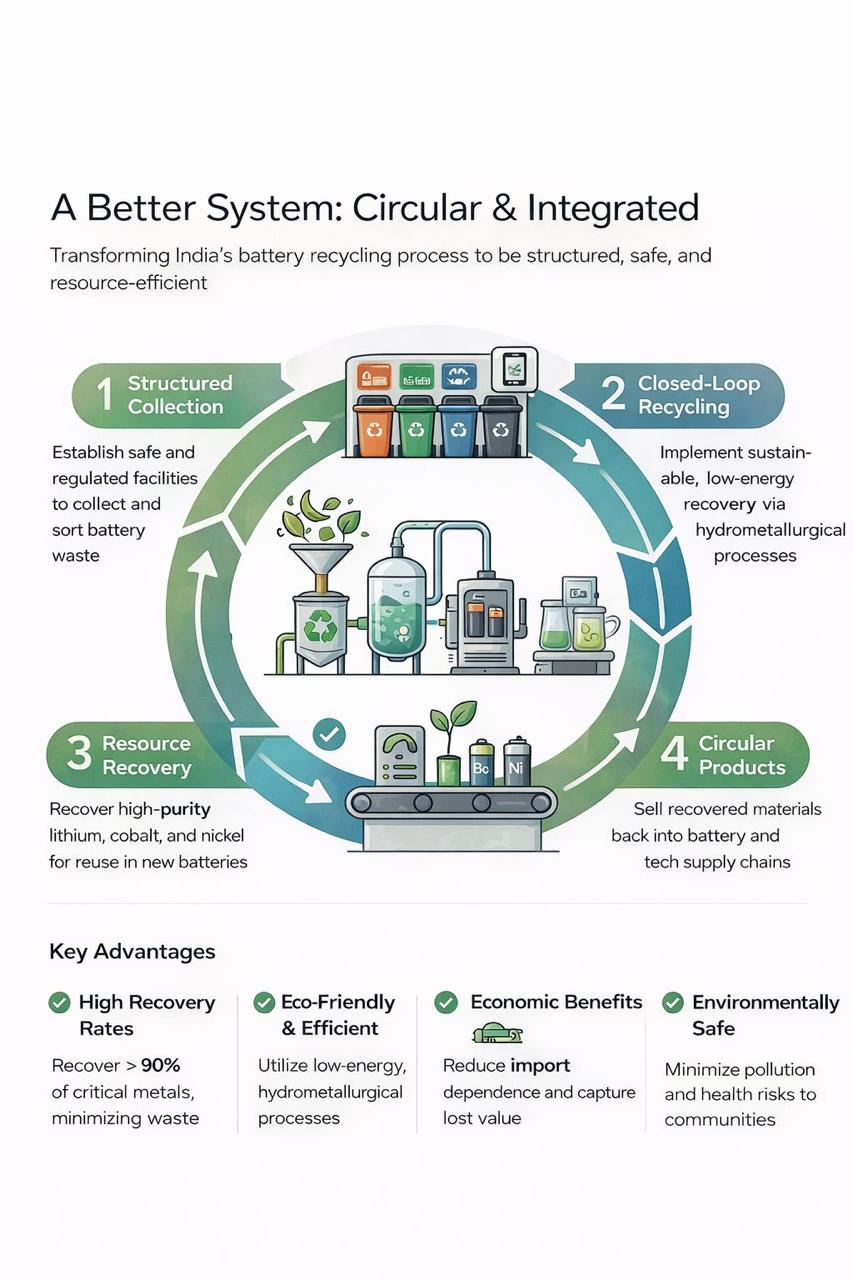
BioCyclic HealthNet is a circular, bio-based battery recycling system enhanced with a health-focused intelligence layer.
Our system operates in three integrated layers:
1. ♻️ Bio-Recycling Engine (Core Innovation)
- Converts citrus waste → citric acid via fermentation
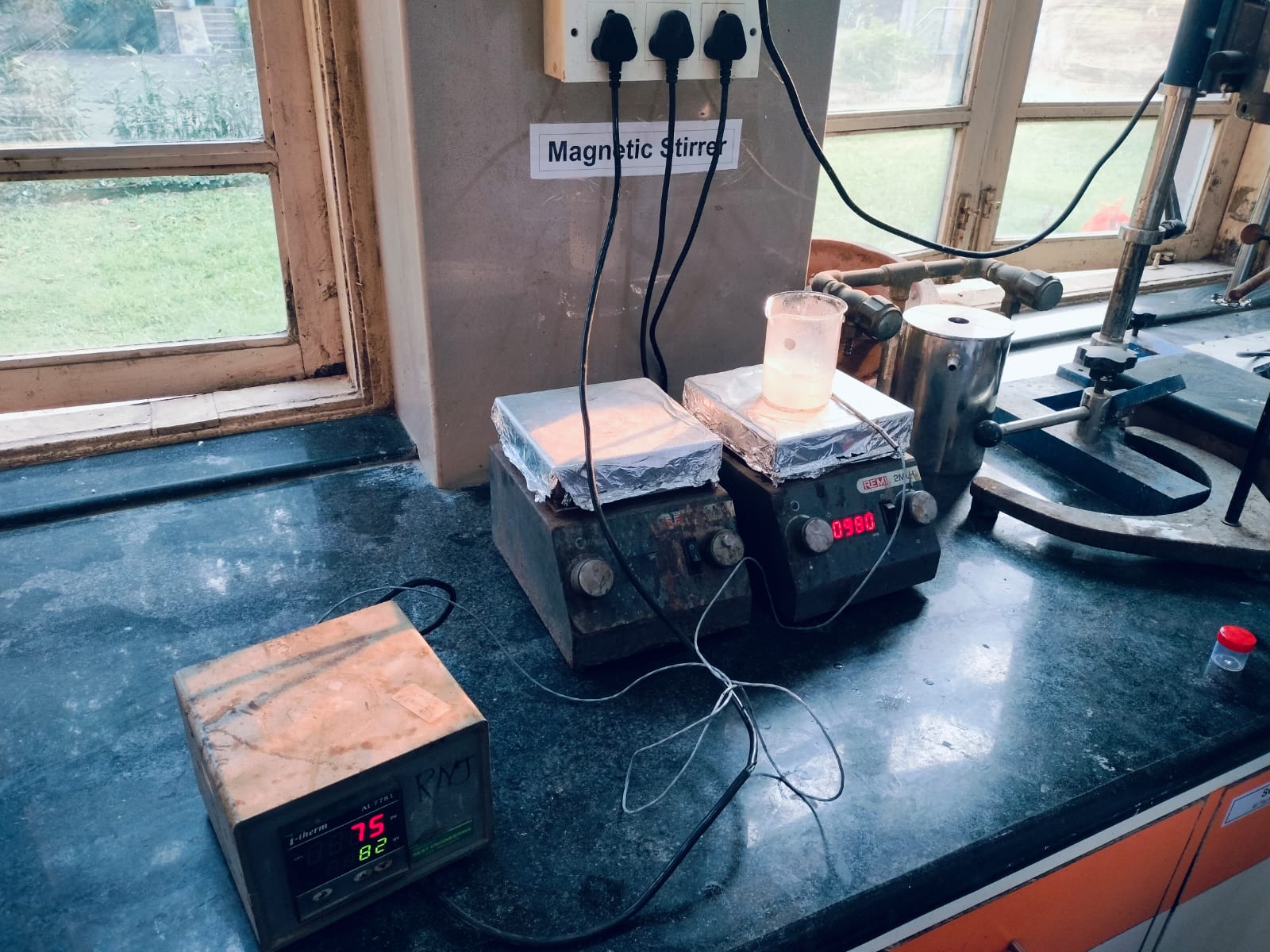
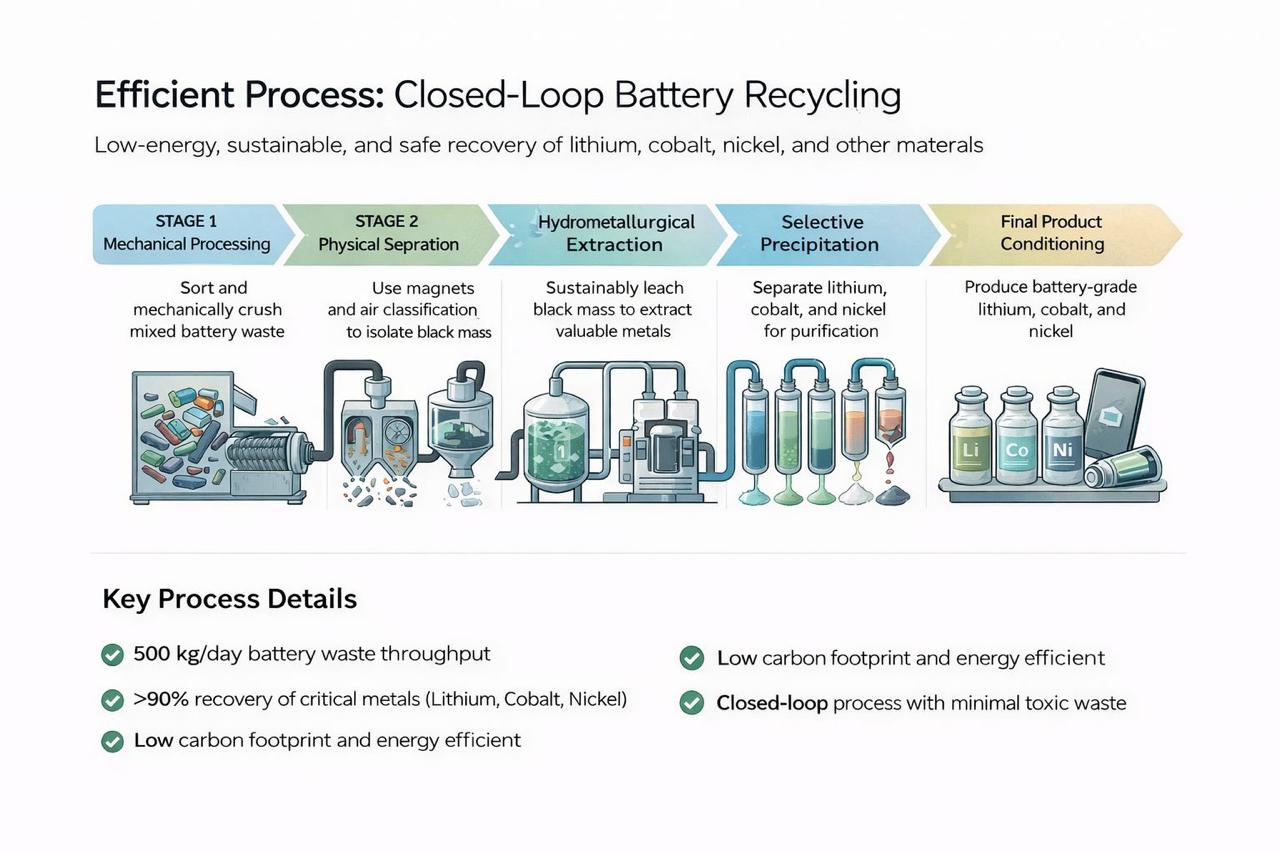
- Uses this bio-acid for bio-leaching of battery black mass
- Recovers high-value metals:
- Lithium (Li₂CO₃)
- Cobalt (CoC₂O₄)
- Nickel (NiCO₃)
- Manganese (MnO₂)
This replaces traditional high-energy, polluting smelting with a low-energy, safer alternative.
2. 🧩 Circular Resource Model
- Integrates organic waste + battery waste
- Achieves high resource efficiency
- Enables decentralized, city-scale deployment
Mathematically, the system efficiency can be viewed as:
[ \text{Recovery Efficiency} > 90\% ]
[ \text{Waste Utilization} = \frac{\text{Recovered Value}}{\text{Total Input Waste}} \uparrow ]
3. 🧠 Health Intelligence Layer (Differentiator)
We extend beyond recycling by introducing a public health perspective:
- AI-based mapping of battery waste hotspots
- Prediction of toxic exposure risk zones
- Visualization of before vs after health impact
This transforms our solution from:
“waste management” → “disease prevention infrastructure”
🛠️ How We Built It
We combined chemical process design + systems thinking + product architecture:
- Designed a bio-leaching workflow:
- Pre-treatment → Fermentation → Extraction → Purification
- Pre-treatment → Fermentation → Extraction → Purification
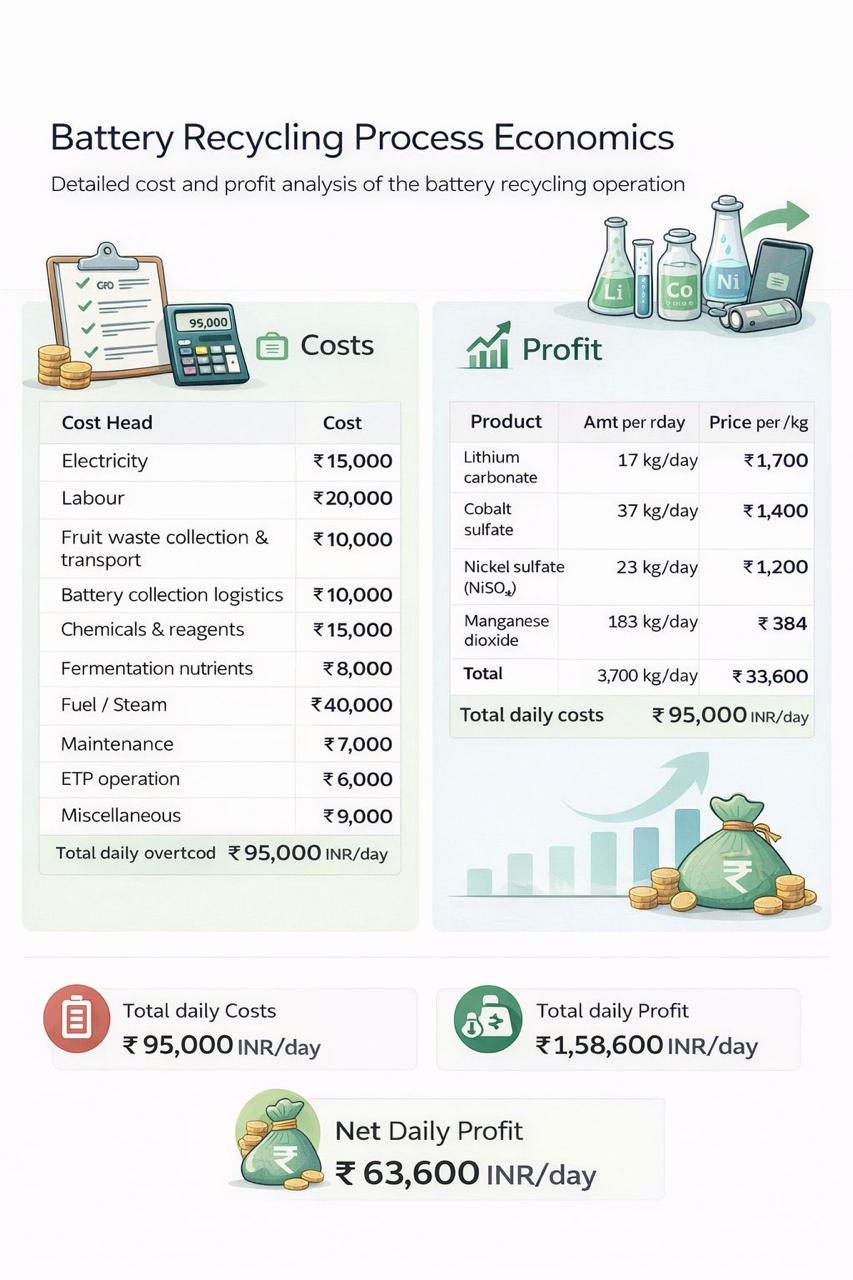
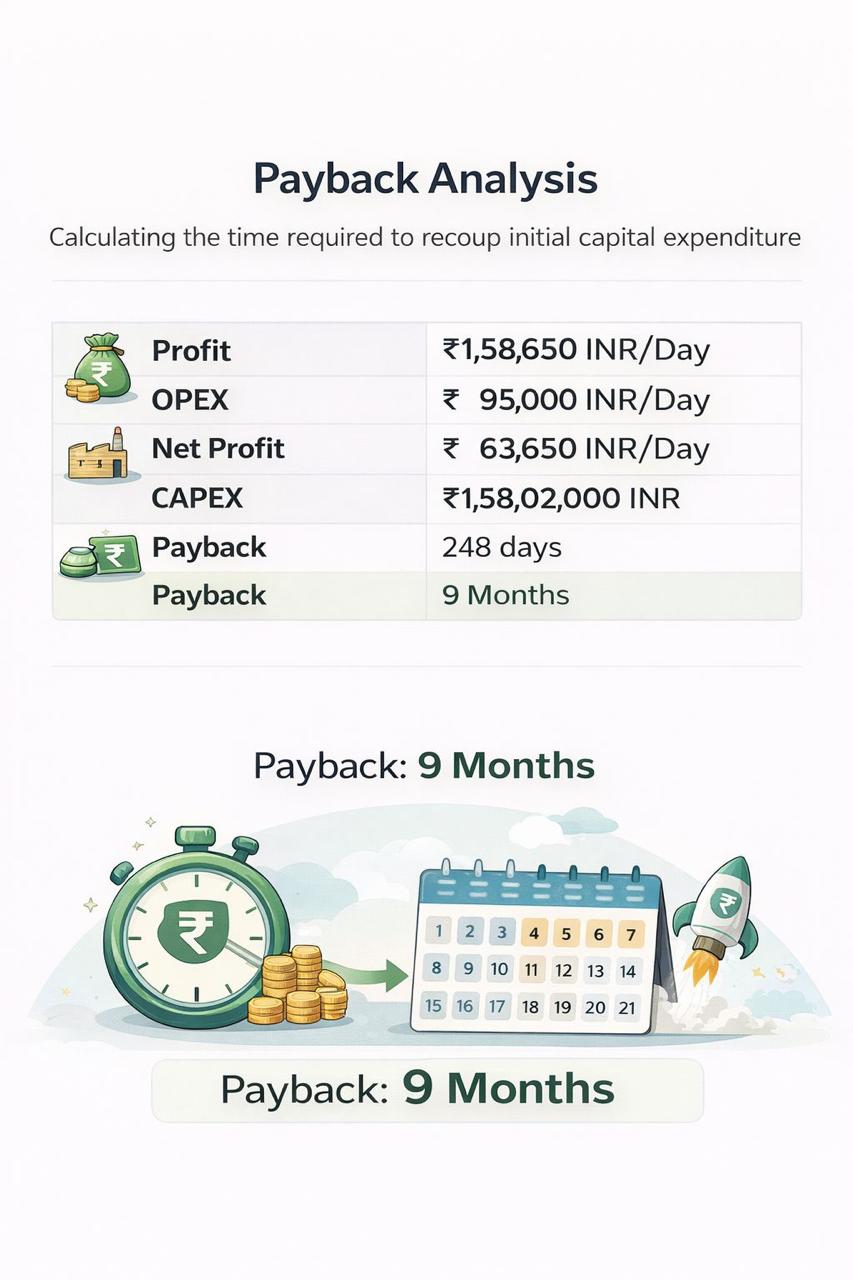
- Modeled process economics:
- Daily revenue ≈ ₹1,58,650
- Net profit ≈ ₹63,650/day
- Payback period ≈ 9 months
- Daily revenue ≈ ₹1,58,650
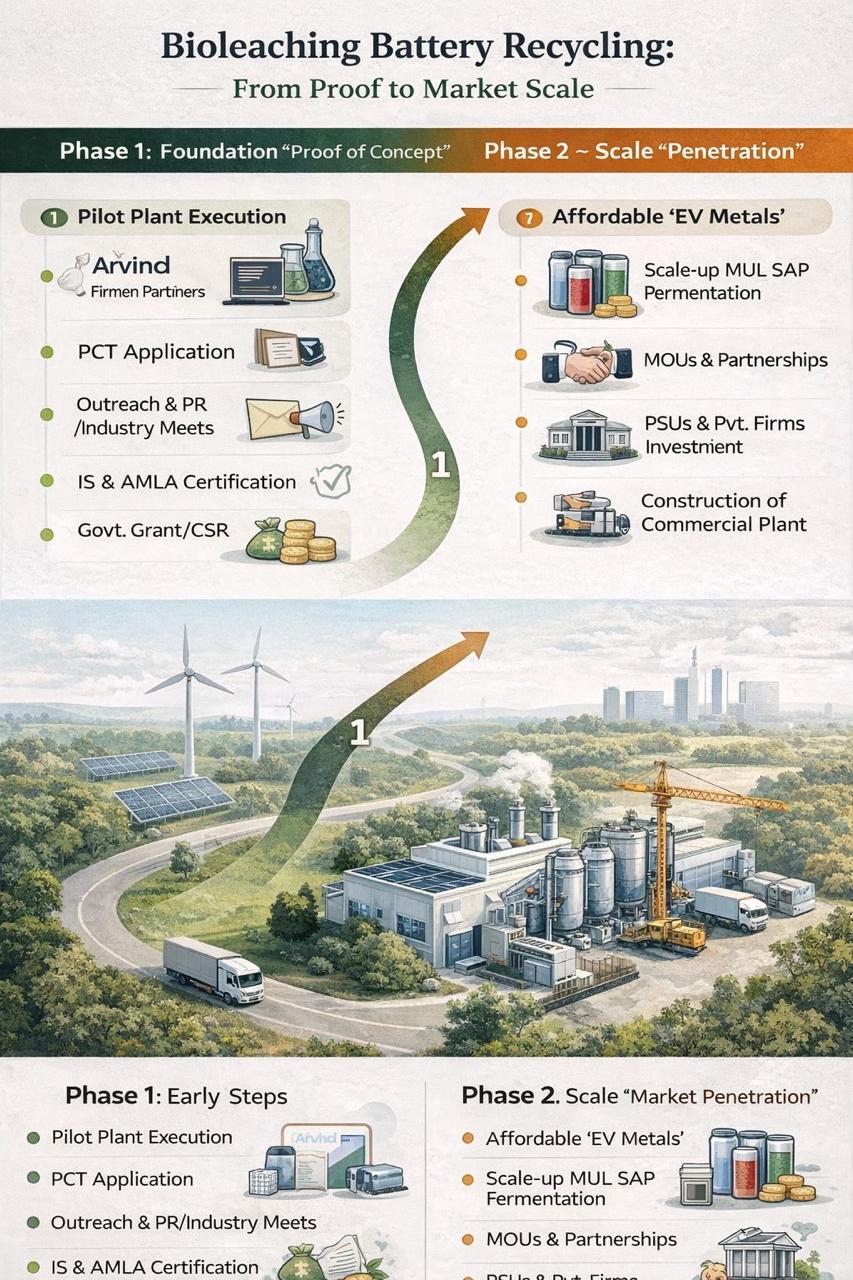
- Structured a modular deployment system:
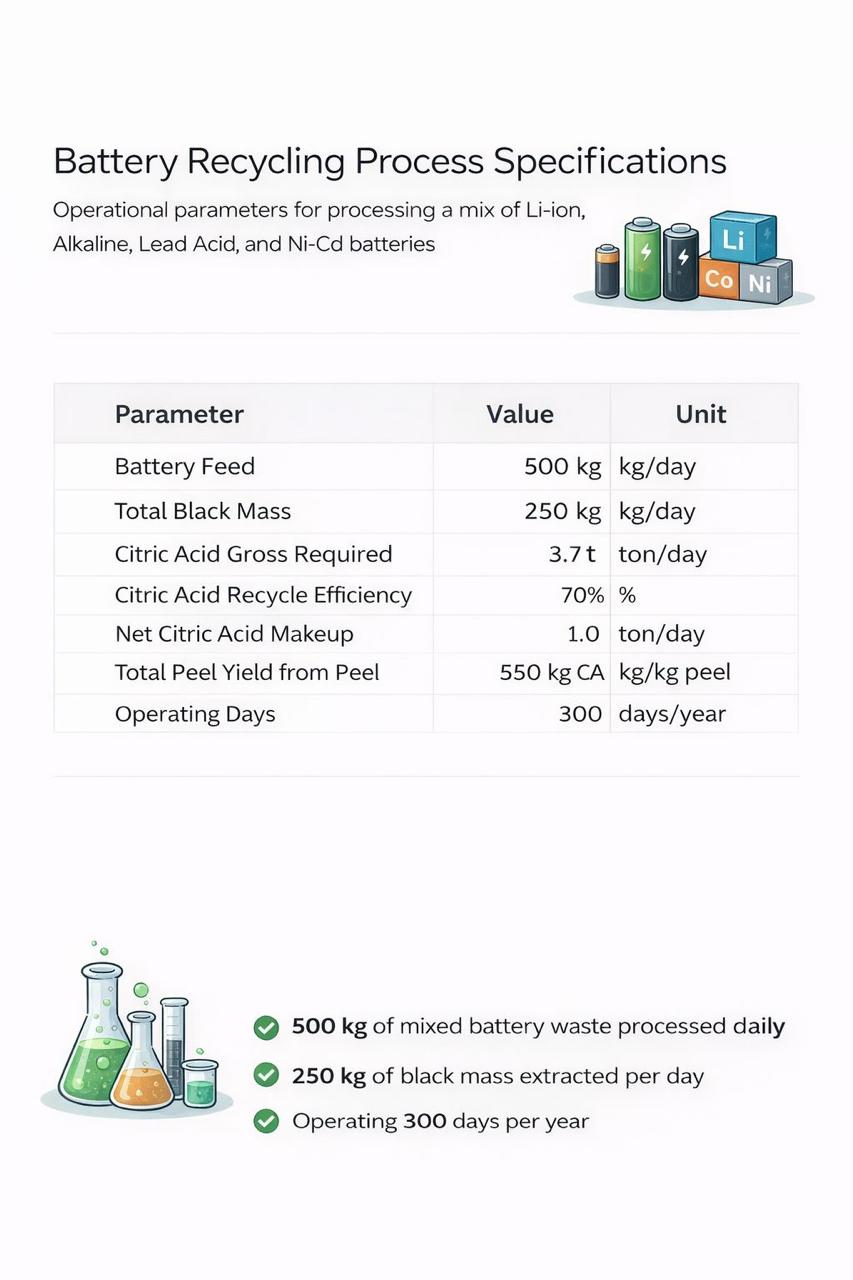
- 500 kg/day processing units
- Scalable across urban clusters
- 500 kg/day processing units
- Conceptualized a digital layer:
- Waste reporting interface
- Collection optimization
- Health-risk dashboard
- Waste reporting interface
📚 What We Learned
This project pushed us across multiple domains:
Circular Economy Design
Understanding how waste streams can be interconnected for maximum efficiencySustainable Chemistry
Learning how bio-leaching can replace traditional hydrometallurgical methodsSystems Thinking
Moving from a single process to a scalable ecosystemHealth-Centric Engineering
Reframing environmental problems as public health challenges
⚔️ Challenges We Faced
1. Bridging Chemistry with Real-World Scale
Designing a process is one thing—ensuring it is economically viable and scalable required detailed modeling and iteration.
2. Making It Hackathon-Ready
Our initial idea was heavily industrial and process-focused.
We had to evolve it into a tech-enabled solution with clear user interaction and measurable impact.
3. Balancing Innovation with Feasibility
We ensured that:
- The system is scientifically sound
- The economics are realistic
- The deployment is practical within urban ecosystems
🚀 What Makes BioCyclic Different
Most solutions:
- Focus only on recycling efficiency
BioCyclic:
- Connects waste → value → health
- Integrates biology + engineering + AI
- Builds a closed-loop, decentralized system
🎯 Final Vision
BioCyclic is not just a recycling solution.
It is a health-first circular infrastructure designed for the cities of the future.
By transforming waste into value—and data into action—we aim to build a world where technology actively protects both the environment and human life.


Log in or sign up for Devpost to join the conversation.