-
-
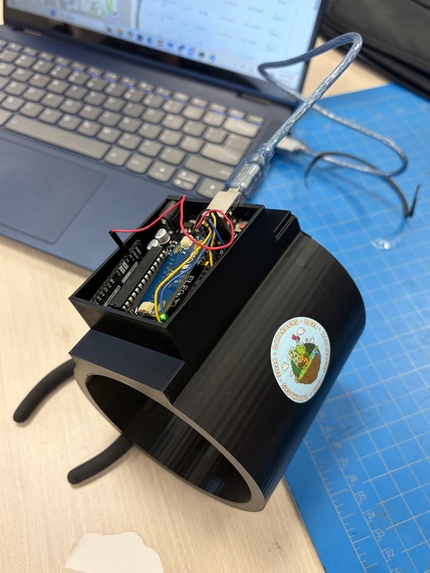
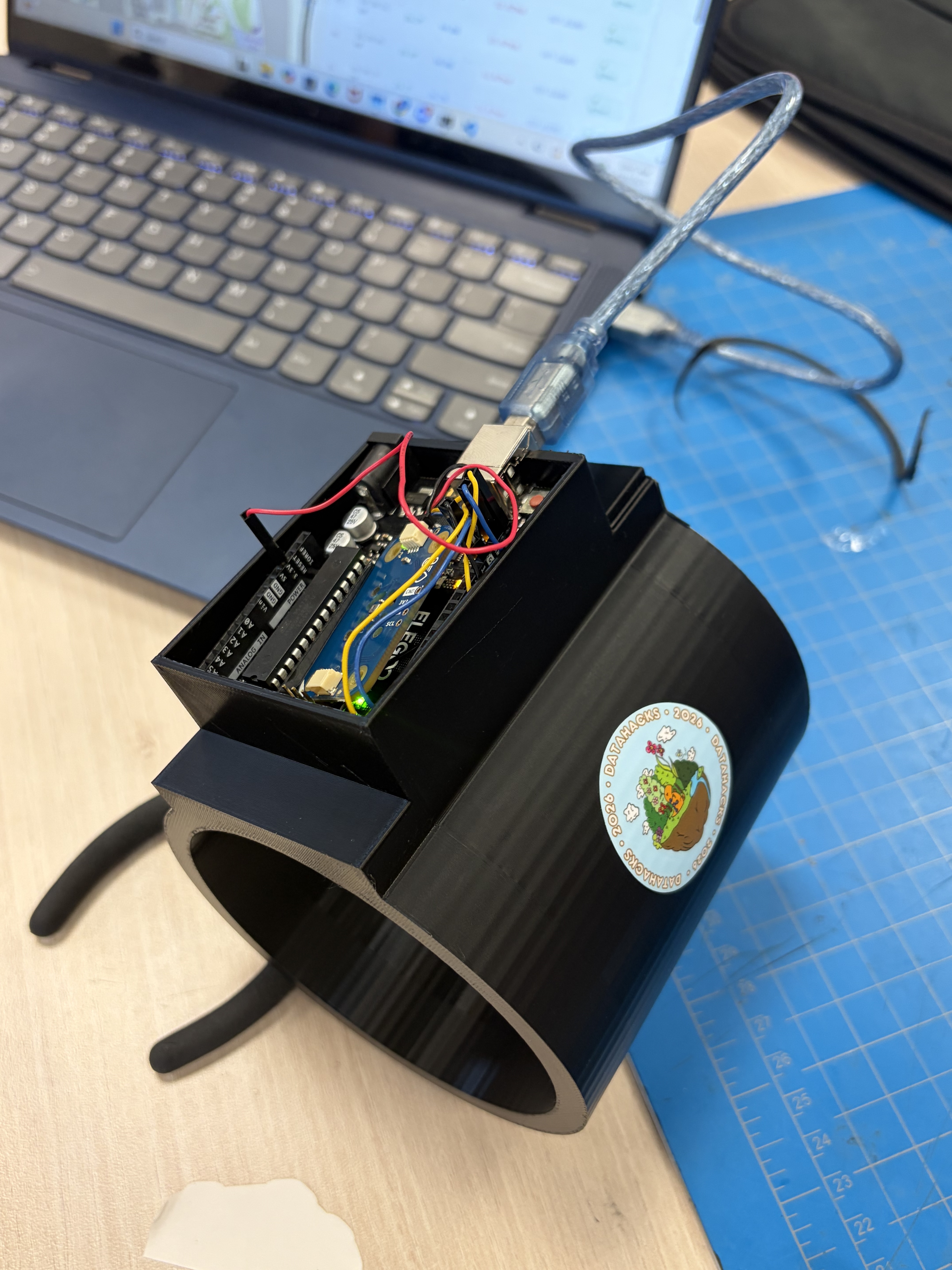
Wearable system that has Modulino Thermo and Arduino
-
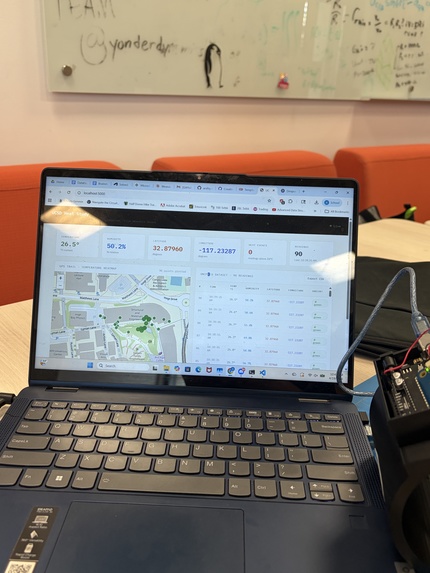
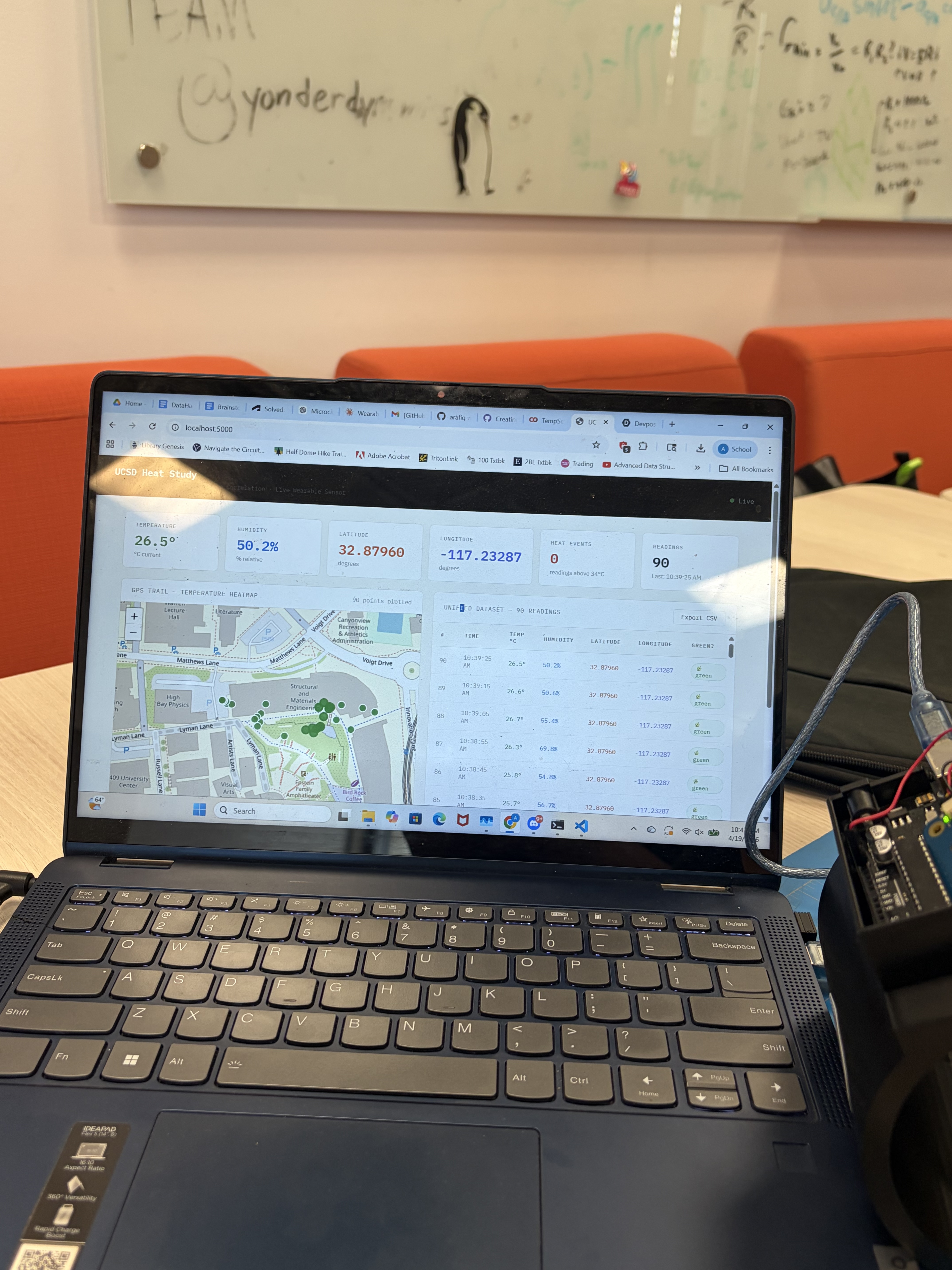
Website that combines Heat and GPS data
We are all students on UCSD campus who have experienced long walks across campus, sometimes in high heat and with no time to grab water between classes. Exposure to high heat can lead to many health problems
- Dehydration
- Heat stress
- Increased vulnerability to illness
These issues can be fixed at a systemic level through urban planning that increases the number of green spaces across campus and along walkways. Increased green spaces are closely linked to mitigating the effects of global warming through mechanisms such as CO2 uptake by foliage. We also acknowledge that UCSD is a large entity with a budget in the billions, and has significant impacts on San Diego's climate patterns and global civilisation. This inspired us to create Biobyte, a wearable, data-driven system that monitors heat exposure as students navigate campus. The system incorporates real-time temperature sensing, GPS tracking, and environmental data, such as green space density, to pinpoint areas where students experience excessive heat and insufficient vegetation.
This has very large potential to further research, development, and use by UCSD and other campuses that tackles both student health and climate change. Our device measures the temperature of the local ambient air around a person. It does this through the use of Arduino and a Modulino Thermo sensor which is attached to a armband designed in Fusion and 3D printed to hold the sensor as a wearable device. The sensor data then transfers to a website application developed in Python and HTML which uses the sensor data and GPS data sent from a cellular phone. We also utilized a Python script which scrapes satellite images from national databases and characterizes color and shade of the images in order to determine the coordinates for green spaces on the UCSD campus. This data also goes to the website where it synchronizes all of it to track real-time location, temperature, humidity, and whether it is at a green space in order to help prevent health issues through further urban development of green spaces and to combat climate change. We ran through a lot of hiccups and had to pivot a few times. We built a whole script that allowed a Macbook to utilize its own internal iOS software to get real time location from an iWatch or iPhone. However, the apple cloud only updates every so often which is not helpful to the scope of our device. We then pivoted to using a mobile device which connected straight to our website and had to redesign our back-end to become compatible with the mobile app. We then had issues with the GPS where we were not familiar with the app to be able to change settings to automatically collect data.
Accomplishments that we're proud of:
We were able to create a website that starts tracking gps signals when we start running
Developed a machine learning pipeline to analyze environmental exposure
Created a web interface to collect and visualize data
Successfully merged datasets from multiple sources
Making real impact in the lives of students and towards combating climate change
What we learned:
We learned how to integrate APIs and write code for the website's frontend and backend. We also figured out how to gain access to a local website from mac to windows. We learned how to integrate two types of data into one interface and use that data to analyze.
What's next for Biobyte
Have a more comfortable wrist band to carry arduino Better housing so that sensor and microcontroller have separate places Better synchronization of data and temperature Stopping data input when the individual is inside since it is not relevant data to send for urban plantation Connect the arduino to bluetooth so that we won’t have to carry a laptop around Hopefully adjust the app so that we only need the gps signal while its running Be able to calculate how long a student is exposed to high temperatures to be able to better advise campus on urban planning and to strategize development of green spaces.
Built With
- 3dprinting
- arduino
- cad
- html
- machine-learning
- modulinothermo
- overland
- python


Log in or sign up for Devpost to join the conversation.