-
-
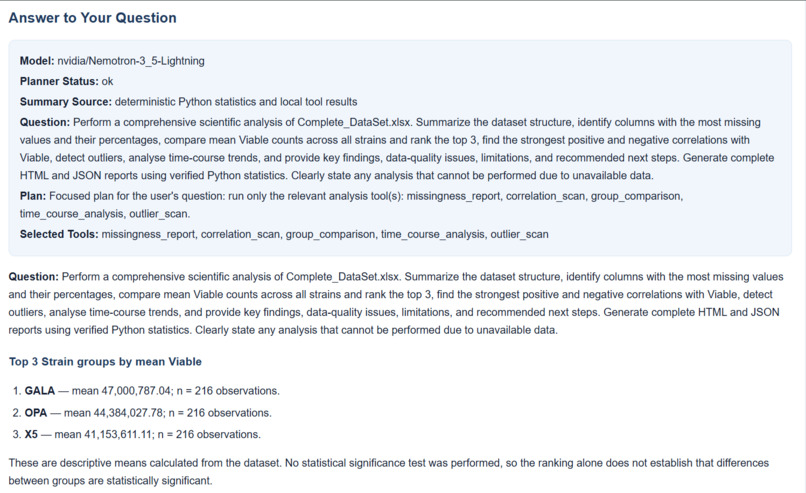
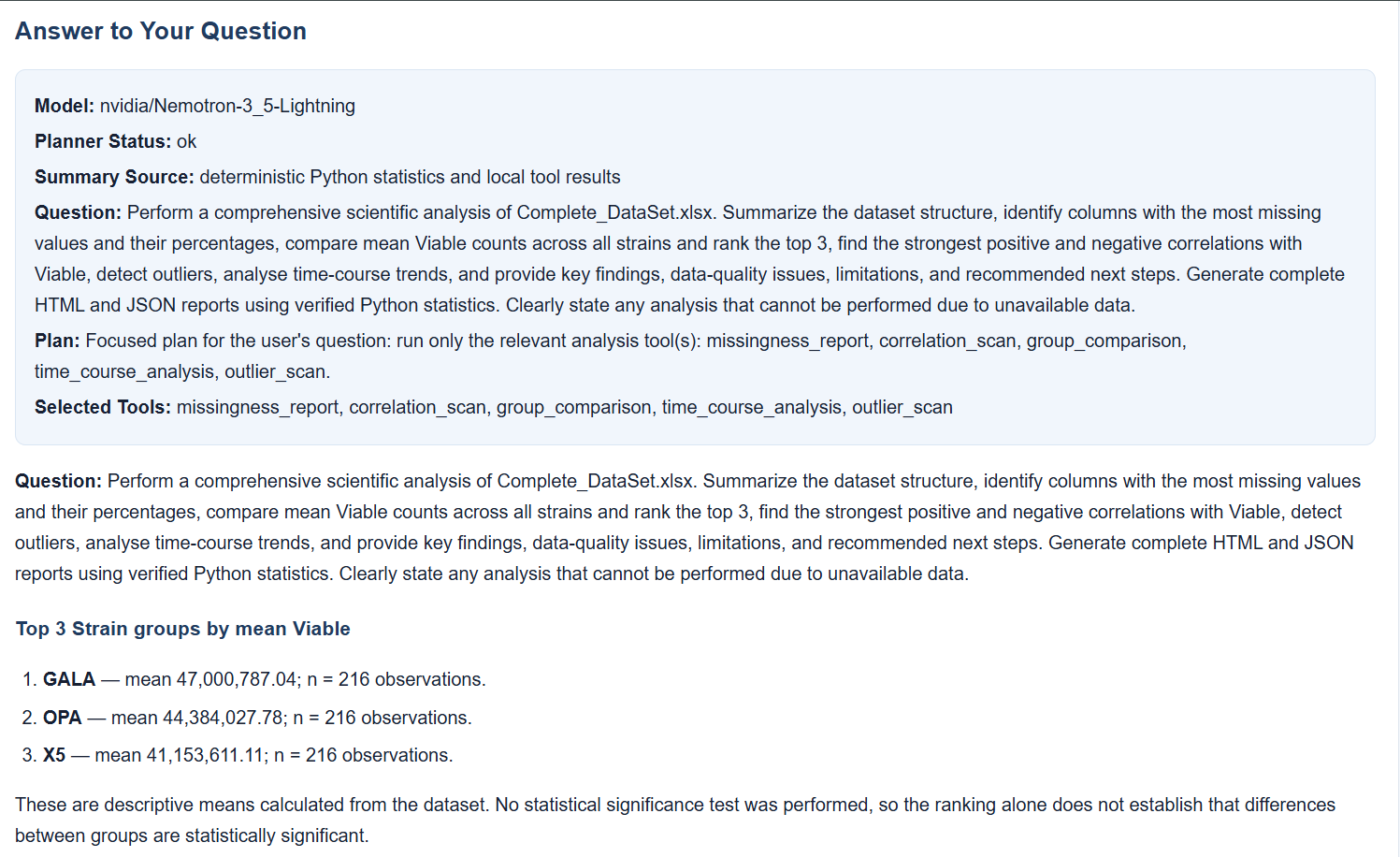
Scientific analysis report summarizing key findings, top strain rankings, data quality issues, correlations, and outliers.
-
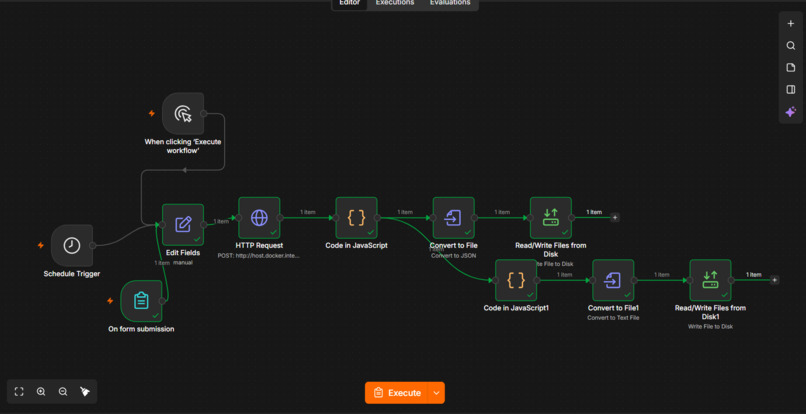
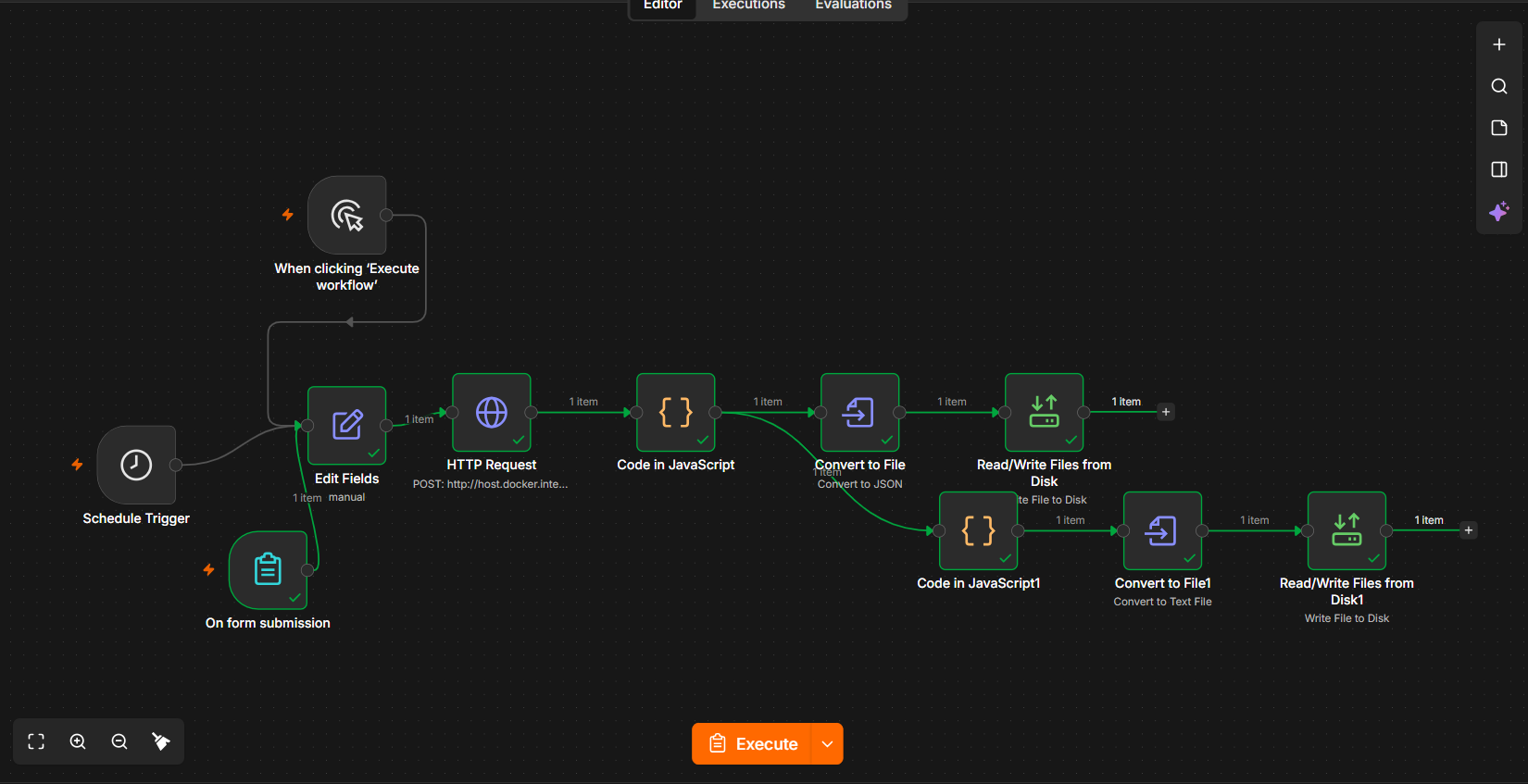
n8n workflow connecting question input, API analysis, JavaScript formatting, and automated JSON and HTML report generation.
-
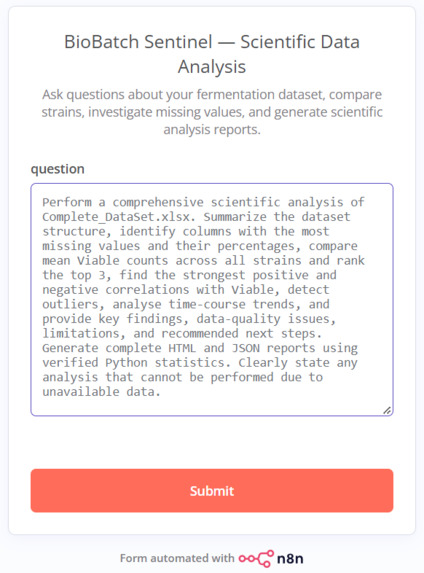
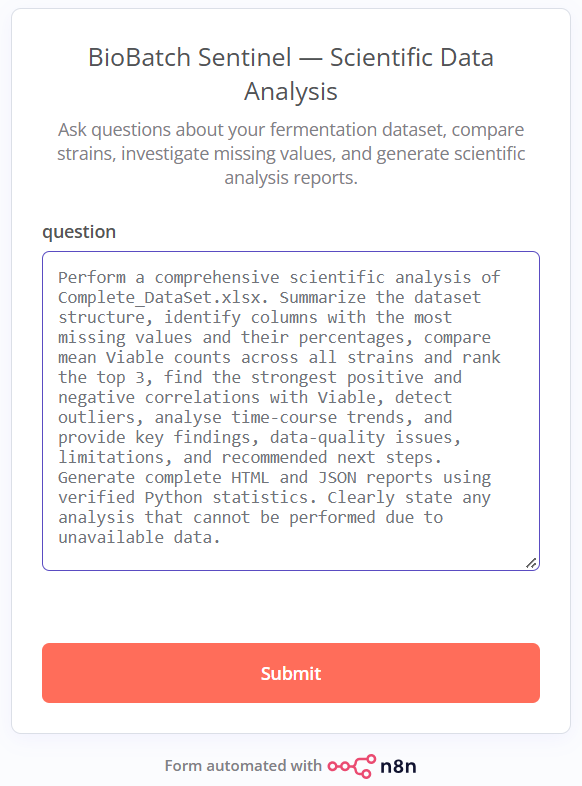
Natural-language question form for requesting scientific dataset analysis and automated report generation.
-
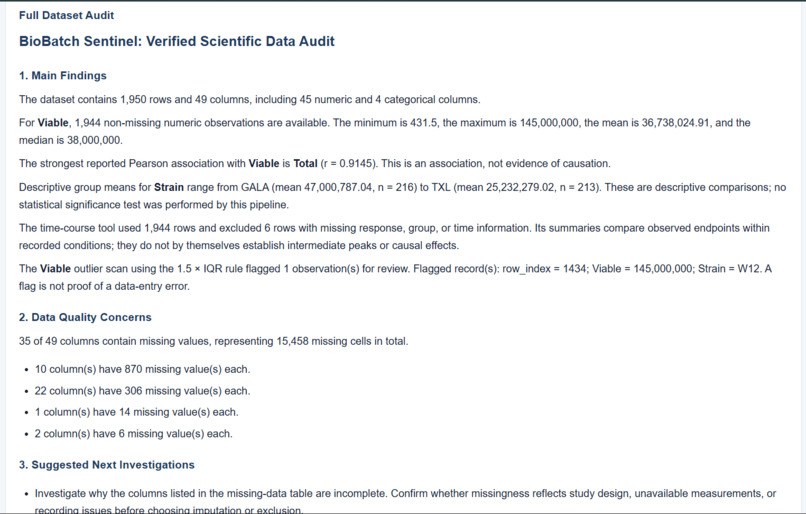
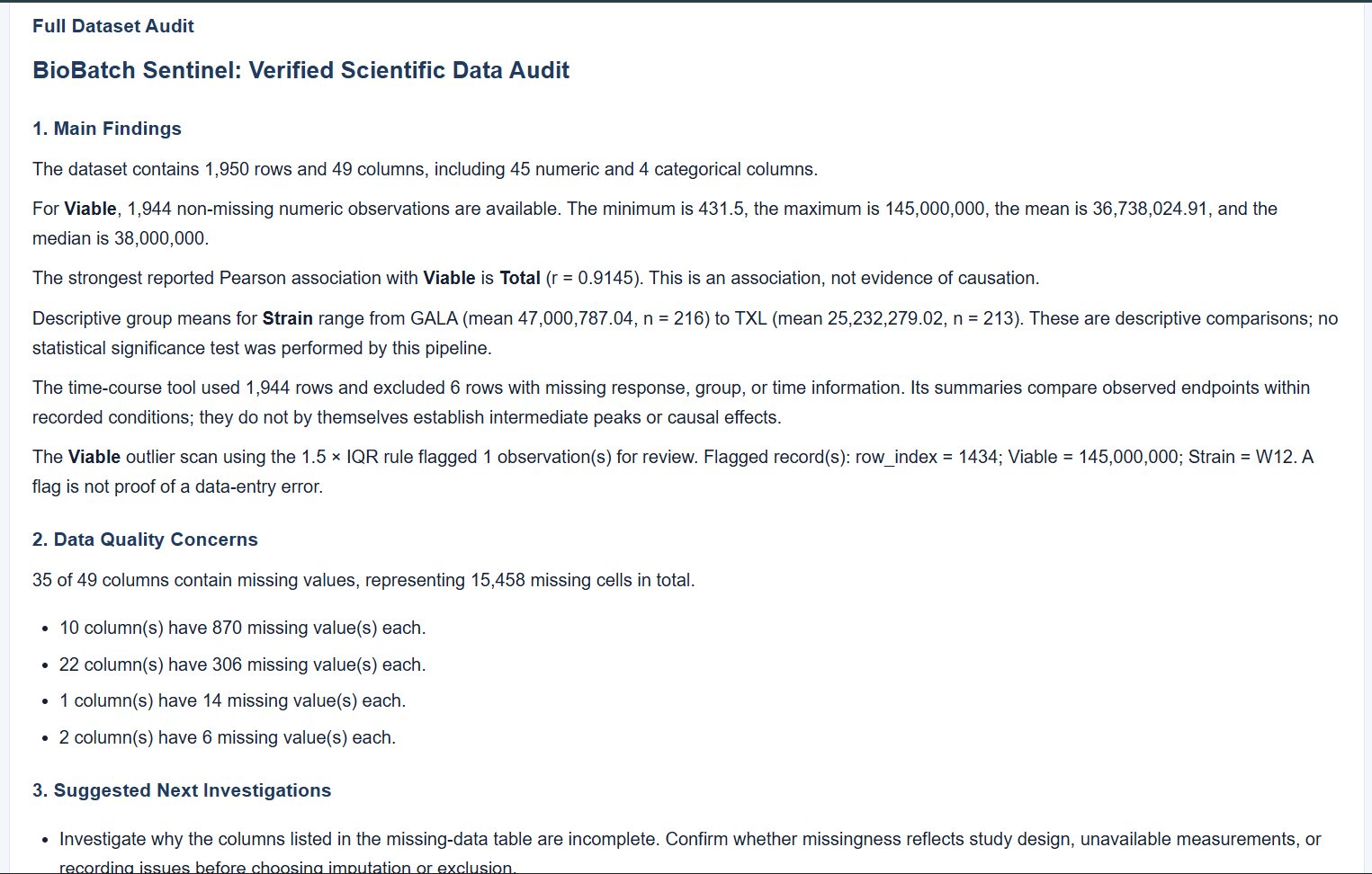
Detailed audit covering dataset statistics, missing values, strain comparisons, correlations, time-course trends, and limitations.
Inspiration
Scientific datasets often contain thousands of observations, missing values, complex relationships, and potential outliers. Analysing them manually can be time-consuming, especially when researchers want answers to specific questions rather than a collection of disconnected statistics.
We built BioBatch Sentinel to make scientific data analysis more accessible through natural-language questions and automated, evidence-based reports.
What it does
BioBatch Sentinel is a question-aware scientific data analysis agent built around a fermentation dataset. Users can ask questions about their data, and the system selects relevant analysis tools to investigate the requested problem.
Its current capabilities include:
- Dataset profiling: Summarises dataset dimensions, data types, and overall data quality.
- Missing-data analysis: Identifies columns with missing values and reports counts and percentages.
- Strain comparison: Compares mean and median Viable counts across strain groups and ranks the results.
- Correlation analysis: Identifies strong positive and negative associations with the selected target.
- Outlier detection: Flags unusual observations using the 1.5 × IQR rule.
- Time-course analysis: Summarises changes between observed time points when suitable data is available.
- Automated reporting: Generates structured JSON output and a formatted HTML scientific report.
How we built it
The application combines a Python-based analysis API with an AI-assisted planning layer and workflow automation.
- Python and pandas perform dataset inspection and statistical calculations.
- FastAPI exposes the analysis functionality through API endpoints.
- Nebius Token Factory and NVIDIA Nemotron support question-aware analysis planning and selection of relevant tools.
- n8n orchestrates the workflow, connects the API to report-generation steps, and writes the resulting JSON and HTML reports.
- Docker runs the n8n environment, while JavaScript formats the results and generates the HTML report.
The architecture separates analysis calculations from workflow orchestration and report presentation, making the system easier to extend and maintain.
Challenges we faced
One major challenge was connecting natural-language questions to the correct analysis tools without running every analysis unnecessarily. Another was keeping the results consistent as structured data moved between the Python API, n8n nodes, and the final reports.
We addressed these challenges by using focused tool selection, deterministic Python-computed statistics, structured JSON outputs, and question-aware report generation. We also included limitations to help prevent descriptive findings from being mistaken for proof of causation or statistical significance.
What we learned
Building BioBatch Sentinel helped us understand how AI-assisted planning can work alongside conventional statistical analysis. We learned to structure analysis tools as reusable components, expose them through APIs, orchestrate multi-step workflows, and generate reports from verified numerical results.
An important lesson was that an AI system should not only produce an answer; it should also provide the numerical evidence, data-quality context, and limitations needed to interpret that answer responsibly.
What's next
Future improvements include richer visualisations, configurable dataset uploads, more flexible analysis questions, formal statistical tests, improved report exploration, and stronger error handling and deployment options.
BioBatch Sentinel is currently a prototype demonstrated on a fermentation dataset. Its findings are descriptive and should be interpreted in the context of the original data and experimental design.
Built With
- docker
- factory
- fastapi
- javascript
- n8n
- nebius
- nvidia
- pandas
- python
- token

Log in or sign up for Devpost to join the conversation.