-
-
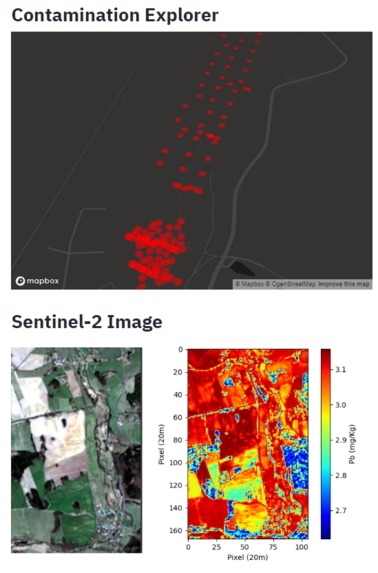
Prototype view
-
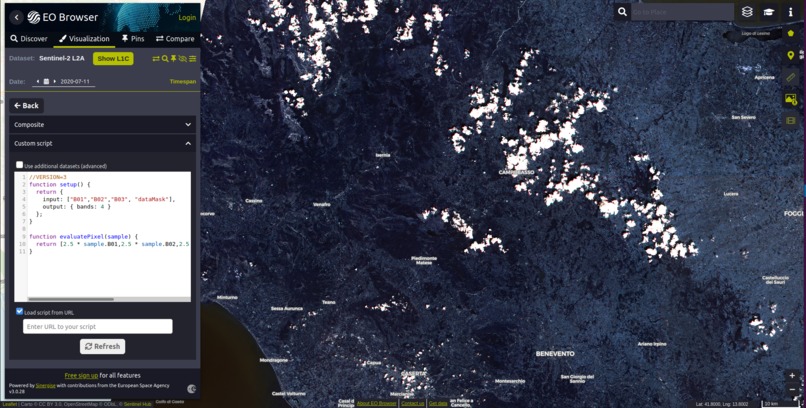
Future plans: combining with an existing map application
Inspiration
Soil contamination is a worldwide crisis, which diminishes food and agricultural production. Alterations in the soil environment due to soil contamination cause biophysical and biochemical changes in vegetation. Due to dynamic nature of these changes, early monitoring can permit for preventive interferences before intense and sometimes inevitable vegetation and soil problems occur. As plants are rooted in soil substrate, vegetation changes can be used as bio-indicators of soil conditions.
As the characteristics of vegetation influence its spectral properties, effective remote and non- contact detection methods offer an alternative and near real-time way for timely and cost-effective detecting plant changes, even on large scales and even prior to visual symptoms and negative effects appearance. Remote sensing spaceborne data coupled with artificial intelligence (AI) potentially are capable to provide and analyze big data for modelling soil contamination not only directly from soil but also indirectly from vegetation cover based on national/continental/global spectral data.
This project has been created to go through the above topic for 2020 Code4Green hackathon.
What it does
The program uses machine learning to predict soil contamination based on remote sensing spaceborne data. It uses the vegetation on the contaminated soil as a proxy since it reflects changes in soil through their reflectance spectrum by adsorbing the contaminant through the roots into the plant.
Challenges we ran into
Model development, handling big data, selection of a suitable algorithm regarding to dataset
What's next for BIO05_Coders4Bugs
In the future we are going to improve the algorithm by using data stream from open satellite data for improving the predictability of contaminations and to differentiate between land covers.
We want to test a combination of our code with an existing map application https://apps.sentinel-hub.com/eo-browser/ by providing the algorithm as a script accessible url. This way we would be able to scale the application and make it accessible to a wide variety of end users without needing to care about frontend infrastructure.
Built With
- python
- streamlit

Log in or sign up for Devpost to join the conversation.