A vast portion of communication in the world remains inaccessible to humans because it occurs beyond spoken or written language. Plants signal stress, damage, and environmental changes through biochemical and electrical responses, but humans cannot naturally interpret these signals in real time. Animals communicate emotions and intentions through vocalizations, movement, and behavior, yet these signals are often misunderstood. Infants, before developing speech, rely primarily on cries and subtle physiological cues, leaving caregivers to rely heavily on guesswork. Similarly, individuals with severe communication barriers, including coma patients, may possess internal states or responses that remain undetected due to the absence of effective decoding systems.
Current technologies largely focus on human-to-human language translation and fail to address this broader communication gap. As a result, critical signals of distress, need, emotion, or awareness often go unnoticed.
There is a need for an intelligent, biology-driven system capable of decoding non-conventional communication by interpreting biological, acoustic, and behavioral signals.
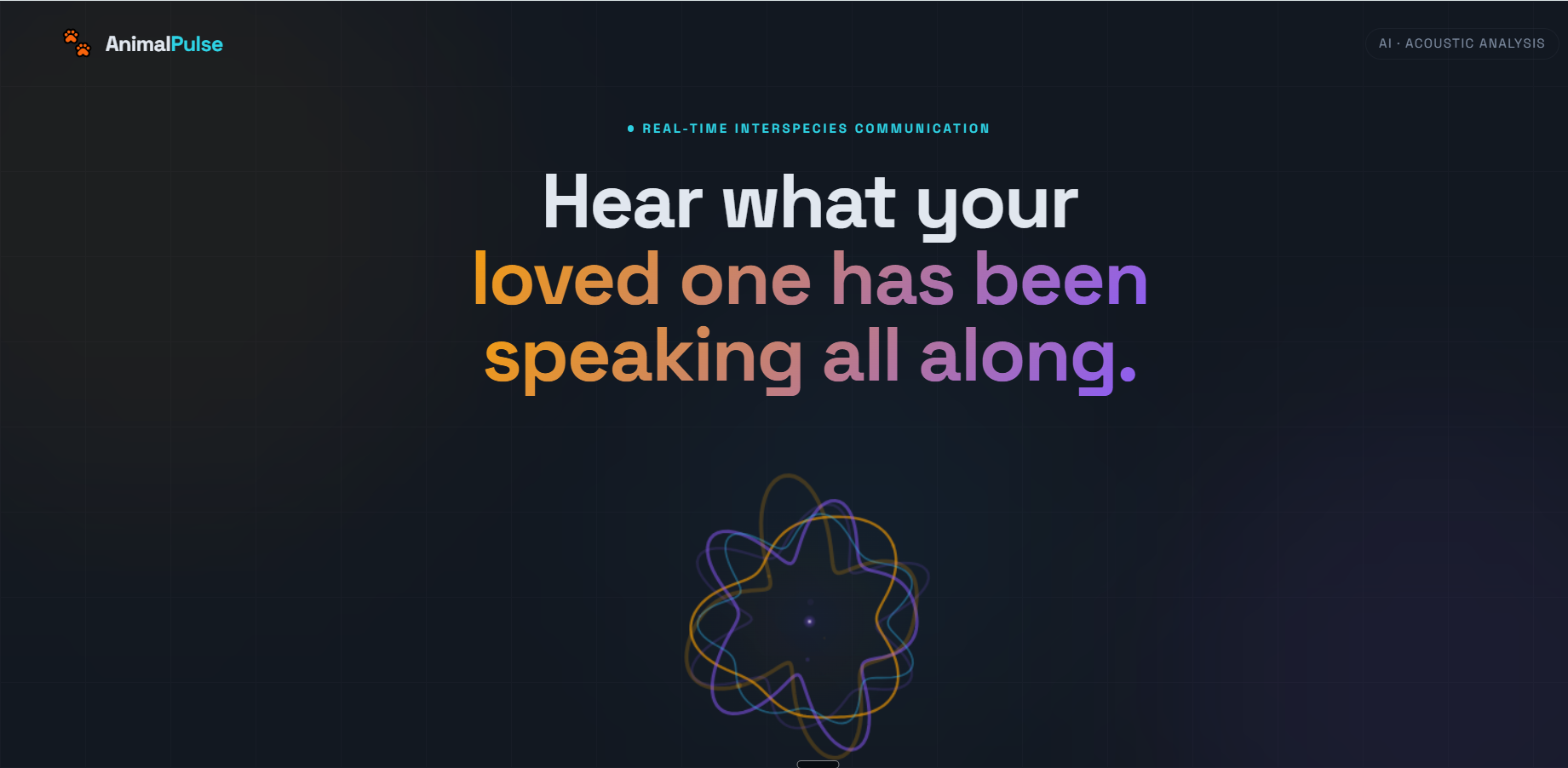
BioSpeaks addresses this challenge by creating a unified AI framework that translates silent communication into meaningful, human-understandable insights.
Communication extends far beyond human language. Every day, plants respond to stress, animals express emotions, babies communicate their needs, and individuals with severe communication impairments generate biological signals that often remain unnoticed or misunderstood. We were inspired by the idea that biology itself is a language waiting to be translated. Instead of limiting AI to translating spoken languages, we envisioned an AI capable of interpreting life's silent conversations.
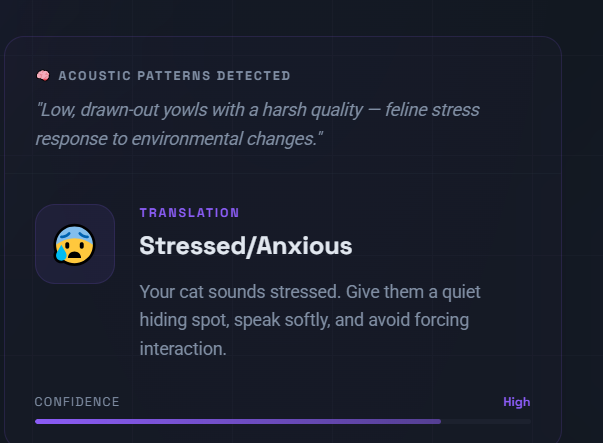
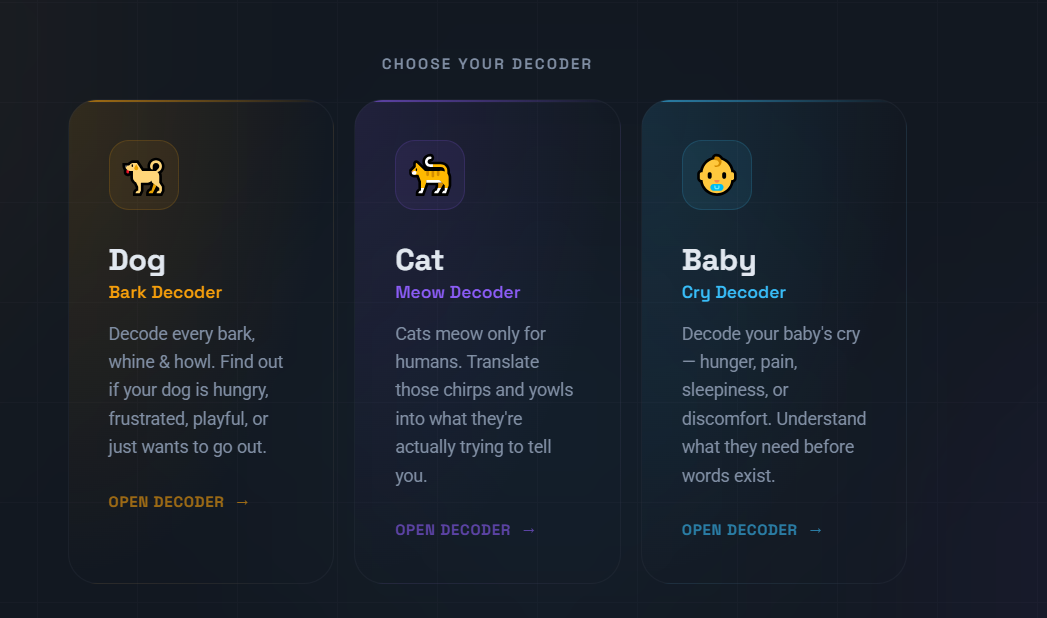
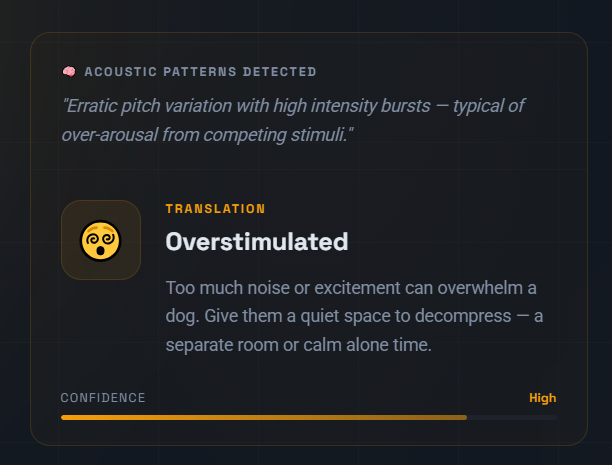
BioSpeaks is an AI-powered biological communication platform that interprets non-verbal communication across multiple living systems. The platform analyzes biological, acoustic, electrical, and behavioral signals to generate human-understandable insights. Depending on the application, BioSpeaks can detect plant stress before visible symptoms appear, interpret animal vocalizations and behavior to estimate emotional states or intentions, analyze infant cries and physiological patterns to suggest likely needs, and explore biological responses from patients with severe communication limitations, including coma patients, to identify potential signs of awareness. Rather than replacing experts, BioSpeaks acts as an intelligent interpretation layer that helps humans better understand silent biological communication.
We designed BioSpeaks as a modular AI framework capable of processing multiple types of biological data. The architecture combines signal processing for electrical and physiological signals, audio analysis for vocalizations, computer vision for behavioral analysis, machine learning models trained to identify meaningful biological patterns, and a unified AI inference layer that converts detected patterns into natural-language explanations. The system is designed to be expandable so additional species and biological communication domains can be incorporated over time.
One of the biggest challenges was creating a single framework capable of handling entirely different forms of biological communication. Plant electrical signals, animal sounds, infant cries, and physiological responses all require different processing techniques. Another challenge was the limited availability of high-quality labeled biological datasets. Designing a scalable architecture while maintaining scientific credibility required extensive research into biology, neuroscience, signal processing, and artificial intelligence.
We are proud to have developed a unified vision for decoding biological communication instead of focusing on a single domain. We designed an AI architecture capable of supporting multiple species and communication methods while shifting the perspective of AI translation from human language to biological language. The concept has the potential to transform agriculture, healthcare, veterinary science, conservation, and biological research through a single scalable platform.
Throughout this journey, we learned that communication is fundamentally a biological phenomenon rather than solely a linguistic one. Building AI for biology requires combining expertise from machine learning, neuroscience, animal behavior, plant physiology, and signal processing. We also learned the importance of designing flexible AI systems that can adapt as scientific understanding evolves.
Our next goal is to transform BioSpeaks from a concept into a working biological communication platform by building domain-specific AI models for plants, animals, infants, and healthcare applications. We plan to partner with researchers to obtain high-quality biological datasets, develop real-time hardware integration for biological signal collection, validate the system with scientists, veterinarians, clinicians, and agricultural experts, and expand the platform to support additional species and biological communication systems. Our long-term vision is to make Bezuba the world's first universal biological communication platform, bridging the communication gap between humans and every form of life through AI.
Built With
- artificial-intelligence-(ai)
- audio-processing
- computer-vision
- deep-learning
- edge-computing
- esp32
- fastapi
- firebase
- flutter
- git
- google-cloud
- iot
- machine-learning
- numpy
- opencv
- pandas
- python
- pytorch
- rest-apis
- signal-processing
- supabase
- tensorflow


Log in or sign up for Devpost to join the conversation.