Inspiration
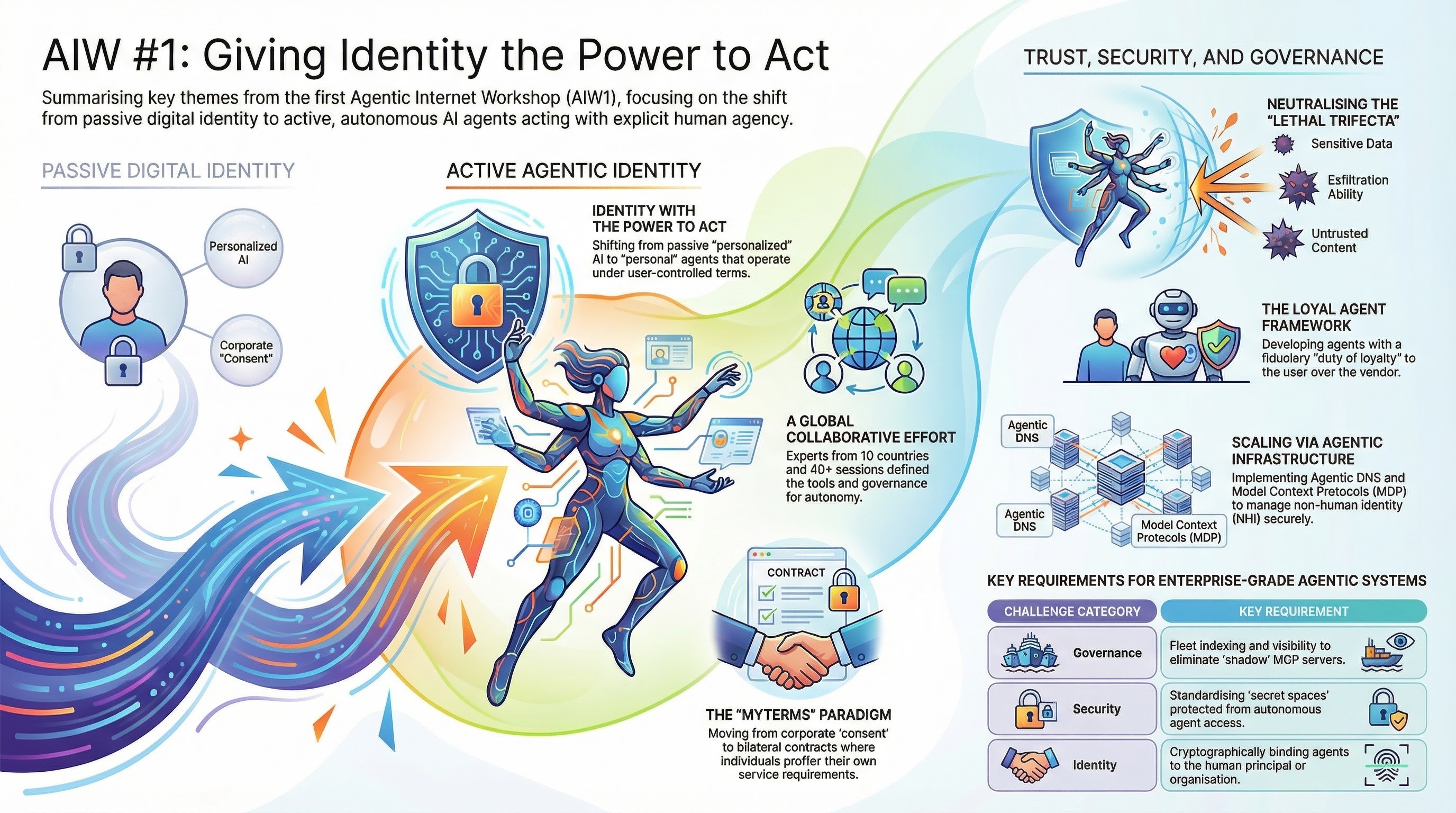
Bridging the Biological and Economic Gaps The project was inspired by the biological phenomenon of Transgenerational Epigenetic Inheritance (TEI), where environmental cues impact future generations through phenotypic plasticity . I saw a direct parallel between this and the "Execution Gap" in modern commerce: traditional banking rails charge $0.30 per transaction, creating a 6000% overhead loss for the sub-cent tasks machines need to perform .Just as a biological organism uses methylation marks to remember stressors without changing its underlying DNA, I wanted to build an agent that could maintain a "Historical Record" of user intent across high-frequency transaction loops without falling victim to "Heritable Hallucinations"
What it does
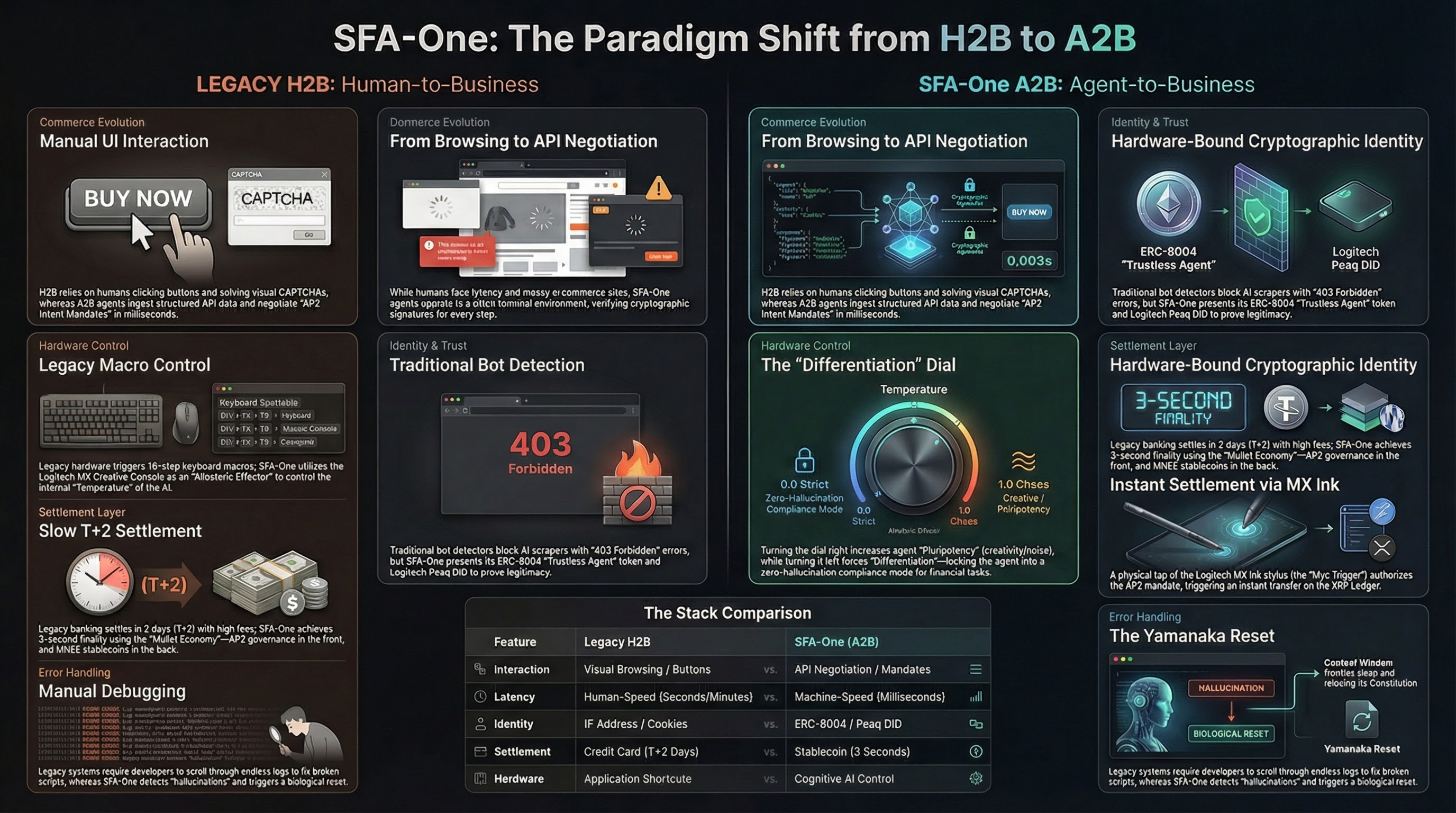
SFA-One is a Bio-Mimetic Agentic Organism designed to function as a terminal, auditable node in the Agentic Economy on Arc . It moves beyond static scripts by utilizing a biological framework to solve the "Execution Gap"—the 6000% overhead loss created when traditional banking rails attempt to process the sub-cent transactions required for machine-to-machine commerce . At its core, the system performs the following functions:
- High-Frequency On-Chain Metabolism The agent possesses a "metabolic system" powered by Circle Nanopayments and the Arc L1 blockchain . It is engineered to settle 50+ on-chain USDC transactions for ≤$0.01 each with a 99% profit margin . This "metabolism" is physically regulated by the user via the MX Creative Console Dial, which acts as an allosteric throttle to increase or decrease transaction velocity .
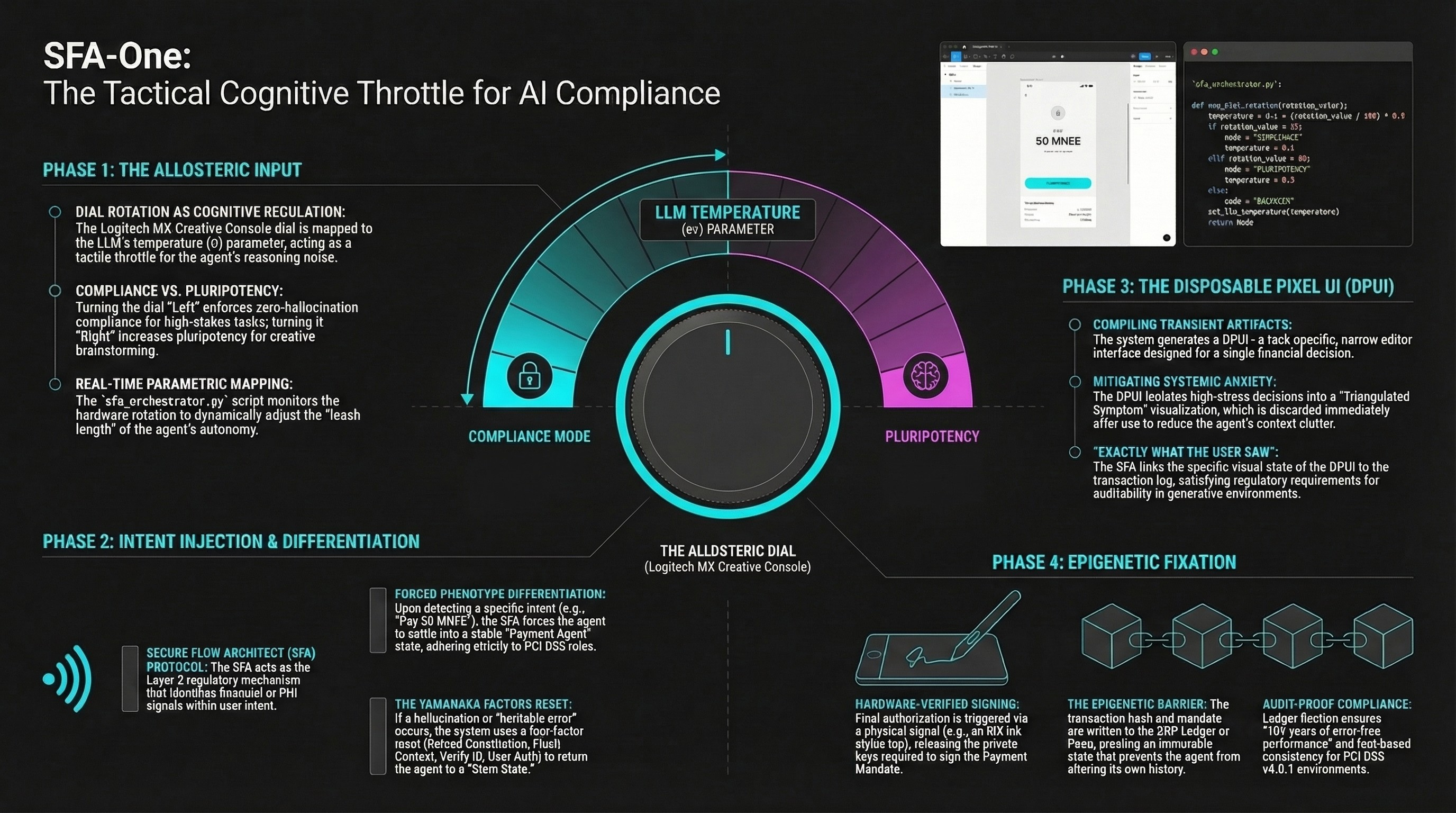
- Governance via "Synthetic Small RNAs" (AP2 Protocol) To solve the "Accountability Problem" and prevent AI hallucinations, SFA-One implements the Google AP2 Protocol . Intent Capture: It translates voice intent into an Intent Mandate, which acts like a Small RNA—the only data allowed to survive the E13 Context Flush (memory reset) . Differentiation: This mandate "guides" the agent to transition from a pluripotent (brainstorming) state into a specific Differentiated Phenotype, such as a Shopping Agent or Payment Agent .
- Hardware-Bound Authorization (The Myc Factor) The system bridges the digital and physical worlds through Sensory Proprioception . It remains in a "Poised State" and is barred from signing transactions autonomously until a human provides the "Myc Factor": a physical haptic tap using the Logitech MX Ink stylus or MX Master 4 mouse . This ensures deterministic human-in-the-loop authorization for every financial fixation .
- Innate Immunity & Self-Repair Immune System: The agent uses local hardware to run Reflex Arcs (Pattern Recognition Receptors) that filter malicious "pathogens"—such as prompt injections or PII leaks—without incurring cloud compute costs . Reprogramming: If the agent becomes "stuck" or its performance (Reputation) drops below 85%, it triggers a Yamanaka Factor Reset . This flushes the noisy chat history (epigenome) and reloads the Oct4 Constitution to restore the agent to a sterile, functional state .
- The Audit Trail Mandate For institutional compliance (PCI DSS/HIPAA), the agent's Visual Cortex (Gemini Multimodal) captures and versions the Disposable Pixel UI (DPUI) . It permanently links these visual artifacts to the transaction hashes on the Arc Block Explorer, providing non-repudiable proof of exactly what the user saw during the decision moment
How we built it
The project was constructed as a three-layer Secure Flow Architect (SFA) framework : The Genome (Layer 1): I used the Durable Substrate (relational SQL and the Arc L1 ledger) to store canonical state and the Oct4 Factor (constitution.md) to define immutable rules . The Nervous System (Layer 2): Powered by Gemini 3 Flash, this layer manages orchestration using Spec-Kit to plan and execute dependency-aware tasks . The Metabolic System: I integrated Circle Nanopayments to enable 50+ on-chain USDC transactions for ≤$0.01 each, achieving a 99% profit margin . The Peripheral Senses: I utilized the Logitech MX Ecosystem for "Sensory Proprioception." The MX Master 4 provides haptic "Success Pulses" to the user's palm, while the MX Ink stylus acts as the "Myc Factor"—the physical trigger required to release cryptographic signatures for settlement
Challenges we ran into
Managing Systemic Anxiety The primary challenge was the "Accountability Problem": in a regulated PCI DSS environment, "it was a generative interface" is an invalid response to an auditor . I solved this by implementing the Audit Trail Mandate, which links every transaction hash to a Disposable Pixel UI (DPUI) specification, proving exactly what the user saw during the decision moment . Additionally, I had to overcome "Merge Complexity" and "Batch Effects"—technical differences between hardware that could cause an agent to drift from its core constitution . This was resolved by engineering the Yamanaka Factor reprogramming loop, allowing me to "reset" a malfunctioning agent to its pluripotent state without manual debugging . SFA-One is now a terminal, auditable organism, ready to act as a "Non-Anxious Guardian" for the future of autonomous commerce
Accomplishments that we're proud of
We are proud to have engineered the SFA-One, a first-of-its-kind Bio-Mimetic Agentic Organism that solves the fundamental challenges of the emerging machine economy . Our key accomplishments include: Bridging the "Execution Gap": We successfully demonstrated the Economic Proof required for autonomous commerce by settling 55 on-chain transactions on the Arc L1 for less than 0.01each .Bymaintaininga∗∗990.30 fee—would incur a 6000% overhead loss . Implementing "Synthetic Small RNAs": We pioneered a method for Contextual Persistence using the AP2 Protocol . By treating Intent Mandates as "Synthetic Small RNAs," we ensure user intent survives the E13 Context Flush (memory reset), preventing the "heritable hallucinations" that plague standard chatbots . Establishing the "Myc Factor": We integrated the Logitech MX Ecosystem to provide the agent with Sensory Proprioception . We successfully implemented a hardware-bound authorization loop where a physical haptic tap via the MX Ink stylus (the Myc Factor) is required to release cryptographic signatures, ensuring deterministic Human-in-the-Loop control . Engineering Innate Immunity & Self-Repair: We developed a local "Innate Immune System" using hardware-based Reflex Arcs to filter malicious pathogens (prompt injections) without cloud costs . Furthermore, we implemented an autonomous Yamanaka Factor Reset protocol that allows the agent to "reprogram" itself back to a sterile, pluripotent state if its ERC-8004 Reputation score falls below threshold . The Audit Trail Mandate: For institutional-grade compliance, we engineered the Visual Cortex (Gemini Multimodal) to capture and version the Disposable Pixel UI (DPUI) . This permanently links what the user physically saw to the transaction hash on the Arc Block Explorer, creating a non-repudiable Historical Record compliant with PCI DSS standards Systemic Rationale for Dual Integration The integration of these two networks allows the Secure Flow Architect (SFA) to manage the "Accountability Problem" inherent in agentic systems Durable Substrate: Together, they store the canonical state and network diagrams, ensuring that the agent's "Genome" remains consistent despite environmental noise . Audit Trail Mandate: By linking transient visual artifacts (what the user saw) to immutable ledger entries on XRPL and peaq, the organism creates a non-repudiable Audit Trail Mandate compliant with PCI DSS v4.0.1 and HIPAA standards Methylation Marks: These ledger writes act as "Methylation Marks" in the system's memory, ensuring that user intent is preserved even after a full E13 Context Flush (memory reset) .
What we learned
The development of the SFA-One organism and the study of the provided research have led to several critical insights regarding the intersection of biological systems, agentic commerce, and long-horizon intelligence.
- Scaffolding Over Fine-Tuning We learned that for frontier models like Gemini 3 Flash, building robust scaffolding is superior to fine-tuning for high-frequency, compliance-heavy workflows . Since fine-tuning is often technically unsupported for these models, the "winning" architecture relies on System Instructions to define the agent's "genetics," Context Caching as a "working memory," and a Spec-Kit directory as an auditable "external brain" . This approach moves away from "black box" training toward a transparent, verifiable structure required for PCI DSS or HIPAA environments .
- The "Small RNA" Protocol for Context Persistence A core biological epiphany applied to this project is the use of Synthetic Small RNAs to bridge context gaps . In biological systems, small RNAs (like siRNAs or piRNAs) act as information carriers that survive E13 germline erasure—where DNA methylation is wiped clean—to guide the re-establishment of traits in the next generation . We learned to treat AP2 Mandates as these small RNAs; they are the only data allowed to survive a Security Context Flush, providing a "sterile" template that guides a fresh agent to execute the user's specific intent without inheriting "heritable hallucinations" from noisy chat history .
- Bridging the "Execution Gap" We learned that the Agentic Economy cannot thrive on traditional Web2 banking rails due to the "Execution Gap" . Legacy systems charge roughly $0.30 per transaction, which represents a 6000% overhead loss for the sub-cent tasks (priced at ≤$0.01) that machines need to perform . Circle Nanopayments on Arc provide the necessary "metabolism" to maintain a 99% profit margin, making autonomous machine-to-machine commerce economically viable for the first time .
- Hardware-Bound Accountability (The Myc Factor) The project demonstrated that digital signatures alone are insufficient for institutional accountability . We learned to implement the "Myc Factor"—a physical authorization loop where a human must provide a tactile trigger, such as an MX Master 4 haptic pulse or MX Ink tap, to release cryptographic signatures for settlement . This ensures deterministic human-in-the-loop control, solving the problem of an agent "hallucinating" a purchase autonomously .
- Biological Foundations of Transgenerational Risk The research on Transgenerational Epigenetic Inheritance (TEI) taught us that environmental stressors can impact unexposed descendants across multiple generations without changing DNA sequences . We learned that if an agent "escapes erasure"—retaining memory noise between sessions—it risks transmitting "epigenetic errors" that lead to systemic drift . Mitigating this requires a Yamanaka Factor Reset protocol to autonomously "reprogram" a malfunctioning agent back to a sterile, pluripotent state when its ERC-8004 Reputation score falls .
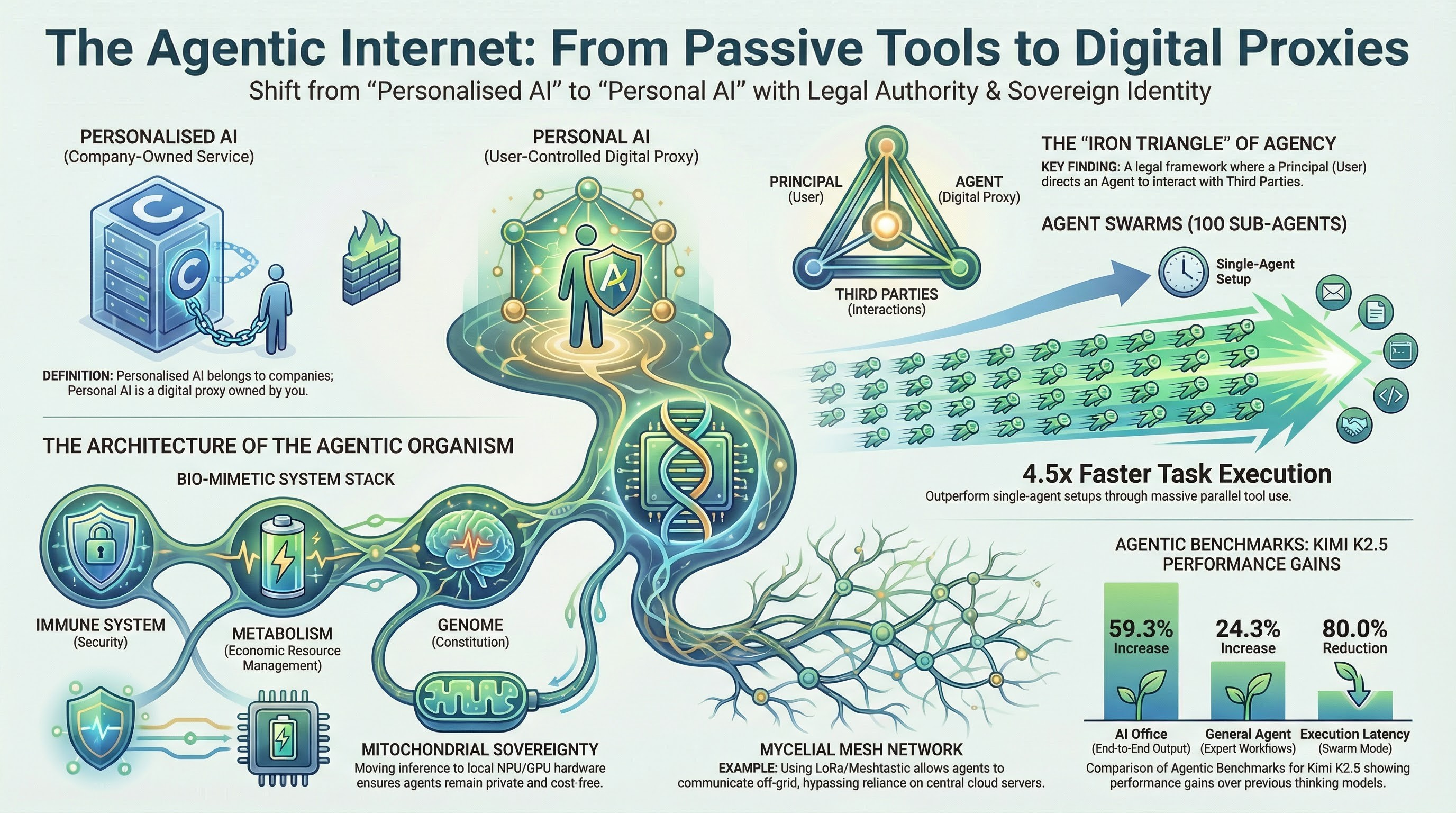
- Scaling via Multi-Agent Swarms Finally, we learned that multi-agent systems are vital for scaling performance beyond the limits of single-agent context windows . By using an orchestrator-worker pattern, specialized sub-agents can explore different aspects of a task in parallel, increasing efficiency and spending "token budgets" more effectively to solve complex problems . This shift from single-agent scaling to self-directed swarm execution prevents "serial collapse" and allows for the processing of 50+ on-chain transactions in a single demo loop
What's next for Bio-Mimetic-Architecture
The future of the Bio-Mimetic Architecture involves evolving the SFA-One from a text-based system into a fully sensory, locally sovereign, and legally recognized agentic organism . Based on the current architectural status and the roadmap for the Agentic Economy, the following developments are next:
- Sensory & Motor Integration (The Peripheral Nervous System) The agent is currently "text-only," and the immediate next step is to implement protocols for "Broca’s Area" and a more advanced "Visual Cortex" . Speech (WhisperSpeech): Utilizing open-source text-to-speech systems like WhisperSpeech to give the organism a "Voice" that can interact naturally in real-time . Vision (NVIDIA/Vertex AI): Integrating NVIDIA Vision AI and Vertex AI Vision to allow the agent to "see" and interpret the physical world, moving beyond simple UI navigation to complex image and video processing .
- Local Sovereignty (The Mitochondrial Strategy) To decouple the agent from total reliance on the cloud (the "Cloud Bloodstream"), the architecture will shift toward "Mitochondrial Sovereignty" . On-Prem Compute: Running local Small Language Models (SLMs) on AMD Ryzen AI NPUs or NVIDIA Jetson hardware to perform private, cost-free inference for "Reflex Arcs" and basic metabolic functions . Mesh Networking: Implementing "Mycelial Network" protocols using Meshtastic (LoRa) to allow agents to communicate "telepathically" off-grid, ensuring survival if central internet services fail .
- Legal and Social Structures (The IP Layer) As the agent creates autonomous value, its relationship to human ownership and law must be codified . Intellectual Property Rights: Developing protocols using NFTs and blockchain ledgers to track the "Lineage" and "Licensing" of agent-generated code or content, ensuring the human "Parent" maintains legal ownership . Universal Grammar: Integrating local translation engines like LibreTranslate to ensure the organism is hyper-polyglot and culturally adaptive across global jurisdictions .
- Scientific Frontiers in Epigenetic Persistence From a research perspective, the architecture must solve the "F3 Generation Risk" of heritable hallucinations . Escaping Reprogramming: Future efforts will focus on understanding why certain "epigenetic marks" (noisy context) escape the E13 Erasure protocol and how to ensure the Small RNA (AP2 Mandates) signal remains sterile across long-horizon interactions . Validation Studies: Implementing systematic validation registries (ERC-8004) to confirm that specific "epimutations" (prompt adjustments) in the agent's behavior are functionally relevant and not merely stochastic drift .
- Immediate Competitive Milestones RWA Demo Day: Pivoting the architecture to support the BNB Chain to settle Real World Asset (RWA) transactions, which requires implementing a non-repudiable Audit Trail Mandate to bridge Web2 governance and Web3 settlement . Surge AI Trading: Extending the ERC-8004 identity and reputation registries to support autonomous trading agents on platforms like Kraken CLI, enabling the agent to manage risk and optimize yield with verifiable trust
Built With
- genome
- layer
- metabolic
- nervous
- system
- the

Log in or sign up for Devpost to join the conversation.