-
-
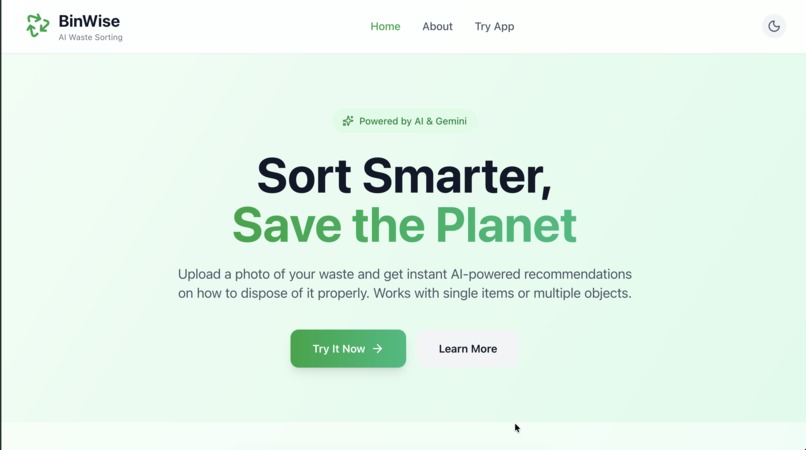
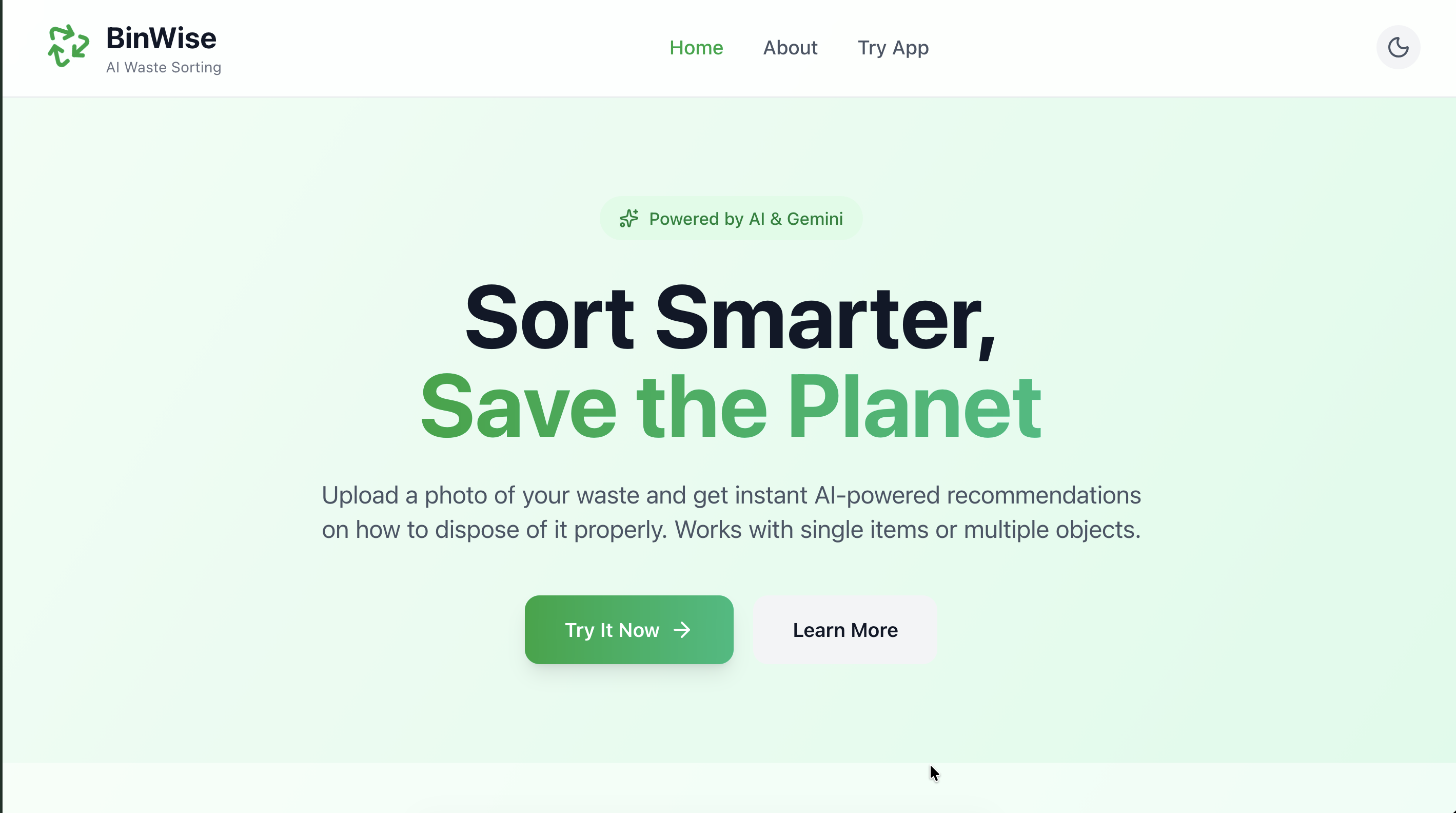
Home Page
-
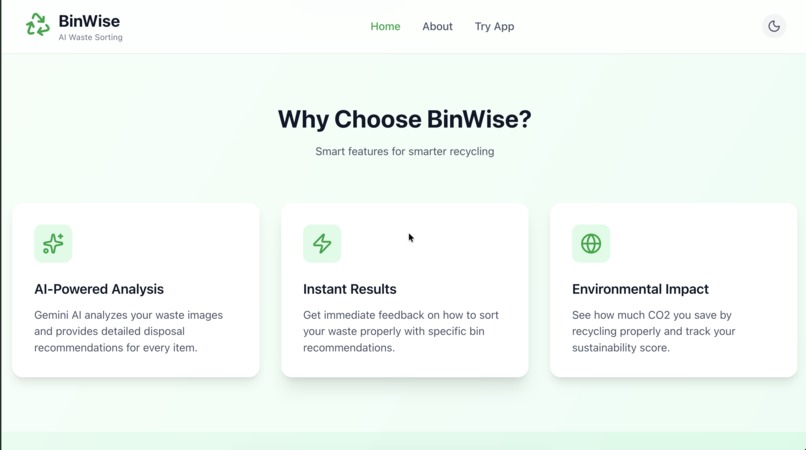
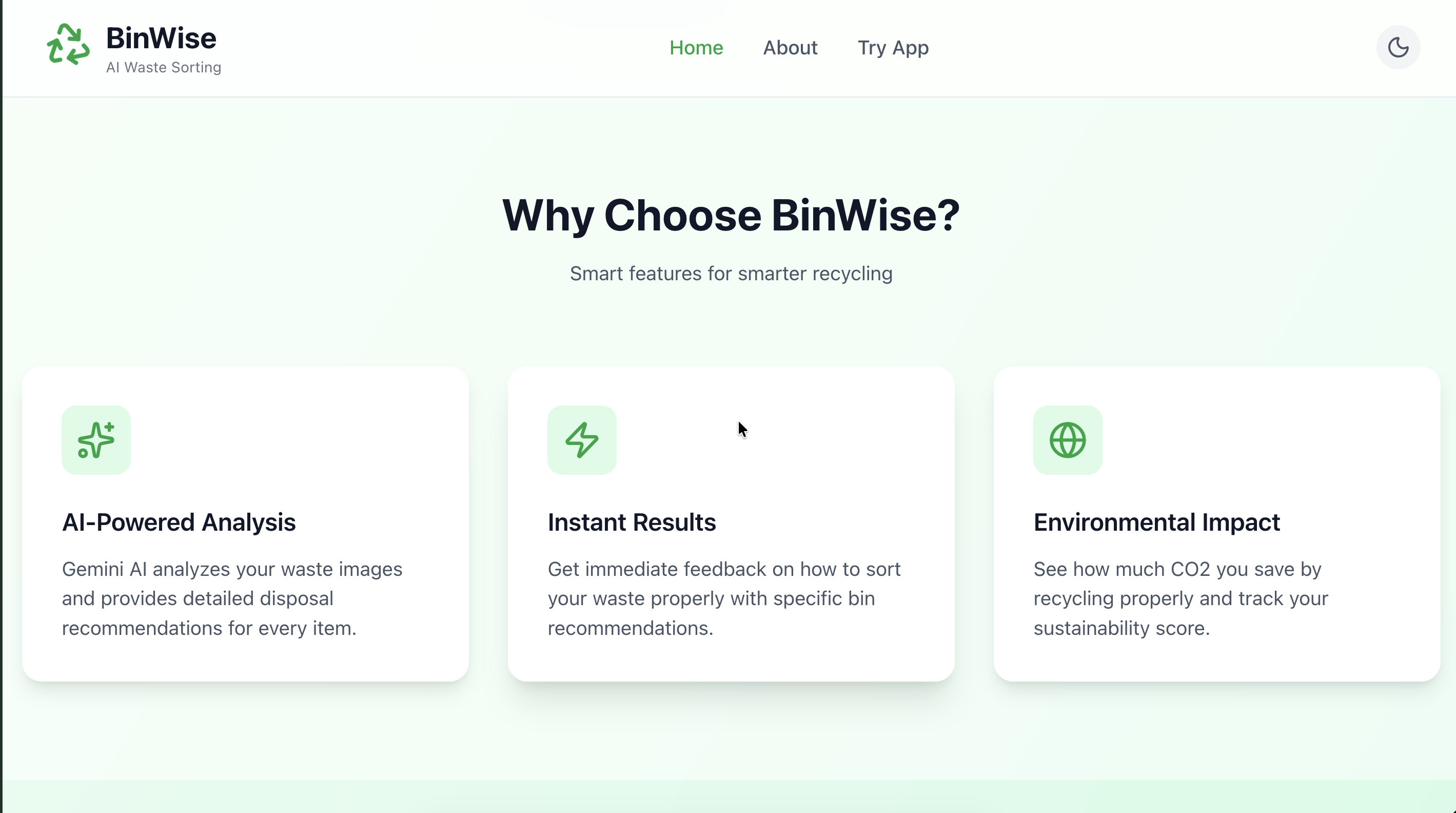
WHY BinWise AI
-
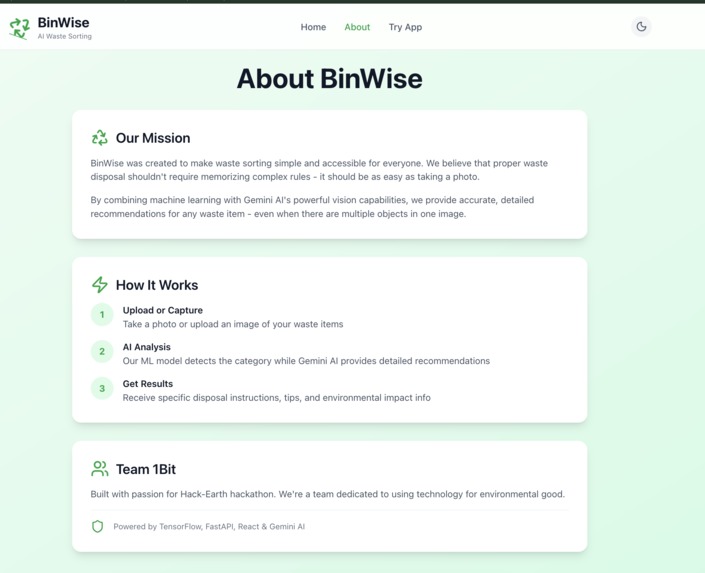
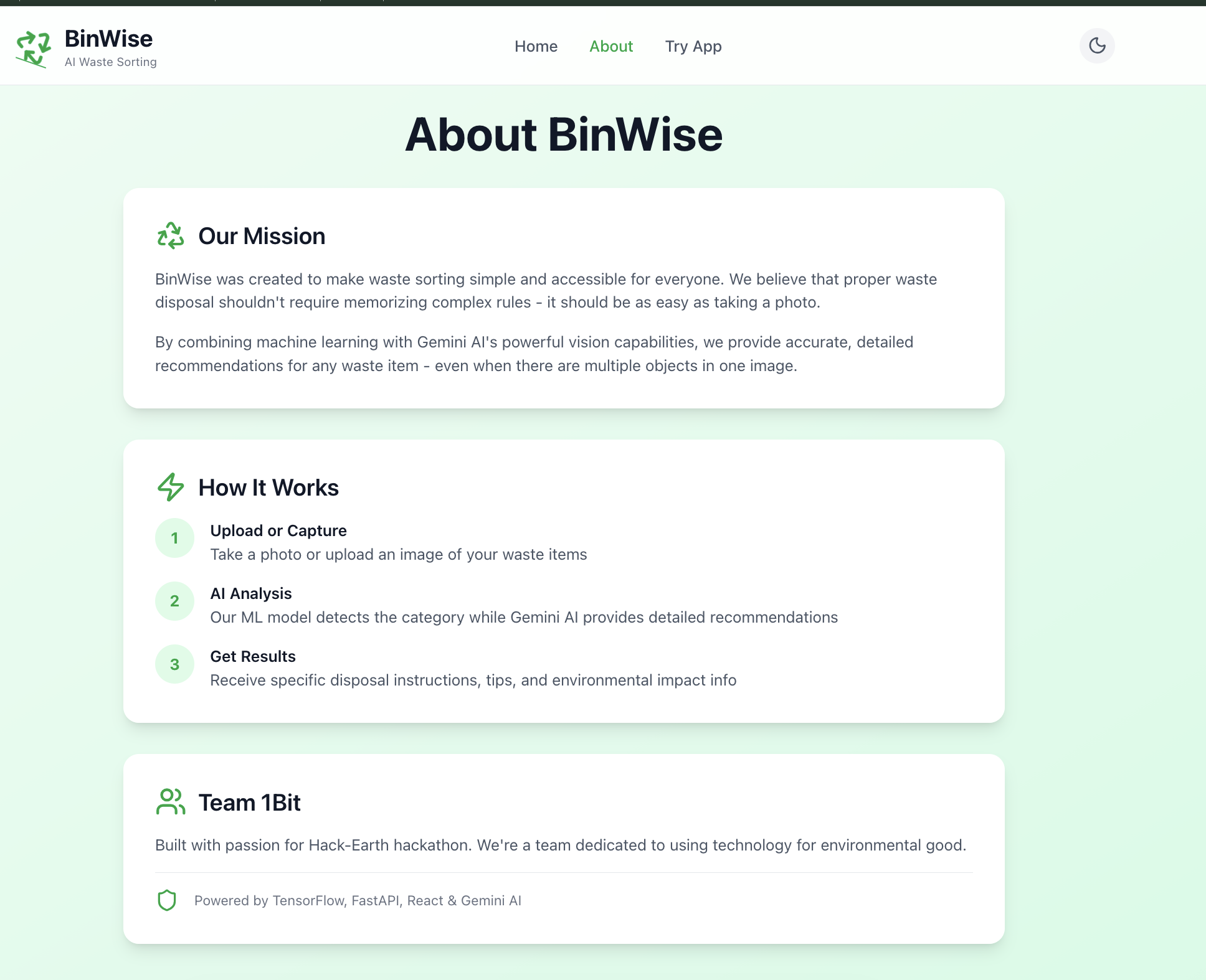
ABOUT BinWise AI
-
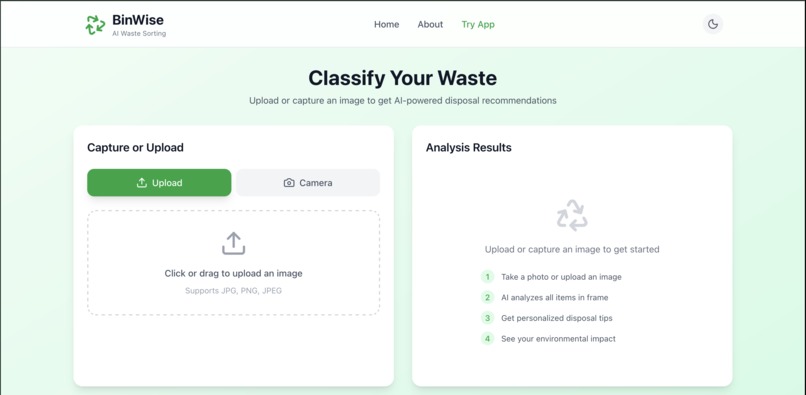
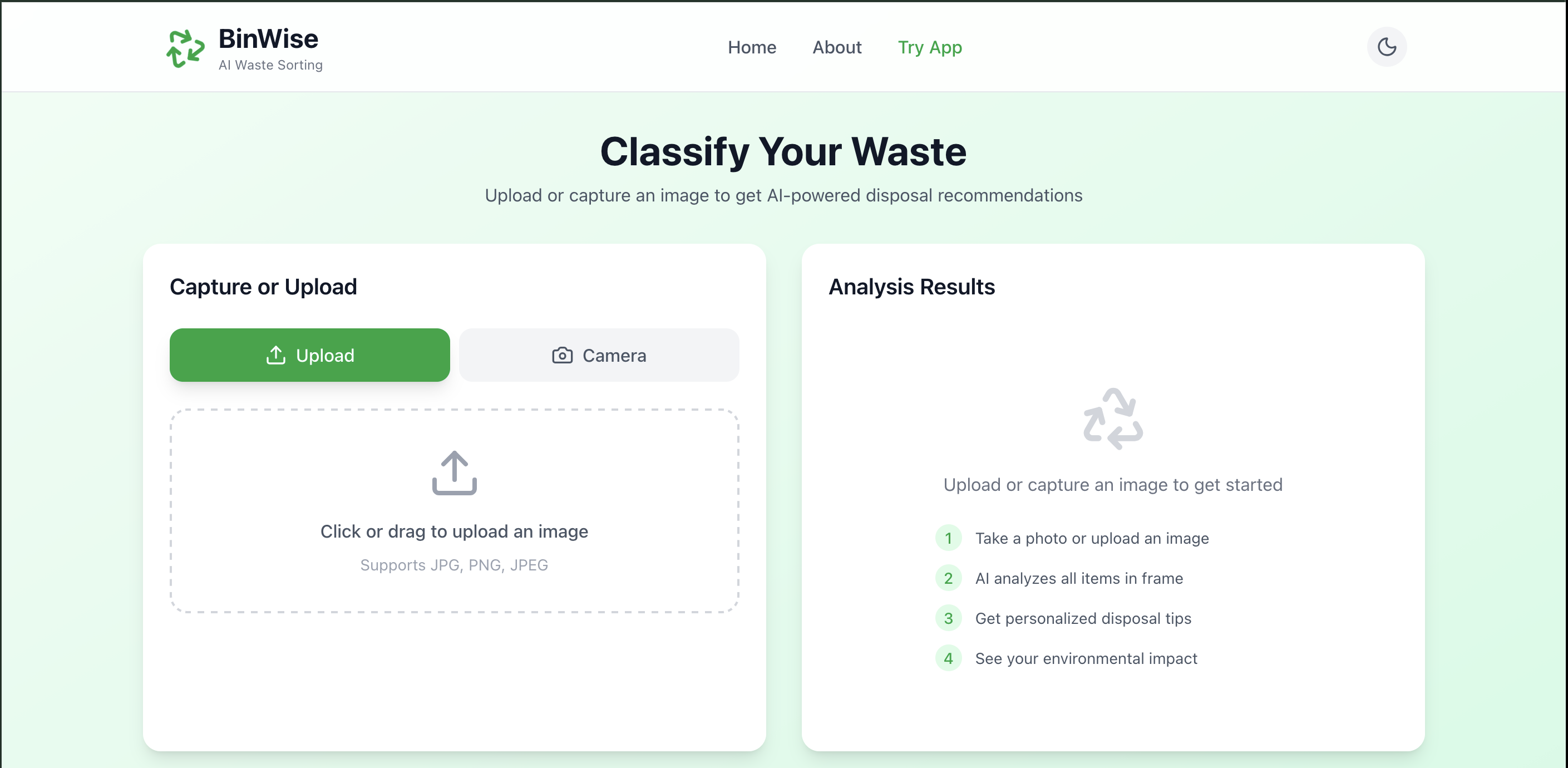
APP Itself
Inspiration
Every day, people practice "wish-cycling"—putting non-recyclable items into the blue bin hoping they'll be recycled. This contamination often results in entire batches of good recycling being sent to landfills. I wanted to create a simple, tech-driven solution that takes the guesswork out of waste disposal.
What it does
BinWise AI is a web-based assistant that allows users to upload a photo of an item. Using a custom-trained Computer Vision model, the app identifies if the item is Plastic, Paper/Cardboard, Metal, Glass, or Trash. It then provides immediate, actionable instructions on how to properly dispose of it (e.g., "Rinse before recycling").
How we built it
As a solo developer (Team 1Bit), I built this using:
- Python for the backend logic.
- React for the frontend user interface.
- TensorFlow/Keras to run the Deep Learning model.
- Google Teachable Machine for training the initial classification model on a dataset of ~2,500 images.
Challenges we ran into
The biggest challenge was "Dataset Bias." The initial trash category was much smaller than the paper category, causing the AI to be over-confident in paper. I had to manually supplement the trash dataset with webcam images of common household waste to balance the model.
Accomplishments that we're proud of
I am proud of successfully deploying a functional AI model that can categorize waste with over 90% confidence in a solo hackathon setting.
What we learned
I deepened my understanding of image preprocessing, normalization in neural networks, and how to build a clean UI for data-driven applications using Streamlit.
What's next for BinWise AI
I plan to integrate a "Local Recycling API" to give users rules specific to their zip code and develop a real-time video detection mode for mobile devices.


Log in or sign up for Devpost to join the conversation.