-
-
-
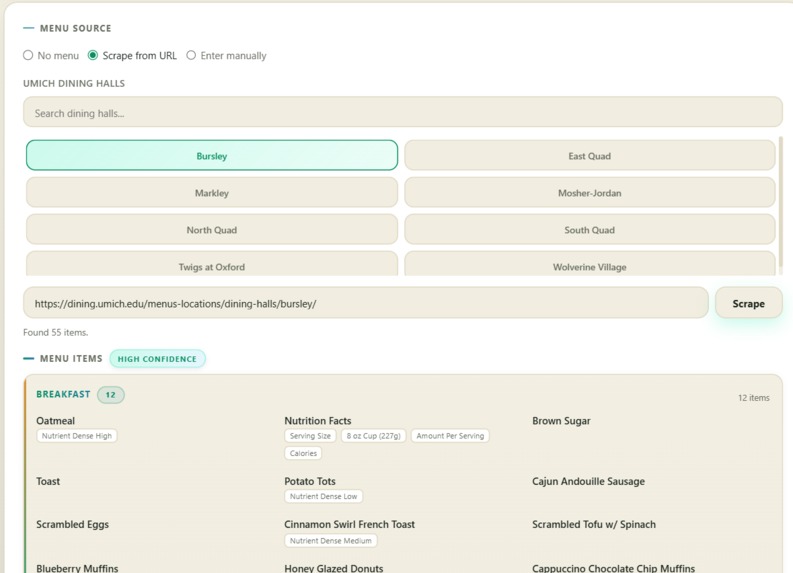
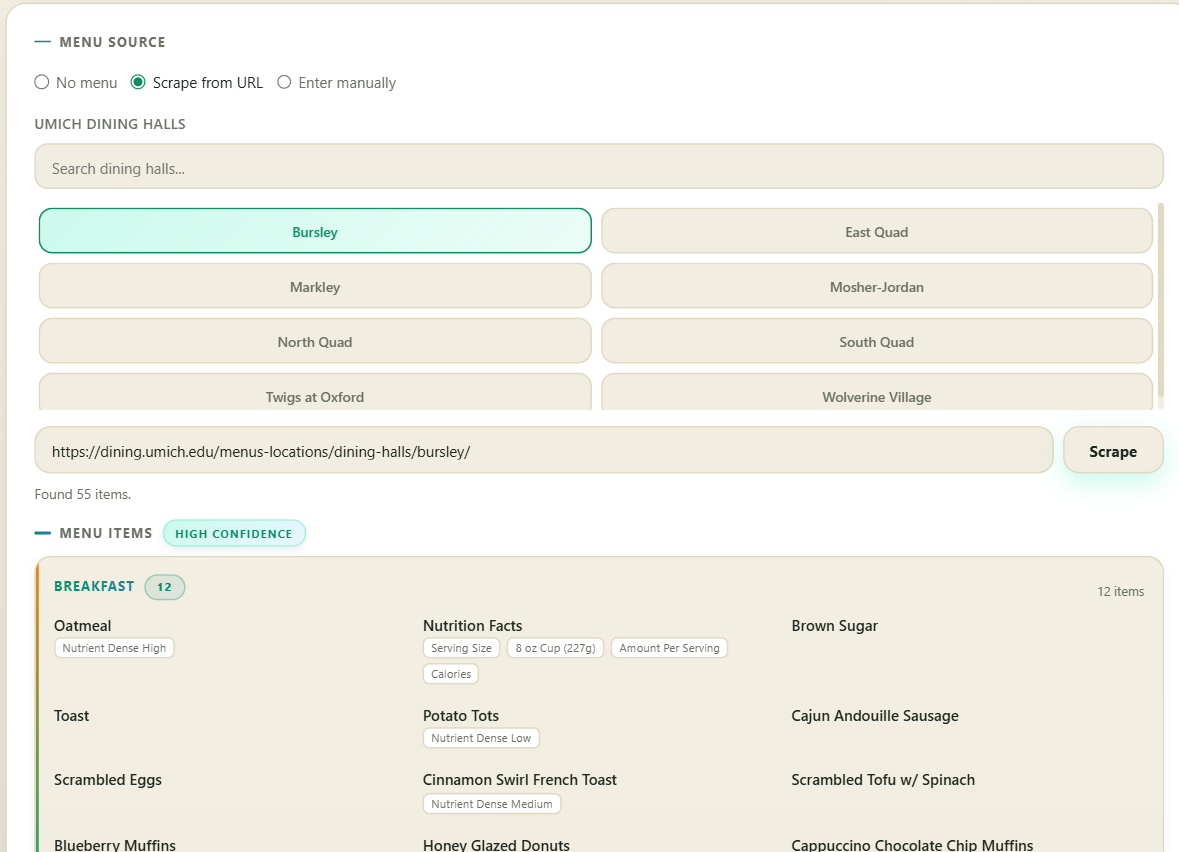
Automatic scraping of dining hall menu for the day
-
-
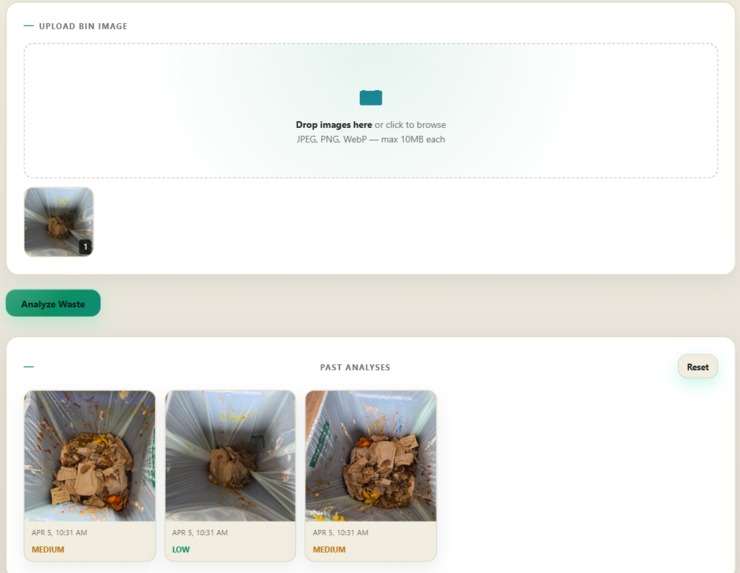
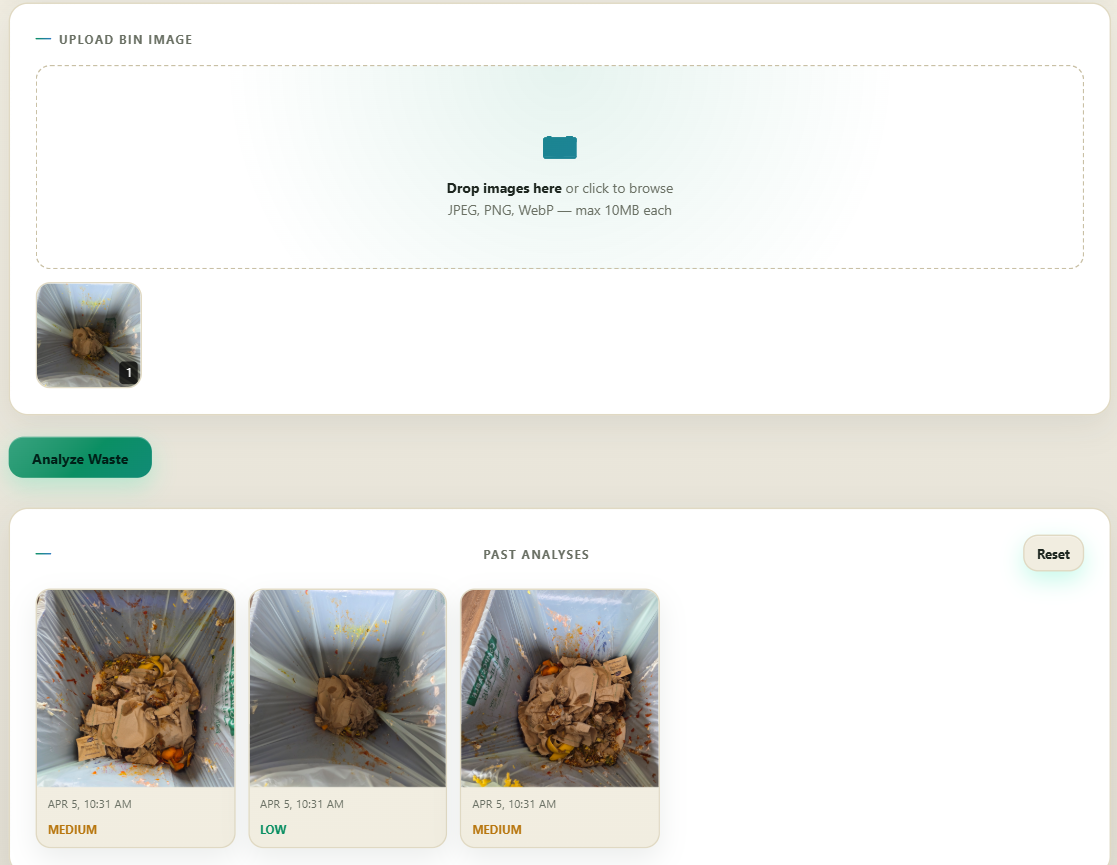
Easy for dining hall employees to upload images periodically
-
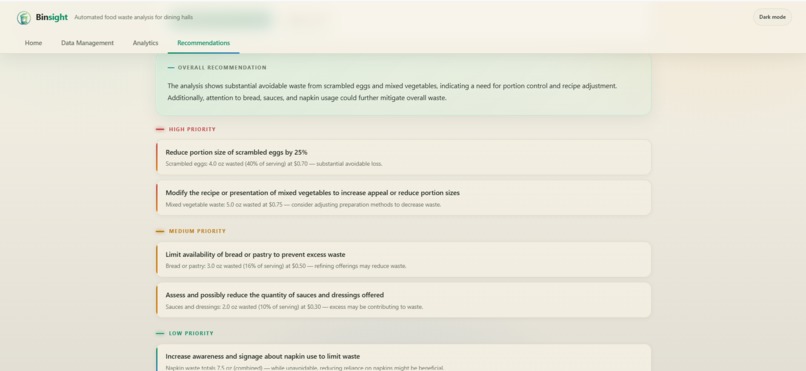
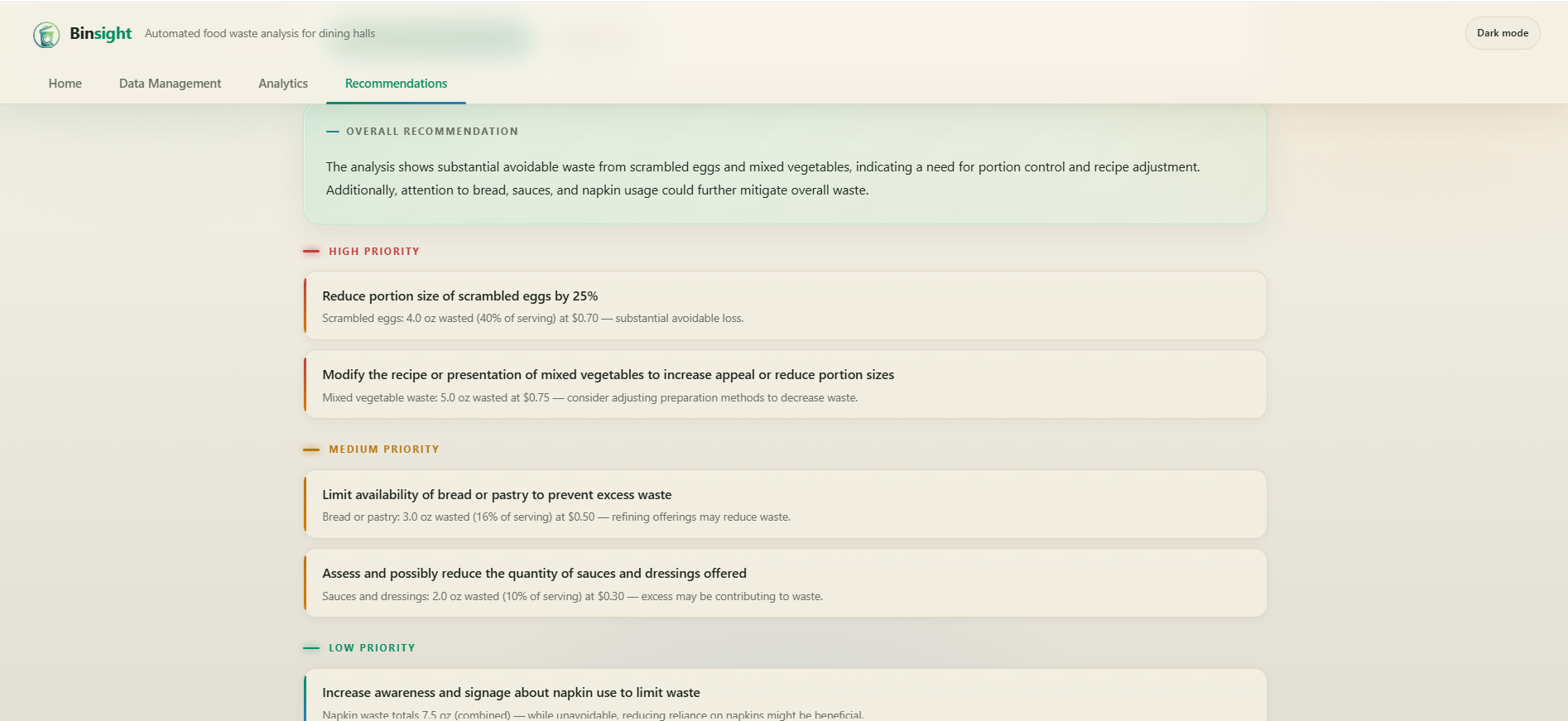
Agentic recommendations
-
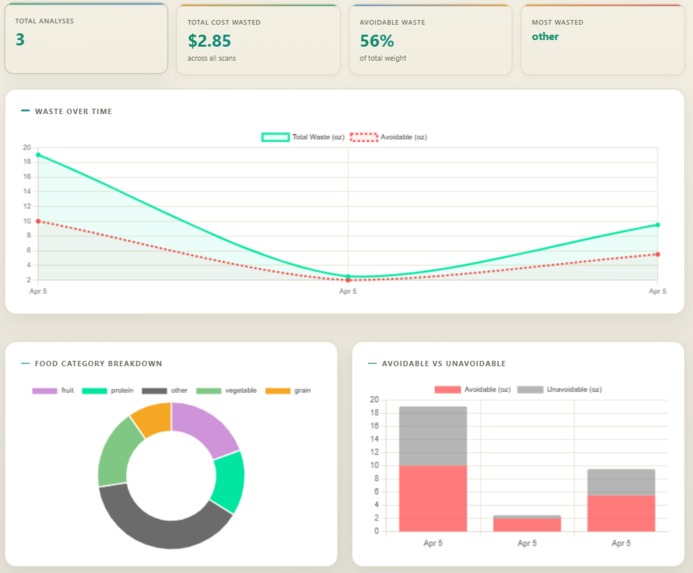
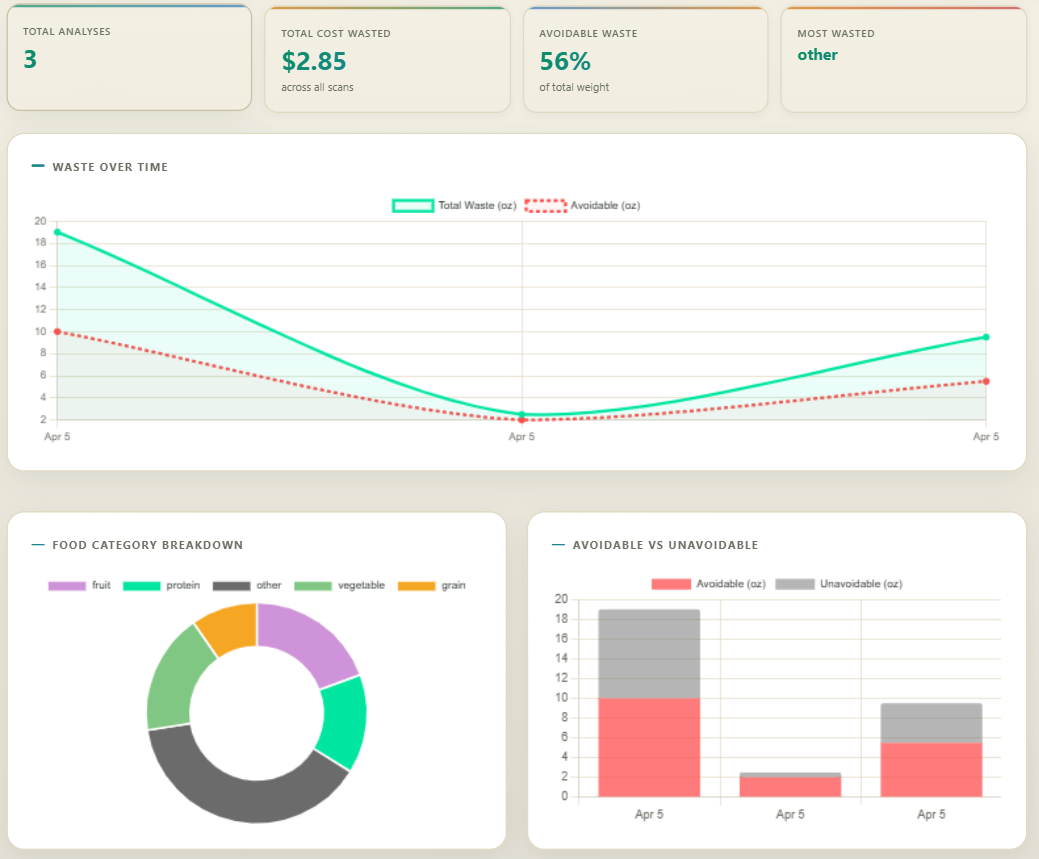
Statistics dashboard
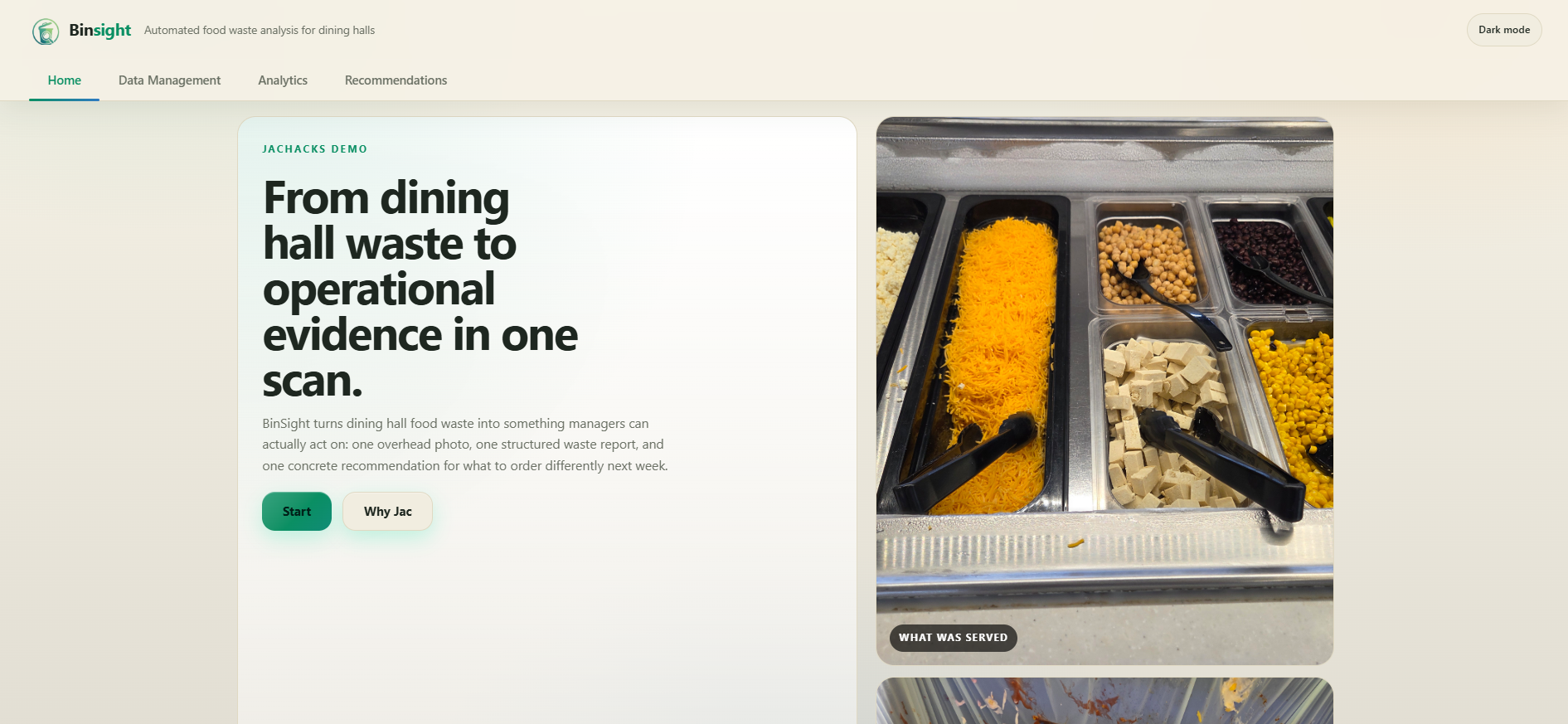
Inspiration
Mortis is a dining hall staff member at UMich. Every Tuesday after lunch rush, he hauls out the same thing: burger buns. Dozens of them, untouched, perfectly good, straight into the trash. He knows it's wasteful - dining halls across the US throw away an estimated $1.8 billion in food every year. But when he brings it up to his manager, he has nothing to show for it. No numbers, no proof, just "trust me, it's always the buns."
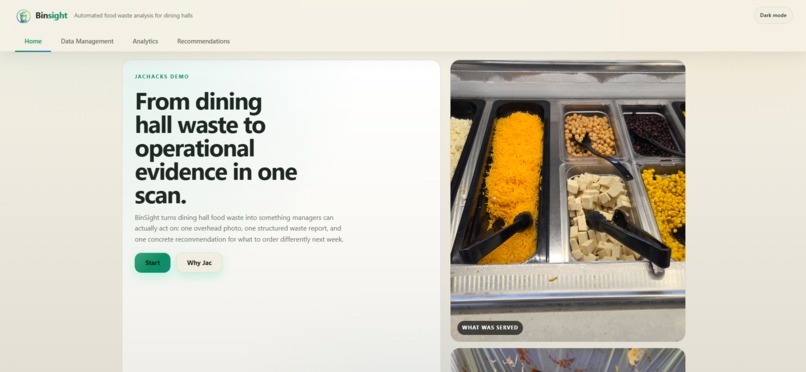
That's why we built Binsight. A quick photo of the bin, and dining hall managers instantly know exactly what's being wasted, what it's costing, and what to order differently next week. Across a semester, Mortis could save thousands of dollars and keep hundreds of meals out of the trash.
What it does
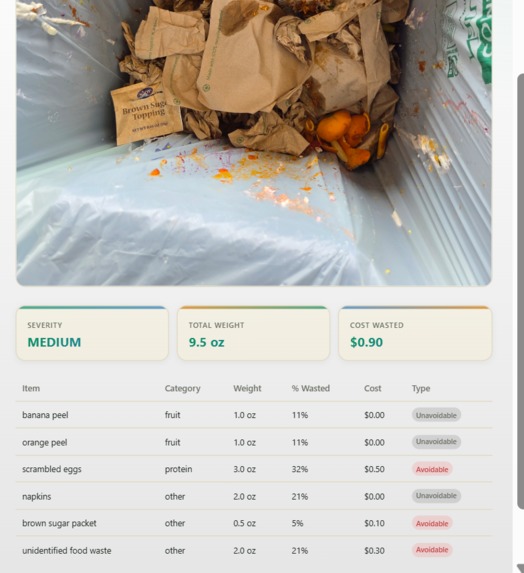
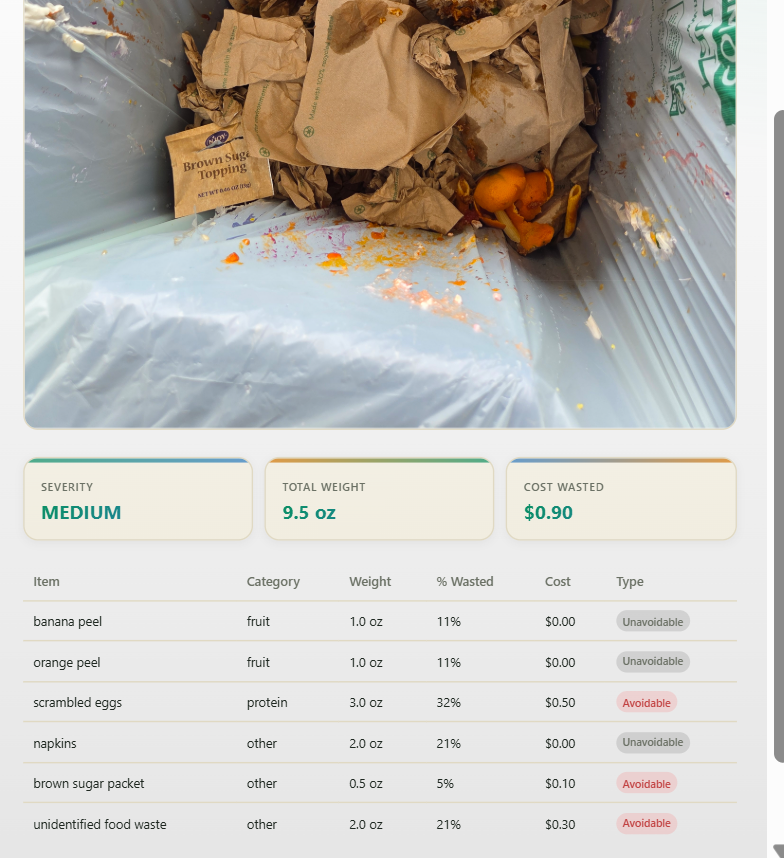
- Instant Waste Analysis: Upload a bin photo and get a full breakdown of every food item, weight, cost, and whether it was avoidable.
- Automatic Menu Scraping: Binsight pulls the day's menu directly from your dining hall's website, so the LLM knows exactly what was served and can identify waste with precision.
- Cost & Waste Tracking: A live analytics dashboard tracking waste trends, food category breakdowns, and avoidable vs. unavoidable waste over time.
- AI-Powered Recommendations: Analyzes patterns across all your scans to generate specific, data-grounded procurement changes.
Challenges we ran into
- Hallucinations & Inconsistencies Initially our model hallucinated trash compositions. We solved this by providing additional context in the form of scraped menu items, so the model knows exactly what to look for.
Accomplishments that we're proud of
- Built an end-to-end pipeline that goes from multiple image to statistical data. This came from a structured waste report and creates actionable recommendations.
- Successfully combined computer vision and contextual LLM reasoning, hence improving accuracy beyond image-only approaches.
- Designed a system that produces decision-ready outputs (cost, trends, recommendations)
- Created a scalable concept that could be deployed across dining halls, campuses, and even restaurants.
- Demonstrated how small operational insights can translate into thousands of dollars saved and reduced environmental impact.
What we learned
- After consulting with dining hall staff, we realized that we needed to abstract the technical side, and focus on actionable recommendations
- Jac Builder allowed us to rapidly prototype before the final build
What's next for Binsight
- Improve detection accuracy using better segmentation models and potentially multimodal models trained specifically on food waste.
- Mobile app deployment for seamless use by dining hall staff in real time.
- Integration with procurement systems to automatically adjust ordering based on trends.
- Sustainability reporting: Translate waste reduction into carbon and environmental impact metrics.
Built With
- css
- html
- jac
- javascript
- llm
- python


Log in or sign up for Devpost to join the conversation.