-
-
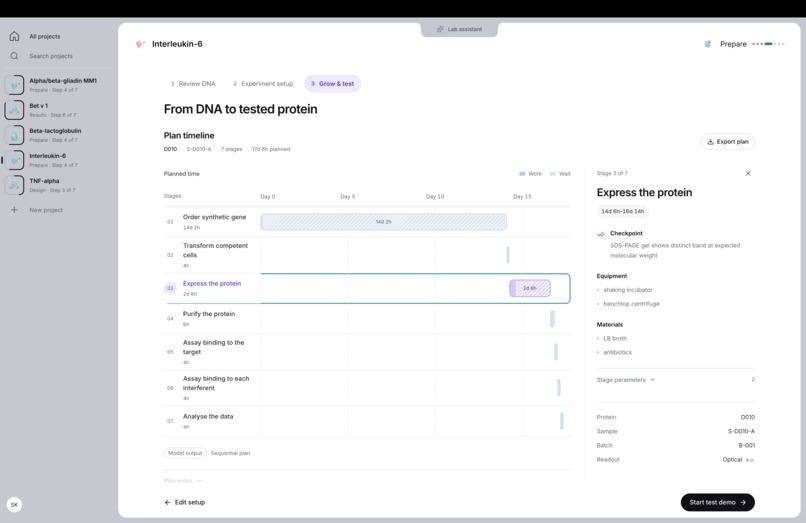
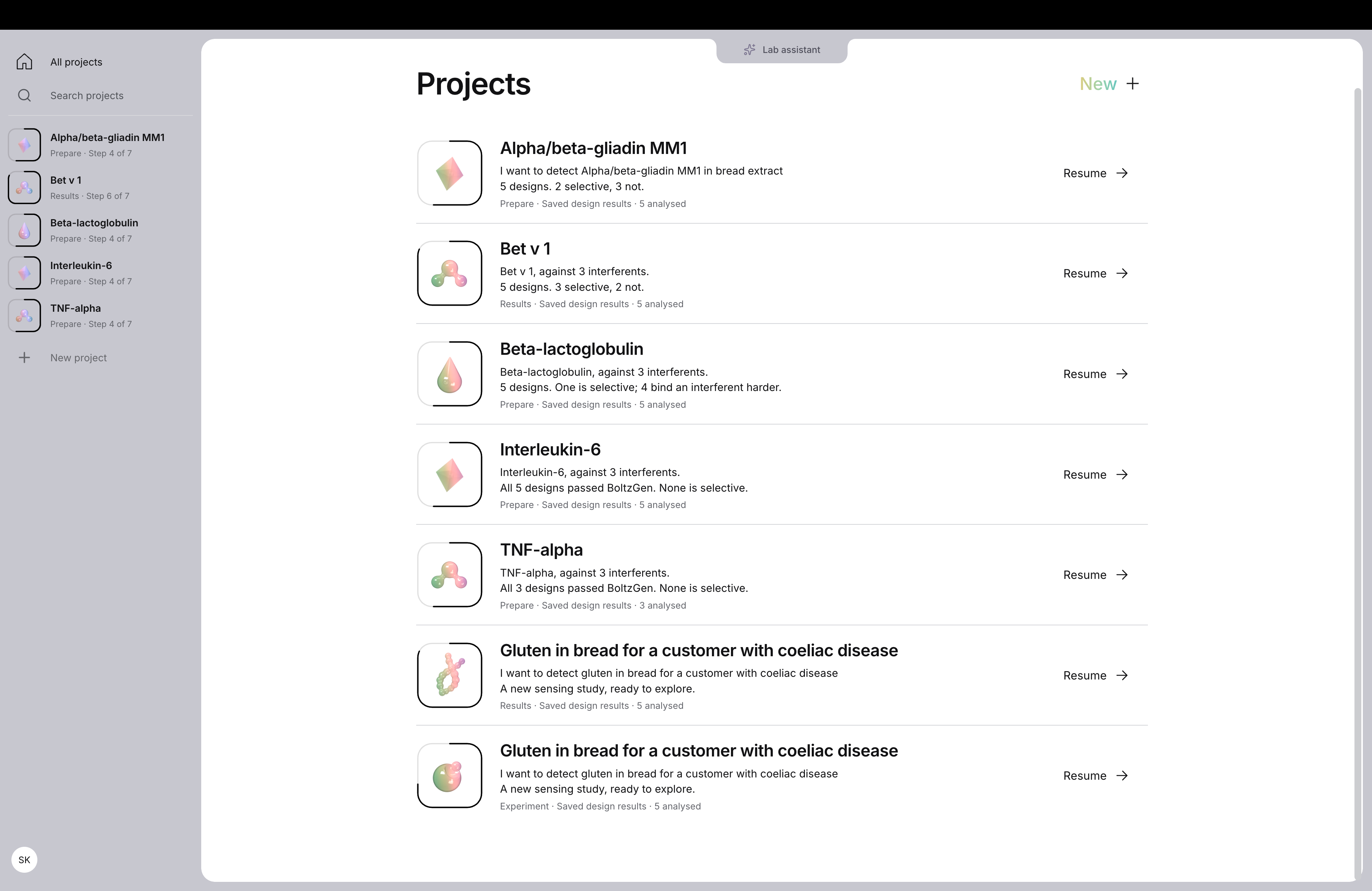
Some of our UI designs (Final UI in Video)
-
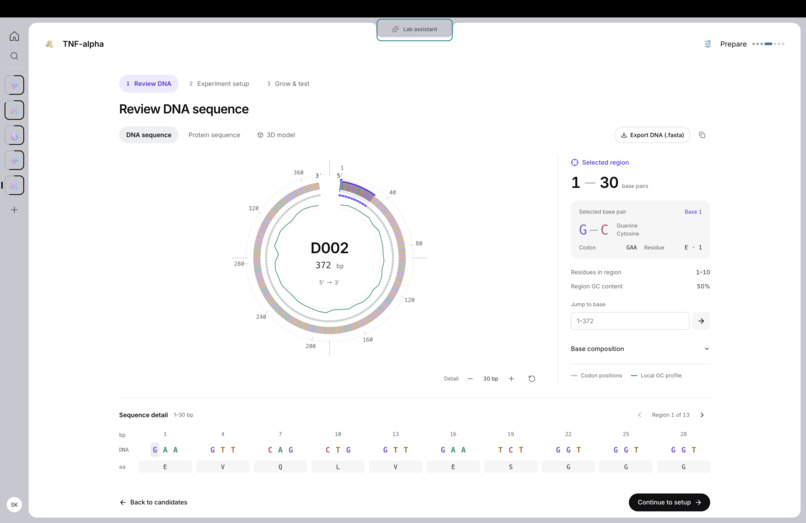
Some of our UI designs (Final UI in Video)
-
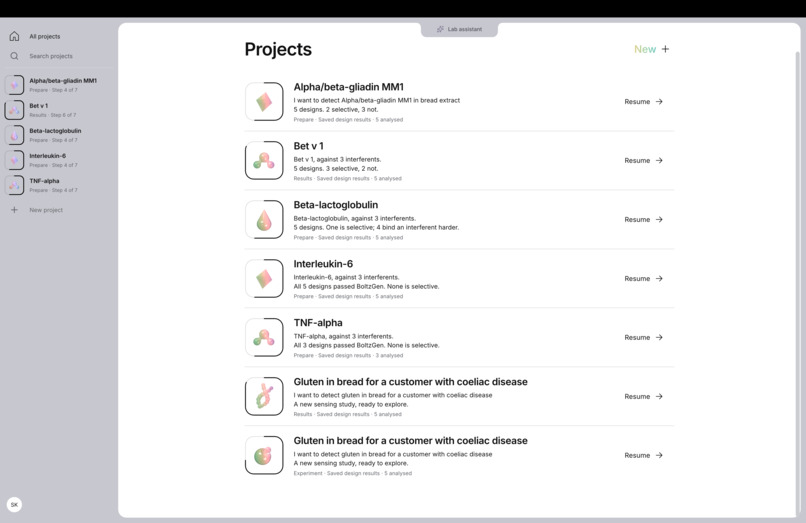
Some of our UI designs (Final UI in Video)
-
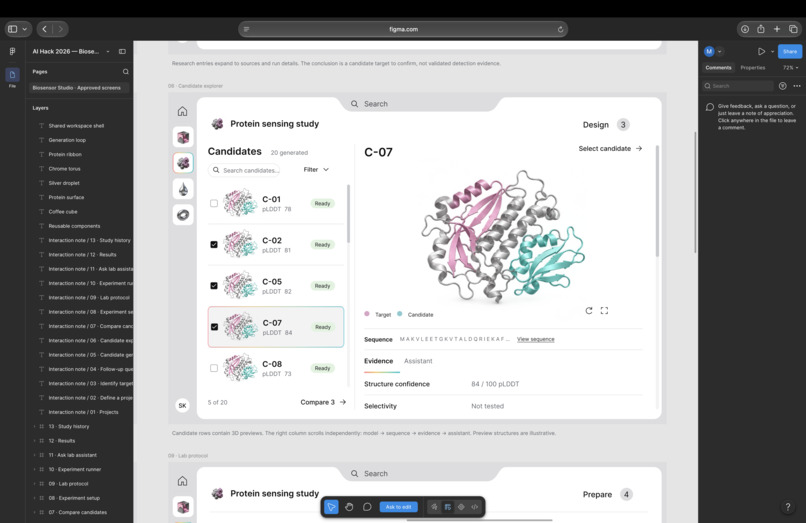
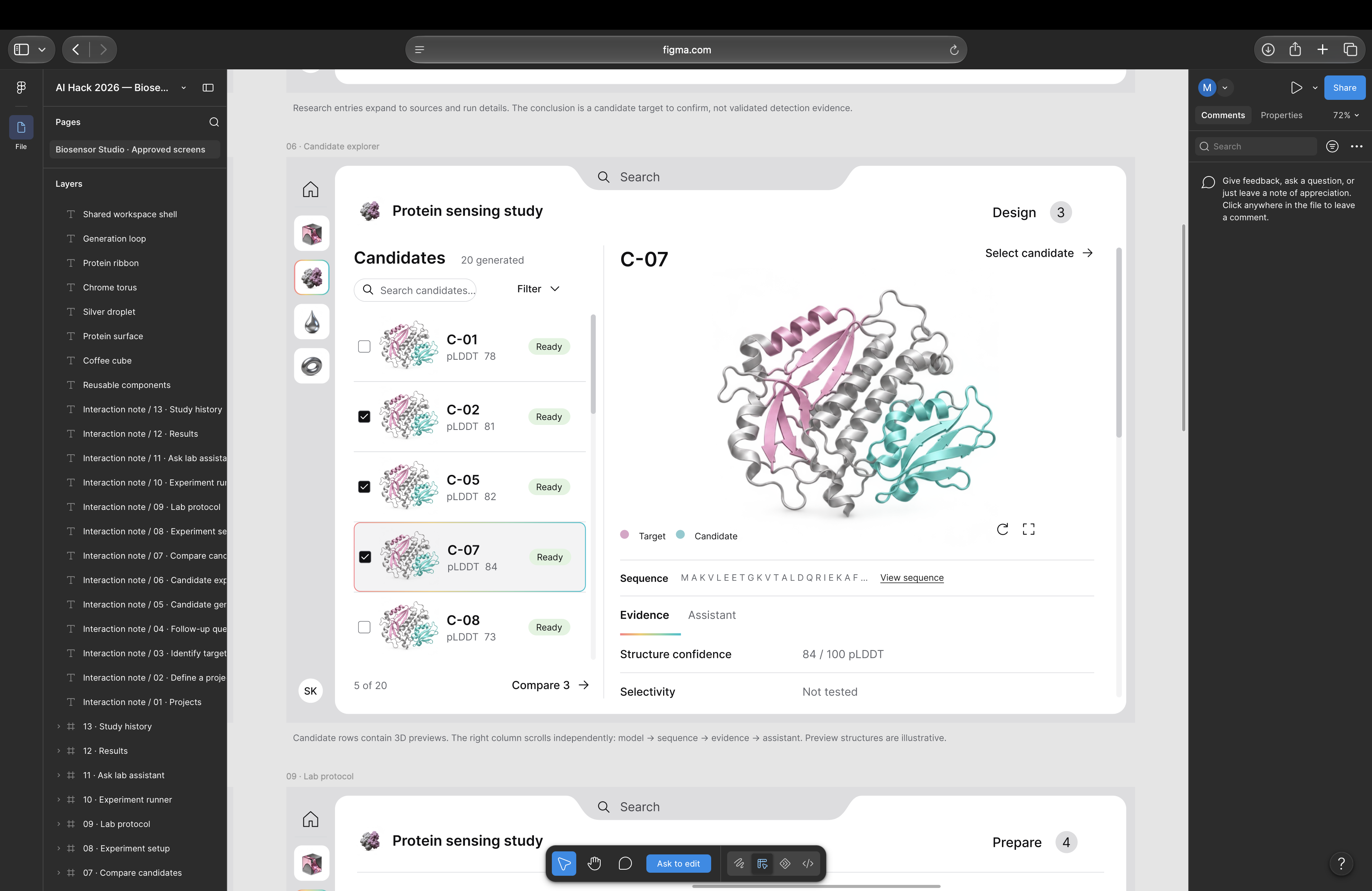
Close-up of one UI interface on Figma
-
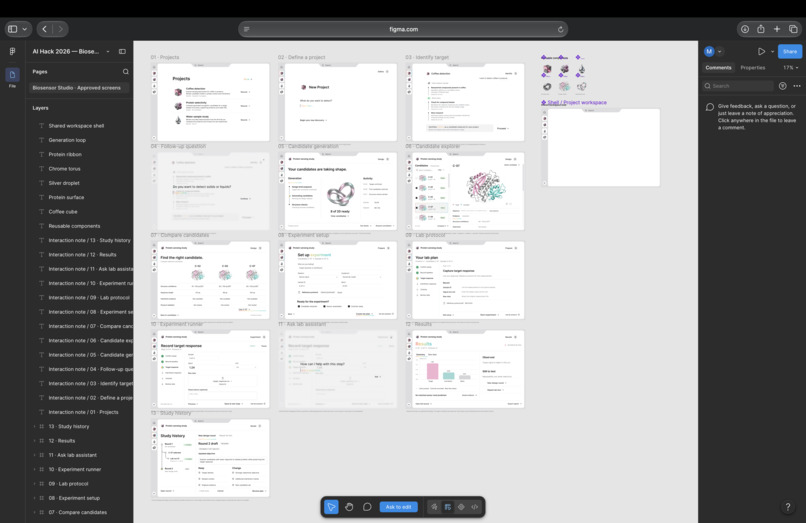
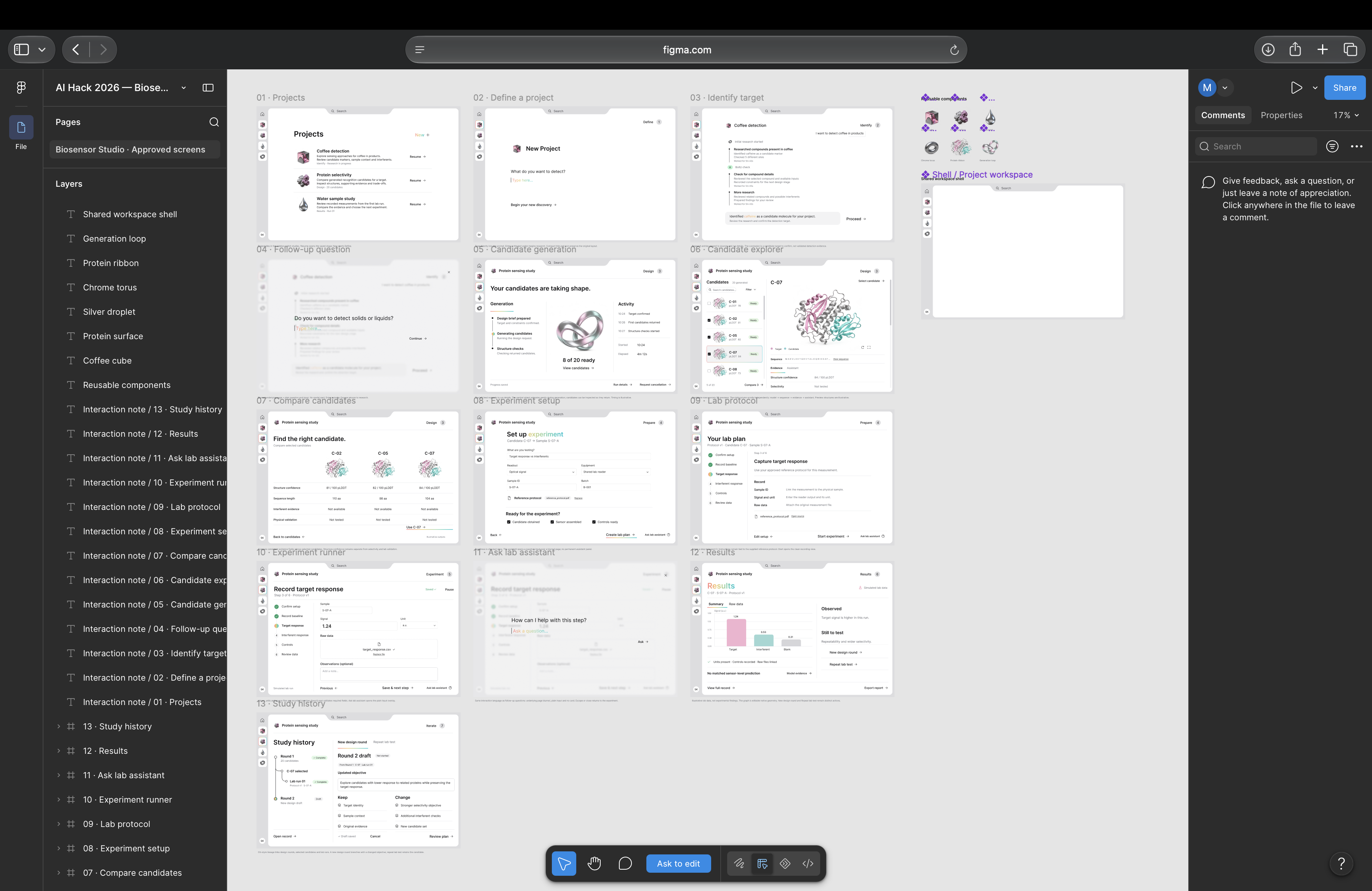
Our UI design on Figma
-
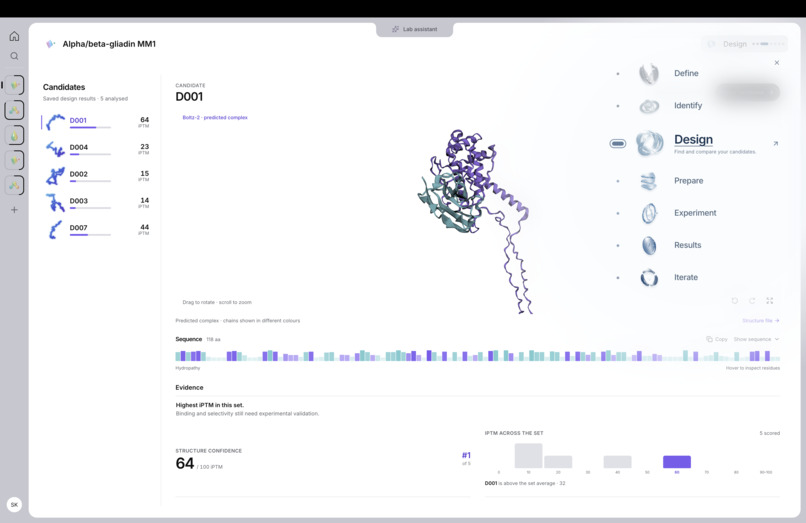
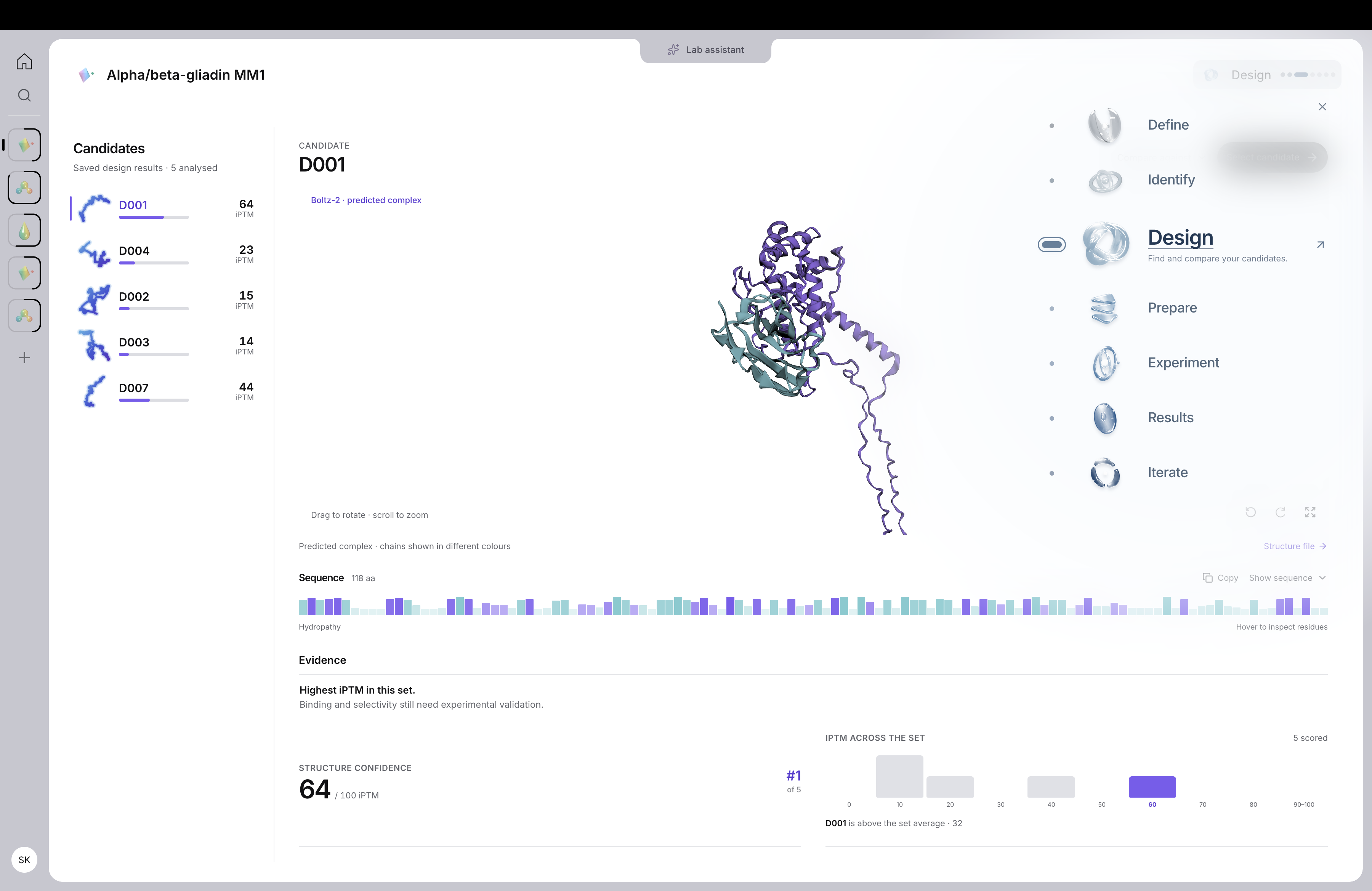
Some of our UI designs (Final UI in Video)
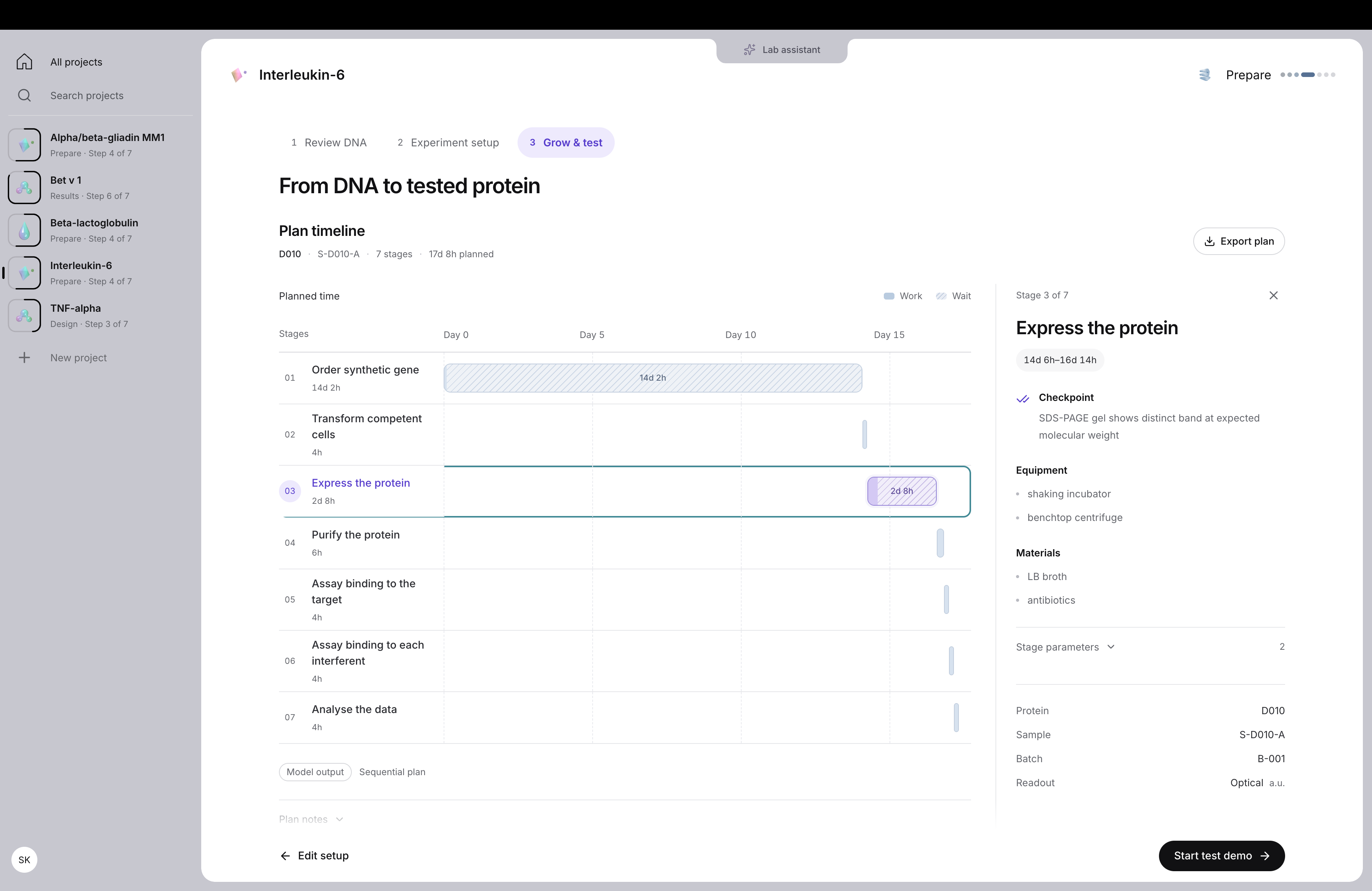
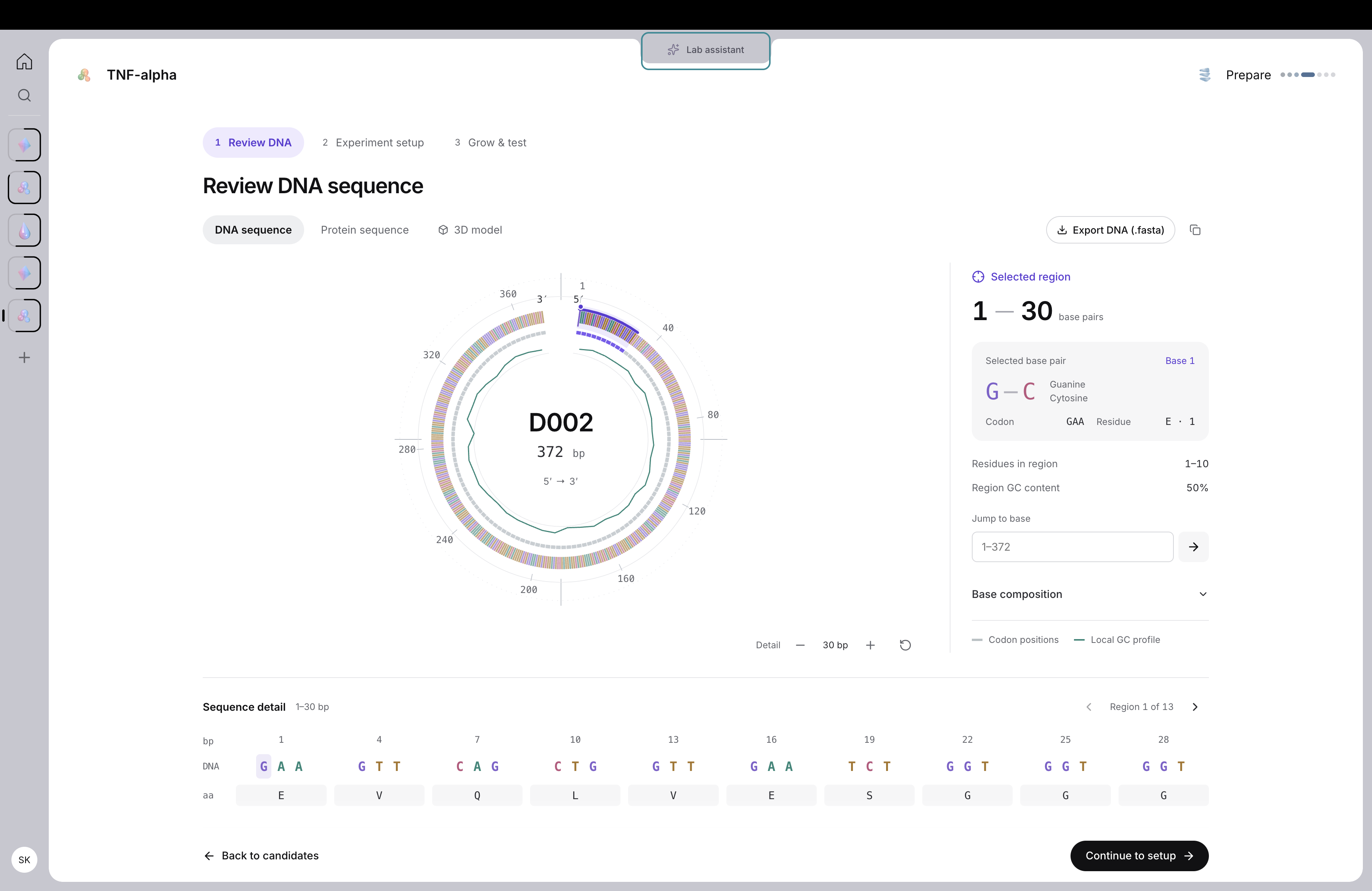
What it does
A biosensor detects a target molecule through its interaction with a recognition element. BindScope is an end-to-end tool that helps scientists design that element, taking them from a detection goal to binder candidates and a proposed laboratory plan.
It begins with an interactive chatbot that discuses the scientist’s requirements in plain English. Using authoritative molecular databases, it identifies a specific protein target, its sequence and available structure, and likely interfering proteins in the sample.
BoltzGen generates binder candidates, which Boltz-2 scores against both the target and the interferents. BindScope ranks candidates by predicted selectivity, with optional AlphaFold cross-checking. The selected candidate and design specification then feed into a fine-tuned model that produces a structured laboratory plan for producing and testing the binder.
How we built it
We decided to focus on making the software beautiful both visually and in terms of ease of use, a step away from traditional industrial platforms. Figma played a central role in our UI/UX process. We used it extensively to design the interface and map the scientist’s interaction with the tool. We display molecular structures using 3Dmol.js, implemented the app design using React, TypeScript and Vite and built the desktop app using Electron.
The workflow is coordinated with a Python backend built with FastAPI. The initial chatbot uses Claude Sonnet 5.5 through an API, although it is interchangeable with any other model. We integrated UniProt, RCSB PDB and PubChem to retrieve authoritative data.
To design and verify the binder, we connect to BoltzGen through Tamarind Bio’s API. Boltz-2 and AlphaFold cross check and score candidates against the target protein.
We finetuned Qwen3.5-4B with LoRA using Adaptions AutoScientist. We scoured through hundreds of research papers to find data for our dataset, as well as using protocols.io’s API to retrieve lab procedures to train our model. Adaption’s Adaptive Data API helped augment and increase the size of our data set, letting us turn the selected candidate into a structured, multi-stage laboratory process. Our model is self hosted on a MacBook Pro as it is small and runs efficient, although it can be run on the cloud if needed.
Accomplishments that we're proud of
We ran the whole thing on real targets instead of mocking it. Real designs, real scores, real predicted structures in the app. Most of the binders we produced passed the design tool’s own filters and still bound the wrong protein, which is exactly the problem we built this to catch.
What we’re proudest of is what the app does when the science doesn’t cooperate. For some targets there’s no usable binder, and it says so instead of ranking a list of bad ones. Something that refuses to answer is harder to build than something that always does.
What's next for BindScope
Order a binder and actually make it. Everything here is a prediction, and none of it is worth much until a biologist runs the bench session the app generates and sees whether the margin survives a real sample.
That hand-off is the whole point. We can narrow five designs down to the one worth someone’s six weeks, but a chemist still has to look at the protocol before anyone orders a gene, and we’d want ours reviewed. After that, widen the interferent panel from three proteins to something closer to twenty.
Built With
- adaption-autoscientist-and-invent-dataset
- alphafold-uniprot
- anthropic-sdk
- boltz-2
- boltzgen
- claude-api
- electron
- figma
- lora
- pubchem
- python
- pytorch
- rcsb-protein-data-bank
- react
- tamarind-bio
- typescript
- vite
