-
-
Binabisa
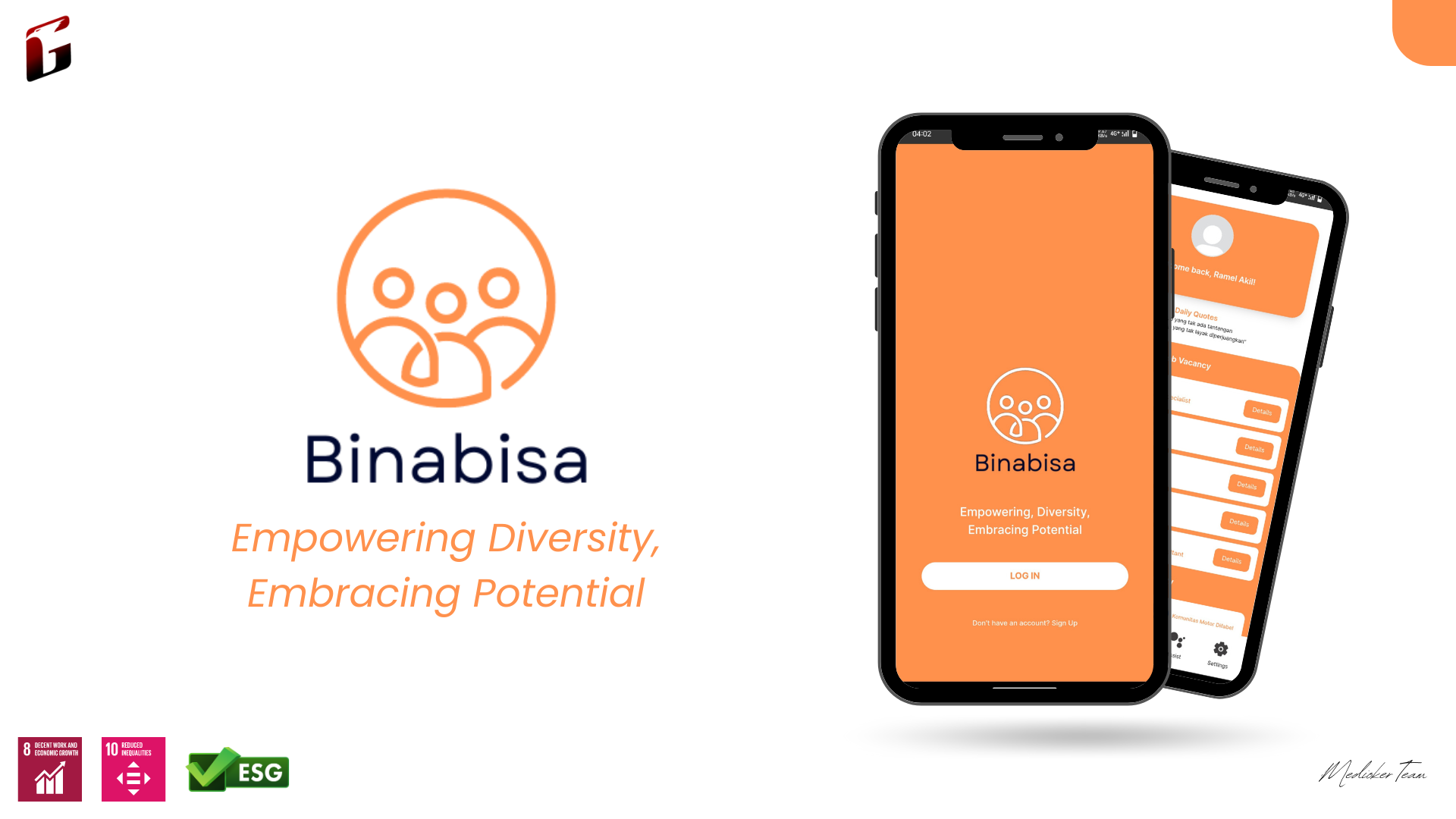
Inspiration
Our idea for this project came from a critical question: What should the future of AI look like? Should AI's focus be limited to improving job efficiency, or is it possible to picture a time when it embraces inclusivity and equality for all? We strongly favor the latter. Only 2 out of 5 people with disabilities are employed in Indonesia, which raises concerns because their jobs may not even be adequate or equitable for them. We were inspired to develop a solution that makes use of AI's capabilities to level the playing field by this blatant imbalance and discrimination. Our project closely reflects objectives 8 and 10 of the Sustainable Development Goals (SDGs) set forth by the United Nations. While SDG 10 is concerned with eliminating inequality, SDG 8 focuses on promoting decent work and economic prosperity. We are also motivated to embrace Environmental, Social, and Governance (ESG) viewpoints, promote diversity and accessibility using AI, and provide for a range of disabilities. Additionally, our aim is motivated by Indonesia's current goal to combat unemployment and advance equality. We are driven by the belief that AI should be a force for positive change, creating a future where inclusivity and equality are not just dreams but a reality for all.
What it does
Directed by purpose, at BinaBisa, we envision a world where AI breaks barriers, empowering every individual to thrive in their chosen dreams, regardless of physical challenges. Our mission is to provide equal opportunities by harnessing AI's power in the workforce. With features like AI-Profile Assessment, Job Matchmaking, Course Learning, and AI-optimized Daily Plans, we cater to individual needs and overcome physical obstacles. Our innovative AI Assistant offers text-to-speech recognition, voice commands, and color contrast optimization, ensuring accessibility for all disabilities condition. Collaborating with partners and aligning with global missions, we bridge the future we dream of – an inclusive, empowered world where everyone can realize their full potential through the future of AI we aim for. In addition, we align our efforts with Indonesia's current target of tackling unemployment and enhancing equality, SDGs number 8 and 10, also embracing ESG from business perspectives.
How we built it
To be able to build Binabisa, we embraced modern technology and made use of a strong tech stack. Our full-stack application was built on a base of TypeScript and React (Next.js). We developed the potent TRPC API for the backend, guaranteeing effective communication between the front-end and the back-end. The relational database selected to effectively manage data was PostgreSQL. Additionally, the app's user design was made sleek and responsive by Tailwind CSS, facilitating smooth user experiences.
Challenges we ran into
One of the biggest obstacles we faced while developing Binabisa was the OpenAI platform's necessity for a paid account, which we first intended to employ for AI functions. We incorporated other AI systems like CHAT GPT, Sendsteps, Gencraft, and Simplified to enable diversity and get around this challenge. With the help of these technologies, we were able to assist users with intelligent chatbots, improve user interaction during online courses, streamline content development, and give AI-powered accessibility alternatives for people with vision impairments or reading disabilities. We made sure Binabisa remained accessible and gave disabled people the tools they needed to prosper in an AI-driven future by ingeniously integrating these platforms.
Accomplishments that we're proud of
Despite all of the challenges, we are quite proud of what was accomplished throughout the hackathon. Our team was successful in creating and integrating complex AI algorithms for course suggestions, job matching, and profile evaluation. We designed an intuitive user experience that meets a range of accessibility requirements and makes it simple for persons with impairments to utilize the program. It was quite satisfying to see the application provide individualized learning possibilities and employment chances.
What we learned
From this project, we have gained invaluable insights into the transformative power of AI in fostering inclusivity and equal opportunities. We learned that AI can be a powerful tool to break down barriers and empower individuals with disabilities to thrive in the workforce. Through the process, we discovered the significance of personalized solutions, tailoring our platform to cater to the unique needs and challenges faced by individuals with physical limitations.
Most importantly, we learned that by aligning our efforts with global missions such as the United Nations SDGs and embracing ESG principles, we can contribute to a more sustainable and equitable future. This project has reaffirmed our commitment to driving positive change through technology, bridging the gap in the workforce, and creating a world where AI truly empowers diversity and embraces everyone's potential.
What’s next for BinaBisa
Soon, we will diligently pursue our goal by continuously enhancing app features and optimizing the user experience, particularly in AI development. We will forge collaborations with like-minded partners to gain deeper insights into the best approaches. From a business scalability standpoint, we are committed to establishing a robust and impactful business model that aligns with market needs and drives sustainable growth.
Built With
- next
- postgresql
- tailwind
- trpc
- typescript


Log in or sign up for Devpost to join the conversation.