Inspiration
Bin2Bucks was inspired by a simple problem: people want to recycle, but the process is inconvenient, inconsistent, and often not rewarding enough. At the same time, local drivers could earn money by collecting recyclables if route planning and pickup coordination were easier. We wanted to turn recycling into something practical, local, and financially motivating.
What it does
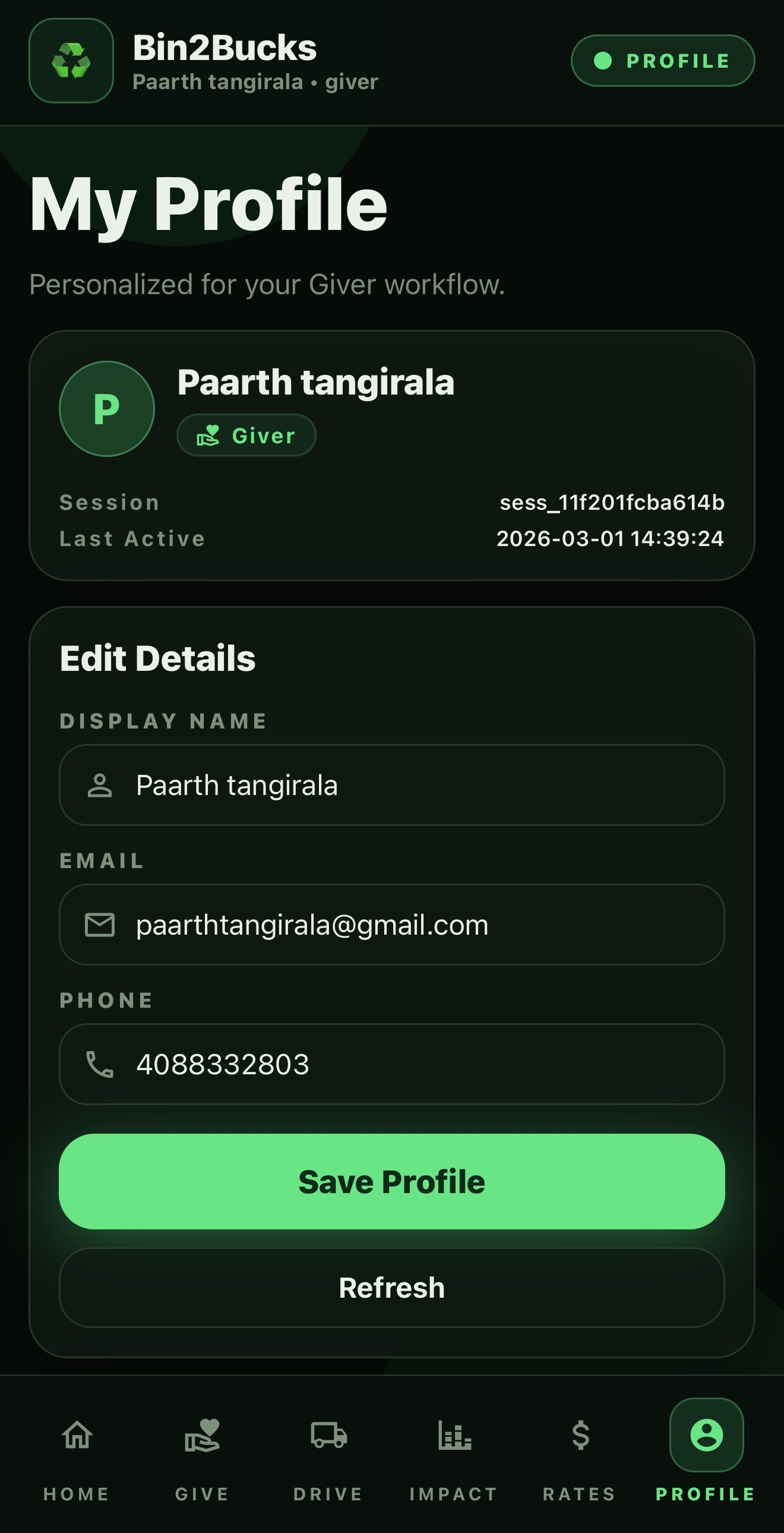
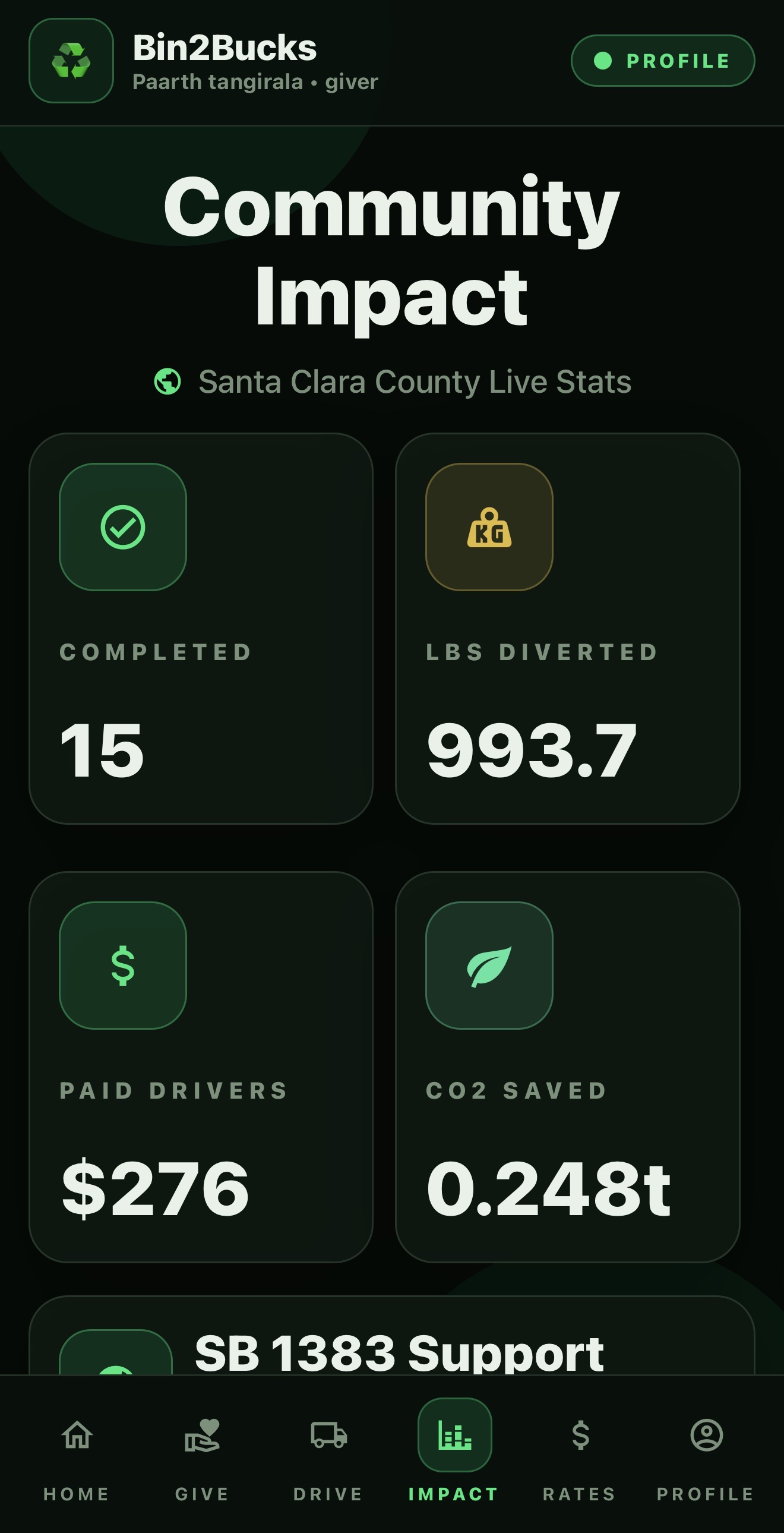
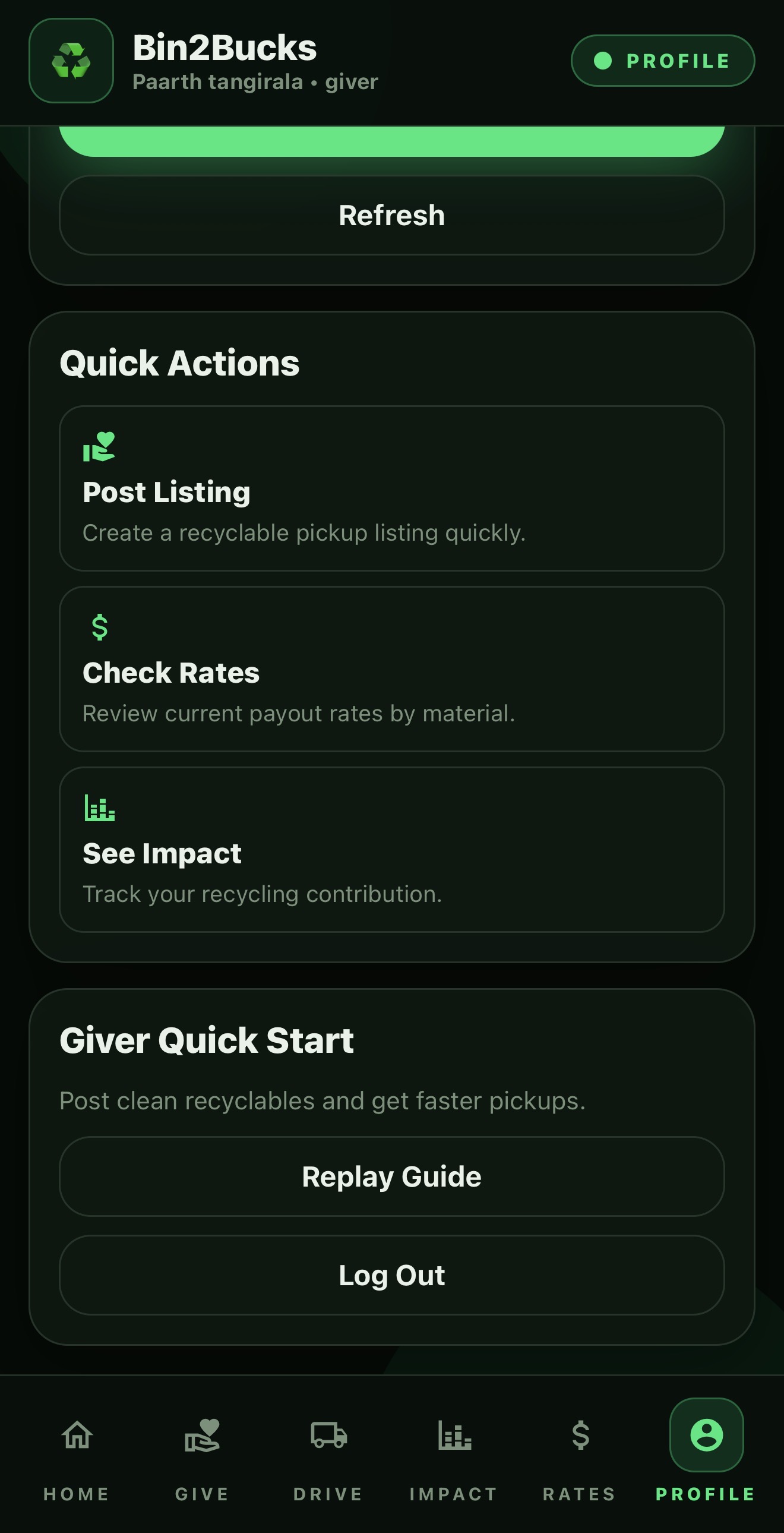
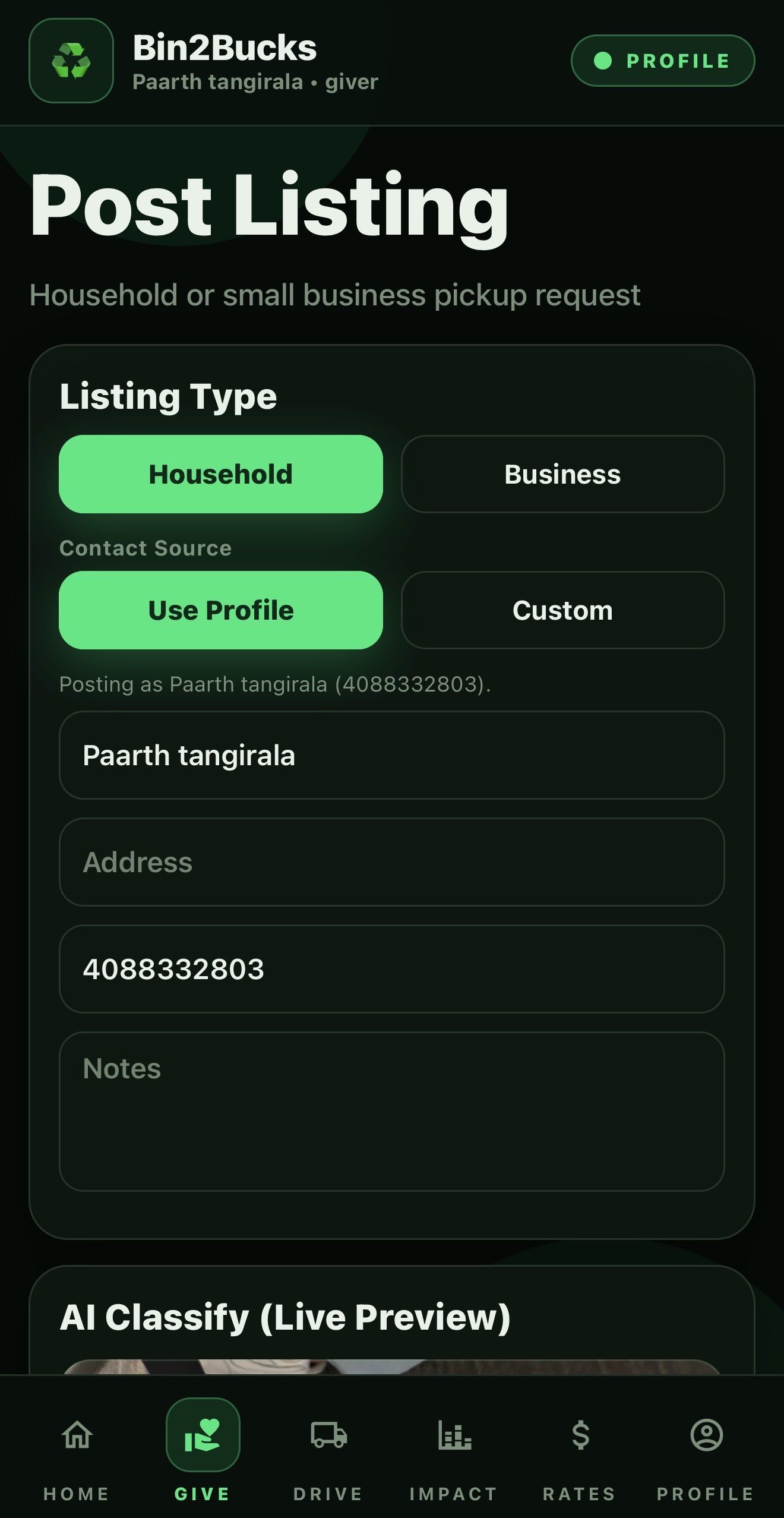
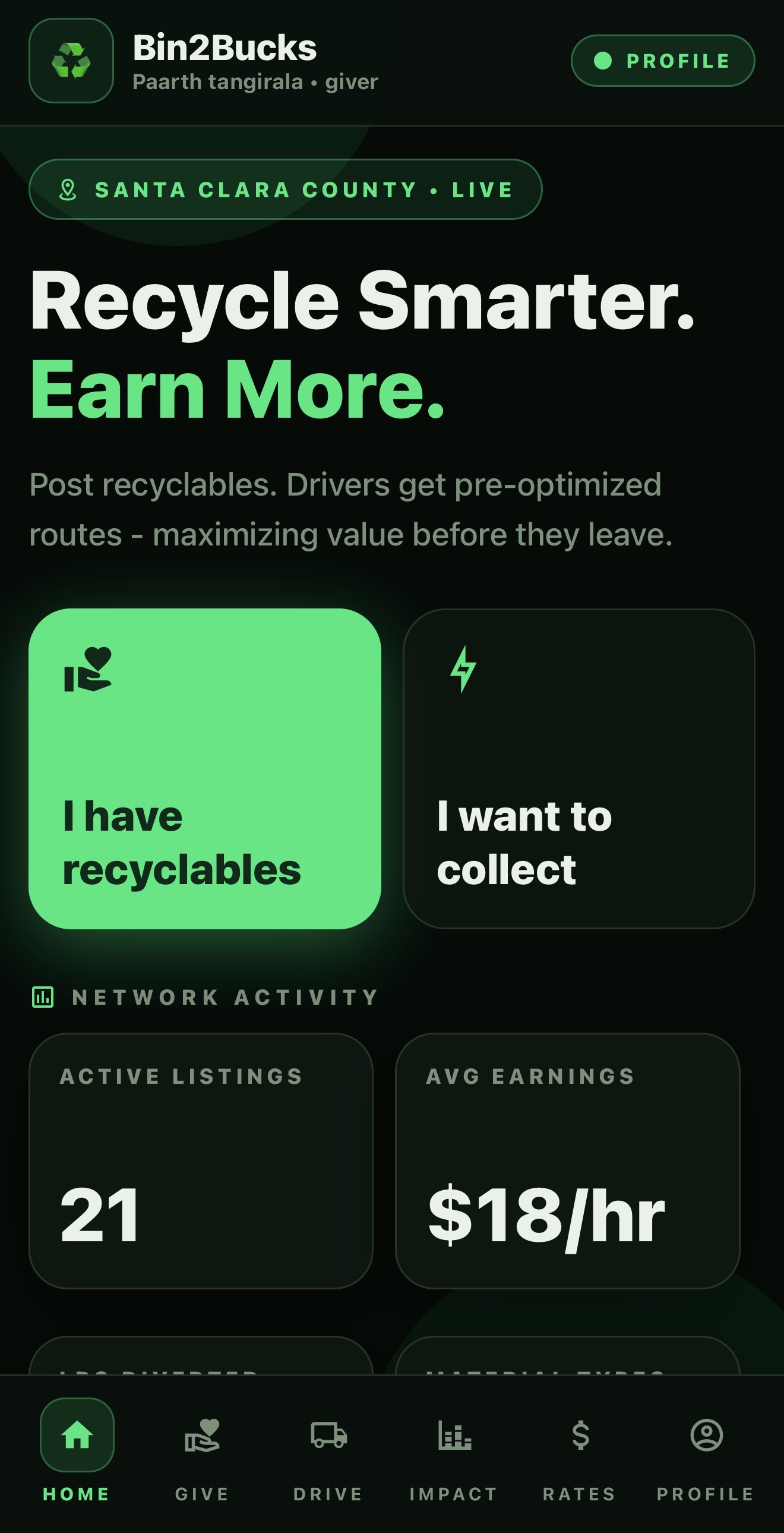
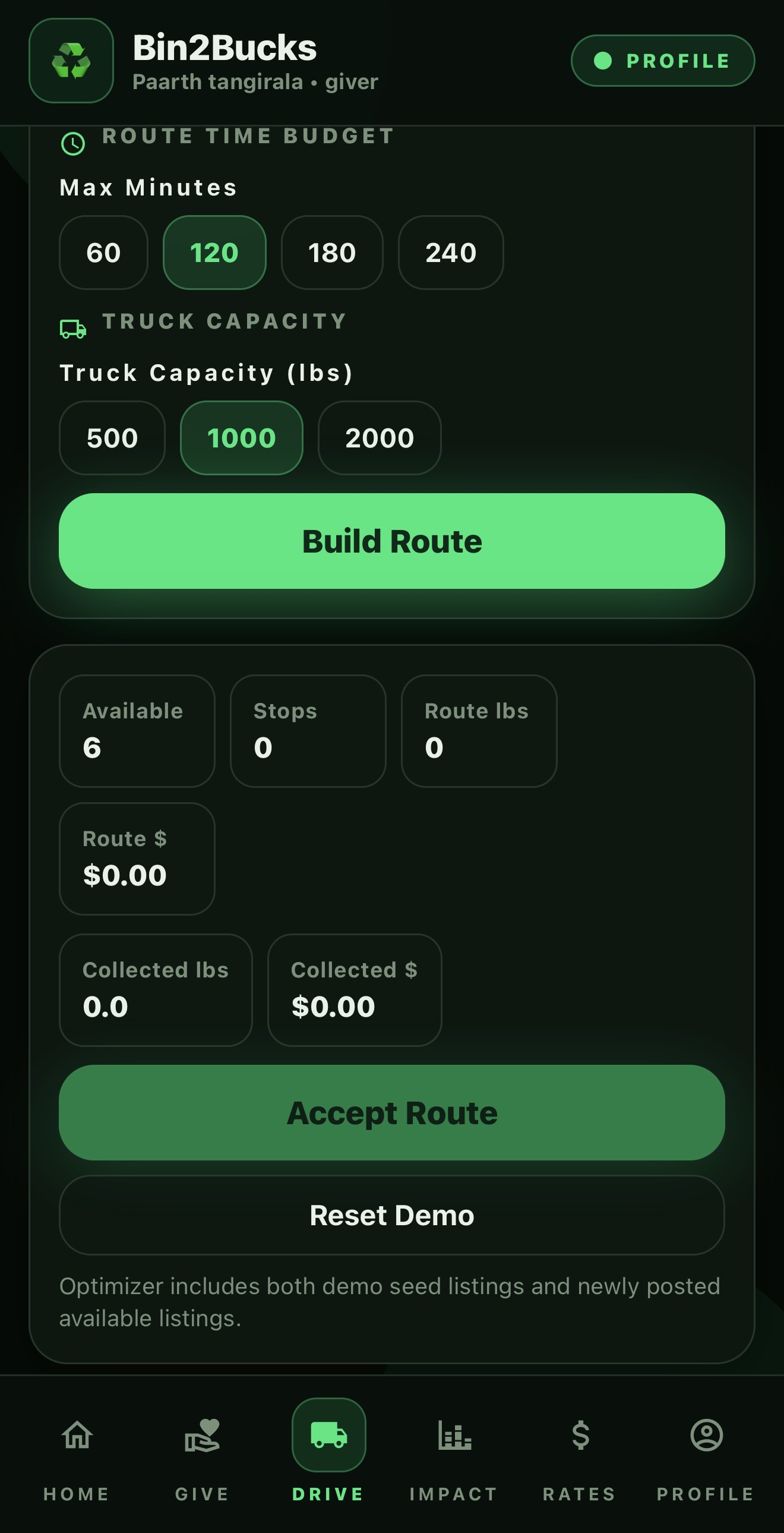
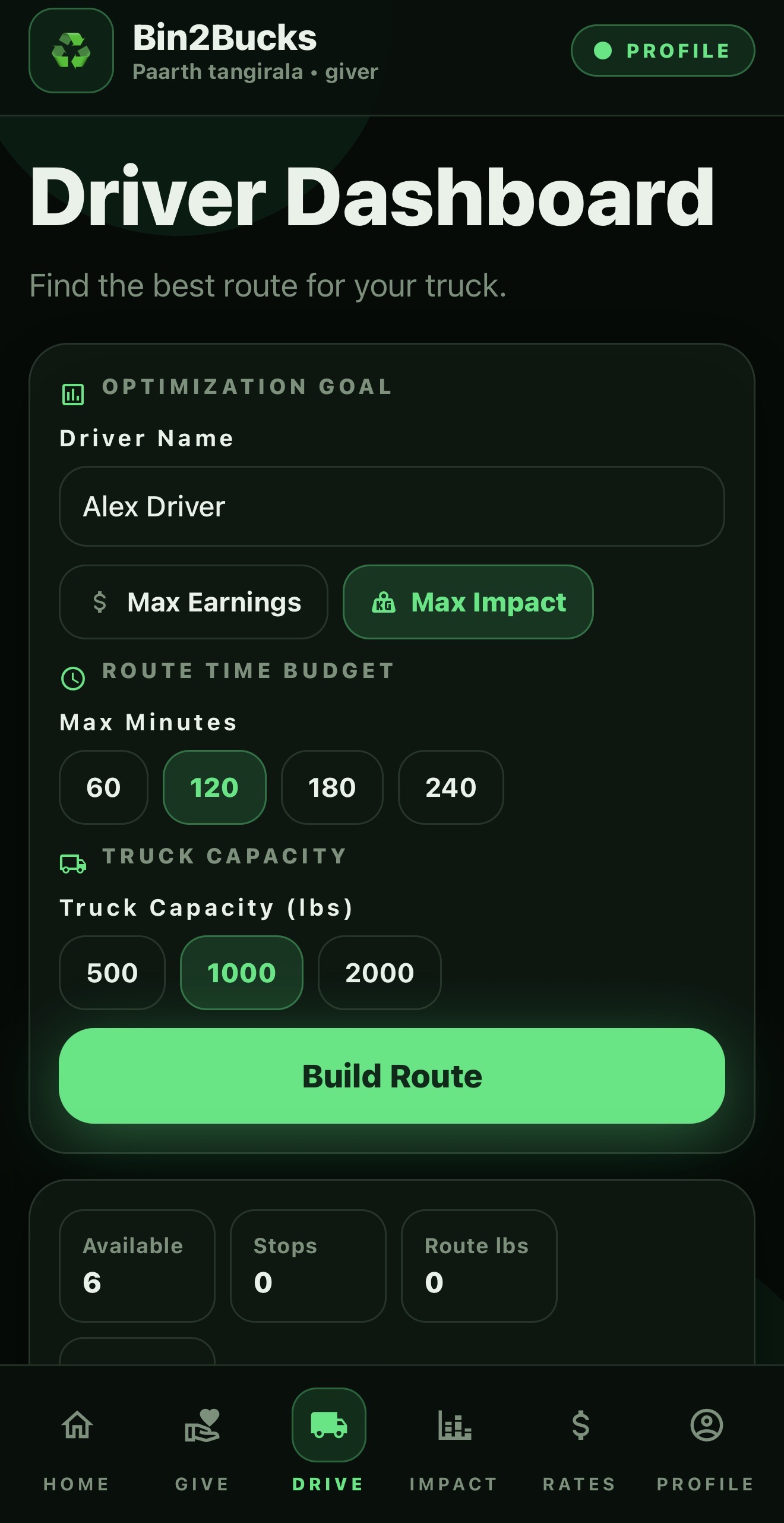
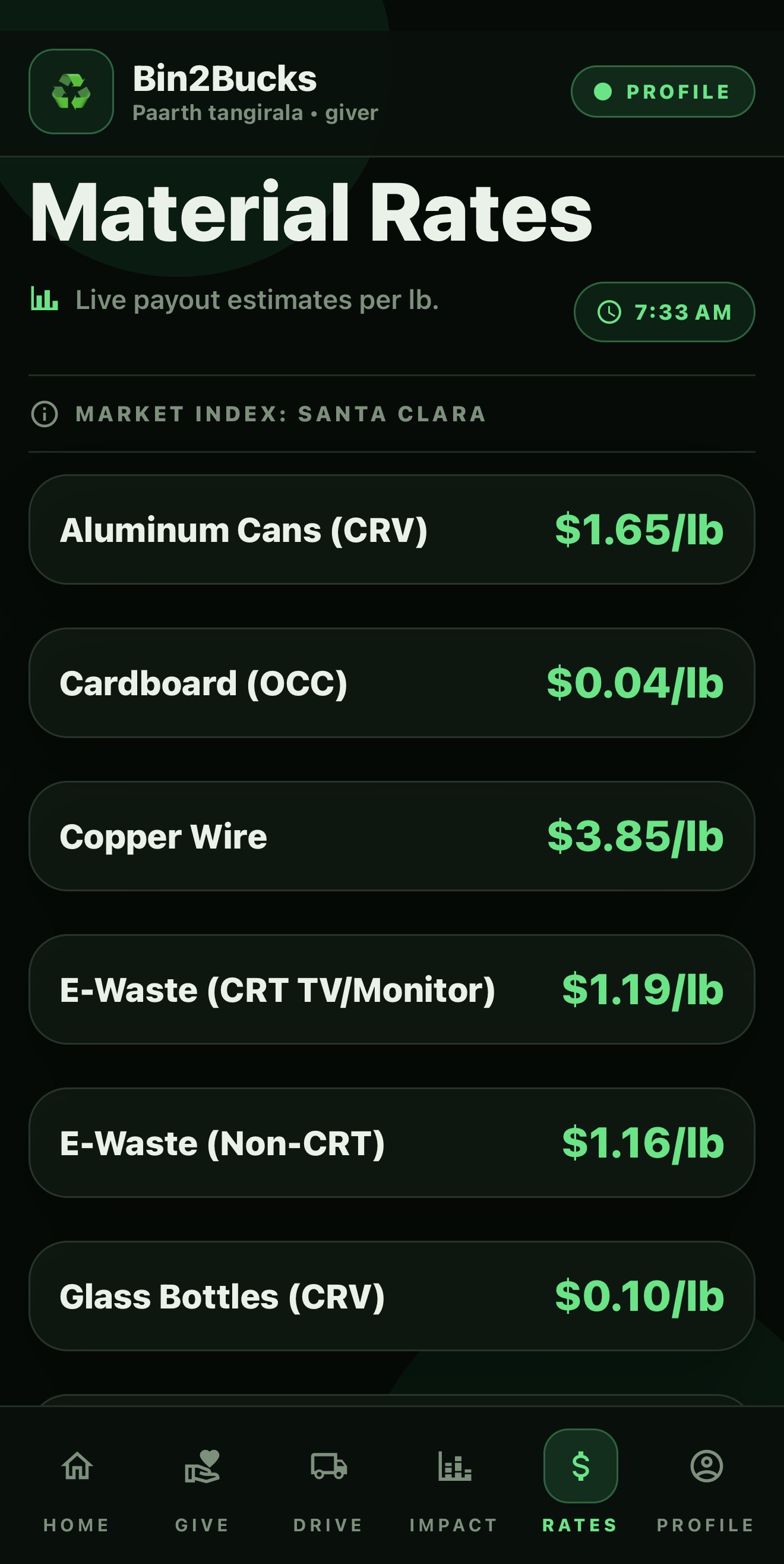
Bin2Bucks is a marketplace that connects households with independent drivers for recyclable pickups. Users can add pickup details, view location pins on a live map, and track status, while drivers can view route-focused map flows and pickup opportunities. The product is designed around convenience, transparency, and real-world recycling incentives.
How we built it
We built the frontend with React, Vite, and TypeScript, and added a lightweight Node/Express backend for API endpoints. We integrated Google Maps services (Places/Geocoding/Routes) for address handling and map rendering, including county-aware logic for Santa Clara County. We also implemented a fallback experience (branded static map + demo/offline mode) so the app still works when live map/API services fail.
Challenges we ran into
Our biggest challenge was map reliability during integration: API key restrictions, config mismatches, and load timing issues caused blank map states. We also had to enforce Santa Clara County boundaries while handling user geolocation permissions gracefully. Another challenge was balancing polished UI design with resilient engineering so the product remains usable even in degraded network/API conditions.
Accomplishments that we're proud of
We shipped a functional dual-sided prototype with both user and driver experiences, not just static screens. We successfully implemented interactive maps, role-based flows, and fallback behavior that keeps core UX intact when APIs fail. We also rebranded and refined the visual identity to better match the Bin2Bucks concept and story.
What we learned
We learned that reliability and trust matter as much as feature depth in civic-tech products. Graceful fallback states, clear user messaging, and clean state handling are essential for real-world usability. We also learned how much product quality improves when engineering decisions (maps, restrictions, API design) are tightly aligned with UX decisions.
What's next for Bin2Buck
Next, we’ll move from prototype to pilot by adding production auth, live driver tracking, and in-app payout flows. Our future revenue model is simple and scalable: Bin2Bucks earns 8% on household pickups and a reduced 5% fee for small businesses, while drivers keep the majority of earnings to maintain strong marketplace participation. As route density increases, platform revenue grows proportionally without subscriptions or upfront fees.
Built With
- expo-camera
- expo.io
- flask
- flask-cors
- go
- google-maps
- gunicorn
- javascript
- native
- python
- react
- react-native-maps
- render
- sql
- tailwind
- vite

Log in or sign up for Devpost to join the conversation.