-
-
Basic Logo implementation
-
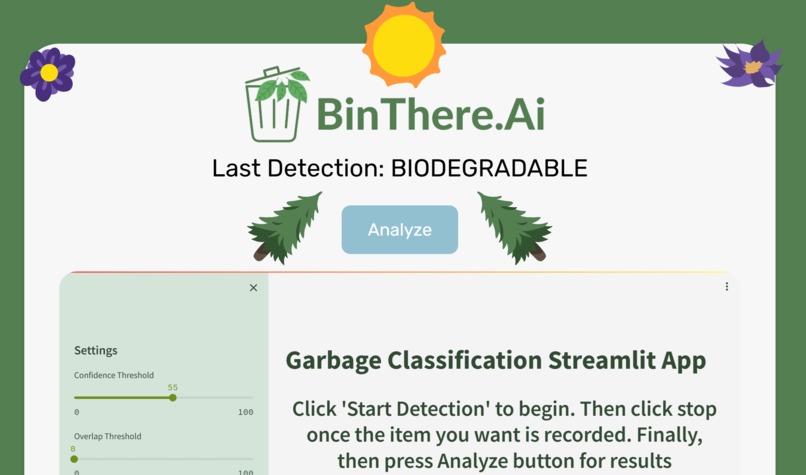
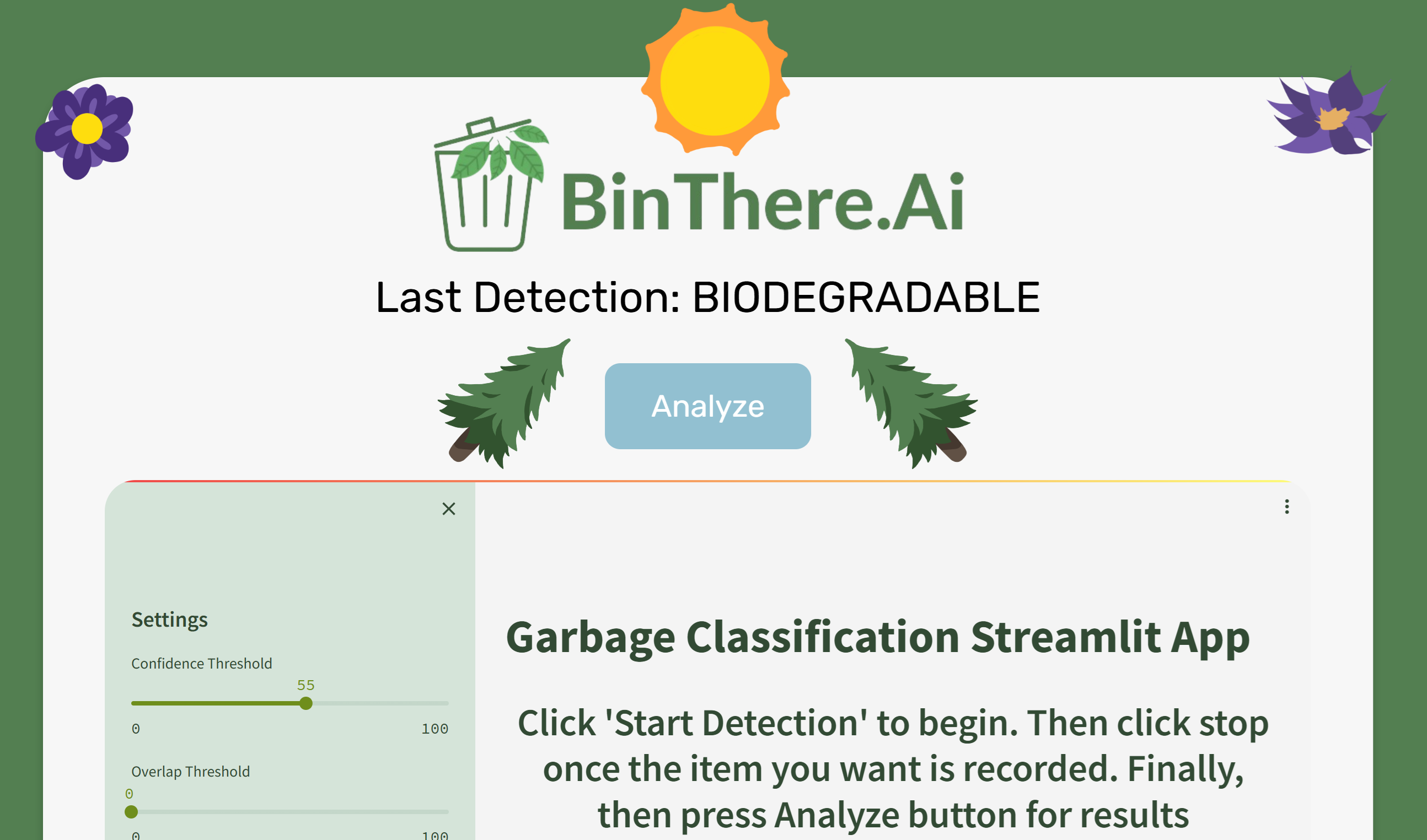
Landing page with seamless Streamlit app integration
-
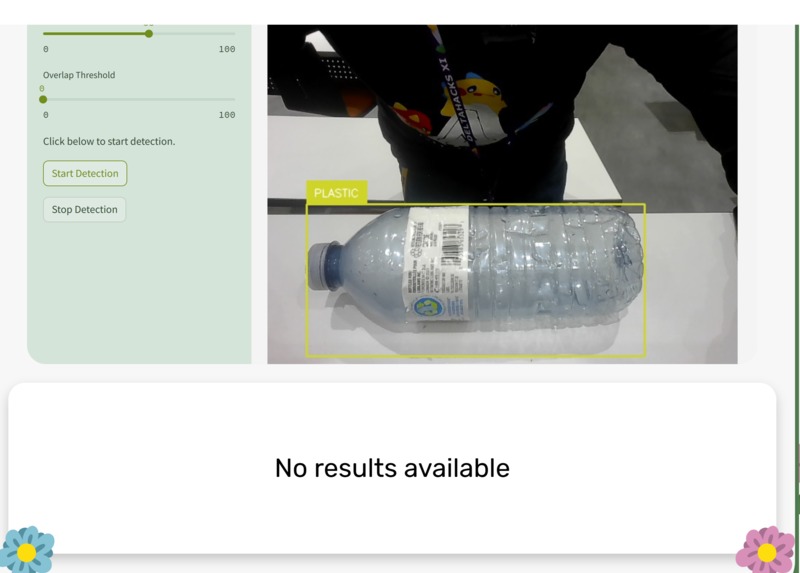
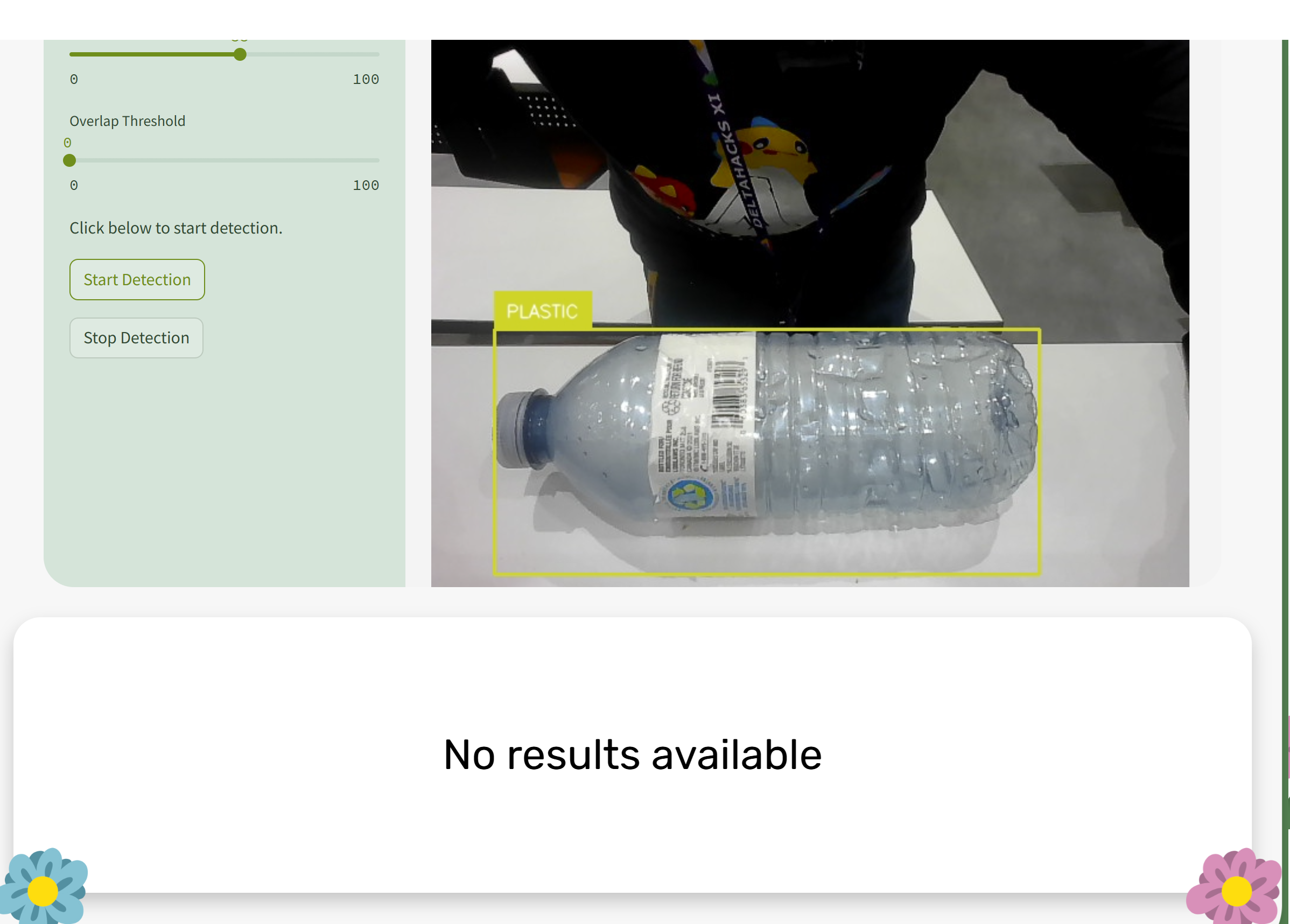
Image detection model at work
-
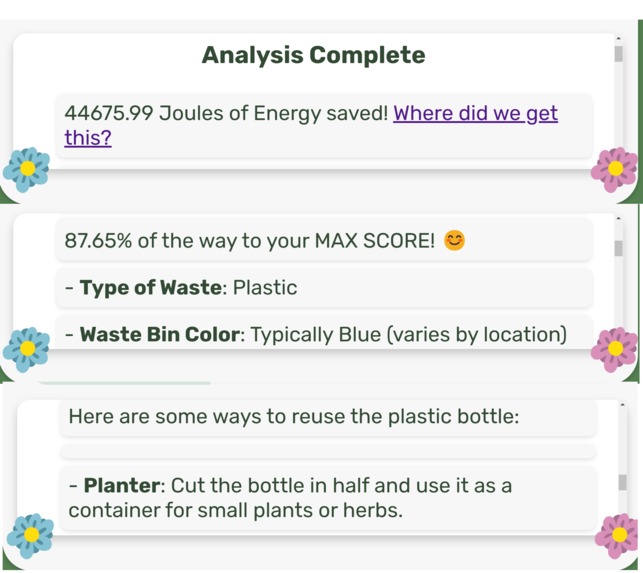
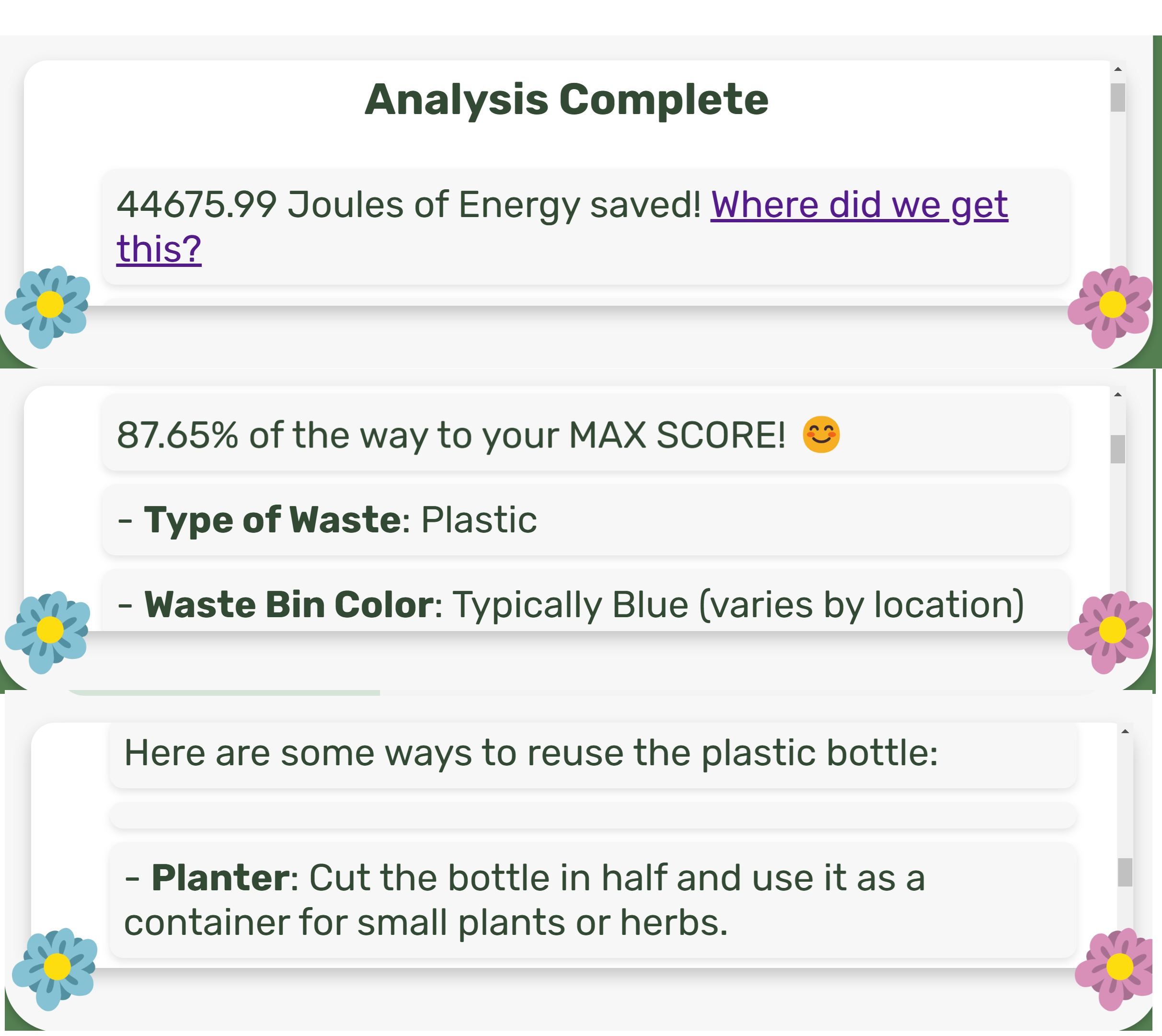
OpenAI insights are informative and fun
Inspiration 💫
Canadians generate over 694 kilograms of waste per person every year, yet only 9% of plastic waste gets recycled. These alarming figures highlight a massive gap in our waste management systems, with millions of tonnes of recyclable materials ending up in landfills. According to Statistics Canada, over 72% of solid waste in Canada is disposed of, much of which could have been diverted. This isn’t because people don’t care—it’s because waste sorting is often confusing and inconsistent across municipalities. That’s where BinThere.ai steps in.
What it does ⁉️
BinThere.ai is a platform that helps users make smarter, more sustainable waste disposal decisions. It provides instant guidance on proper waste disposal methods and nearby disposal locations, ensuring accuracy and convenience. The platform tracks waste categories and displays real-time calculated data of savings to keep users informed about their impact. Additionally, BinThere.ai educates users on the environmental benefits and offers creative DIY ideas to repurpose waste. To encourage sustainable habits, it features a point system that mentions to the user when they have achieved a new high score of potential energy saving, inspiring them to take responsibility and make meaningful contributions toward a more sustainable future by gamifying the application.
Our product uses a camera to detect waste in many categories including paper, metal, plastic, biodegradable features, and everything else. Then it analyzes the image and the type of waste afterwards to provide the user with information such as where the best location to dispose of the waste is. Additionally, as mentioned previously, it also recommends ways to constructively reuse said waste before even throwing it out, instilling the mindset of reusing as much as possible for environmental conservation.
How we built it 👾
BinThere.ai is built with a robust and modern tech stack designed for efficiency and scalability:
YOLO and Roboflow: implemented an image detection model for waste to determine different categories. We found an existing model in Roboflow that was based on YOLO and implemented it into our backend seamlessly.
OpenAI: Inputted prompts with extra context in a RAG(Retrieval-Augmented Generation) type manner to create responses that were informative and relevant
React: A beautifully designed frontend made to be visually appealing
Streamlit: Created a backend local control plane, roping all the backend AI tools in one place, seamlessly matching them in an interface matching the theme of the frontend.
By combining these technologies, BinThere.ai delivers a fast, reliable, and impactful waste management tool.
Challenges we ran into 🖊️
One of the main challenges we faced was integrating the frontend and backend, particularly figuring out how to use Flask and Streamlit simultaneously, as both ran on local sources. After exploring various options, we resolved the issue by running them on separate threads, enabling smooth communication between the two. Another challenge was formatting the frontend to ensure usability. Initially, the Streamlit application stood out awkwardly and was not intuitive for non-technical users. By implementing thoughtful design adjustments and refining internal text, we successfully integrated the Streamlit window seamlessly into the BinThere.ai interface, making it accessible and user-friendly for all.
Accomplishments that we're proud of 🎖️
Our proudest accomplishment is the seamless integration of multiple technologies to create a functional, intuitive, and visually attractive platform. BinThere.ai features a visually appealing UI that not only looks great, but also allows for an easy headache-free experience for all users, including those who are not technically inclined. We’re especially proud of leveraging Streamlit to display AI-powered features directly on the frontend, and also configuring Streamlit’s appearance to blend perfectly with the overall design of the application. Additionally, we integrated advanced tools like Roboflow, YOLO, React, Flask, and OpenAI’s API to build a cohesive solution for waste classification and AI-driven insights. Above all, we’re proud that BinThere.ai isn’t just a project—it’s a tool with the potential to make a real-world impact.
What we learned 🧠
Our team learned so much during this project! We got hands-on experience with Streamlit, a tool that makes it easy to connect AI directly to the frontend of a webpage, and even figured out how to configure it using CSS to improve its visual appeal. We also learned how to integrate ChatGPT with OpenAI’s API, allowing our website to display AI-generated text seamlessly. On the frontend, we dove into React and npm, seeing how these tools can create responsive, single-page applications that look great and work smoothly. On the backend, we explored how Roboflow and YOLO can be used to build powerful image recognition models with pre-trained machine learning systems. By bringing it all together, we enabled accurate waste categorization, which is a key feature of BinThere.ai.
DeltaHacks 11 was an amazing hands-on experience that not only boosted our technical skills but also showed us how software engineering can solve real-world problems. We’re proud of what we accomplished and can’t wait to participate again next year!
What's next for BinThere.ai 🍃
More targeted deployment towards mobile is a must, along with location tracking for our locale specific waste management rules. User accounts with login functionality. This will allow users to save their data, track their impact over time, and access personalized waste management insights. Additionally, we will integrate data visualization features, displaying graphs that illustrate user contributions and environmental savings. These updates will make the app even more engaging and impactful, fostering a stronger connection between users and their sustainability goals.


Log in or sign up for Devpost to join the conversation.