-
-
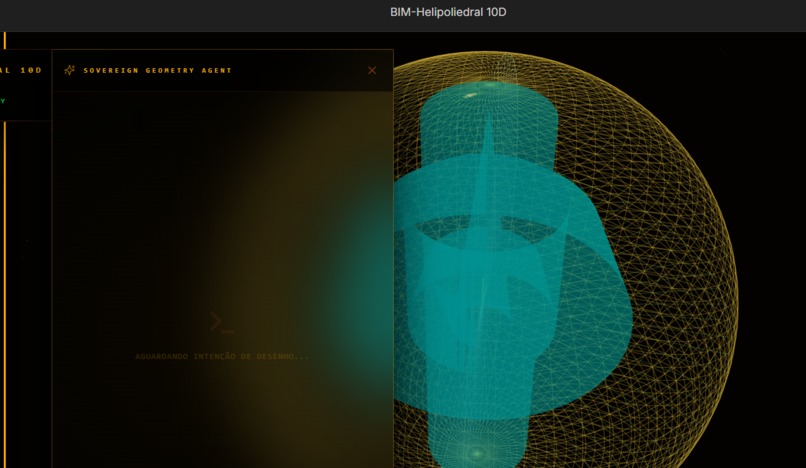
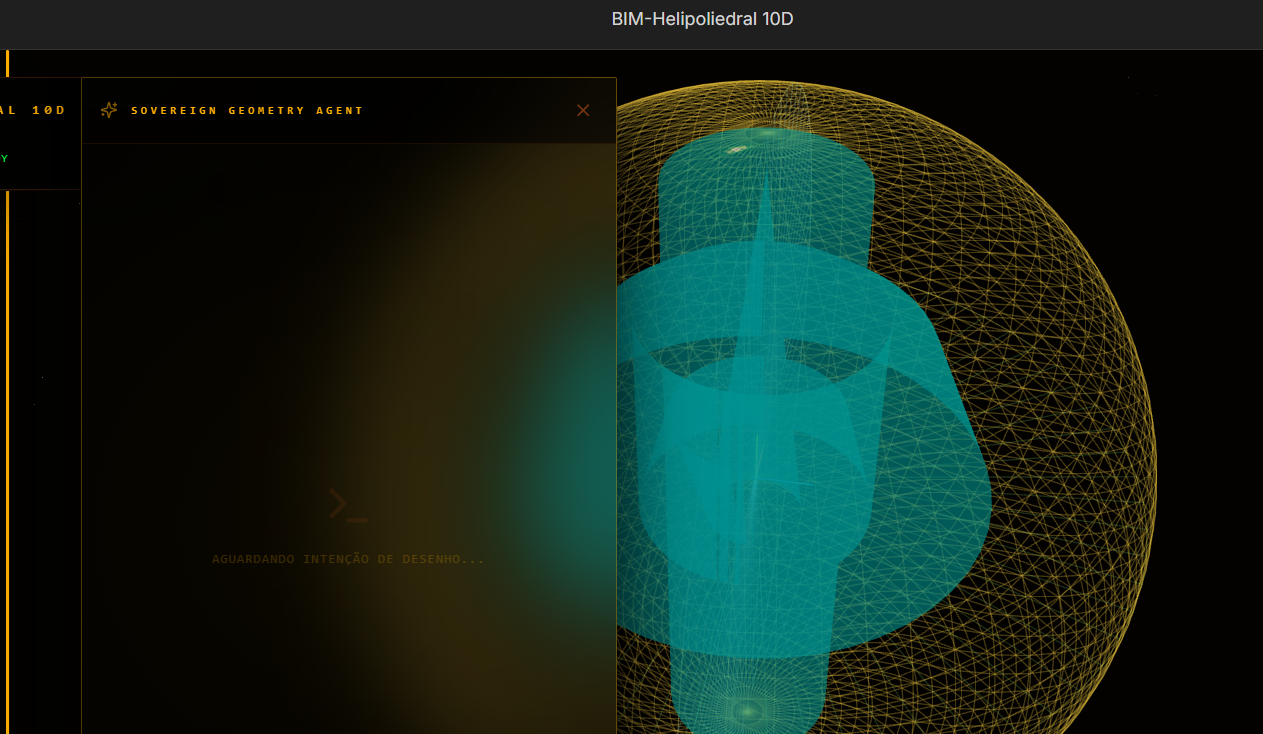
Sphere Lathe to draw and the window the Sovereign Geometry Agent (Gemini 3)
-
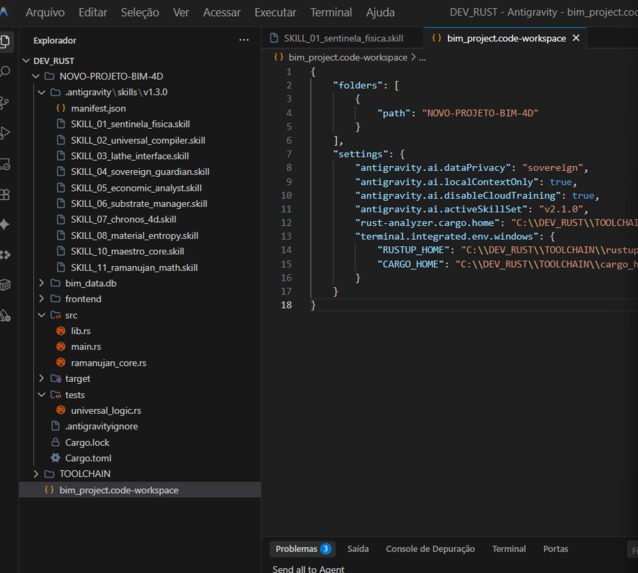
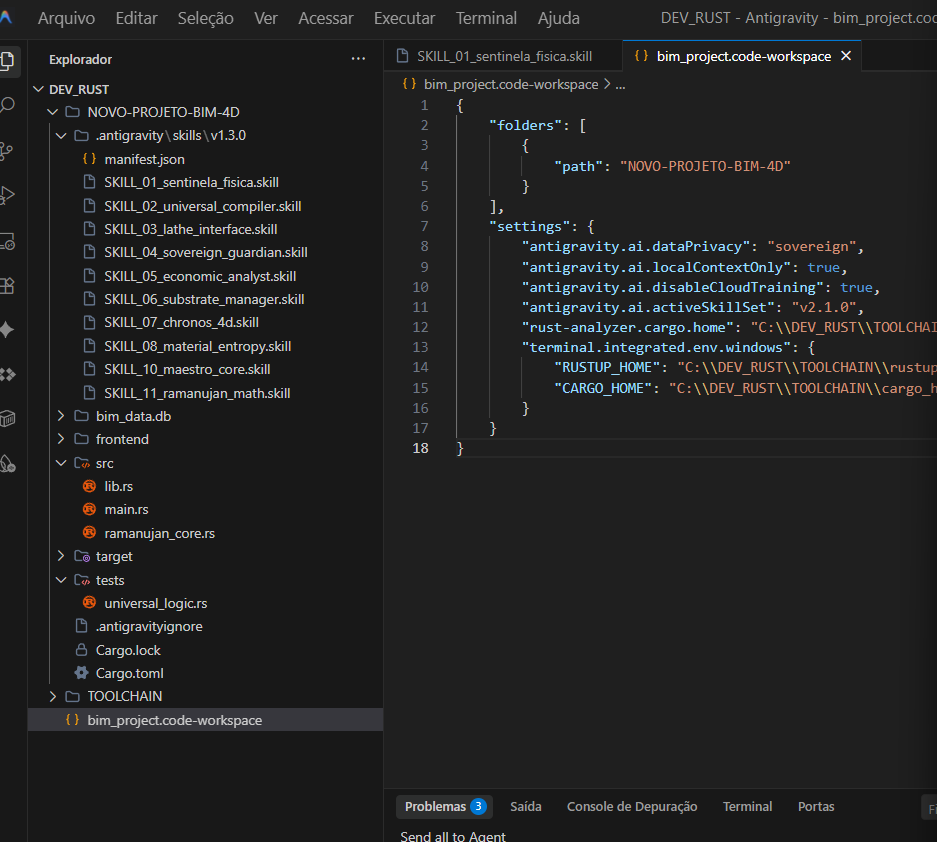
Code localhost (Make with Antigravity)
-
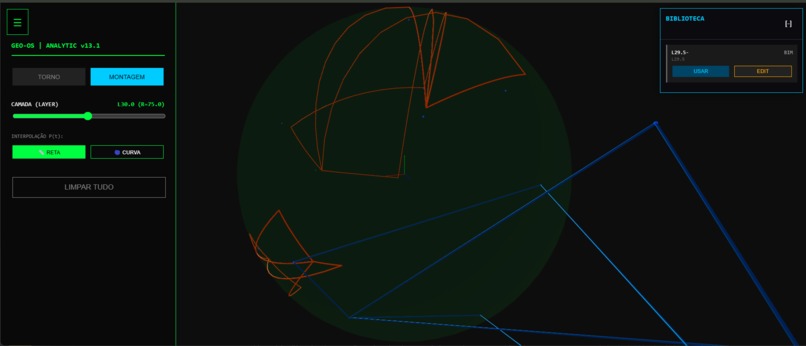
Version Rust (Leptos + Svelte)
-
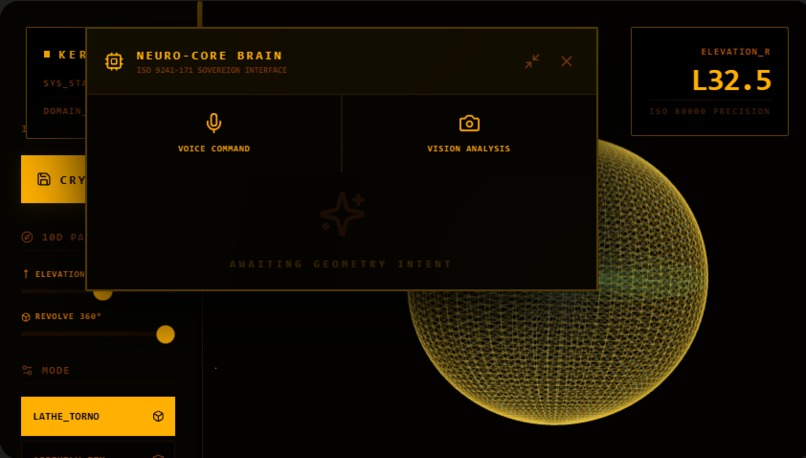
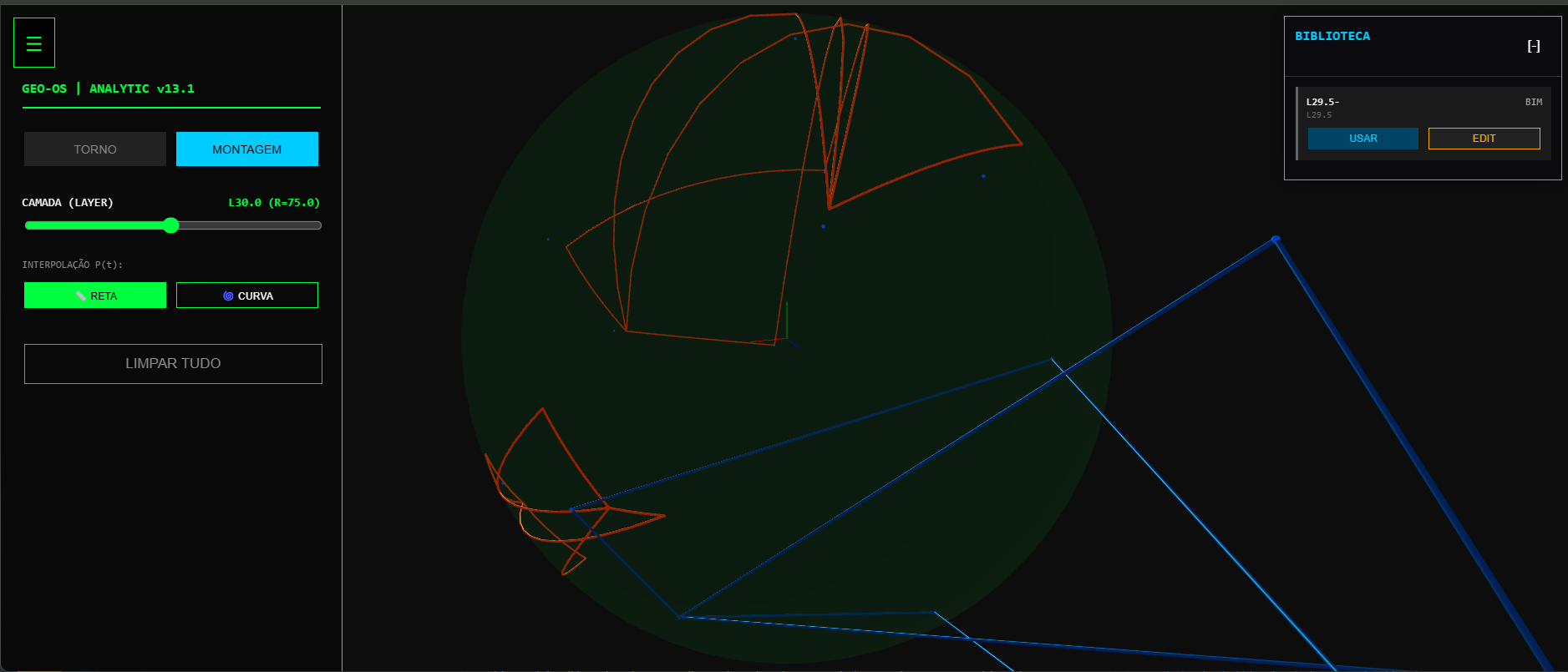
Version TypeScript (mobile mode)
Inspiration
The inspiration for BIM-Helipoliedral 10D came from the challenge of visualizing and validating high-dimensional architectural structures. Standard BIM (Building Information Modeling) is limited to 3D or 4D. I wanted to push the boundaries of spatial engineering by creating a system capable of handling 10-dimensional topological data, where the Gemini 3 API acts as a cognitive bridge between complex mathematics and practical design.
What it does
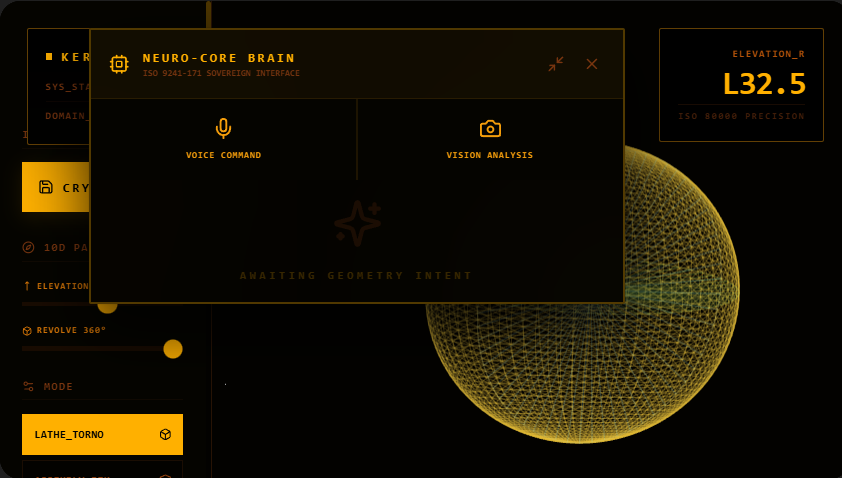
The application is a high-performance engine that allows for the creation and validation of helipoliedral structures in a 10D manifold. It uses the Gemini 3 API to orchestrate the design process, providing autonomous feedback on topological integrity. By integrating multimodal inputs (camera and microphone), users can interact with abstract geometry using natural language and visual cues, while the system ensures that mathematical constraints are met in real-time.
How I built it
I adopted a Vibe Engineering workflow, utilizing a full-stack approach:
Core Engine: Developed in Rust for maximum memory safety and performance, handling heavy 10D spatial calculations.
WebAssembly: I compiled the Rust core into .wasm binaries, allowing high-performance execution directly in the browser.
Design of Disassembly (DfD): I developed a native, ISO-compliant DfD capability. While the frontend uses TypeScript for illustration, the true low-level complexity resides in the agnostic localhost core.
AI Orchestration: The Gemini 3 API is the project's "NeuroCore." Instead of just returning text, the Gemini Kernel is programmed to understand it has "hands"—represented by point arrays. It emits Action Tokens (JSON) that are intercepted by the system to inject and manipulate geometry within the sphere.
Topology Validation: The reasoning engine validates the topology defined by: $$\chi = V - E + F - ... + (-1)^{n-1}P_n$$
Challenges we ran into
The biggest challenge was mapping 10-dimensional coordinates into a 3D visualizable space without losing topological meaning. Implementing a custom database in Rust on Windows to handle these specific structures required deep low-level engineering. Furthermore, synchronizing the autonomous feedback loops between the Gemini 3 API and the WASM binaries required precise prompt engineering to ensure the Action Tokens triggered the correct geometric transformations.
Accomplishments that we're proud of
It brings me joy to have built a completely autonomous validation system. Through Vibe Coding, I iterated rapidly on the ramanujan_core.rs. I implemented unique ethical filters governed by topological mathematics; since every object has a unique signature in the form of an equation, the software "touches" the geometry to prevent the creation of unauthorized structures. Seeing Gemini 3 successfully interpret a 10D manifold and point out inconsistencies was a breakthrough moment.
What we learned
I learned the true power of long-context reasoning. I learned to manage hallucinations through 15 days of iteration using custom Gems. Handling 10D data means managing thousands of tokens of spatial metadata; Gemini 3's ability to "understand" this context window was a game-changer. I also mastered the integration of Rust-based WASM with AI-driven TypeScript environments, creating a bridge between low-level logic and high-level AI orchestration.
What's next for BIM-HELIPOLIEDRAL 10D
The next step is to expand the PWA and .exe capabilities. The path already exists in the agnostic core, allowing for a premium experience in creating 10D structures using Ramanujan-based mathematics. I also plan to refine the autonomous agents to perform predictive structural analysis based on: $$\nabla \cdot \sigma + f = 0$$
Built With
- firebase-studio
- gemini-3-api
- gems-personalizados
- google-ai-studio
- google-antigravity-ide
- rust
- typescript
- webassembly


Log in or sign up for Devpost to join the conversation.