-
-
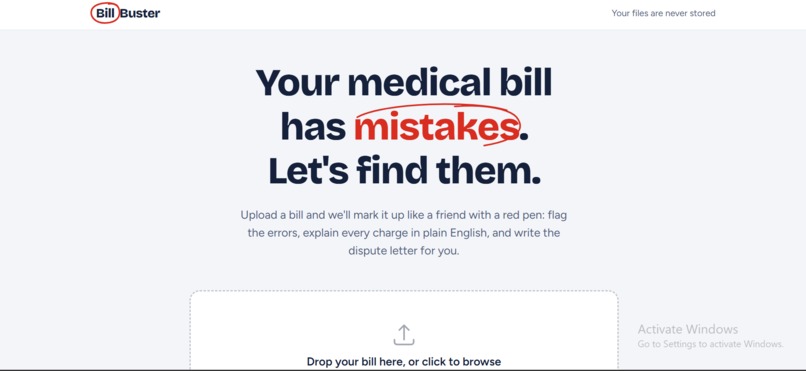
Home: Upload a photo or PDF of any medical bill, or try a sample. Files are never stored.
-
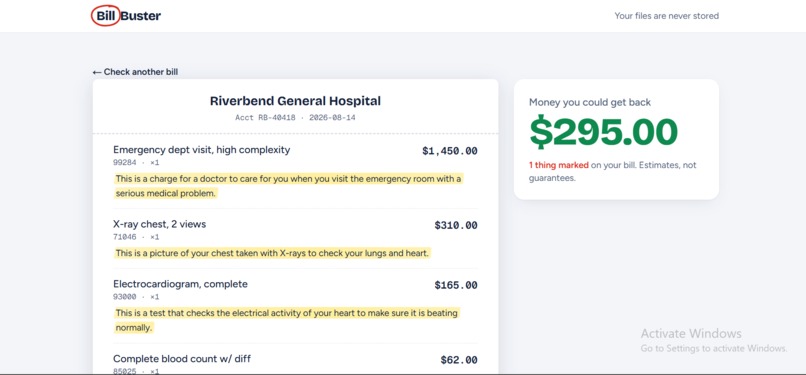
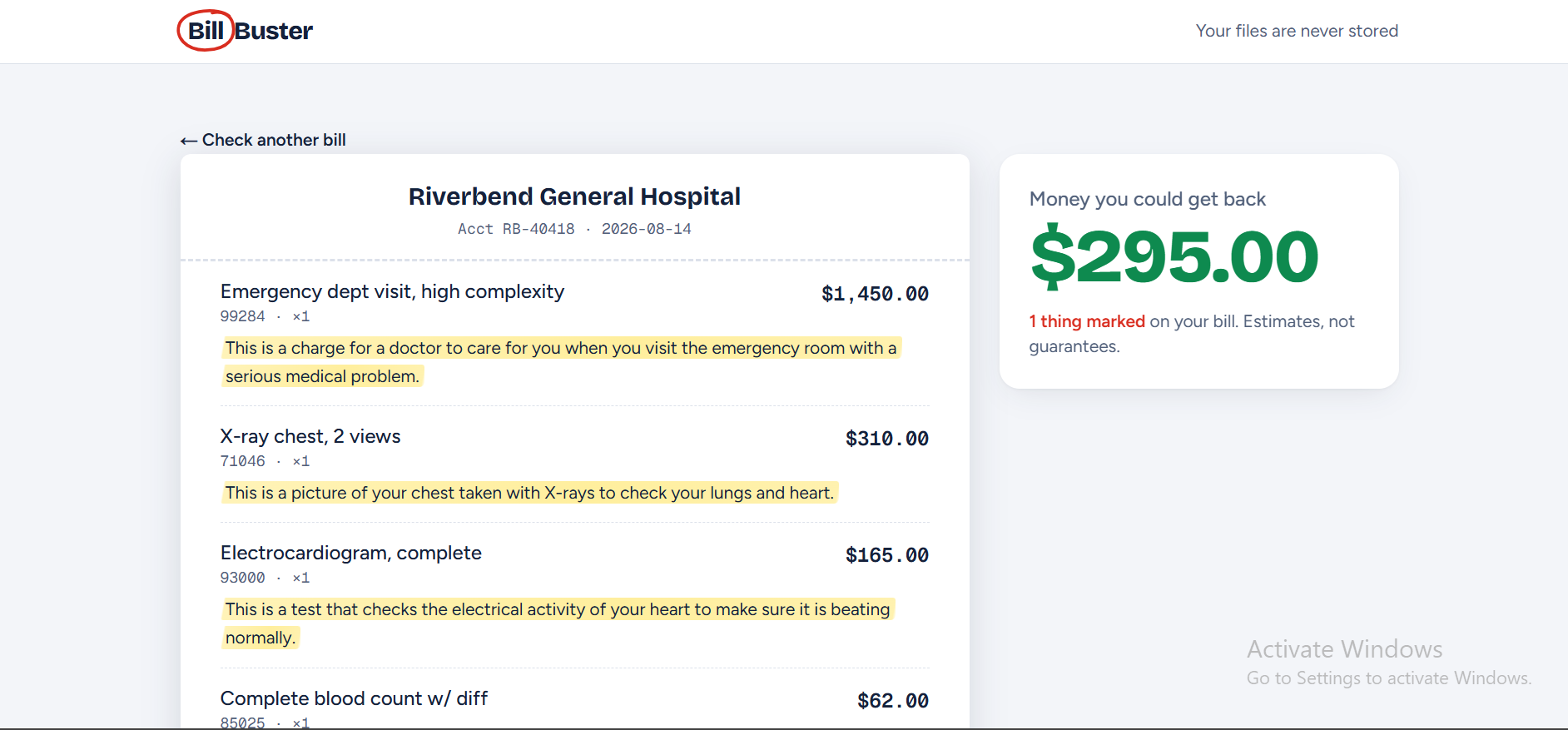
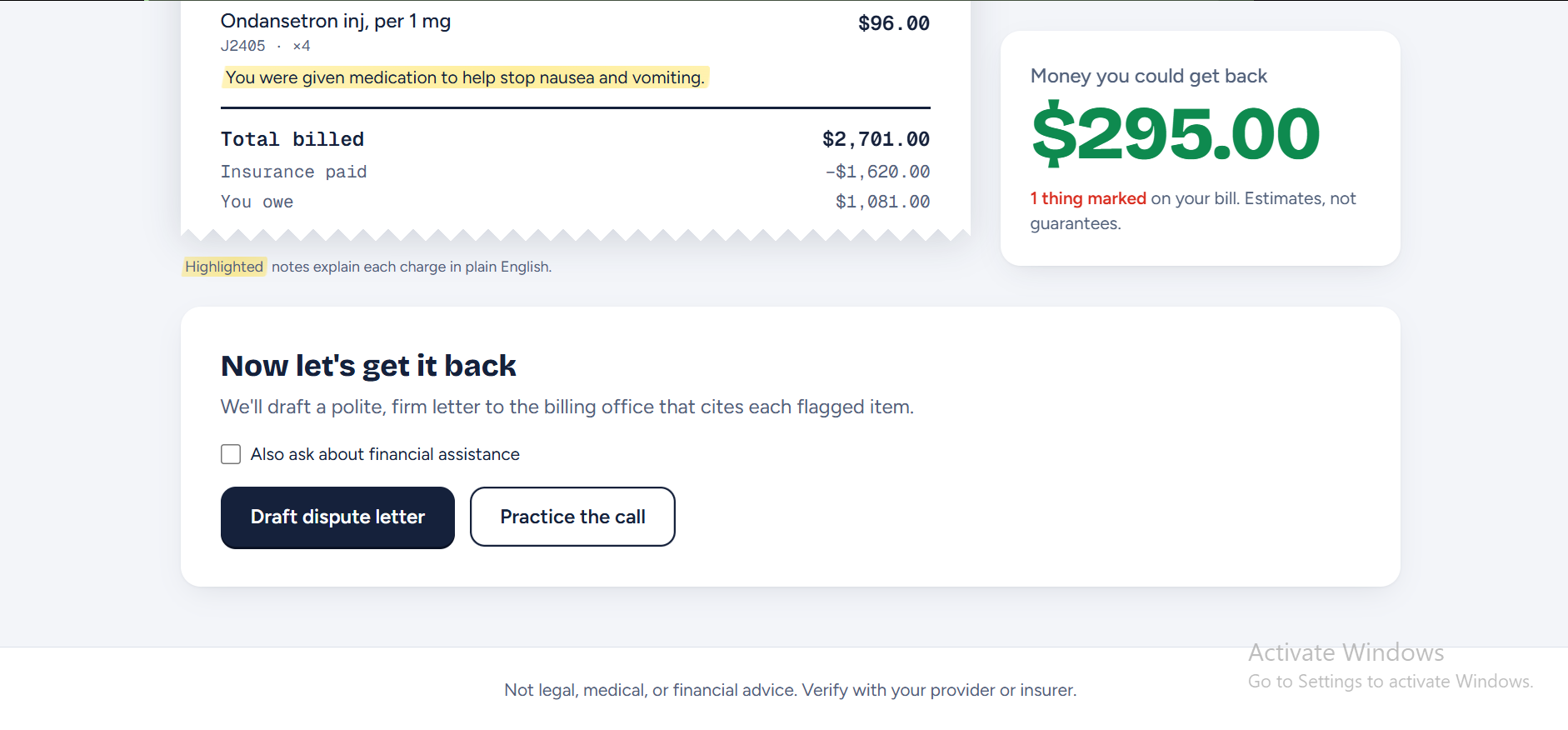
Results: The red pen marks every likely error. This ER bill has $295 in questionable charges.
-
Explanation: Every charge explained in plain English, so you know exactly what you're paying for.
-
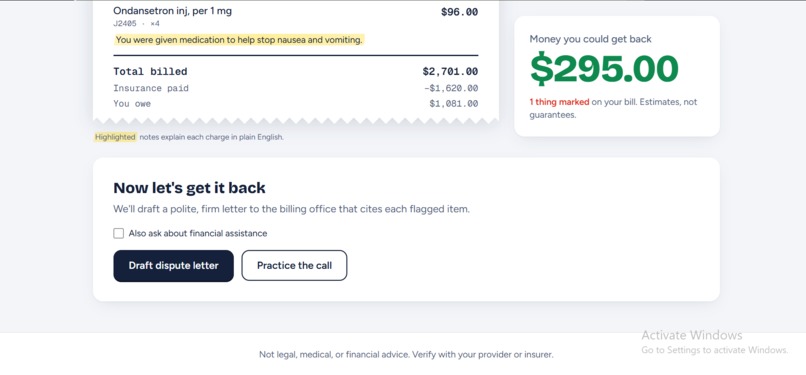
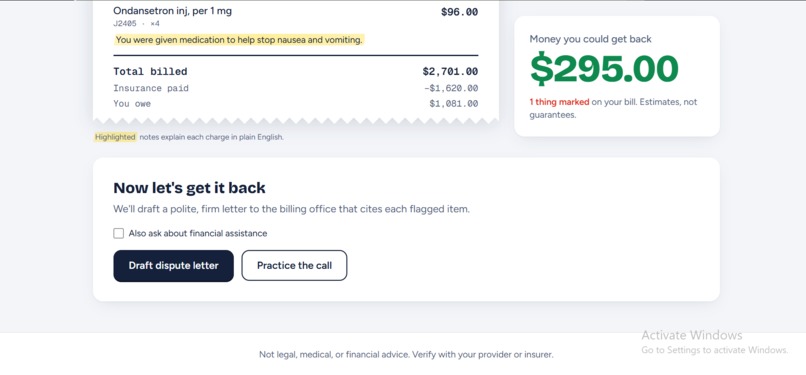
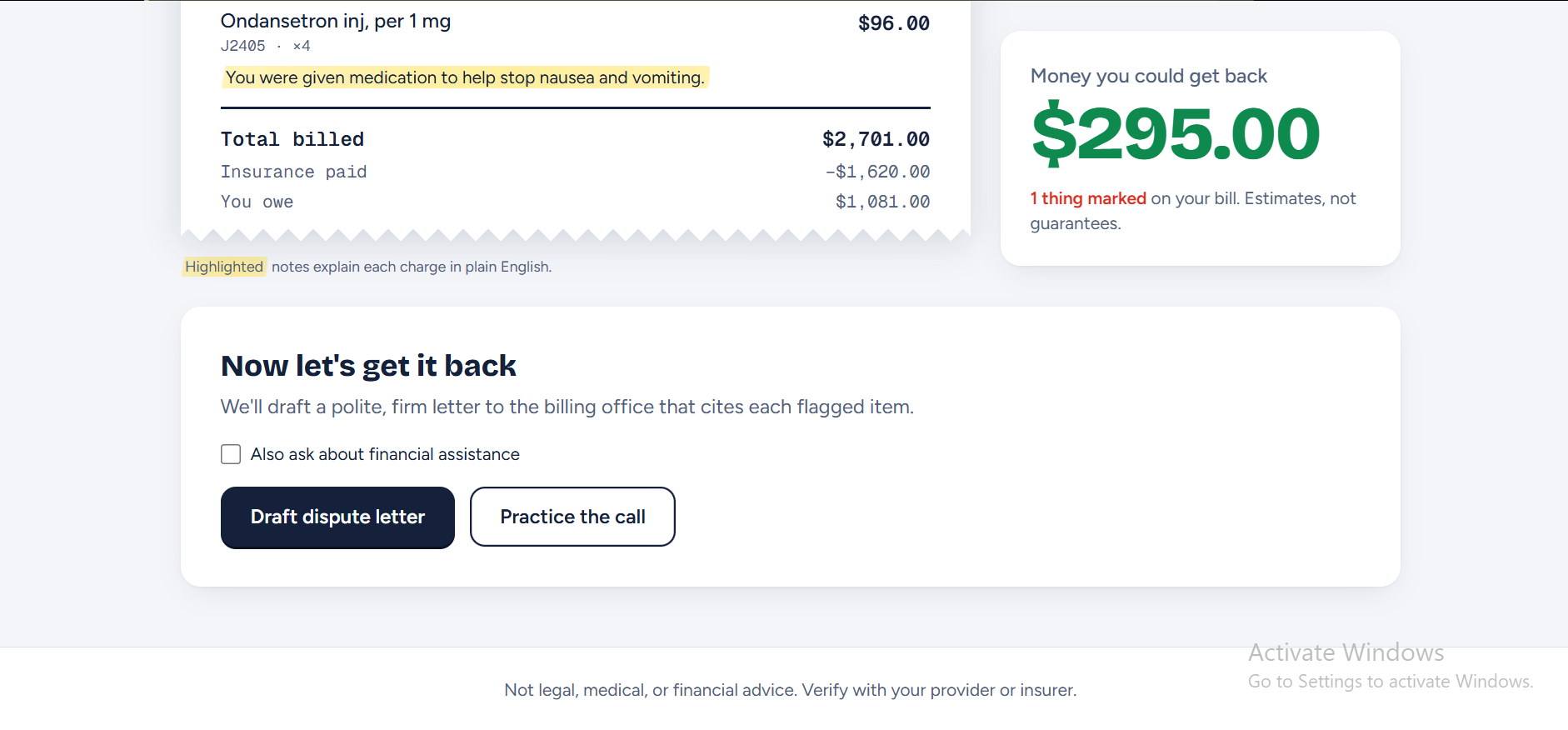
Dispute letter: One tap writes a dispute letter citing the exact errors, ready to send
-
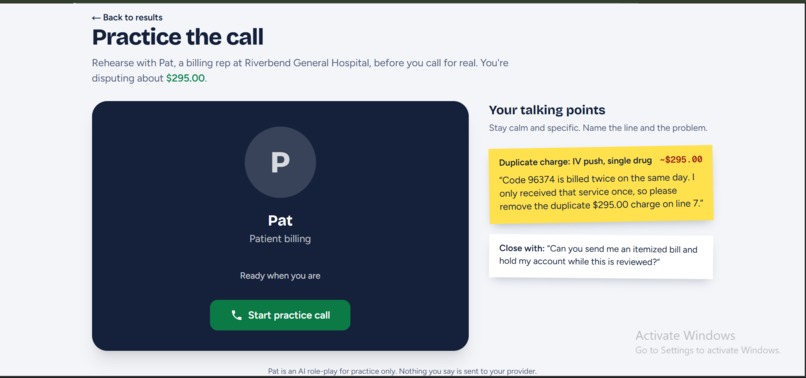
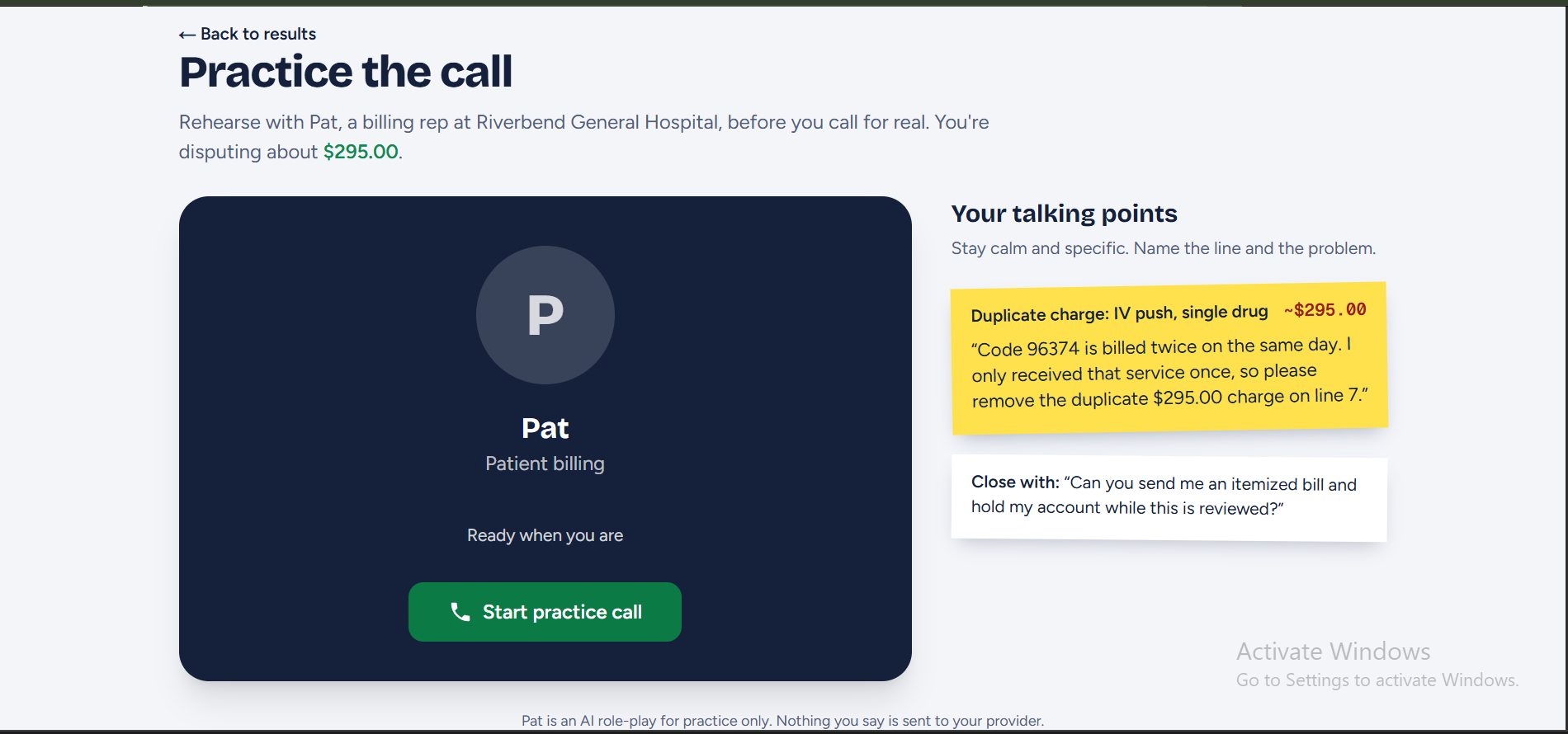
Pat call: Practice the call with Pat, an AI billing rep powered by ElevenLabs, before you call for real. One more thing: your homepage
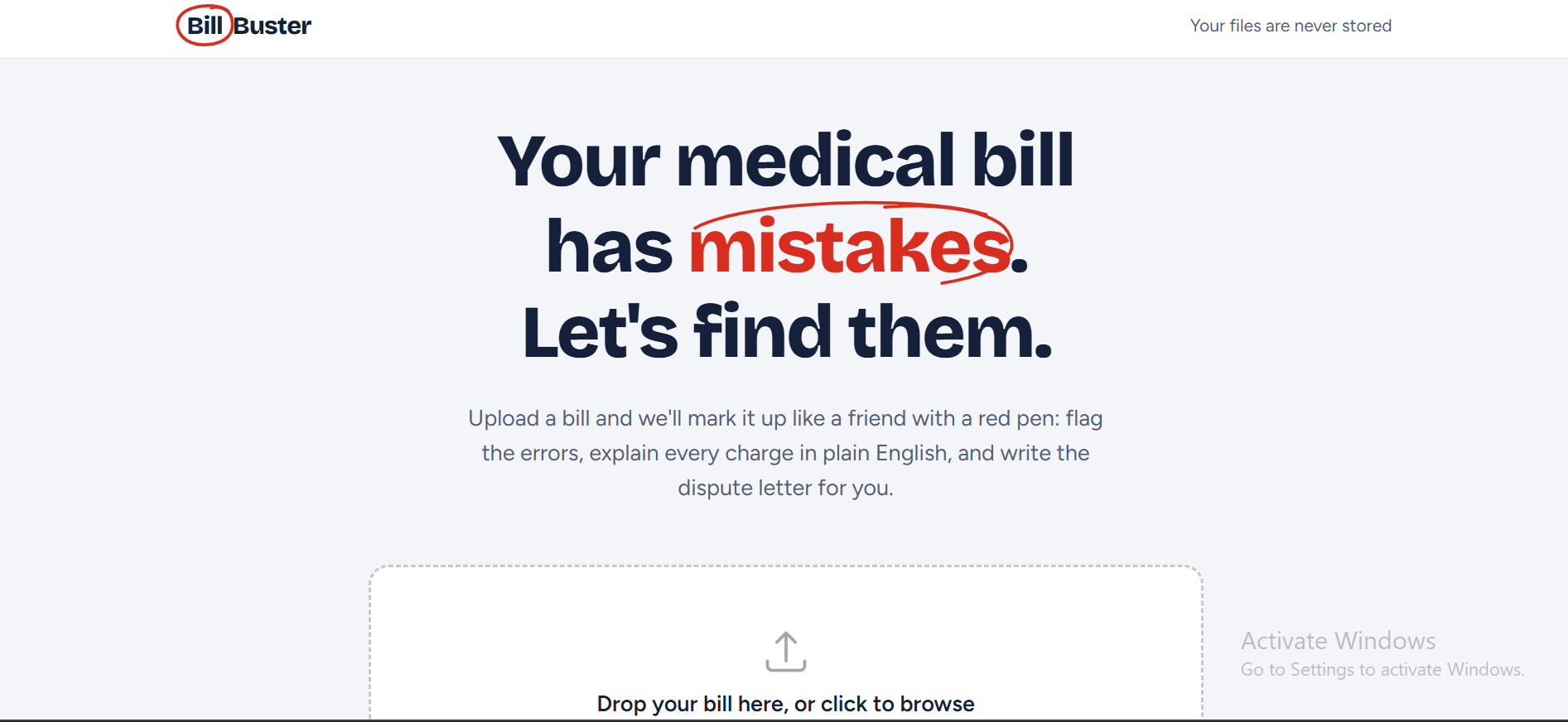
Inspiration Medical bills are one of the most confusing documents people ever receive, full of cryptic codes, vague descriptions, and totals that are hard to verify. Billing errors like duplicate charges and inflated prices happen, but most people never check because they don't know how. We wanted to give everyone a tool that reads a bill the way an expert billing advocate would, for free, in seconds.
What it does
BillBuster turns a confusing medical bill into something you can understand and act on:
- Snap or upload a photo or PDF of a bill or Explanation of Benefits
- Extract every line item (code, description, quantity, charge) using AI
- Flag likely errors: duplicate charges, quantity anomalies, prices far above typical ranges, and math mistakes
- Explain each charge in plain English
- Fight back with a one-tap dispute letter or financial-assistance request
The total questionable amount is calculated as:
$$\text{Questionable} = \sum_{i \in \text{flagged}} (\text{charge}_i - \text{expected}_i)$$
How we built it
- Next.js + TypeScript + Tailwind for a fast, mobile-friendly web app
- Google Gemini API reads bill images and PDFs and returns structured JSON, validated with Zod
- A rule-based flagging engine in TypeScript. We deliberately kept error detection deterministic instead of relying on the LLM, so results are consistent and explainable
- Gemini generates plain-English explanations and personalized dispute letters
- [ElevenLabs voice agent that lets users practice negotiating with a billing rep]
- [Tiger Data / Vultr, if used] ## Challenges we ran into
- Bills vary wildly in layout, so getting reliable structured extraction took a lot of prompt and schema iteration
- Deciding what the AI should do versus what code should do. We learned LLMs are great at reading and explaining, but flagging errors needed hard rules
- Building realistic demo bills without using any real patient data
- [Add a real bug or struggle your team hit; judges love honesty here] ## Accomplishments that we're proud of
- A working end-to-end flow: upload → flags → explanation → dispute letter
- Every flag comes with a clear reason, so users understand why something looks wrong
- Privacy by design: uploads are processed in memory and never stored ## What we learned
- How confusing healthcare billing really is, and how much money people may be losing to errors ## What's next for Billbuster Real price-transparency data from hospitals' published price files
- Insurance plan awareness (deductibles, copays, in-network rules)
- Tracking dispute outcomes so users can see what actually got refunded
- Partnering with patient advocacy groups and community health clinics
Built With
- https://github.com/dacryptoeth1/billbuster


Log in or sign up for Devpost to join the conversation.