-
-
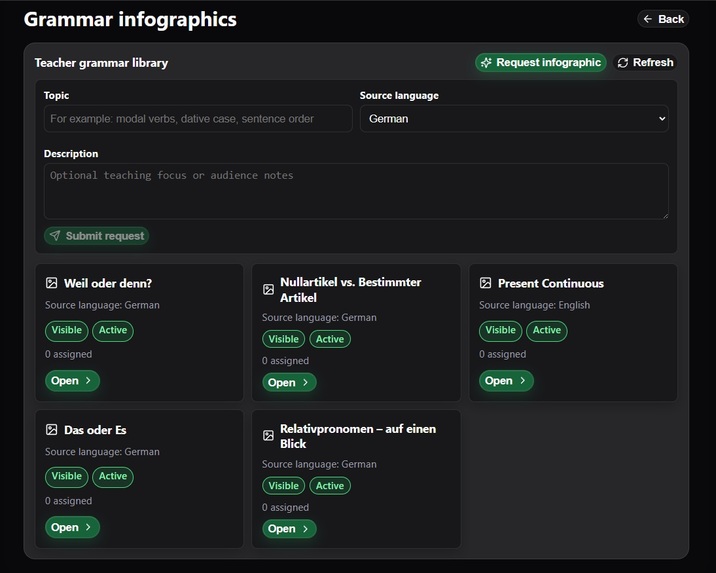
Teacher authoring and German Grammar Infographics library
-
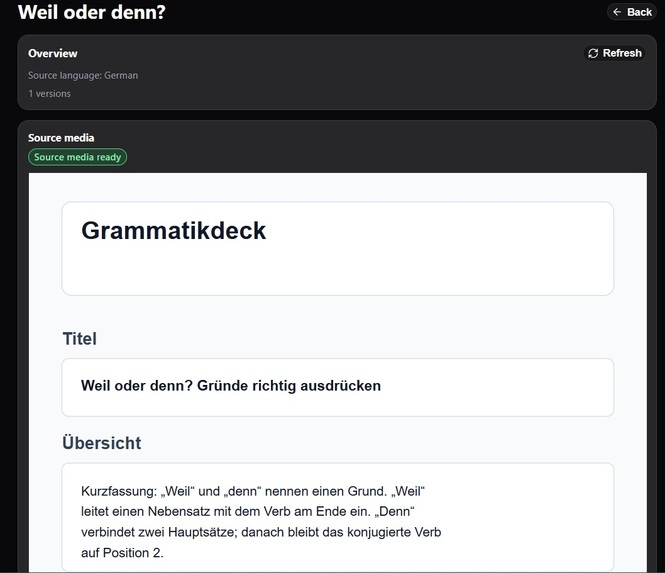
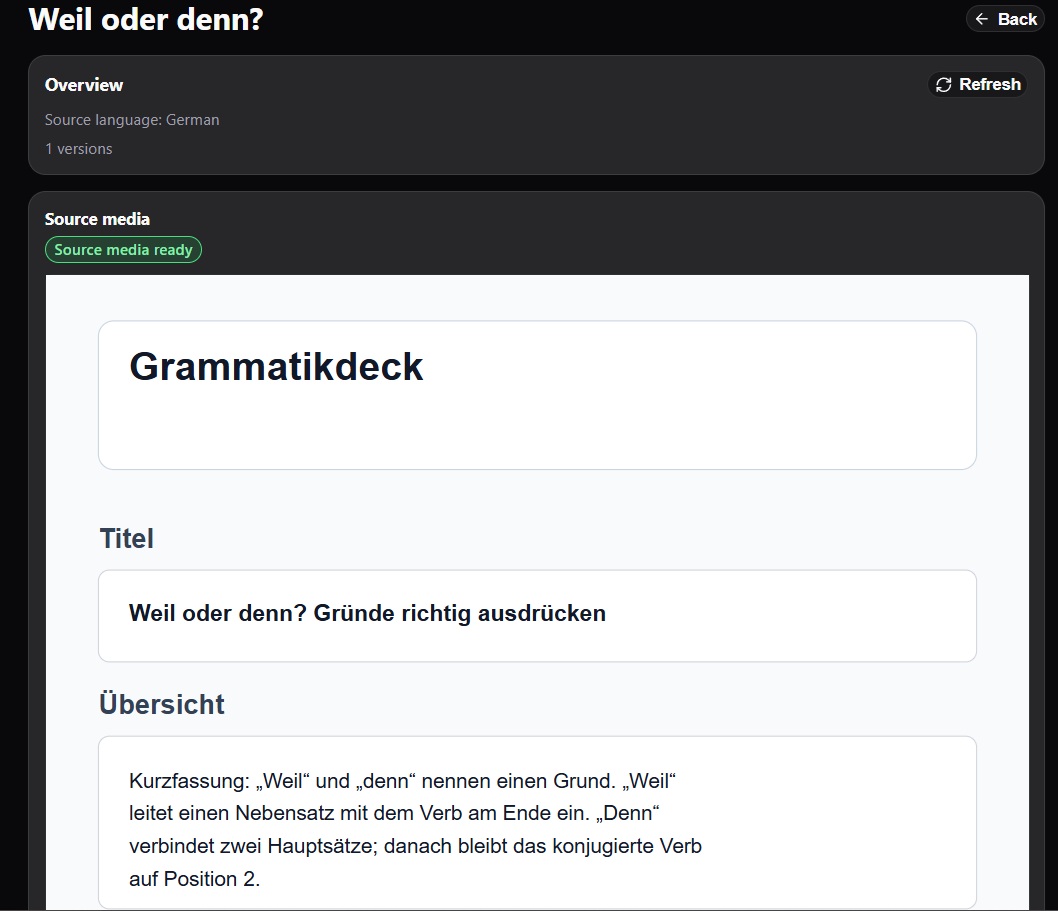
GPT-5.6 structured German grammar guide rendered as one natural-height SVG
-
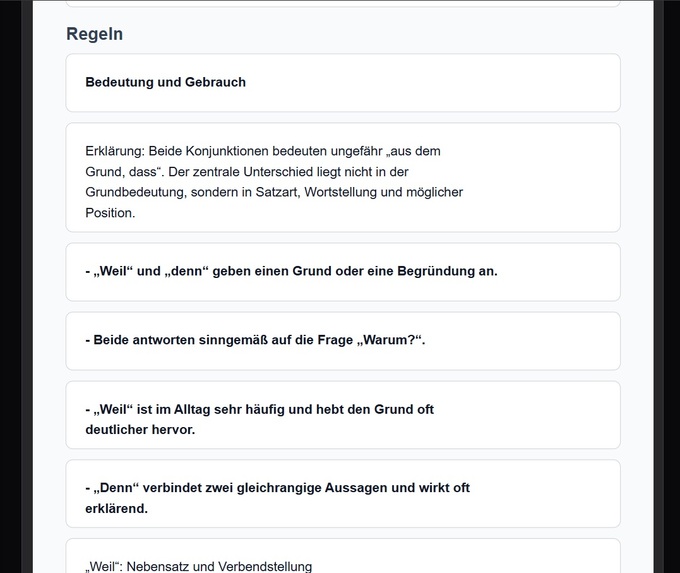
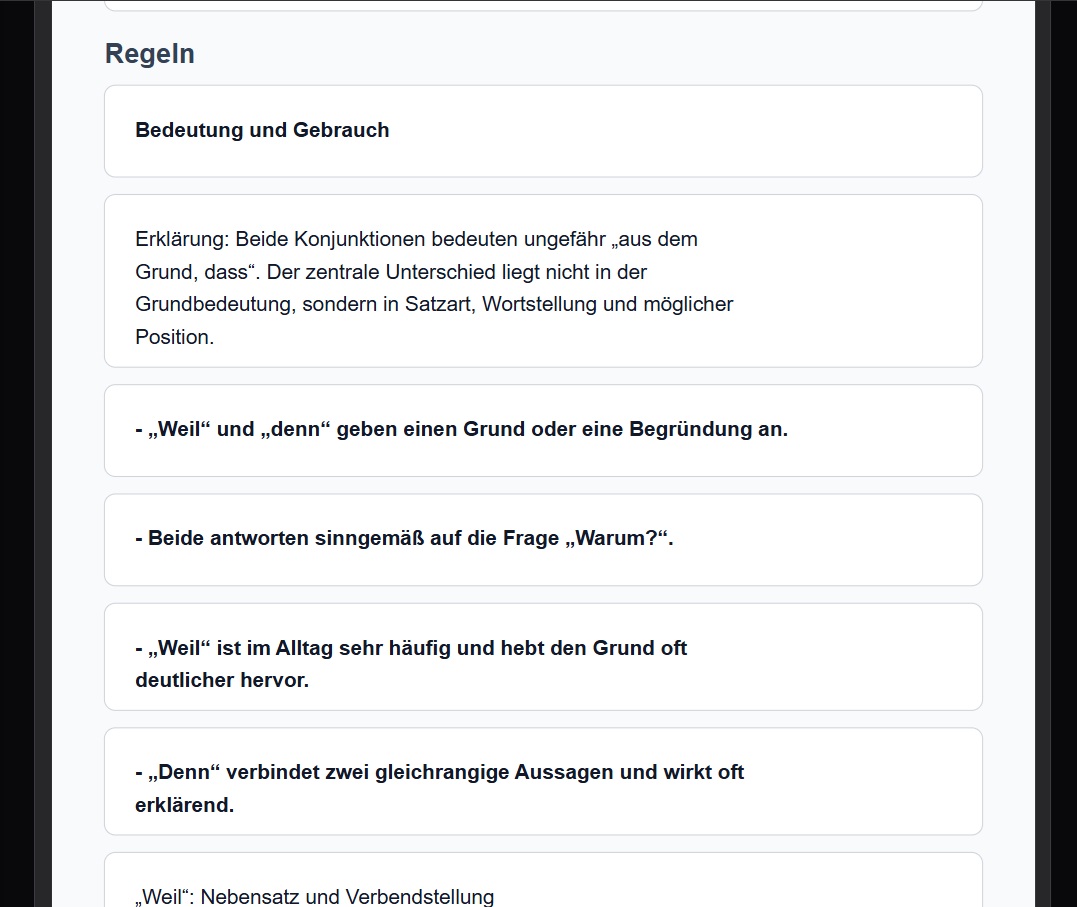
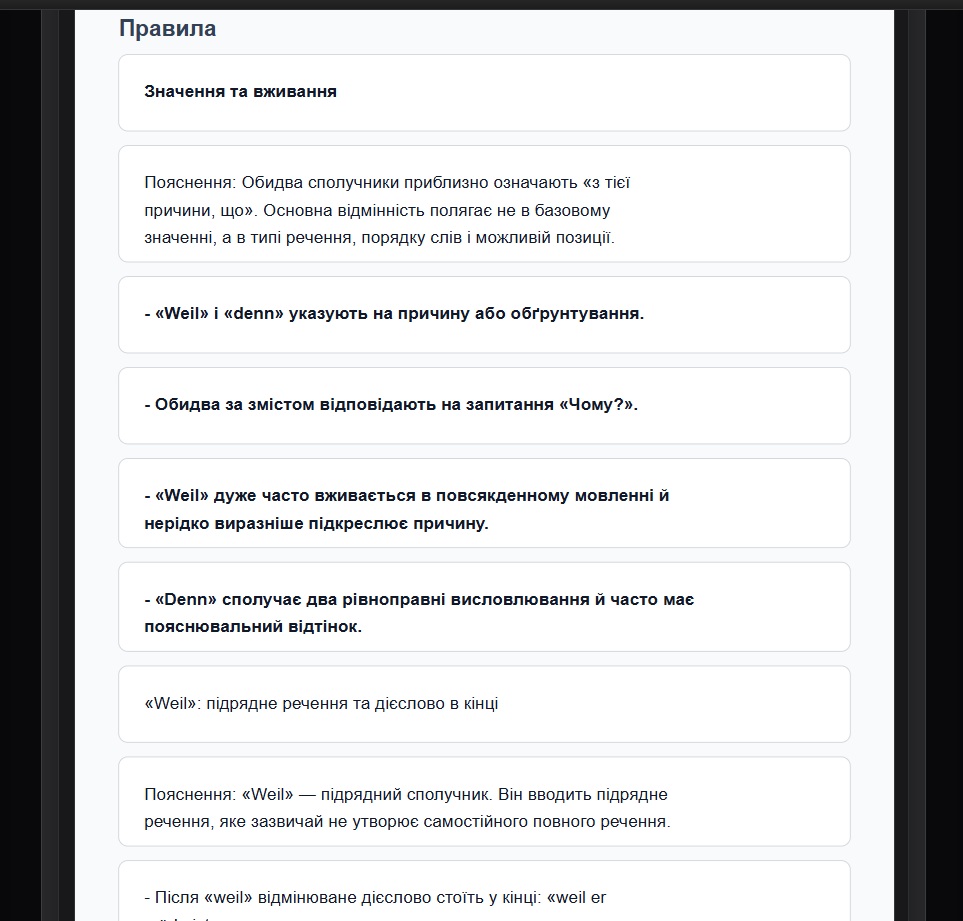
Structured rules and explanations inside the application-controlled SVG
-
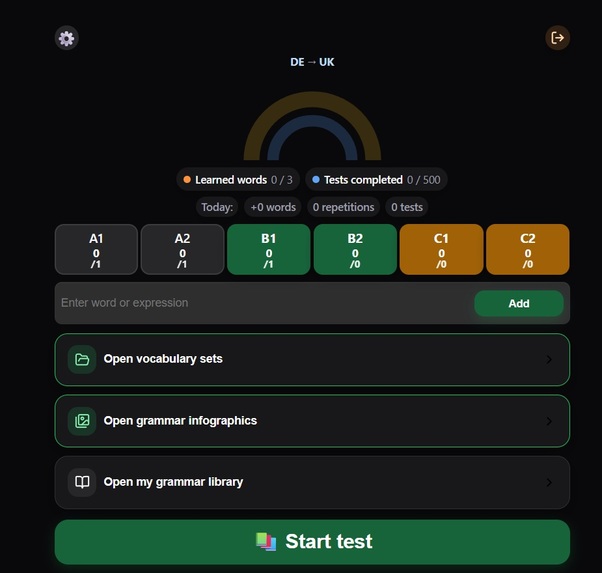
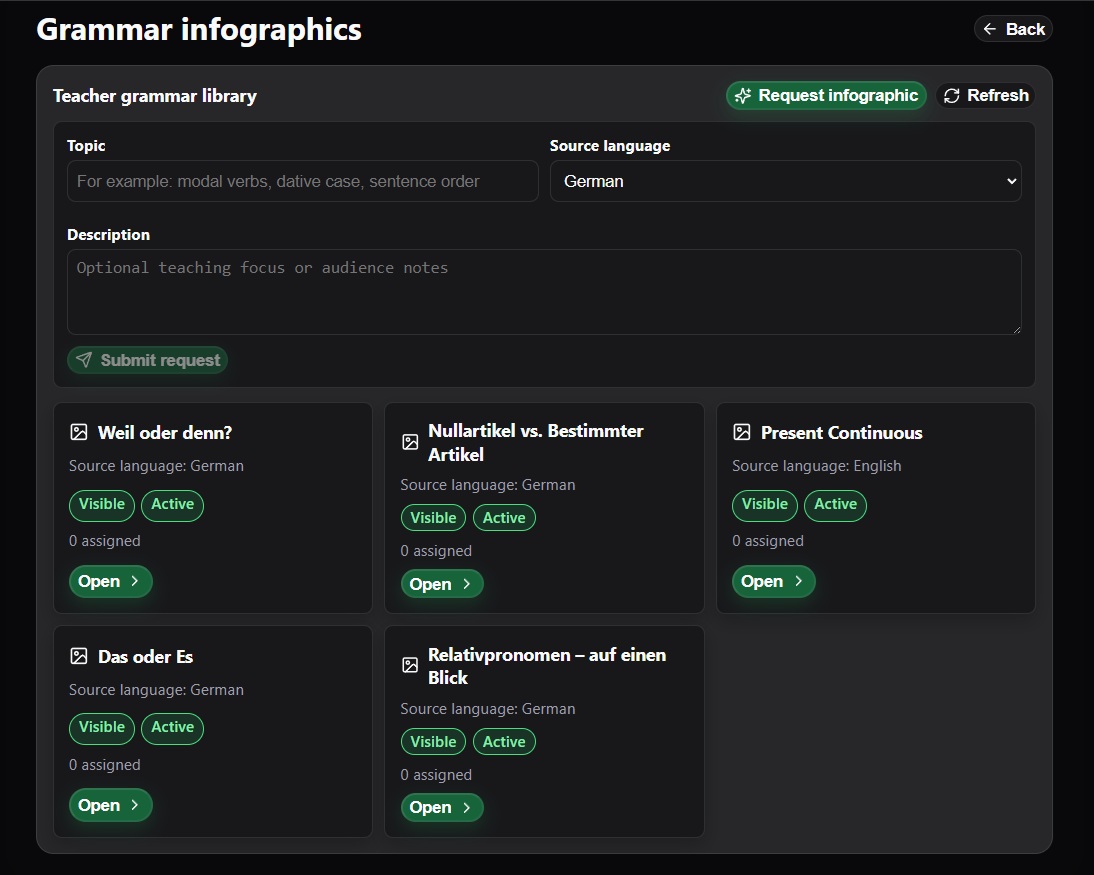
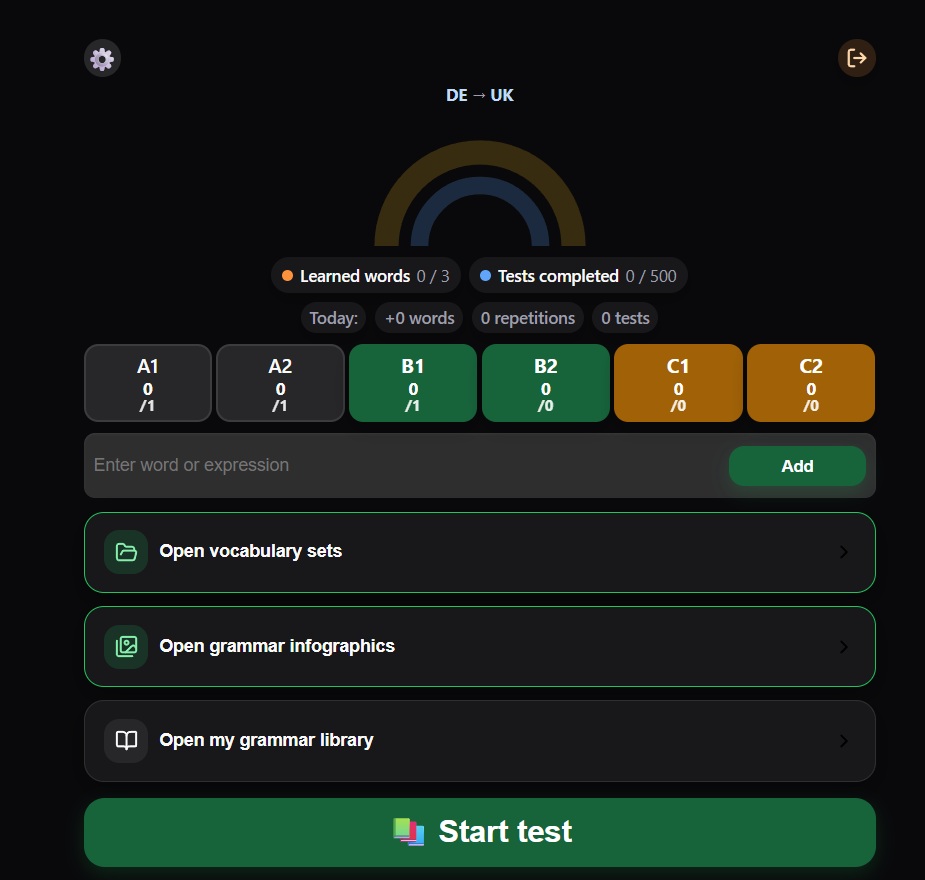
Student dashboard with assigned and personal Grammar Infographics access
-
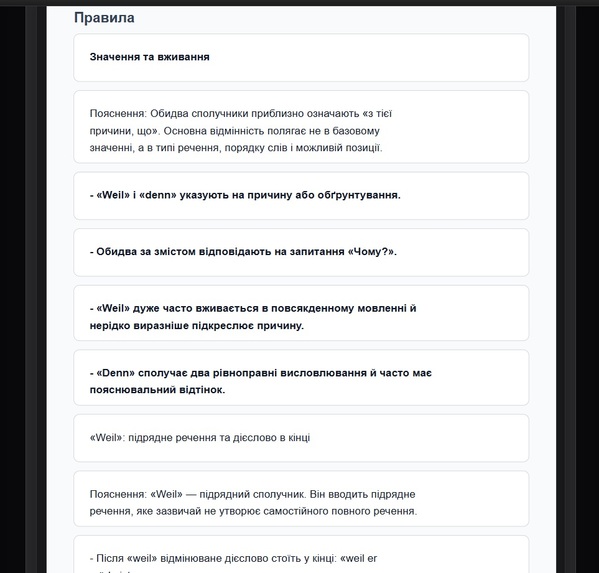
Manually verified German-to-Ukrainian example with German grammar forms preserved
Inspiration
Bildmind grew from a practical classroom problem.
In a multilingual language class, students study the same target language but often need explanations in different native languages. A teacher can prepare one grammar lesson manually, but producing clear and reusable materials for several language groups takes significant time.
The existing Bildmind platform is already being piloted in a multilingual German B2 classroom with one teacher and 13 students across five native-language groups. All 13 students have recorded learning activity. The current pilot covers vocabulary learning, tests, classrooms, progress, assignments, and Teacher Sets.
Grammar Infographics are a new OpenAI Build Week extension. They were not included in the previously reported pilot activity and have not yet been rolled out to the full class.
A German teacher participating in the ongoing pilot gave permission for her feedback to be used anonymously. She identified visual vocabulary presentation, AI-supported word suggestions, thematic organization, Teacher Sets, assignments, and progress tracking as useful directions.
She would also like to see more interactive exercises, Grammar Infographics, and a clearer mobile progress view for teachers. She expressed interest in continuing to test Bildmind with the course.
Regarding Grammar Infographics, she said:
“Visual representations can make grammatical structures easier to understand, facilitate language comparisons, and support learners with different language skills.”
— German teacher participating in the ongoing Bildmind pilot, translated from German
This feedback does not mean that Grammar Infographics have already been tested by the full class. It confirms that the problem is real and that the selected direction is relevant to a multilingual teaching environment.
What it does
Bildmind provides a controlled teacher-to-student workflow for German grammar materials.
- A teacher enters a German grammar topic and optional teaching context.
- GPT-5.6 returns strict structured educational content.
- The backend validates and persists the canonical content.
- Bildmind creates one deterministic, application-controlled SVG guide.
- The teacher previews the exact generated material version.
- The teacher assigns that exact version to a class.
- An assigned student opens the protected material.
- The student can save the material to a personal learning library.
The final output is one natural-height visual grammar guide containing:
- explanations;
- rule blocks;
- tables;
- German examples;
- common mistakes;
- corrections;
- notes;
- summary or memory-aid material.
The material uses ordinary vertical page scrolling instead of forcing every topic into a fixed number of slides.
In one manually verified “Das oder Es” demonstration, a German-to-Ukrainian version reached ready state, opened successfully, showed Ukrainian explanations, and preserved the German examples.
This is one demonstrated case. I do not claim that every grammar topic, language pair, device, or retry path is already equally reliable.
How we built it
Bildmind was not created from zero during Build Week.
Before the competition period, the platform already included:
- authentication and protected user roles;
- organizations and classrooms;
- personal language profiles;
- personal vocabulary;
- vocabulary tests and progress;
- Teacher Sets;
- classroom assignments;
- initial media-storage foundations;
- initial material, version, and assignment contracts.
I disclose this existing foundation clearly and do not present the entire Bildmind platform as Build Week work.
During Build Week, I transformed that foundation into a working German Grammar Infographics teacher-to-student workflow.
The backend uses:
- Python;
- FastAPI;
- Pydantic;
- SQLAlchemy;
- Alembic;
- PostgreSQL;
- Redis;
- the OpenAI API;
- Docker;
- pytest.
The frontend uses:
- React;
- TypeScript;
- Vite;
- React Router;
- Vitest;
- Playwright.
GPT-5.6 is configured specifically for Grammar Infographics through:
GRAMMAR_INFOGRAPHICS_AI_MODEL=gpt-5.6
The model interprets the teacher’s German grammar topic and generates strict structured educational content.
GPT-5.6 does not generate raw SVG.
Bildmind remains responsible for:
- schema validation;
- capacity validation;
- material identity;
- version identity;
- content fingerprints;
- persistence;
- deterministic SVG rendering;
- protected media authorization;
- classroom assignment;
- publication lifecycle;
- retry lifecycle;
- failure handling.
The Build Week implementation materially added or extended:
- the Grammar Infographics authoring lifecycle;
- feature-scoped GPT-5.6 configuration;
- strict Structured Output handling;
- canonical grammar-content validation;
- privacy-safe failure categories;
- fail-closed publication;
- deterministic application-controlled SVG rendering;
- protected media access;
- teacher preview;
- exact-version assignment;
- assigned-student access;
- student personal-library lifecycle;
- natural-height frontend presentation;
- ordinary document scrolling;
- compatibility with historical multi-slide records;
- translation validation and explicit retry paths;
- backend, frontend, API, contract, and lifecycle tests.
I used Codex as a structured engineering system rather than as a one-shot code generator.
The workflow was:
human observation
→ repository inspection
→ inspection report
→ stage decomposition
→ bounded implementation
→ implementation or replan result
→ automated verification
→ manual product decision
Codex was used to:
- inspect the real backend and frontend repositories;
- trace contracts across repositories;
- implement bounded backend and frontend stages;
- run focused and global tests;
- verify Git and branch safety;
- identify failed assumptions;
- generate implementation and replan evidence;
- adapt the implementation after real browser observations.
I retained control over product decisions, scope, approval gates, repository access, manual visual acceptance, public claims, and the final submission.
The primary representative Codex session for the final renderer is:
019f80d5-5563-7600-b6cb-995a44943049
In that session, Codex implemented the final single-page renderer, ran 116 focused backend tests, passed repository hooks, created the final renderer commit, and pushed it to the approved feature branch.
Challenges we ran into
The hardest part was not simply calling an AI model.
The following components all had to agree:
- teacher input;
- GPT-5.6 Structured Output;
- canonical content validation;
- renderer capacity;
- persistence;
- version identity;
- protected media access;
- assignment identity;
- frontend presentation;
- asynchronous lifecycle states.
An early version used six fixed slides.
That version could pass automated tests while still producing slides that were:
- too sparse;
- too dense;
- difficult to read;
- unable to contain valid educational content without overflow.
More complete explanations increased overflow risk, while shorter content could become pedagogically weak.
The final route therefore replaced the fixed six-slide output with one bounded natural-height SVG guide.
This reduced clipping and overflow boundaries and allowed the complete structured material to remain in one continuous learning document.
Another challenge was separating technical success from product success.
A valid JSON response did not automatically mean that the educational material was good. A technically valid SVG could still be too small on a phone. An HTTP 200 or 201 response did not prove that an asynchronous generation or translation job had reached ready state.
The project therefore required several cycles of:
- inspection;
- implementation;
- testing;
- manual browser observation;
- replanning.
I also discovered that the current authoring prompt is specifically optimized for German grammar. Other source-language choices can generate inappropriate comparisons with German.
Instead of hiding this limitation, I narrowed the public claim to what is actually implemented:
Bildmind currently supports AI-authored visual guides for German grammar.
Accomplishments that we're proud of
The final manually demonstrated and regression-tested MVP includes:
- real teacher authoring through the UI;
- a German grammar material reaching ready state;
- one natural-height SVG guide;
- teacher preview;
- exact-version classroom assignment;
- protected assigned-student access;
- ordinary vertical scrolling;
- saving to the student personal library;
- one manually demonstrated German-to-Ukrainian case;
- Ukrainian explanations with preserved German examples;
- 116 focused backend renderer, content-contract, service, and API tests;
- 1,673 backend tests passed in a full regression run;
- 1,064 frontend tests passed, and the frontend production build completed successfully;
- clean and pushed backend and frontend feature branches;
- private repository access prepared for Devpost and OpenAI judges.
The existing Bildmind pilot also provides real-world context:
- 1 teacher;
- 13 students;
- 5 native-language groups;
- 3,183 vocabulary items added;
- 835 completed test sessions;
- 8,208 learning questions completed;
- 6 Teacher Sets;
- 1,212 items in assigned Teacher Sets.
These pilot metrics describe the established vocabulary, testing, classroom, progress, and Teacher Set functionality.
They are not presented as proof that Grammar Infographics have already been used by all 13 students, and they are not presented as proof of measured learning improvement.
The current Build Week result is a working MVP.
It is not presented as a universally reliable translation system, a finished mobile design, or a fully production-deployed service.
What we learned
I learned that green tests are not the same as a successful learning product.
Structured AI output still needs application-owned validation. A technically valid SVG can still be difficult to read. A successful HTTP response does not prove that an asynchronous job completed correctly.
Automated evidence and human product review must remain separate.
I also learned that the quality of an agentic engineering system depends not only on the number of agents, but on how clearly their responsibilities, handoffs, review boundaries, and approval gates are designed.
The current workflow already separates:
- inspection;
- decomposition;
- implementation;
- verification;
- replanning;
- human approval.
However, the Build Week process revealed where the system should become stronger:
- more specialized agents for product review;
- stronger pedagogical review;
- independent frontend visual acceptance;
- dedicated security and privacy inspection;
- stronger cross-repository regression verification;
- clearer release-readiness gates;
- better reconciliation between tests, runtime behavior, and human observation;
- smaller implementation stages with more precise success criteria;
- stronger evidence collection and public-claim validation.
My next goal is therefore not simply to add more agents.
It is to expand and further specialize the agent team so that it produces a more reliable, understandable, secure, and user-centered final result.
I also learned that honest scope makes a project stronger.
One German-to-Ukrainian example worked, but universal translation reliability is not claimed. Ordinary scrolling works, but mobile typography and zoom still need improvement. Grammar Infographics are ready for a controlled pilot, not yet for an unrestricted production rollout.
What's next for Bildmind — German Grammar Guides with GPT-5.6
The next phase has two parallel tracks.
1. Improve the agentic engineering system
I plan to expand and further specialize the agent team by adding stronger roles for:
- product review;
- pedagogical review;
- frontend visual acceptance;
- backend contract and lifecycle verification;
- security and privacy inspection;
- cross-repository regression testing;
- release readiness;
- evidence collection;
- public-claim validation.
I also plan to improve coordination between agents through:
- clearer handoffs;
- smaller bounded stages;
- independent review;
- stronger stop conditions;
- better runtime evidence;
- better comparison between automated tests and real user behavior;
- clearer ownership of final acceptance decisions.
2. Improve Bildmind with that stronger agent system
The product roadmap includes:
- pilot Grammar Infographics with the teacher and a controlled student group;
- collect teacher and student feedback;
- improve mobile typography;
- add zoom or pan support;
- create a clearer mobile progress view for teachers;
- add more interactive exercise formats;
- make authoring genuinely source-language aware;
- verify more German grammar topics;
- verify additional target-language combinations;
- improve translation reliability;
- add richer topic-specific visual elements;
- configure persistent media storage for reliable production deployment;
- measure teacher preparation time;
- measure long-term usage and learning engagement.
The goal is to develop the agent system and the language-learning product together.
A stronger engineering system should produce a stronger Bildmind, while real classroom feedback should continuously improve the agents’ priorities, tests, and acceptance criteria.
The Build Week result is not the end of Bildmind.
It is the beginning of a more disciplined cycle between AI-assisted engineering, human product decisions, and real classroom validation.
Built With
- alembic
- codex
- docker
- fastapi
- gpt-5.6
- openai
- playwright
- postgresql
- pydantic
- pytest
- python
- react
- sqlalchemy
- svg
- typescript
- vite
- vitest


Log in or sign up for Devpost to join the conversation.