-
-
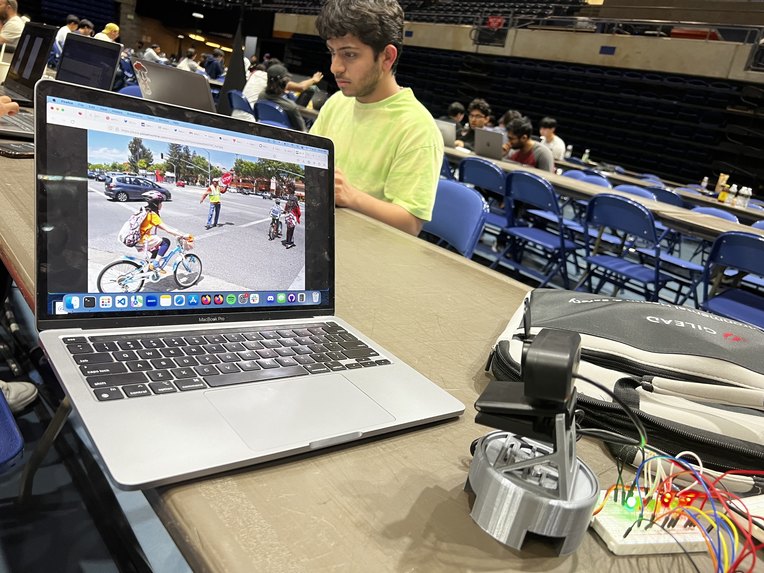
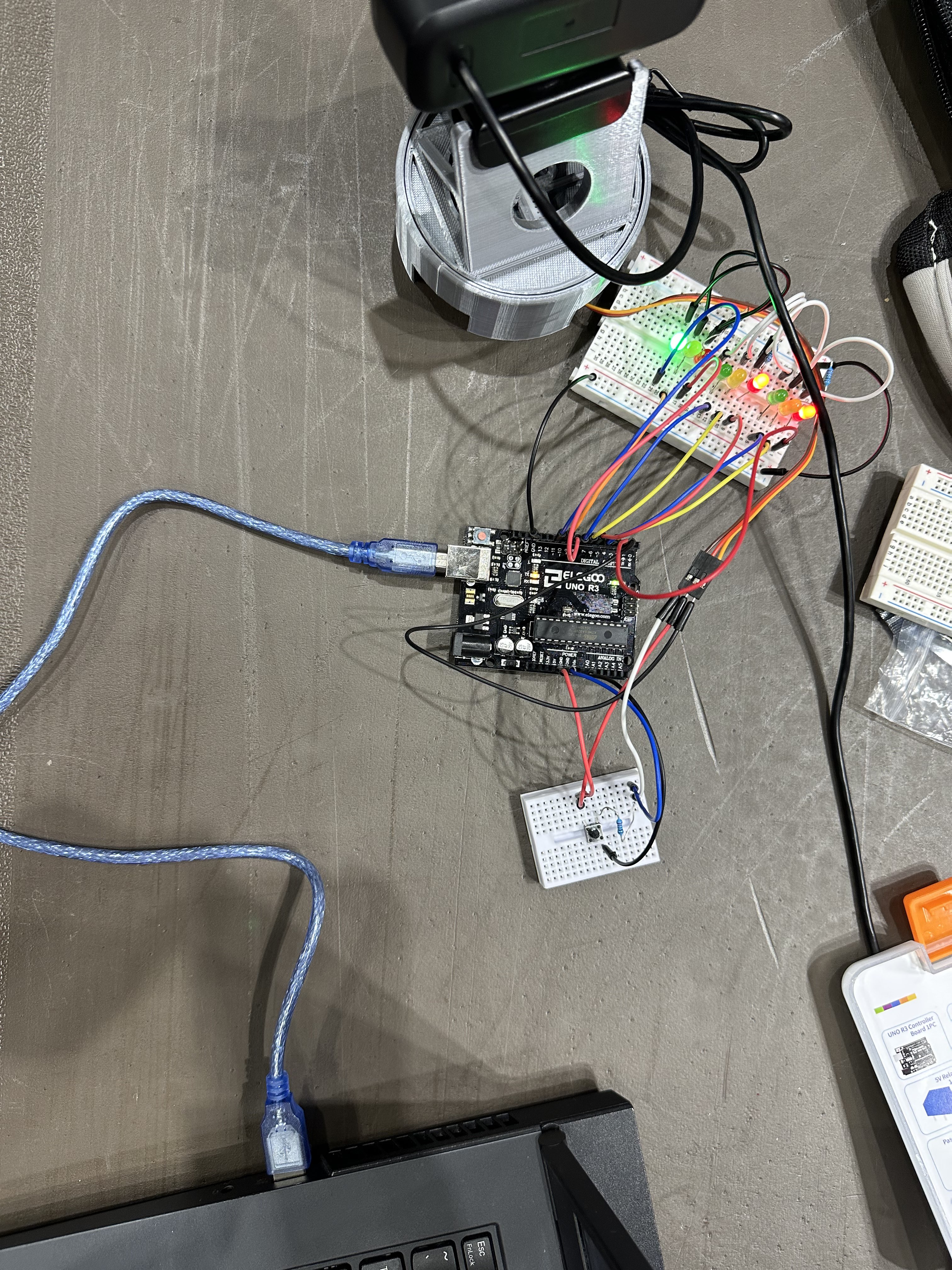
Camera on mount looking at bikes
-
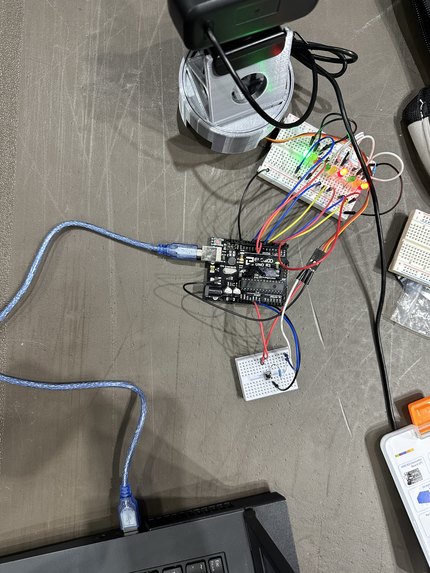
Arduino connecting to breadboard
-
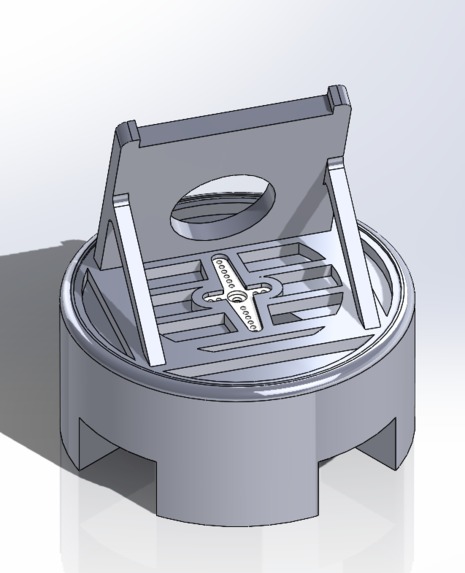
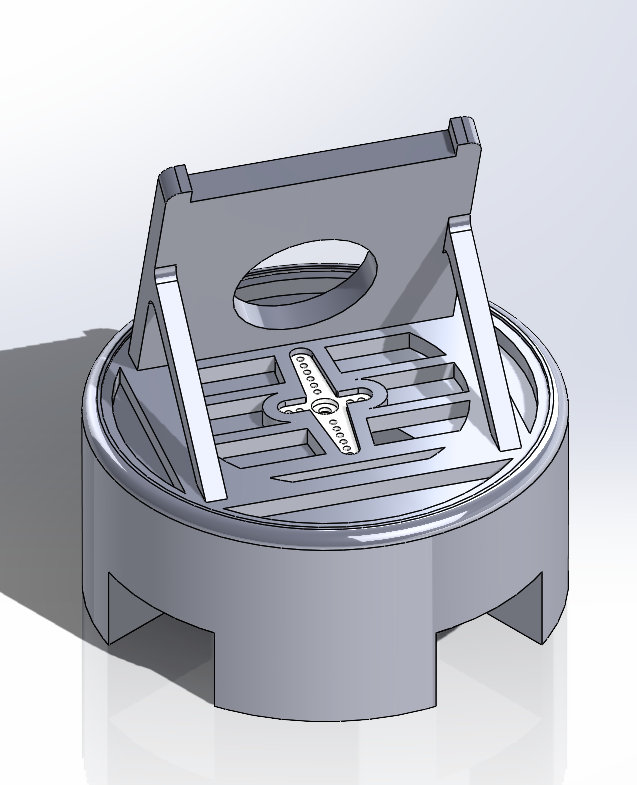
Solidworks CAD model of camera mount
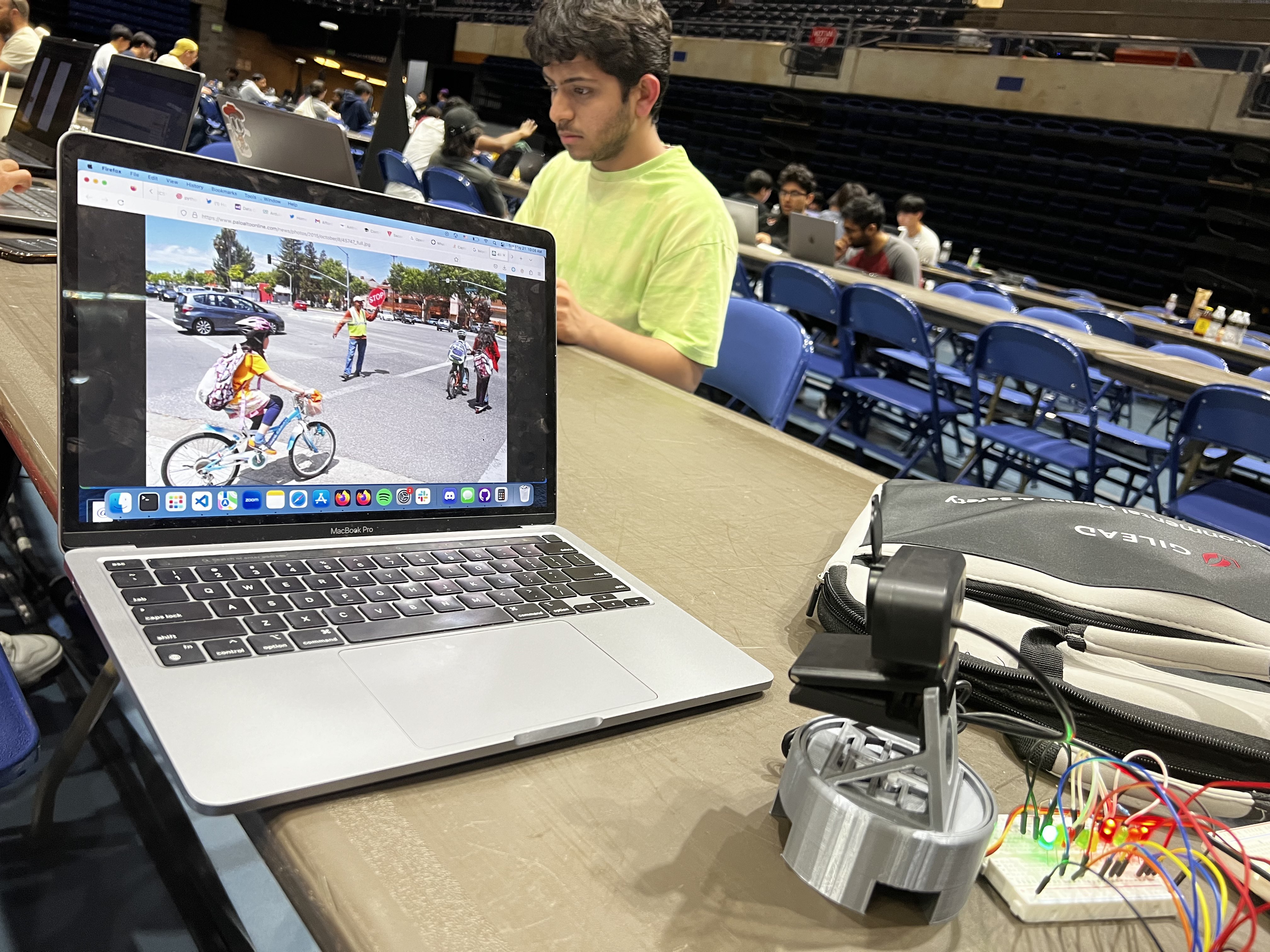
Inspiration
Many students and individuals’ main source of transportation is through biking. Nearly over 1000 bicyclists die and 130,000 bicyclists are injured every year and we want to minimize as many tragedies as possible.
What it does
A button can be pressed and the camera rotates 90 degrees and finds the number of bikes per lane. The LED for the lane with most bikes will turn green, and if there are no bikes the light turns green in a counterclockwise fashion. If there is the same number of bikes, it chooses the most counterclockwise lane. It cannot turn green twice in a row for just one lane. It repeats until the button is pressed again.
How we built it
We 3-D modeled and 3-D printed the bike detector using Solidworks. The bike detector includes a mount and base, which mimics a Lazy Susan. The mount is angled so the camera can cover ground through 90 degree rotations, scanning three lanes. The mount includes a cutout for the servo recess and the servo is coded to allow the mount to rotate on top of the base. The base holds the servo and completes the Lazy Susan design.
We coded the logic. We took a bottom-top approach, focusing on smaller modules first, such as object detection for images, controlling the camera to take pictures, the traffic light logic and finally integrating all these subparts together.
Challenges we ran into
We started with a Raspberry Pi and the pins wouldn’t work so we decided to use an Arduino instead. Also, running the Arduino with Python instead raised difficulties because we had to run Python for the camera, Arduino, and on the computer.
Accomplishments that we're proud of
We are proud of the servo fitting the cutout without interference, without sanding down edges. We are proud of integrating the Arduino with the camera using all Python.
What we learned
We learned how to use an Arduino with Python, gaining skills in integrating hardware with software. We also learned to use pretrained AI models to detect everyday objects, but especially for bicycles, in order to control traffic lights.
What's next for Bike Detector?!
In the future, we hope to include more cameras and incorporate Raspberry Pi, create a system of computers sensing traffic to improve flow, be able to detect the lane the bike is in, ignore bikes leaving a line.

Log in or sign up for Devpost to join the conversation.