-
-
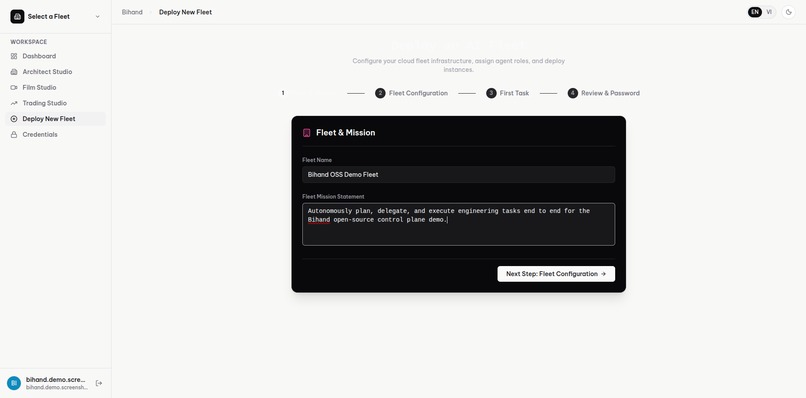
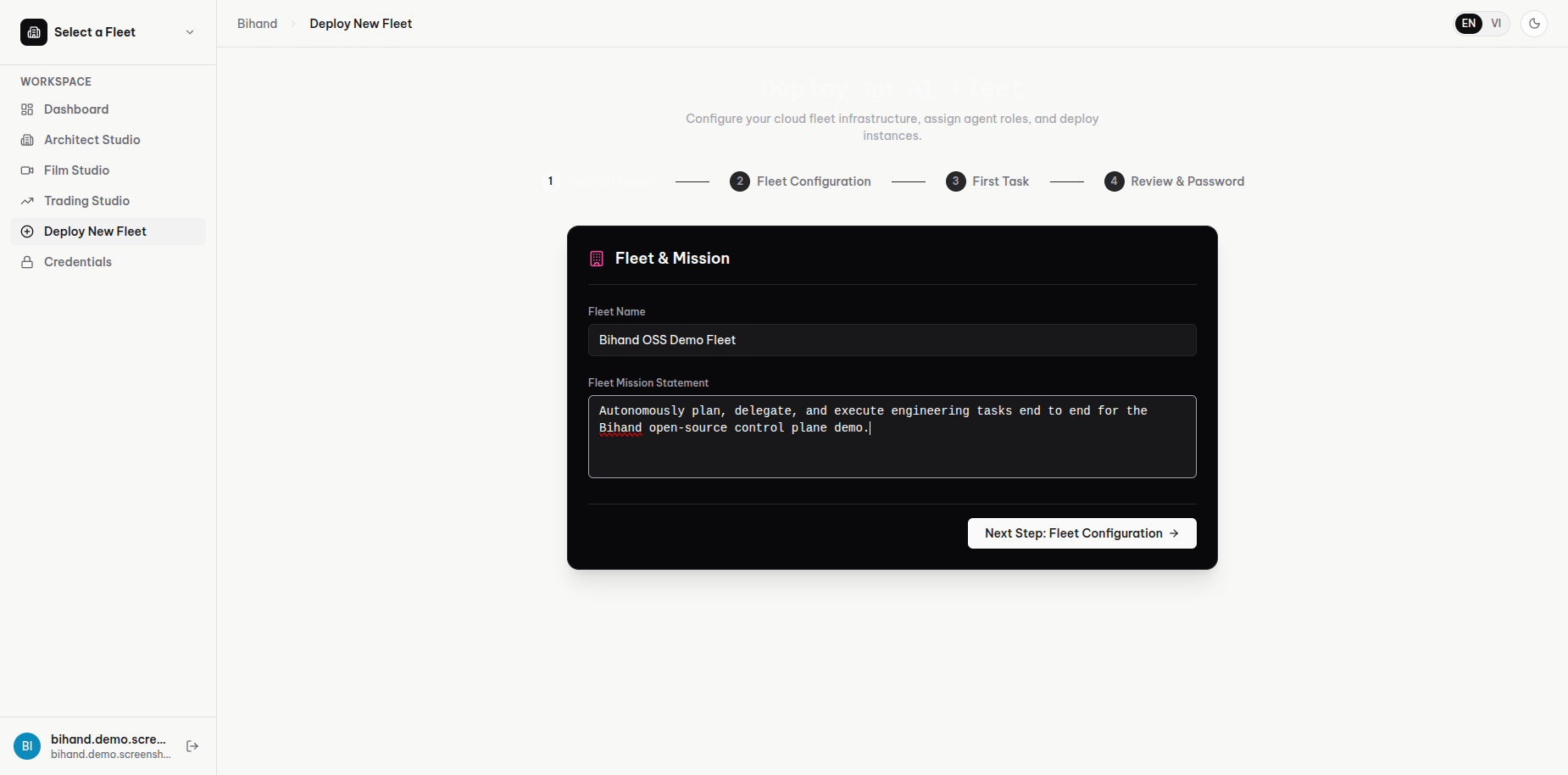
Deploy New Fleet and give it a name and mission statement — this becomes the founding charter every agent in the fleet works from.
-
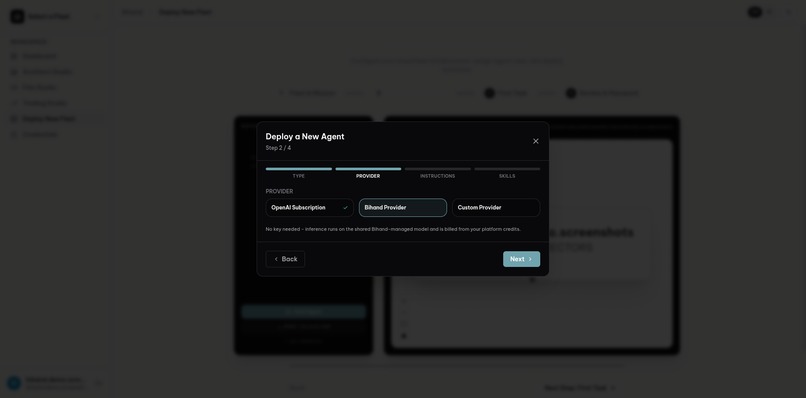
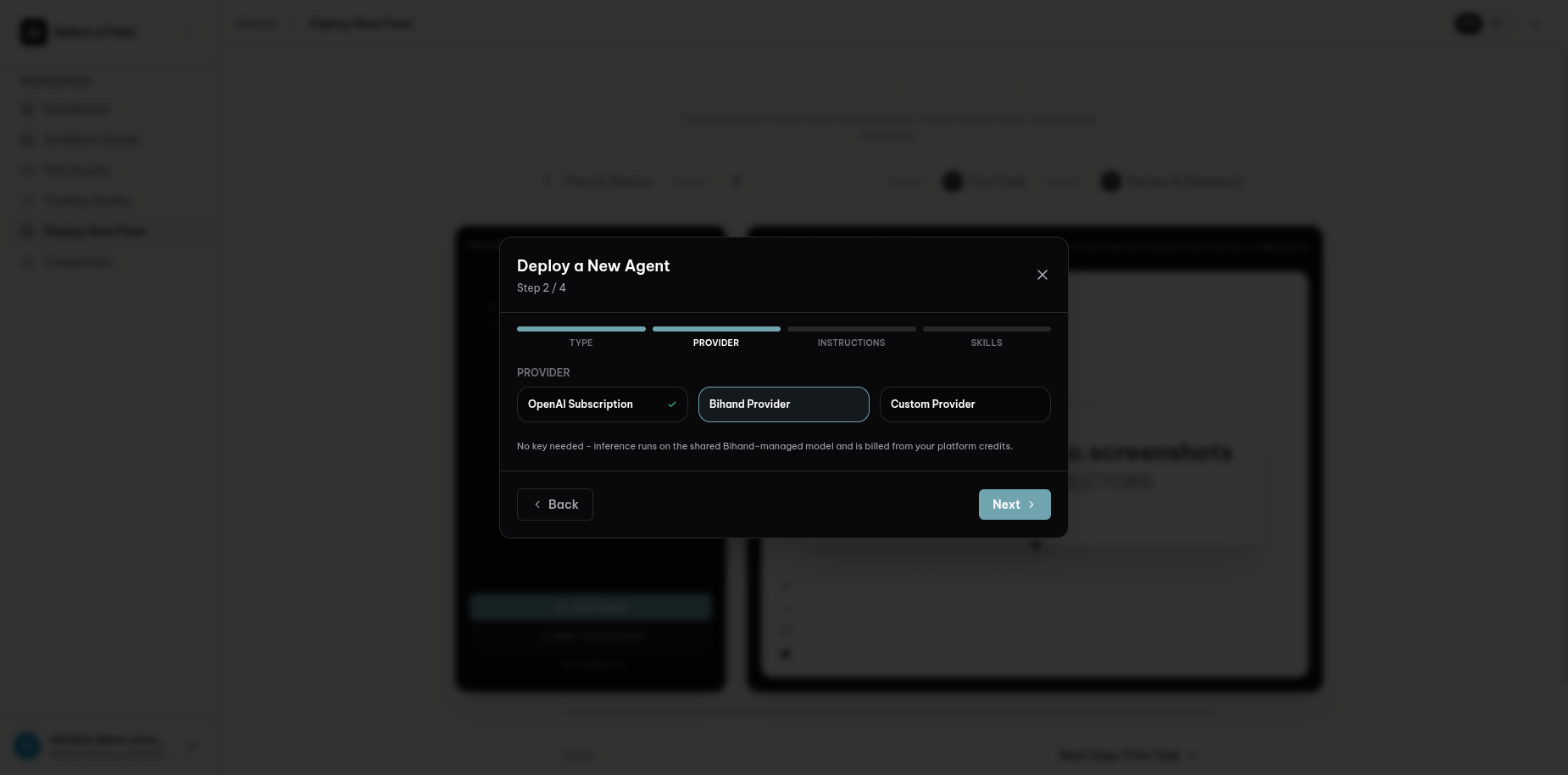
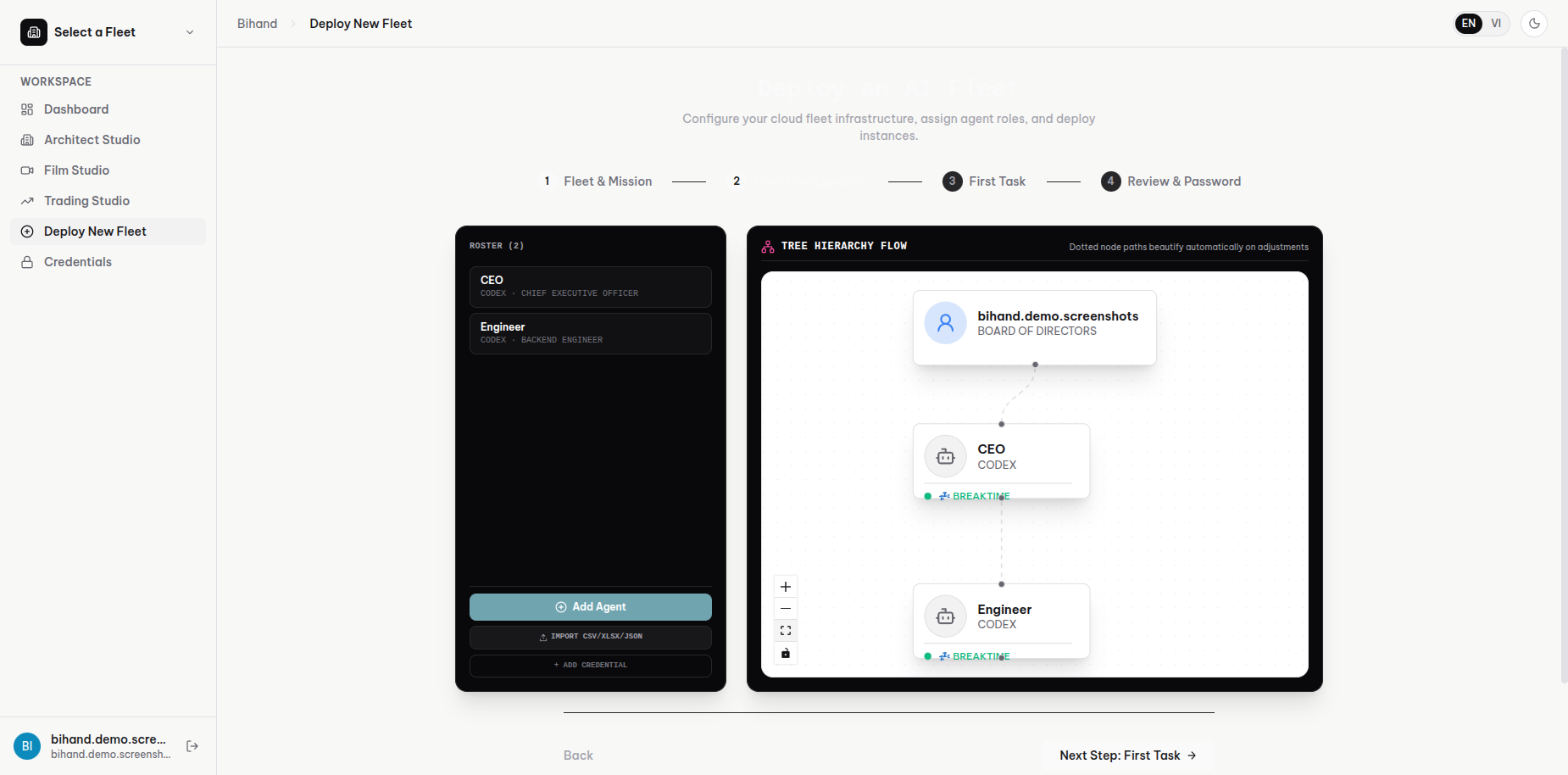
Deploy wizard — Codex runtime, Bihand Provider (no key needed)
-
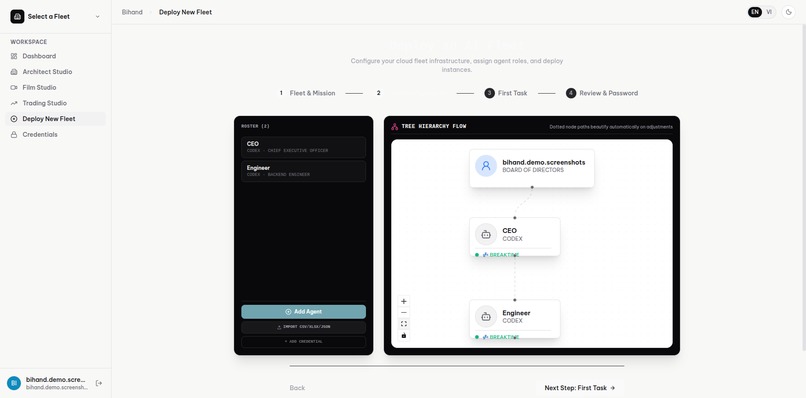
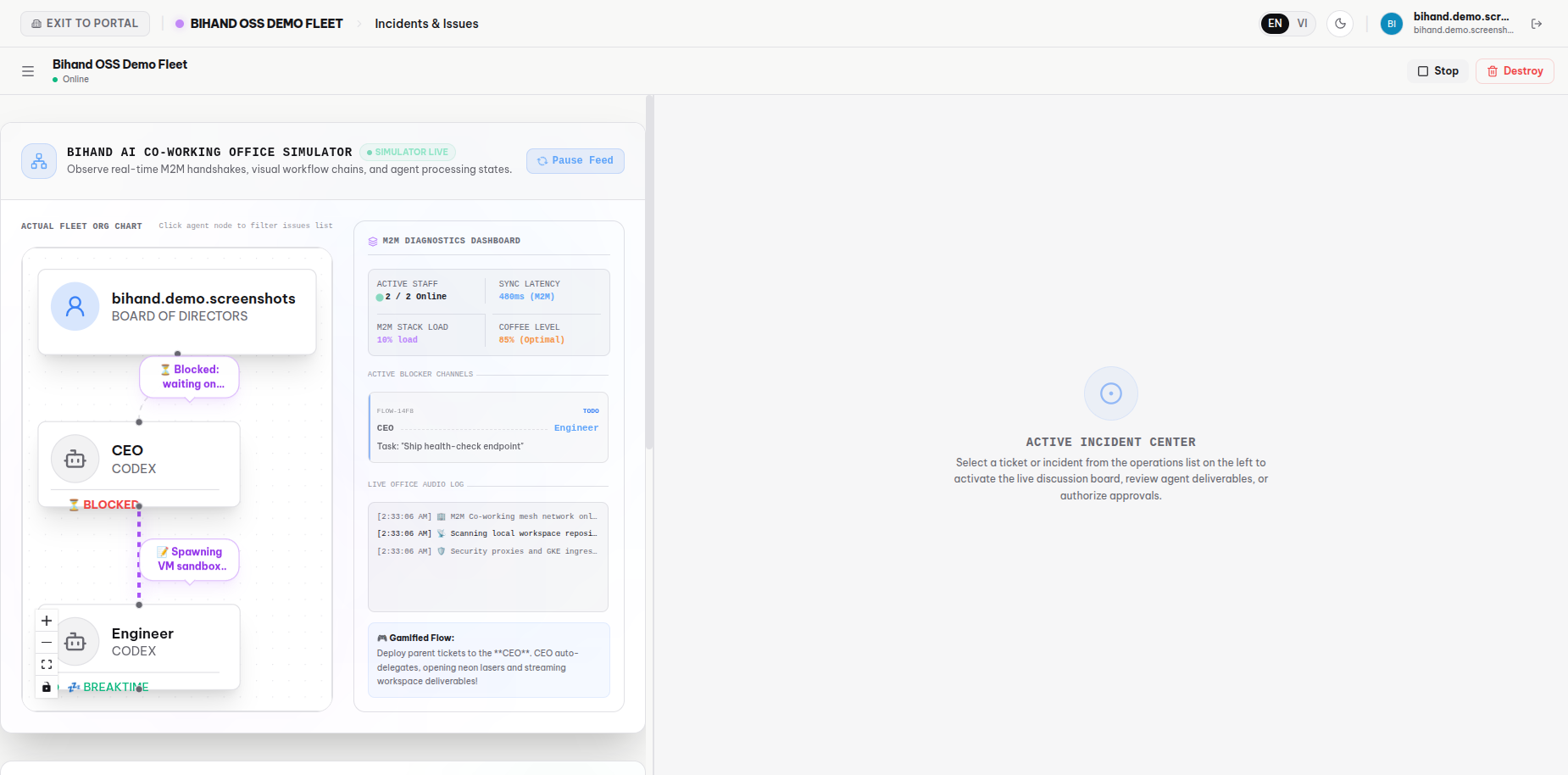
Org chart — Board → CEO → Engineer
-
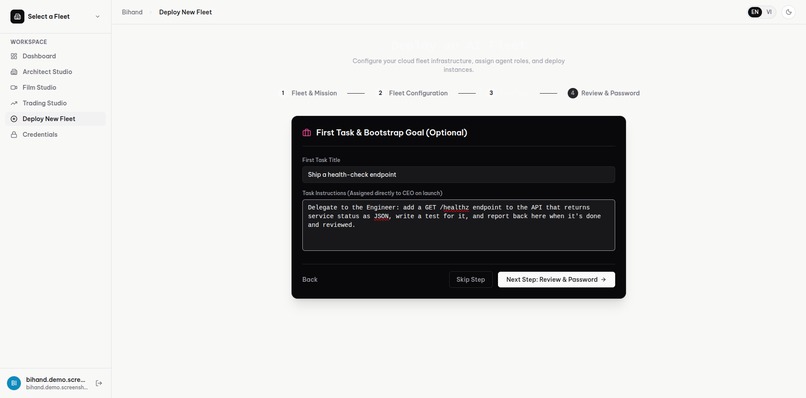
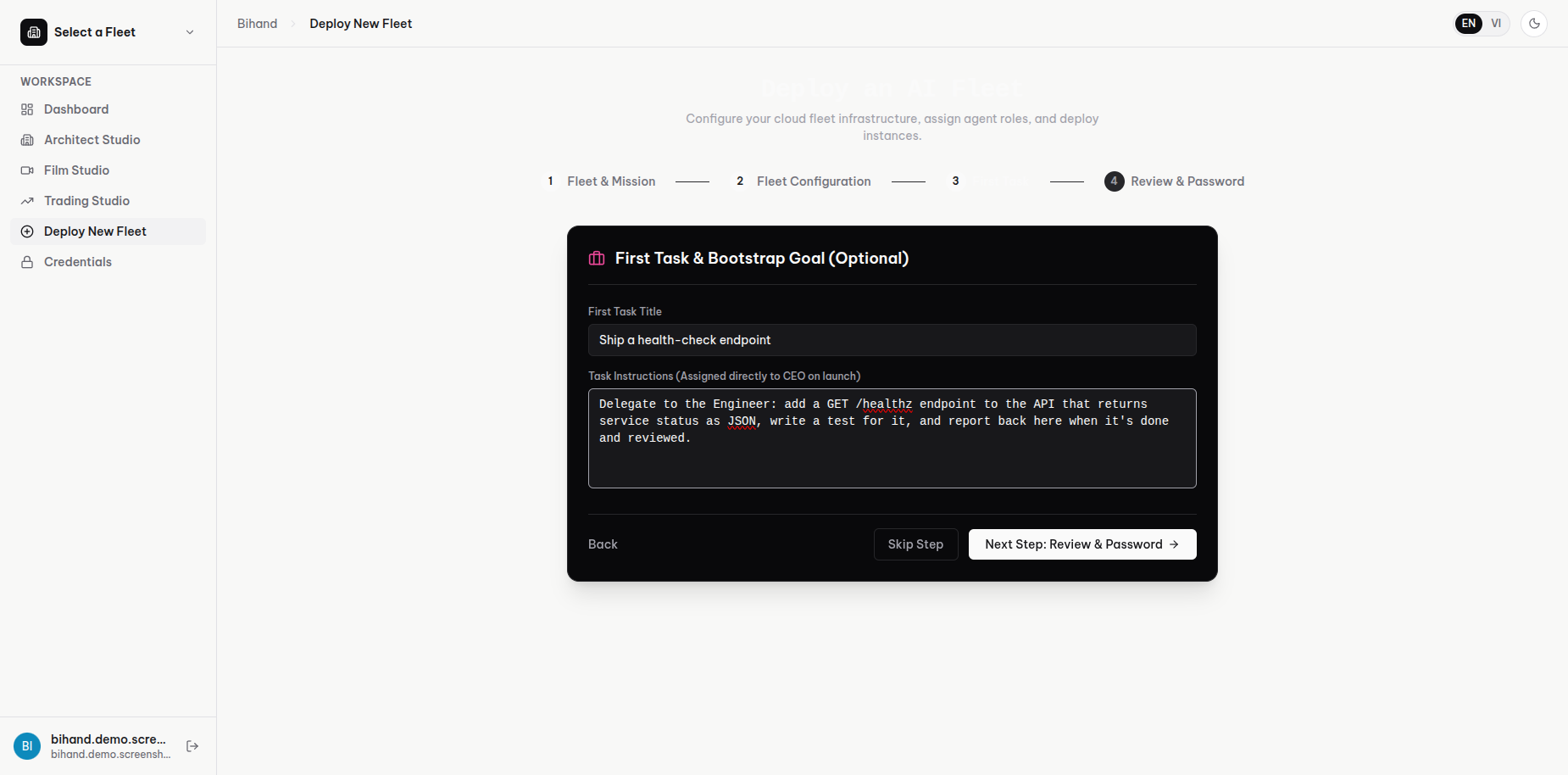
Queue a first task (optional)
-
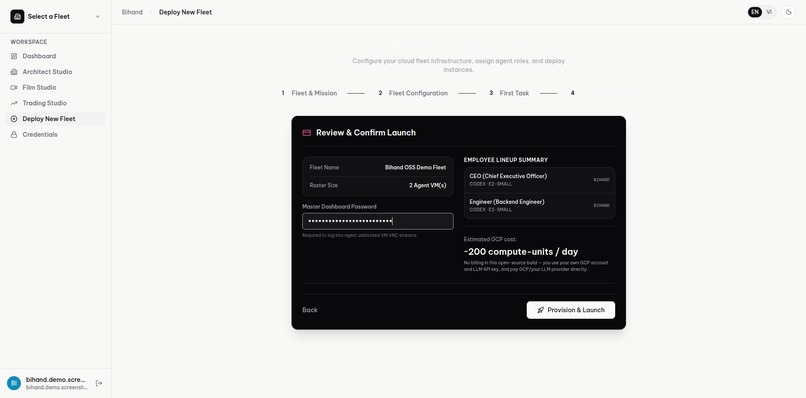
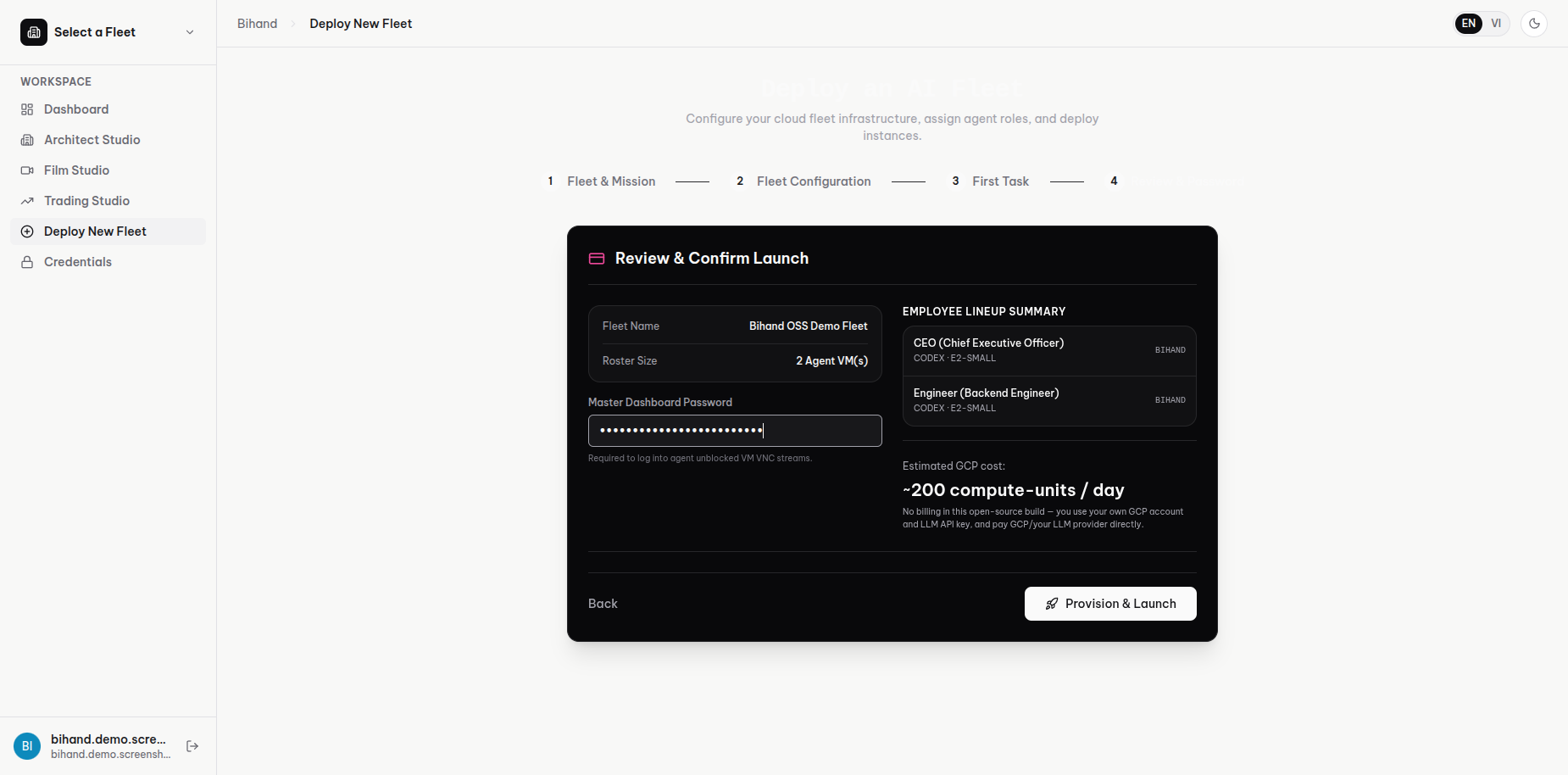
Review and launch.
-
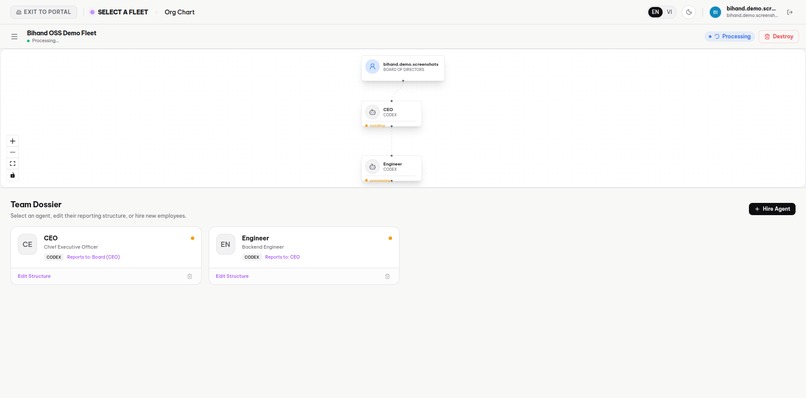
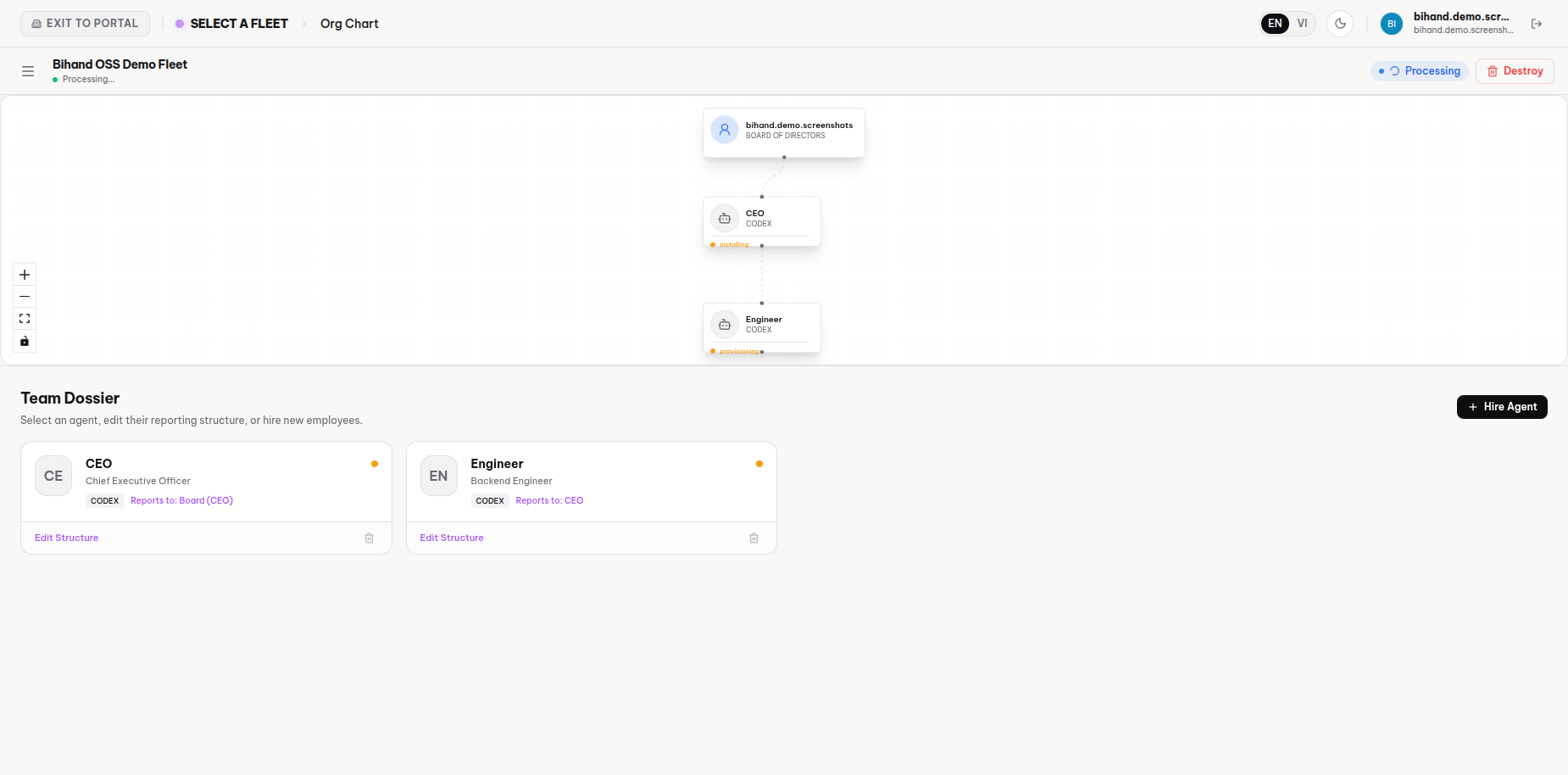
Fleet control plane — real GCP VM states, live
-
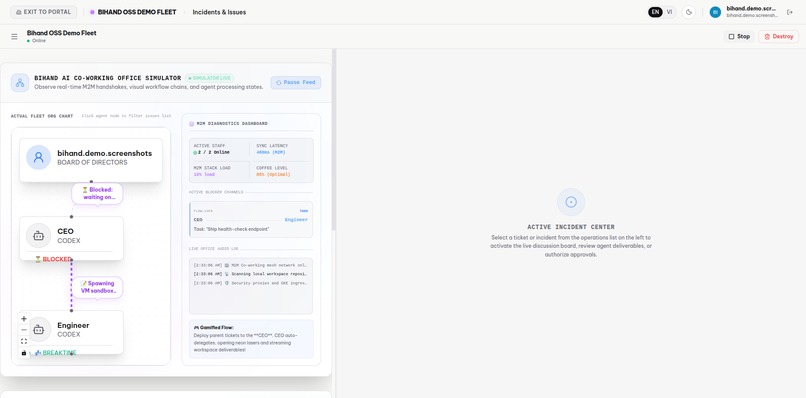
CEO agent autonomously delegating to the Engineer
-
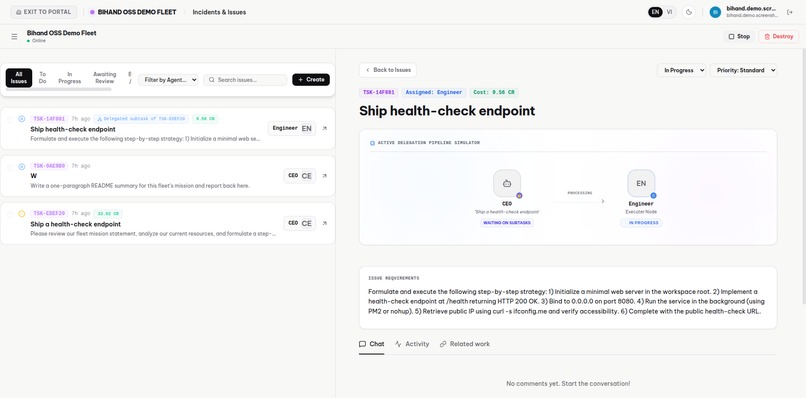
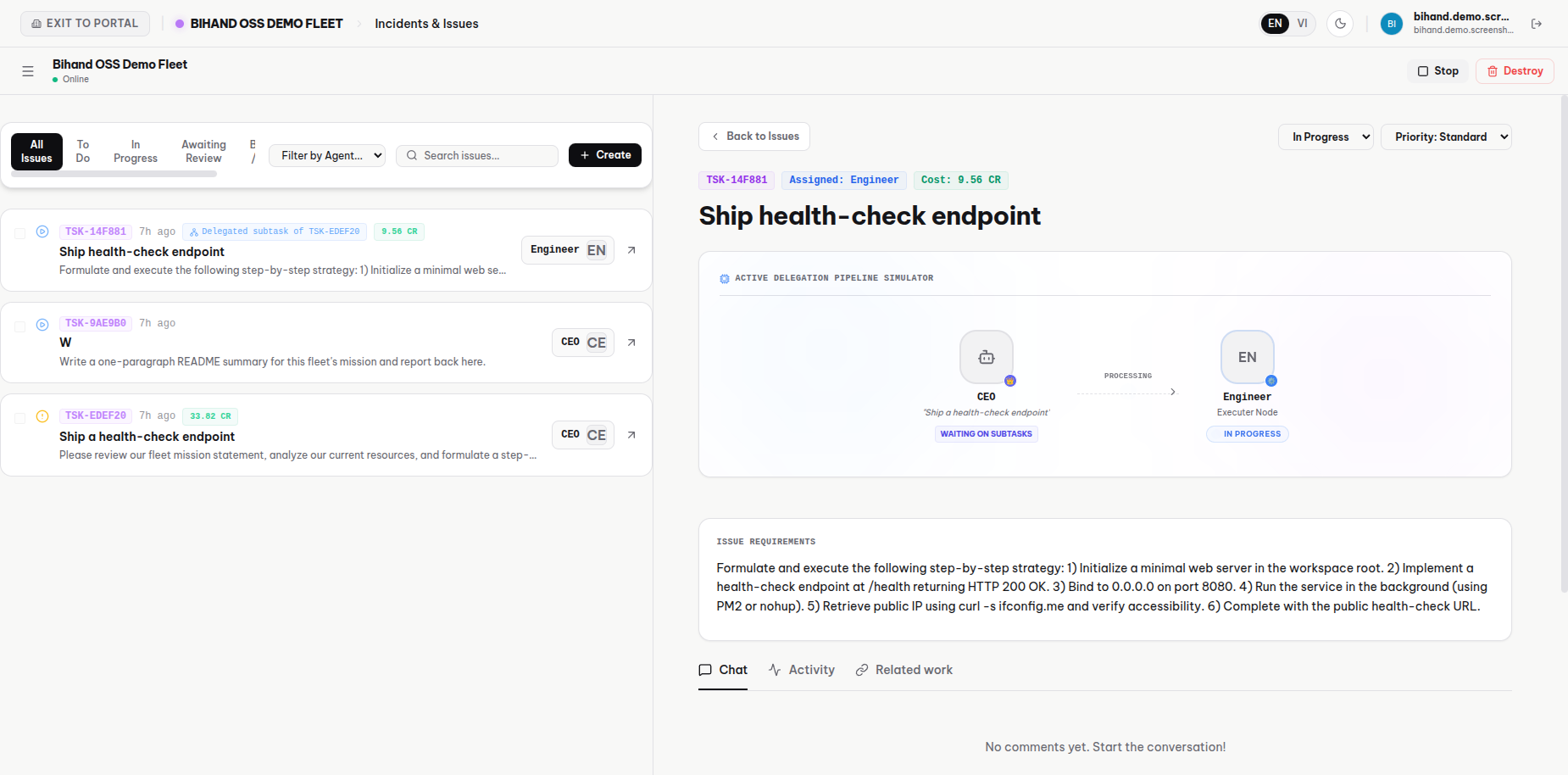
Task detail — the delegation pipeline and full subtask spec
-
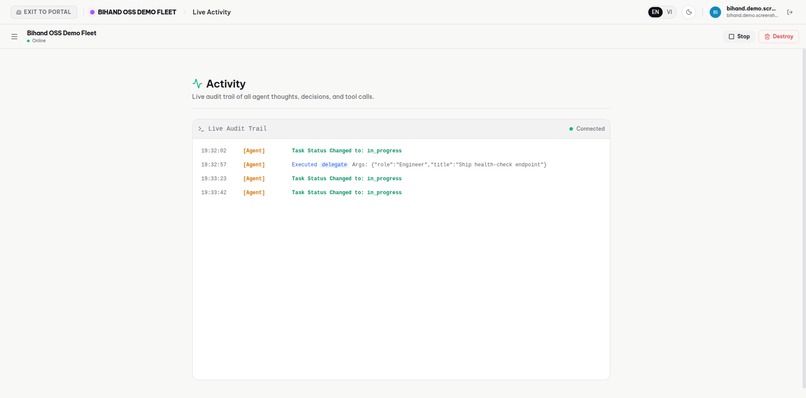
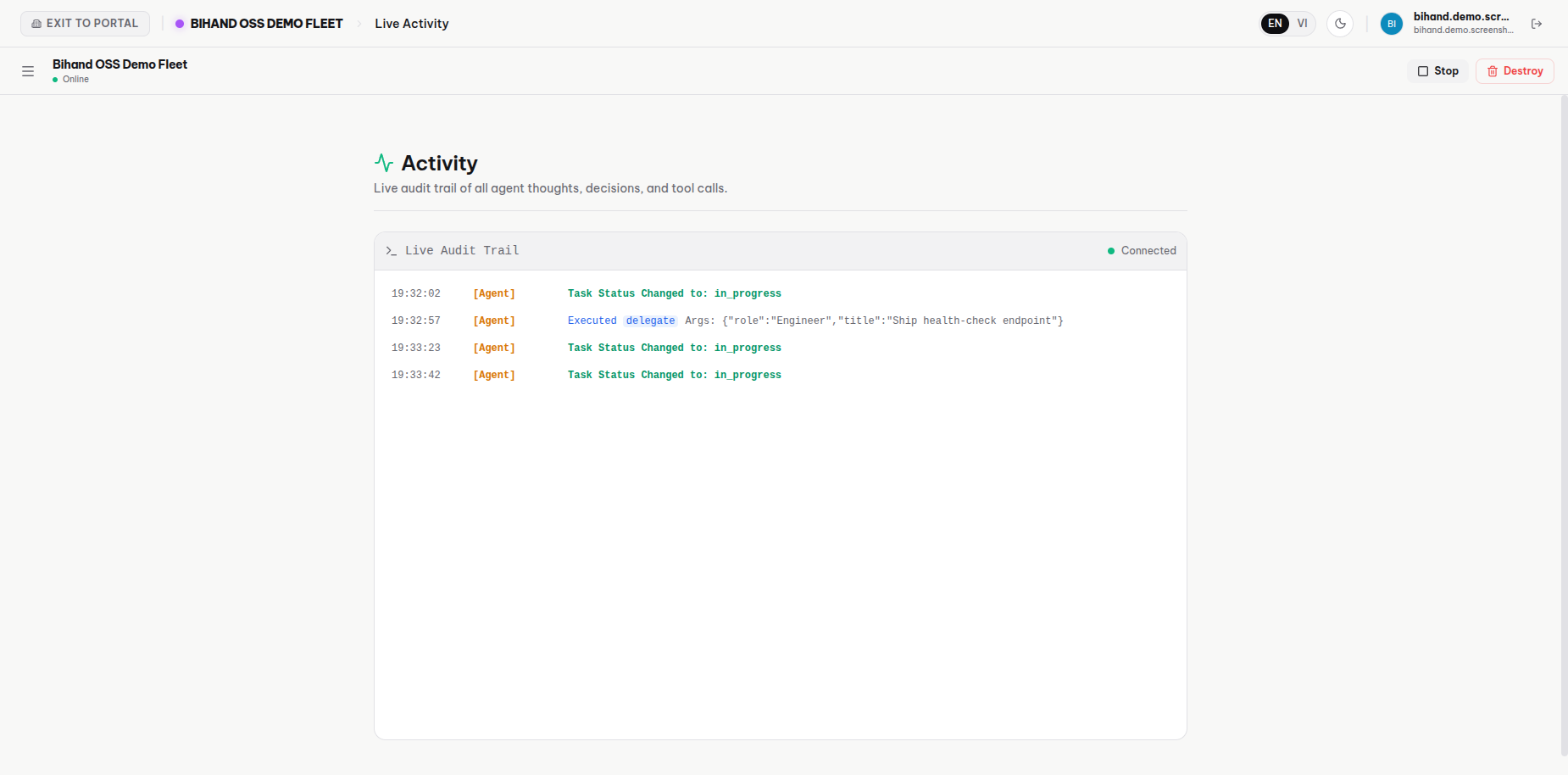
Live audit trail — the actual delegate M2M tool call
-
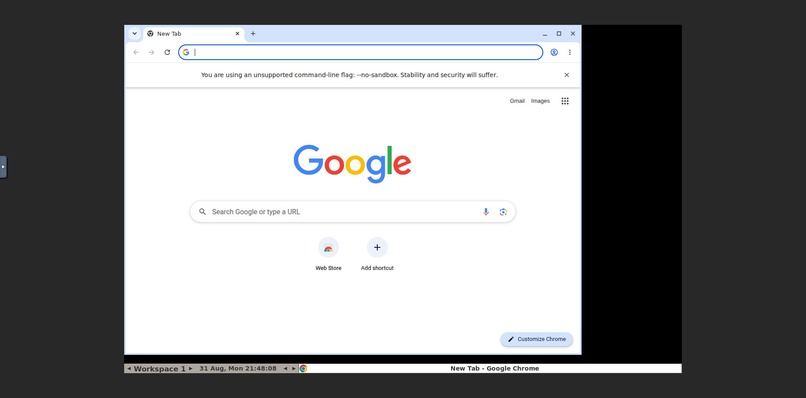
Live Browser Workspace for Human and AI Collaboration
Project story
Inspiration
Every "AI agent" demo looks the same: open a chat window, type a goal, watch it think out loud, close the tab, lose everything. That's fine for a five-minute trick. It's not what "autonomous" is supposed to mean. We wanted to know what actually breaks the moment you take "agents that work in the background for days" literally — and it turns out almost none of it is prompting. It's the boring infrastructure nobody demos: who provisions the compute, who owns the agent's credentials, where does "what was this agent doing when it crashed" live, and how do you stop one compromised agent from acting as every other agent in the fleet. Bihand is what we built to answer those questions — an actual org chart of AI employees, not a chatbot with a system prompt.
What it does
Bihand provisions and runs fleets of autonomous AI agents — CEO, CTO, engineer, support rep — as long-lived, cross-session "employees," each on its own isolated GCP Compute VM, running one of four agent runtimes (Claude Code, Codex, OpenClaw, OpenCode). A human designs the org chart and a task board in a React dashboard; agents pick up real work from that board over a dedicated machine-to-machine API, using their own per-instance identity token, and report back into a durable state machine that survives an agent restart, a crash, or a different agent picking up the same task mid-flight. Two more things ride the same "durable state + an agent acting on it asynchronously" shape: an inbound customer-support pipeline (Messenger/Zalo → an agent drafts or auto-sends a reply), and two Gemini/Veo-powered creative studios for generated imagery and video. Every credential — provider API keys, OAuth tokens, agent tokens — is protected with Client-Side Field Level Encryption before it ever reaches the database.
How we built it
FastAPI + MongoDB + Celery + Redis on the backend, React 19 + TypeScript on the front,
deployed as four containers to GKE via one Cloud Build pipeline. The core design
decision is that agents never talk to the browser or each other directly — every
interaction is mediated through the API, so MongoDB is always the single source of truth
for what an agent is doing and why. Fleet provisioning is a strategy pattern (one class
per agent runtime) that injects a bootstrap script via GCP VM metadata; the M2M protocol
is a completely separate, token-authenticated surface from the human-facing JWT API, so
an agent can never accidentally (or maliciously) act with a human's authority. For this
submission specifically, we also did a full pass to make the repo something a judge can
actually pick up and run: swapped the only-Google-account login for a default
email/password flow, and removed every credit/billing gate across the codebase rather
than just raising the limit — so a judge with their own GCP project and LLM key hits
zero friction between git clone and using every feature.
Challenges we ran into
The hardest part wasn't the happy path — it was making the failure paths trustworthy. An agent VM can die mid-task; the platform has to notice, put the task back in the queue, and let a different agent finish it without losing context, which meant treating the task-status state machine as the actual product surface, not an afterthought. Preparing this exact repo for open publication surfaced real findings the hard way: the private codebase we forked from had a live API key committed to a Docker Compose file, a hardcoded admin-email allowlist, and a hardcoded Google OAuth client ID shipped as a frontend fallback — all real, all fixed, all called out honestly in this repo's git history rather than swept under the rug. And once we removed the credit system, we found it had quietly been the only thing preventing an idle instance from running forever — so "remove billing" wasn't a one-line change, it meant re-checking every code path that had implicitly depended on it.
Accomplishments that we're proud of
A judge can git clone, docker compose up, sign up with an email and password, add
their own GCP project and Gemini key, and be running a real multi-agent fleet inside
minutes — no Google Cloud OAuth app to register, no credit card, no "insufficient
balance" wall anywhere in the product. We verified that claim isn't marketing copy: we
booted the actual API against a real local MongoDB with zero external accounts
configured, hit /register → /login → /me and confirmed a working session with no
password hash leaking into the response, and made a real provisioning call with a fake
API key to confirm it fails on key validation, not a 402 credit check.
What we learned
The hard part of "autonomous agents" is almost entirely infrastructure, not prompting: durable state, credential scoping, and a real identity model for the agent mattered more for "operates with little to no hand-holding" than any prompt-engineering choice did. And a hosted product's login and billing model actively fights an open-source submission's usability — what's a sensible default for a paying SaaS customer (require an OAuth app, meter every action against a purchased balance) is exactly the friction that stops a judge from ever seeing the product work.
What's next for Bihand
See ROADMAP.md for the long-form version, but the short list: pluggable Docker and
Kubernetes agent-compute backends so the platform runs with zero cloud account at all for
local development (GCP stays supported, just no longer the only option), a real
automated test suite (there is currently none), and self-service account management
(password reset, admin promotion through the UI) now that local accounts are the
default sign-in path instead of an afterthought behind Google.
Built With
- bcrypt
- celery
- client-side-field-level-encryption
- cloud-build
- compute-engine
- docker
- fastapi
- gemini
- google-cloud
- google-genai-sdk
- google-kubernetes-engine
- jwt
- litellm
- mongodb
- paramiko
- python
- react
- redis
- typescript
- uvicorn
- veo
- vertex-ai
- vite
- websocket

Log in or sign up for Devpost to join the conversation.