-
-
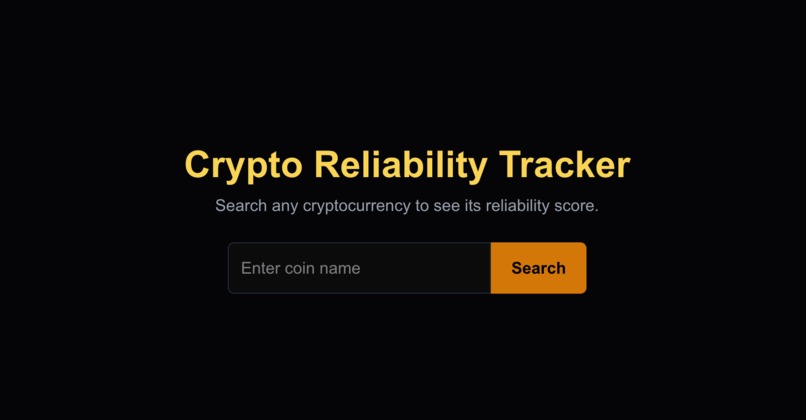
Homepage
-
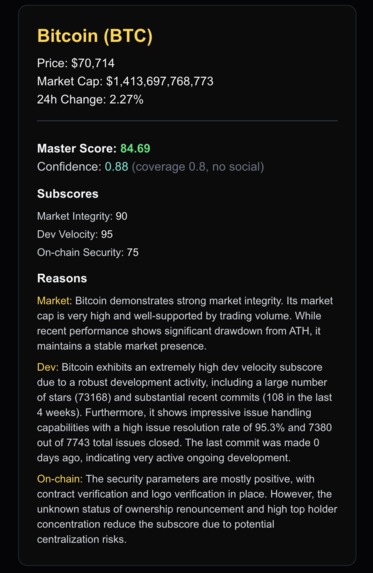
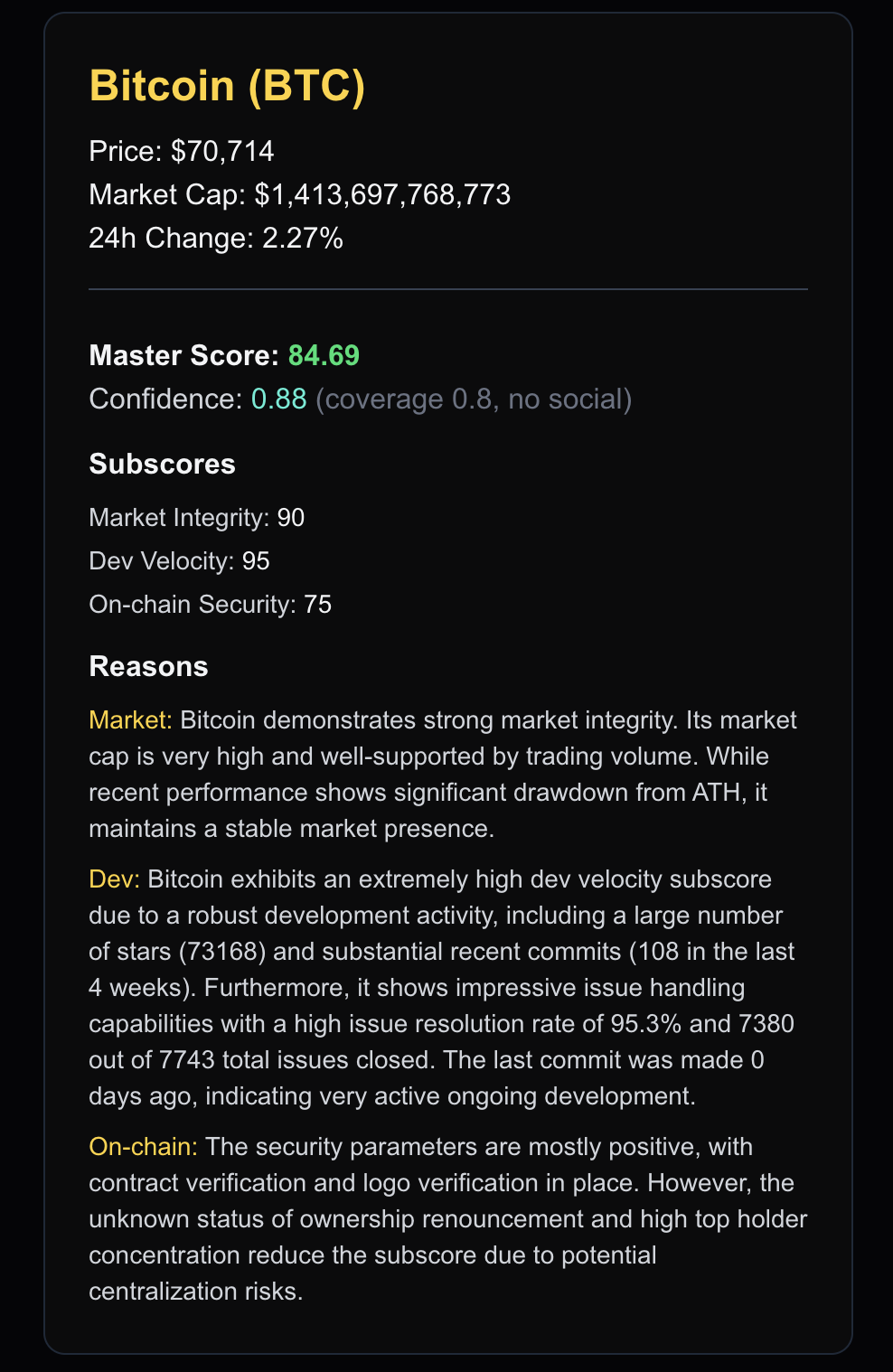
Score report / Search result
-
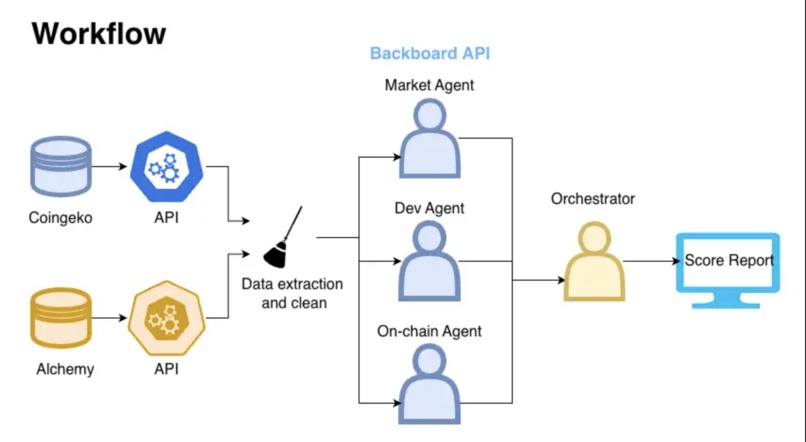
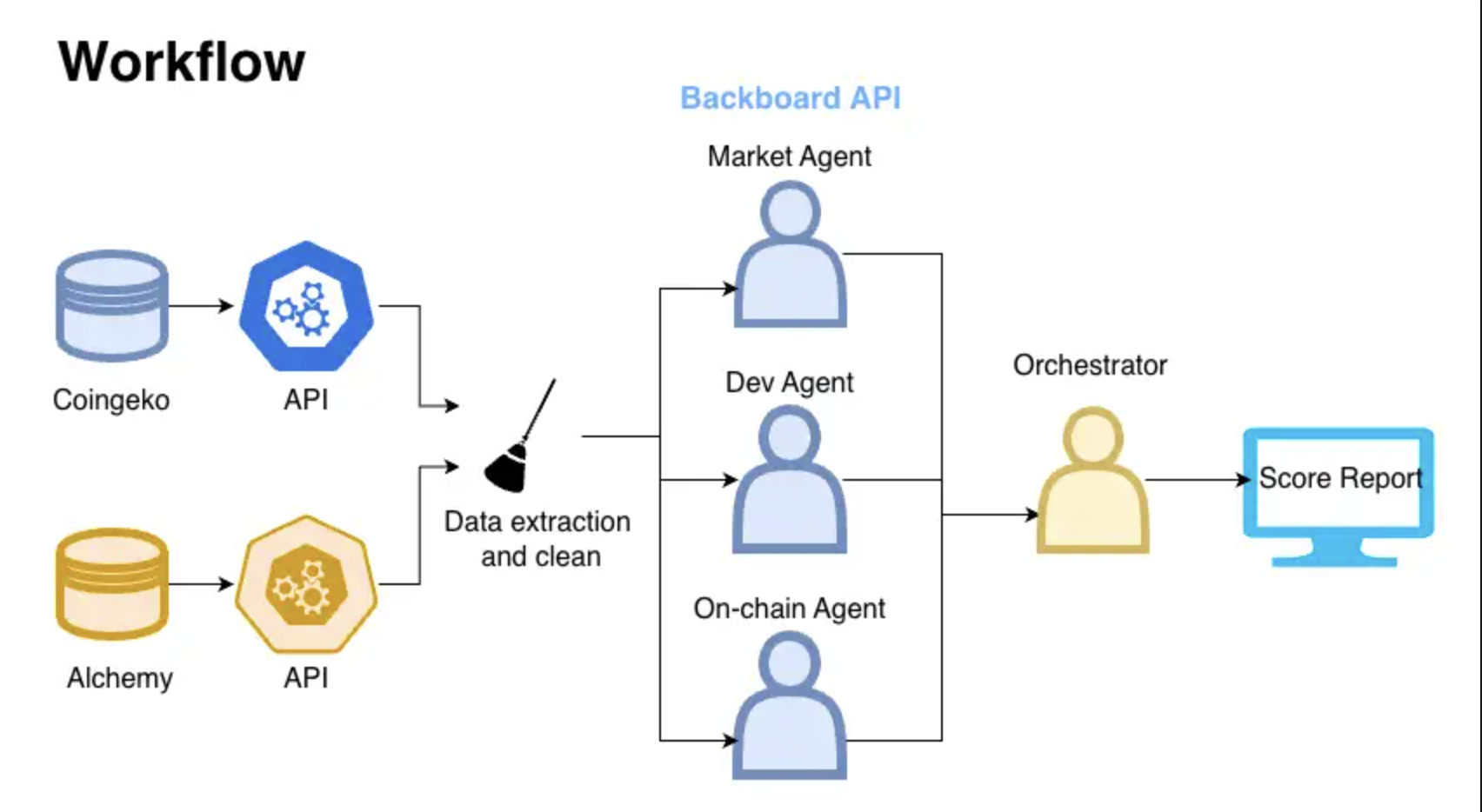
Workflow
Inspiration
Crypto research is noisy and fragmented, price stats, repo activity, and on-chain signals live in different places. We wanted one place that turns those signals into an explainable reliability score.
What it does
Users type a coin name and get a Master Score, Confidence, three subscores (Market Integrity, Dev Velocity, On-chain Security)
How we built it
A Next.js UI calls an internal /api/score route, which spawns a Python orchestrator. The orchestrator runs a Node script to fetch CoinGecko + optional Alchemy context, cleans it into a strict JSON schema, then sends it to three Backboard agents that return JSON subscores. The orchestrator combines them via a weighted average and returns one final JSON payload to the frontend.
Challenges we ran into
We fought a lot of “plumbing” issues: mixed logs breaking JSON parsing, truncated stdout, prompt-template {} conflicts, non-EVM “wrapped” addresses causing provider errors, and Next.js App Router async pitfalls (e.g., searchParams/headers() needing async handling).
Accomplishments that we're proud of
We shipped an end-to-end pipeline that reliably returns structured, explainable scores in seconds, with clean separation between data collection, scoring, and presentation.
What we learned
Trust comes from contracts and explainability: strict JSON outputs, normalized confidence, clear flags, and disciplined logging matter as much as the model call.
What's next for Crypto Reliability Tracker
Add Social Sentiment, improve EVM/non-EVM detection, cache results to reduce API rate pressure, and refine scoring calibration with benchmarks against known scam/legit token lists.
Built With
- backboard.io
- javascript
- nextjs
- python
- typescript


Log in or sign up for Devpost to join the conversation.