-
-
Title slide
-
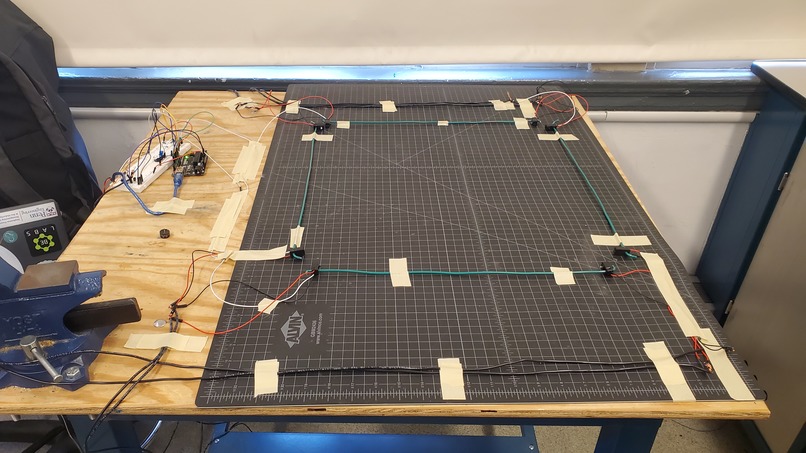
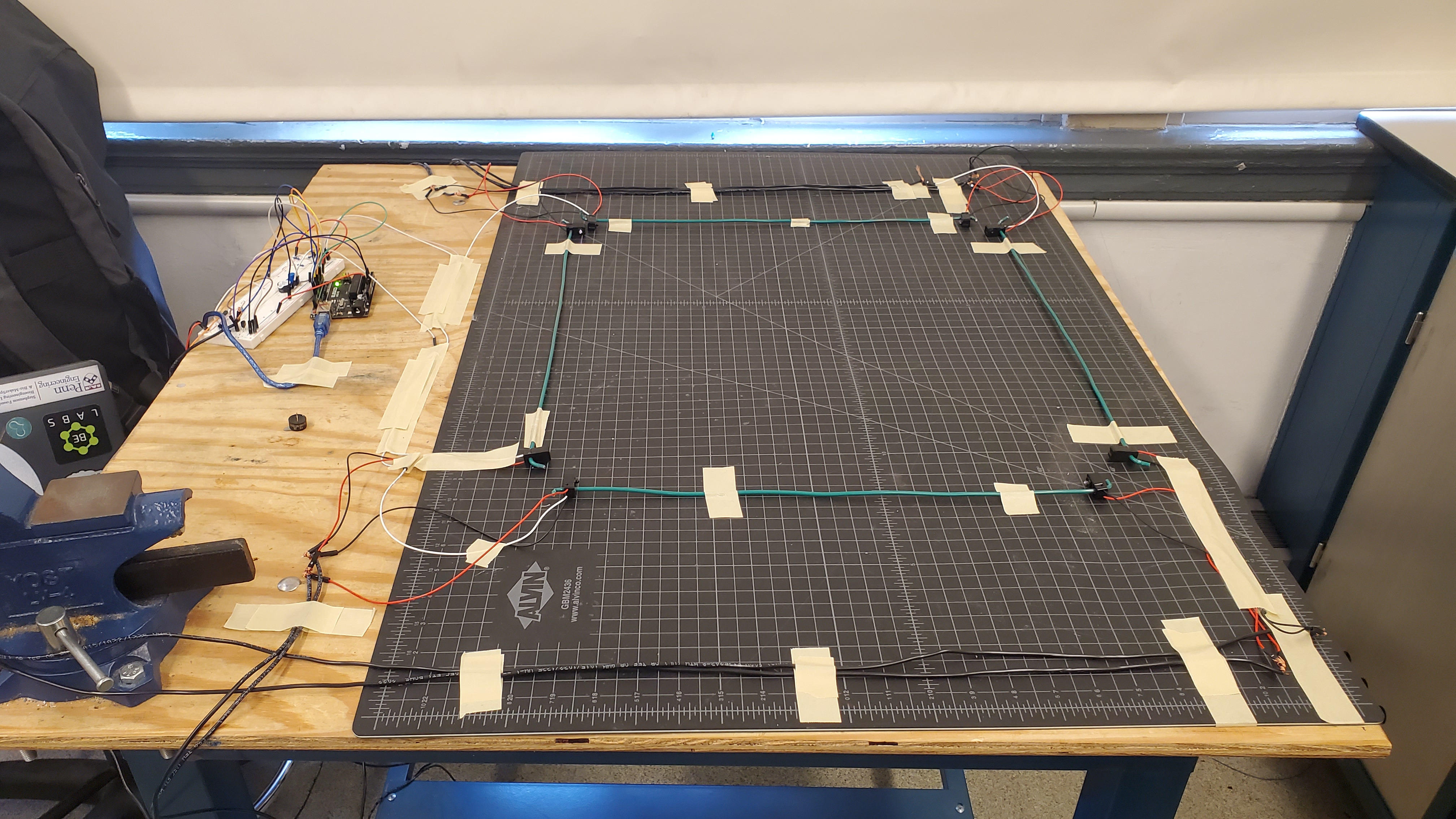
Cage/pen area for the baby
-
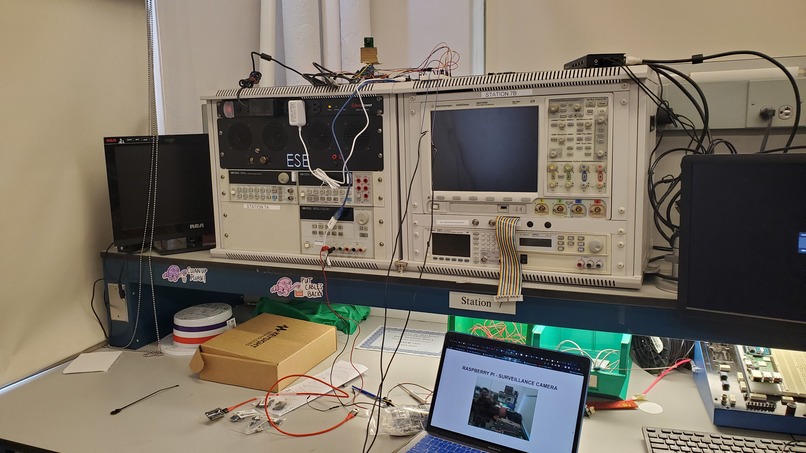
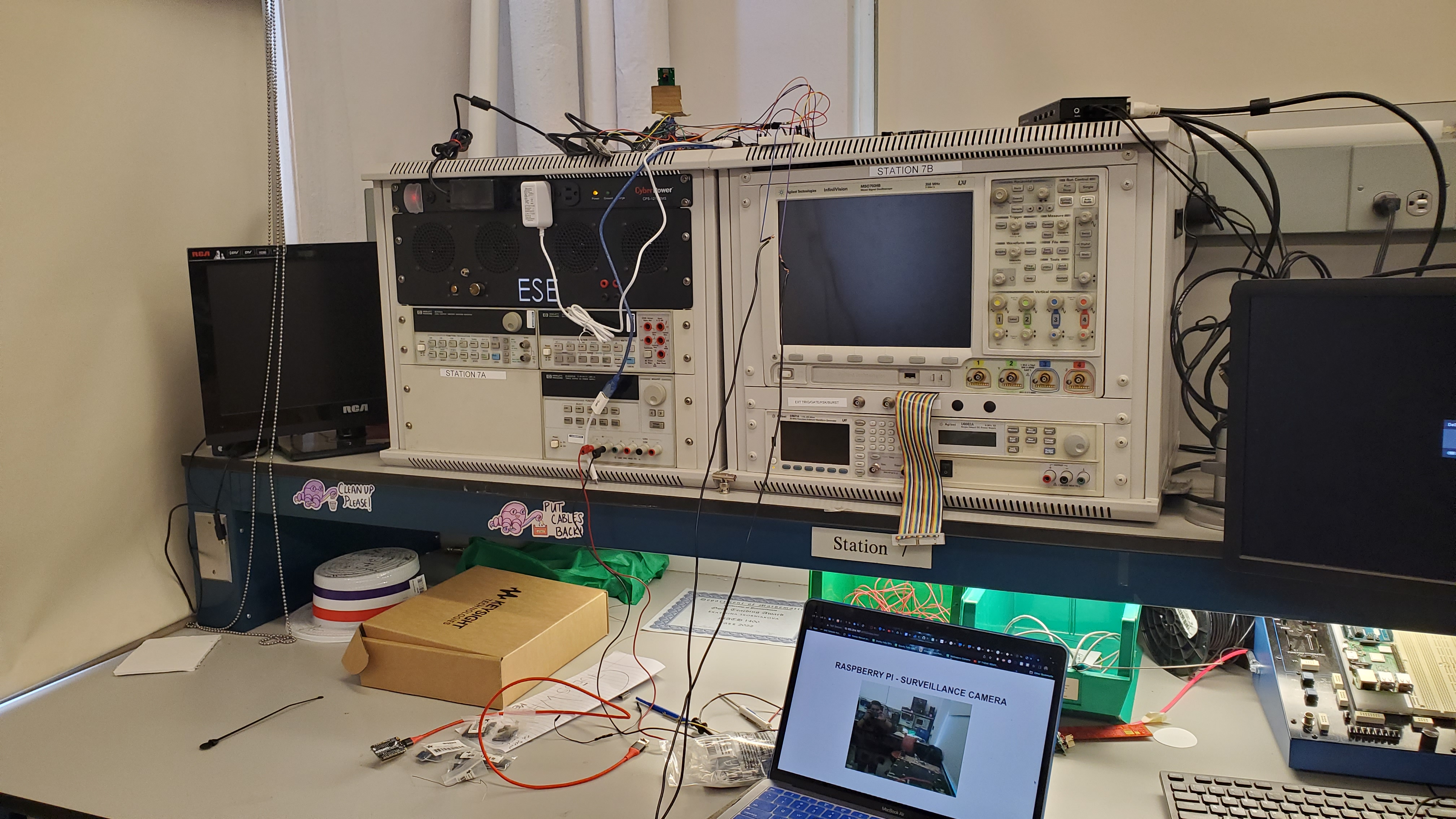
Wireless communication setup, with camera mount on top
Inspiration
Parents often have to juggle multiple duties in the household while keeping watch of their children. The motivation of this project is to provide parents a proxy babysitter to watch their child as they do another task in the house. Current baby monitors on the market start from $160, our child monitoring system provides hackers and engineering parents a cheaper and fully configurable alternative. This project is not intended to completely replace babysitters/responsible child care.
What it does
This project aims to develop a baby monitoring system that ensures child safety and reduces parent stress. The system utilizes IR sensors to monitor a designated area for the presence of a child. In the event that the sensors detect the child leaving the boundery of the safe zone, the system will immediately alert the parent via a notification. The system also includes a camera mounted on a servo that the parent can use to monitor the room in real-time. This innovative solution provides peace of mind for parents, knowing that their child is always safe and secure. The system will also implement a temperature sensor, monitoring the conditions of the room and alerting parents if there are any drastic changes.
How I built it
The system was split into two parts: one for the cage/playpen area for the baby and the other for wireless communication. The cage area was designed using IR sensors to designate a safe zone for the child, and contained a temperature sensor to monitor the environment. For the wireless communication system, we utilized an Arduino Uno, Adafruit Feather ESP32 V2, and Raspberry Pi. The Raspberry Pi was used to set up the web server, while the Feather ESP32 V2 controlled the communication to the web services used for the project. The camera from the Raspberry Pi was mounted onto a servo motor in a way that changing the direction of the servo would change where the camera was pointing. The servo was controlled by the Arduino Uno, and the direction was dictated by the ADC values received from the ESP32, set up using PWM as done in Lab 4.
Challenges I ran into
One of the challenges we encountered was how two MCUs, despite operating under similar conditions, are not necessarily outputting the same logic level. We initially had issues with the ESP32 not recognizing the change in logic from the alarm system being triggered, which required us to troubleshoot and modify our approach.
Another issue we faced was with the notification system to alert the parents/user. Our initial plan was to use the Blynk app to send notifications to the parents, as Blynk was already being used to control a servo/camera wirelessly. While such a feature exists with Blynk, it is locked behind a paywall for PRO features. We tried to use another Blynk feature which was changing a “device state” which does send a phone notification from the Blynk app, but it cannot be changed multiple times in a way that would be convenient for a notification system. We changed our approach to find a free service we could do this, and fortunately we found a service that uses webhooks.
Accomplishments that I'm proud of
We are proud that we were able to successfully design and build a functional baby monitoring system that includes IR sensors, a camera mounted on a servo, and a temperature sensor. We also successfully integrated wireless communication to allow for mobile notifications. We both learned about webhooks in our CIS 3500 class regarding web development, so we utilized that knowledge for creating HTTP requests to trigger a webhook event on IFTTT.
What I learned
We learned a great deal about the design and implementation of a complex system using multiple components and technologies. We also gained experience in troubleshooting and modifying our approach to address unexpected challenges.
What's next for Big Momma's House
The next step for this project is to continue to refine and improve the system's functionality, reliability, and safety. This could include baby-proofing the product, enhancing the camera's capabilities, expanding the range of the wireless communication, and exploring the use of machine learning algorithms to improve the accuracy of the system's monitoring and notification capabilities.

Log in or sign up for Devpost to join the conversation.