-
-
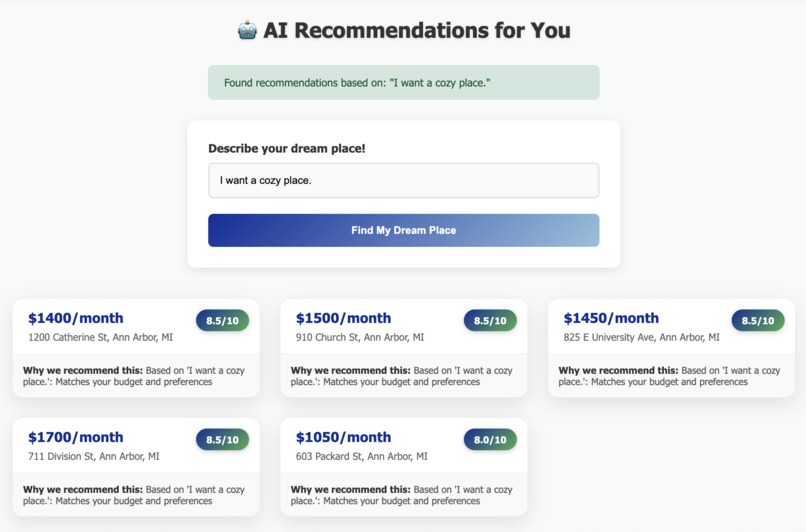
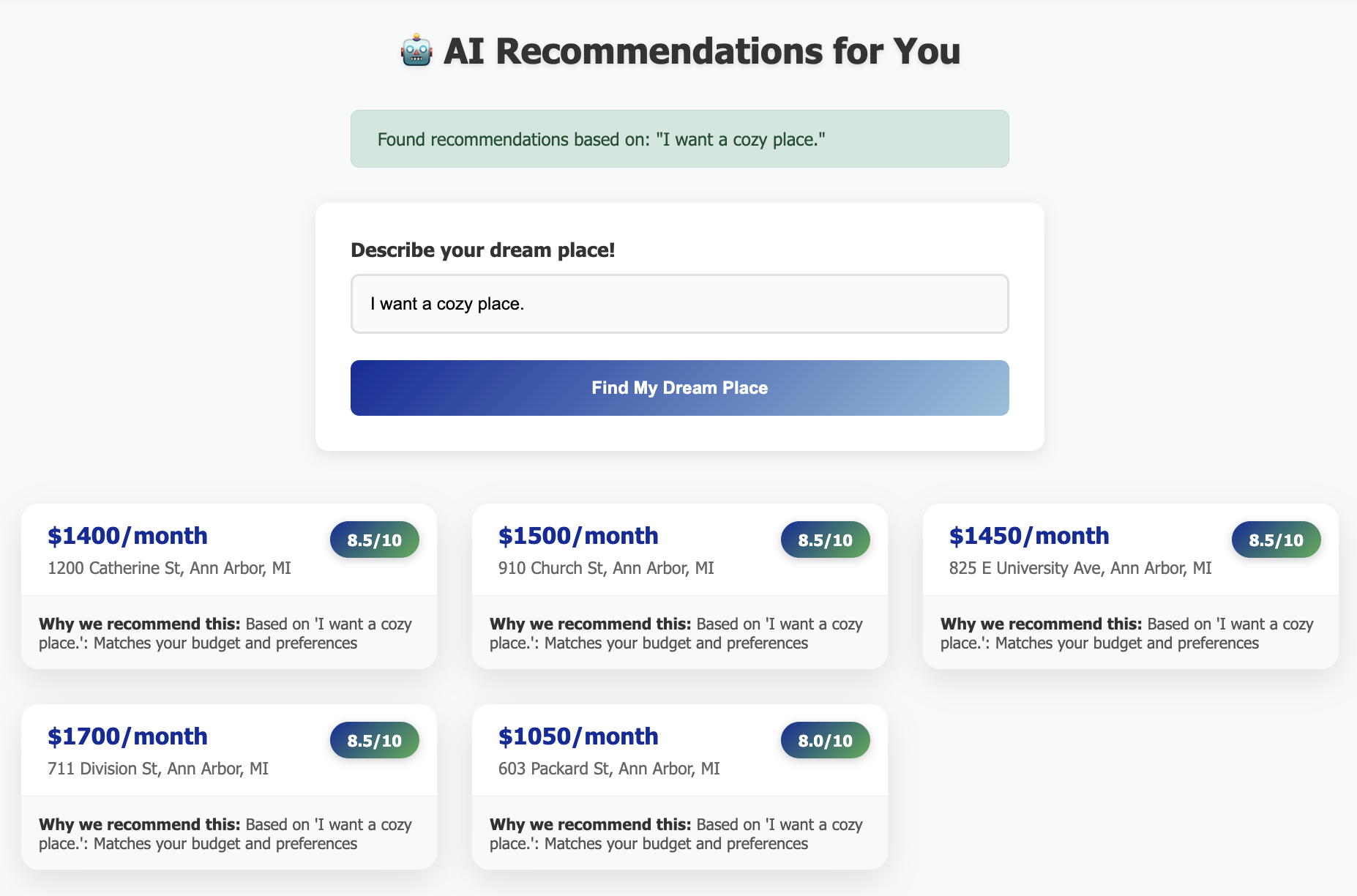
AI Recommendations for User
-
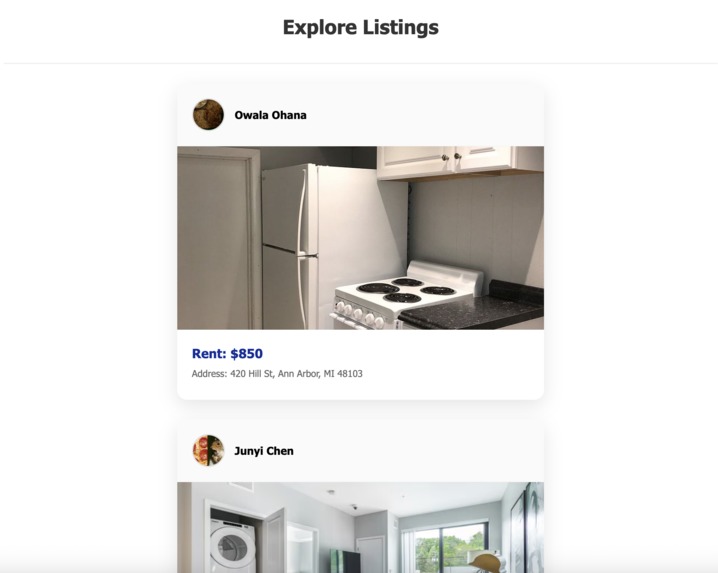
Explore Page for User
-
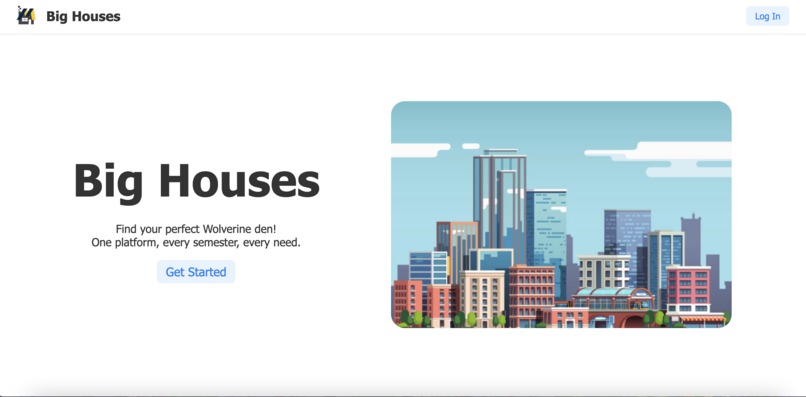
Home Page
Inspiration
Every Michigan student knows the chaos of housing season. The second semester hits, and suddenly everyone is scrambling, scrolling through endless Facebook posts, piecing together info from Snapchat stories, or relying on word-of-mouth leads. It’s stressful, time-consuming, and sometimes feels like pure luck if you find a place.
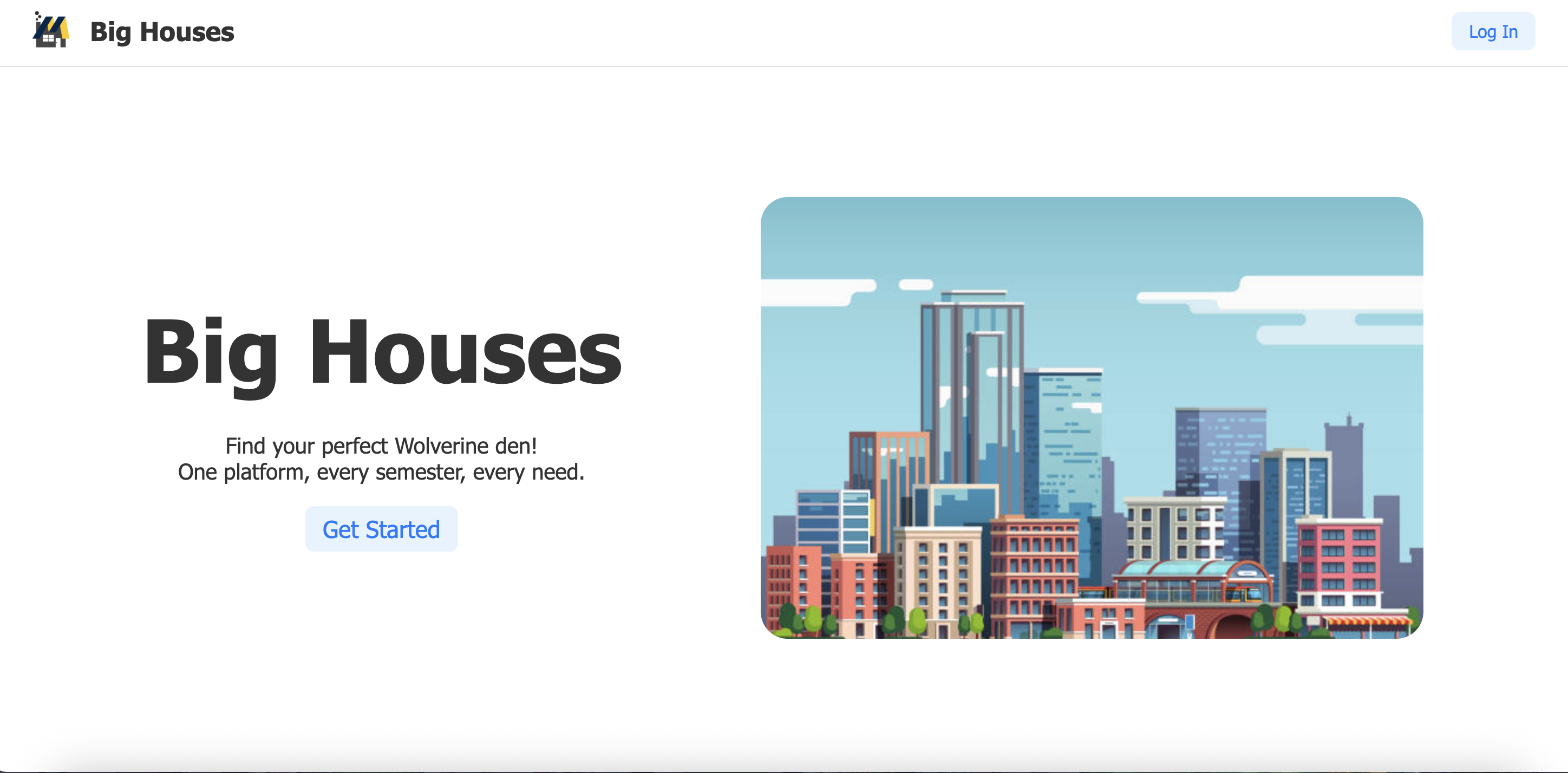
Our app, Big Houses, takes its name from the iconic Michigan Stadium, affectionately called “The Big House.” Just like the stadium inspires school spirit, our platform brings Michigan students together to find housing smarter, faster, and with a touch of Wolverine pride.
What it does
We set out to solve a simple but frustrating problem: finding housing as a Michigan student shouldn’t be stressful. That’s why we built a centralized platform designed specifically for U-M students—where searching for housing is faster, smarter, and more seamless.
Whether it’s for the school year, internships, or research, students can explore options filtered by their preferences in an easy-to-read, standardized format. With U-M email required for access, the platform stays safe and secure, ensuring trust within the community.
How we built it
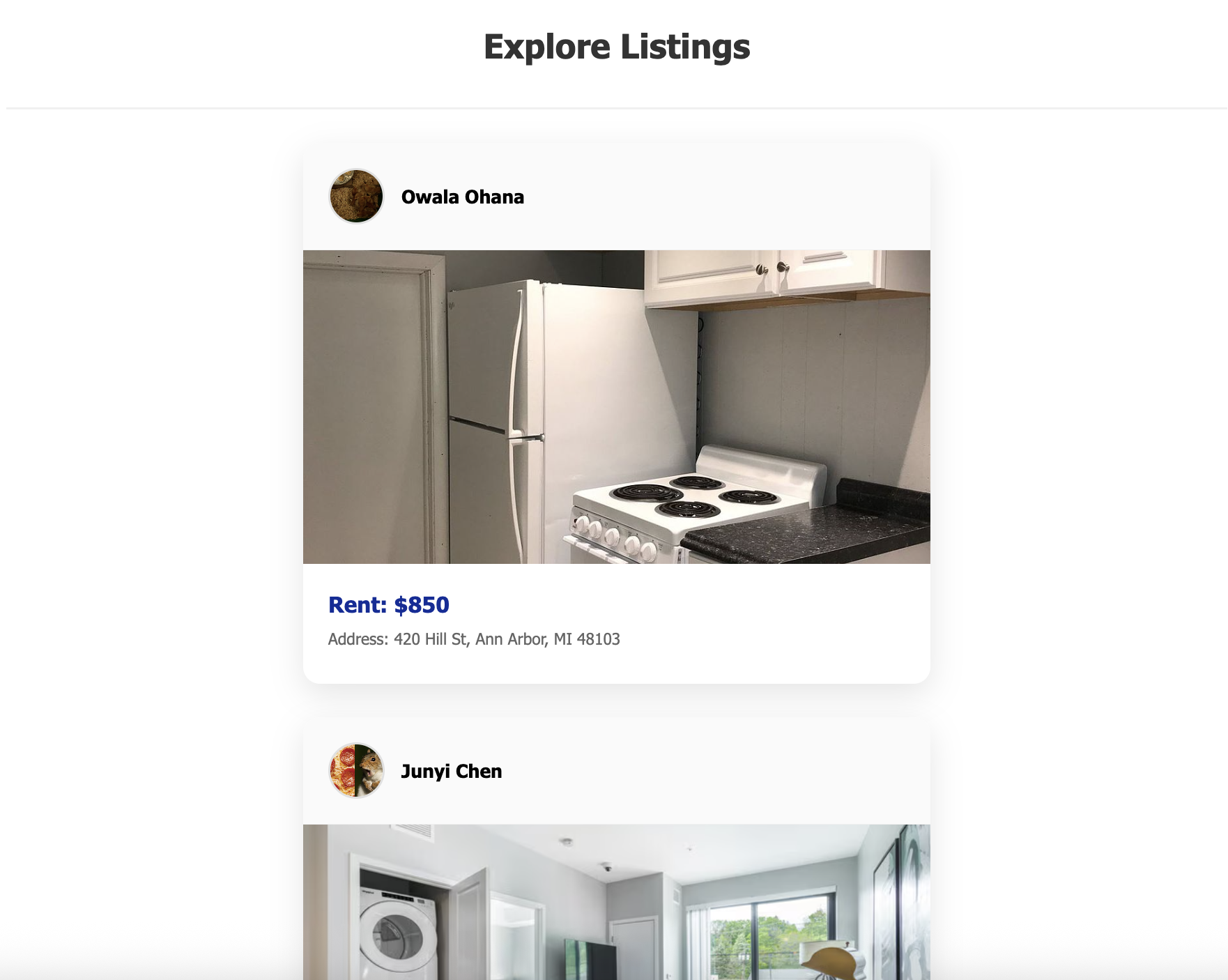
We built the platform with Python/Flask powering the backend and SQLite handling the database. On the frontend, we used HTML, CSS, and Jinja templates to create a clean and usable interface. The app includes account features (signup, login, logout), editable student profiles with preferences and contact info, and housing listings that anyone can add or explore. We added a filtered page called explore that filters based on the user's preference to make searching efficient, and included image uploads for both profiles and listings to give the platform a personal, real-world feel.
Challenges we ran into
One of the first hurdles we faced was hosting our Flask app could only run on a single device at a time, which made testing and collaboration tricky. With four people coding together in VS Code Live Share, we also ran into frequent sync issues that slowed us down.
On the frontend, styling and layout took more time than expected. Creating a clean, usable interface required more iteration than we initially thought. At the same time, the pace of the hackathon pushed us out of our comfort zones. For most of us, this was our first hackathon, so adapting to the compressed timeline while also learning new tools felt overwhelming at first. Over time, though, we improved at dividing tasks quickly and communicating clearly.
We also had technical challenges that stretched our problem-solving skills. Learning and implementing cookies for login/authentication took effort, and debugging SQL queries for filtering housing listings was especially difficult. Our main query for matching users to housing posts involved many conditions, and making it both correct and efficient required multiple rounds of debugging and optimization.
Accomplishments that we're proud of
We’re proud of how well we worked together under a tight timeline, building a platform that’s both usable and visually clear. Learning new tools and figuring out authentication and session management was challenging, but we came away with a much stronger understanding. We also got better at dividing tasks quickly and communicating as a team, which made the whole process smoother and more efficient.
Overall, this was a memorable experience that inspired both first-time and experienced hackathon participants on our team to take part in more hackathons in the future.
What we learned
This project pushed us to grow in a lot of ways. We got hands-on experience building a full-stack web app with Flask and SQLite, and we learned how to design forms and layouts that feel intuitive rather than overwhelming—because our main goal was to keep this website stress-free for students searching for housing. Working with images and file uploads gave us a chance to think carefully about security and reliability, and we realized how important it is to plan data structures early to avoid roadblocks.
What made the project even more exciting was that, for many of us, it was our first time building with AI. We used Google’s generative AI tools to speed up development, brainstorm solutions, and enhance the user experience. Beyond the technical side, we also learned how to divide tasks, coordinate effectively, and keep moving fast under the time pressure of a hackathon.
What's next for Big Houses
We’re excited to continue improving Big Houses by adding features that make housing searches faster and smarter. We also want to implement notifications and alerts so students can be informed when new listings match their preferences. Additional ideas include promotions to highlight new or popular listings, and social features that help students find roommates or shared housing matches.
Our goal is to keep optimizing the platform to save time, reduce stress, and make finding housing as seamless as possible for Michigan students.


Log in or sign up for Devpost to join the conversation.