-
-
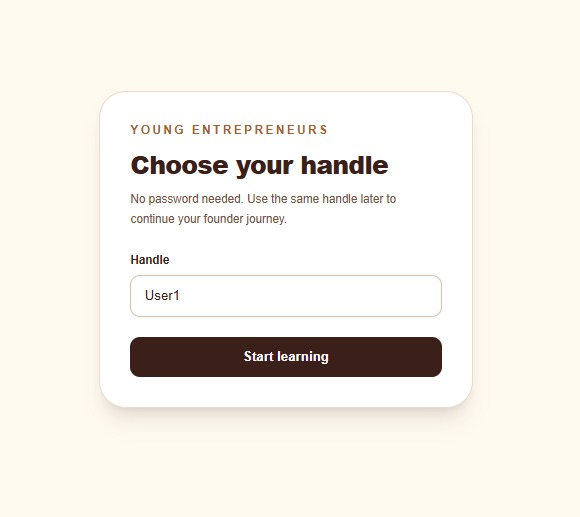
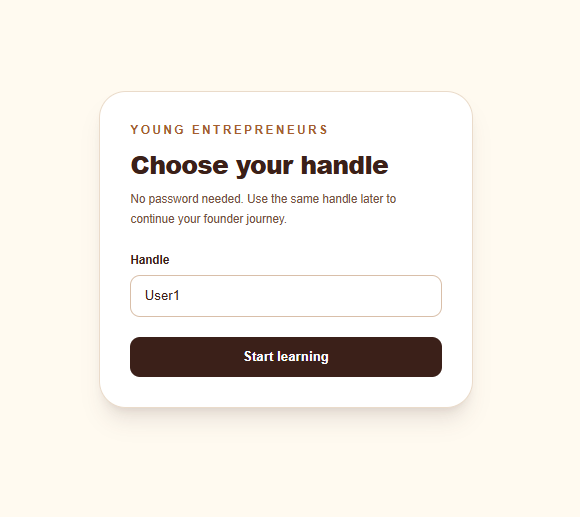
Authentication and Data Storage
-
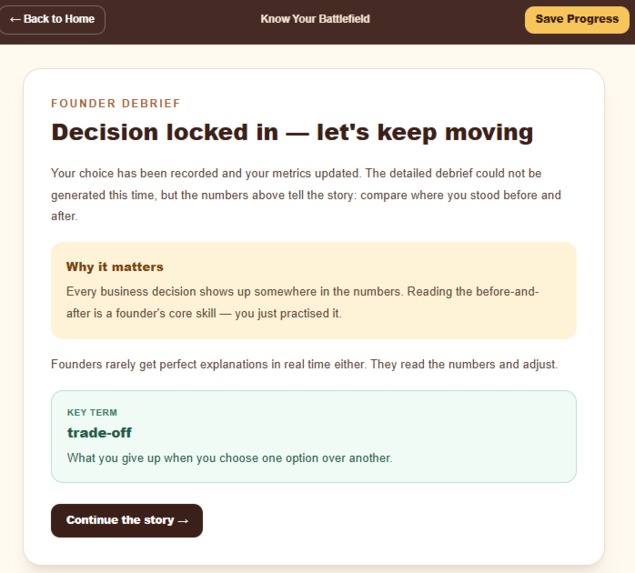
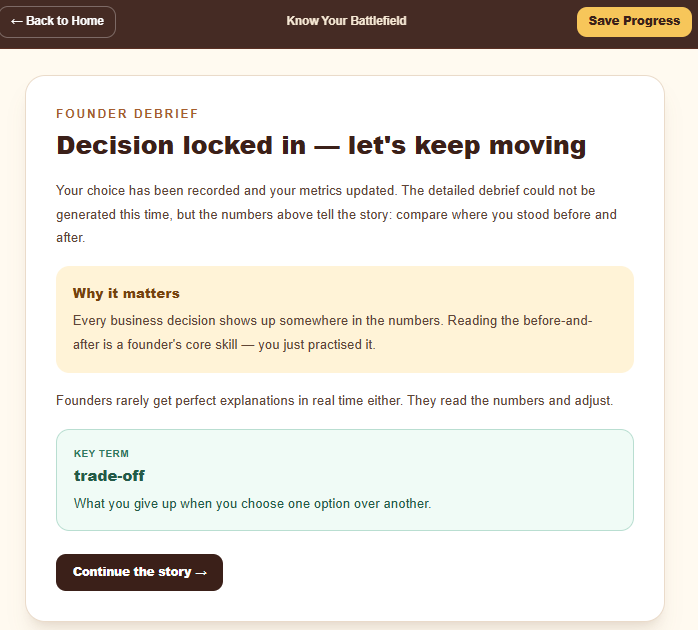
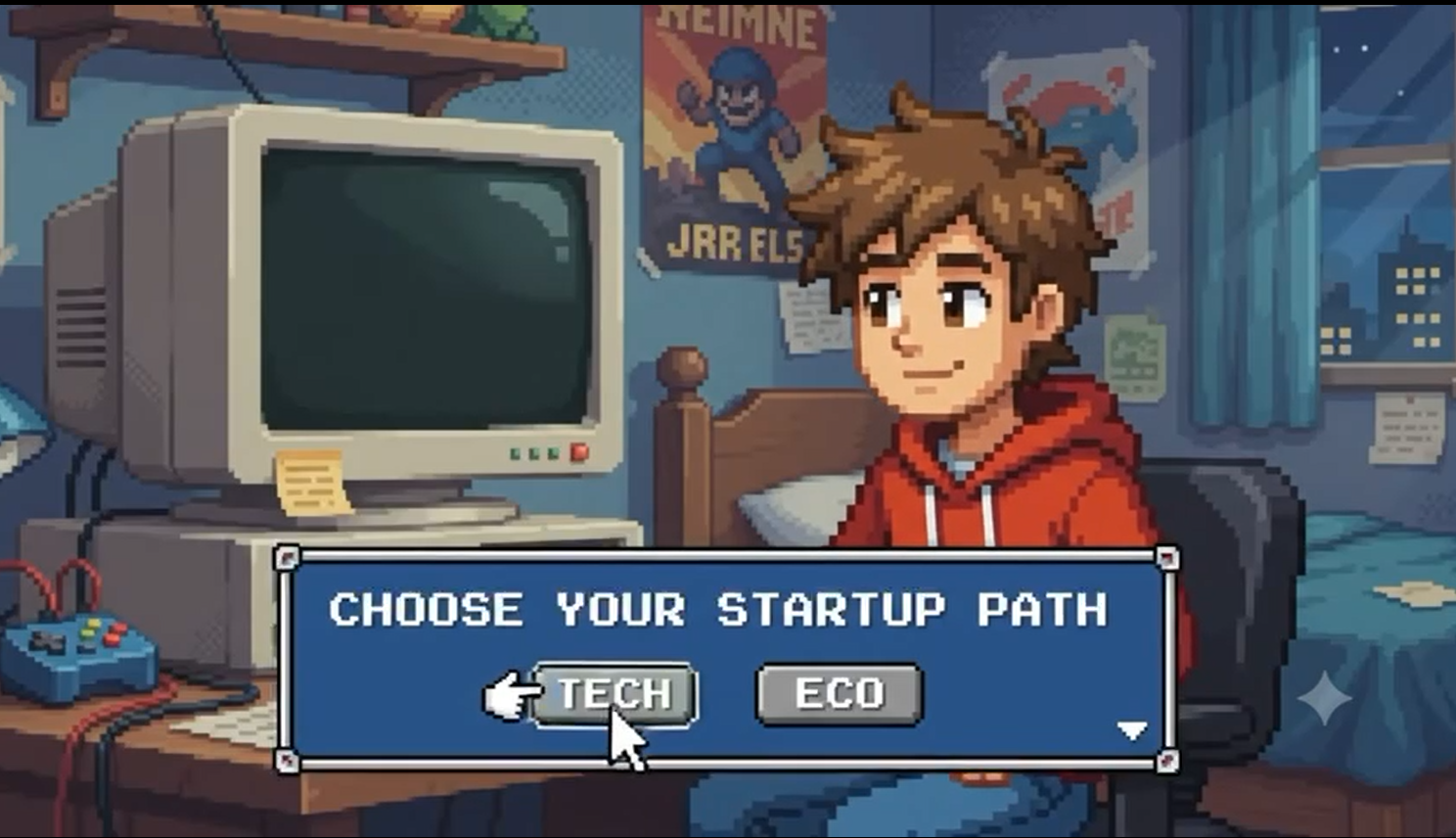
Bandersnatch style business decisions
-
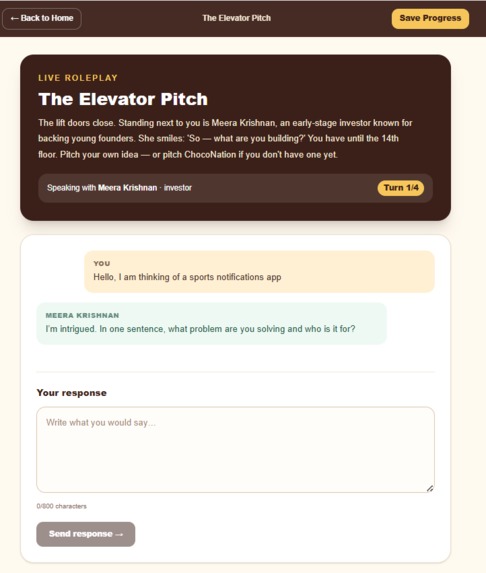
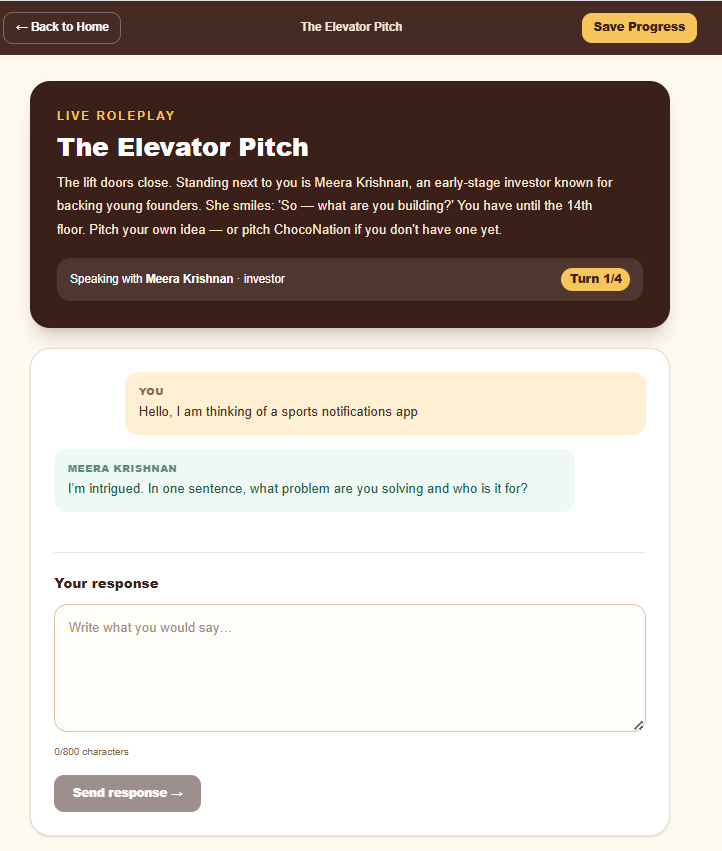
Pitching Simulator
-
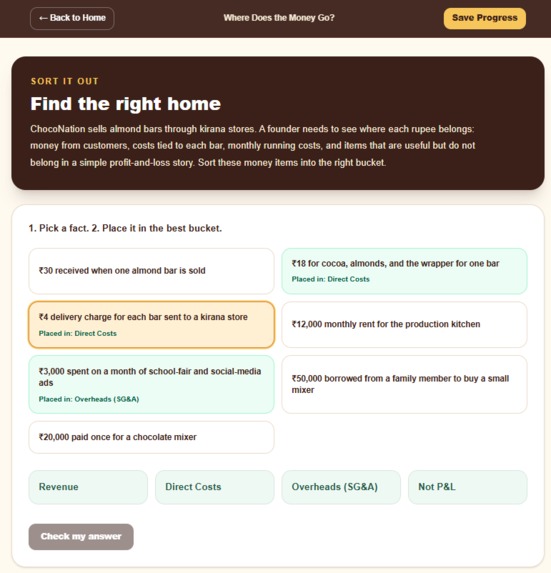
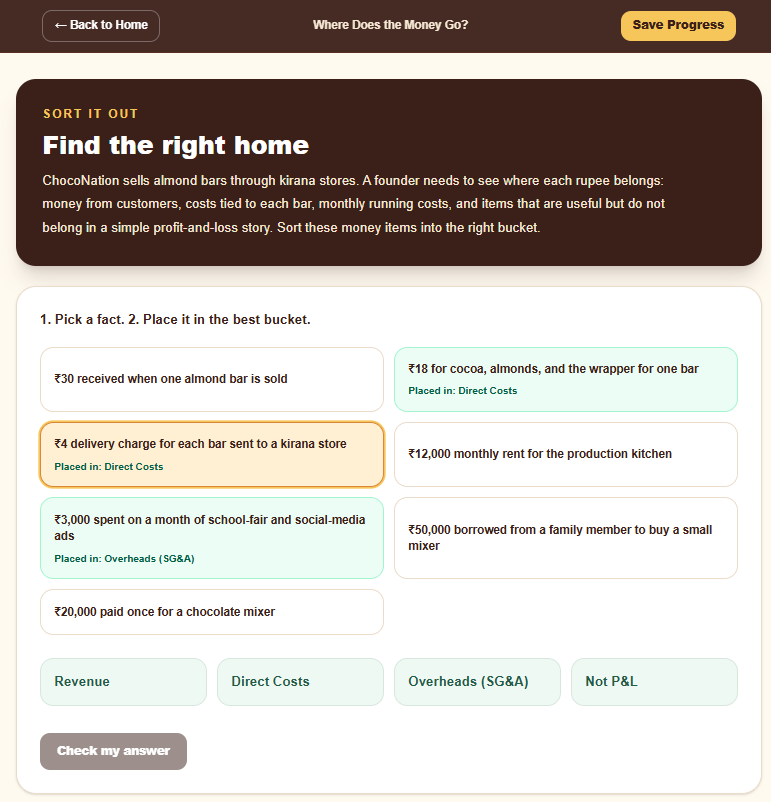
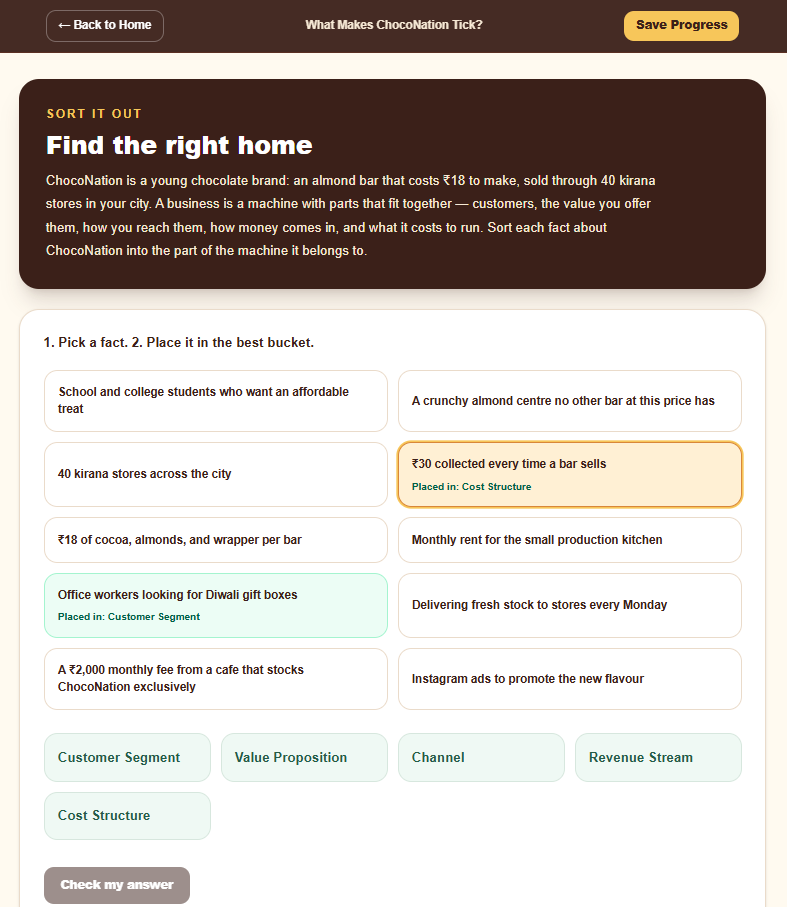
Sorting decisions into buckets
-
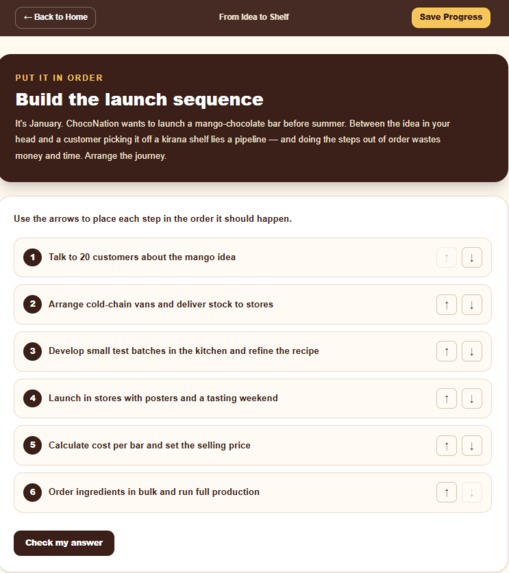
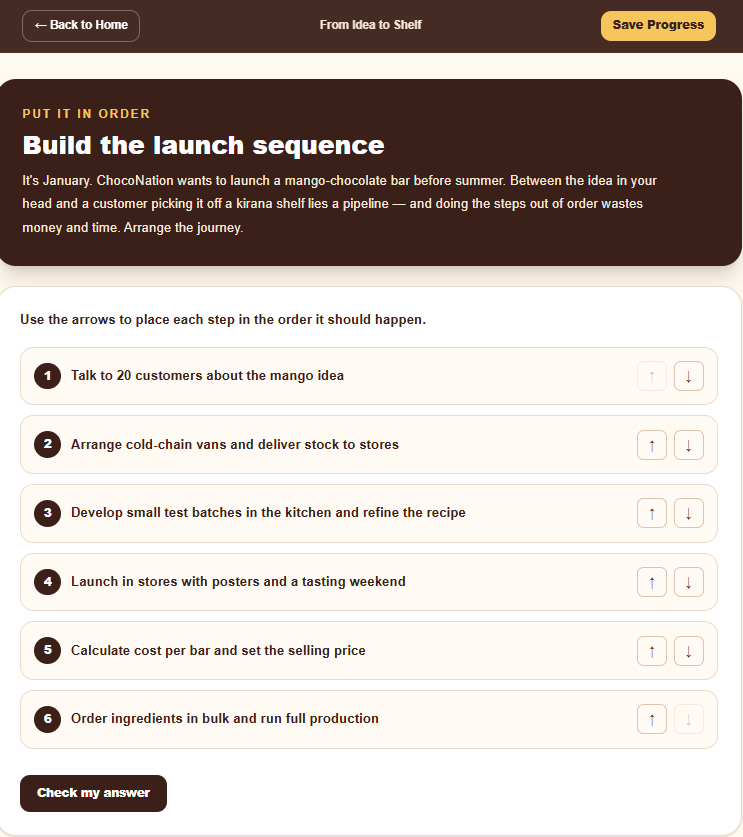
Teaching pipeline decision making
-
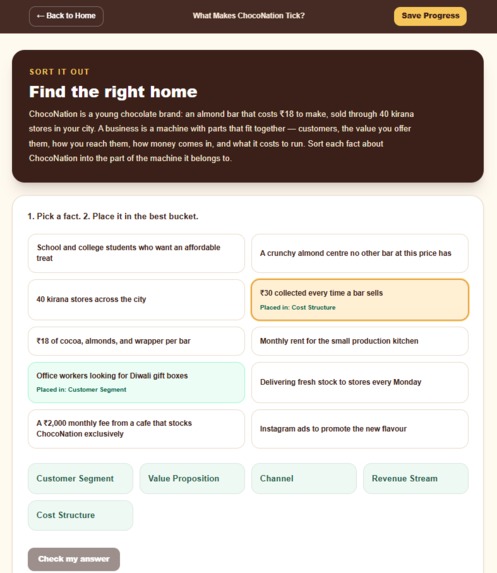
Sorting decisions into buckets
-
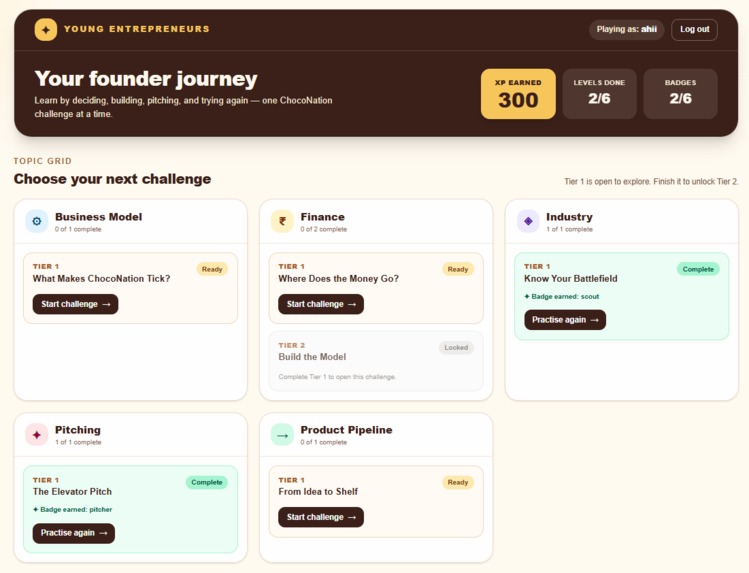
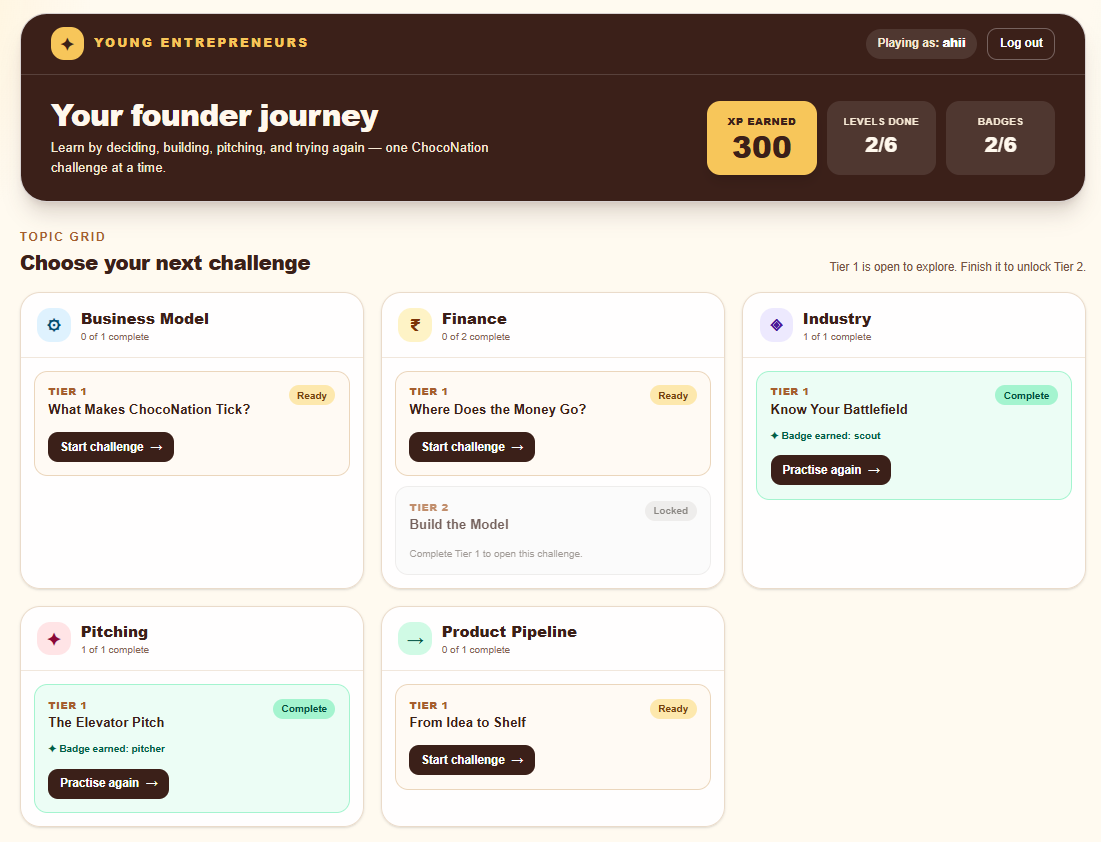
Homepage (Proxy for openworld format)
-
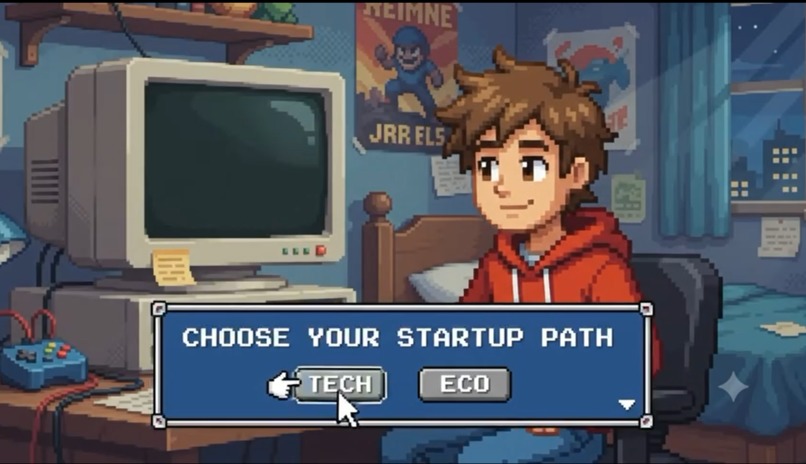
Snippet of a promo/marketing video for the app
Inspiration
Honestly, growing up we all wanted to build something. But nobody really taught us how. We'd see podcasts about billion-dollar startups, but that felt so far away. And textbooks? Forget it. They're boring and don't actually teach you what it's like to make real decisions as a founder.
We wanted to build something that actually feels like playing a game, not sitting in a classroom. Something where you can pitch, fail, learn, and try again without losing real money. And honestly, we're thinking bigger than just that—what if this could eventually become a place where teenagers actually learn entrepreneurship by doing it?
What It Does
Right now, Big Hero Six (aka Young Entreprenuers) is a platform with five different challenge types. Each one teaches you a real founder skill:
- Pitching — You pitch your idea to an AI mentor. She gives you feedback. You get better.
- Financial Modeling — Build out a simple business model and see if it makes sense.
- Prioritization — Organize what matters most when you're building.
- Process Sequencing — Figure out the right order to do things.
- Story/Decisions — Navigate a branching startup scenario where your choices actually matter. Think Bandersnatch style.
You earn XP and badges as you complete challenges. If you fail, you can try again without losing anything. If you pass, you lock in that achievement and can practice more for fun. And you can always pause mid-challenge and come back later—your work is saved.
But our real vision? An open-world game where as your startup grows, new challenges unlock. You face crises. You make bigger decisions. It feels like actually building a business.
How We Built It
We started small. We said: "Let's just build these five mechanics really well first. Get the foundation right."
We used Next.js for the frontend because it's fast and modern. Supabase for the database because we needed multi-user tracking and persistence. And we mocked the AI responses—no OpenAI API, no costs, no latency issues during the demo. Vercel was used to deploy the app online.
The key decisions we made:
- Draft saving: Users can pause anywhere and come back later. Their work is always there.
- XP locking: Once you earn XP, it's locked in. Practicing again doesn't let you game the system and earn more.
- Persistent auth: Simple username login. No passwords. Just pick a handle and go.
- Flexible database: We designed the database to scale from 5 challenges to 50+ without rebuilding everything.
Basically, we wanted the code to be solid enough that we could actually build Phase 2 later without throwing everything out.
Challenges We Ran Into
Codex kept running out of steam. When we gave it huge prompts, it would say "I don't have time to finish this." So we learned to break things into smaller pieces. Ask for one mechanic at a time, not all five. We used the codex sessions of our family members to ensure the project was completed without bugs.
The roleplay API was broken. After you completed a pitch, you couldn't pitch again—the API would just error out with a 409 code. We had to redesign how restart works.
XP was regressing. Here's the annoying bug: if you practiced a challenge you'd already beaten, it would overwrite your XP with the new score. So you could accidentally lose points. We had to build a whole system to lock XP on first pass.
Scope creep killed us. We wanted OpenAI integration, real mentors, leaderboards, PvP, the whole thing. But we were running out of time. We cut it all and just focused on: make these five mechanics work really well.
Saving state is hard. When you're building five different types of challenges, each with different data (chat transcripts, form fields, ordered items, story decisions), saving their drafts isn't trivial. We had to build a unified system to handle all of it.
What We're Proud Of
Honestly, we're proud that it works. Like, you can log in, play a challenge, pause, leave, come back, and your work is there. That's not nothing.
- Five mechanics that feel like one app. They all save the same way, restart the same way, score the same way. It feels intentional.
- No data loss. You can't accidentally lose your work or your XP. The system protects you from yourself.
- Multi-user. Judges can test as "judge1", then "judge2", and see completely different progress. It actually works.
- Built with AI, not by AI. We used Codex to speed things up, but we also caught its mistakes. It proposed fixes we'd have missed. That felt like real collaboration.
What We Learned
You don't need everything. You need one thing done really well.
We learned that scope is brutal. We had this massive vision, but Build Week doesn't care about your vision—it cares about what you shipped. So we shipped the foundation. The basics. Five mechanics that work.
We also learned that consistency beats features. When save/load/restart work the same way everywhere, users don't get confused. They just play.
And honestly? Building educational software is harder than we thought. You can't just make it fun—it has to actually teach something. It has to not feel preachy. That balance is tricky.
What's Next
Phase 2 is the open world. Challenges unlock as your business grows. You face actual crises—markets crash, competitors show up, your team fights. You make real decisions about hiring, fundraising, scaling.
Long-term, we want this in schools. We want teachers using it to teach entrepreneurship. And yeah, eventually we want it on the App Store so teenagers can learn on their own time.
But for now? We're proud we got Phase 1 shipped. It works. It's solid. It's ready for what comes next.
Links
🎮 Live Demo: https://edu-app-open-ai-project.vercel.app/
🔗 GitHub: https://github.com/Ahigith/EduAppOpenAIProject
📋 Try it: Login with any handle (e.g., "judge1" or "my_name"), complete a challenge, practice it again and watch XP stay locked in. Try as a different handle to see your progress separate from someone else's.

Log in or sign up for Devpost to join the conversation.