-
-
Logo
-
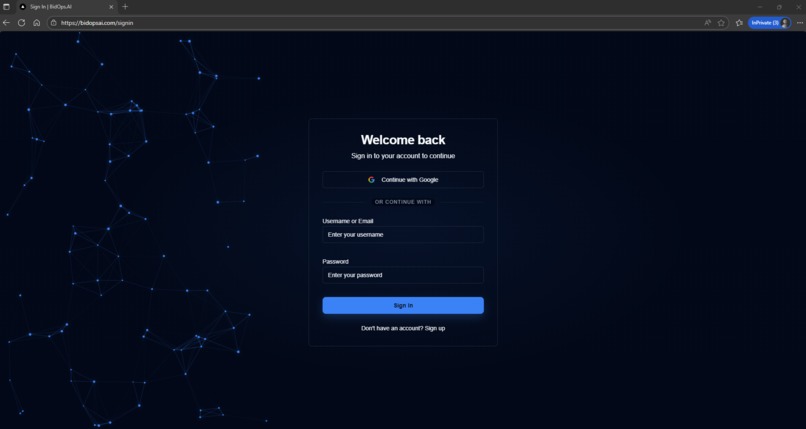
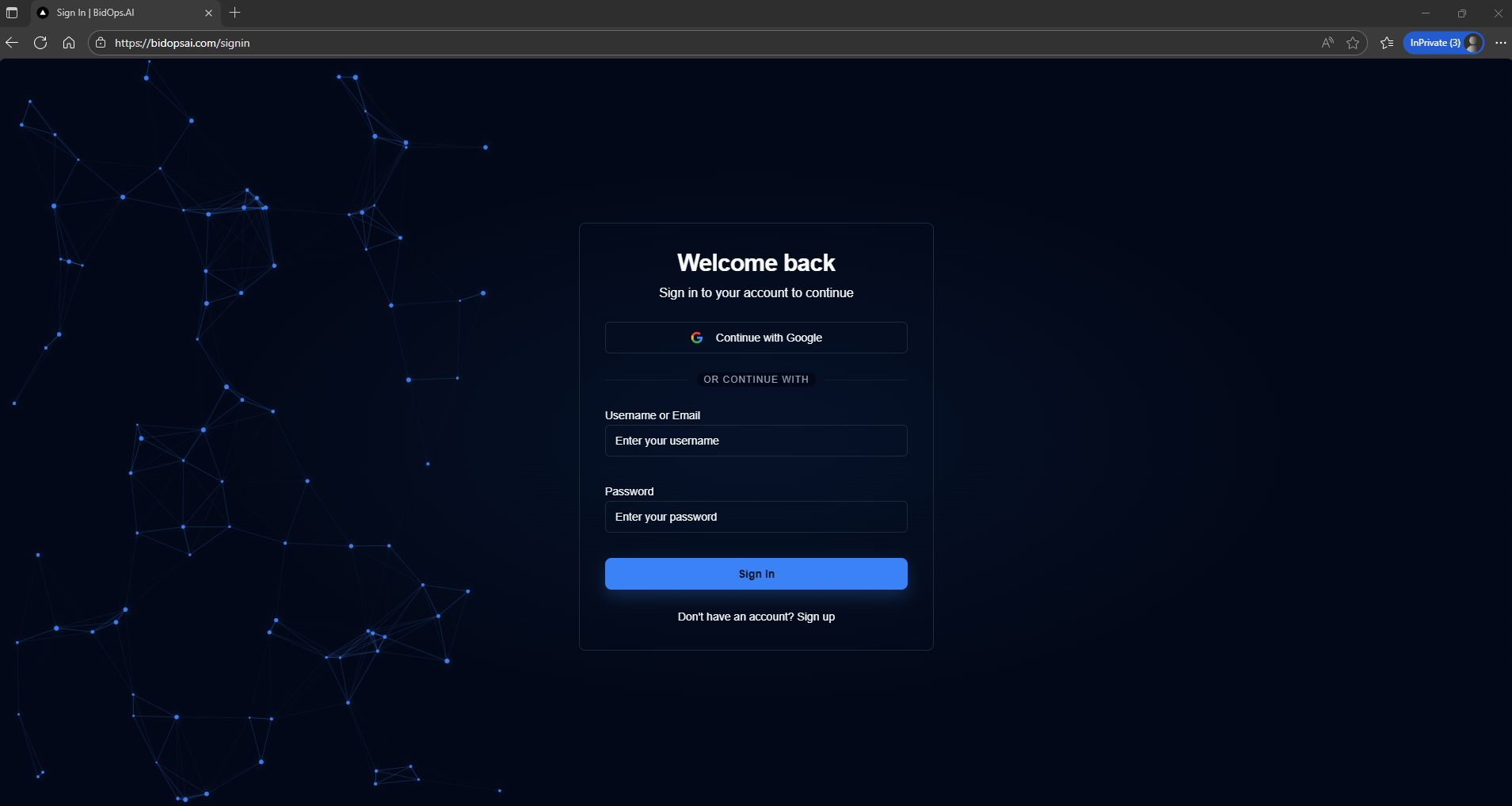
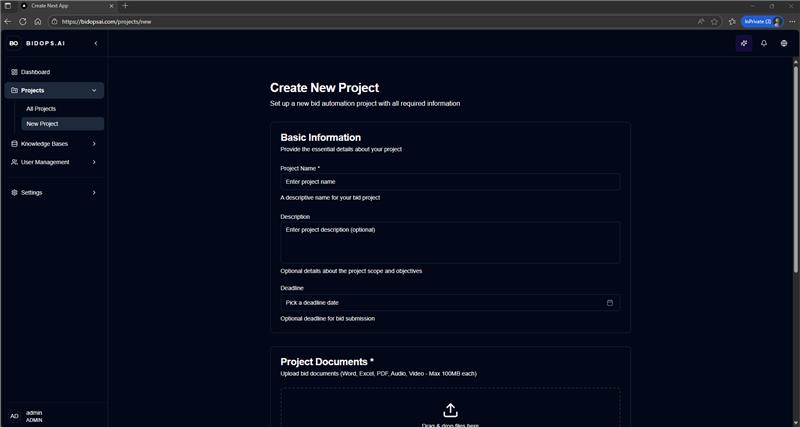
Sing in page
-
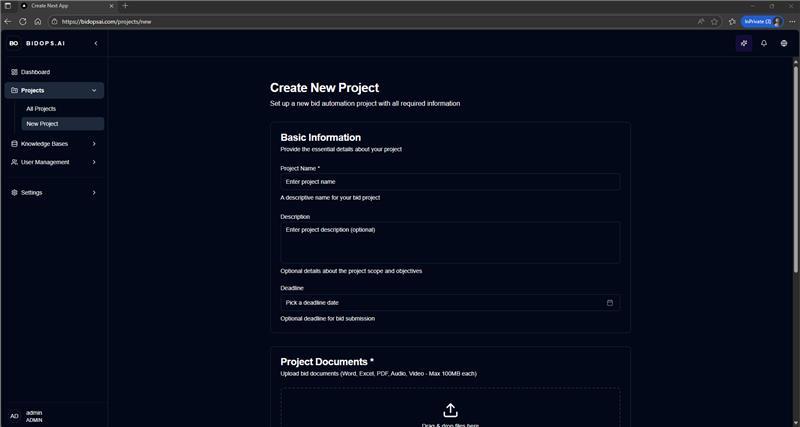
Landing page
-
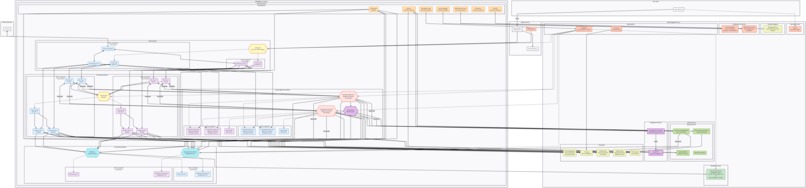
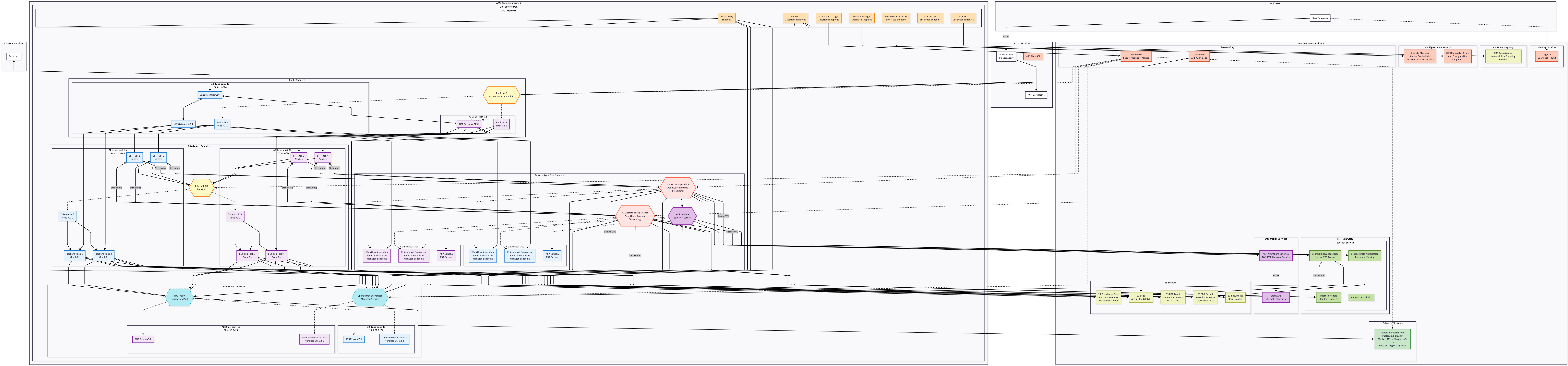
Architecture diagram
-
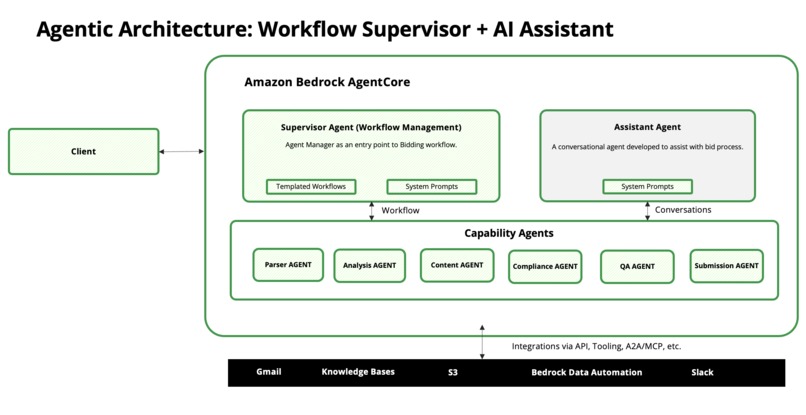
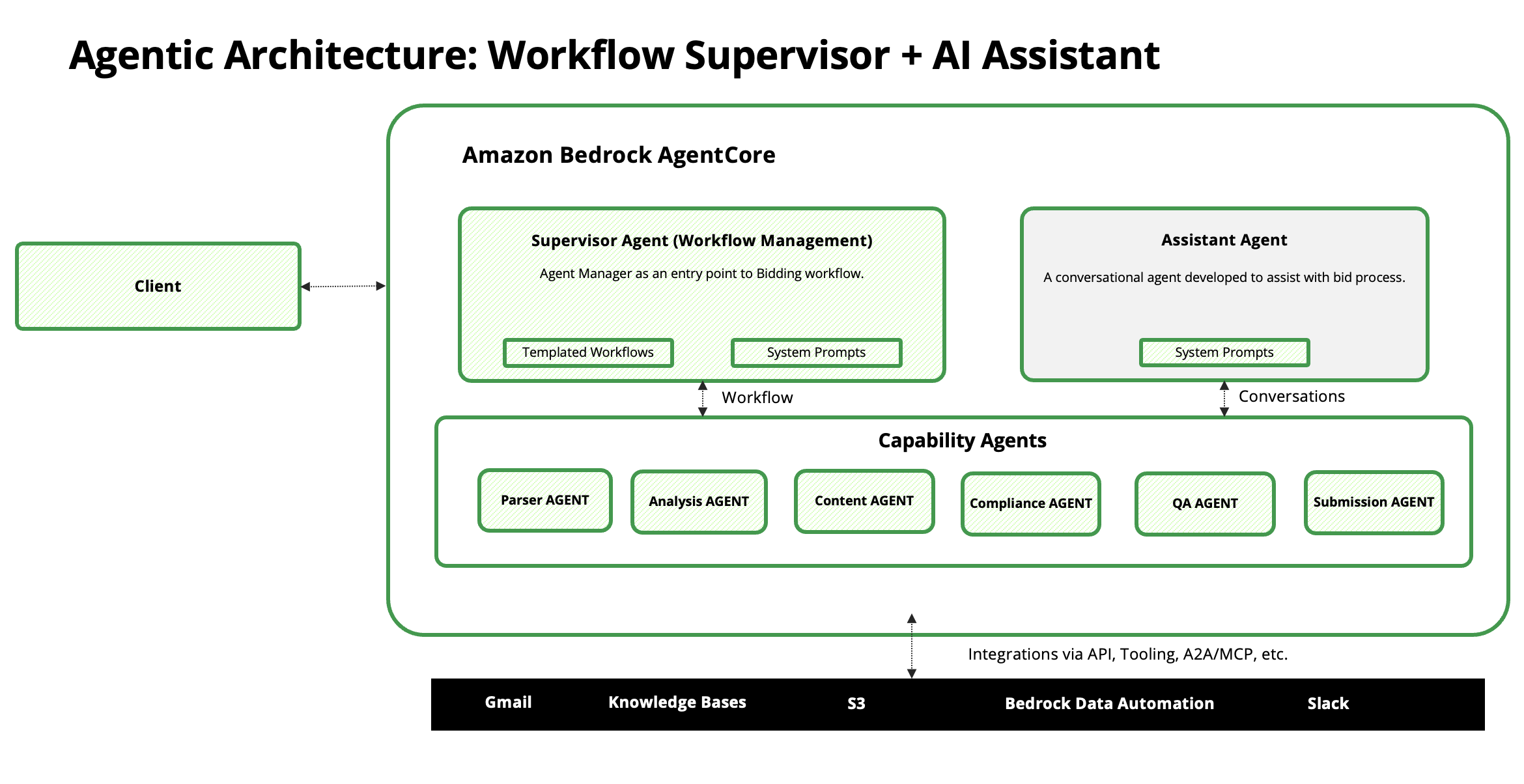
Agentic Architecture: Workflow supervisor + AI Assistant
-
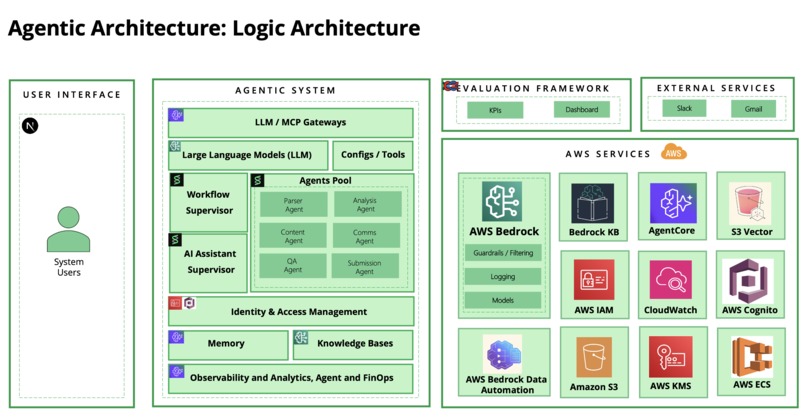
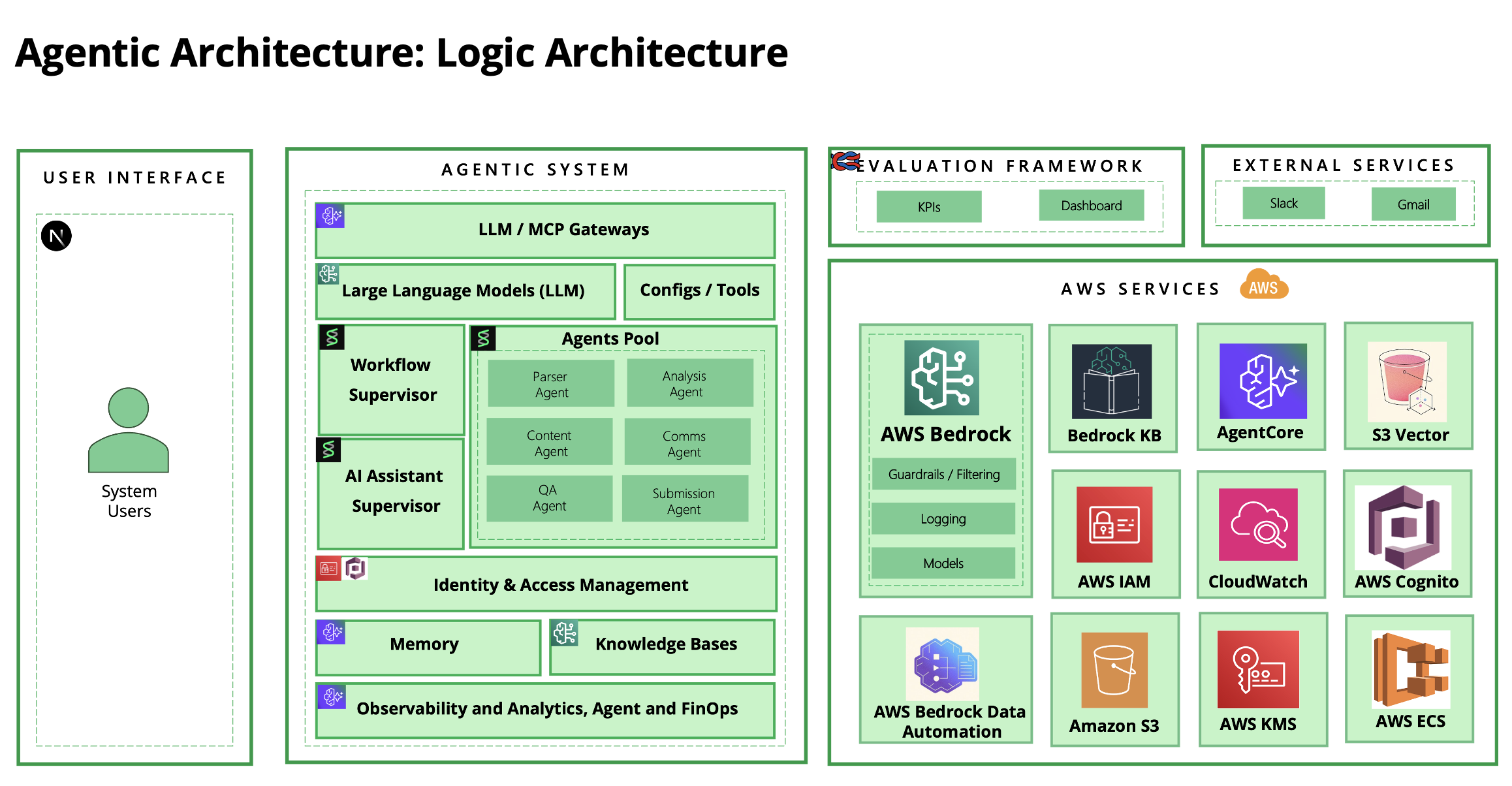
Agentic Architecture : Logic Architecture
Inspiration
The bid and RFP response process is a time-consuming, manual workflow that can take teams 40-80 hours per proposal. Our inspiration came from watching organizations struggle with repetitive document processing, compliance checks, and content generation - tasks that could be orchestrated by specialized AI agents working together. We wanted to prove that a multi-agent system with human oversight could transform this workflow from weeks to hours.
What it does
BidOps.AI orchestrates 9 specialized AI agents through a complete RFP response workflow:
- Supervisor Agent coordinates everything via LangGraph StateGraph
- Parser → Analysis → Content → Knowledge → Compliance → QA → Comms → Submission work sequentially with human approval gates
- Users upload RFPs, documents needed for processing, agents process and generate proposals, users review and edit, agents can also handle submission
- Workflow supports interruption and resumption-keep human in the loop feedback, agents loop back to fix issues, resume from checkpoints
How we built it
Agent System: AgentCore runtime, AgentCore Memory, AgentCore Observability + LangFuse (Added Observability, AgentCore Identity, AgentCore MCP Gateway (Slack and Bedrock Gata Automation), RDS Serverless, OpenSearch Serverless, Bedrock LLMs, Bedrock Knowledge Bases, Bedrock Guardrails, filters, logging.
Frontend: Next.js 15, React 19, TypeScript, TailwindCSS, TanStack Query, TipTap rich text editor, AWS Cognito auth (Google OAuth, MFA), RBAC
Backend: Node.js 24, GraphQL with Apollo Server, PostgreSQL with Prisma ORM, AWS SDK for S3 and Bedrock integration
AI/ML: AWS Bedrock AgentCore runtime, Strands Agents, AWS Bedrock (Claude 3 Sonnet/Haiku, Amazon Nova), Bedrock Data Automation, Bedrock Knowledge Bases with OpenSearch vector search
Infrastructure: AWS CDK (Python) VPC with multi-AZ deployment, Aurora Serverless v2, Amazon ECS, CloudWatch monitoring, GitHub Actions CI/CD with Trivy scanning
Challenges we ran into
AgentCore is brand new - few docs and examples. Had to reverse-engineer everything from runtime config to IAM policies.
Stateful workflows designing StateGraph, conditional routing, checkpoints, human-in-the-loop gates, and error recovery loops while maintaining context was complex.
Real-time streaming implementing SSE from AgentCore → Next.js with proper error handling and reconnection.
Time management building production infrastructure, database, API, auth, frontend, AND full agent implementation in hackathon time required prioritization.
Accomplishments that we're proud of
- Few functional agents using pure Strands with real-time streaming:not a demo, working MVP system (and more agents to come!)
- Production infrastructure:AWS CDK stacks deployable to any account with proper security and monitoring
- Complete database:schema covering entire workflow with audit trails and versioning
- Polished UI:auth, RBAC, rich text editing, project/KB/user management
- Sophisticated orchestration:StateGraph with checkpoints, resume-after-interrupt, intent-based routing
What we learned
AWS Bedrock AgentCore from scratch runtime config, container artifacts, VPC networking, IAM trust policies Strands mastery pure agent pattern, MCP tools, StateGraph orchestration, checkpoint state management Multi-agent coordination supervisor orchestration, conditional branching, human-in-the-loop patterns, error recovery Production systems the gap between "works once" and "secure, monitored, tested, deployable" is enormous.
What's next for bidops.ai
Immediate/Near-term: Fine tuned versions of Agentic Worflow, Evaluations, Improve functionality to add More Custom Knowledge Bases, AI assistant, analytics dashboard Long-term: Multi-language support, custom model fine-tuning, competitive intelligence, enterprise integrations (Salesforce, SAP), multi-tenant SaaS for consulting firms
Built With
- acm
- agentcore
- alb
- amazon-cloudwatch
- amazon-web-services
- aurora
- aws-bedrock-(claude-3
- aws-bedrock-agentcore
- aws-cdk
- aws-services-(cognito
- bedrock
- cloudtrail
- cognito
- docker
- ecr
- ecs
- github
- graphql
- langfuse
- langgraph
- mcp
- next.js-15
- node.js
- nova)
- opensearch
- postgresql
- prisma-orm
- rds
- react-19
- route53
- s3
- strands-agents
- typescript


Log in or sign up for Devpost to join the conversation.