-
-
app icon
-
app screenshot
Inspiration
We always wondered why chat apps give you GIFs and stickers but nowhere to find a funny meme sound to drop in. Whenever we wanted to reply to a friend with a viral clip from TikTok or Instagram, we'd have to find the video, download it and cut out the bit we wanted. It was tedious. So we built Bickqr.
What it does
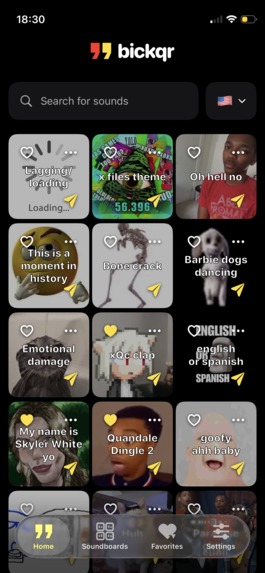
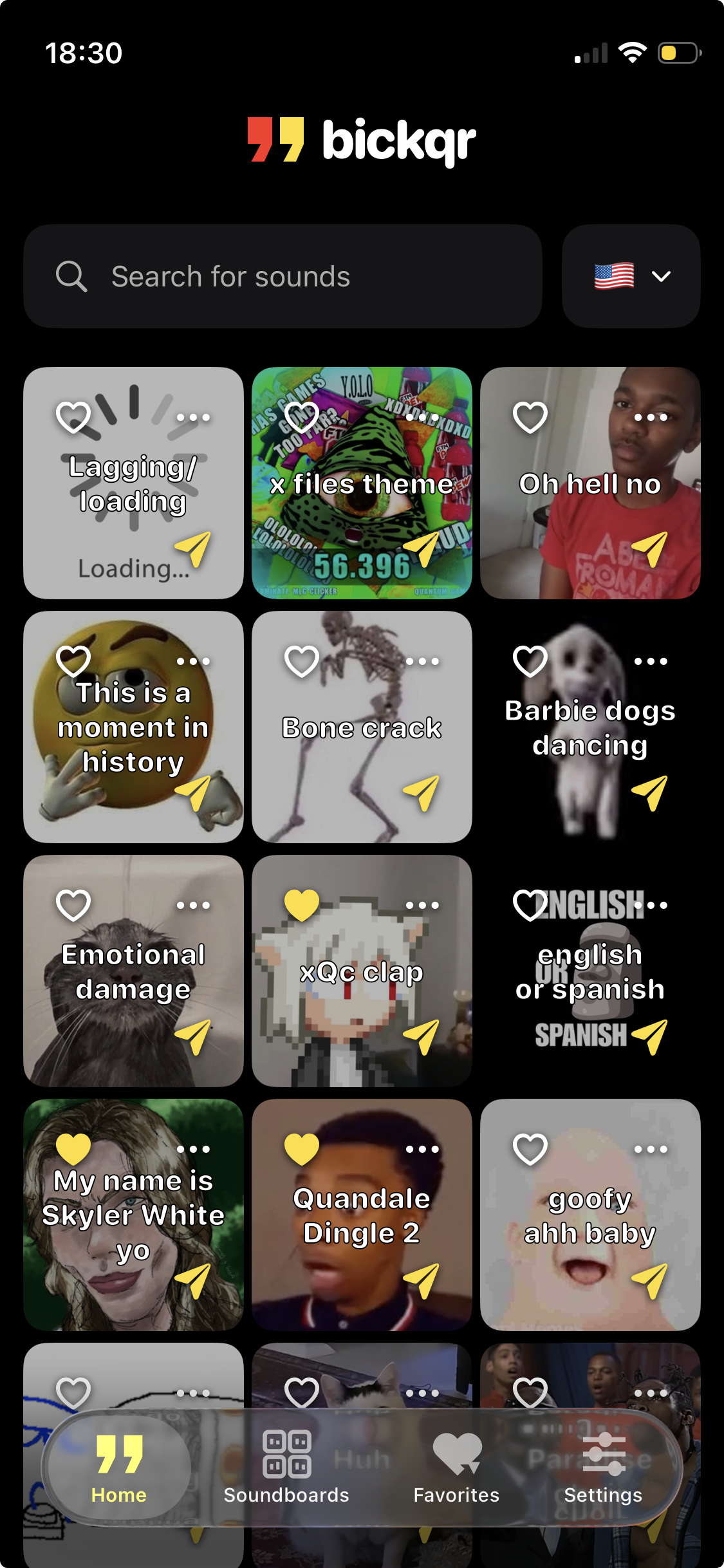
Bickqr is a free library of more than 8,000 meme sounds, including over 300 Nigerian ones, that you can send into a chat in a couple of taps. You don't even need an account.
- In iMessage, you open Bickqr right inside the conversation, search, tap a sound, and it drops into the thread with a play button.
- In the main app, you browse, search, play and save your favorites, then share any sound to WhatsApp, Snapchat, Discord or wherever you're chatting.
- Bickqr Plus ($4.99 a week, through RevenueCat) gives you unlimited favorites, shares without our little audio tag, and your favorites inside iMessage.
How we built it
The iPhone app is SwiftUI, with an iMessage extension built on Apple's Messages framework. Both share one Swift package for our models, networking and media rules, and sounds play through AVFoundation.
In iMessage, sounds go out as system-drawn bubbles, so everyone in the thread sees the sound's name, source and length with a play button. Video sounds go in as normal attachments.
Free shares get a short Bickqr audio tag added right on the phone. The original files are never touched, and Plus shares go out clean.
RevenueCat runs our weekly subscription, entitlements and restores. We built our own SwiftUI paywall that shows up in the app and in a compact version inside iMessage, and it remembers your subscription so Plus still works offline.
Behind it all: a Next.js site at bickqr.com, Supabase Postgres for the catalogue, Cloudflare R2 and a CDN for the media, and a worker on Railway that turns every upload into formats you can play and share.
Challenges we ran into
We started late, on September 3rd, more than a month into Shipaton. That left us 12 days to build and get through App Store review, and then 15 days to market.
Getting sound into a chat was harder than it sounds. Chat apps don't have an "audio GIF", so we made iMessage show a native bubble with a play button, and used the share sheet so the same sound works in WhatsApp, Snapchat and Discord.
We were also broke, so growth had to come from friends, creators and showing up on campus in person. And then the big one: none of our first users paid for Plus.
Accomplishments that we're proud of
- We shipped a real App Store app with an iMessage extension in 12 days, and it was approved on September 15th.
- We got to about 210 users in two weeks without spending anything on ads. Our RevenueCat dashboard shows 209 new customers and 210 active users.
- Seven small creators made videos about Bickqr for us: video 1, video 2, video 3, video 4, video 5, video 6, video 7.
- We printed fliers and took Bickqr to students at the University of Port Harcourt.
- Business of Tech Africa featured us: "Bickqr Wants to Build Nigeria's Giphy for Meme Sounds" (September 18th, 2026).
What we learned
Creators, fliers and one press feature got us our first 210 or so users with no ad budget. Our Plus offer isn't convincing enough yet, because more favorites and a cleaner share aren't reasons to pay. And in Nigeria, where money is tight, a meme sound subscription just doesn't feel like a necessity. Who you sell to matters as much as the paywall.
What's next for Bickqr
We're rebuilding Plus around things people will actually pay for, and we're focusing on the US next. We'll keep growing our marketing with more creators and content we can repeat, and we're finishing the Android app.
Try it: App Store · bickqr.com
Built With
- claude
- swift

Log in or sign up for Devpost to join the conversation.