-
-
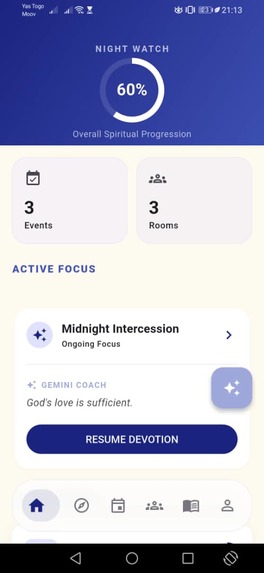
Your spiritual activity center
-
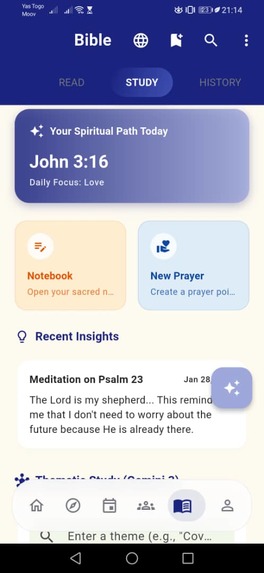
-
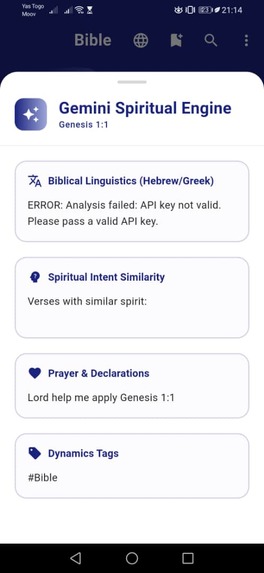
AI-powered guidance for meaningful conversations
-
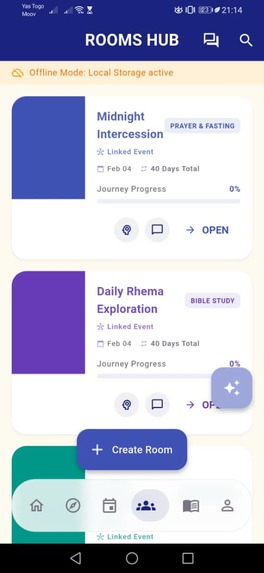
A shared space for faith and discussion
-
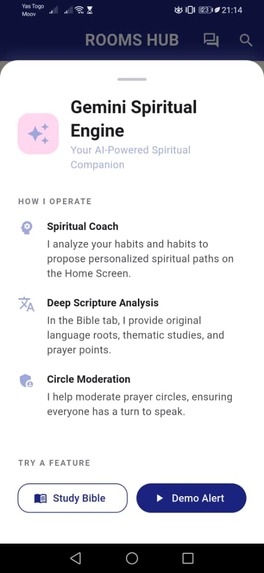
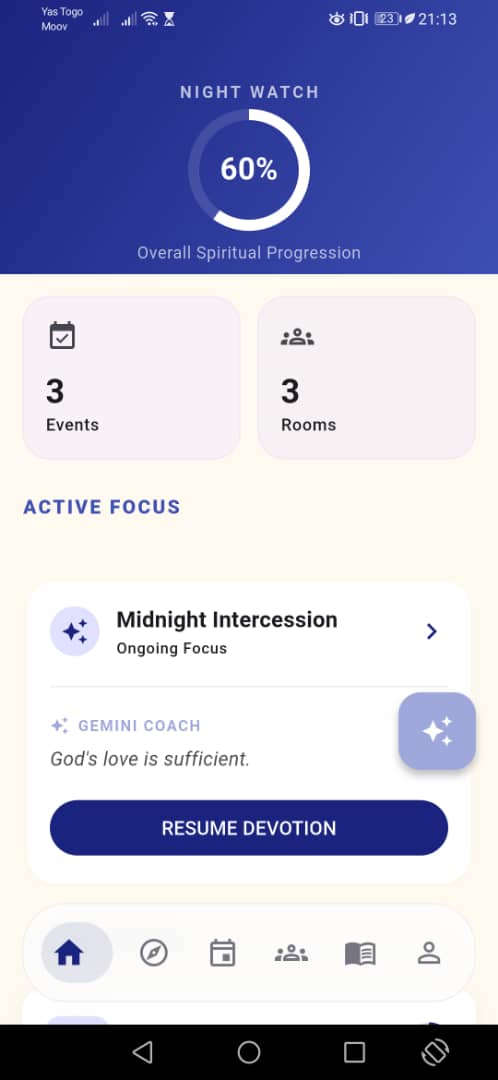
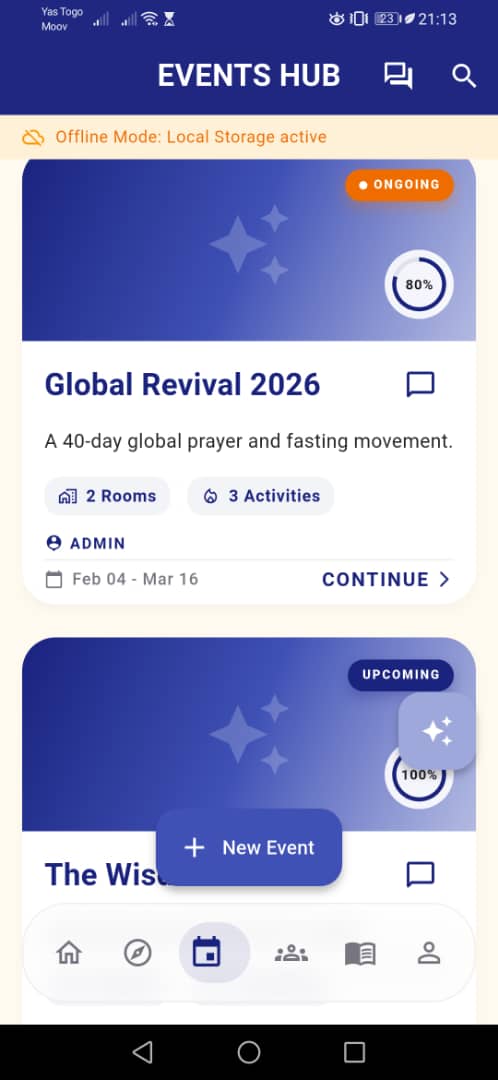
Designed to nurture daily spiritual discipline
-
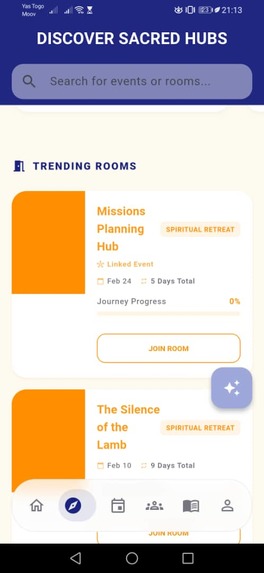
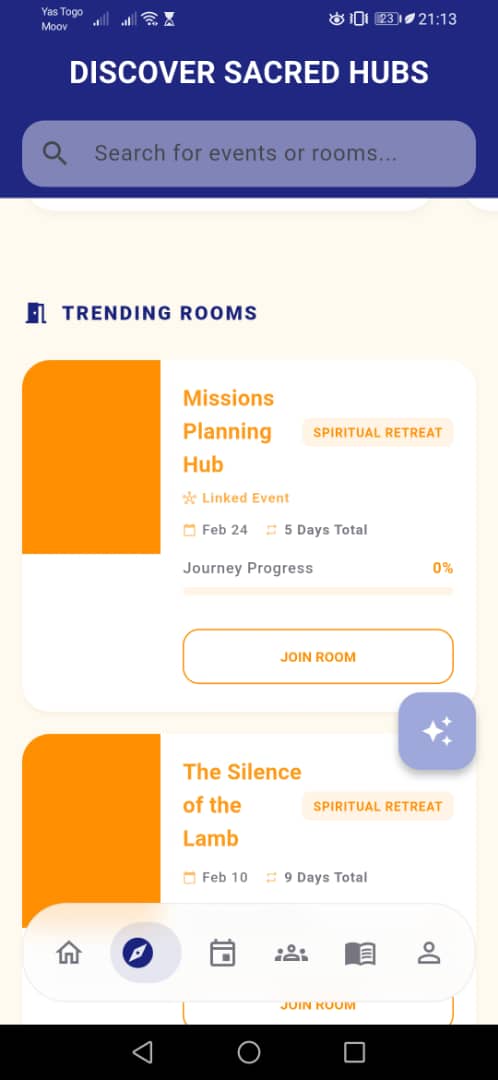
Find communities that align with your faith
-
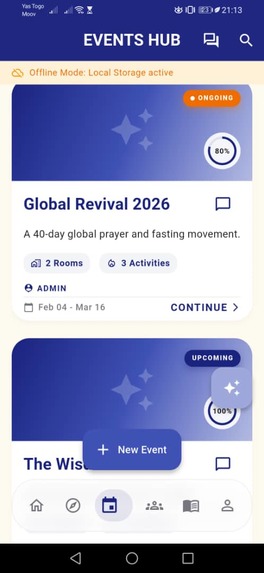
Gather, study, and connect live
BibleVerse
Inspiration
BibleVerse was born from a personal observation and a burden.
I noticed that many Christian communities struggle to grow spiritually with discipline and consistency in today’s digital world. While social media connects people, it does not help believers stay accountable, structured, or spiritually intentional.
BibleVerse was imagined as a centralized spiritual collaboration platform where believers can read the Bible, communicate, organize studies, and grow together through clear objectives, daily tasks, and community discipline.
This project is not only for a hackathon prize. It is a long-term vision to help churches, leaders, and communities grow spiritually using technology designed for purpose, not distraction.
What it does
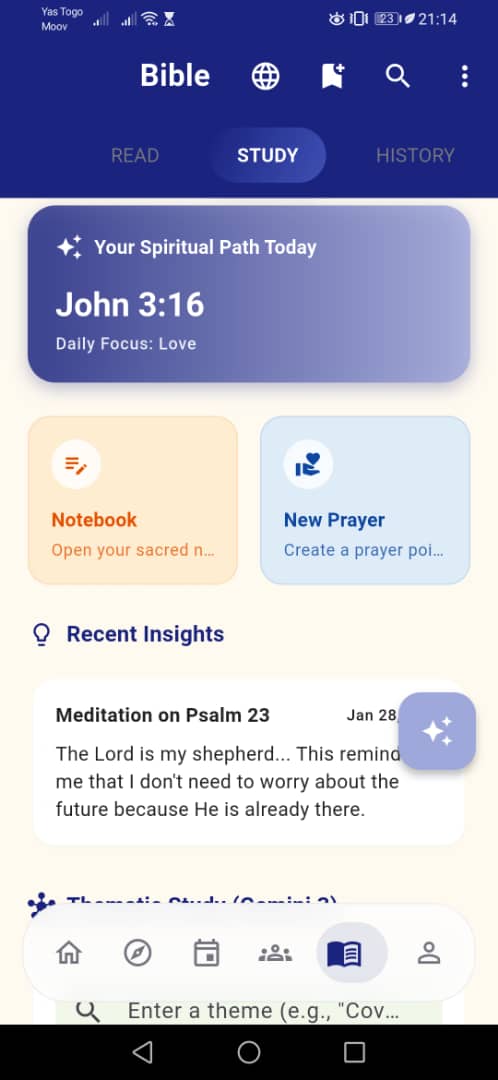
BibleVerse is a collaborative spiritual platform that enables users to:
- Read the Bible (offline-first)
- Chat and study Scripture together
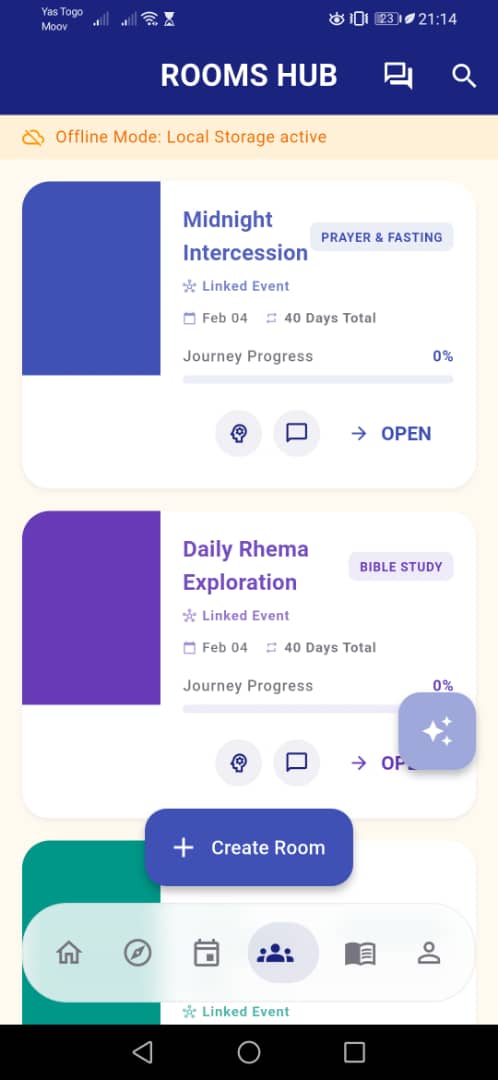
- Create events and structured rooms
- Assign and complete daily spiritual tasks
- Organize meetings and Bible studies
- Prepare real-world activities (evangelism, donation, service)
A key aspect of the app is discipline-based growth:
- Tasks are mandatory
- Participation is tracked
- Consistency matters more than activity volume
BibleVerse allows users to:
- Chat while reading the Bible
- Organize Bible studies with structure
- Grow spiritually through guided routines
- Collaborate as churches or groups in one platform
How we built it
At first, the project was designed as a full-stack application with:
- Frontend
- Backend (TypeScript)
- Database (Firebase)
During development, I realized that introducing a custom backend added unnecessary latency and complexity. Firebase already provides authentication, database, and real-time sync.
Architectural Decision
I decided to remove the traditional backend entirely and connect the application directly to Firebase.
However, because I am based in Togo (Africa), network latency with Firebase servers became a major challenge.
Latency Solution
To solve this, I implemented a local repository architecture:
- When the app launches (splash screen), required data is fetched once
- Data is stored locally in a repository
- UI components read from the local repository
- Firebase synchronization happens in the background
This approach:
- Reduced perceived latency
- Improved UI responsiveness
- Enabled offline-first behavior
- Prevented constant network calls from the UI
The app was built using:
- Flutter for UI
- Firebase for authentication and database
- Gemini models as an intelligence and governance layer
How Gemini is used in BibleVerse
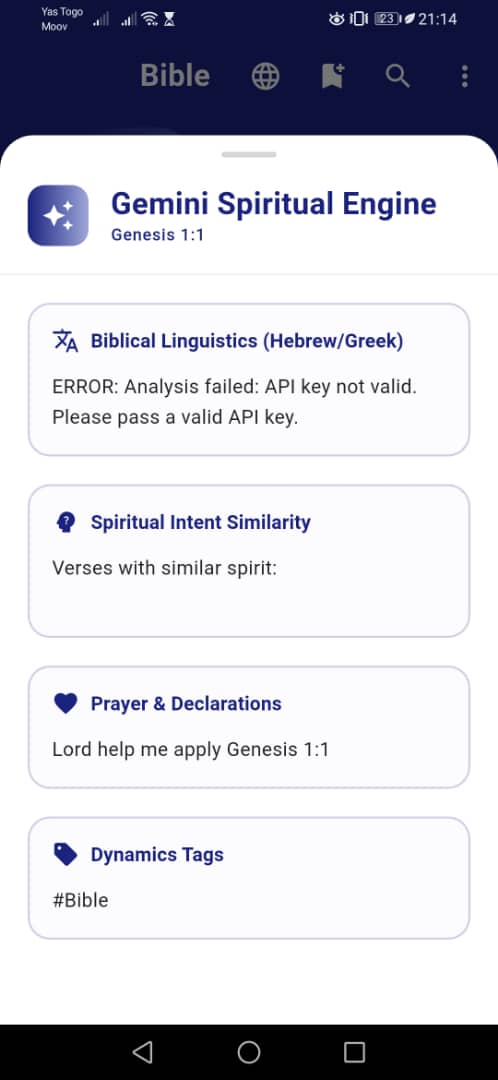
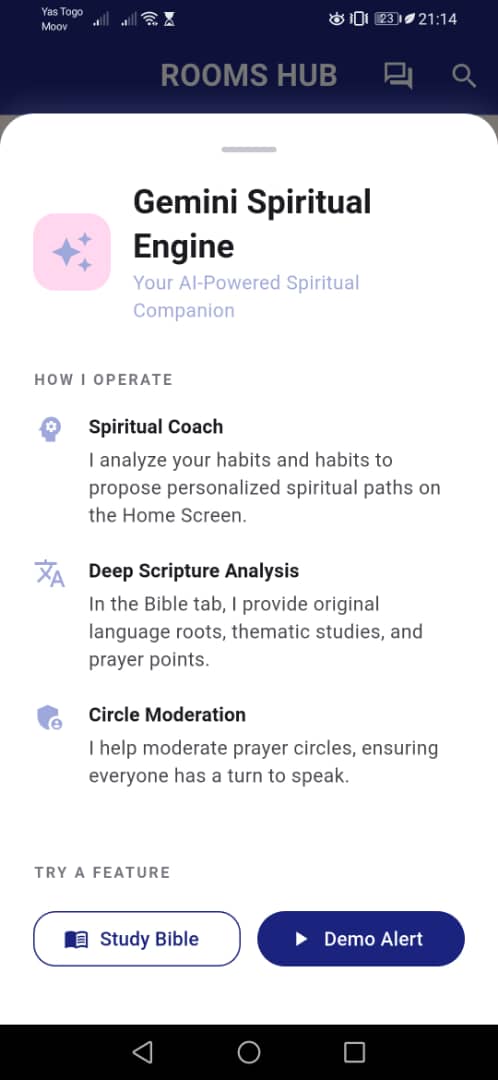
Gemini is not just an assistant — it acts as an intelligent moderator and guide inside the application.
Current Gemini Capabilities
Gemini is designed to:
- Assist users while writing reflections and notes
- Suggest Bible verses and spiritual insights
- Analyze participation in rooms and tasks
- Enforce discipline rules (inactivity detection)
- Help structure tasks, objectives, and reflections
Gemini acts as a neutral intelligence layer, ensuring fairness and consistency in community rules.
Challenges we ran into
- High latency due to geographic location
- Rethinking architecture mid-project
- Removing backend services safely
- Managing offline-first synchronization
- Building APK files and handling build issues
- Designing a complex system under hackathon time constraints
These challenges pushed the project toward better architectural decisions, not shortcuts.
Accomplishments that we're proud of
- Designing a Firebase-native architecture without a custom backend
- Implementing a local repository to reduce latency
- Creating a discipline-based spiritual growth system
- Integrating Bible reading, chat, and collaboration
- Introducing AI as a governance and moderation layer, not just a chatbot
What we learned
- Firebase can replace traditional backend services when architected properly
- Offline-first design is critical in regions with unstable connectivity
- Architecture decisions matter more than feature count
- AI becomes powerful when used for moderation and structure, not only content generation
- Constraints can drive smarter system design
What's next for BibleVerse
The next major evolution of BibleVerse is real-time communication with AI moderation.
Planned features include:
- Voice messages inside rooms
- Online call meetings (audio-first)
- AI-assisted meeting moderation using Gemini
- Speaking turn management during calls
- Automatic muting, hand-raising, and fair speaking order
- Gemini acting as a co-moderator, assisting the admin in managing meetings
- AI-generated summaries after meetings
In the future, Gemini will:
- Help manage online discussions
- Reduce chaos in group calls
- Ensure everyone has a voice
- Support leaders rather than replace them
BibleVerse is not finished — it is a foundation for a disciplined, collaborative, and spiritually intentional digital community.

Log in or sign up for Devpost to join the conversation.