Inspiration
As someone deeply interested in both machine learning and social impact, I was struck by how algorithms while powerful can unintentionally reinforce societal biases. The idea of bias in financial systems, especially in loan approvals, inspired me to build a platform that not only predicts outcomes but actively ensures fairness across demographic groups.
What it does
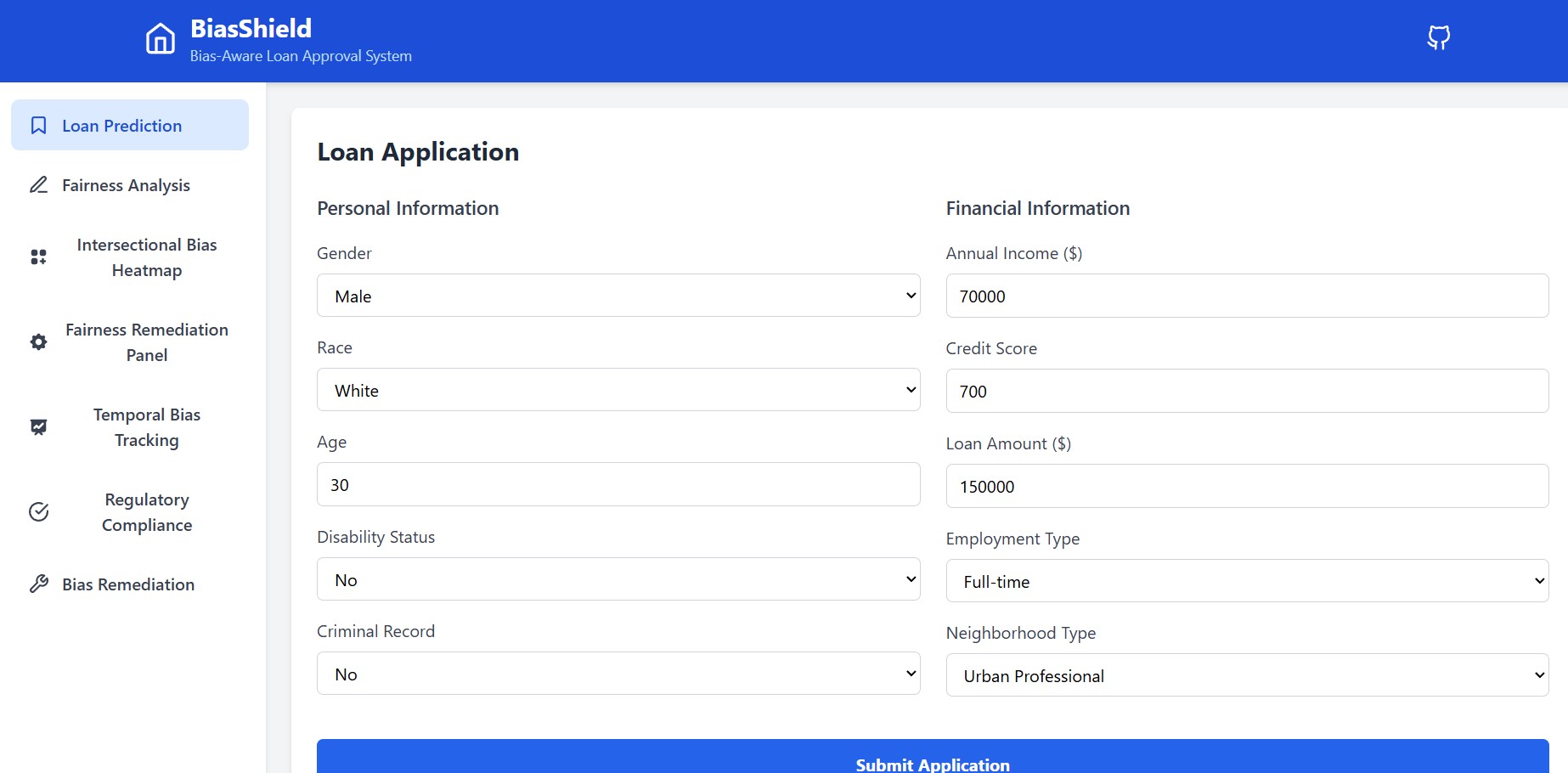
BiasShield is a fairness-aware loan approval system. It predicts the likelihood of loan approvals using machine learning while actively detecting and mitigating bias across protected attributes like gender, race, age, and disability. The system offers:
- Accurate predictions using an XGBoost model
- Bias detection with tools like Fairlearn and AIF360
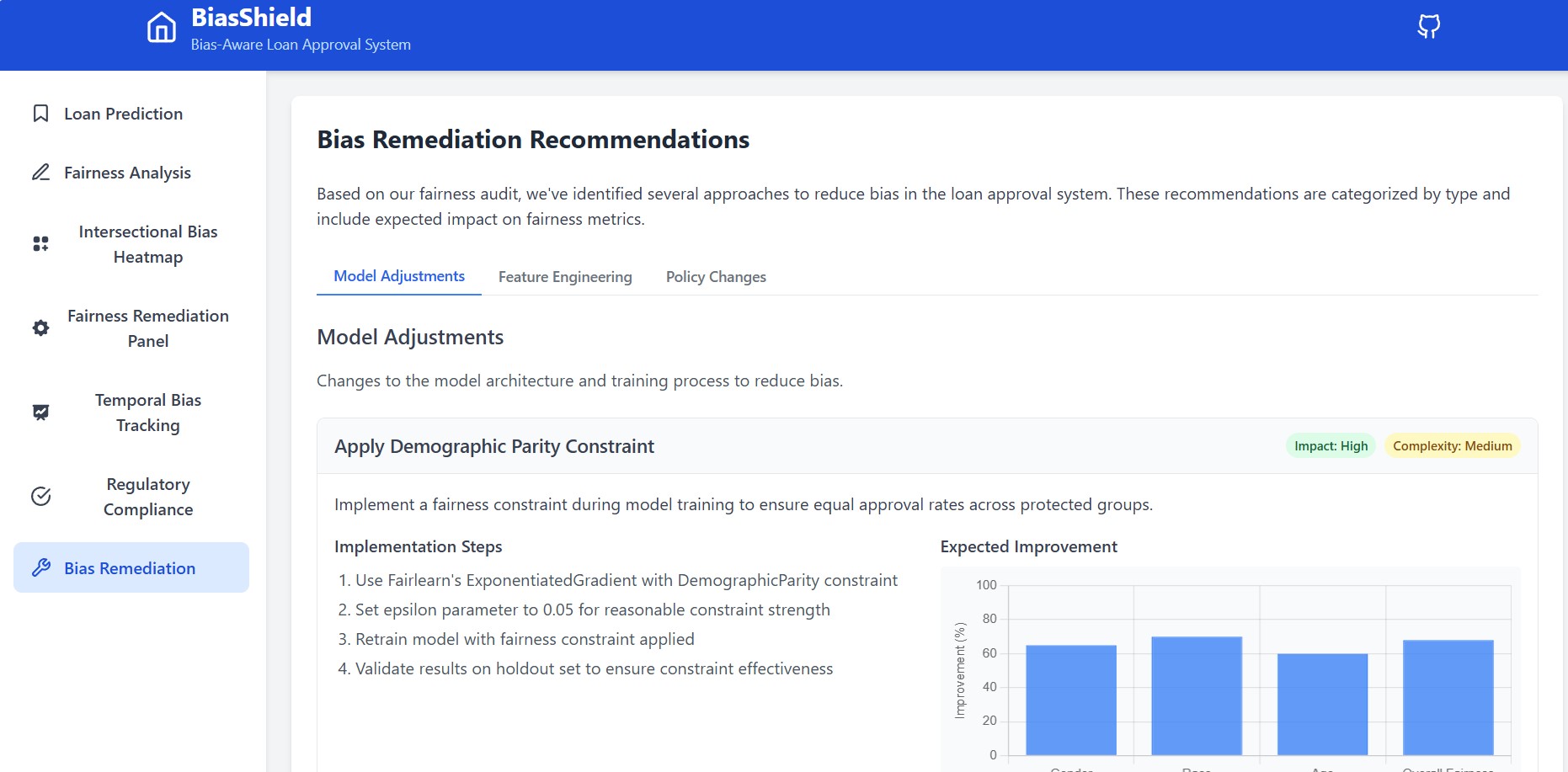
- Fairness constraints such as Demographic Parity and Equalized Odds
- SHAP-based explanations for transparency
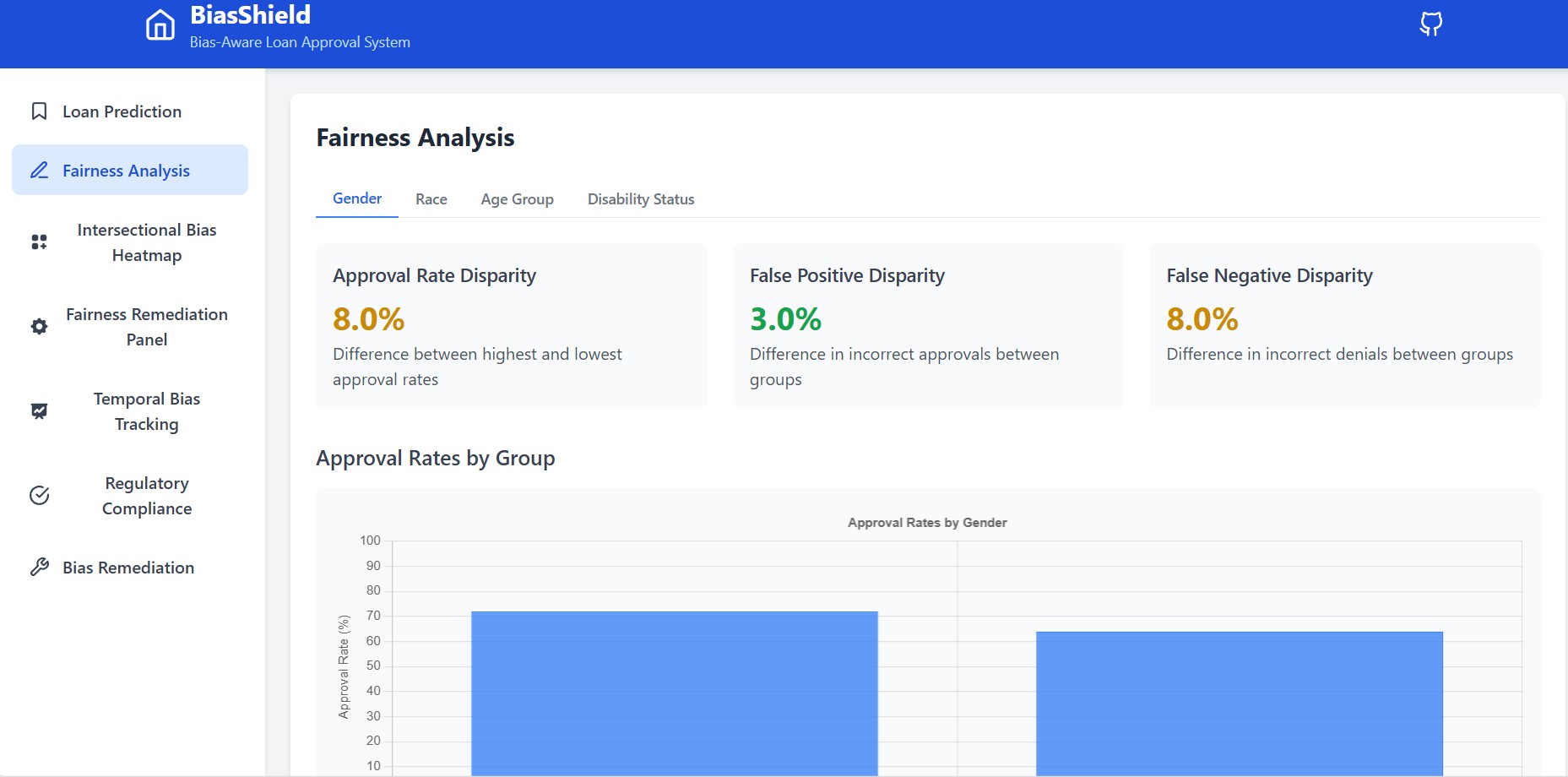
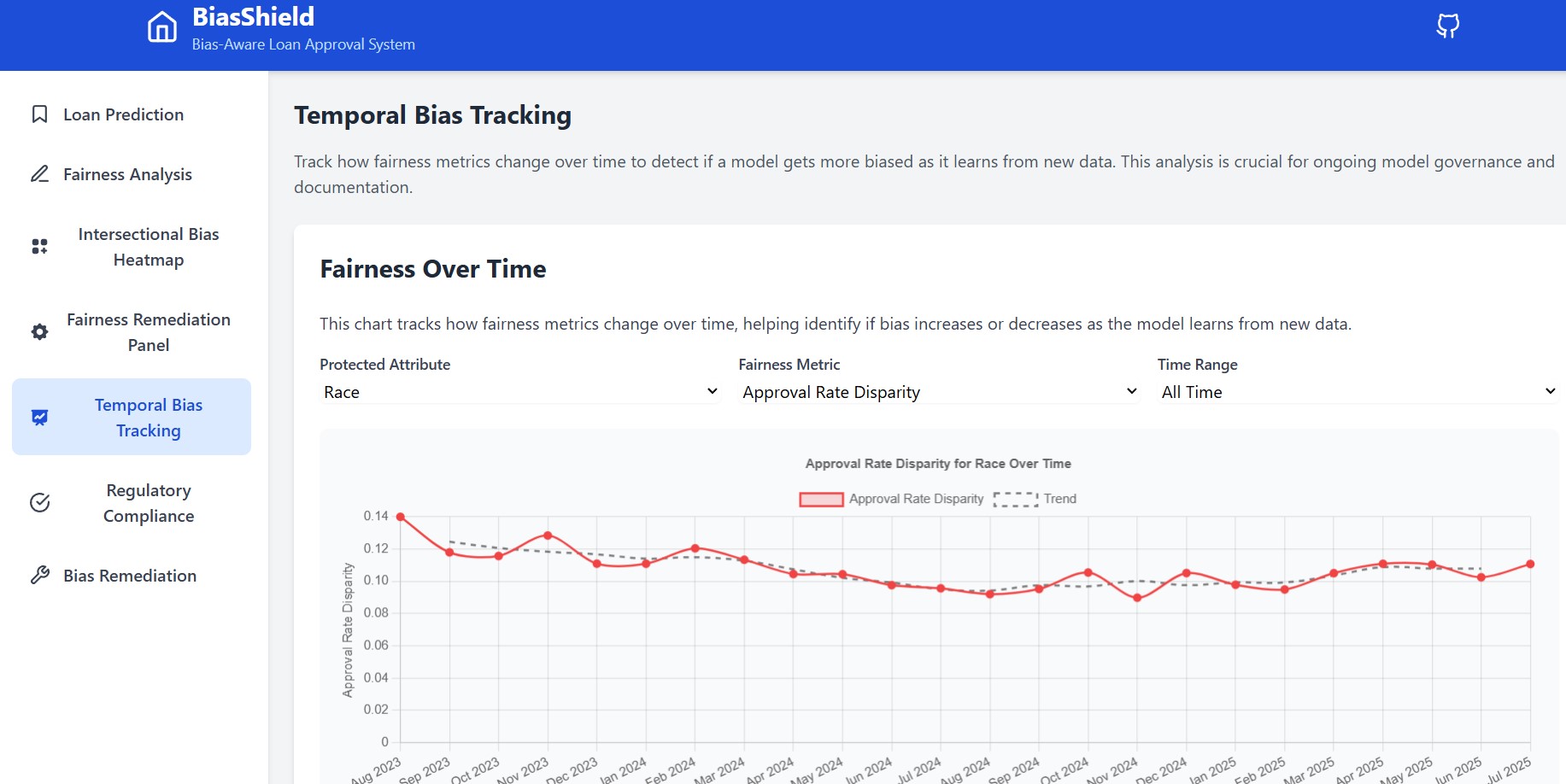
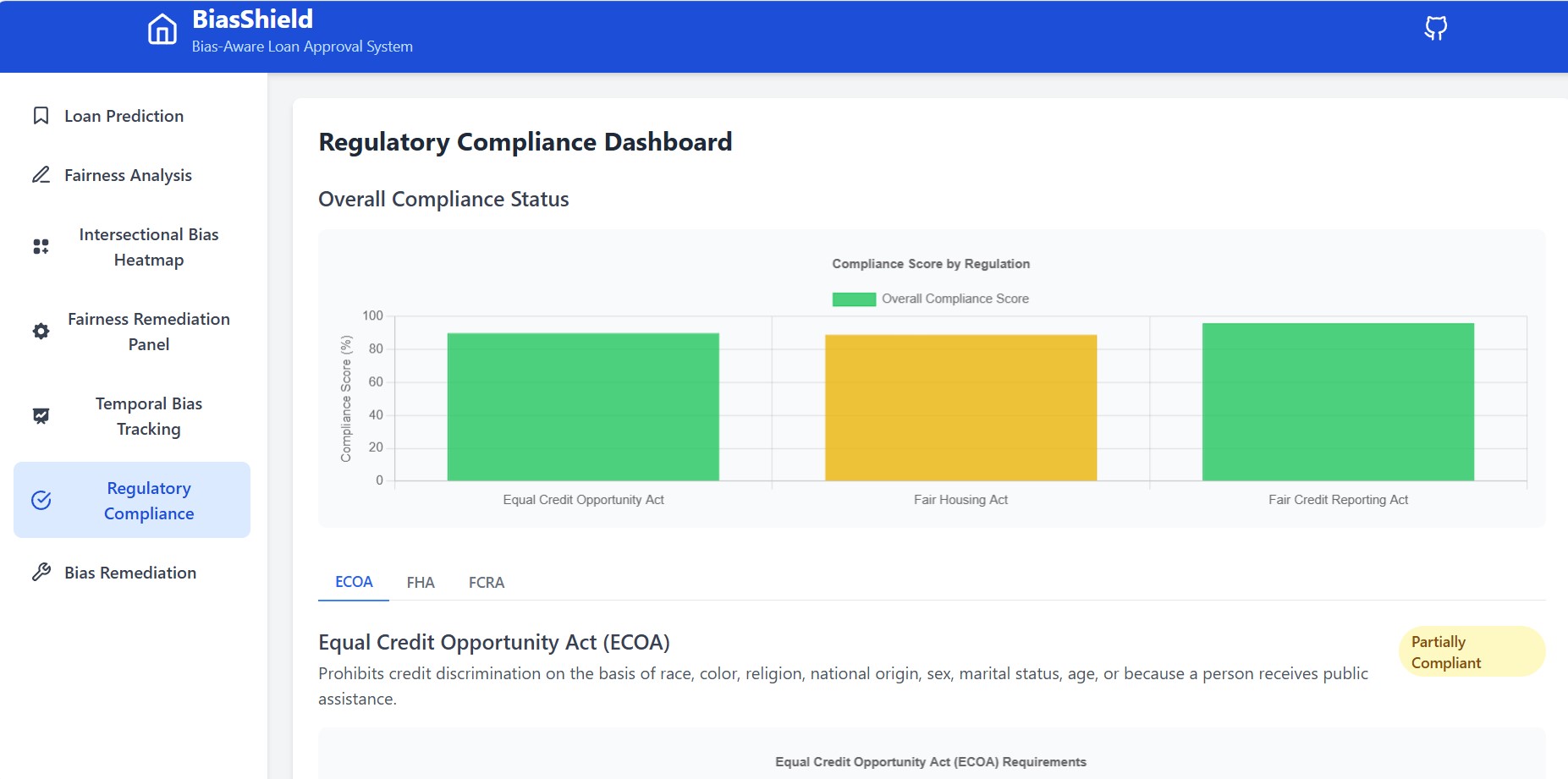
- Interactive dashboards to visualize fairness metrics and model performance
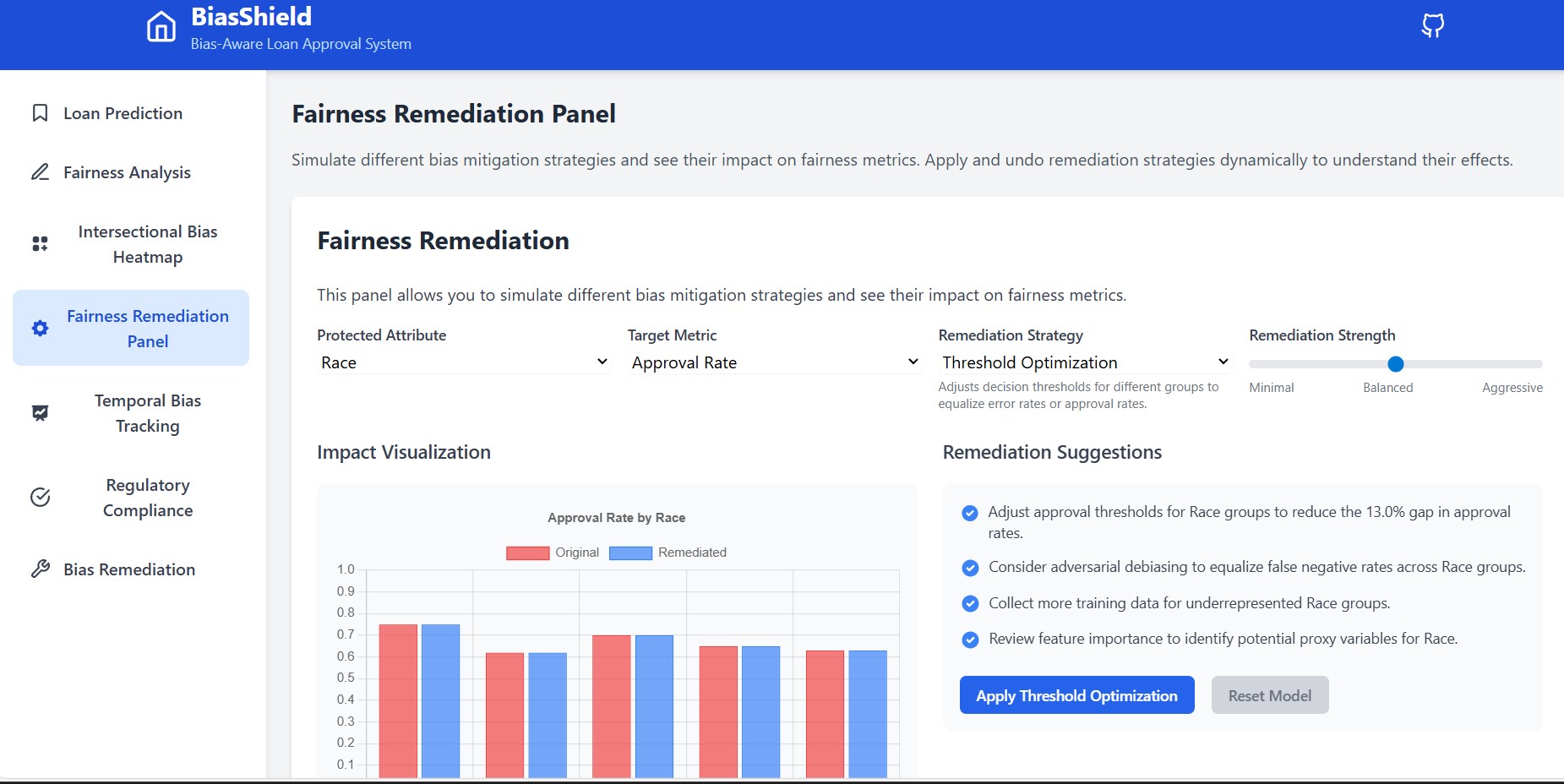
- Automated reports and bias remediation strategies
How I built it
I built BiasShield as a full-stack application using the following technologies:
- Backend: Python (FastAPI), XGBoost for prediction, Fairlearn & AIF360 for fairness evaluation and mitigation, SHAP for explainability
- Frontend: React.js with TailwindCSS and Chart.js for visualizing fairness dashboards
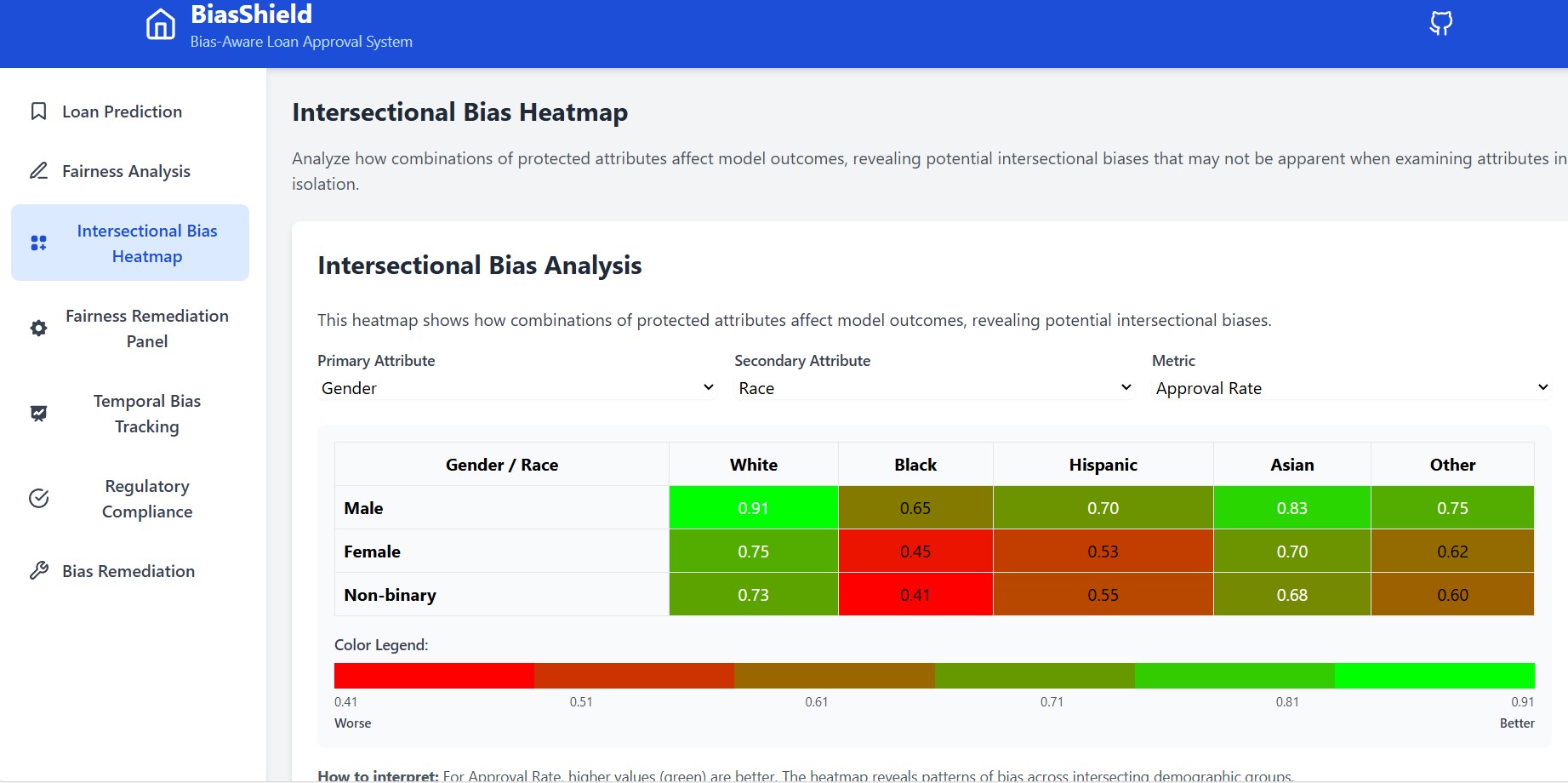
- Visualization: SHAP plots, disparity charts, and heatmaps for intersectional analysis
- Tools: Git for version control, VS Code for development
The model pipeline includes data preprocessing, training with fairness constraints, evaluation using both accuracy and fairness metrics, and generation of interpretability and bias reports.
Challenges I ran into
- Balancing accuracy and fairness: Adding fairness constraints often impacted predictive performance, requiring multiple rounds of tuning.
- Explainability complexity: Translating SHAP values into understandable insights for non-technical users was challenging.
- Intersectional bias: Evaluating combined bias (e.g., gender+race) introduced high-dimensional analysis that needed careful visualization.
- Integration issues: Synchronizing the frontend with backend fairness metrics and visualizations took several debugging cycles.
Accomplishments that I'm proud of
- Successfully implemented multiple bias mitigation techniques and demonstrated their real-world impact.
- Built a working dashboard that allows real-time exploration of model fairness.
- Designed a self-contained rule-based explanation engine for loan decisions.
- Ensured compliance checks aligned with regulations like ECOA and FCRA.
- Translated complex technical concepts into a usable and educational platform for end users.
What I learned
- Deepened my understanding of fairness definitions like Demographic Parity, Equalized Odds, and Counterfactual Fairness.
- Learned to balance model performance with ethical constraints.
- Gained hands-on experience with tools like SHAP, Fairlearn, and AIF360.
- Improved my full-stack development skills by integrating backend models with a dynamic frontend interface.
What's next for BiasShield
I plan to:
- Extend BiasShield to support more financial use cases (e.g., credit scoring, insurance underwriting).
- Add user authentication and audit logs for enterprise readiness.
- Deploy the app on cloud infrastructure for broader access.
- Incorporate reinforcement learning to adapt fairness interventions based on feedback.
- Conduct user testing with financial professionals and fairness researchers to improve usability and impact.

Log in or sign up for Devpost to join the conversation.