-
-
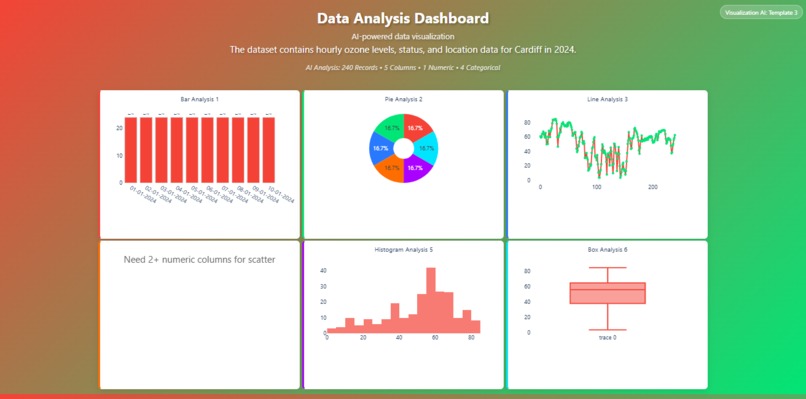
Output
-
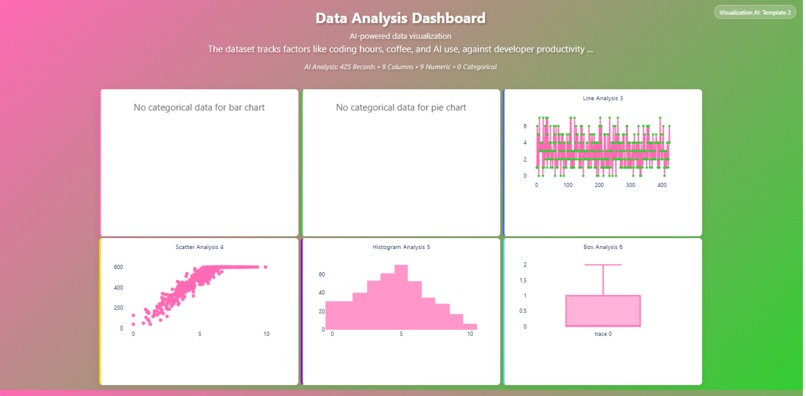
Output
-
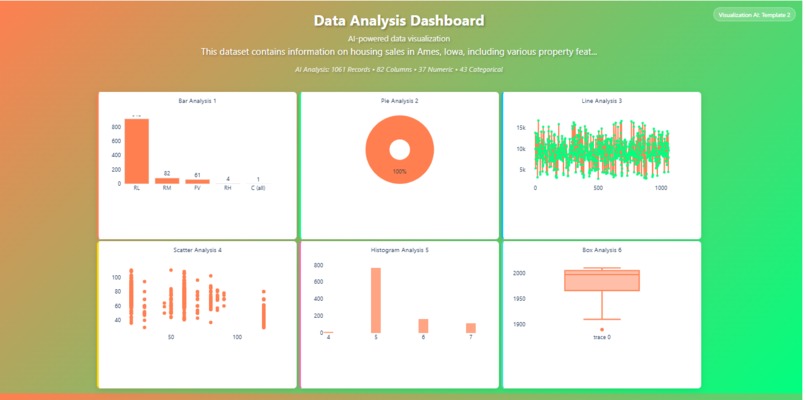
Output
-
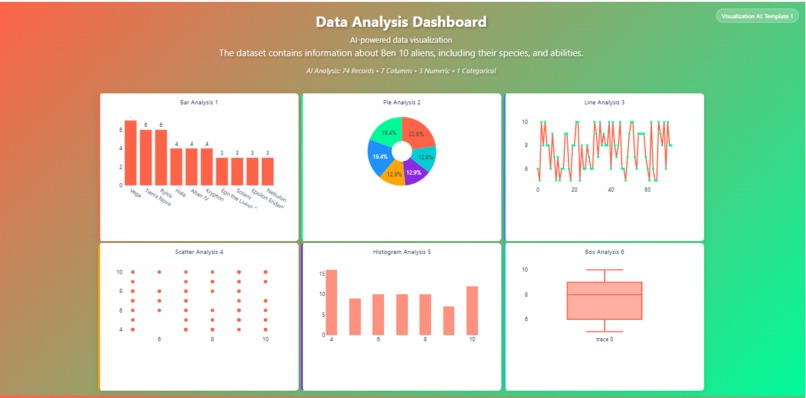
Output
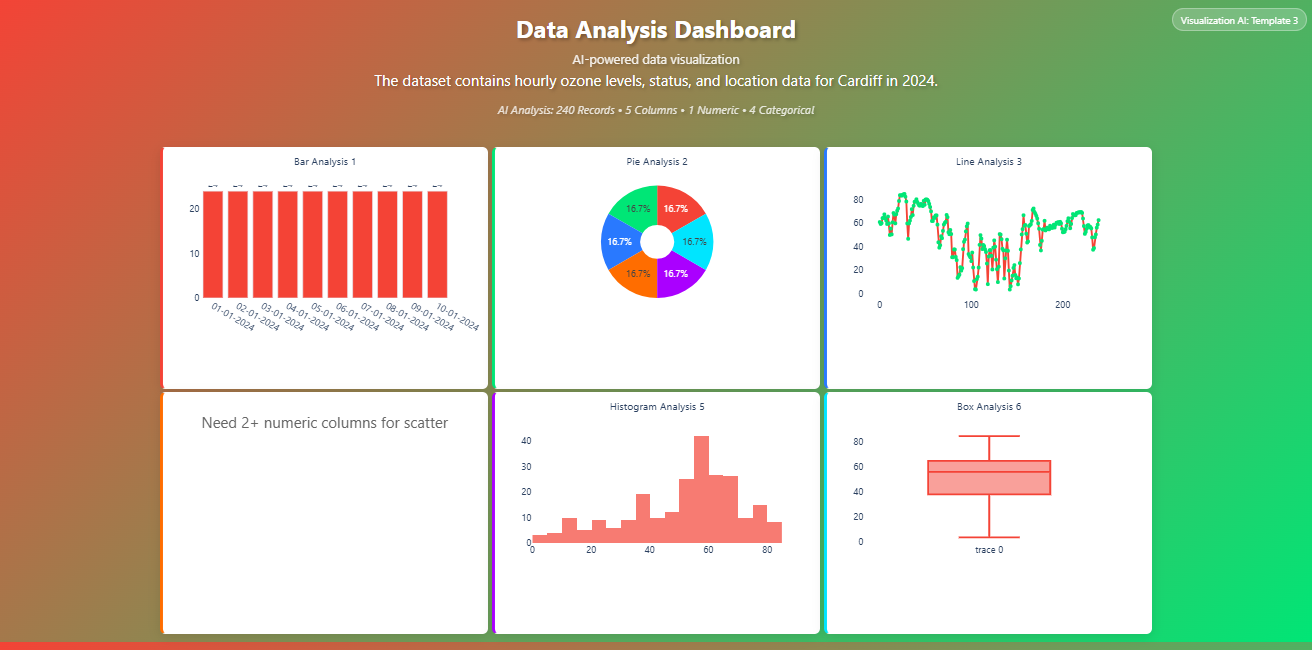
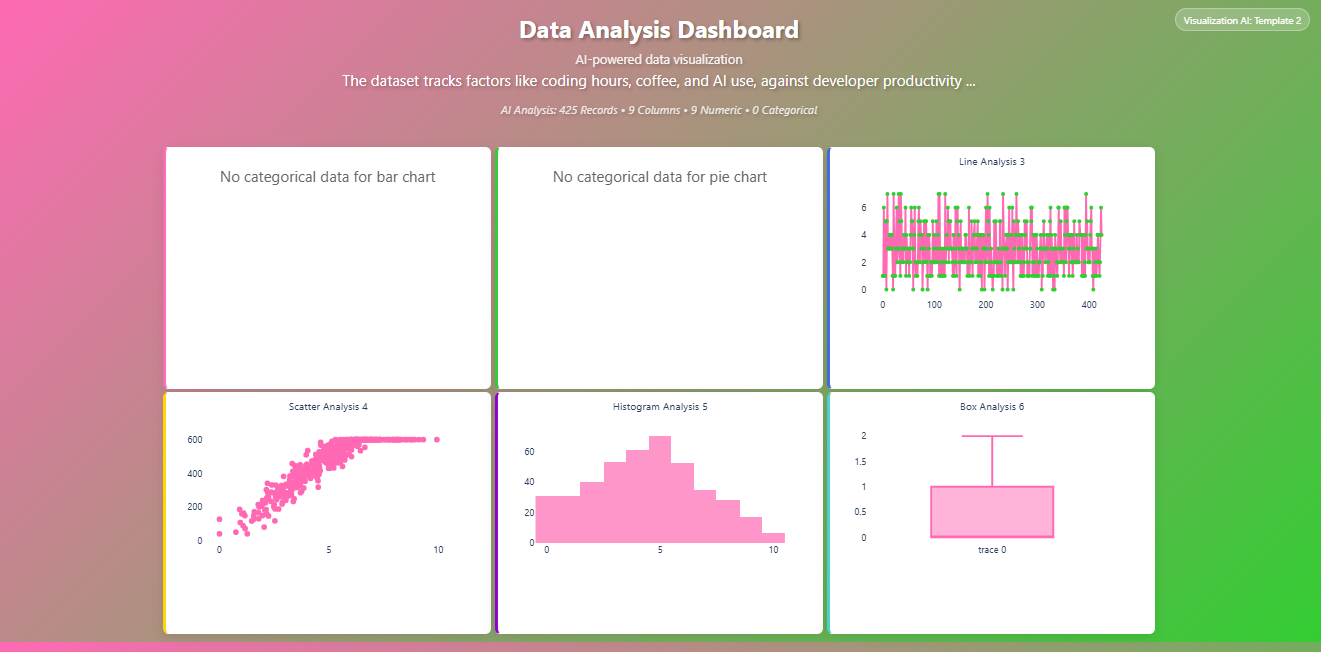
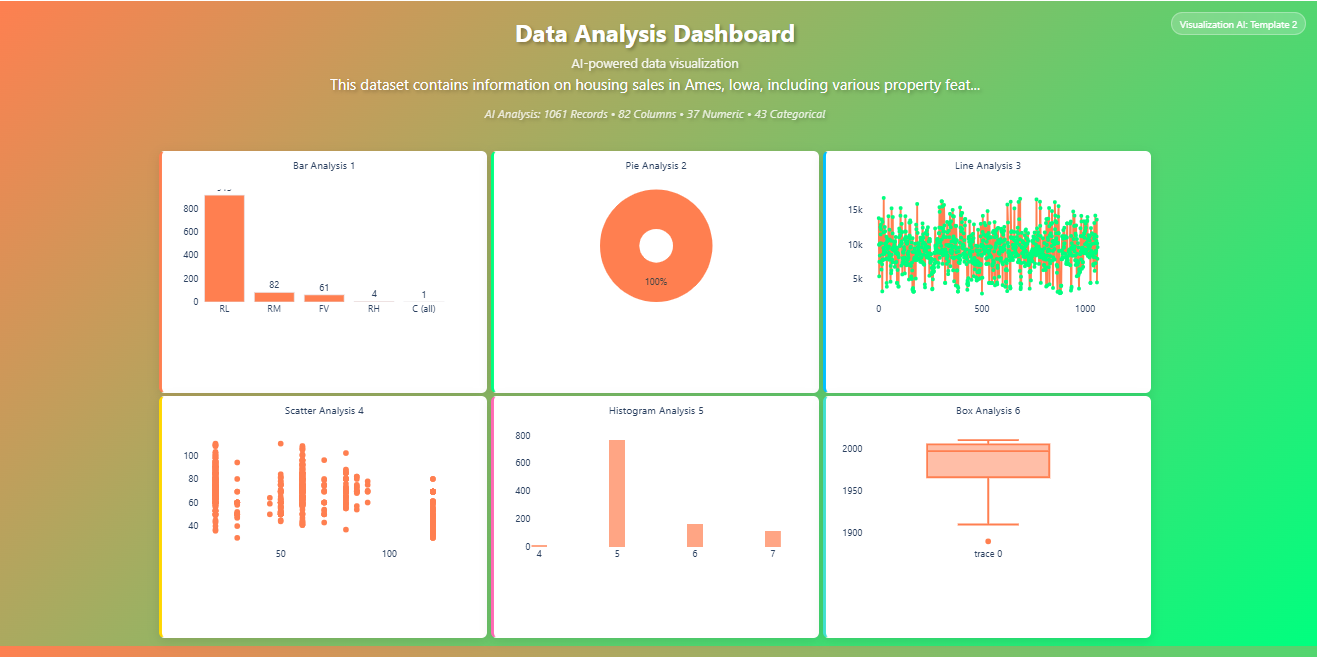
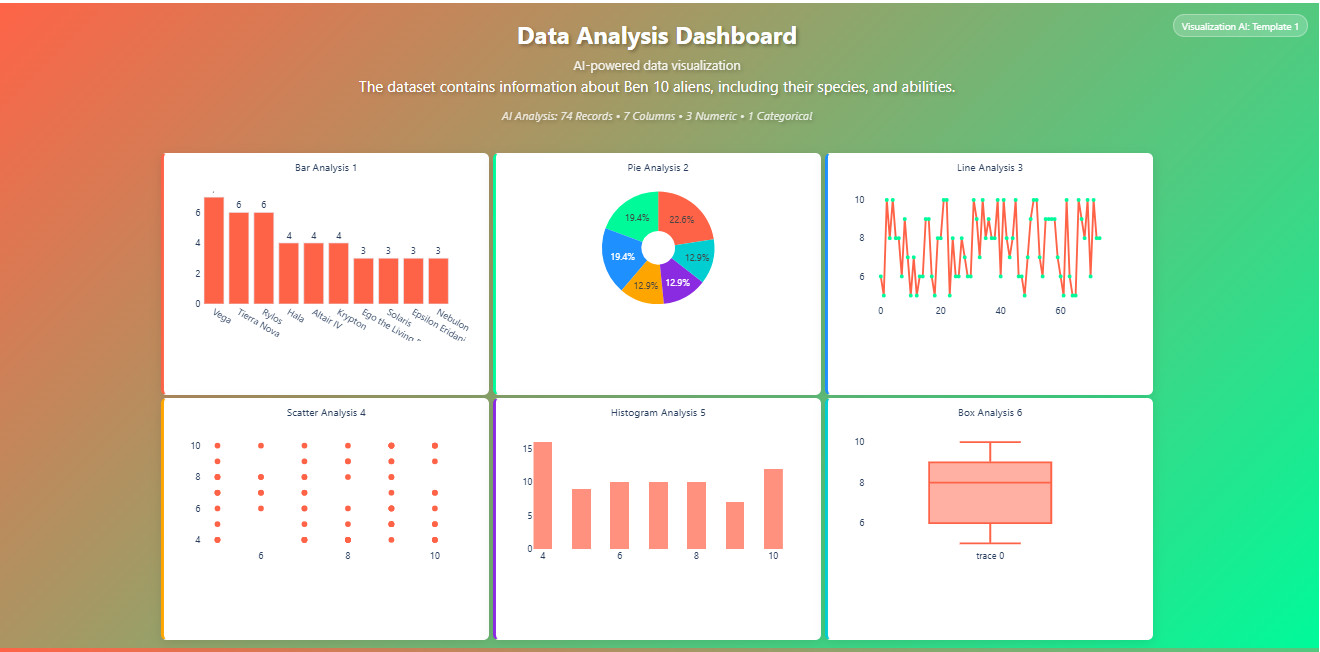
userid user password password
Use of Google: vertex AI as AI engine Hosted in Google Cloud and Digital Ocean Code Generated by Gemini AI mainly
Use of Mongo DB: stored at MongoDB
BI by AI: Become a BI Professional Without Learning Power BI
Inspiration
I learned data analysis in college, but there are so many things to master - complex formulas, visualization design, dashboard creation - and I am not good in design as well. Traditional BI tools like Power BI, Tableau require months of training and design skills that many people struggle with. So I thought of doing something where I don't need to be an expert in all these areas. What if we could just talk to our data like we talk to ChatGPT? This inspired me to create BI by AI - a platform where anyone can become a data analyst through natural conversation.
What it does
BI by AI is a conversational Business Intelligence platform that transforms data analysis into simple conversations. Users can upload CSV files and ask questions in plain English to get instant insights, visualizations, and analysis. The platform currently supports CSV files only, with no other data sources supported in this prototype version. Users can ask questions like "What are my top performing products?" or "Show me sales trends by month" and receive immediate analysis with automatically generated charts and insights. The system provides comprehensive data quality analysis, statistical summaries, correlation analysis, and intelligent visualizations without requiring any technical knowledge.
How we built it
The architecture follows a strategic approach to balance AI capabilities with cost efficiency. I used a hybrid model where AI handles natural language interpretation while Python does the heavy computational lifting. This approach keeps token costs low by avoiding sending large datasets to the AI model.
The tech stack includes:
- Frontend: Flask web application with modern UI
- Backend: Python with Pandas for data processing
- AI Engine: Google Gemini for natural language understanding
- Database: MongoDB for session and user management
- Analytics: Custom Python modules for statistical analysis
The key innovation is the sampling technique - instead of sending entire datasets to the AI, the system sends only representative samples and analysis results. This allows the AI to understand data patterns and provide insights while keeping API costs manageable. The AI calls Python functions for heavy data processing, correlation analysis, and visualization generation, then interprets the results in natural language.
Challenges we ran into
The biggest challenge has been the cost factor - building and testing this platform properly is very expensive. Every AI interaction costs money, and with large datasets, these costs can escalate quickly. This is why the current version can only handle one CSV file at a time and doesn't support multiple files simultaneously or other data sources like databases or APIs.
Technical challenges included:
- Memory optimization for large datasets to avoid server crashes
- Designing an efficient sampling algorithm that maintains data integrity
- Balancing AI token usage with functionality
- Creating a robust error handling system for various data formats
- Implementing session management for concurrent users
The prototype limitations are significant - no multi-file support, no real-time data connections, and limited to CSV format only. These limitations exist purely due to development and infrastructure costs.
Accomplishments that we're proud of
This is something that big tech giants like Amazon with QuickSight Q, Microsoft with Power BI natural language features, and Anthropic with Claude are investing millions into. I attempted this challenge and built a working prototype alone, which despite all its limitations, does what it's supposed to do - democratize data analysis through conversation.
Key accomplishments:
- Successfully implemented natural language to data insights pipeline
- Created an intelligent sampling system that maintains data accuracy while reducing costs
- Built a working conversational BI interface that non-technical users can operate
- Developed a scalable architecture that separates AI interpretation from data processing
- Achieved the core goal of making BI accessible without requiring Power BI expertise
The fact that a solo developer can create something in the same space where tech giants are competing with multi-million dollar budgets is itself an accomplishment.
What we learned
The most crucial learning was how to protect AI capabilities while using its power to maximum effect. I discovered that the key is intelligent delegation - use AI for what it does best (understanding human language and providing insights) while using traditional programming for heavy computation.
Technical learnings:
- Sampling techniques can maintain statistical significance while dramatically reducing costs
- AI token optimization is critical for viable commercial applications
- Session management and memory optimization are essential for scalable web applications
- The importance of separating concerns - AI for interpretation, Python for computation
- How to design user experiences that hide complex technical processes
Business learnings:
- The gap between prototype and production-ready software is enormous
- Cost management is crucial in AI applications
- User experience design is as important as the underlying technology
- The market need for accessible BI tools is massive
What's next for BI by AI: Become a BI Professional Without Learning Power BI
The next steps require significant investment, which I currently don't have the money for. The roadmap includes:
Immediate needs (Investment required):
- Multi-file support and database connections
- Real-time data pipeline integration
- Advanced visualization engine
- Enterprise security and compliance features
- Scalable cloud infrastructure
Technical improvements:
- Support for Excel, JSON, database connections
- Real-time collaboration features
- Advanced analytics and machine learning capabilities
- Mobile application development
- API integrations with popular business tools
Business development:
- Enterprise customer acquisition
- SaaS pricing model implementation
- 24/7 support infrastructure
- Compliance certifications (SOC2, GDPR)
The vision is to create a platform where anyone in any organization can become a data analyst instantly, eliminating the months of training required for traditional BI tools. However, this requires substantial funding for infrastructure, AI model optimization, enterprise features, and team scaling.
If investors, VCs, or enterprises believe in this vision of democratizing data analytics through AI, I'm open to partnerships and funding discussions to take BI by AI from prototype to production-ready platform.

Log in or sign up for Devpost to join the conversation.