-
-
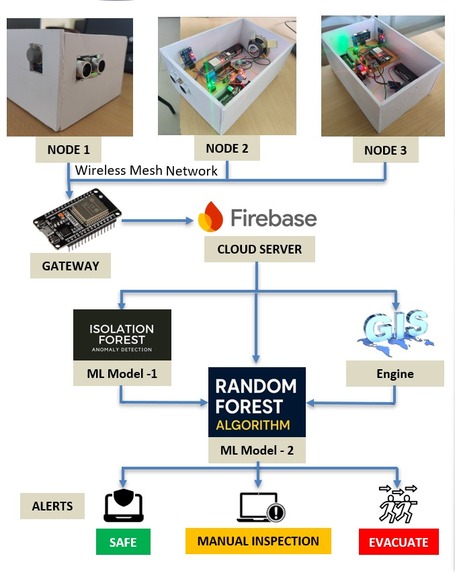
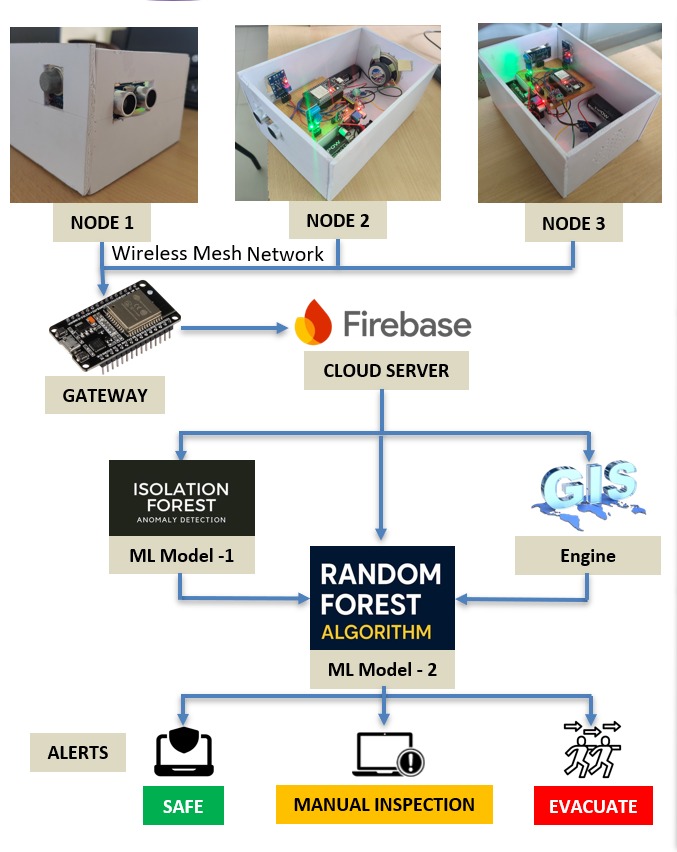
architechture diagram
-
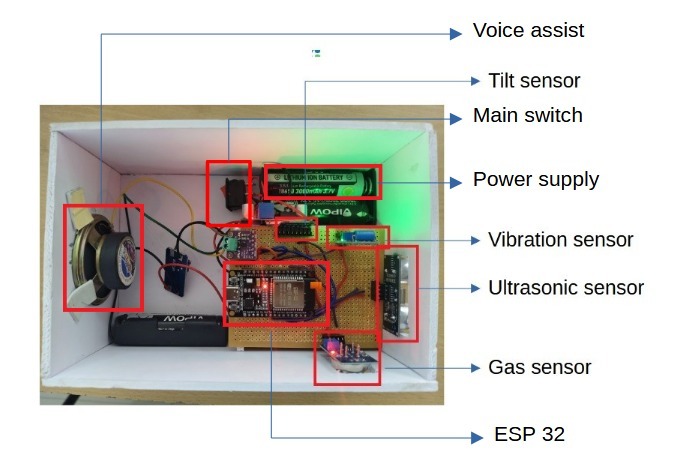
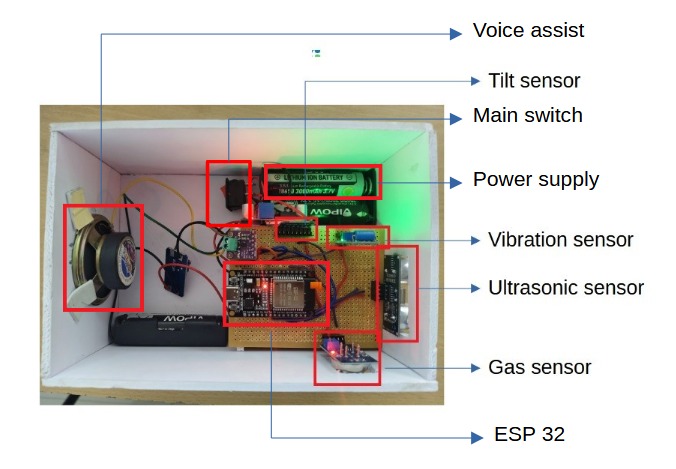
our node's components
-
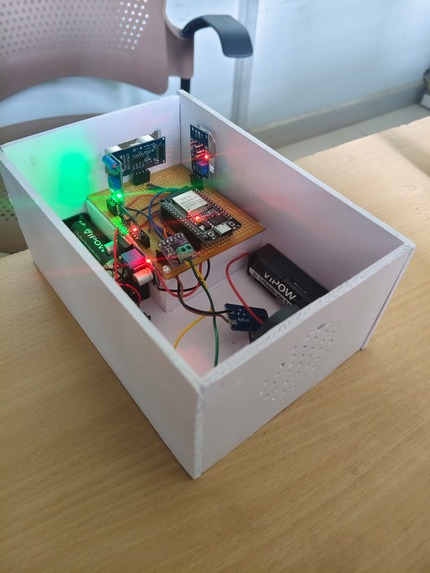
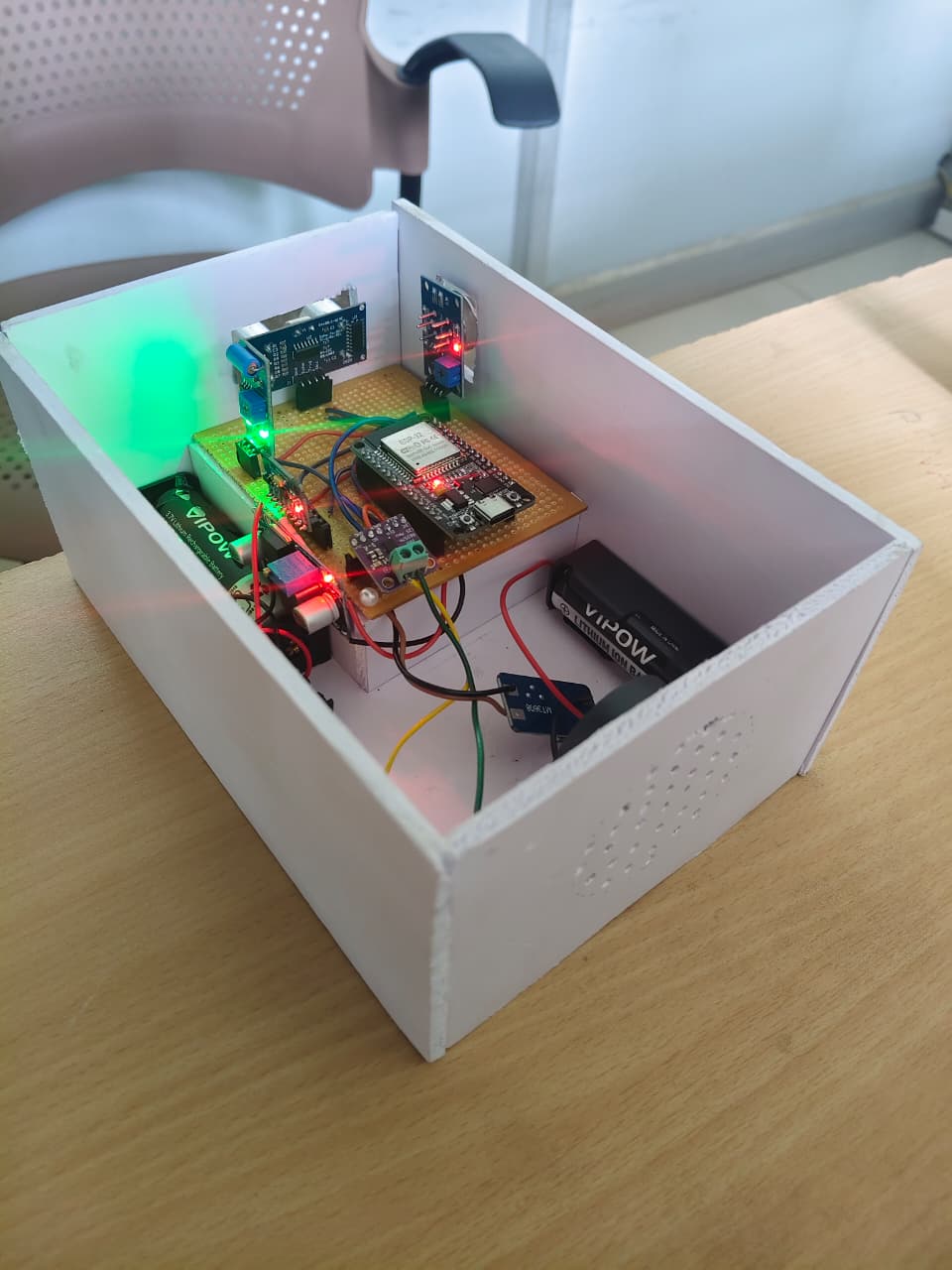
our multi-sensor node
Inspiration
Underground coal mines face serious risks, including ground movement, roof instability, vibration, and hazardous gas accumulation. We wanted to develop an affordable and intelligent solution that helps monitor these conditions continuously and identify potential hazards early.
What it does
BhuRakshak is an IoT-based underground coal-mine monitoring system that uses multiple sensors to monitor distance changes, tilt, vibration, and combustible gas presence. It combines sensor data with Machine Learning techniques to identify abnormal patterns and supports risk assessment through a centralized monitoring platform and alerts.
How we built it
We built our prototype using ESP32-based sensor nodes connected to an ultrasonic sensor, MPU6050, and MQ-2 gas sensor. The nodes collect measurements and transmit data to a central platform using an IoT communication architecture. The proposed software architecture includes data processing, Machine Learning algorithms such as Isolation Forest and Random Forest, dashboard visualization, and alert generation.
Challenges we ran into
Integrating multiple sensors with the ESP32, obtaining consistent readings, handling sensor variations, and designing reliable anomaly detection were key challenges. We also considered how to make the system modular and scalable while keeping the prototype affordable.
Accomplishments that we're proud of
We are proud of developing a physical sensor-node prototype and designing a unified monitoring architecture that brings together IoT sensing, data analysis, and mine-safety monitoring. The project provides a foundation for expanding the system with additional sensors and monitoring locations.
What we learned
We gained experience in sensor integration, ESP32-based development, IoT communication, data processing, and Machine Learning concepts. We also learned that sensor calibration, reliable communication, and proper testing are essential when developing systems intended to support safety-related decisions.
What's next for BhuRakshak
We aim to improve the prototype by integrating dedicated mine-gas and ground-deformation sensors, strengthening underground communication, and validating anomaly-detection models using reliable data. Future developments may include predictive subsidence analysis and detailed mine-panel visualization, helping BhuRakshak evolve into a scalable mine-monitoring and decision-support platform.

Log in or sign up for Devpost to join the conversation.