-
icon for Bhū Saṃrakṣā
-
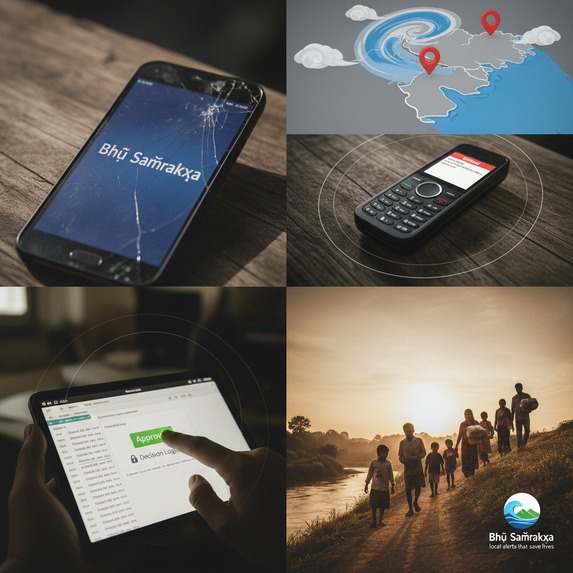
Bhū Saṃrakṣā demo
-
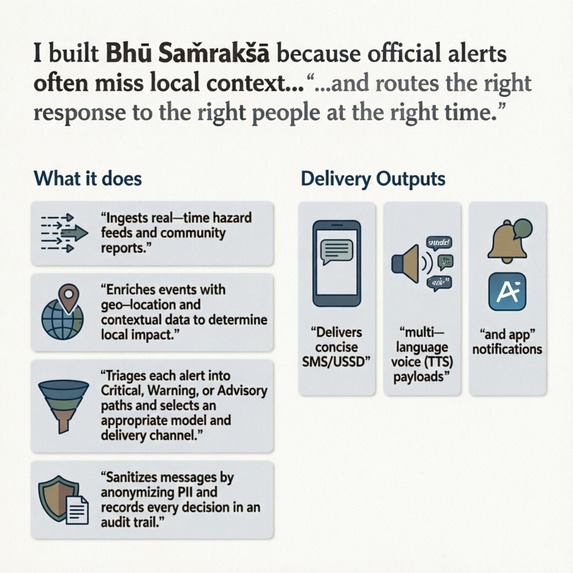
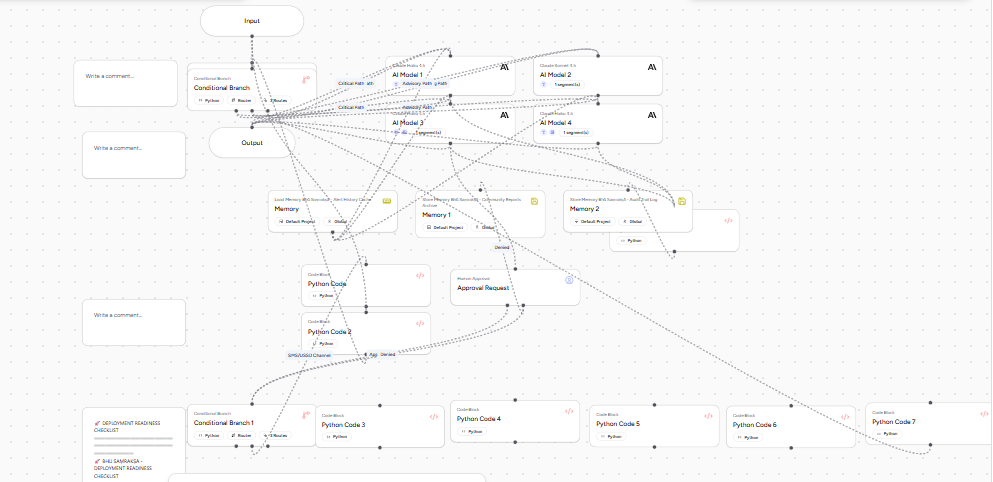
Critical, Warning, or Advisory paths and selects an appropriate model and delivery channel
-
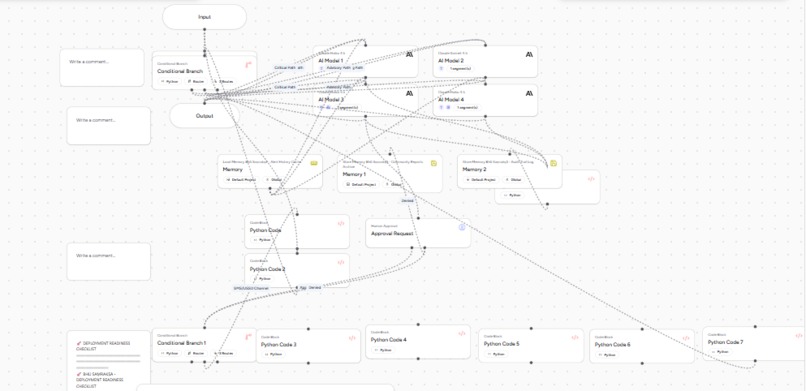
Bhū Saṃrakṣā_v.1
-
Bhū Saṃrakṣā_submission received
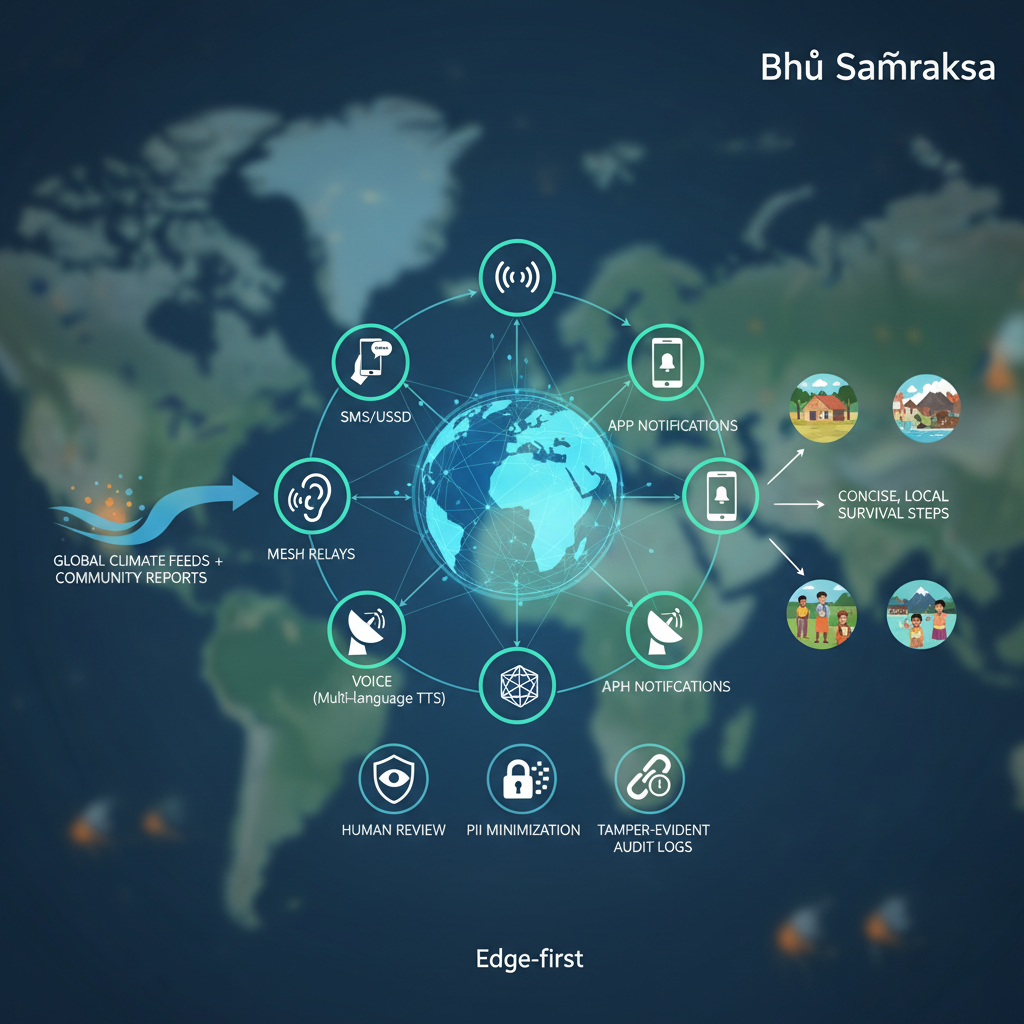
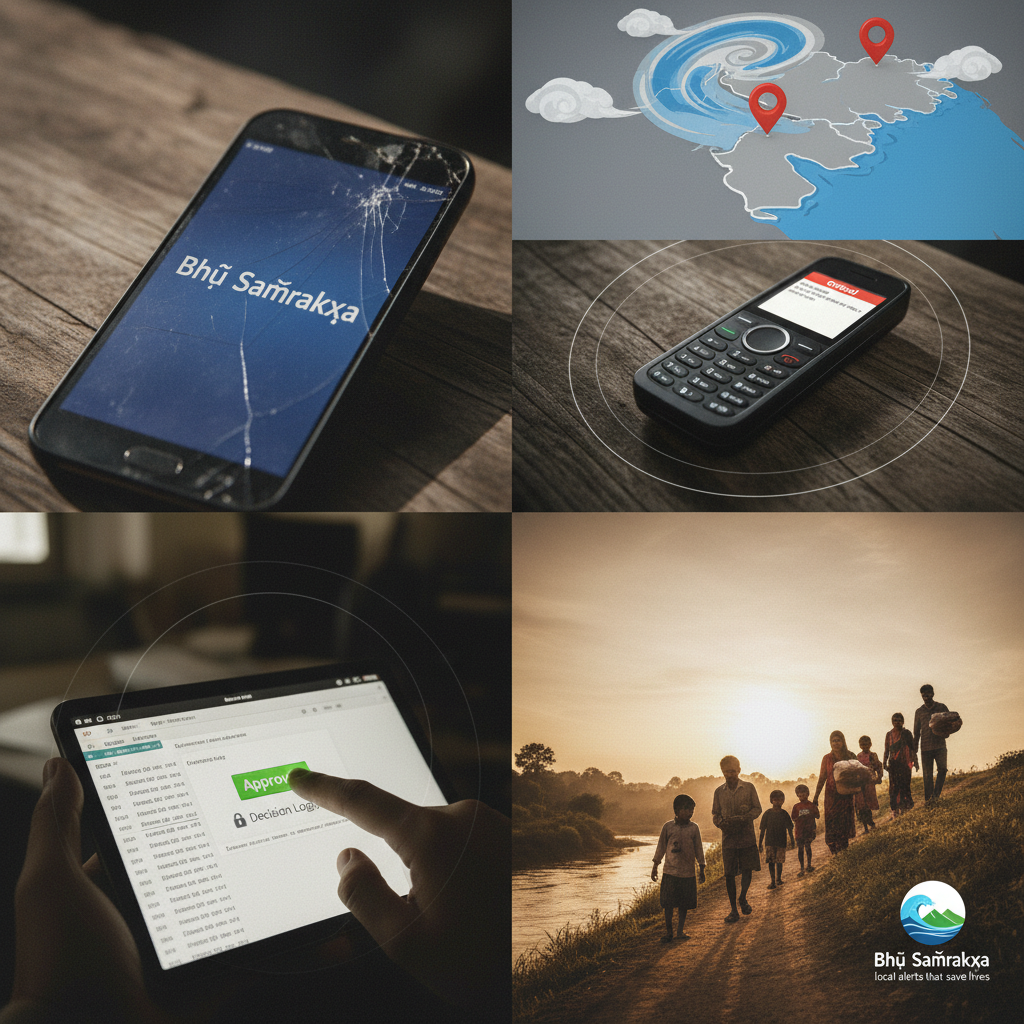
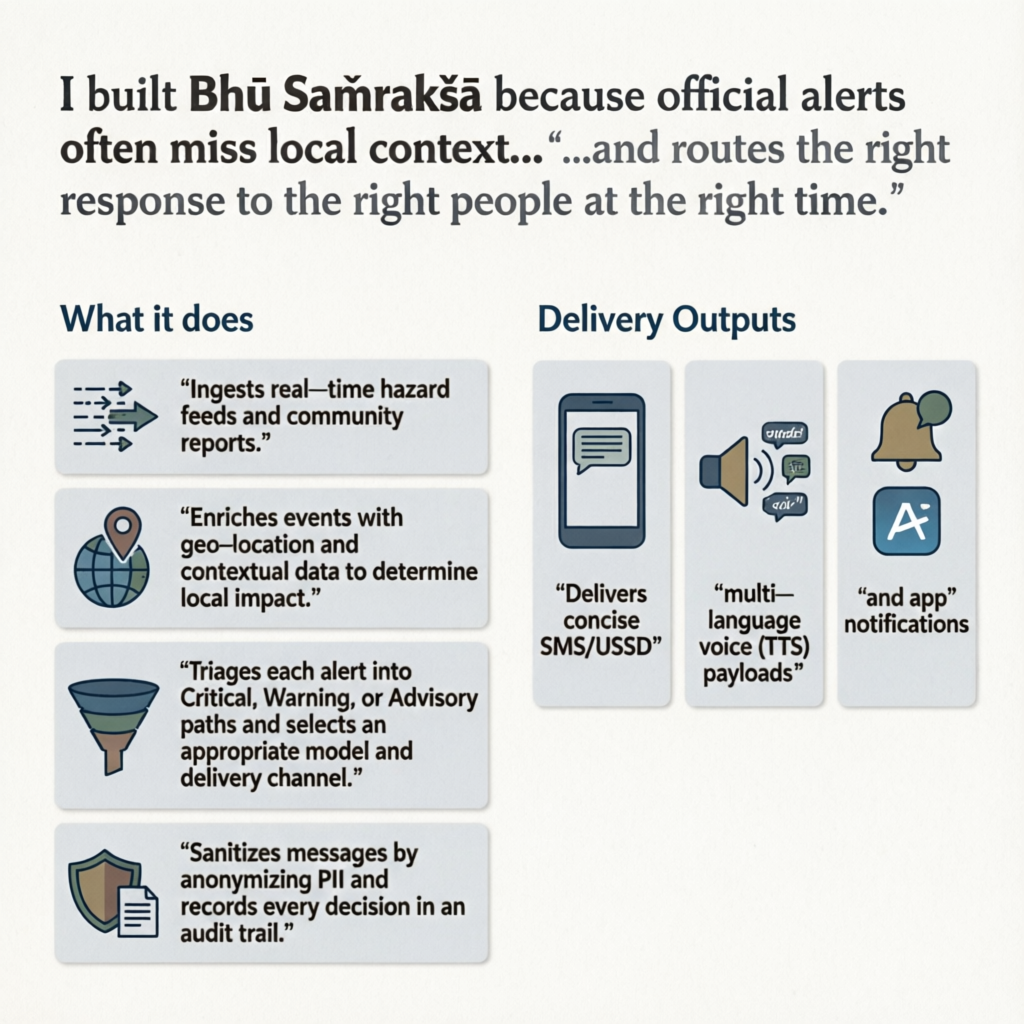
Inspiration I built Bhū Saṃrakṣā because official alerts often miss local context and many vulnerable communities rely on low‑bandwidth channels or voice in local languages during crises. The project was inspired by real‑world failures of one‑size‑fits‑all alerts, the need for concise actionable guidance (SMS/USSD), and the life‑saving potential of localized voice messages when connectivity is poor. The goal was to create a pipeline that respects privacy, reduces false alarms, and routes the right response to the right people at the right time.
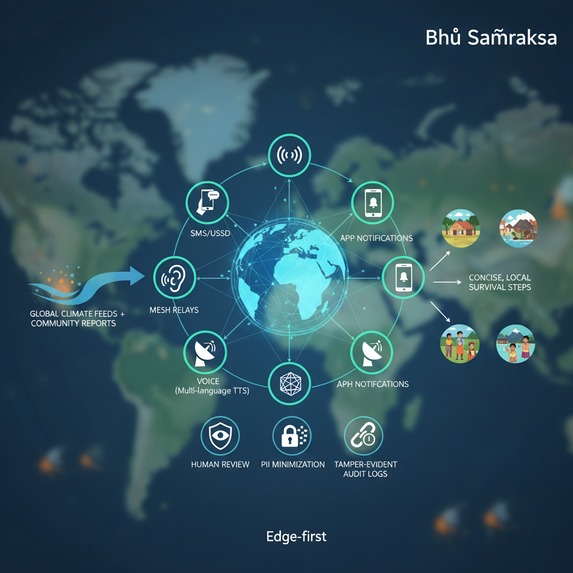
What it does Ingests real‑time hazard feeds and community reports.
Enriches events with geo‑location and contextual data to determine local impact.
Triages each alert into Critical, Warning, or Advisory paths and selects an appropriate model and delivery channel.
Sanitizes messages by anonymizing PII and records every decision in an audit trail.
Delivers concise SMS/USSD, multi‑language voice (TTS) payloads, and app notifications, with human approval gates for life‑threatening broadcasts.
How we built with Architecture overview
Pipeline components: Ingest → Geo‑Location Enricher → Crisis Triage Router → Pathed Response Engines → PII Anonymizer → Audit Trail → Multi‑Channel Router.
Languages & runtime: Python for backend processing and orchestration; JavaScript/TypeScript for UI and integration layers.
AI & models: Multi‑model strategy (fast low‑latency model for Critical path; higher‑capability models for Warning/Advisory).
Integrations: Prepared payloads for Sarvam (TTS and conversation analytics), connectors for climate feeds (IMD/OpenWeather/NOAA), and SMS/voice gateways (Twilio or local providers).
Data & governance: In‑pipeline memory nodes for alert history, community reports, and tamper‑evident audit logs.
Challenges we ran into External integration friction: Webhook/MCP configuration for Sarvam and live climate feeds required provider‑side setup and authorization that delayed end‑to‑end testing.
Authorization and linking limits: Automated linking steps sometimes hit permission boundaries, forcing manual linking and final prompt adjustments.
Conciseness vs completeness: Enforcing strict SMS/USSD length limits (160 characters) while keeping messages actionable required careful prioritization logic and iterative testing.
Latency vs capability tradeoffs: Choosing when to use a fast, lower‑capacity model versus a slower, more capable model demanded careful severity thresholds and fallback rules.
Accomplishments that we're proud of Working triage pipeline: Implemented a full triage router that reliably classifies simulated inputs into Critical/Warning/Advisory and routes them through the correct path.
Privacy and auditability: Built automatic PII anonymization and tamper‑evident audit trails so every broadcast is traceable and reviewable.
Multi‑channel readiness: Prepared SMS formatting, USSD constraints, and Sarvam TTS payloads for multiple Indian languages, enabling low‑bandwidth and voice‑first delivery.
Human‑in‑the‑loop safety: Integrated a human approval gate for critical alerts to reduce false positives and increase trust.
What we learned Designing for context matters: Local geography, language, and channel constraints change what “actionable” means; templates must be context‑aware.
Model orchestration is a systems problem: Effective crisis response requires routing logic that balances latency, model capability, and human oversight.
Privacy engineering is essential: PII anonymization and auditable logs are non‑negotiable for public trust and compliance.
Operational integration is often the hardest part: Even with payloads ready, real‑world connectors (webhooks, gateways, provider auth) are the final mile that requires coordination with external teams.
What's next for Bhū Saṃrakṣā
Below is a focused, actionable roadmap and checklist to move Bhū Saṃrakṣā from a tested pipeline to a production‑ready, community‑deployed crisis advisor. I include immediate priorities, 30–90 day milestones, operational tasks, metrics to track, and longer‑term growth items you can use for Devpost, investor updates, or team planning. The Devpost project page is already in progress and can be updated with these milestones.
Built With
- cloud
- gcp
- javascript
- kubernetes
- meteorological
- postgresql
- s3?compatible
- sarvam
- vms
- vps


Log in or sign up for Devpost to join the conversation.