-
-
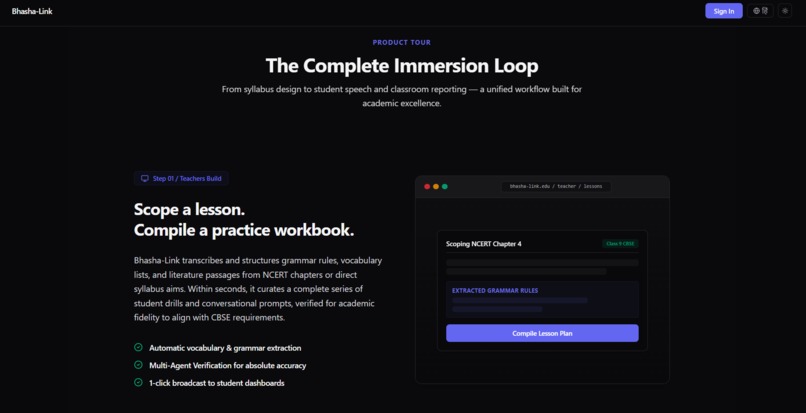
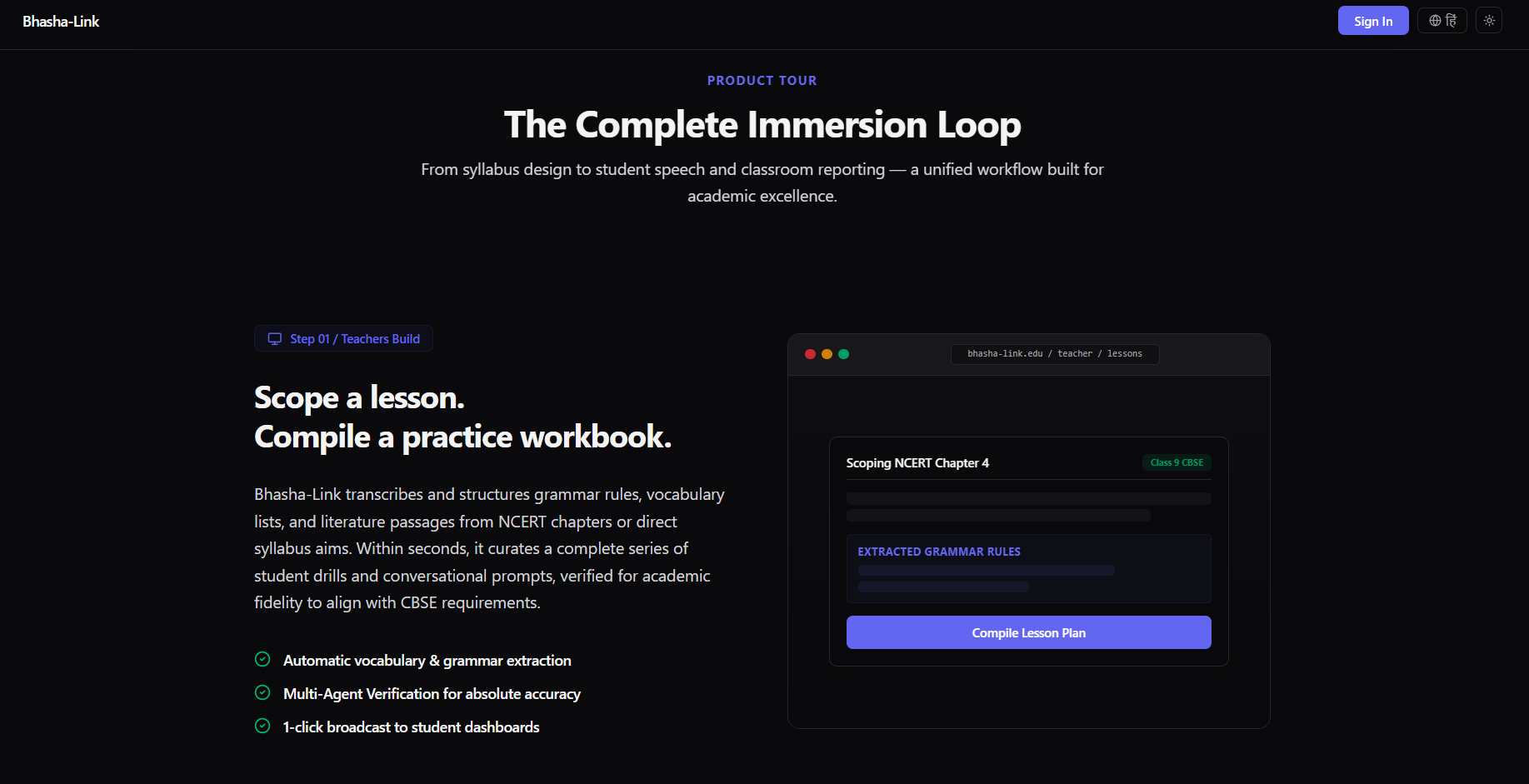
Features Section screen #1
-
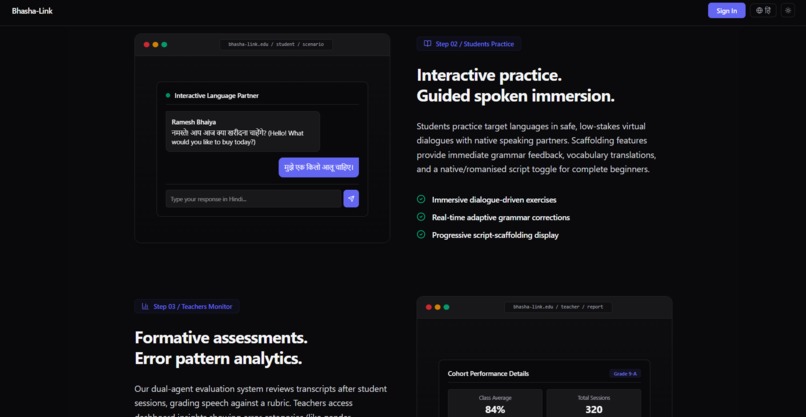
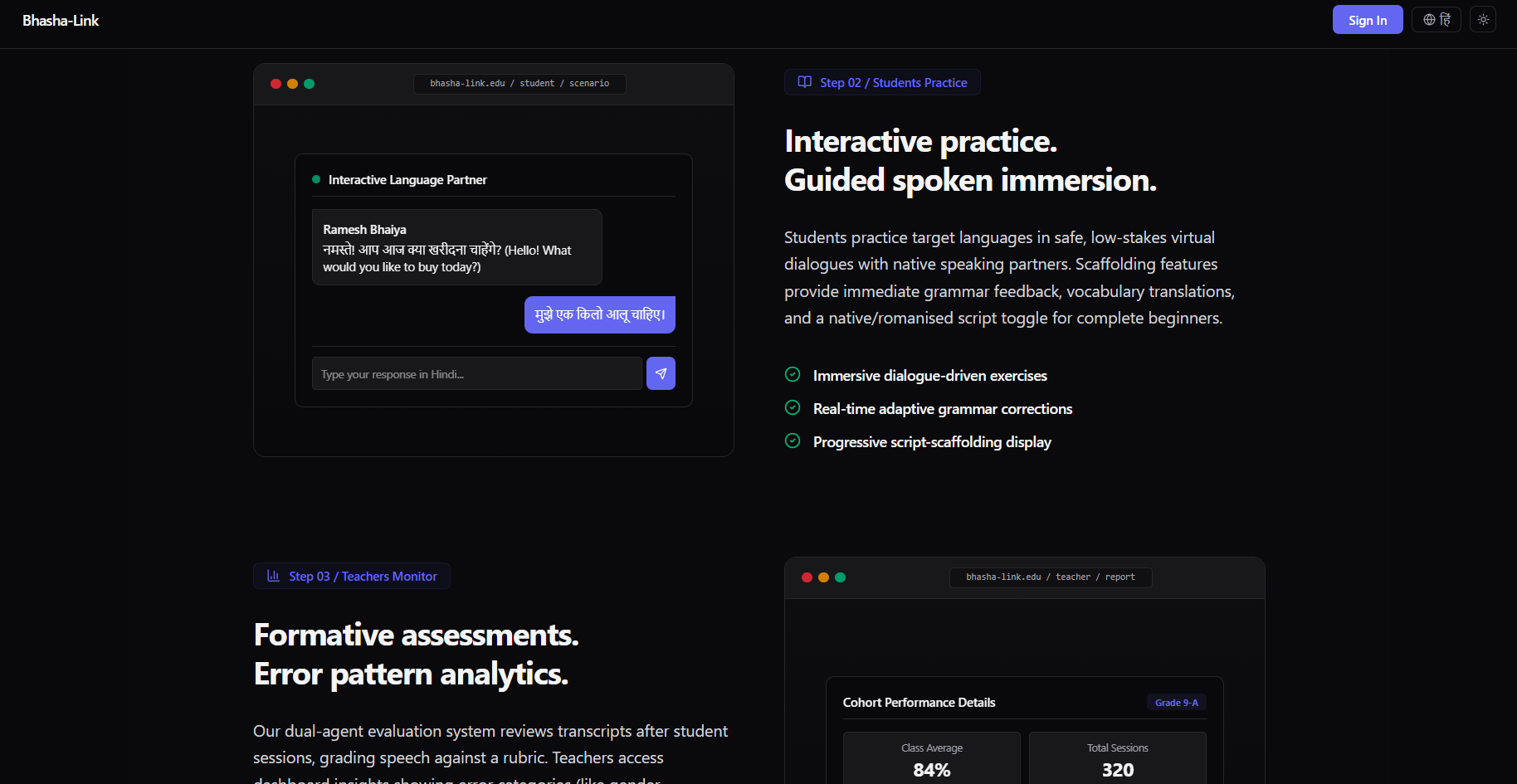
Features Section screen #2
-
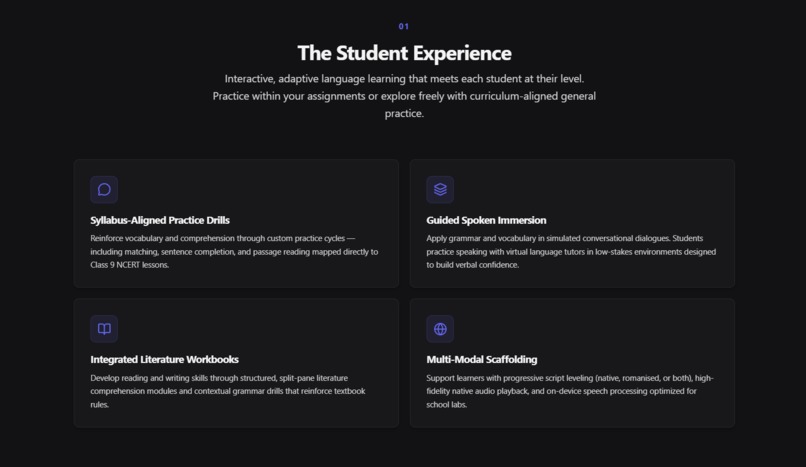
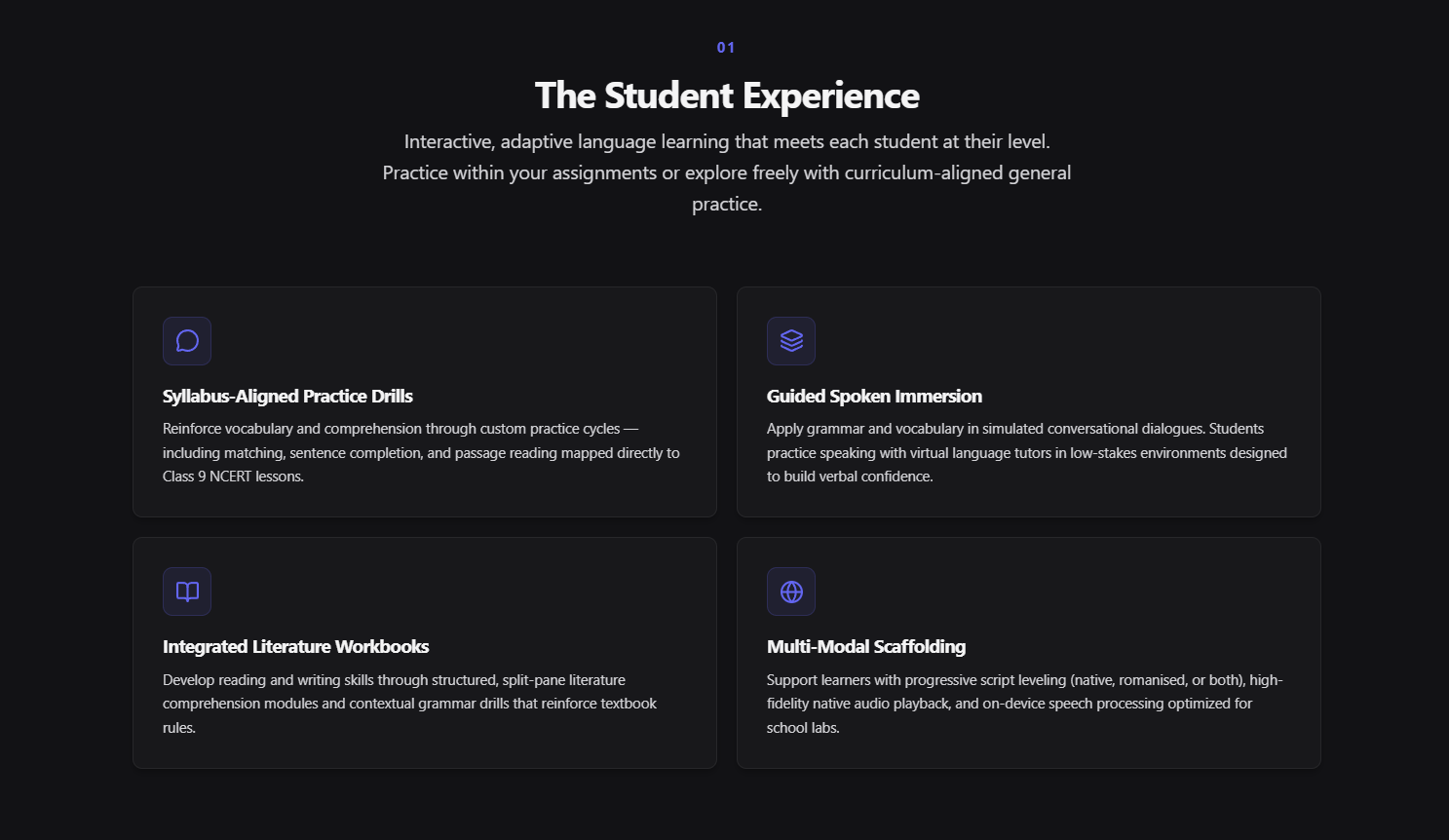
The Student Experience
-
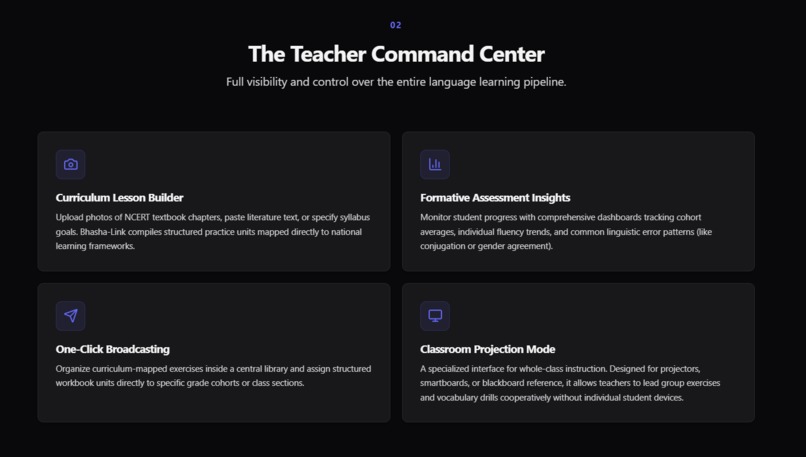
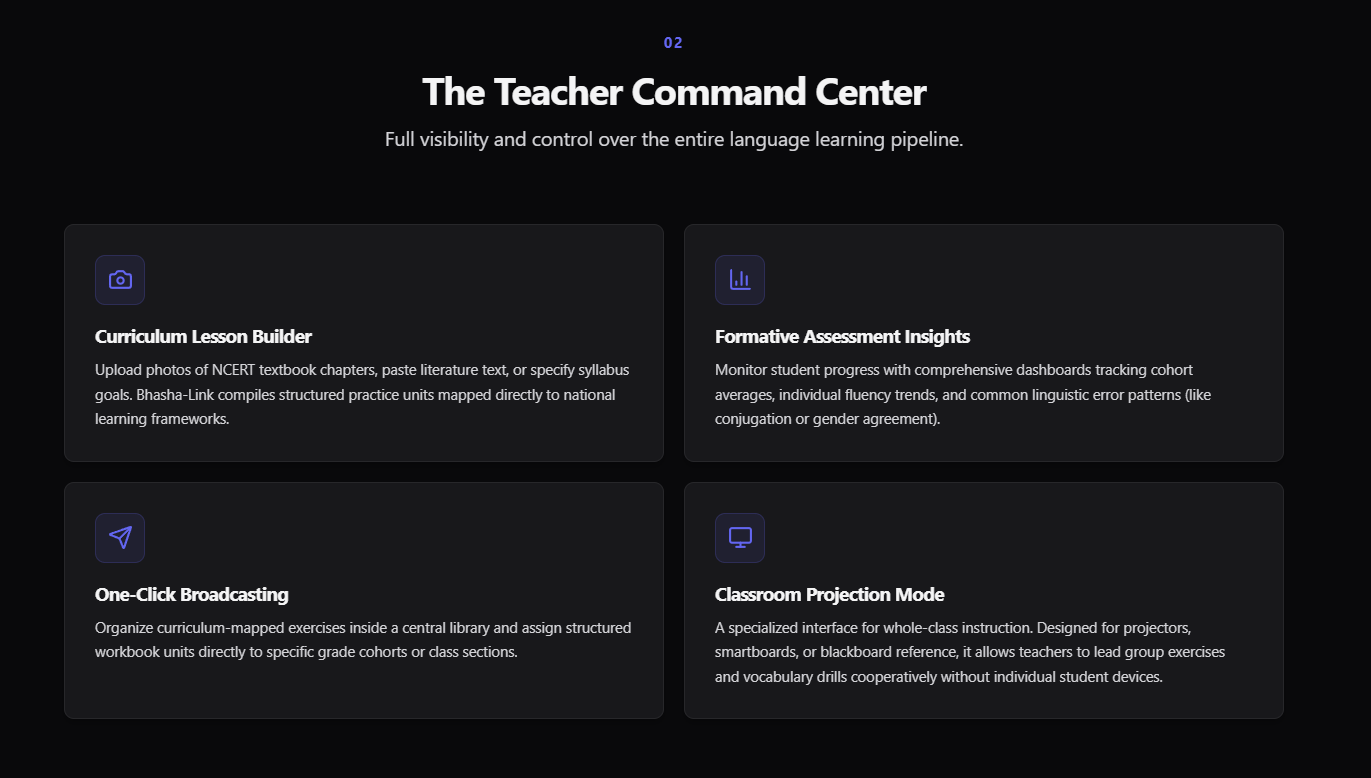
The Teacher Command Center
-
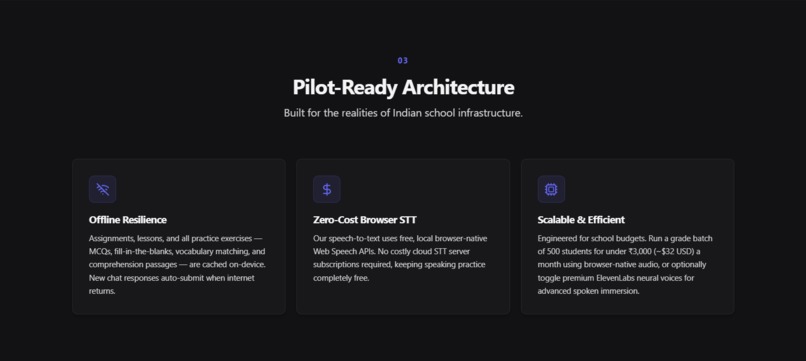
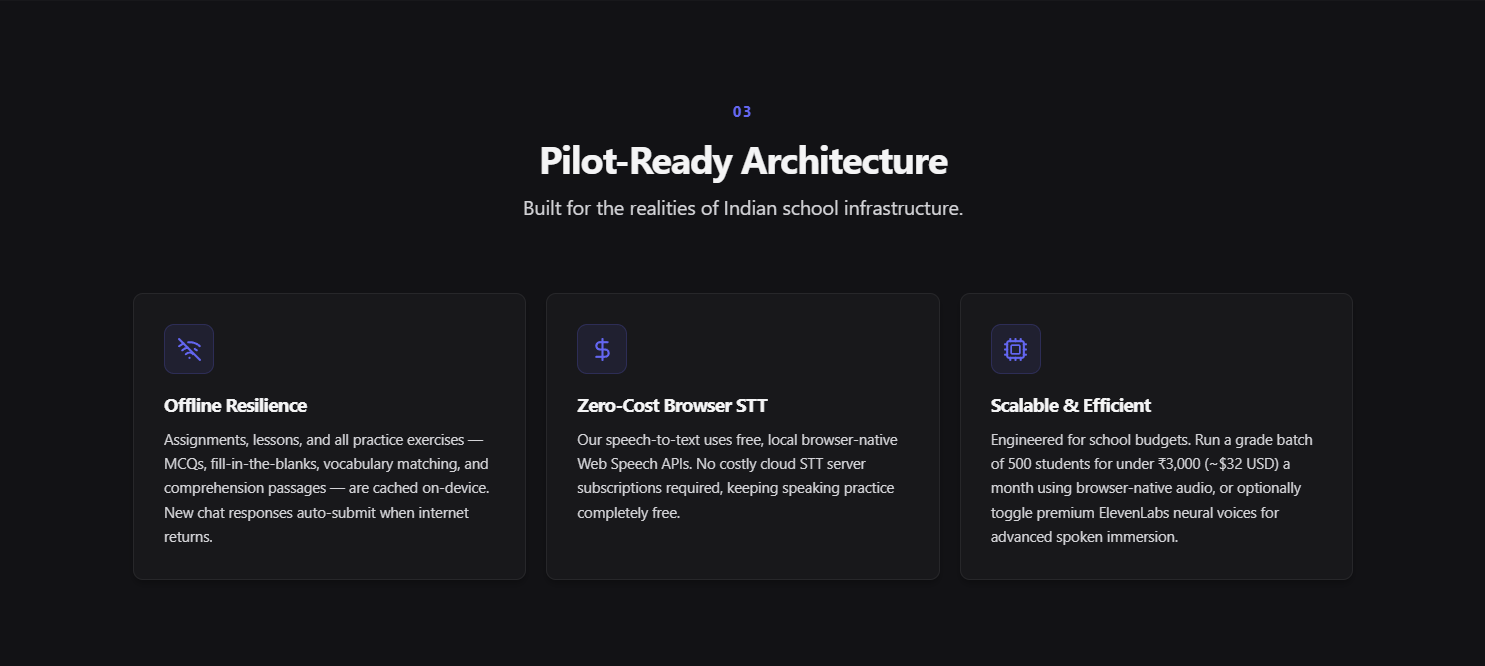
Pilot-Ready Architecture
-
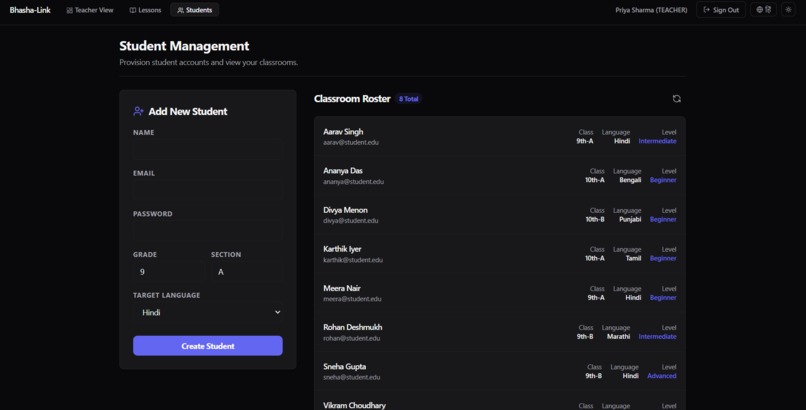
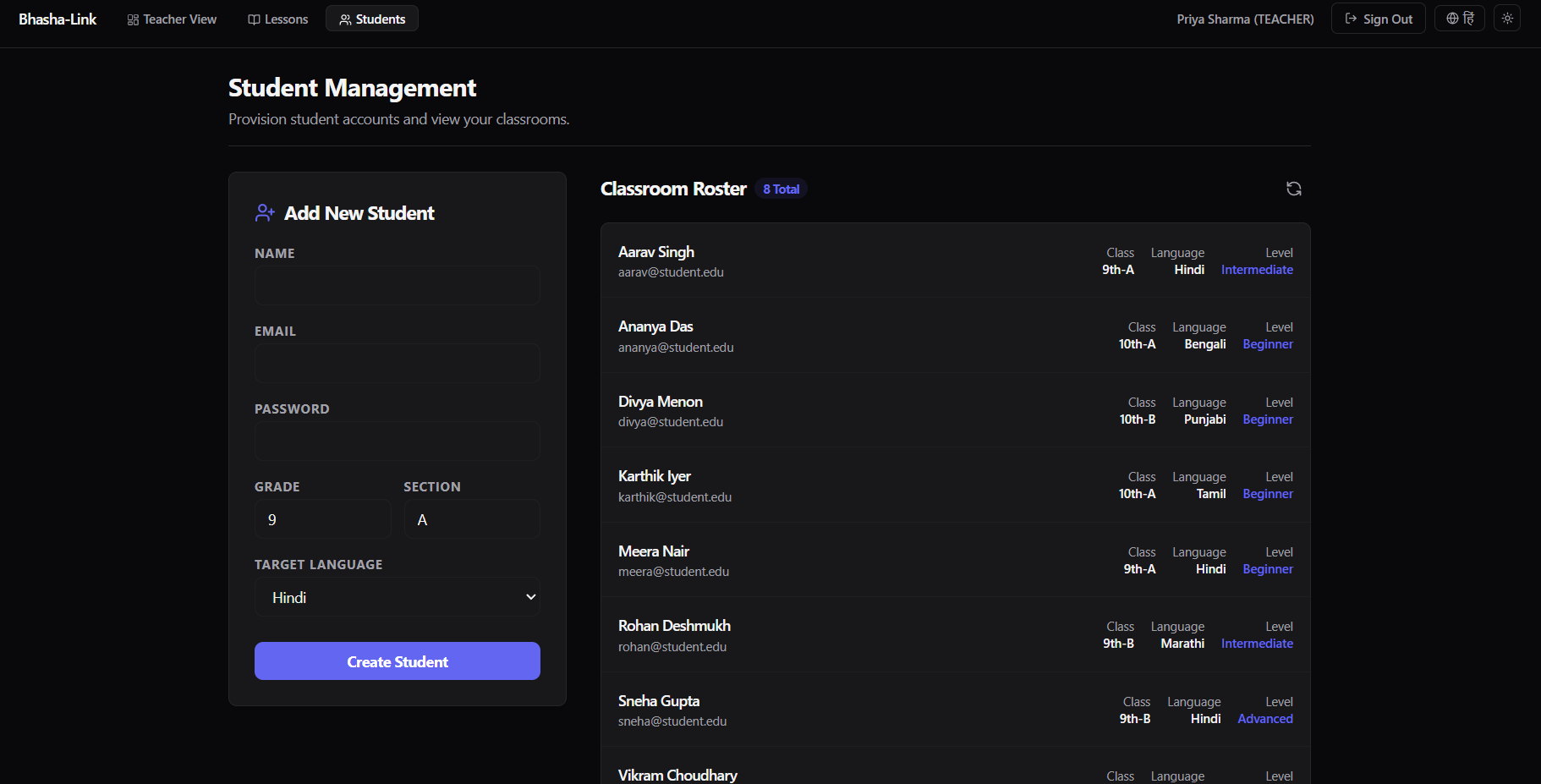
Student Management screen
The Inspiration (The Problem We're Solving)
While AI language apps like Duolingo are great for general travel, they completely fail students navigating standardized school curriculums. In India, the national education board (CBSE) mandates that millions of students learn a regional "Third Language" (like Marathi, Tamil, or Telugu) entirely distinct from their native tongue.
The problem is that practice relies on dry textbook memorization or expensive private tutors, leaving low-income students behind. I experienced this gap firsthand. I wanted to use AI not to replace the curriculum, but to supercharge it. I built a bridge between static textbook chapters and active, conversational immersion that any public school could actually afford.
What it does
Bhasha-Link is a complete, deployable Progressive Web App (PWA) with two distinct experiences:
- The Teacher Command Center: A teacher simply snaps a photo of an NCERT syllabus textbook. Within seconds, the AI compiles a structured lesson, extracting vocabulary, generating comprehension quizzes, and building a conversational scenario. The teacher can then batch-broadcast these interactive assignments to specific class sections.
- The Student Portal: Students engage in "Guided Spoken Immersion." They practice speaking with virtual AI tutors, such as a school librarian or a science lab assistant, based exactly on the vocabulary from their textbook chapter. The AI provides real-time grammatical scaffolding, inline translations, and adaptive pop quizzes based on the student's mistakes.
- The Economics: We built a dedicated cost model. By utilizing browser-native Web Speech API for voice and aggressive caching, the entire platform costs a school less than $0.05 (₹4.72) per student, per month to operate.
How we built it
I built Bhasha-Link using Next.js 16 and React 19, styled with Tailwind CSS 4 and shadcn/ui. The backend relies on Prisma, PostgreSQL, and NextAuth v5 for robust Role-Based Access Control (RBAC) via Next.js Middleware.
The intelligence is powered by Google Vertex AI. I used Gemini 2.5 Pro for the heavy lifting (native image transcription of textbooks without OCR, and deep curriculum extraction) and Gemini 2.5 Flash for the low-latency conversational agent.
Challenges and What I Learned
A major challenge was making the platform "production-ready" for a real school. I had to implement Upstash Redis for sliding-window rate limiting to prevent abuse. Additionally, getting the "Evaluator Agent" to reliably score grammar, extract specific error patterns, and instantly formulate a targeted pop quiz required precise prompt engineering and structured JSON outputs via Zod schemas. Building the IndexedDB offline-sync queue was also a massive learning curve, but crucial for ensuring students with spotty internet can still practice.
Built With
- gemini-2.5-flash
- gemini-2.5-pro
- next.js
- postgresql
- prisma
- pwa
- react
- shadcn-ui
- tailwind-css
- typescript
- upstash-redis
- vertex-ai
- web-speech-api


Log in or sign up for Devpost to join the conversation.