-
-
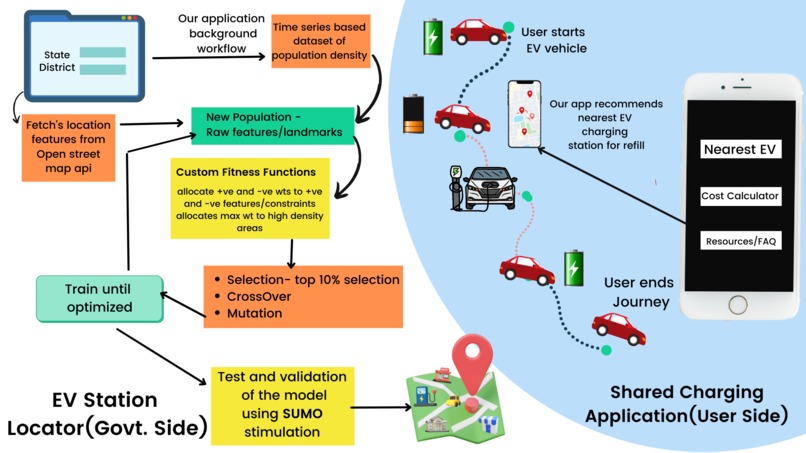
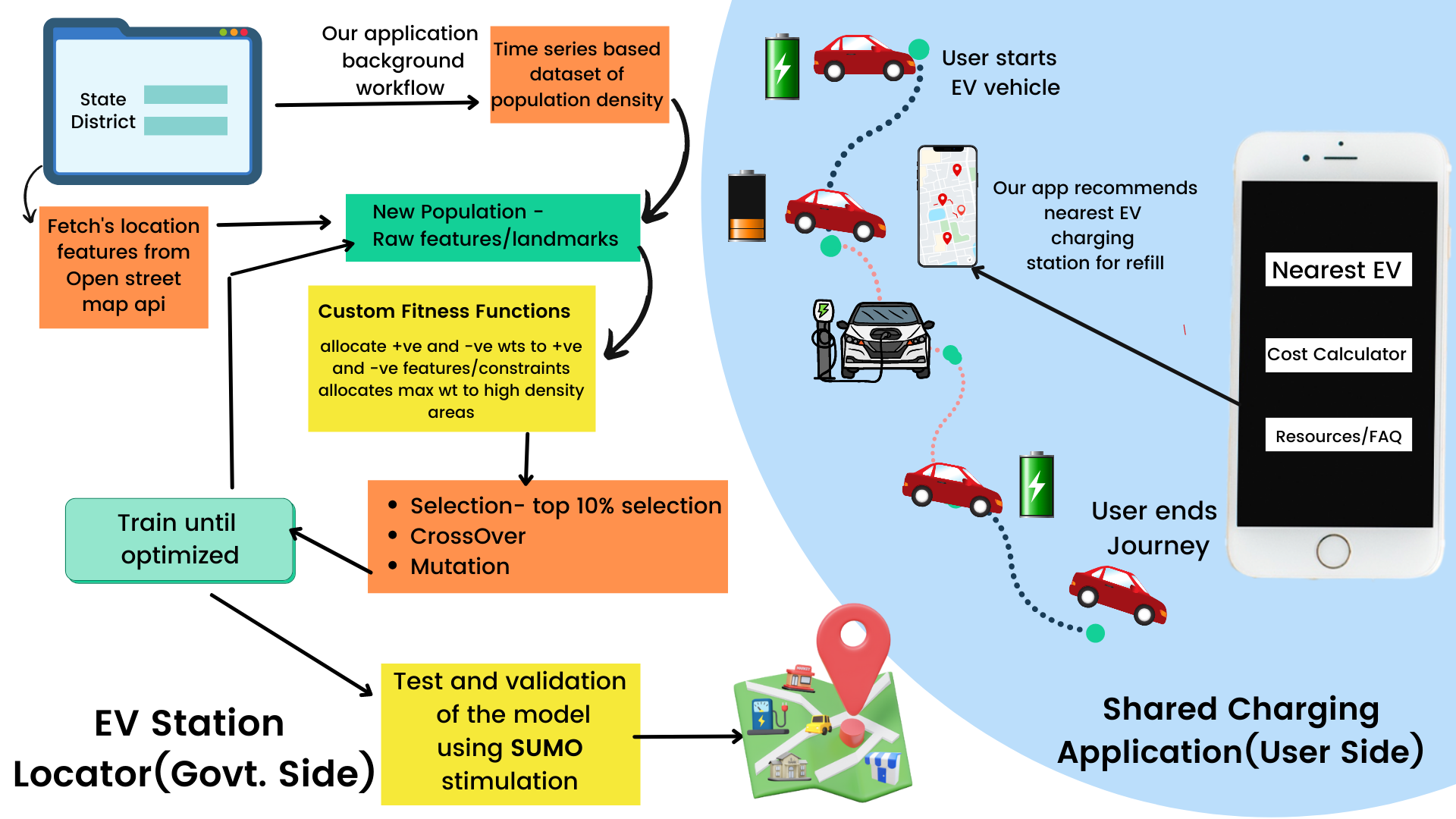
Project FlowDiagram of Govt Side and User Side Application
-
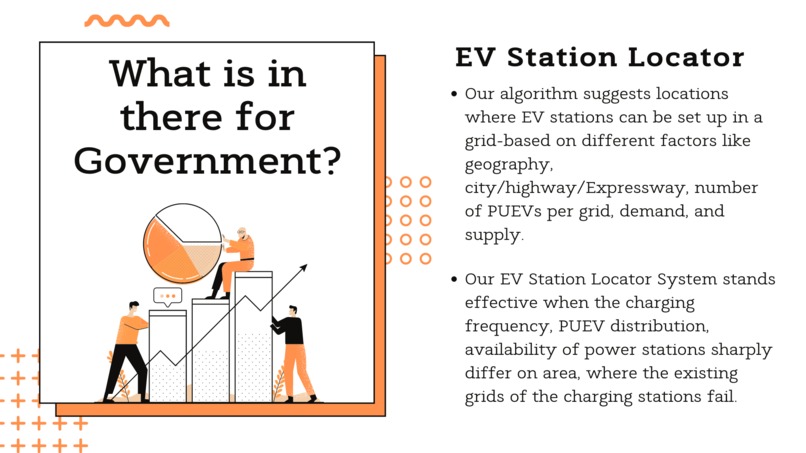
Govt. Side Application
-
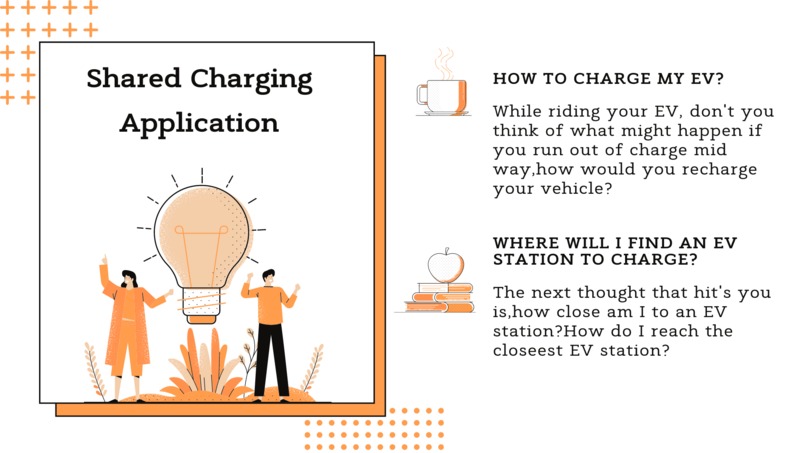
User Side Application

Inspiration
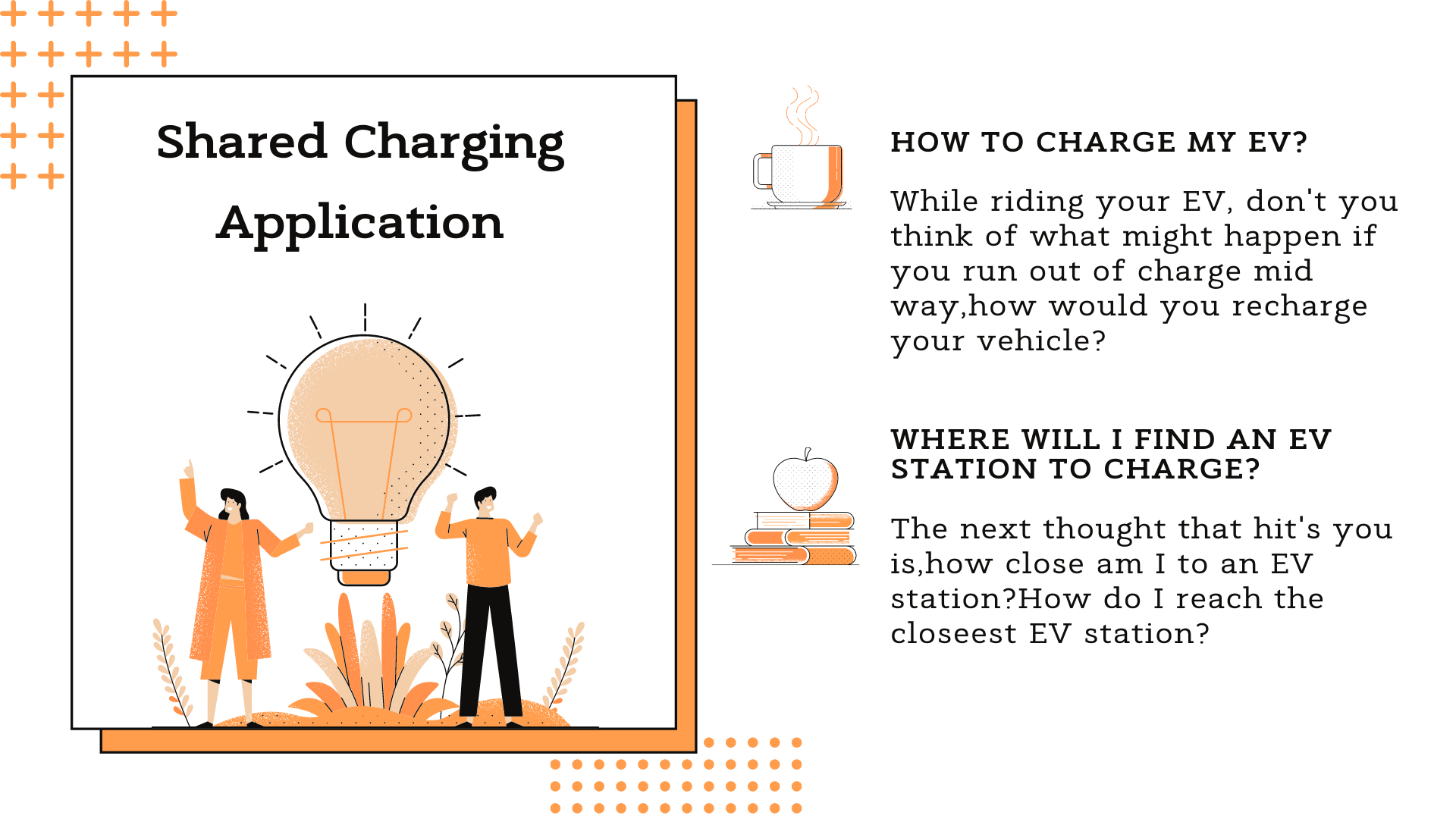
We examine a new, upcoming generation of vehicles that run on electric power supplied by onboard batteries in a smart city environment. Charging at home and in public areas are the best recharging option. As charging stations are shared resources, Cooperating EVs have the potential to avoid unbalanced use of charging stations and long wait times.
What it does
We would like to present a model for EVs that will resolve the unbalanced use by following the rule of demand and supply for optimal placement of EV charging stations around the city. This will not only help the public for easily charging their vehicles but also to the Government for proper and minimal utilization of their funds for providing service to a comparatively large population.
How we built it
Our initial plan will be to develop an application (say a portal), that would suggest a collection of geographic coordinates that would suit for setting up an EV station based on a variety of constraints like landmarks, accessibility, efficiency, regional acceptance, and demand, and supply, etc. We will also try to maintain a better ratio of PUEVs per grid so that all EV stations get equal opportunities. And all of these will be available in a single click in an amazing user-friendly web application. Although this would complete the need of the problem statement, we also want this to be regulated and implemented as per our thought. For this, we will also develop a mobile-based Android and IOS app that would help the people owning electric vehicles pan India gain profits from our solution. This app would do things like:
- Notify the user if it's time to charge the EV.
- Show him the nearby EV stations.
- Real-Time traffic at the station.
- Book slots for charging, and give queue updates in real-time.
- Estimated Charging cost for recharging his EV.
Challenges
- There were multiple challenges we ran into like the availability of a dataset with geolocation coordinates of different EV Stations with type of chargers supported, We created a custom dataset by manually scrapping data from Maps API and various other sources.
- We looked for the maximum utility of each EV Stations, user's experience, and handling queue at different EV Stations while booking for recharging, this was solved using optimization techniques and deep learning model predictions.
Accomplishments
Alongside, our client-side app will educate users about EVs, and help them to find the nearest EV stations, Also our client app will aware users of the charging cost comparison so that users do not spend more while recharging their vehicles. Similarly, our app will trigger reminder notifications for users so that they can recharge their EV vehicles within due time.
Future Scope for Bharat EV Setu
We plan to scale out Bharat EV Setu Application globally. Not only restricted to countries like India, US, etc. We want to transform it into a startup idea and roll out our solution globally to cater to different governmental
Built With
- amazon-web-services
- blockchain
- fastapi
- firebase
- flutter
- gcp
- geneticalgorithm
- heroku
- mapsapi
- mongodb
- node.js
- react
- redis
- tensorflow

Log in or sign up for Devpost to join the conversation.