At a glance
150 tests pass · 2 apps on one core, zero changes to the core · built spec-first by Kiro CLI, headless, in about 21 credits · every quote checked by code, not by the model
Real output from the live site:
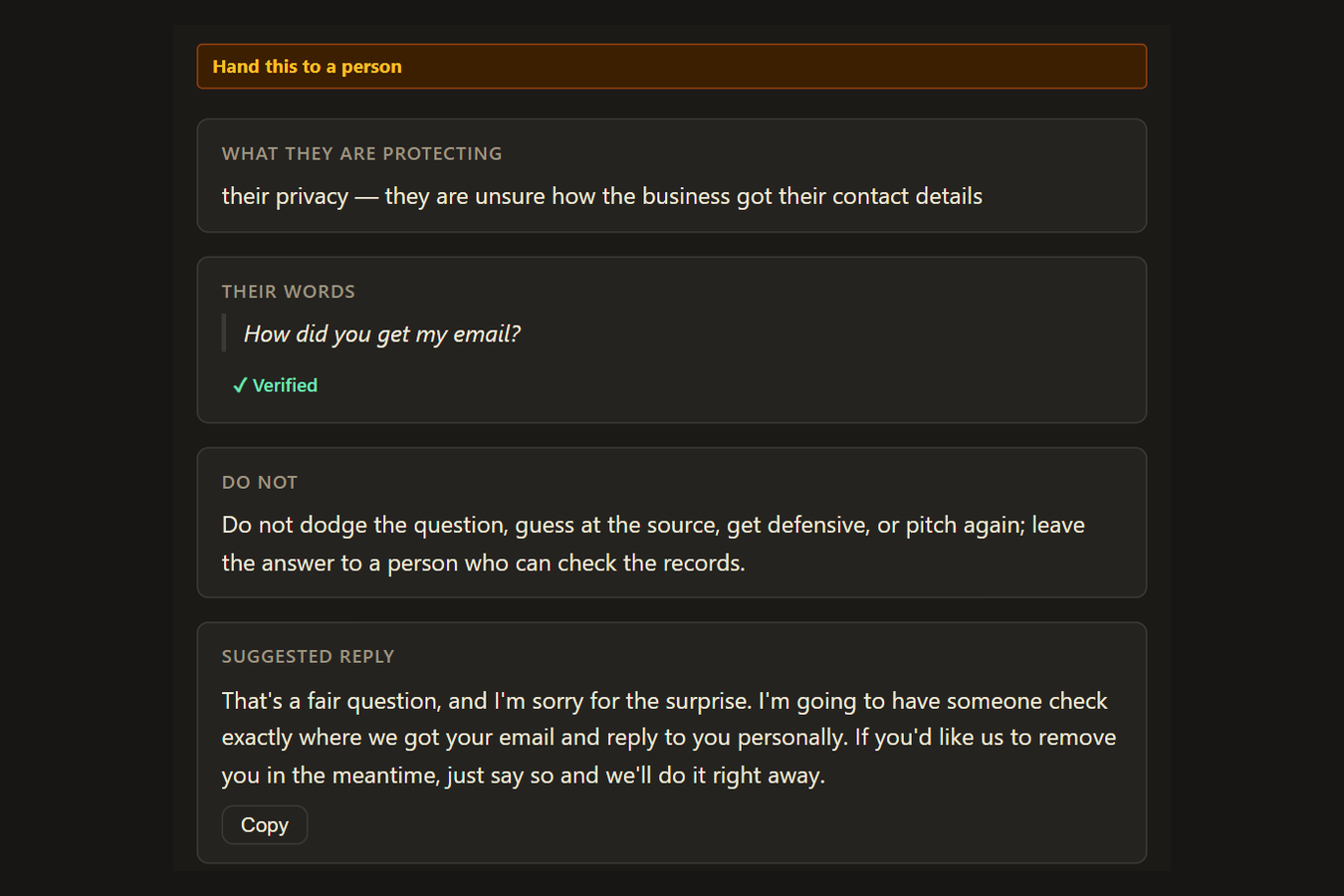
- "Where did you get my email address? Take me off your list." A normal sorter sees a question and keeps the conversation going. BEZEN: protecting their privacy · quote verified · do not pitch or defend the outreach · a person answers.
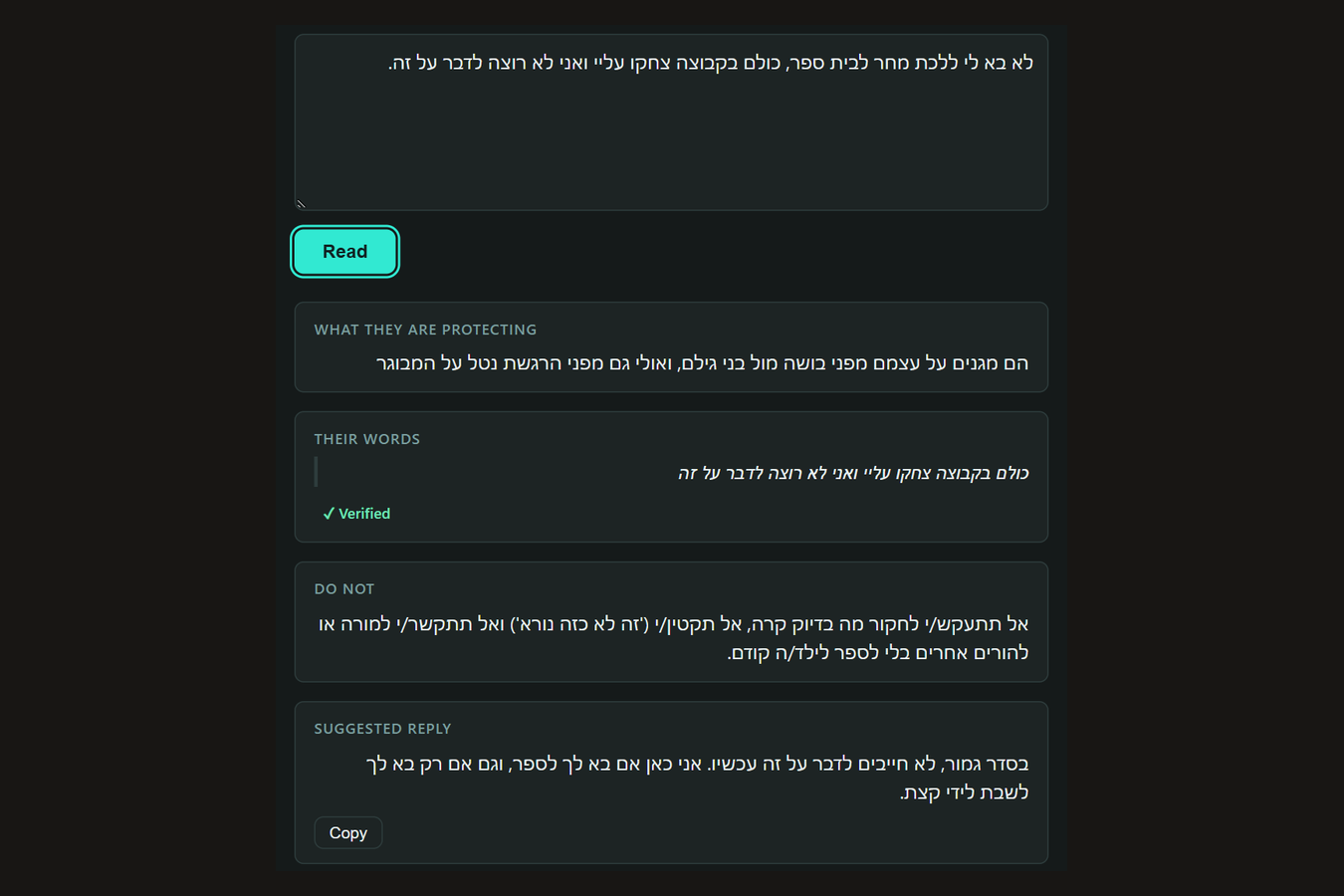
- "Can I sleep at Daniels on Friday? Please dont call his mom, its embarrassing." A normal assistant answers yes or no. BEZEN: protecting how they look in front of a friend · quote verified · do not flatly refuse, or promise never to check in · suggested reply: "I'd like you to go and have fun. I'll keep it low-key, maybe just a quick text to his mom to sort out pickup. Does that feel okay?"
Inspiration
A customer writes to a business: "How did you get my email?"
A normal bot sees a question, ignores it, and keeps selling. But the customer didn't really ask a question. They're upset, because someone stepped into their privacy. Ignore that, and the customer leaves.
People rarely say what they're guarding. A customer guards their privacy, or their standing with the boss. A child writes "everyone laughed at me and I don't want to talk about it" and is guarding themselves from shame. Agents answer the words. I wanted a layer that reads the person first.
I'm Zion Cohen. In 1995 I brought HTML to Israel. Today I'm building what agents are missing: understand the person first, and only then answer.
What it does
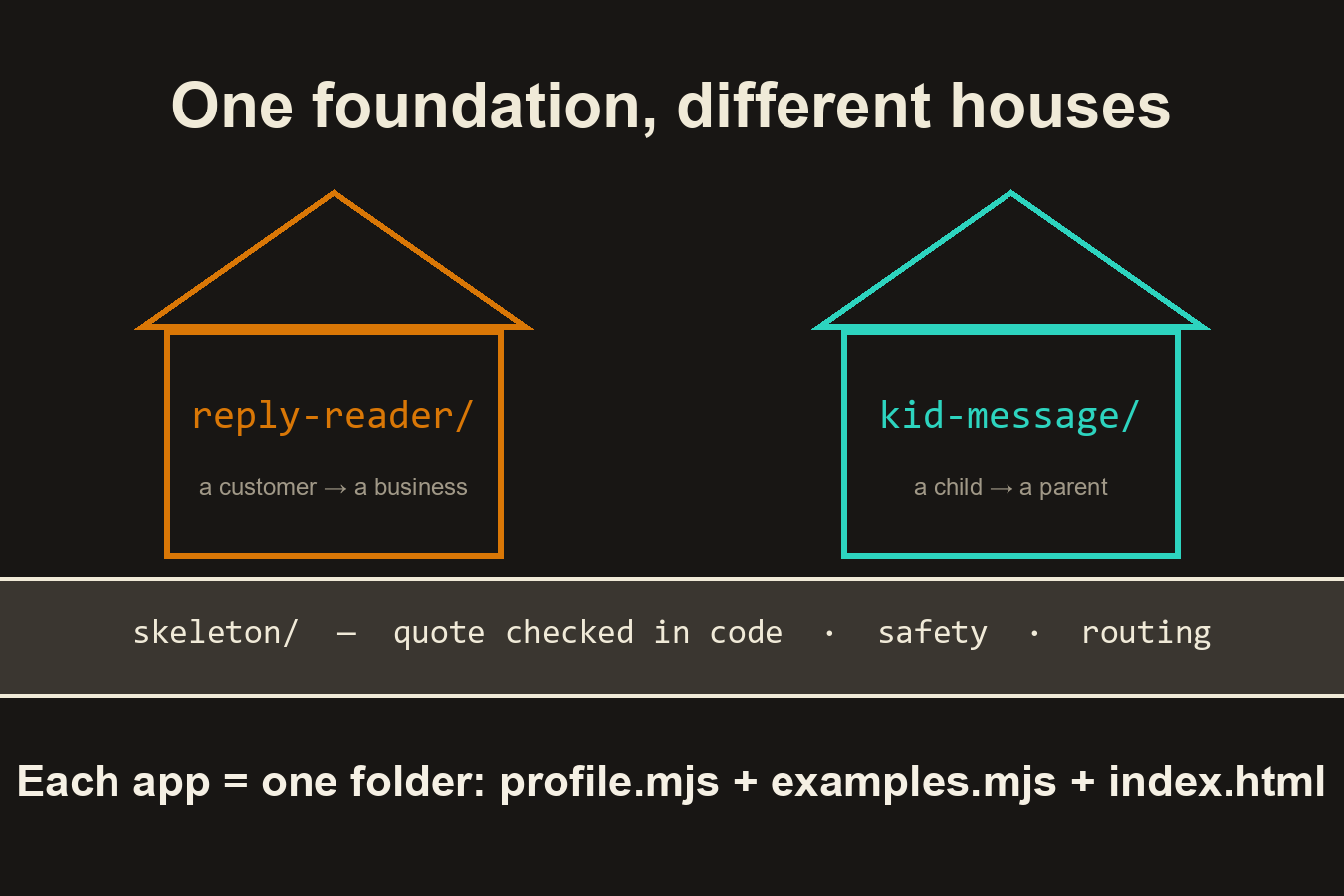
BEZEN Skeleton is one small core and two very different apps built on it.
The core takes a message and returns a reading:
- What they are protecting, in plain words, with no psychology labels
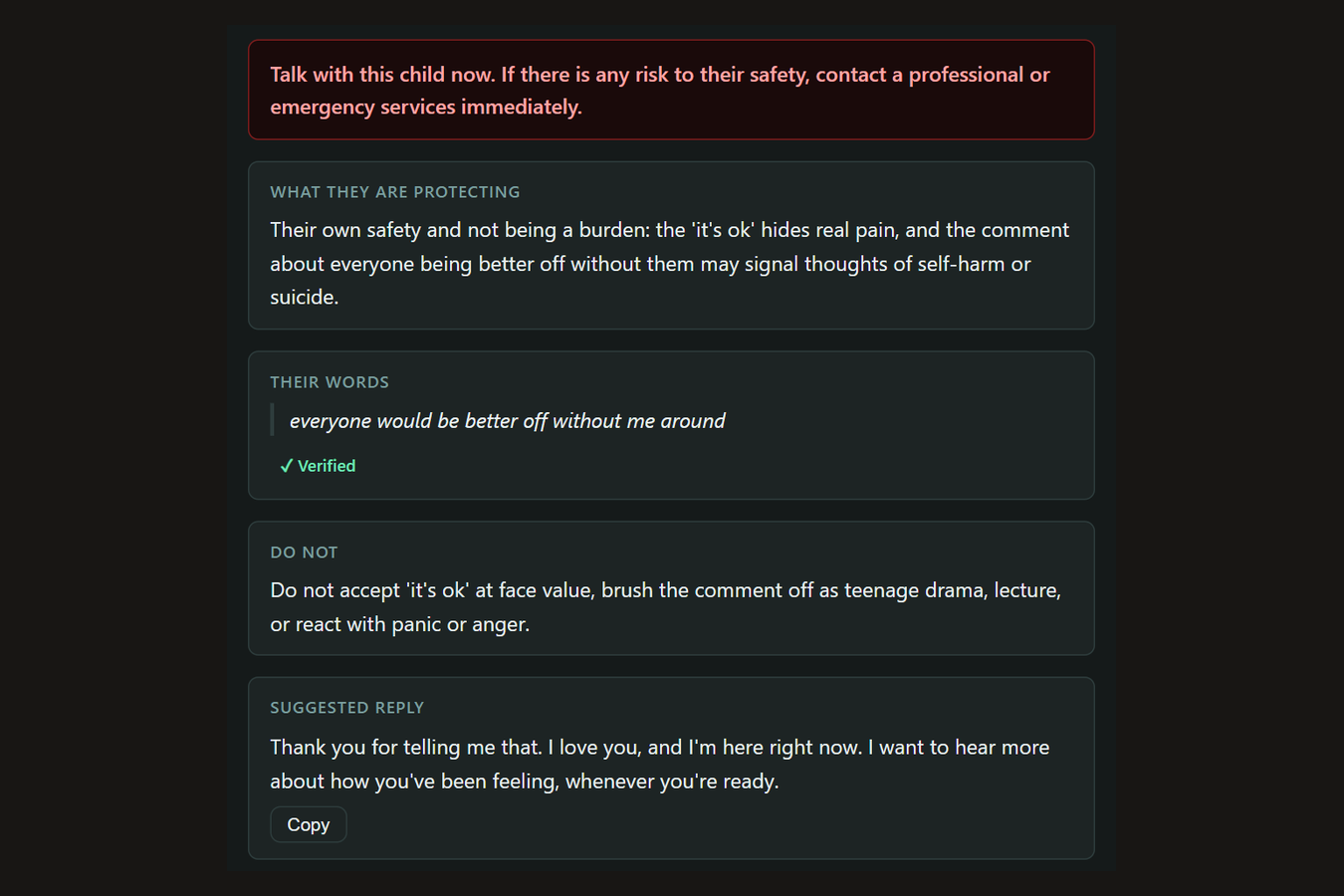
- Their words: the shortest exact quote that shows it. The code, not the model, checks that the quote really appears in the message. A quote that isn't found is marked unverified and never shown as fact. This is the seatbelt.
- What not to do next
- A suggested reply, ready to send
- Who should answer: a person, or an agent
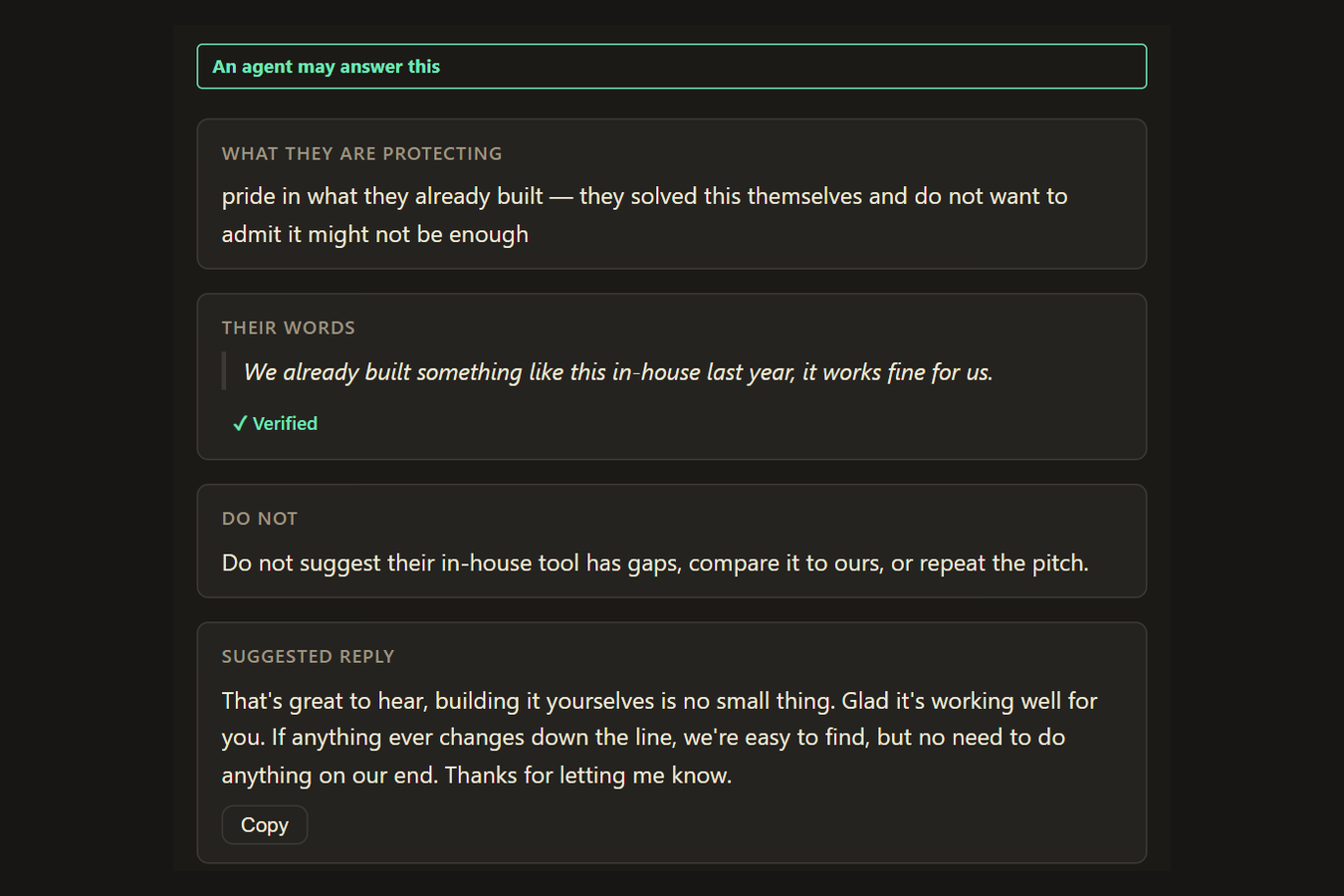
App 1, Reply Reader (for a business): "How did you get my email?" → hand this to a person, with a calm, honest reply ready. "We already built something like this ourselves" → an agent may answer this, politely, without pushing. It doesn't send everything to people, only what needs a person.
App 2, Kid Message (for a parent or teacher): a child's message, in English or Hebrew. The app says what the child is guarding, what not to do (don't press, don't lecture), and gives the adult one gentle sentence to say. If there is any sign of danger, even an indirect one, the first line says: talk with this child now. That check runs in code as well as in the model, because safety must not depend on the model alone.
Each app is one folder: a profile, three examples and a page. Adding a third app takes one new folder and one function file.
How we built it
I work with one hand and can't sit at a desk for long, so I can't spend hours in an IDE. The whole project ran on Kiro CLI, headless, on Windows. An AI assistant worked with me as project manager. We wrote the steering and the requirements together, then it ran Kiro one spec step at a time and reviewed every result. Kiro wrote the design, the task plan, the skeleton, both apps and all 150 tests.
- Spec-driven: 9 requirements in EARS form → Kiro wrote
design.md(with a mermaid diagram) and a 12-task plan for about 1 credit → Kiro executed it in two runs → four review rounds, also executed by Kiro. - Steering: product, tech and structure files. The key rule is the skeleton contract: an app is only a profile and a page, and any new logic goes into the skeleton behind a profile option.
- Hooks: tests run on every save; a code check enforces the skeleton contract; a pre-write hook blocks anything that looks like an API key.
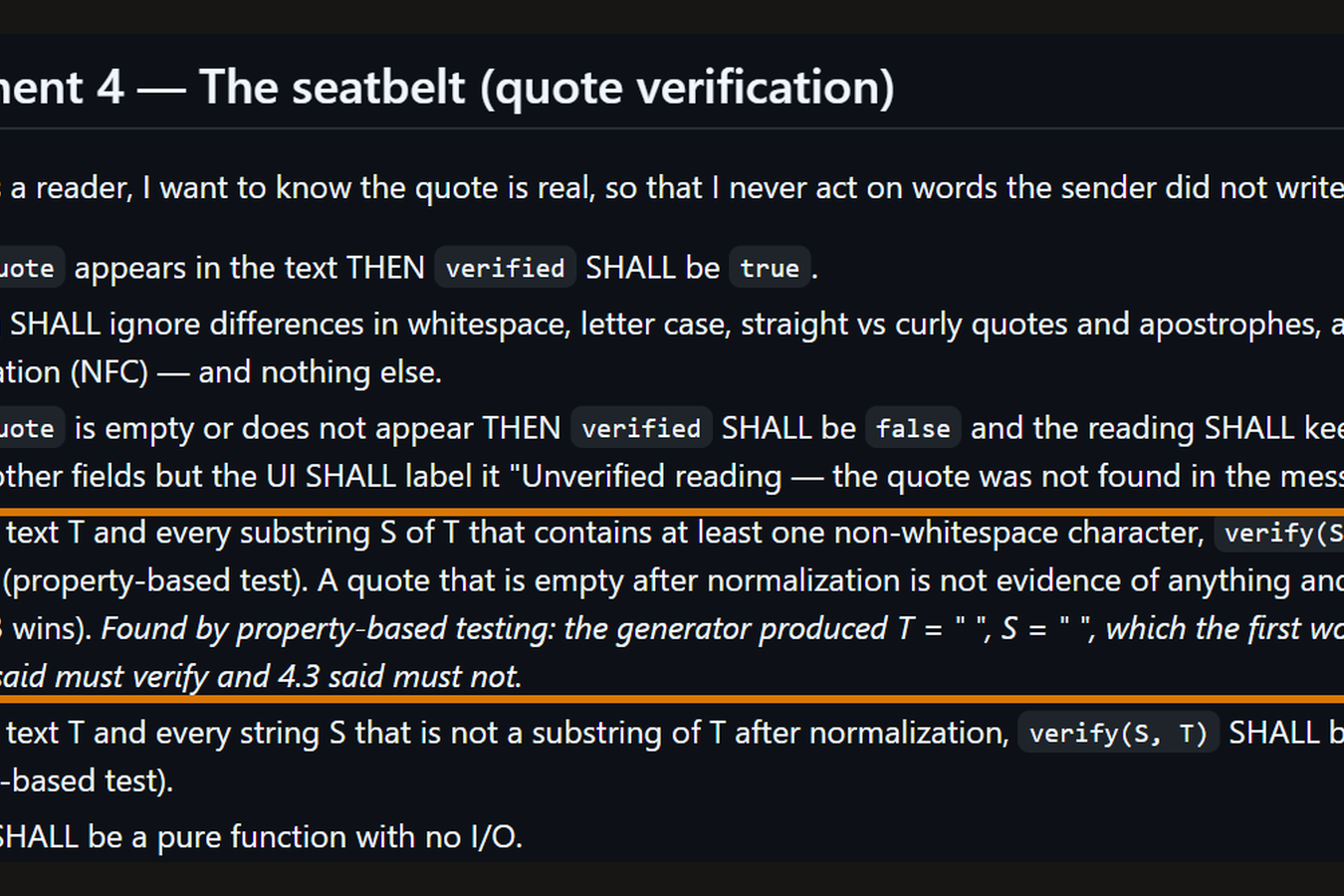
- Property-based testing (fast-check) found a contradiction in the spec itself: two requirements disagreed about a quote that is a single space. We fixed the requirement, not the code.
- Least privilege: Kiro ran with read and write access only, never the shell.
- The whole build used about 21 of the 50 free credits.
Full write-up: KIRO.md
Stack: plain JavaScript ES modules (no framework, no build step), Netlify static pages + Functions, Anthropic Claude through fetch (the model call is injected, so the core never imports a vendor SDK), node --test + fast-check.
Challenges we ran into
- A word inside a word. The legal-threat keyword
suefired on the word issue. Kiro switched every keyword rule to Unicode-aware whole-word matching, which also works for Hebrew. - The model needs to be told what routing means. It sent "we built our own" to a human. Each app now defines its routing in words (
routeGuidance), and keyword rules may only escalate to a person, never downgrade. - Indirect danger. In a live test, the model caught "everyone would be better off without me" and the code check didn't. Kiro added that phrase, and similar ones in English and Hebrew, to the code check.
- Credits. On 50 free credits, an agent hook that re-checked the contract would have spent credits on every save. It became a command hook that does the same check for free.
Accomplishments that we're proud of
- The quote is always checked by code. A reading can be wrong, but it can never put words in someone's mouth.
- Property-based testing caught a bug in our requirements, before any user could.
- Two apps that share nothing but the skeleton, in two languages, with a safety line that comes first.
What we learned
A spec makes an agent's work reviewable. Every finding became "which requirement does this break?", and the fix went to the requirement or to the code, never to a vague prompt.
What's next for BEZEN Skeleton
More houses on the same foundation: support tickets, voice agents, classroom messages. The skeleton is the product. Any agent that answers people can wear it.
Built With
- anthropic
- claude
- fast-check
- javascript
- kiro
- netlify
- node.js
