At a glance
6 critic tests pass · 3 replies, 3 different correct decisions on a live Jira Service Management site · runs only on Forge, no external servers or keys · every quote checked by code, not by the model
What it caught on the demo site:
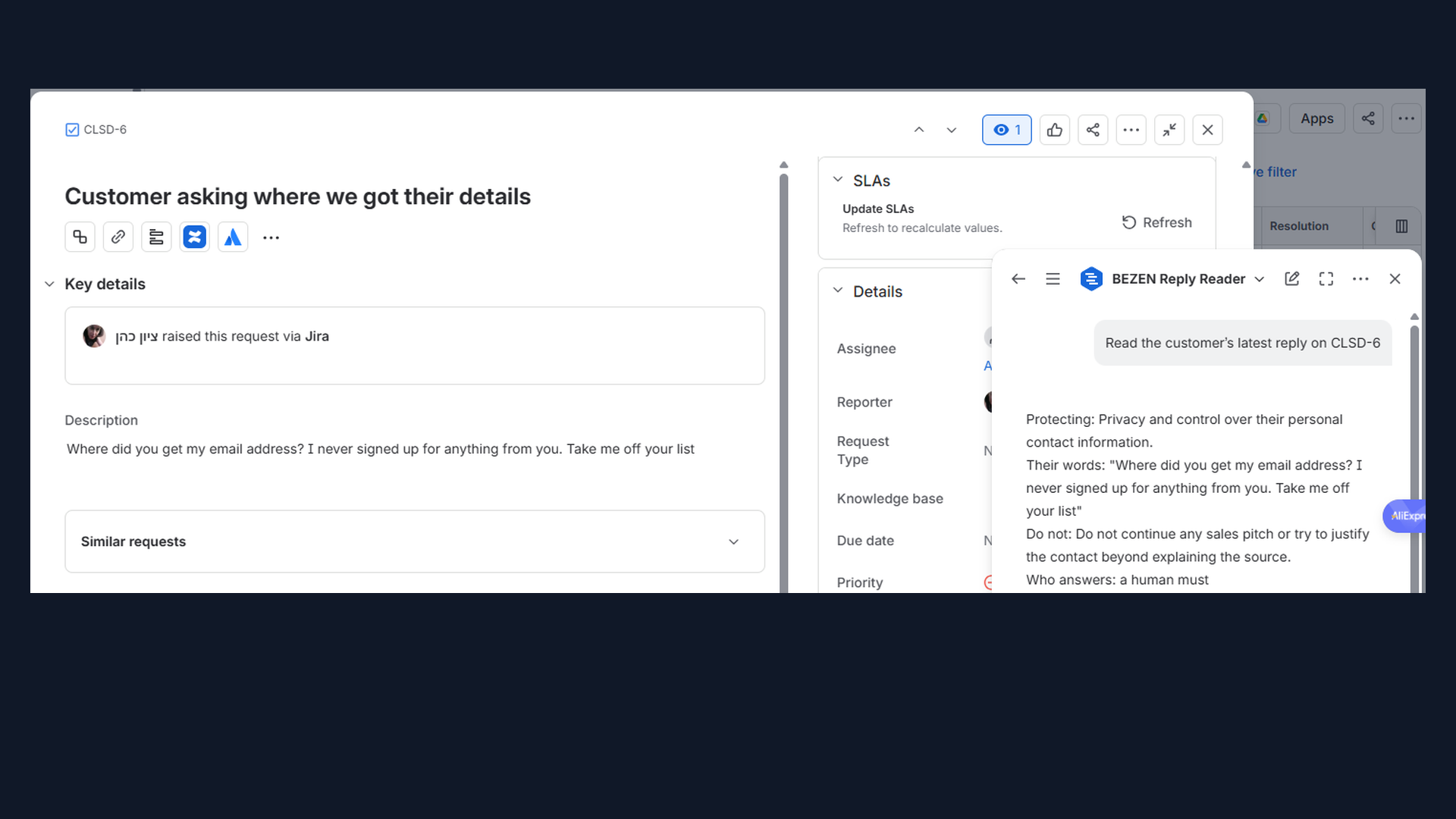
- CLSD-6: "Where did you get my email address? I never signed up for anything from you. Take me off your list." A normal bot sees a question and keeps selling. BEZEN: protecting their privacy · do not pitch · a human must answer.
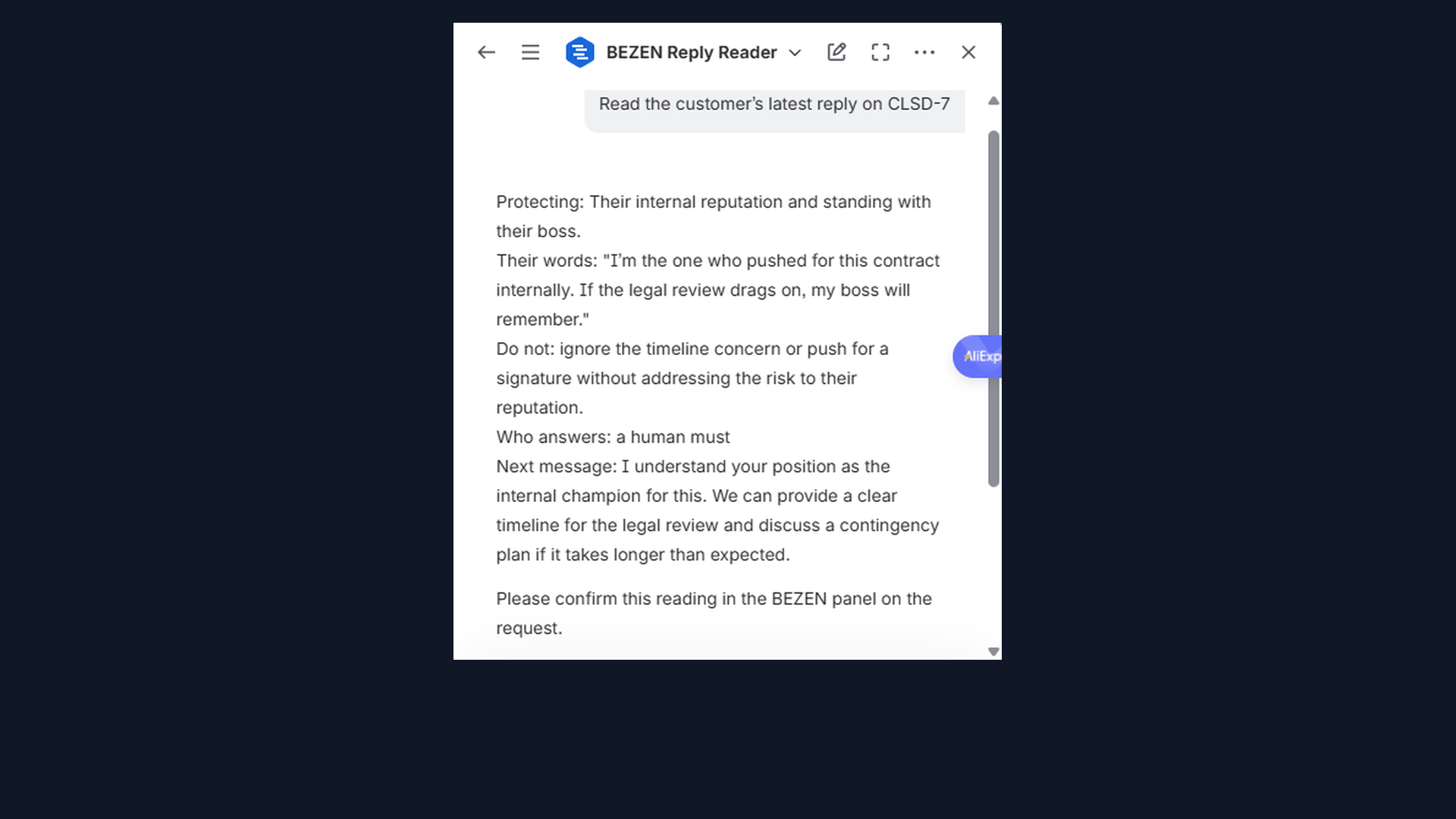
- CLSD-7: a customer asks when it will be ready. A normal bot sends a timeline. BEZEN: protecting their standing with their boss, after convincing management to buy · next message: a clear timeline and a backup plan · a human must answer.
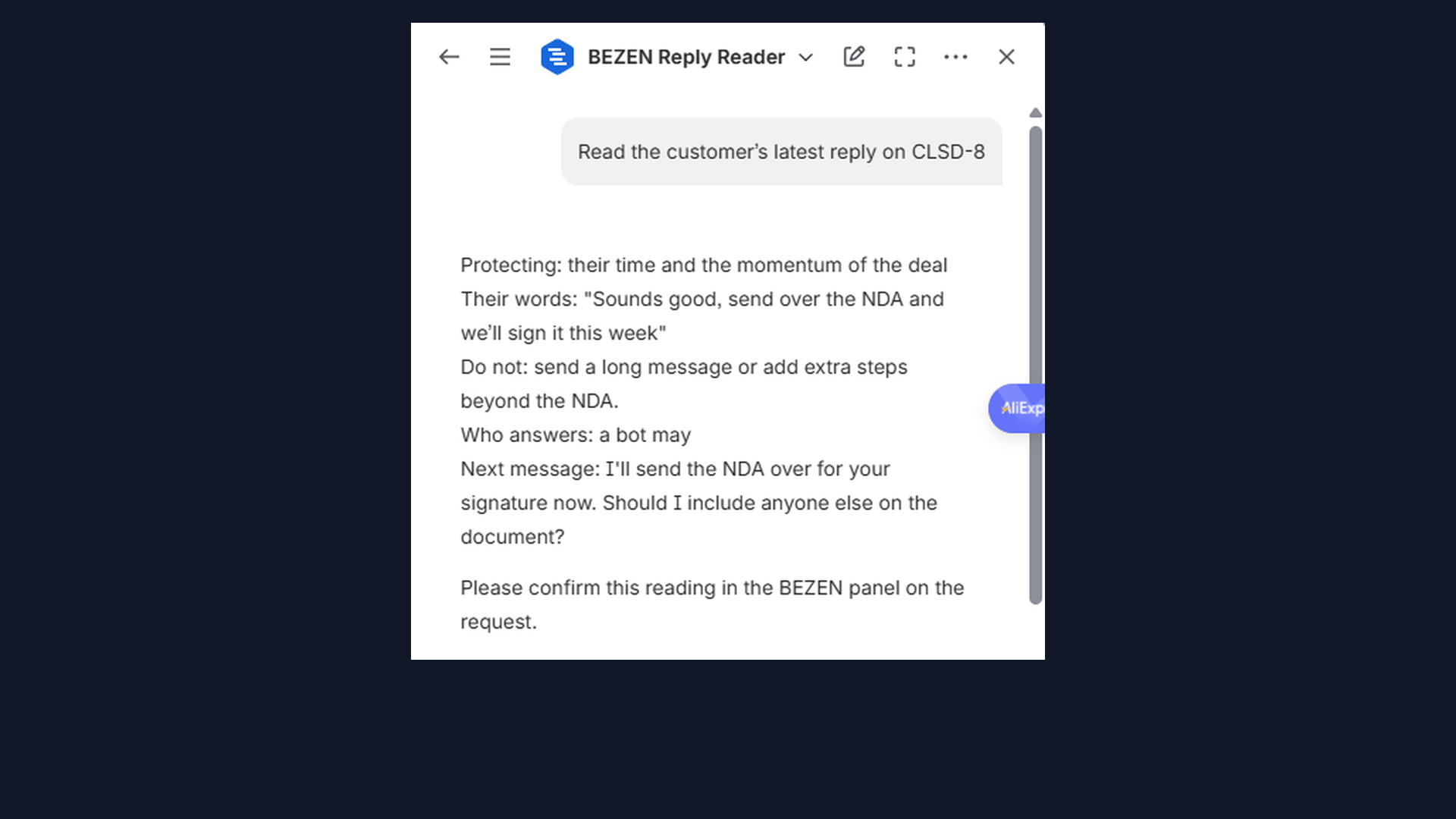
- CLSD-8: "Sounds good, send over the NDA and we'll sign it this week." BEZEN: nothing to guard, the customer is ready · a bot may answer right away.
It does not send everything to a human. Only what needs one.
Inspiration
Inspiration
Most replies to a support or sales team are simple. A few are not, and they hide inside hundreds of ordinary ones a day. "Where did you get my email?" looks like a question. "When will it be ready?" looks like a timeline question. A bot, and most autonomous agents too, sort by what the customer asked for and answer all three the same way. That is how good customers are lost.
What it does
BEZEN Reply Reader is a Rovo agent for Jira Service Management. It reads the customer's latest reply on a request and says:
- what the customer is protecting (their privacy, their standing with their boss, their time),
- their own words that show it, quoted exactly,
- what not to do now,
- who should answer: a bot or agent may, or a human must,
- the next message, as a draft.
A normal agent knows when its action is risky. BEZEN Reply Reader knows when an automatic answer would hurt the person in front of it. The privacy complaint goes to a human. The worried internal champion gets a clear timeline and a fallback plan. The simple "yes, send the NDA" can be answered right away.
How we built it
Everything runs on Forge:
rovo:agentwith the BEZEN layer as its prompt: a pattern layer built from 499 human patterns, distilled into reply states such as intrusion, career risk, burned before and casual yes.- Action
get-customer-replyfetches the reporter's newest comment from Jira itself, so the agent never supplies the text it is checked against. - Action
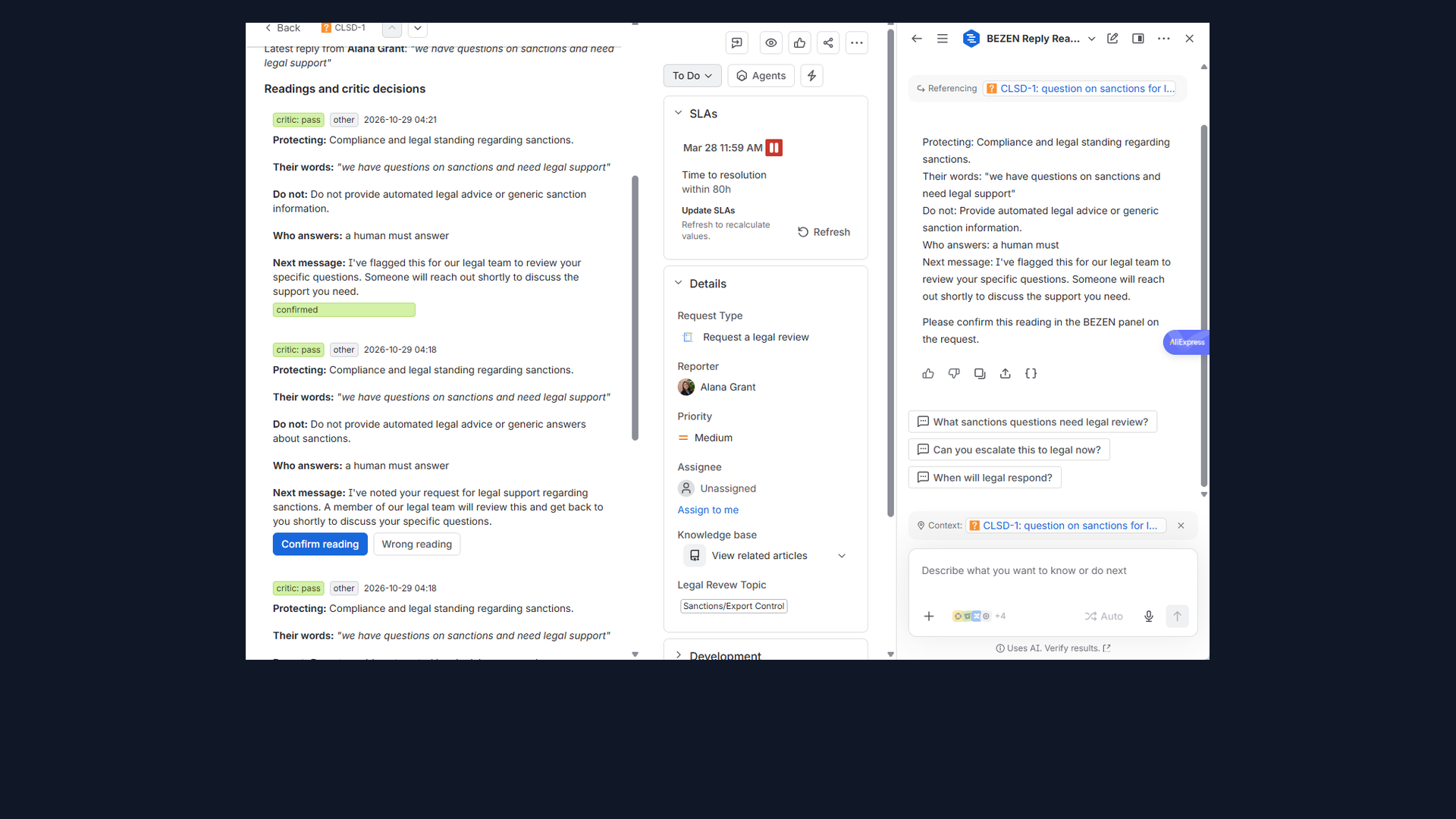
check-readingruns a checker written in plain code, not a model. It rejects any quote that does not appear in the reply word for word, and never lets a sensitive case (intrusion, guilt or loss) go out automatically. One rejection: the agent reads again. A second: the request goes to a human with no message. - Ledger: every reading and every check, pass or fail, is stored on the request as an issue property. Asking again does not reset the count.
- Runs on Atlassian: no external servers, egress or keys; Forge reported the production version as eligible for the Runs on Atlassian program.
jira:issuePanel(UI Kit): the team member sees each reading and confirms or rejects it with a click. The agent only reads and suggests; the team decides what is sent to the customer.
Challenges we ran into
Models invent quotes. We moved the trust from the model to code: the checker fetches the reply on its own and compares character by character. Early on the agent also wrote "I have removed your email" in a draft, as if it had already acted; the prompt now forbids claiming any action was done.
Accomplishments that we're proud of
Three short replies, three different correct decisions, each backed by the customer's exact words and each logged on the request for a human to confirm.
What we learned
Every serious agent stops for approval before acting. The open question is when. Stopping on every outbound message is too slow; never stopping is too risky. Reading the person is what lets an agent stop only where it matters.
What's next
More reply states from the BEZEN pattern corpus, a Rovo skill other agents can call before they answer a customer, and a Hebrew version.
