Inspiration
Thinking about people in our live feeling insecure, we immediately thought about our grandparents. Benjamin’s grandfather has to take in a daily plethora of pills and medications, duly prepared every morning by his grandmother. He would not know which to take when, if she didn't guide him. This led us to a potential customer group of elderly people with dementia or other impairments, that make them insecure about their daily medication intake.
What it does
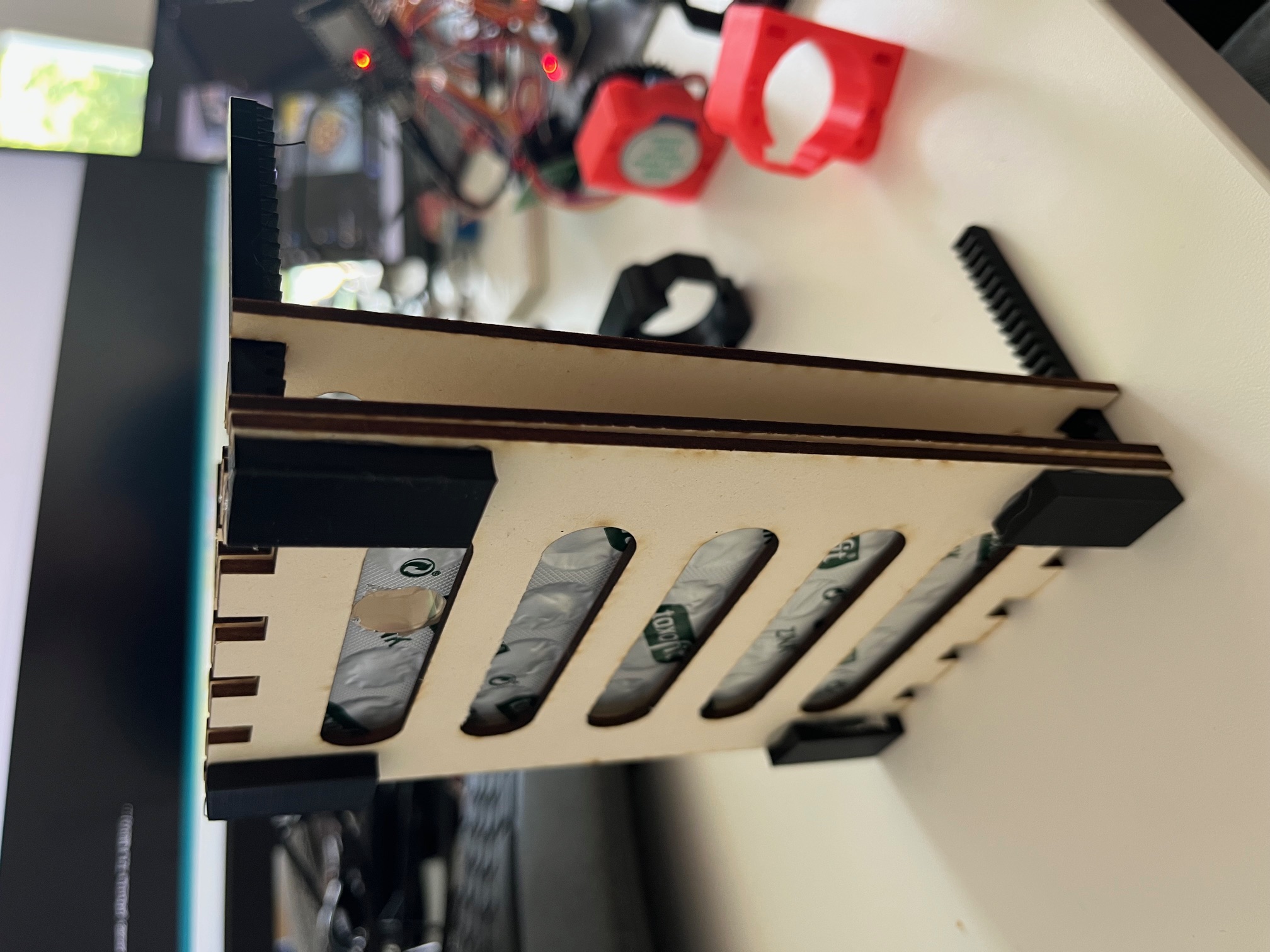
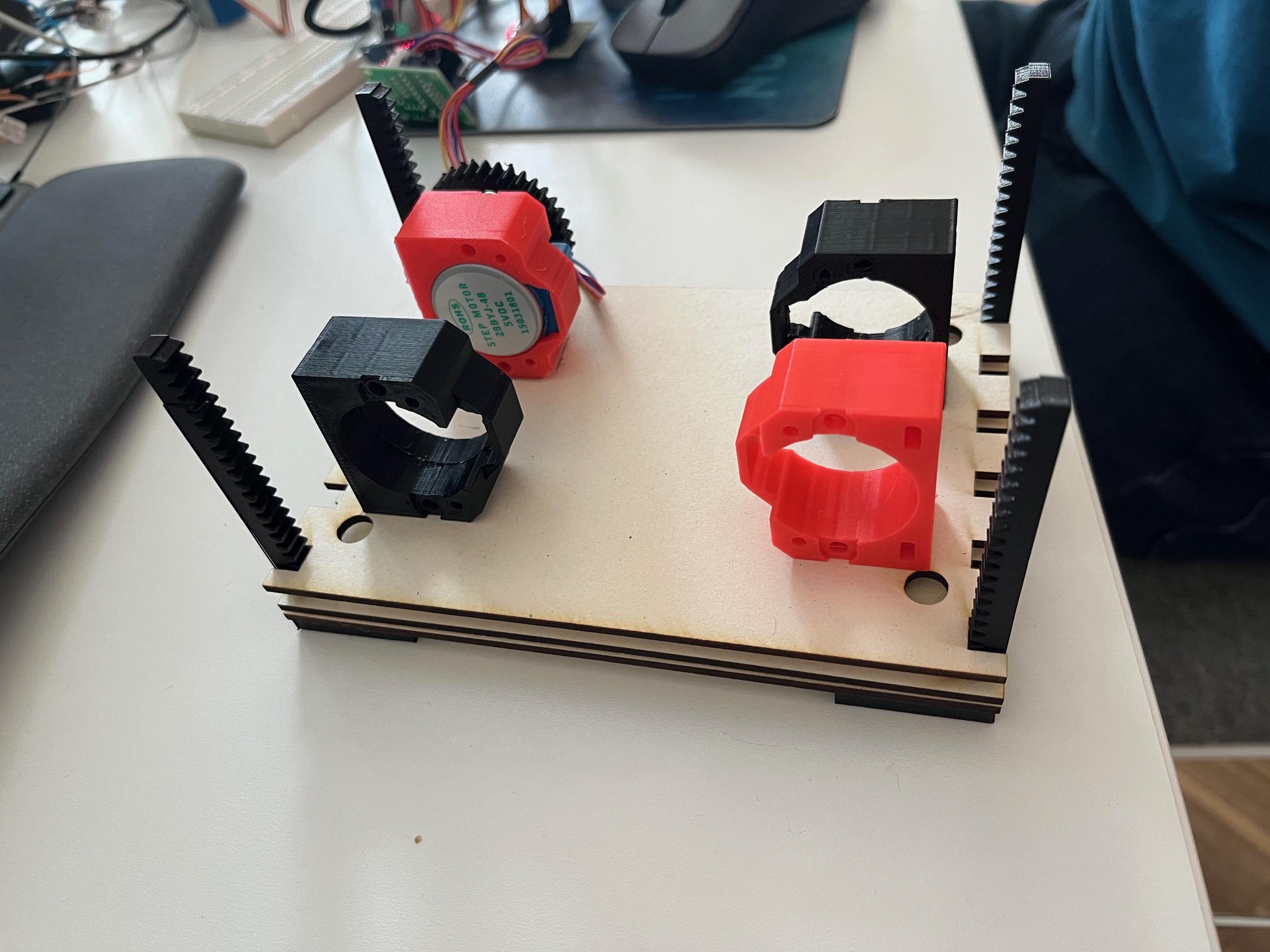
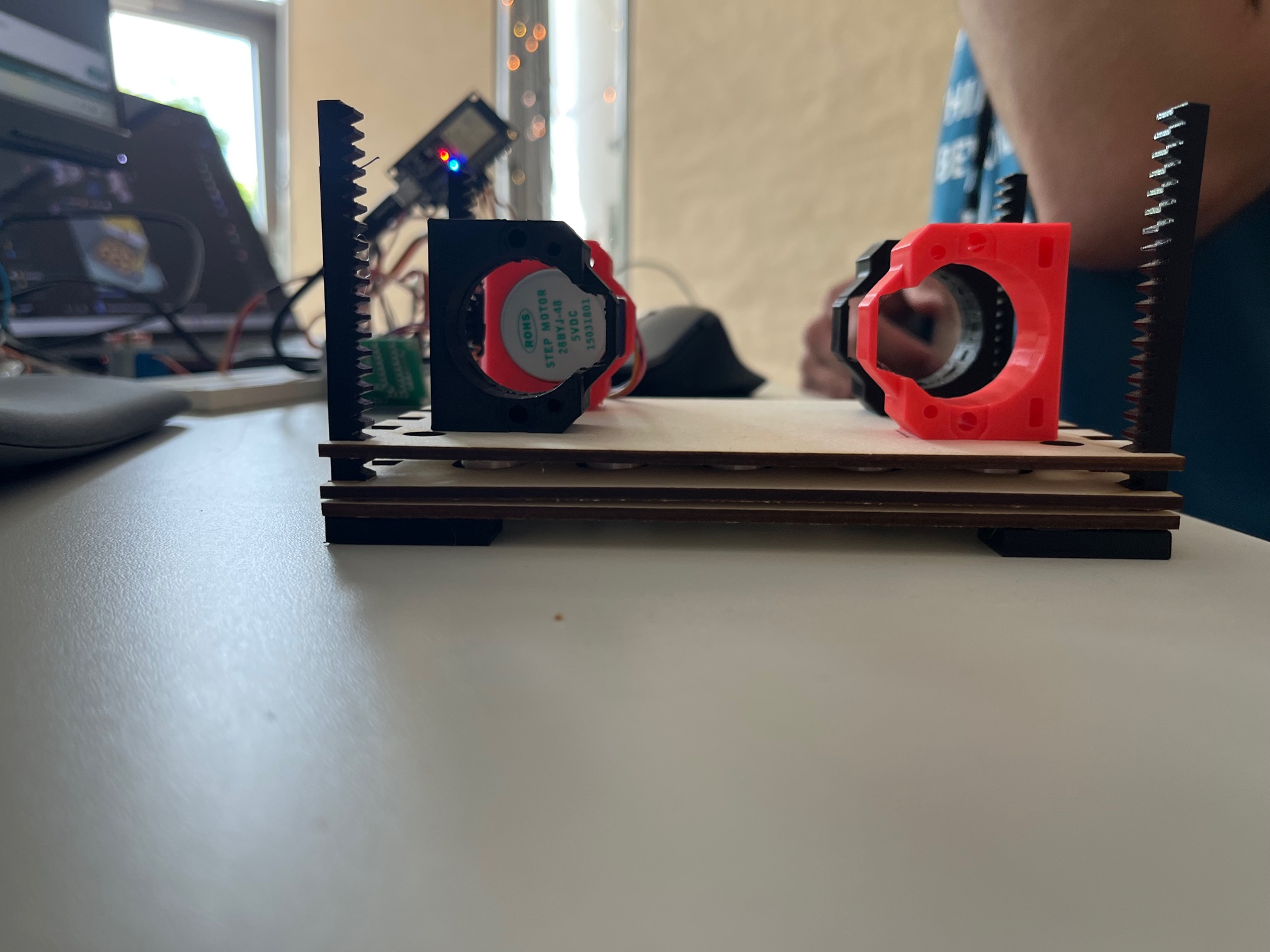
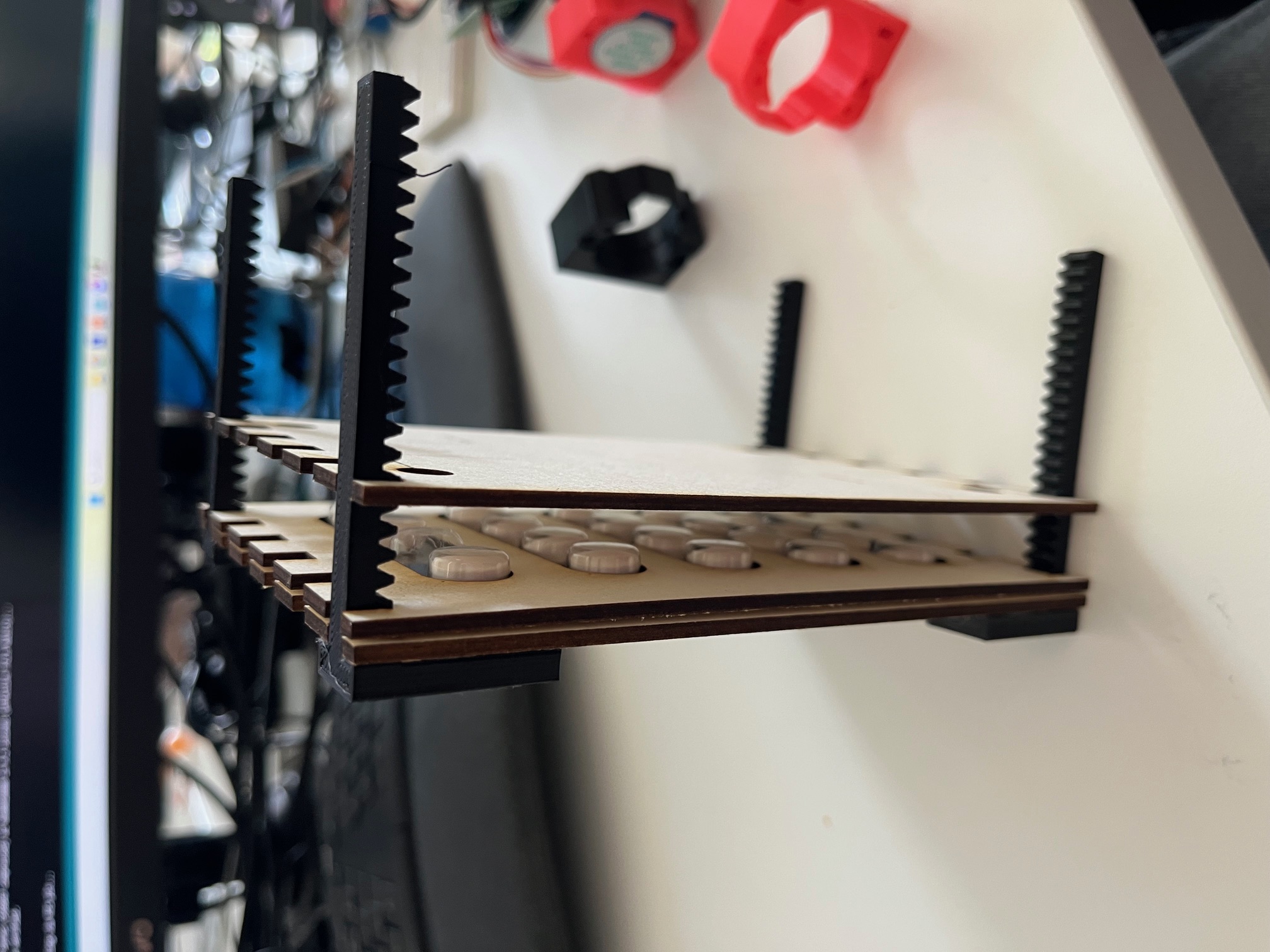
This is where our product comes into play: The BeyondBlister. It is a medium sized device, where the user fist scans a blister full of medications (blister is the aluminum encasement) and then inserts it into the device. After a given schedule, the single pills are pressed out of the blister mechanically and dispensed to the user. (Of course the user puts in a pill that doesn't fit their medication-plan, nothing will be pressed or dispensed)
How we built it
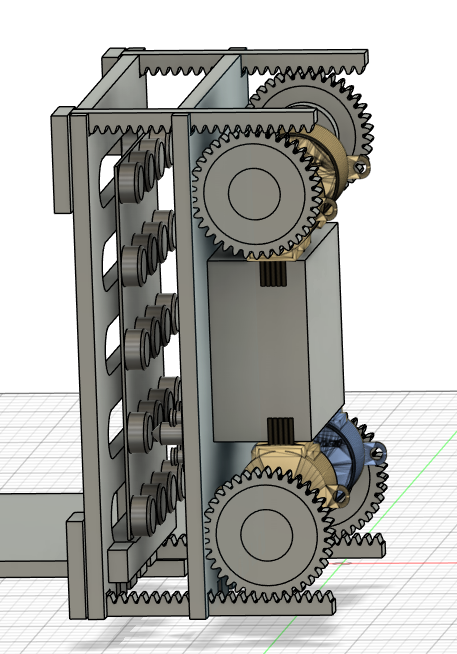
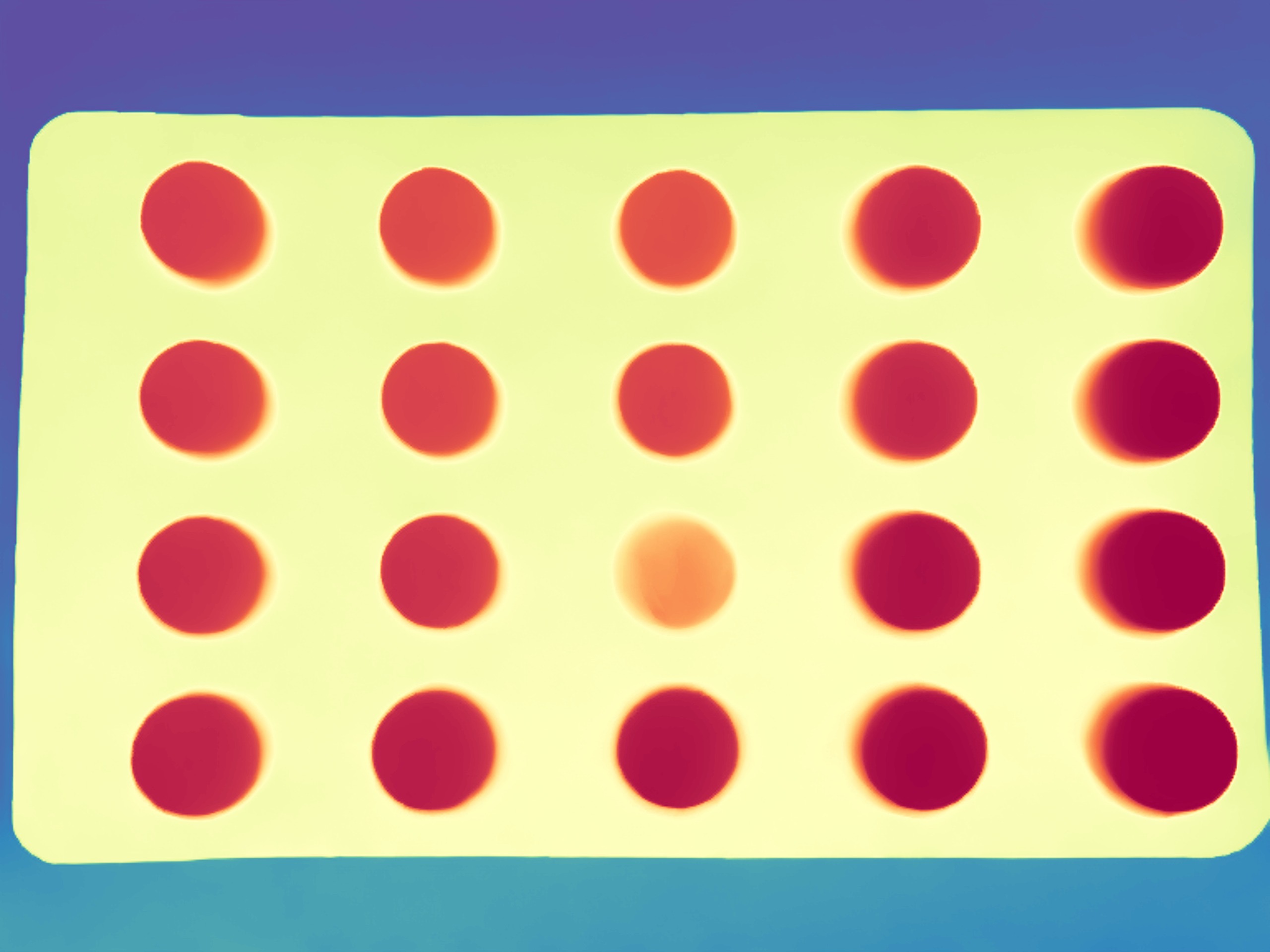
We used Fusion 360 to model the whole design, focusing on 3D-Printing and Lasercutting to produce the basic structure. Furthermore, we use ESPs and various stepper motors in order to make the compression and thus popping of the medication possible. Programwise, we used the ArduinoIDE to control all the electronics and PyTorch in combination with an ESP Cam to implement the Vision Model Depth-Anything in order to find out where in the blister the pills are and where not.
Challenges we ran into
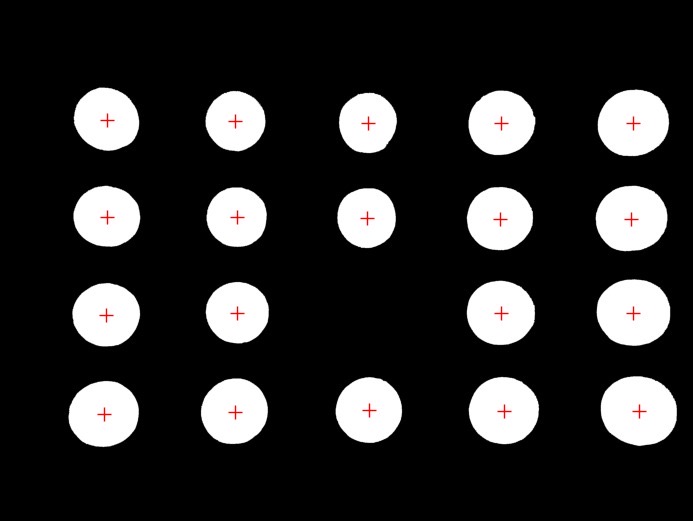
One of the biggest problems we ran into was the surprising amount of force needed to press pills out of their blister. We realized this after multiple design-iterations with differing mechanisms weren't able to fully press the pills out of their encasing. Over the course of the project we have designed a mechanism that might be up to the task but ultimately stronger motors are the most reliable solution. Another challenge on the software side was designing a program that could differentiate empty and full pill-repositories and locate the middle point of full ones, a feature that is will be needed to direct the pill-press to the right locations and press at exactly the right spot.
Accomplishments that we're proud of
We made great progress in our pill-detection software. Starting from a picture of the blister it builds a heat map where the pill-spots are highlighted. From there it differentiates between empty and full repositories and is then able to compute the middle points of every single one. Furthermore we we produced a fusion model of the full product that focuses on easy production and fail resistance.
What we learned
We learned a lot about mechanical challenges. A lot of attention to detail is needed when working with hardware, because there are so many possible point of failure. In our case those were things like stepper motors being to weak or 3D-Prints having weak points. If you are not very experienced with hardware design you tend to underestimate a lot of things like the force needed to push a pill out of its case.
What's next for BeyondBlister
The next steps are making a first fully functional prototype, going further than just the MVP mockup we managed in these three days. In general, would this be a start-up, we would branch our product in two categories. First, going for the home market for elderly people and secondy focusing on hospitals, which need to have a much higher throughput.

Log in or sign up for Devpost to join the conversation.