-
-
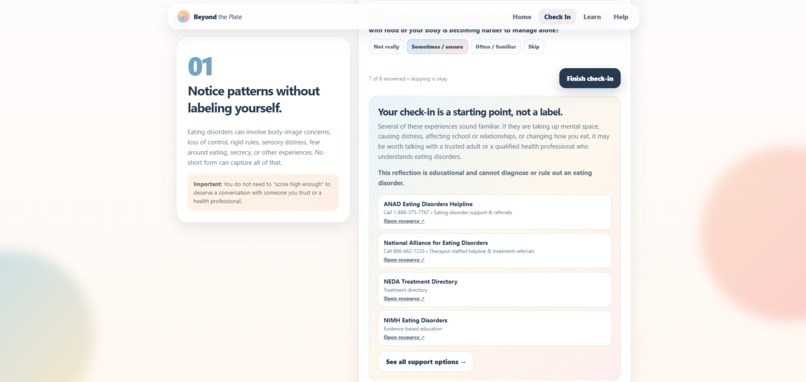
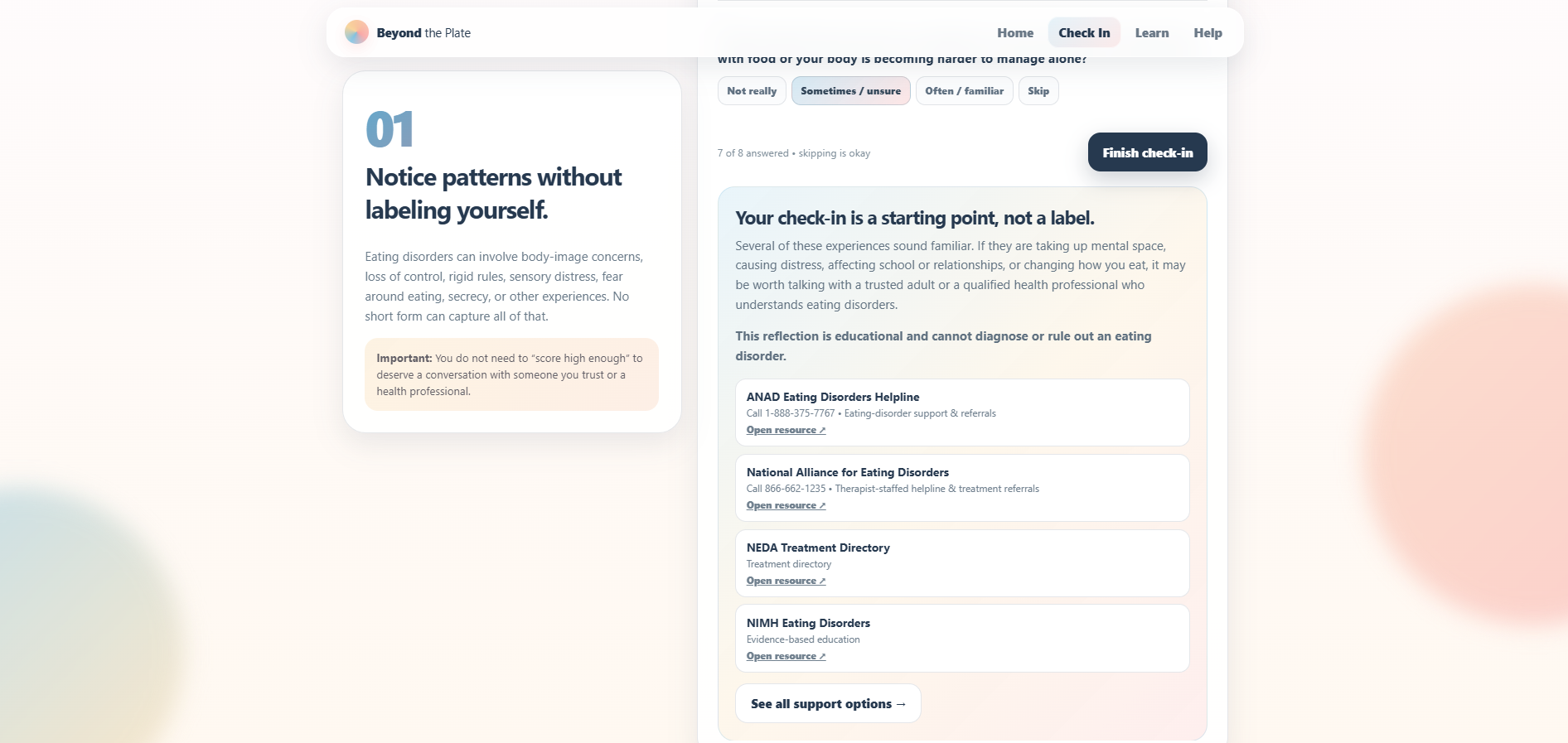
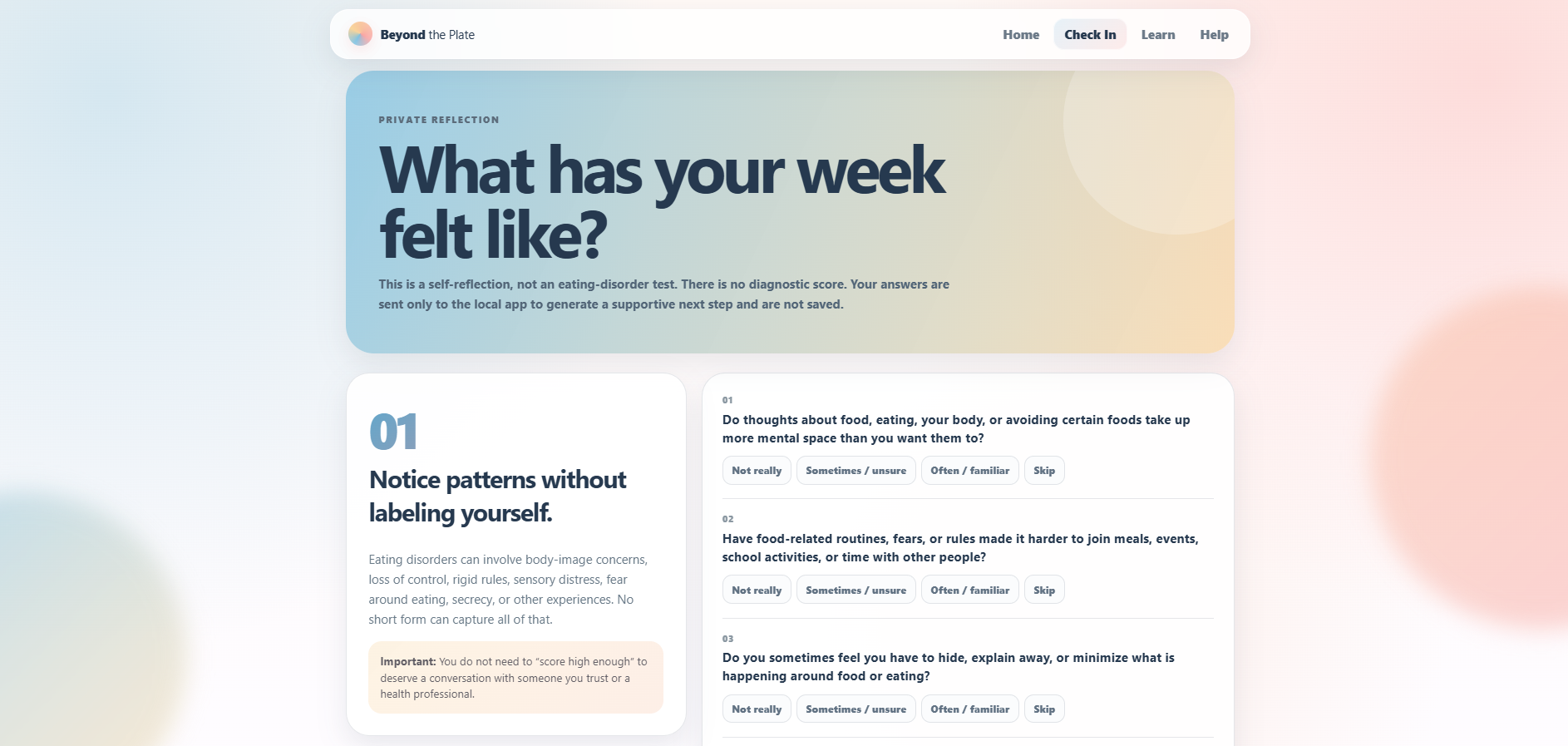
Check in Resources
-
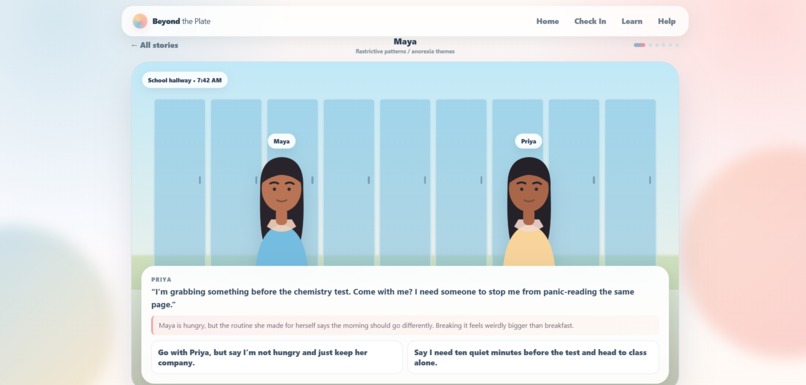
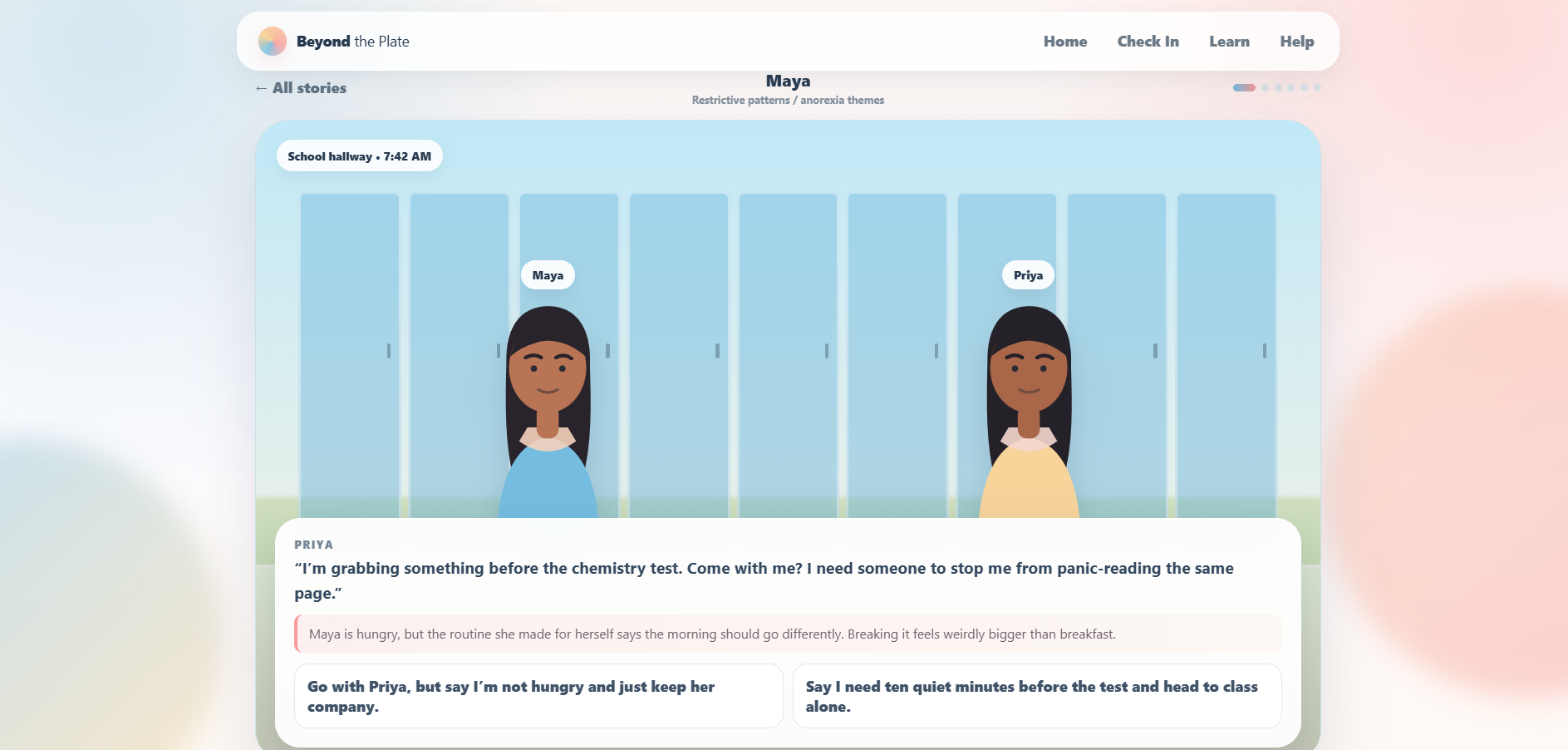
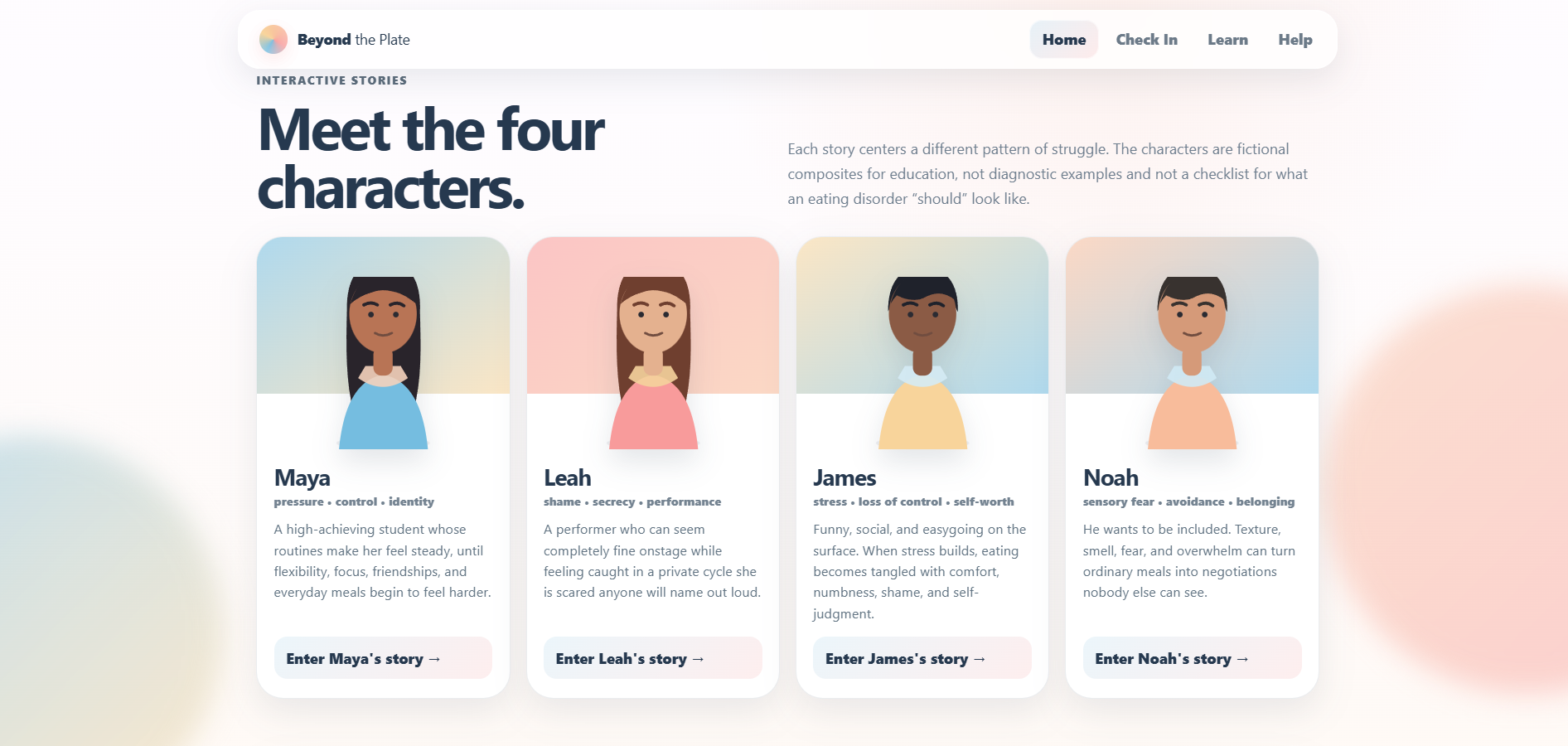
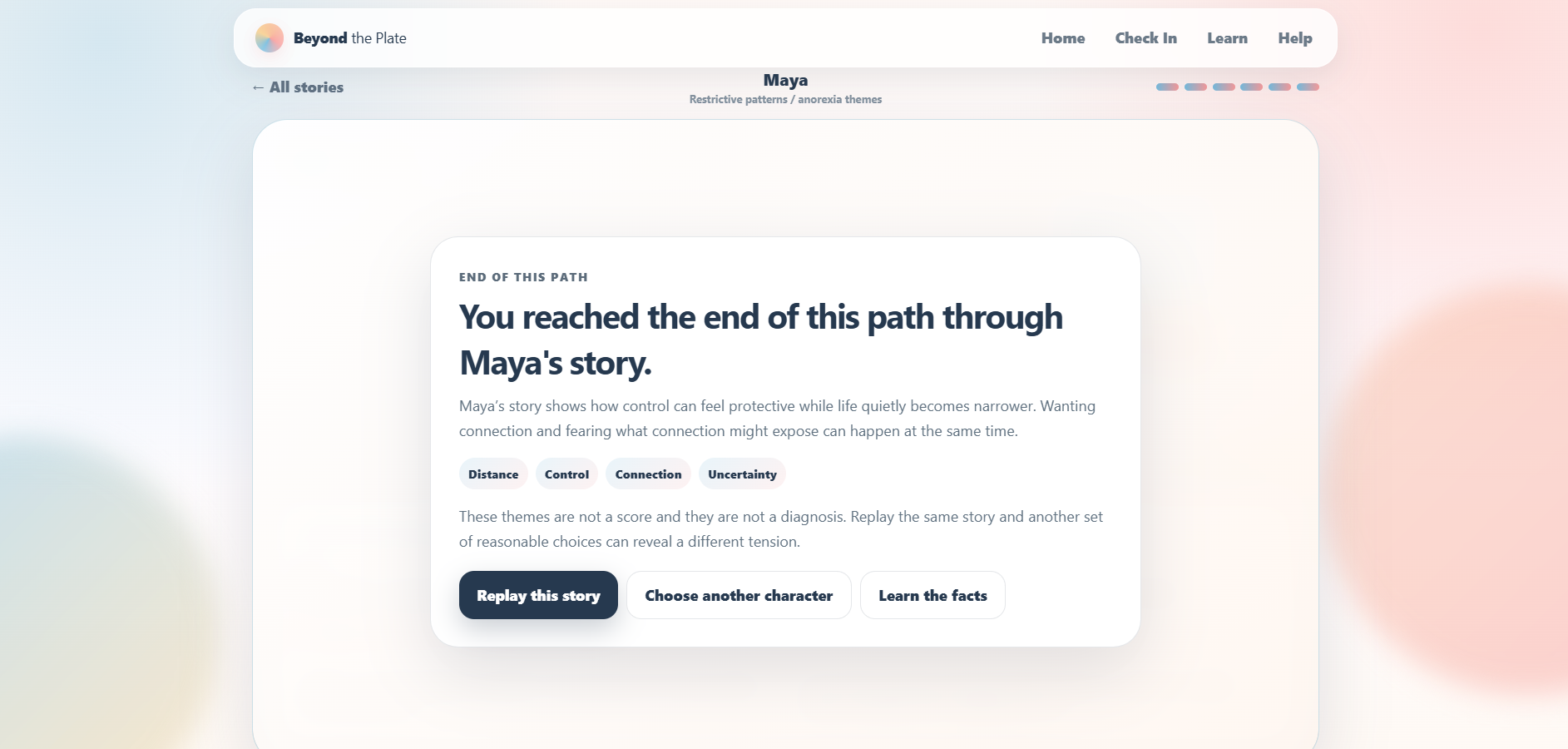
Story Mode: Character
-
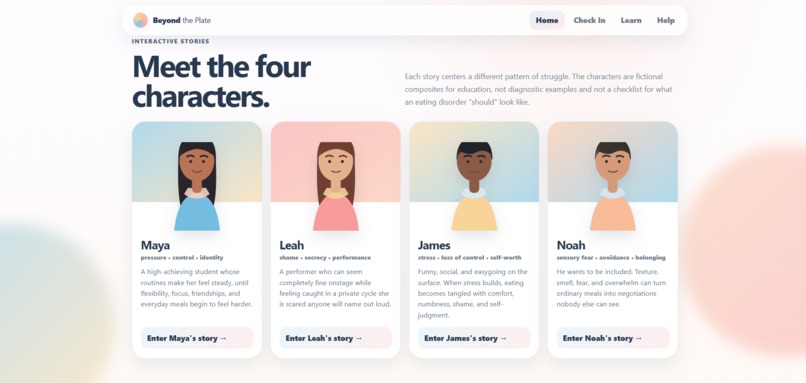
Story Mode
-
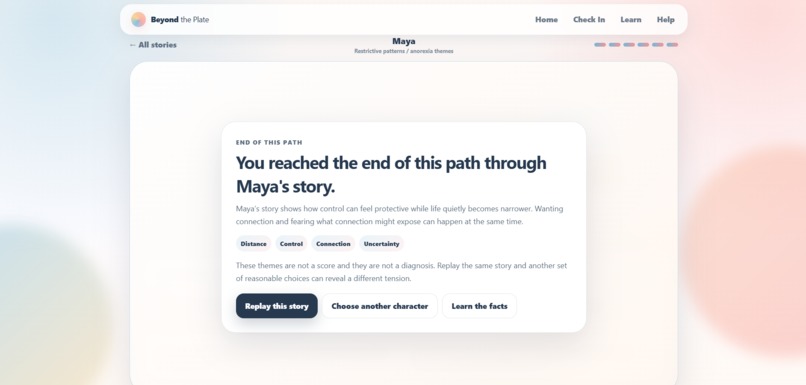
Options after completing one story
-
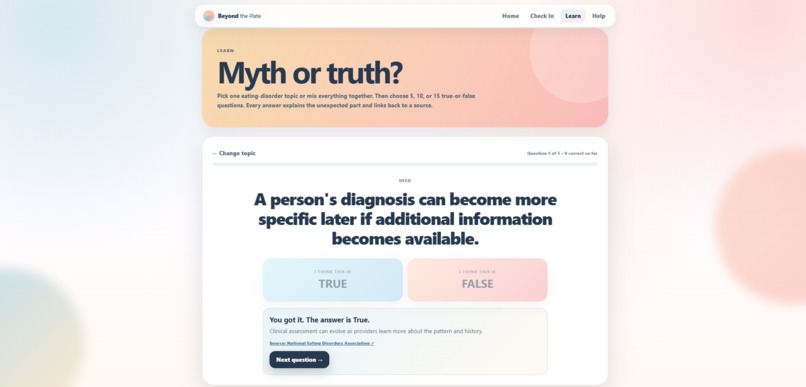
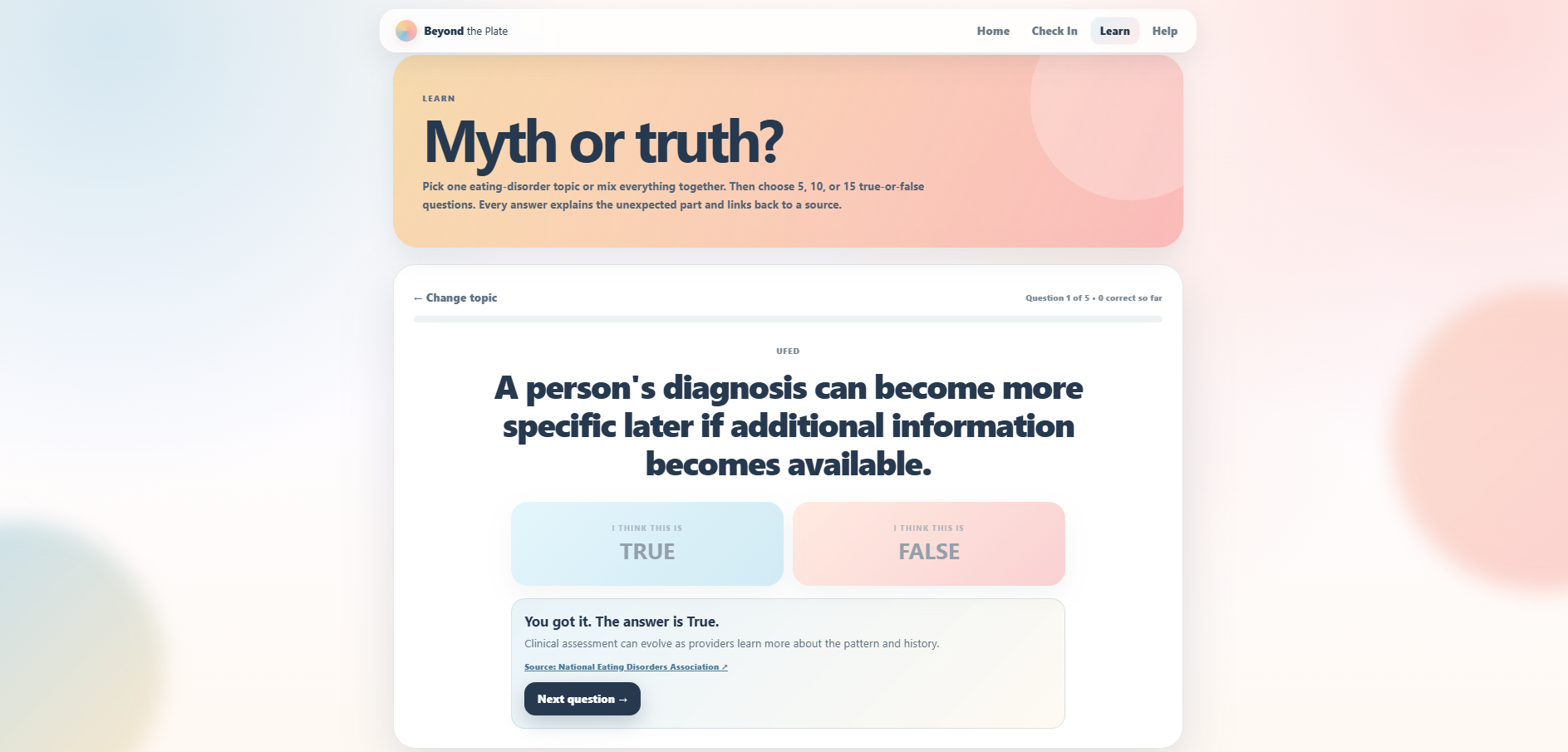
Explanations in Learning mode
-
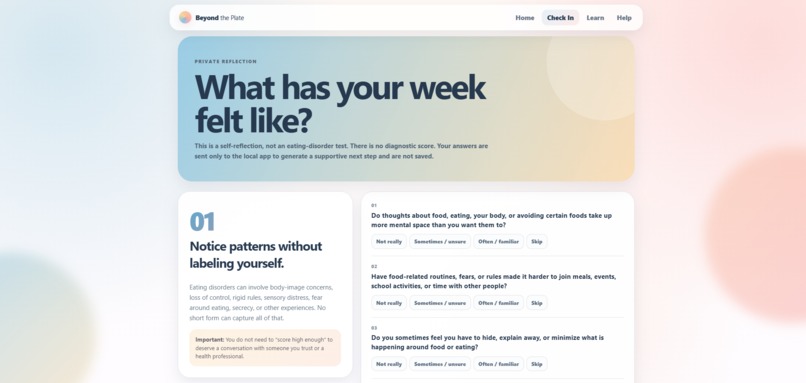
Check in
-
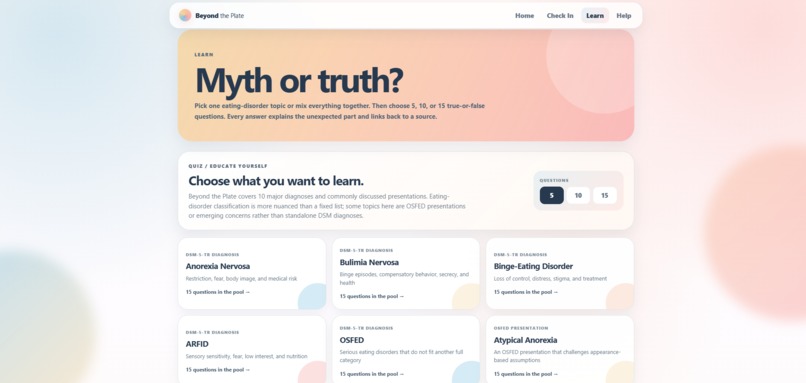
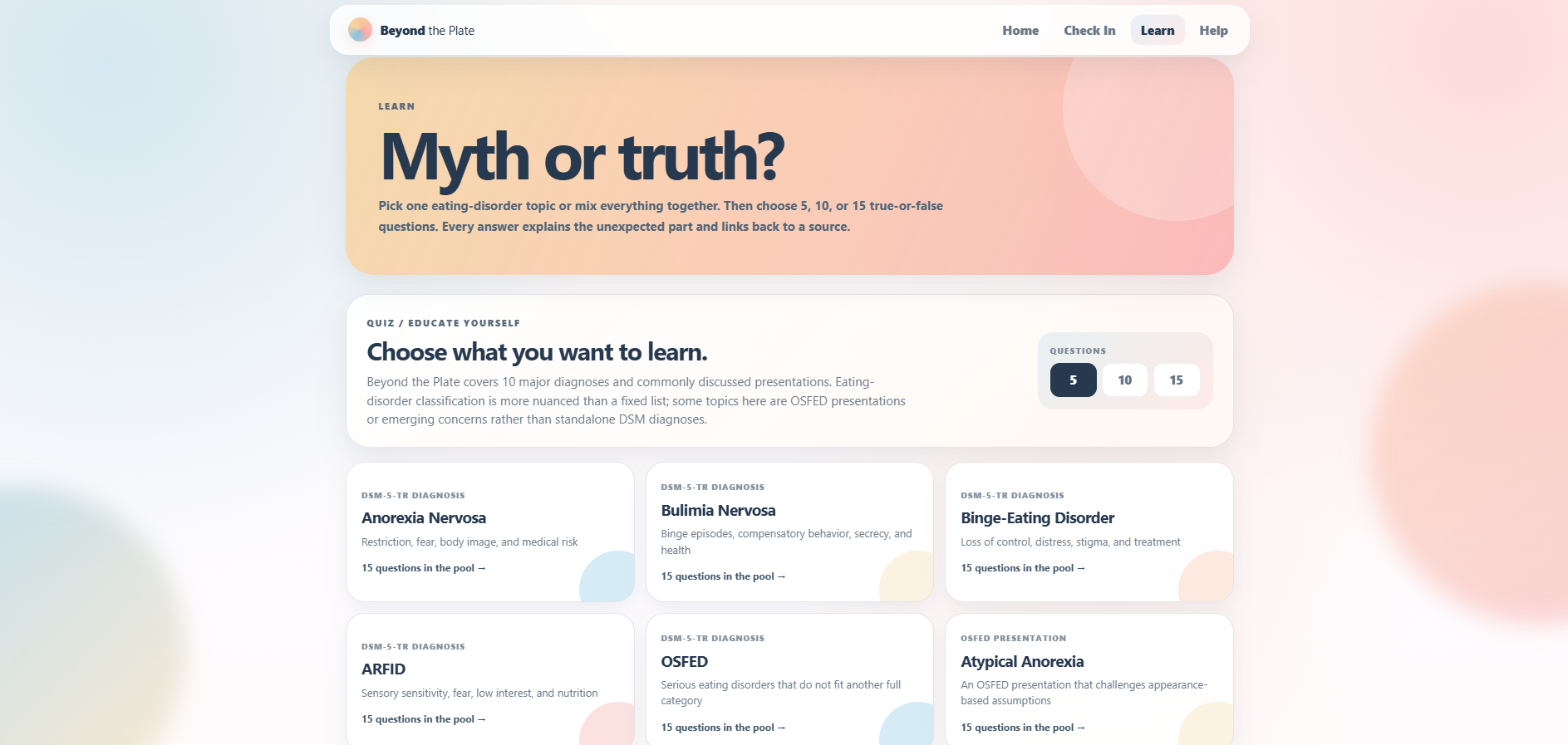
Learning Mode: True or False
-
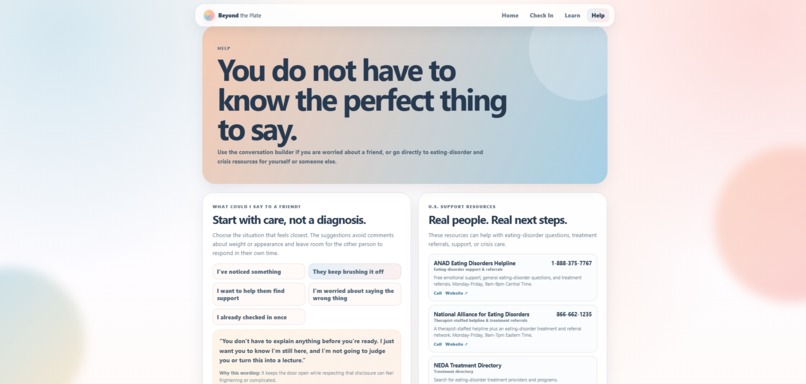
Help resources and supportive ways to reach out if needed
-
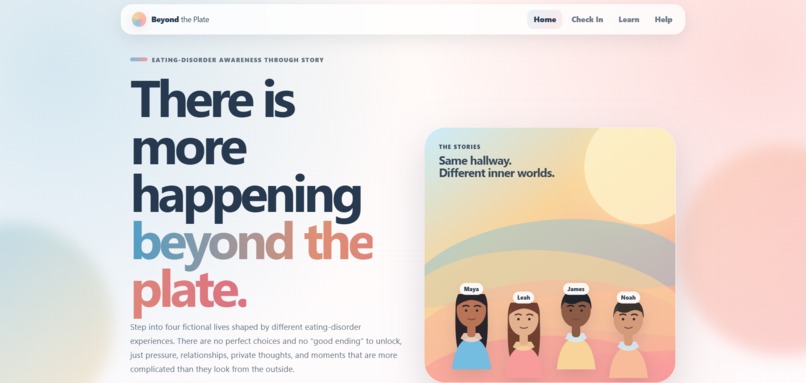
Homepage
Inspiration
This idea actually started somewhere unexpected, Netflix. A couple weeks ago, I was watching this TV show, 'Insatiable'. The premise of the show is about Patty, an overweight girl who undergoes complete weight loss due to an accident. Even though Patty now has a better looking body according to society standards, her eating habits remain the same; excessive binging. She later attends an "Overeaters Anonymous" meeting where she realizes that she does still have an Eating Disorder (or ED). However, due to her previous misconception on what an ED is supposed to look like, it took her an incredibly long time to seek real help and support. As I watched that scene, it truly changed my perception Eating Disorders. So, I decided to build my website for Patty. Something that would have allowed her to seek help sooner rather than later by allowing her to realize her own relationship with food. Rather than building a conventional page telling people what a single definition of an ED is, I could tell them that there are multiple definitions and complex stories that someone can be struggling with that are not portrayed or talked about at all in the media.
What it does
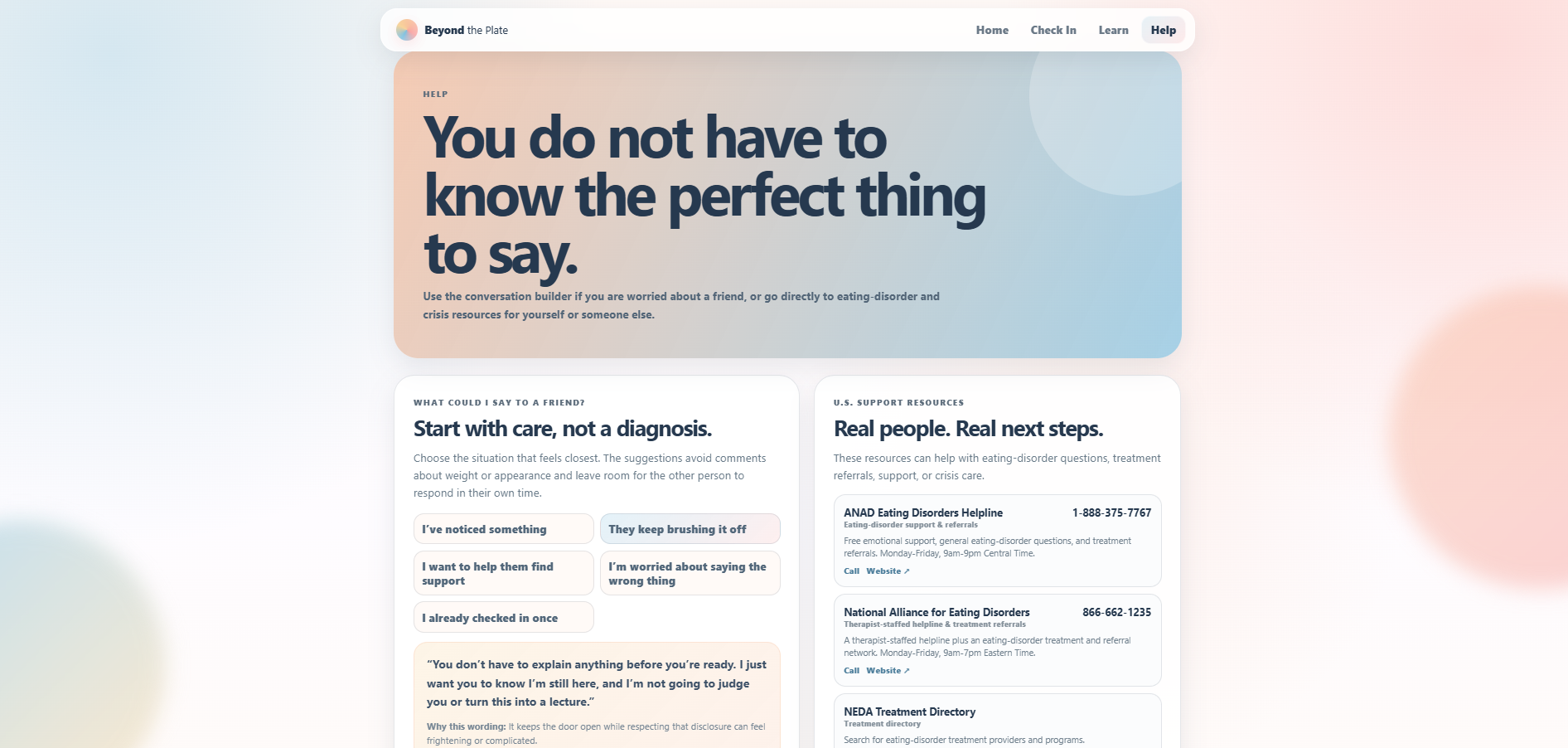
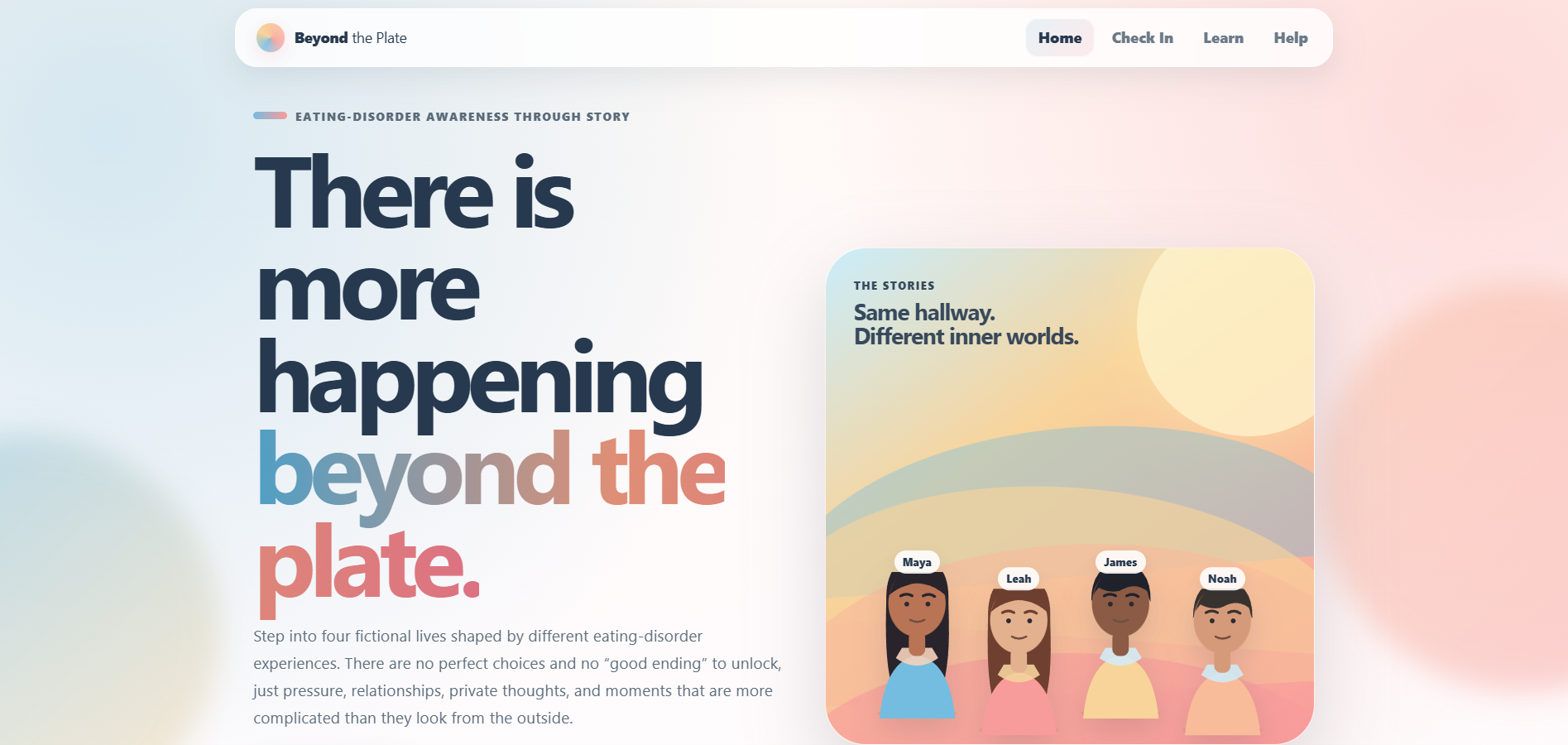
Beyond the Plate has various different but equally effective features to help educate others about Eating Disorders: Story Mode, Learning Mode, a "Check in" section, and a "Help" page to allow people to reach out to seek professional medical support. Story mode allows users to experience an inside view of different characters portraying real people that struggle with an Eating Disorder. Rather than the conflict of just "ignore the problem" or "go seek help", a struggling person goes through choices much more complicated than that, so these stories showcase those conflicts to help others understand why a person that is struggling might make an unexpected decision. The learning segment is where users can continue learning about different types of EDs and misconceptions that are associated with them by taking a 'true or false' quiz with a total of 150 questions across 10 different categories. Beyond the plate explains why an answer is correct or wrong and gives real reasoning behind why, so the user can understand the factual evidence behind the answer as well. One of the biggest things I've had to establish while planning out "Beyond the Plate" isn't what the website should do, but rather what it shouldn't. Beyond the plate should not diagnose anyone with an ED. Rather, the "Check in" segment allows a person to reflect privately on their thoughts and experiences and offers them help resources, but never makes a statement that will diagnose them. That is the job of a real medical professional, which "Beyond the Plate" does help users get in contact with. Lastly, the help section allows the user to reach out to a professional and offers support in many different ways. It also gives users responses to how they might approach a person they think is struggling with conservation starters for many different types of scenarios.
How we built it
Beyond the Plate is built as a separated frontend and backend application. While the frontend handles the interactive stories, visual experience, navigation, quizzes, and user interactions, the backend is built with Python and FastAPI and handles the actual functionality of the website. For example, when a user starts taking a learning quiz, the frontend requests a quiz session from the backend. Answers are checked through the API which returns whether the response was correct, and along with the real educational explanation as to why. The reflection and resource functionality also communicates through backend endpoints rather than simply remaining static.
Challenges I ran into
It was difficult coming up with a way to ensure that this website remains educational and fun without overstepping what its capabilities are. My first idea was to make a quiz, similar to the ones that BuzzFeed and many other sources release. My initial idea was a system where if the user answered very strongly to "Eating Disordered Orientation" or view of their body or food, they would get back a percentage saying that they "Have a __% chance of struggling with an ED". However, I soon realized that it wouldn't be right or accurate to diagnose a person based on 10 questions they answered on a random day of the week. So I soon came up with the idea of a Check in rather than a quiz, where the user can comfortably see where their comfort levels are with certain issues and reflect on their own choices.
Accomplishments that I'm proud of
Being able to brainstorm this creative solution and turn it into something that feels approachable and useful for any user. The capabilities of Beyond the Plate are things that I carefully and meticulously planned out from start to finish, from the story to the quizzes, private Check ins, and support resources. I'm especially proud that the project does more than simply explain eating disorders, it gives users a way to experience how complicated and different these struggles can look from person to person without making the subject feel overwhelming or a difficult topic.
What I learnt
Through this project, I learned that building a health focused product requires much more than making something functional; It requires thinking carefully about how users would interpret the experience, what the product should and should not do, and how to communicate sensitive information in a responsible manner. I learned how much stronger a solution can become when you keep questioning your first idea. "Beyond the Plate" changed significantly throughout development, where each revision helped me focus less on what looked impressive but rather more on what would actually make the experience meaningful, understandable, and useful to all the users.
What's next for Beyond the Plate
I would like to improve "Beyond the Plate" with feedback from multiple users, and then publish the website. After it has been published, I would love to expand this to my High Schools Health curriculum to educate the students taking those classes with permission from the supervisor as well as the Physical Education coaches. Expanding this idea not just school wide but hopefully even district wide would be an amazing opportunity for both me and others and a great learning opportunity to bring awareness to Eating Disorders.
Built With
- api
- css
- fastapi
- github
- html
- javascript
- python
- rest
- uvicorn
- vscode
