Inspiration
At Tlakali Game Studio, we believe video games and immersive technologies can do more than entertain — they can bring history, culture, and imagination to life.
As a small independent Mexican game development team, we have always been fascinated by the rich history and mythology of ancient Mesoamerican civilizations, particularly the Mexica (Aztec) culture.
This passion inspired us to explore how virtual reality could become a new way to experience cultural heritage. Instead of presenting visitors with static objects and information, what if they could actually hold ancient artifacts, interact with them, discover their stories, and become part of an adventure inspired by their mythology?
Beyond the Jade Mask was born from this idea: an experience that combines the concept of an interactive VR museum with the excitement of a mythological adventure.
Our goal is to spark curiosity about ancient cultures while demonstrating the potential of VR as a tool for cultural exploration, education, and entertainment.
What it does
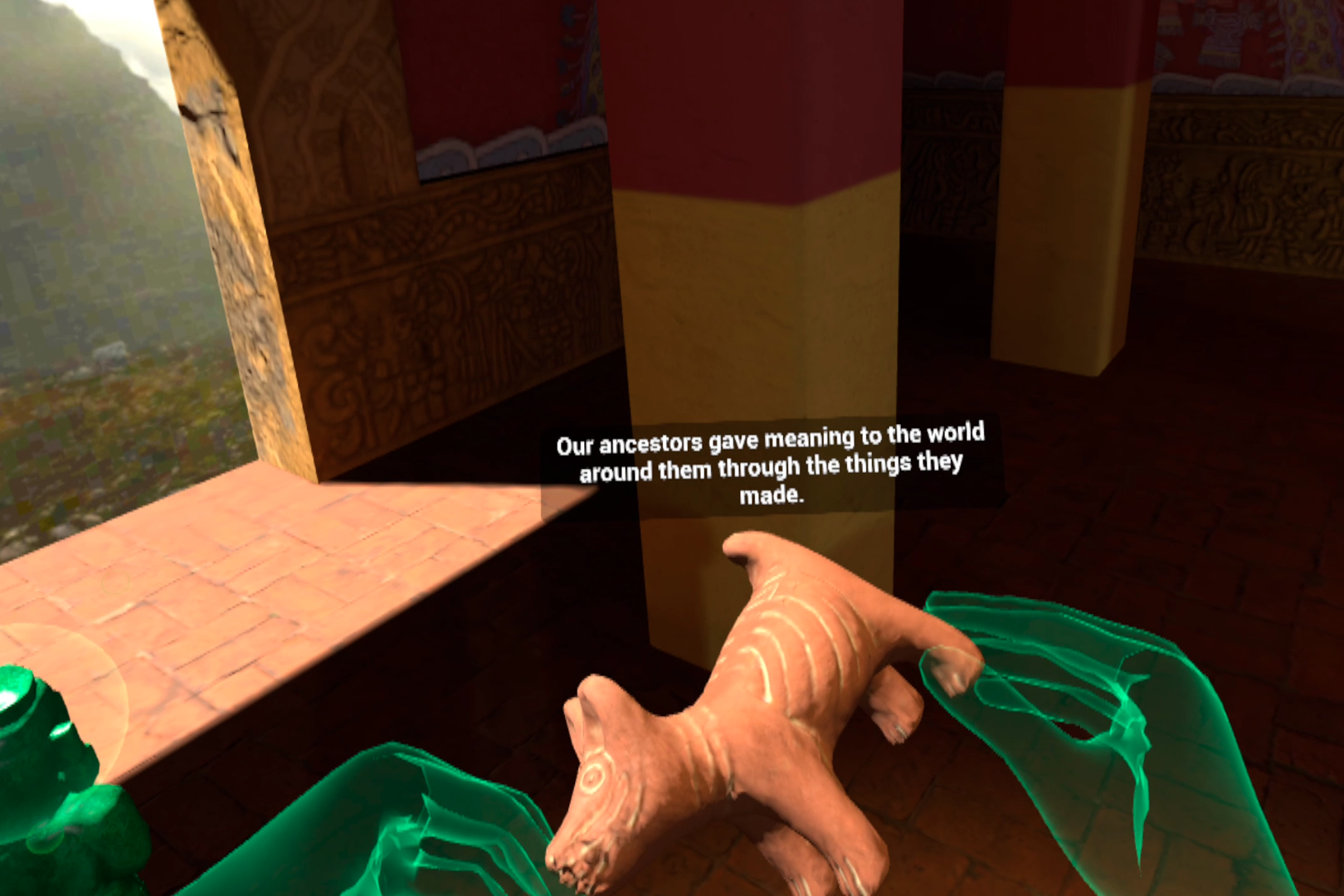
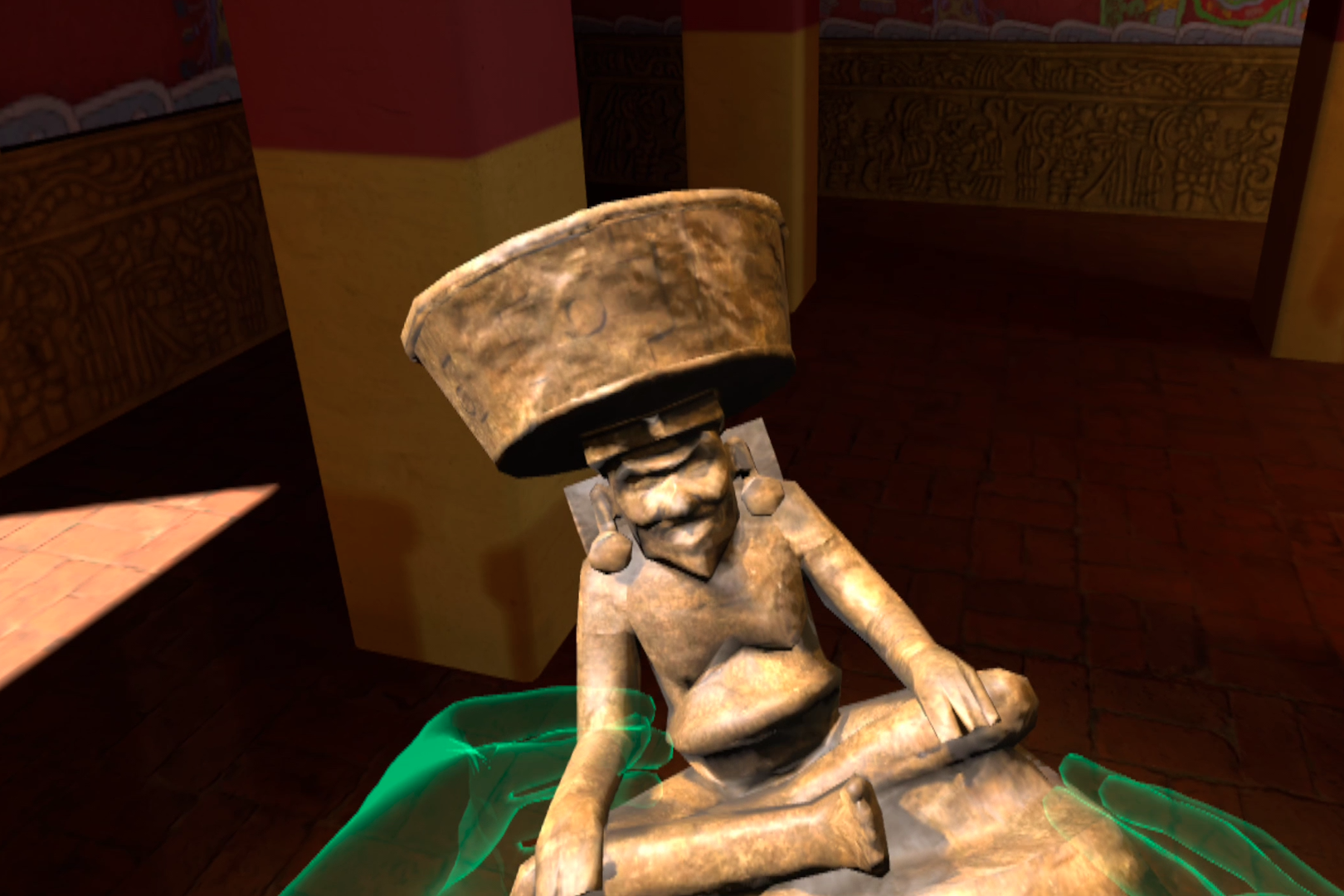
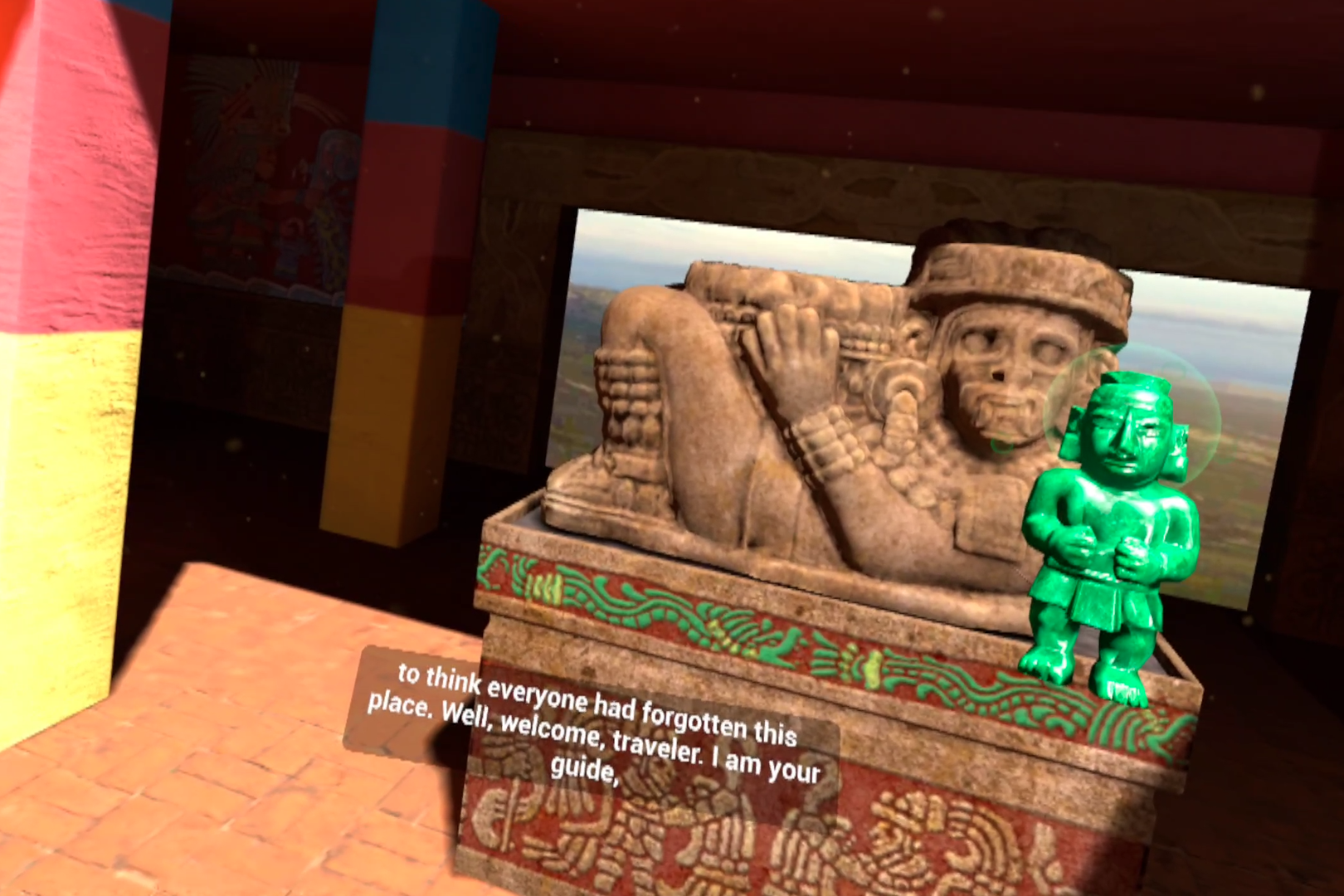
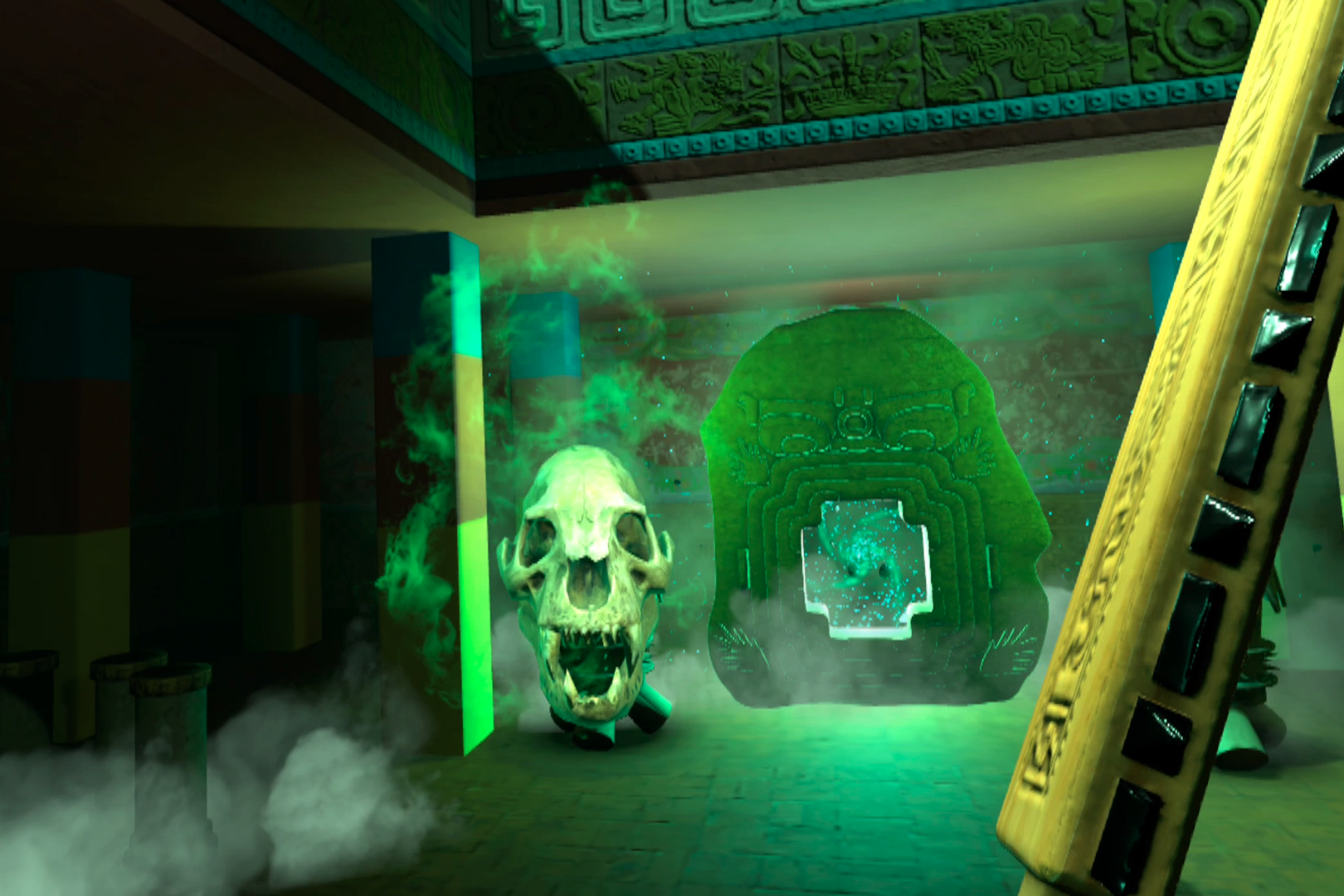
Beyond the Jade Mask takes players on an immersive journey through an ancient Mexica temple. Using hand tracking, players can reach out and interact naturally with ancient figurines and artifacts. A mysterious jade guardian awakens to become their guide, introducing the meaning and stories behind the objects they discover.
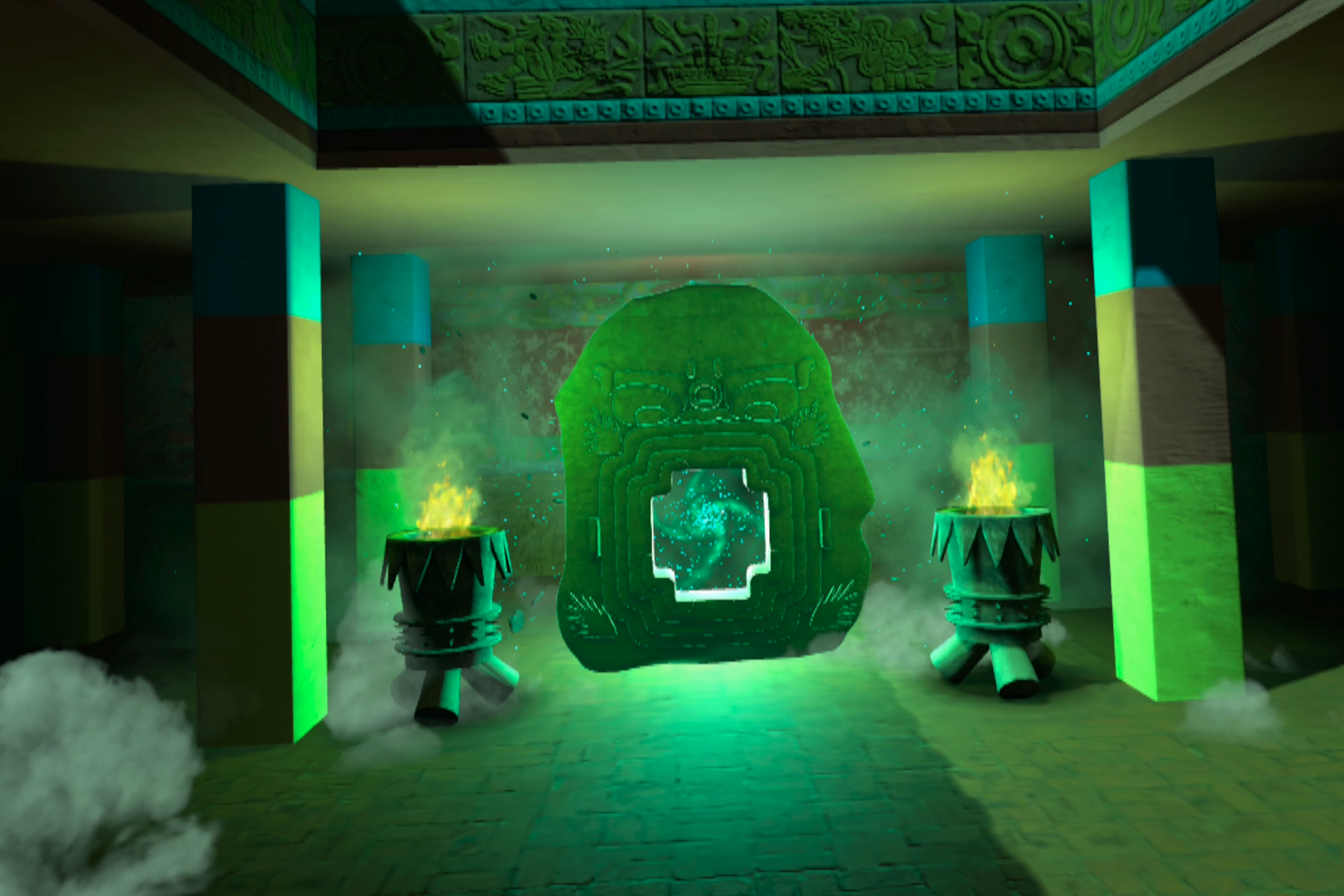
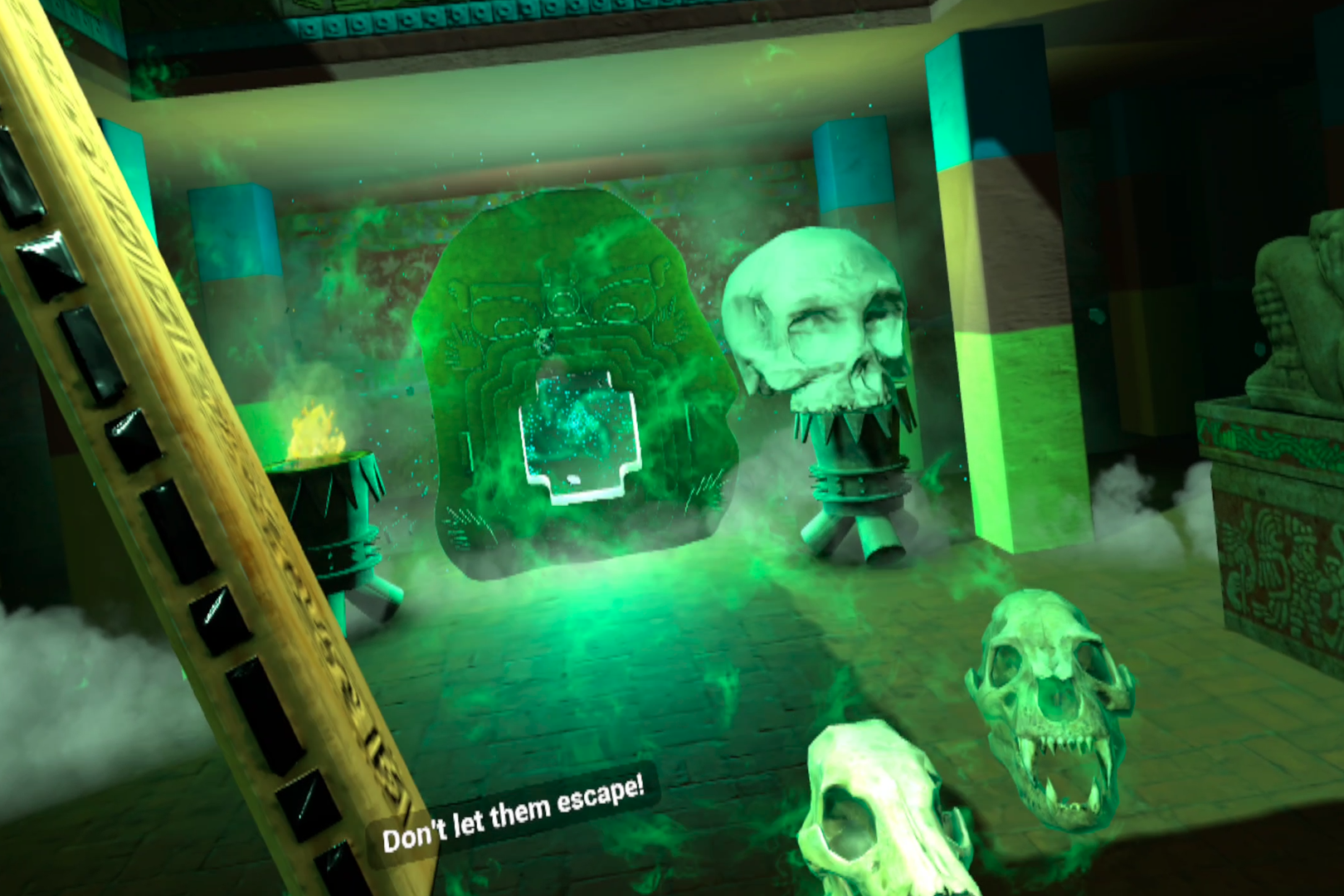
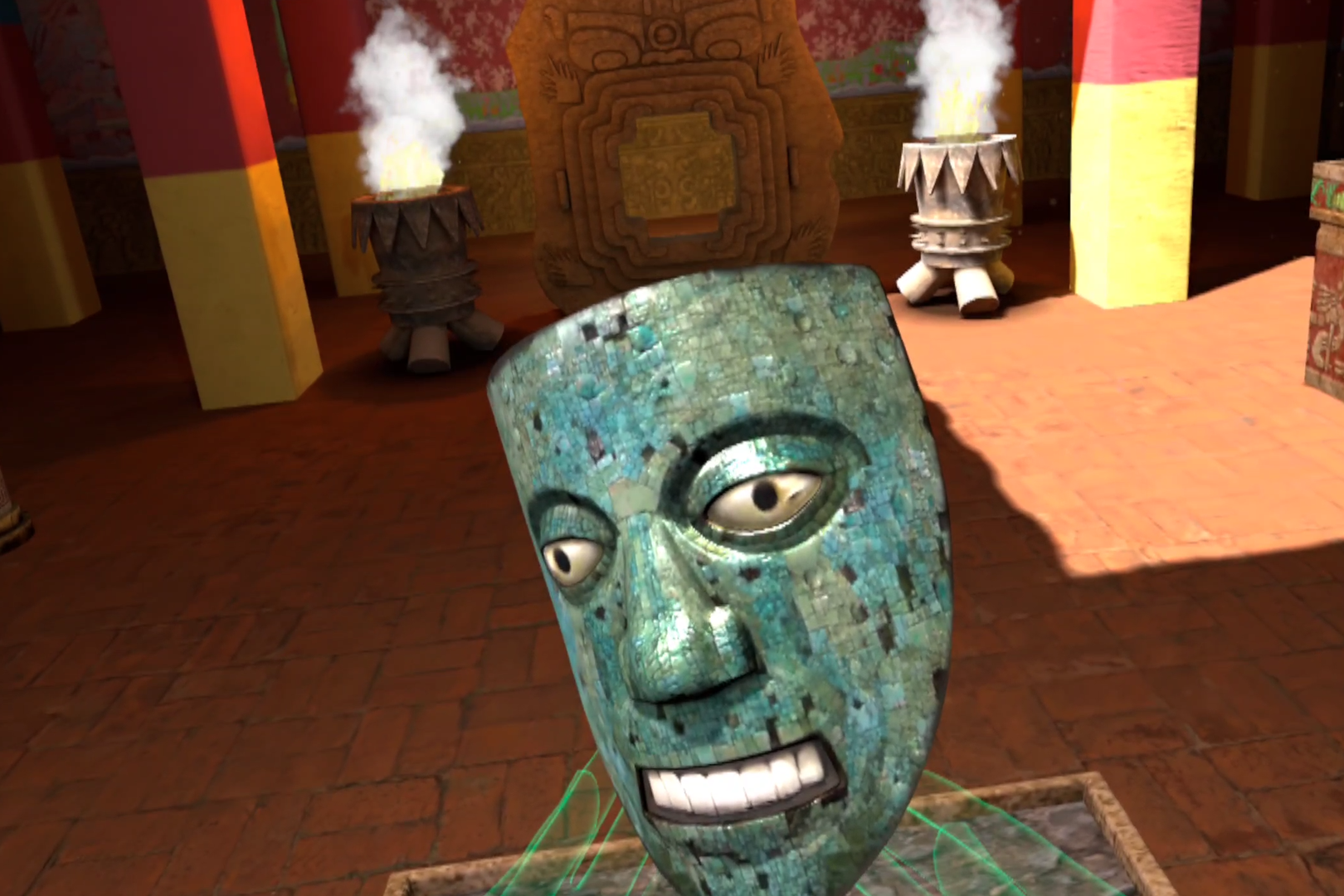
But the experience goes beyond simply exploring artifacts. The journey reaches its climax when players discover a ceremonial jade mask. By putting it on, they reveal a hidden world and witness a portal to Mictlán, the underworld in Mexica mythology, opening inside the temple.
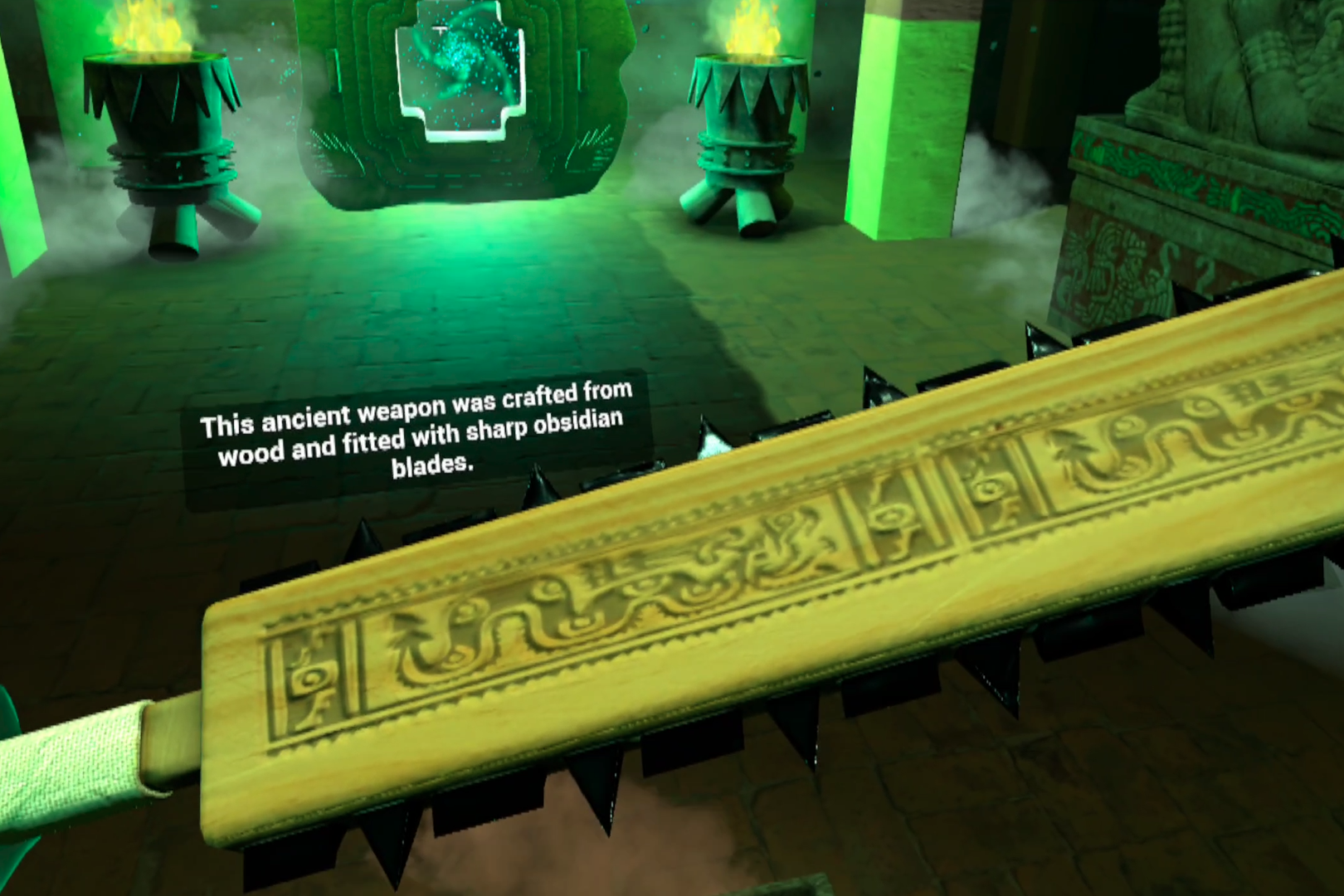
As mysterious spirits emerge from the portal, players must grab a macuahuitl, an ancient weapon, and defend the temple. The experience combines:
- Interactive cultural exploration: Discover and physically manipulate ancient-inspired artifacts using hand tracking.
- Immersive storytelling: Meet a virtual guardian who guides players through the experience and introduces cultural and mythological concepts.
- Mythological adventure: Experience a supernatural event inspired by Mictlán and become part of the story.
- Interactive gameplay: Use the macuahuitl to fight emerging spirits and protect the temple.
Our vision is to demonstrate how cultural discovery and interactive entertainment can coexist in a single VR experience.
How we built it
Beyond the Jade Mask was developed using Unreal Engine 5.8, targeting Meta Quest headsets. We combined original 3D assets created specifically for this experience with selected assets from our own 3D library, allowing us to build a rich environment while maintaining a consistent visual identity. Our 3D modeling and asset creation workflow uses Blender, where we create, prepare, and optimize models, props, and materials for integration into Unreal Engine.
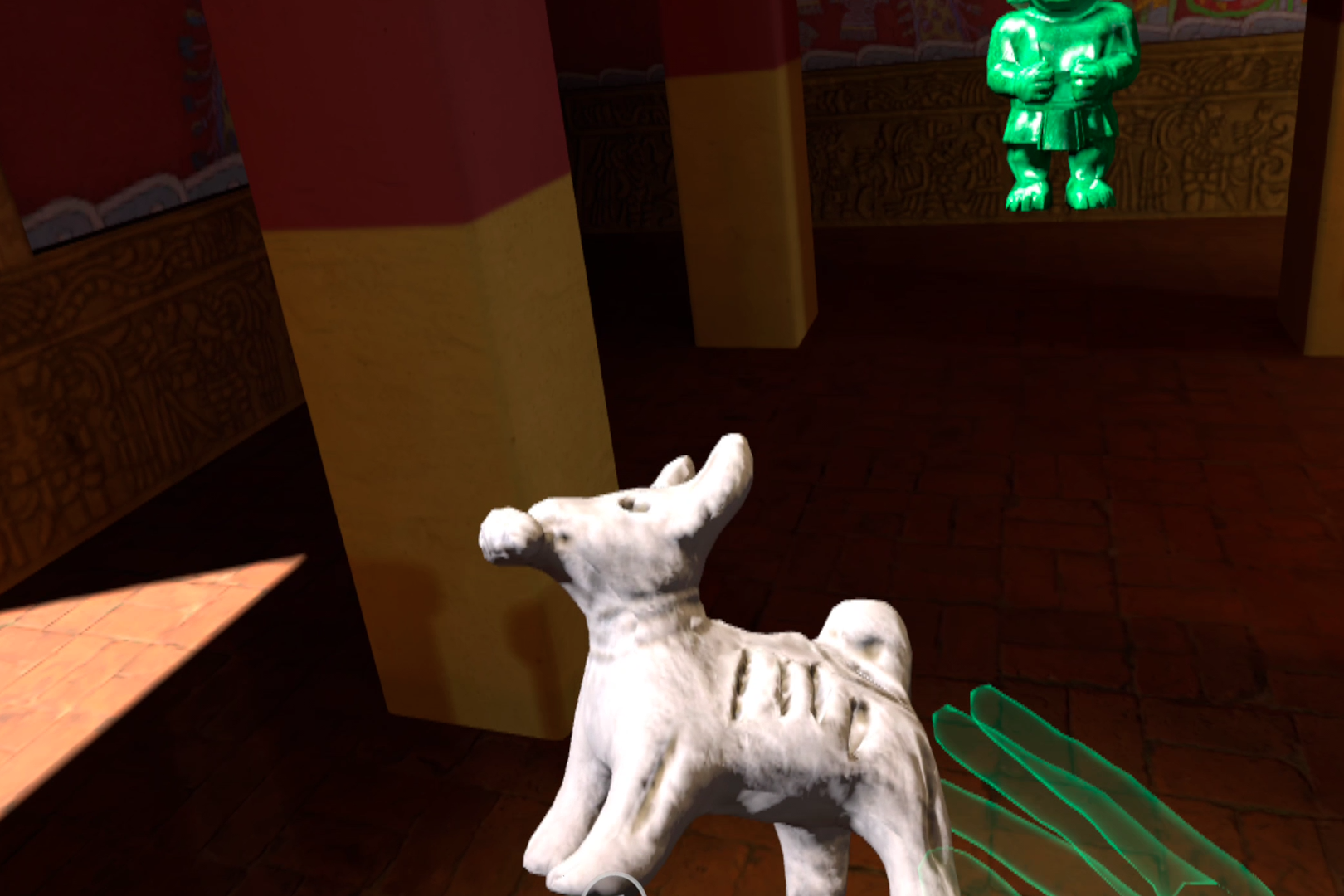
An interesting part of our asset library is that some of its models originated from 3D scans of physical replicas of figurines used on traditional Day of the Dead altars in Mexico. By bringing these scanned objects into the virtual world, we found another way to connect physical cultural traditions with immersive digital experiences.
Some of the main technologies and development elements include:
- Unreal Engine 5.8: Our primary development environment for building the VR experience, implementing gameplay systems, and creating immersive environments.
- Meta Quest hand tracking: The foundation of the interaction system, allowing players to grab, hold, inspect, and manipulate objects using their bare hands, without relying on traditional VR controllers.
- Blender: Used for 3D modeling, asset preparation, and optimization, combining newly created models with assets from our existing library.
- Interactive gameplay systems: Implementing object interactions, narrative progression, the mask sequence, portal events, and combat mechanics.
- Voice acting and audio: Using AI-assisted voice generation and sound design to bring the guardian narrator and the experience's events to life.
We designed the experience around a simple principle: players should feel that they are interacting with a real collection of ancient objects, not simply pressing buttons to advance through a story.
Challenges we ran into
One of our main challenges was finding the right balance between cultural exploration and engaging gameplay.
We wanted to create something that could introduce players to ancient Aztec culture without feeling like a conventional educational application. At the same time, we wanted the adventure elements to complement the cultural experience rather than overshadow it.
Another significant challenge was designing natural and reliable interactions using hand tracking alone. Without traditional controllers, every interaction needs to feel intuitive and responsive, from picking up small figurines to handling larger objects.
We also faced challenges with object handling and stabilization. For example, the macuahuitl is a relatively large object that can easily feel shaky or unstable when held and moved using virtual hands. Achieving a smooth and convincing interaction required additional attention to how objects behave, respond to hand movements, and maintain stability during gameplay.
Performance was another important consideration. Since the experience targets standalone VR hardware, visual quality, lighting, materials, geometry, and interaction systems all need to be carefully balanced to deliver a smooth and comfortable experience.
Finally, connecting the different elements like artifact discovery, the narrator, the ceremonial mask, the underworld portal, and combat into a coherent experience required careful attention to pacing and storytelling.
Accomplishments that we're proud of
We are particularly proud of creating an experience that combines cultural exploration, immersive storytelling, and gameplay while relying entirely on hand tracking for player interactions.
Some of the accomplishments we value most are:
- Creating a controller-free experience where players can naturally interact with ancient-inspired artifacts using their own hands.
- Bringing physical cultural references into VR, including 3D-scanned figurines originating from replicas used on traditional Mexican Day of the Dead altars.
- Creating an interactive guardian character that acts as the player's companion throughout the journey.
- Combining the atmosphere of a virtual museum with the excitement of a mythological adventure.
- Designing a memorable transition between the physical temple and the supernatural world revealed by the jade mask.
- Implementing interactions with objects of different sizes and behaviors, including the macuahuitl combat mechanic.
Most importantly, we are proud to continue exploring how a small independent Mexican studio can use emerging technologies to showcase the richness of our cultural heritage to a global audience.
What we learned
This project reinforced our belief that the real potential of VR goes beyond recreating physical environments. It is about creating memorable experiences through presence, interaction, and immersion.
One of our biggest learnings was understanding how important it is to design an experience specifically around hands-only interaction. When players don't rely on traditional controllers, their hands become the primary connection between themselves and the virtual world.
Making this feel natural requires more than simply enabling hand tracking. Objects need to respond smoothly and convincingly to hand movements, with careful consideration of grabbing behavior, positioning, physics, and stabilization.
For example, handling a large object such as the macuahuitl presented a particular challenge. Even small movements or tracking variations can make a large object feel shaky. We explored stabilization techniques and adjustments to object behavior to make holding and using it feel smoother and more comfortable.
We also learned how powerful storytelling can be when connected to physical interactions. Instead of interrupting the experience with long explanations, we can introduce information naturally through a character, an object, and the player's own curiosity.
Ultimately, we learned that successful immersive experiences aren't necessarily about having more mechanics or longer gameplay sessions. Sometimes, a short, well-designed sequence of meaningful interactions can create a much stronger and more memorable connection with the player.
What's next for Beyond the Jade Mask
Beyond the Jade Mask is intended to be the starting point of a broader collection of VR experiences from Tlakali Game Studio.
Our vision is to create brief, memorable, and fun experiences that combine cultural exploration, immersive storytelling, and engaging gameplay, introducing players to different aspects of ancient Mesoamerican civilizations.
Rather than limiting ourselves to a single long experience, we envision a collection of independent adventures, each exploring a different cultural theme, historical setting, or mythological story through interactive VR.
Future possibilities include:
- Expanding the collection of interactive artifacts and introducing more stories from ancient Aztec culture.
- Creating new experiences inspired by other Mesoamerican civilizations.
- Introducing new mini-games and interactive activities that make cultural discovery engaging and accessible.
- Exploring multiplayer experiences where people can discover cultural environments and interact with artifacts together.
- Collaborating with museums, cultural institutions, and educational organizations to explore new ways of presenting cultural heritage through VR.
Our ultimate goal is to make history something people don't just learn about, but something they can step into, explore, and experience for themselves.
Beyond the Jade Mask — Discover the past. Experience the stories. Explore what lies beyond.
Built With
- blender
- photoshop
- quixel-mixer
- reality-scan
- unreal-engine


