-
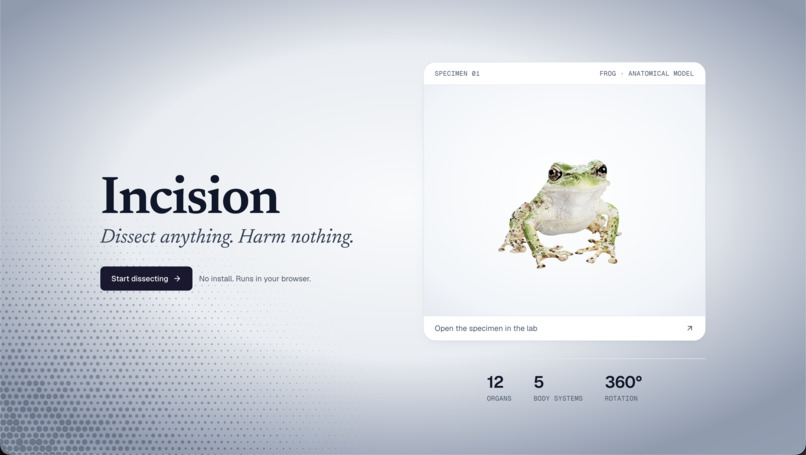
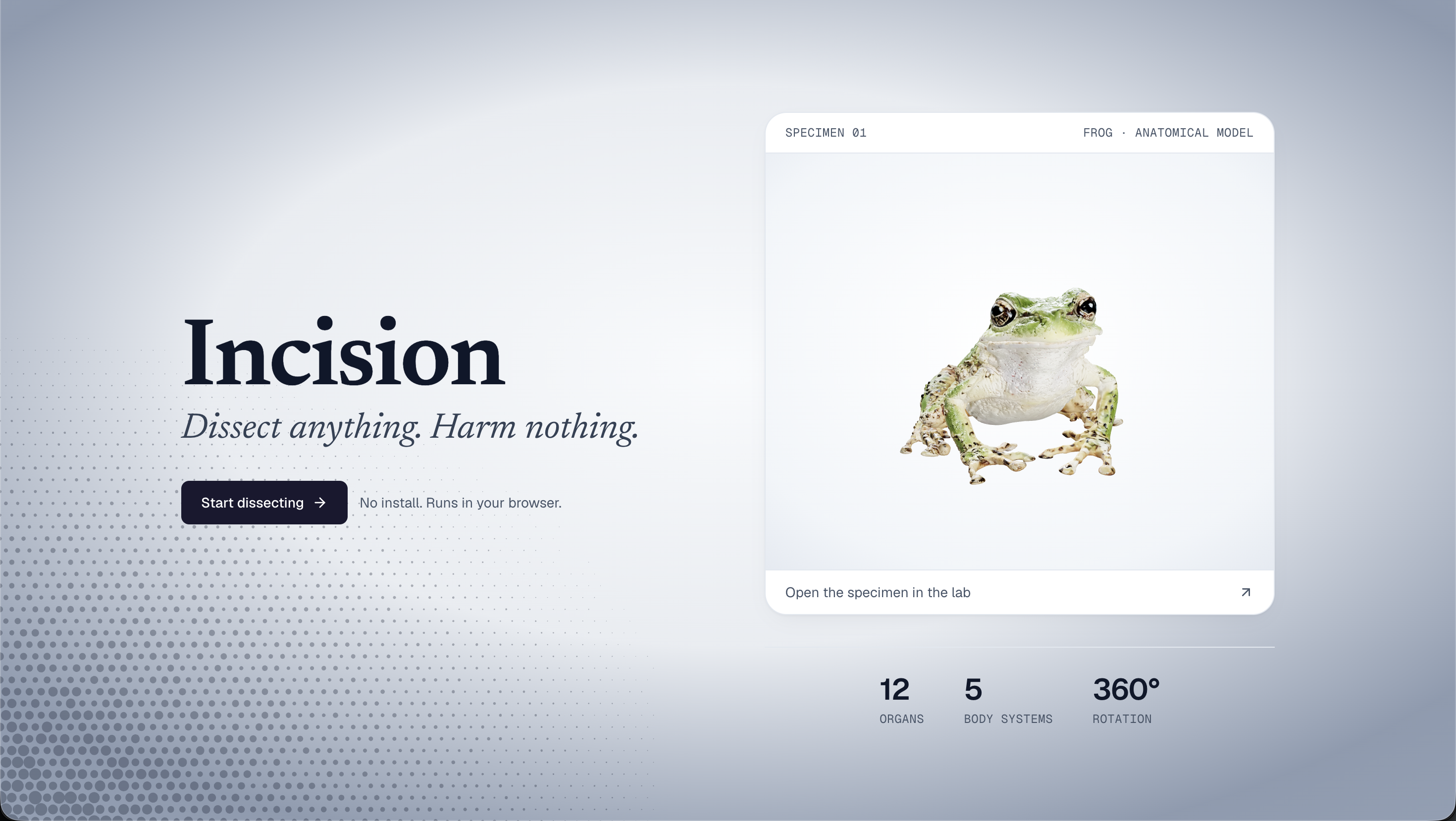
Landing Page
-
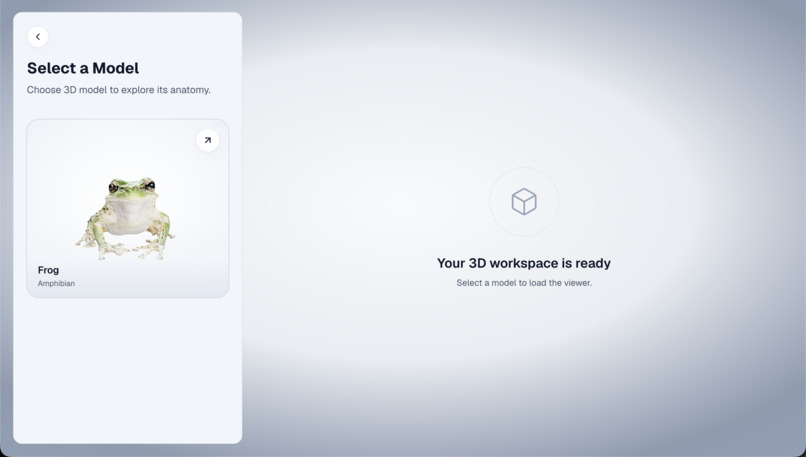
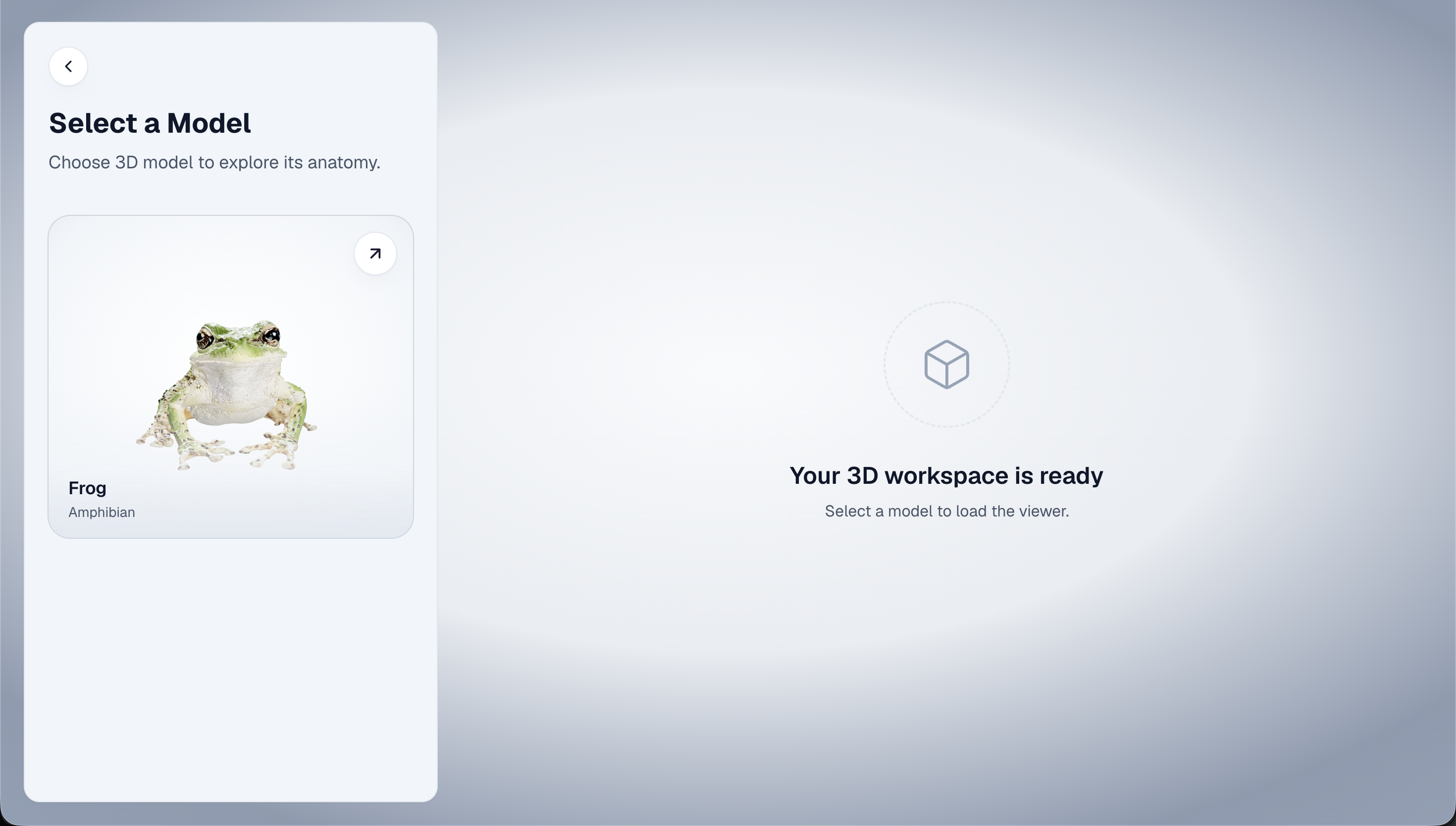
Explore Page
-
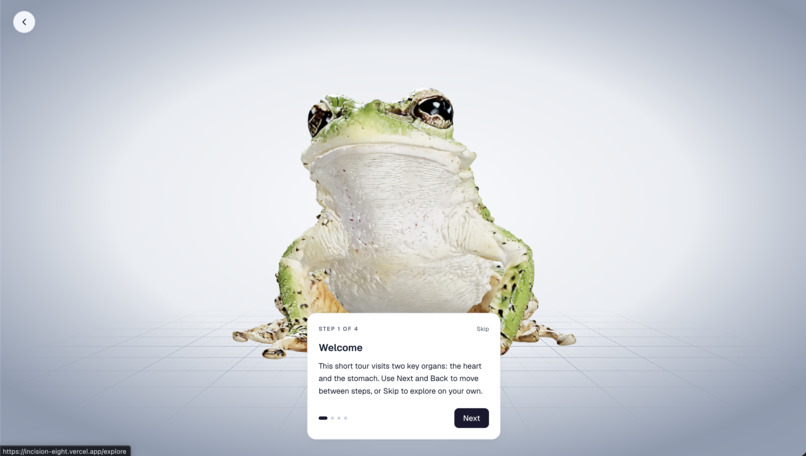
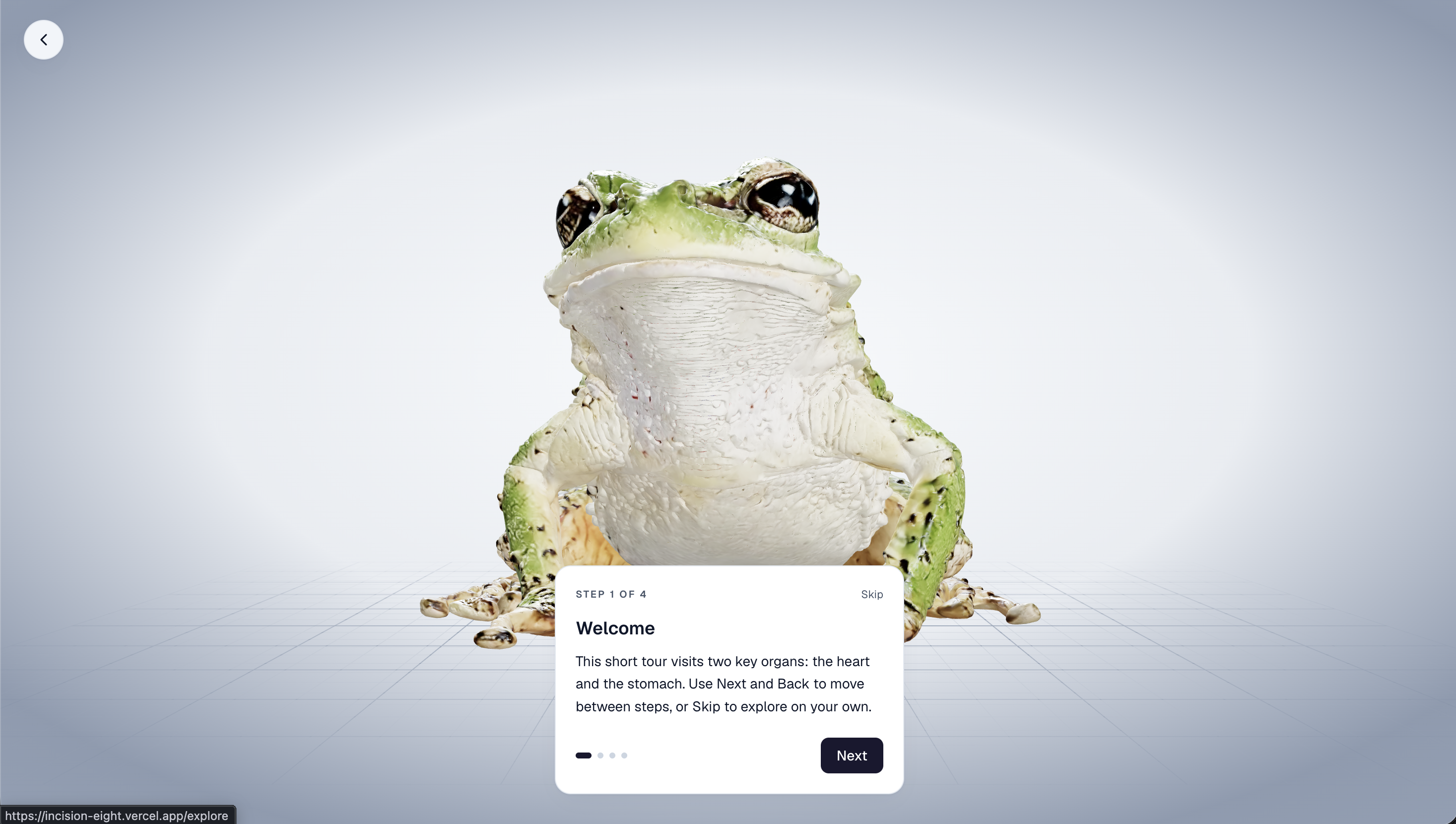
Tour Welome
-
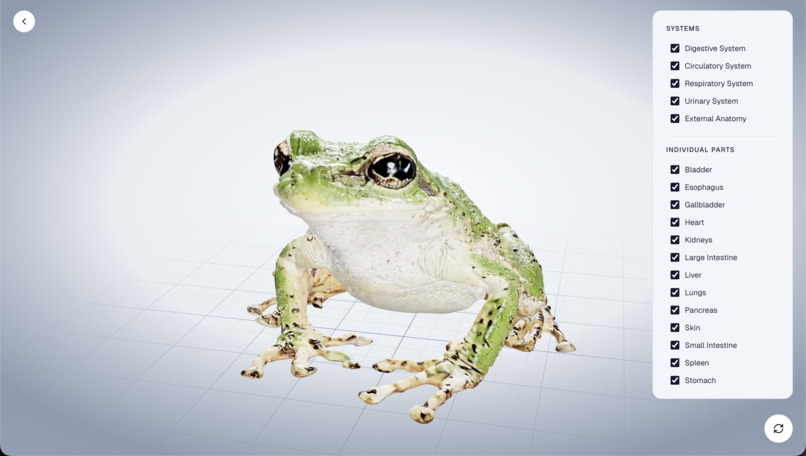
Visibility Controls
-
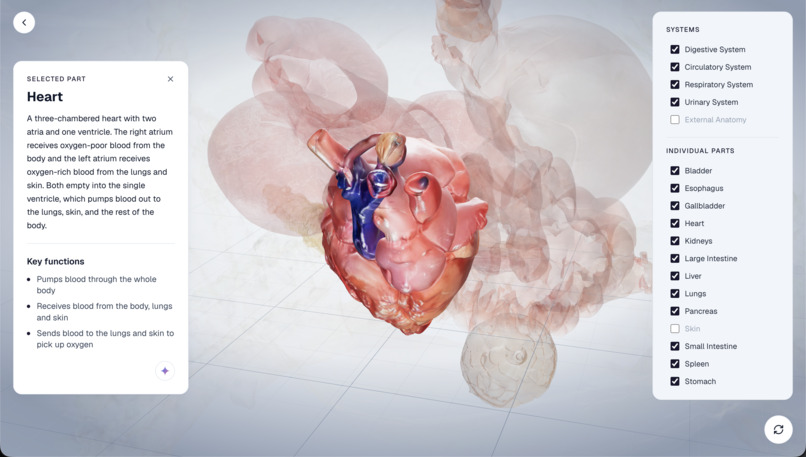
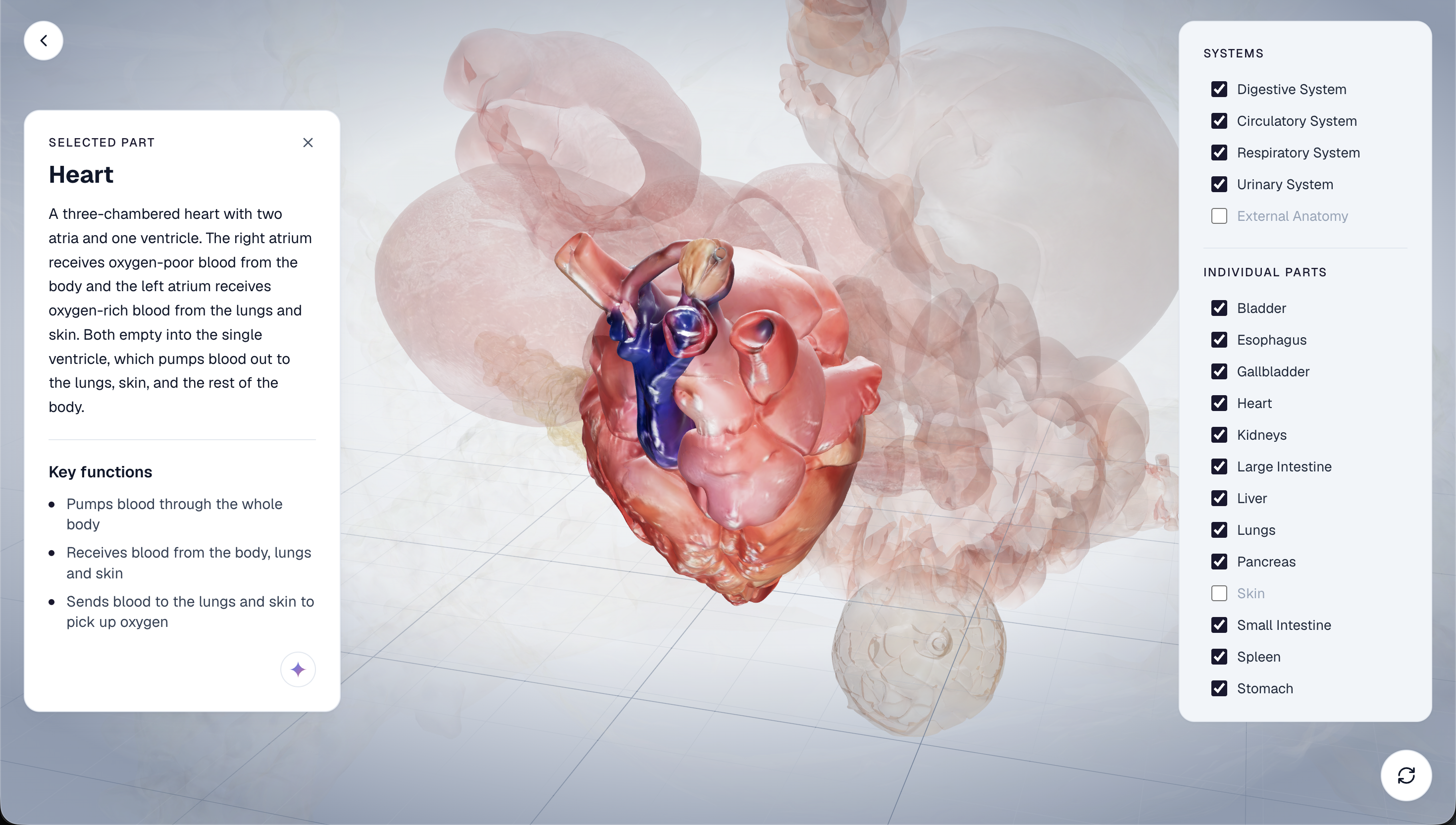
Organ Detail View
Inspiration
While talking, we found a shared appreciation for our dissection labs in our previous biology classes. As a team we realized two things: one that much of the insight of these lessons was thanks to the subject's tactile nature, and two, that many schools lack the resources to replicate these guided demos themselves.
What it does
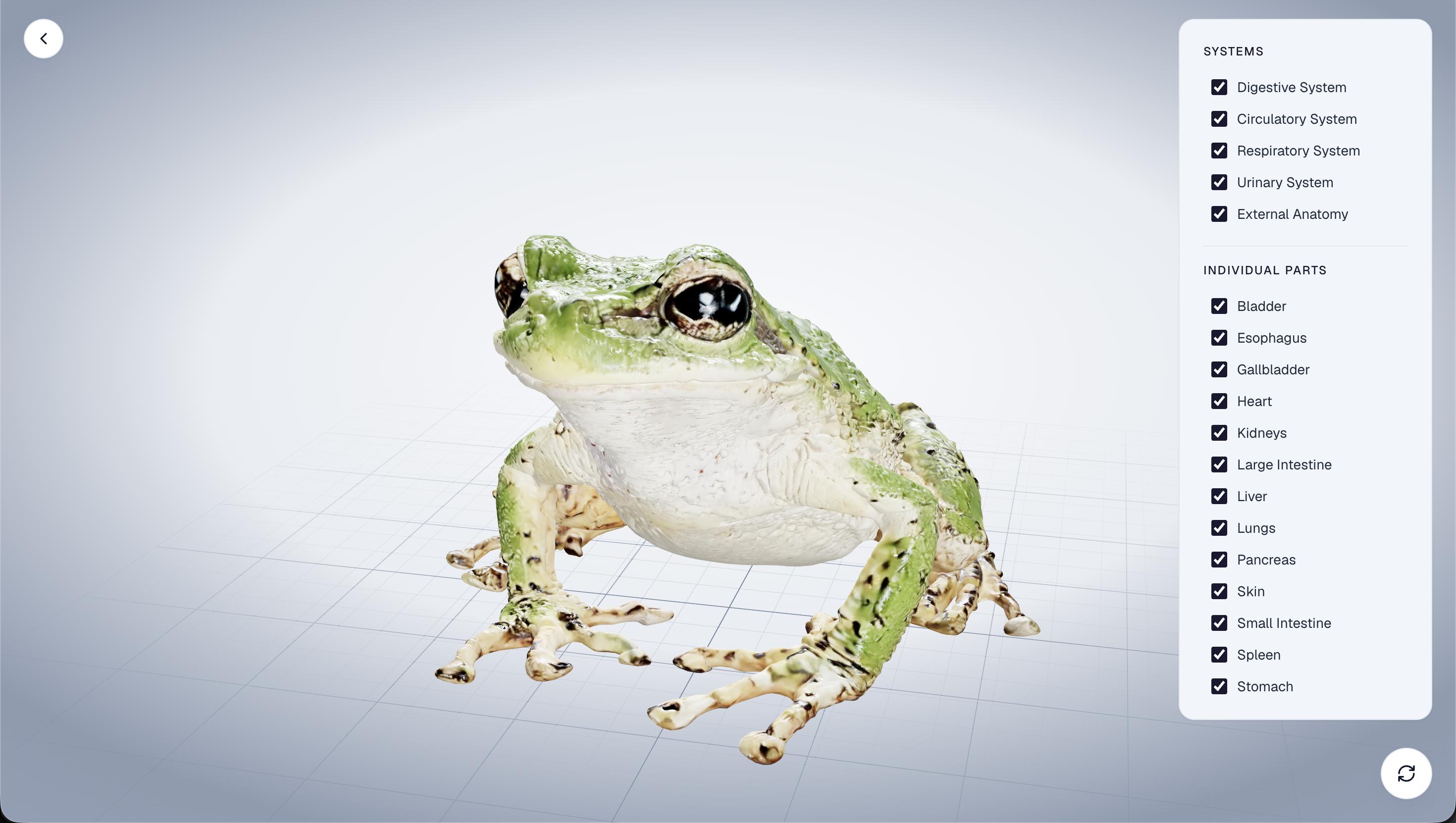
Incision lets students explore 3D anatomical models of organisms to better understand their biology. Take a guided tour of the specimen, then rotate, zoom, and click any organ to reveal more detailed information about the selected systems. Quiz yourself along the way! Our demo features a frog, but Incision is built to render any organism, including other animals, plants, and microorganisms, enabling further expansion in the future.
How we built it
Our demo features a custom 3D model prepared in Blender, with a unique mesh for every organ, allowing them to be inspected and managed individually. The viewer is built with React Three Fiber, and the backend is a FastAPI server that sends the frontend each model's organ info, system groups, and tour steps, which makes adding a new specimen as simple as adding a model and a content file. Our quiz system runs through Gemini on the backend so our API key never touches the browser.
| Part | Tools |
|---|---|
| Frontend | Next.js 16 (App Router), React 19, TypeScript, Tailwind CSS v4 |
| Backend | FastAPI (Python), Pydantic, google-genai |
| AI | Gemini 3.5 Flash-Lite |
| 3D | Blender, React Three Fiber, drei, three-mesh-bvh, gltf-transform |
| Animation | Motion |
Challenges we ran into
Implementing the model was our most significant challenge. Early on, our progress was stalled over an hour when we ran into a GLB chunk-length desync preventing our model from being properly rendered. Later, every organ required careful modeling, segmentation, and geometry optimization to accommodate them.
Accomplishments that we're proud of
We’re proud that we were able to turn an idea into a working application as a team with minimal experience together and mostly as beginners. We’re also proud that it’s something people could actually use and that has the potential to make a significant positive impact on the world.
What we learned
We learned how to integrate Blender models within a web app, how to make individual parts interactive, and how to connect a 3D frontend to a Python backend. We also learned a lot about delegating work, and resolving issues spanning multiple levels.
What's next for Incision
We want to add more specimens, like a fetal pig, earthworm, cow eye, and other classic biology labs. We also think it would be amazing to implement helpful animations, and maybe even a feature to allow anyone to contribute a model after proper review!
Built With
- blender
- drei
- fastapi
- google-genai
- javascript
- next.js
- python
- react
- react-three-fiber
- tailwindcss
- typescript


Log in or sign up for Devpost to join the conversation.