-
-
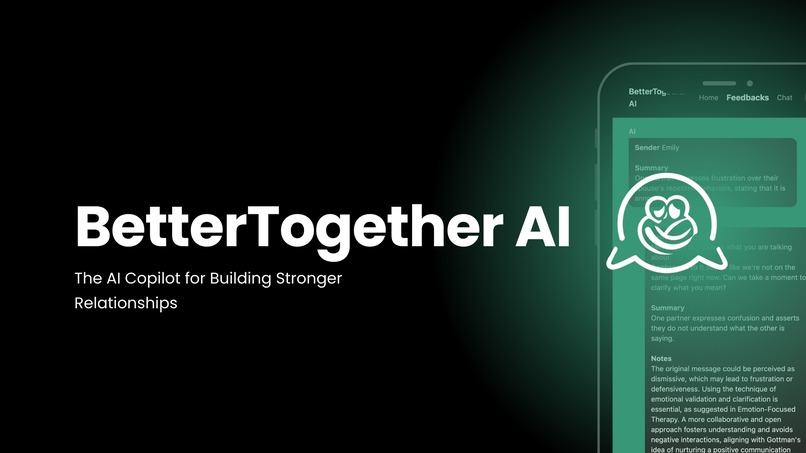
Intro
-
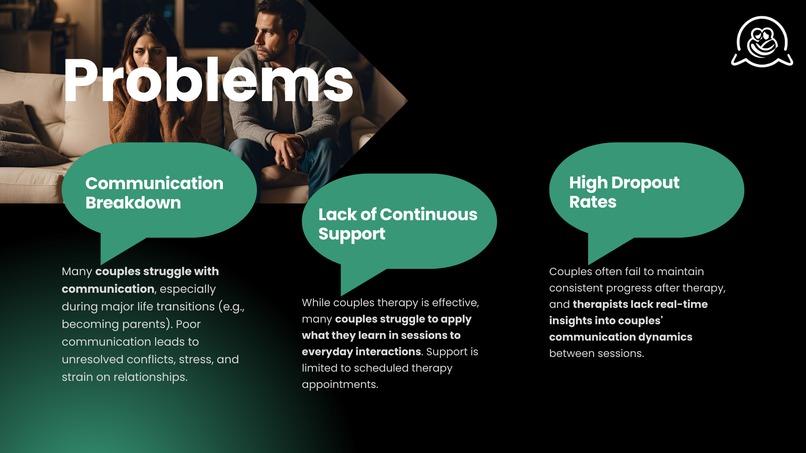
Problems solved
-
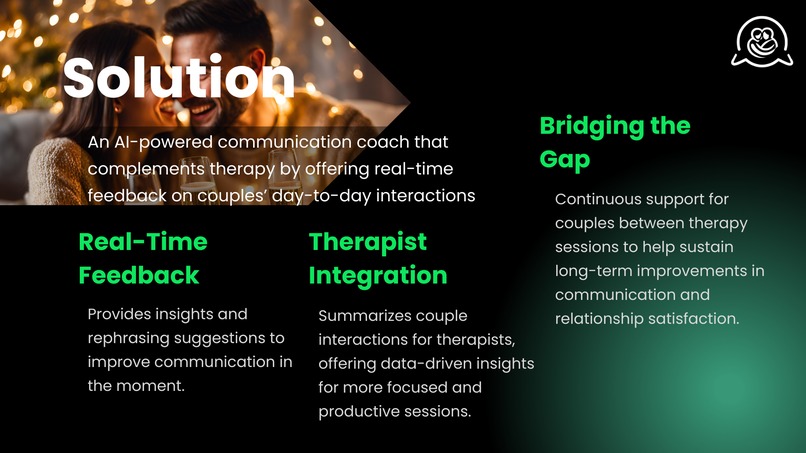
Solution
-
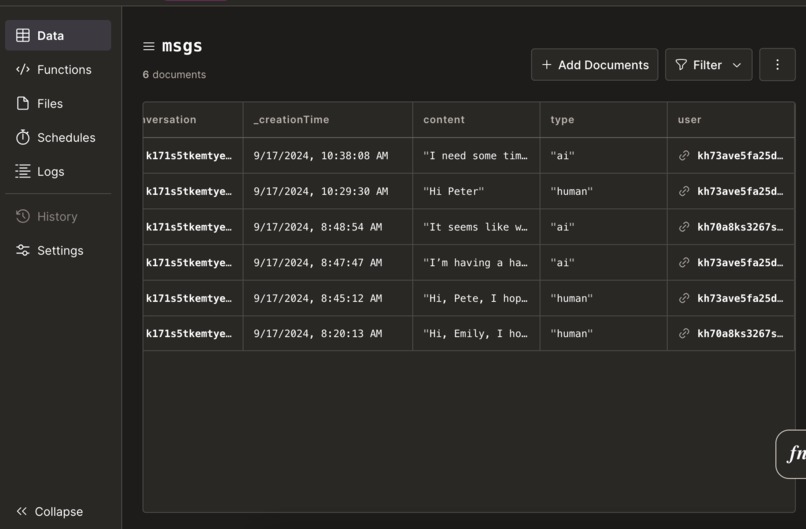
Convex Dashboard - Data
About BetterTogether AI
Inspiration
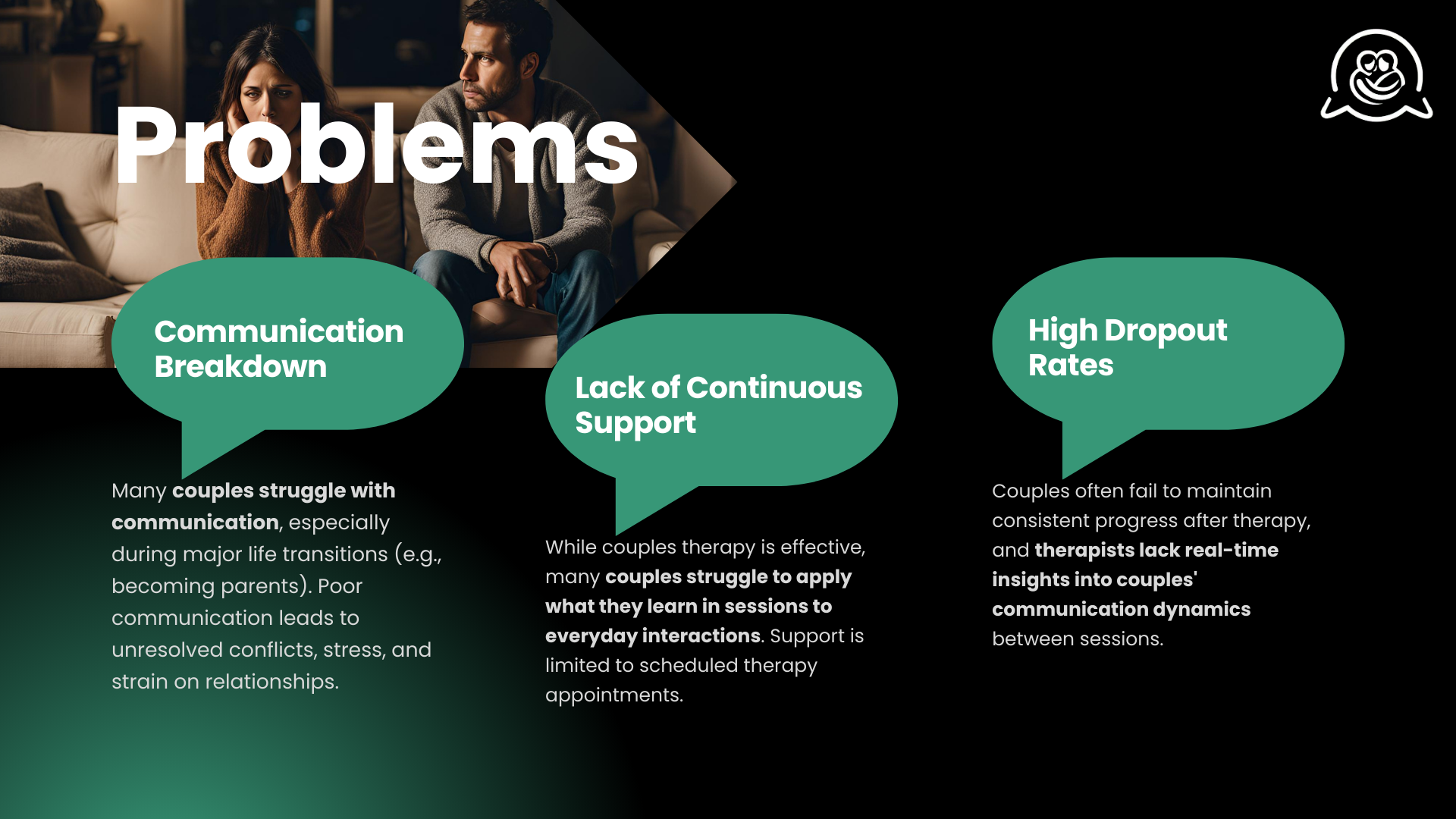
BetterTogether AI is inspired by the shared challenges my wife and I faced, both personally and professionally, as we transitioned into parenthood. My wife, a psychotherapist specializing in prenatal and postnatal care, works with couples who experience significant relationship strain during this period. We noticed that, despite the effectiveness of traditional therapy, couples often struggled to maintain healthy communication in their everyday interactions. We experienced similar challenges in our own relationship and recognized the need for continuous support outside therapy sessions.
Through her work and my expertise in building AI-driven solutions, we envisioned an AI Copilot that could provide real-time feedback and guidance to help couples navigate difficult conversations and emotional challenges, particularly during the perinatal period when relationship stress is high.
What it Does
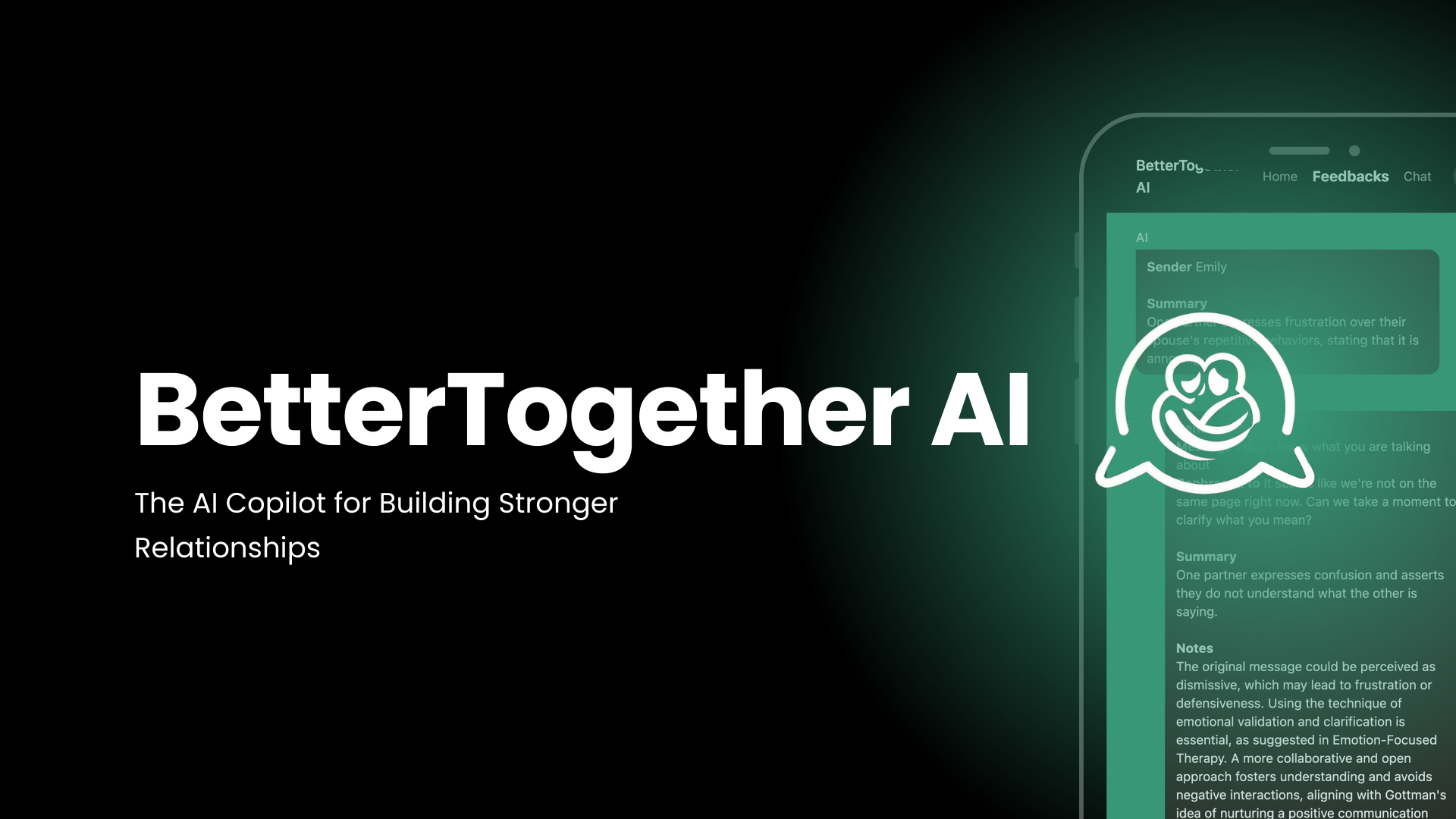
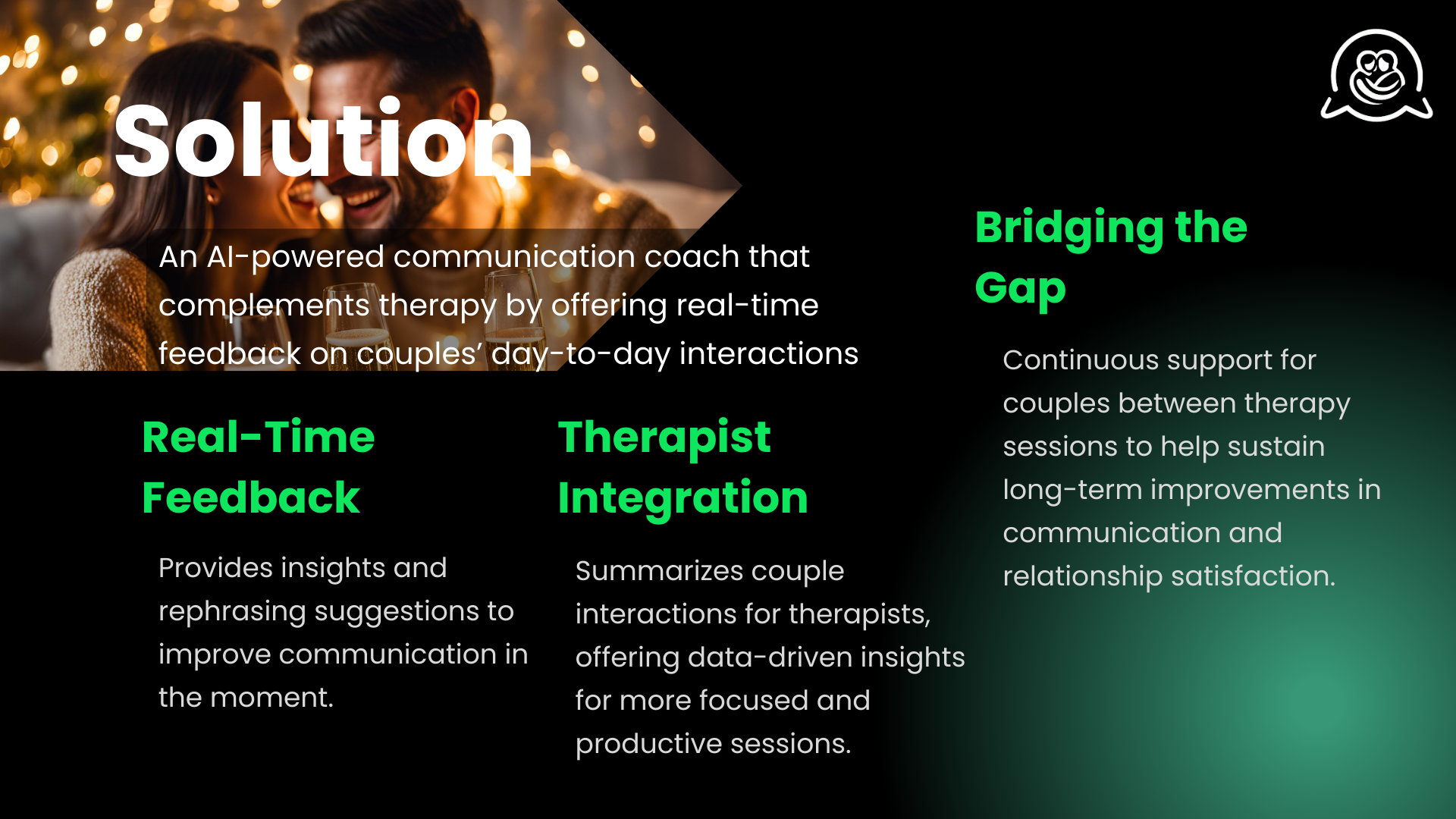
BetterTogether AI is a virtual communication coach designed to complement couples therapy. It helps couples improve their day-to-day interactions by analyzing their communication patterns and offering real-time, constructive feedback. The AI rephrases emotionally charged messages, identifies potential misunderstandings, and provides insights based on proven therapeutic methodologies like the Gottman Method and Emotionally Focused Therapy (EFT). It acts as a communication mediator, offering in-the-moment suggestions that enhance empathy and understanding between partners.
The AI acts as a communication mediator, helping partners better understand each other’s emotions and intentions. In addition, therapists can access communication summaries, enabling them to focus on key issues during sessions, effectively bridging the gap between therapy and daily life, and ensuring that couples have ongoing support in their communication journey.
Business Model
BetterTogether AI is going to be a subscription-based app. We will offer an affordable monthly subscription plan for therapists and couples. If a therapist invites their couple patients to the app then we will offer the couple a discounted rate.
How We Built It
The development process for BetterTogether AI has been iterative. Combining my expertise in Fullstack and AI development with my wife’s clinical knowledge, we built a system that leverages Natural Language Processing (NLP) and Large Language Models (LLMs) to analyze text and verbal interactions, identifying emotional cues and communication patterns. We wrapped everything in a React.js front-end and integrated it with a Convex-powered backend for real-time database updates. The starting point was two Convex's repositories: "convex-auth-example" (that helped us implementing Convex Auth quickly), and "convex-samples-ai-chat-langchain"(that helped us with the AI implementation).
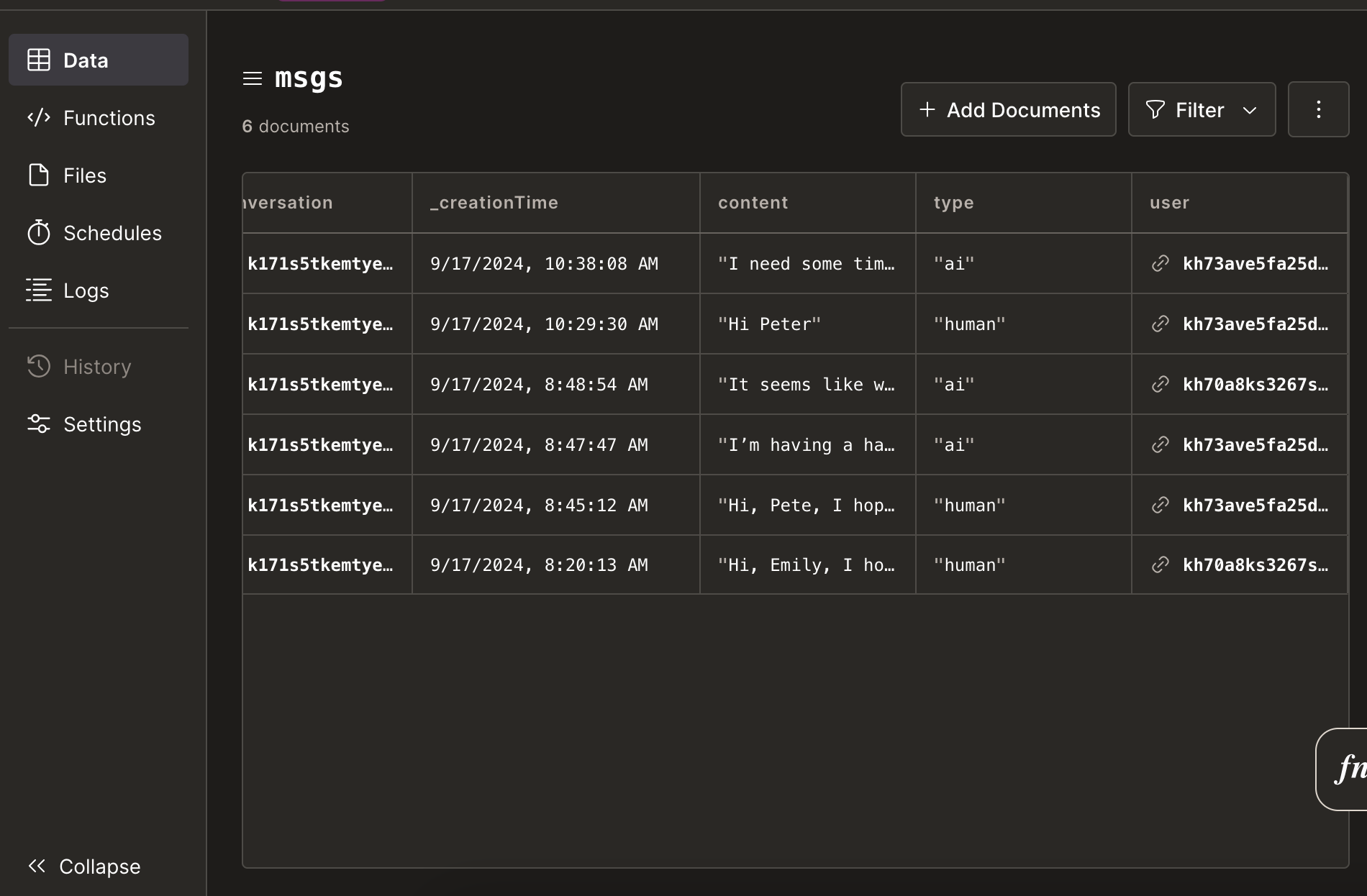
Tech Stack: We used Convex for real-time data queries and updates, OpenAI API and Langchain for AI-based responses and retrieval-augmented generation (RAG), Tailwind CSS and Radix UI for design. The app also uses Convex’s features, such as user authentication(Convex's Authentication), error handling, and vector search for indexing therapy-related content, ensuring the AI remains grounded in therapeutic methodologies.
The integration with Convex allows seamless data flow between users and therapists. We utilize Convex’s live updates, user identity management, and its ability to efficiently retrieve data using vector search, creating an intuitive and powerful user experience.
Challenges We Ran Into
The primary challenge was ensuring the AI could accurately interpret the emotional depth of human communication. Conversations between couples are often complex and emotionally charged, requiring the AI to offer supportive, nuanced feedback without oversimplifying the context. Achieving this required numerous iterations and extensive testing.
Another significant challenge was protecting user privacy. Since the app analyzes intimate conversations, we implemented strict privacy measures, including anonymizing sensitive data after it’s summarized for therapist review. Balancing the need for useful insights with stringent data protection was crucial.
Additionally, learning Convex’s platform took time, as it was new to us. However, their comprehensive documentation and excellent support helped us integrate it efficiently into our project.
Accomplishments That We're Proud Of
We’re proud of the meaningful, real-time feedback our AI offers, which empowers couples to navigate everyday interactions and conflicts. The integration of AI with evidence-based therapy approaches is a significant milestone. Furthermore, we’re proud of the robust privacy protections we’ve built to ensure users feel secure in sharing personal communication data.
We’re also grateful for the support from the Convex team, whose guidance allowed us to deliver a highly functional app within a short development timeline.
What We Learned
This project underscored the importance of empathy—both in technology design and human relationships. Communication is not just about words; it’s about emotional safety, understanding, and connection. We learned that even with advanced AI, designing with empathy and sensitivity is key to building a tool that truly helps people.
We also learned that couples need continuous support outside of therapy to reinforce the gains they make in sessions. Offering real-time feedback can prevent issues from escalating and help partners resolve misunderstandings as they arise.
What's Next for BetterTogether AI
We are piloting the app in my wife’s bilingual provider group, which includes counselors, psychiatric nurse practitioners, and holistic primary care providers. This environment focuses on family well-being, making it an ideal setting for testing the app’s impact on couples during the perinatal period. For the pilot we are adding some features: email validation, social login/signUp, better chat UX, and chat notifications.
In the future, we plan to expand the app’s features based on feedback from the pilot program. We aim to incorporate additional languages and cultural contexts to serve a more diverse audience. We’re also exploring partnerships with healthcare providers to integrate the app into broader perinatal care networks.
Additionally, we plan to implement Agentic AI features, such as automatic scheduling of therapy sessions by integrating couples’ and therapists’ calendars. We also want to introduce advanced data analysis tools for therapists, allowing them to track communication trends over time and adjust their approaches accordingly. Thanks to Convex's DB Vector capabilities It would be also possible to allow therapists to upload the documentations and references they use on their practices to ground the AI responses and make the app more customized.
Ultimately, our goal is to make BetterTogether AI a trusted resource for couples, helping them navigate the emotional challenges of communication—particularly during life transitions like parenthood.
By combining cutting-edge AI with well-established therapeutic practices, BetterTogether AI has the potential to revolutionize the way couples engage with therapy and with each other.
For testing(IMPORTANT)
Please check the instructions inside the README file in Github.
Built With
- convex
- langchain
- openai
- radix
- react
- tailwind

Log in or sign up for Devpost to join the conversation.