Inspiration
We were inspired by the app Beli and the way it lets users rate and organize restaurants based on their personal preferences. We wanted to take that idea of personal rating and recommendation, but apply it to recipes and nutrition. As pre-meds, two of whom are concentrating in nutritional sciences, we have learned about daily nutrient requirements, dietary restrictions, and how different people may need varying amounts of macronutrients and micronutrients depending on their health, age, pregnancy status, or personal goals. We also noticed a real problem: it is hard to find one online recipe that fits every individual requirement. Someone might need a recipe that is low-sodium, allergy-friendly, high-protein, budget-conscious, culturally appropriate, and still enjoyable to eat. Because of this, we wanted to build a website where users can choose a recipe they already like and receive a personalized version that better fits their dietary needs, preferences, budget, and health goals. Instead of forcing users to search endlessly for the “perfect” recipe, BetterBites helps transform recipes into versions that are more realistic and usable for each individual.
What it does
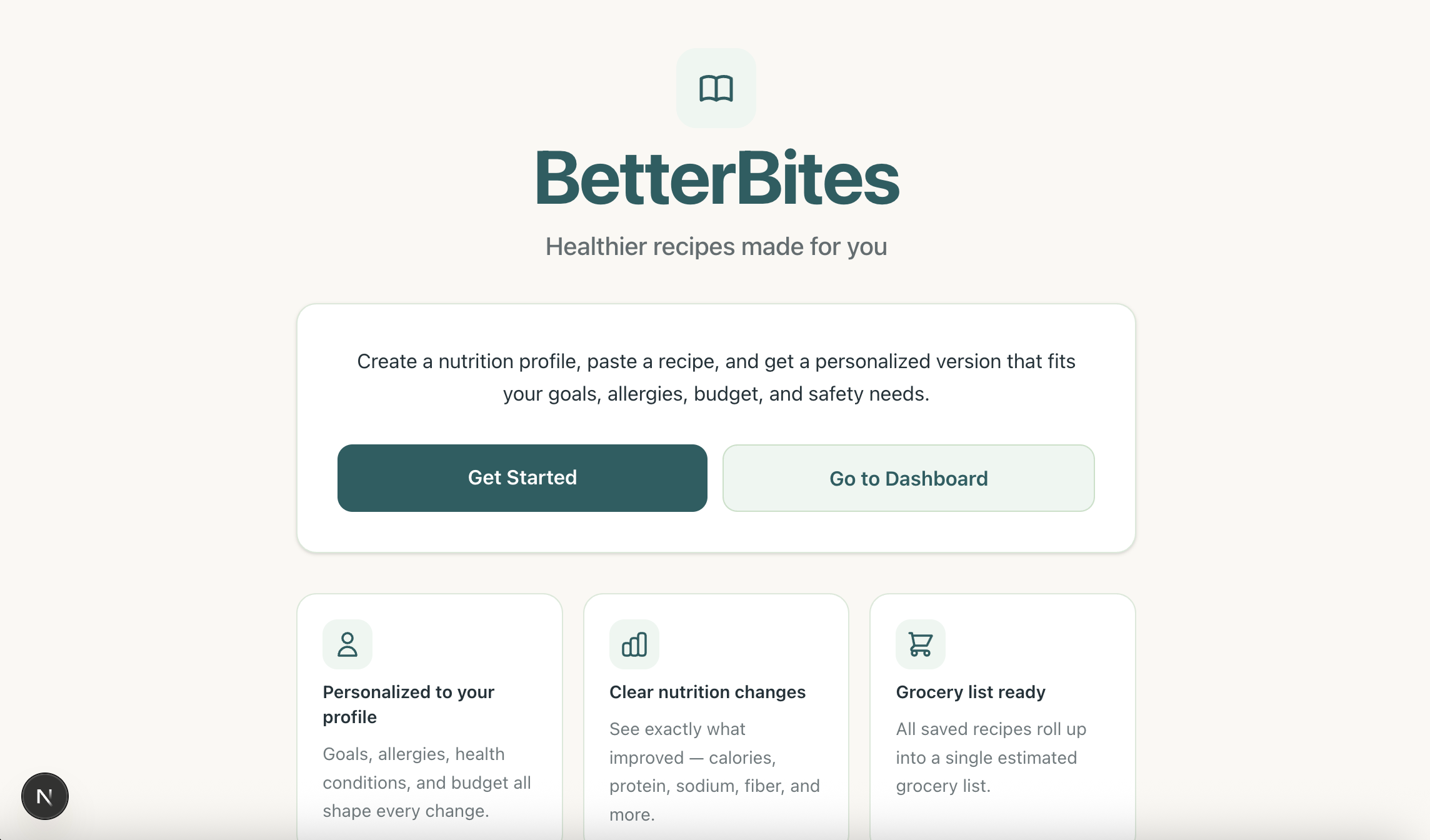
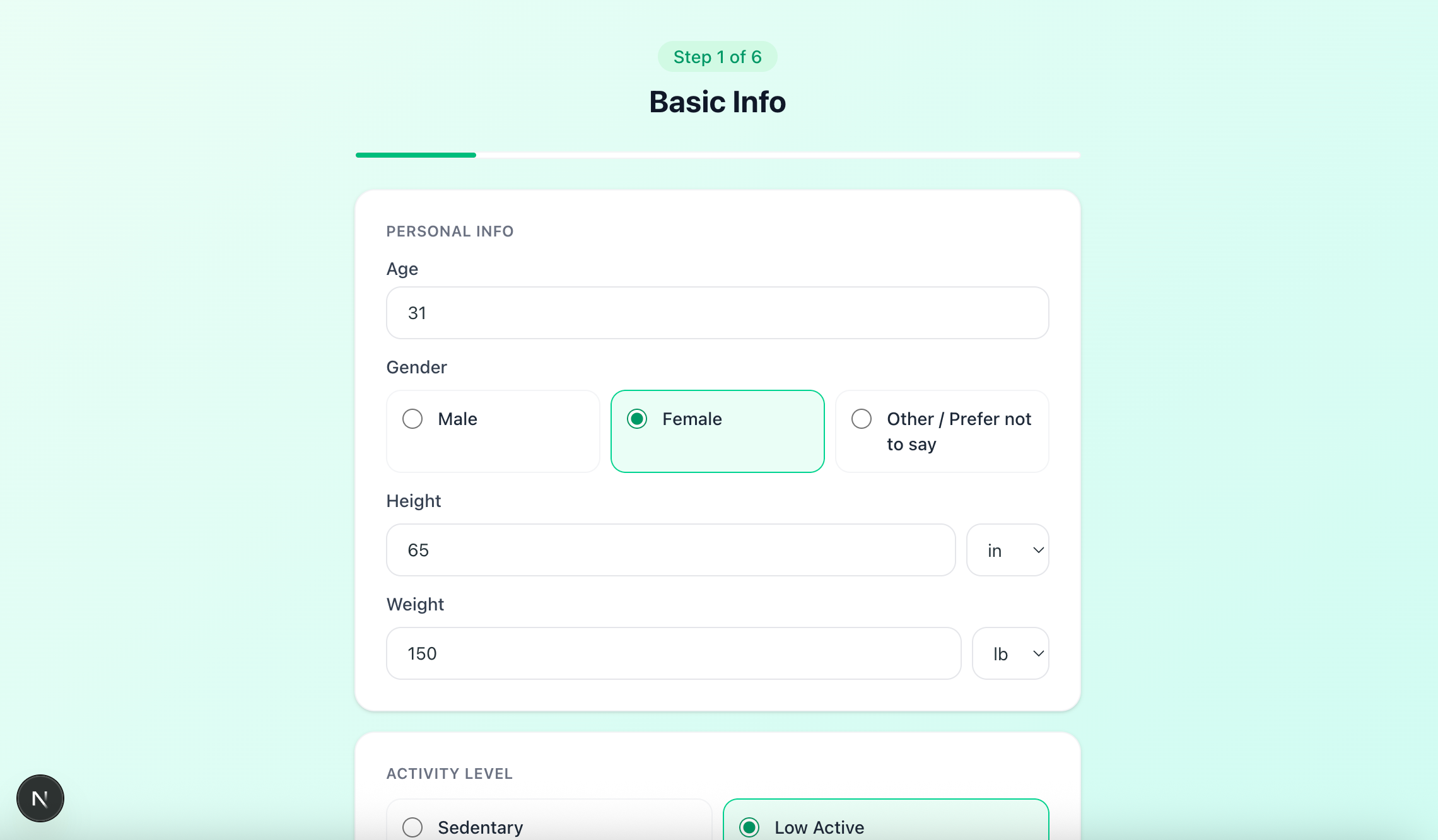
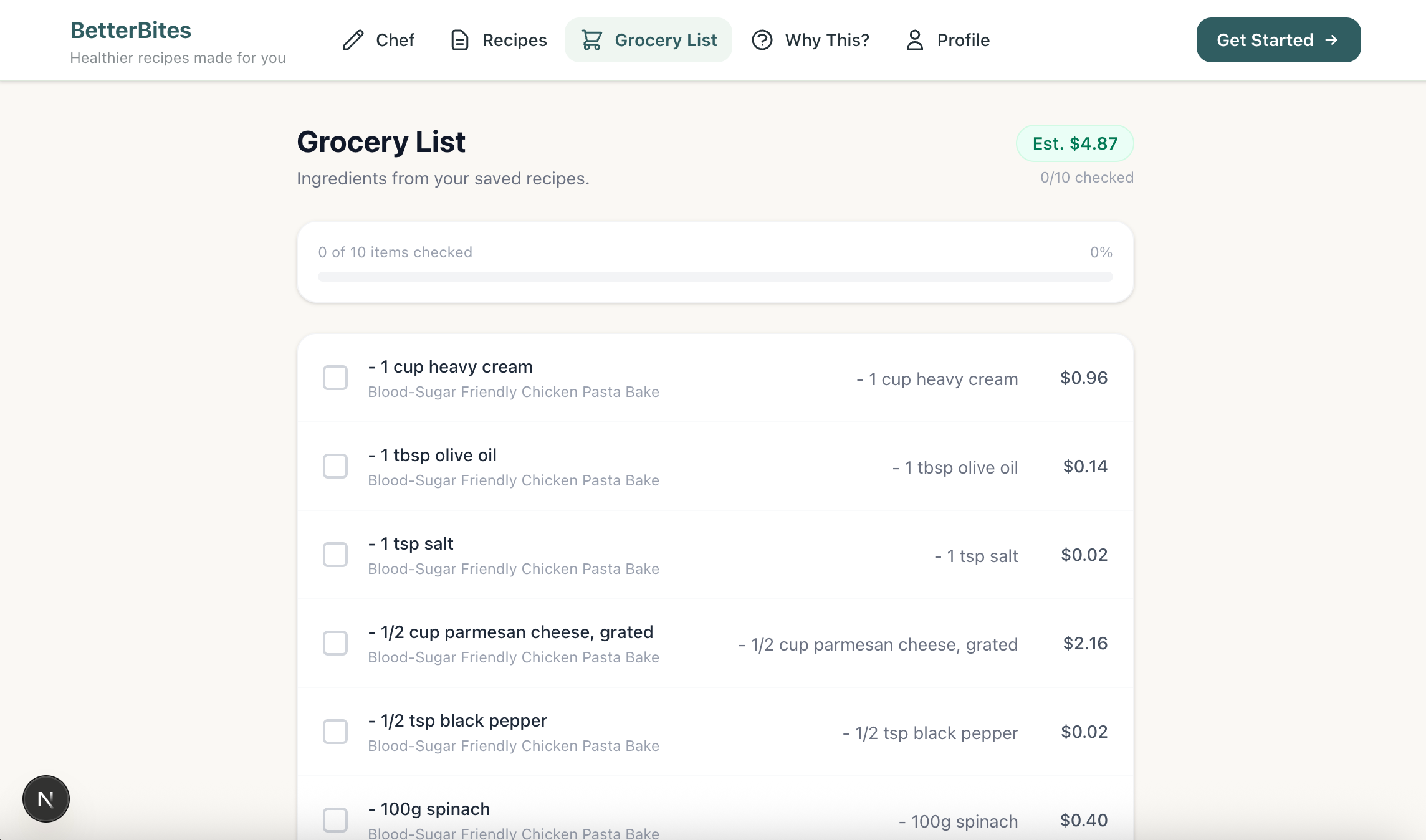
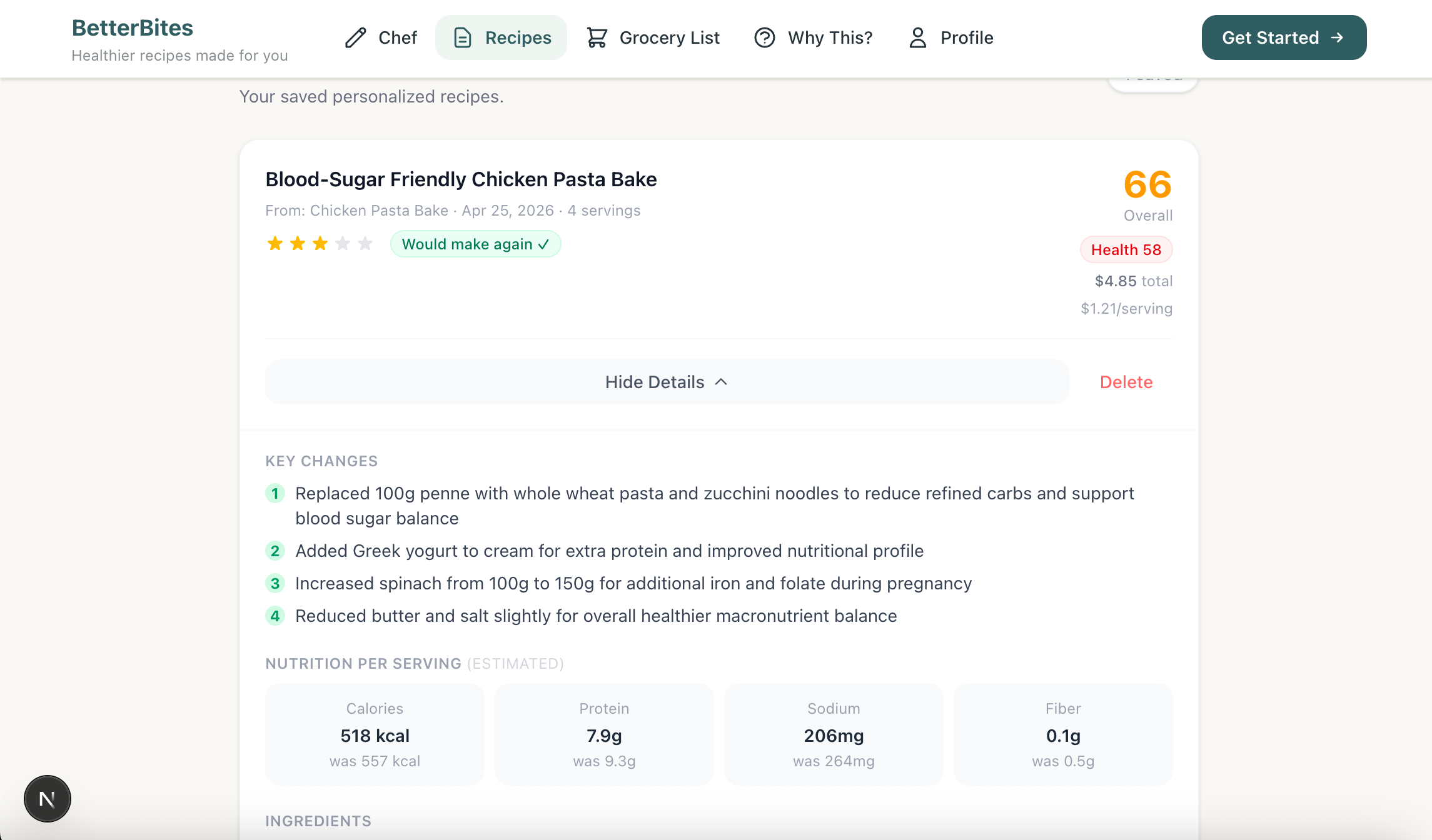
Our project is a recipe transformation website that helps users make personalized versions of recipes they find based on their nutrition goals, dietary restrictions, and personal preferences. It is tailored to all adults, including the elderly and pregnant women. Users first create a profile with important nutrition-related information, such as BMI, allergies, health goals, medical history, food preferences, and budget. Then, they can input a recipe (personal or something they found on the internet), and the platform uses AI to analyze the ingredients, suggest personalized substitutions, provide nutrition information, generate a modified recipe, and grocery list. Users are also able to rate the recipes they try. These ratings help the platform understand what the user likes and dislikes. Over time, the AI uses this past feedback and recipe data to generate better recipe recommendations that are more personalized and tailored to each user’s taste, goals, and dietary needs. The website can be especially helpful for people who struggle with strict diets, such as patients managing diabetes, high blood pressure, high cholesterol, food allergies, or weight-related health goals. Many patients are told what they “should” eat, but they are not always given practical recipes that match their taste, budget, culture, or lifestyle. It does not shame users for their food choices. Instead, it helps them find realistic meals they would actually enjoy. It can scale to many users because profiles, recipe ratings, and AI-generated recommendations can improve over time. It can also expand to more dietary categories, languages, cultures, grocery stores, and healthcare settings. Our platform helps bridge that gap by turning health recommendations into realistic meal suggestions. Hospitals, doctors, dietitians, and caregivers could also use this website as a supportive tool when helping patients make better food choices. For example, if a patient dislikes certain foods, follows religious/cultural diets, needs to lose/gain weight, or needs low-sodium or low-sugar meals, the platform can suggest personalized recipes that fit those needs. This can make medical nutrition advice easier to follow and more patient-centered. The website is designed to be easy to use, especially for elderly users, with clear navigation, simple buttons, and a clean layout. Recipes can also be saved and archived so users can return to them later. Recipes can then be “added to cart” within a different tab and put into a grocery checklist. The progress can be monitored through a bar at the top of the page. Importantly, this website is not meant to replace doctors, dietitians, or medical diagnoses. Instead, it supports healthcare professionals by helping translate dietary guidance into meal ideas that patients can actually use. For risky medical conditions, allergies, pregnancy, eating disorders, or major diet changes, users should always consult a doctor or licensed dietitian
How we built it
We built BetterBites as a profile-first recipe personalization app: users create a nutrition profile, paste a recipe, and receive a safer, healthier transformed version. The app first uses rule-based parsing and transformation, then optionally enhances the recipe with Claude while preserving allergy, pregnancy, and medical safety warnings. Nutrition can be improved through USDA FoodData Central using a server-side API route, while static nutrition data remains as a fallback. Saved recipes, ratings, grocery lists, and explanations are connected across the dashboard
Challenges we ran into
One of the biggest challenges was integrating Supabase, Claude API, USDA API, and FatSecret API and connecting the database smoothly with the rest of the website. It was difficult to make sure user profile data, recipes, saved recipes, and ratings could all be stored and accessed correctly. Also, we tried to implement an OAuth login feature. We wanted users to be able to log in securely and have their profiles, saved recipes, grocery lists, and ratings connected to their accounts. However, setting up OAuth was difficult because it required proper configuration, authentication settings, and testing through the application. Since we were working within a limited time frame, it was challenging to fully run and test the login system smoothly.
Accomplishments that we're proud of
We are proud that BetterBites solves a real and relatable problem. Instead of only telling users what foods are “healthy,” it helps them transform recipes they already like into meals that better fit their personal needs.
Additionally, we are also proud of making the platform patient-centered and dignity-focused. The website does not shame people for their food choices. It respects that people have different cultures, budgets, religious diets, medical needs, and taste preferences.
Another accomplishment is building a system where ratings can improve future recommendations. This makes the project more than just a one-time recipe generator. It can learn from the user and become more helpful over time.
We are also proud of designing the website to be accessible for elderly users, caregivers, doctors, hospitals, and patients who may need a simple tool to turn dietary advice into realistic meal ideas.
What we learned
Next, we want to integrate Google Maps so users can find nearby grocery stores and see where they can buy the ingredients for their personalized recipes. This would make the platform more practical because users could not only receive a modified recipe, but also know where to get the ingredients near them. We also want to improve the login feature so users can create accounts based on how they plan to use the platform. For example, users could indicate whether they are using BetterBites for personal use or as a healthcare provider helping patients. This would allow doctors, dietitians, caregivers, or hospital staff to generate recipe suggestions that better match a patient’s health needs, preferences, and restrictions. Another future goal is to add a social media-style feature where users can share their transformed recipes with others. People could post recipes, rate them, comment on them, and upvote the ones they like most. This would create a ranking system where the best personalized recipes rise to the top, making it easier for users to discover meals that other people with similar goals or dietary restrictions found helpful and enjoyable. Over time, these features would make BetterBites more interactive, community-based, and scalable. It could grow from a recipe transformation tool into a personalized nutrition platform that connects users, healthcare providers, grocery stores, and recipe communities.
Built With
- anthropicsdk
- claudeapi
- fatsecretapi
- next.js
- react
- supabase
- tailwindcss
- typescript
- usdaapi

Log in or sign up for Devpost to join the conversation.