Inspiration
In our businesses, passion projects, and daily lives, we constantly encounter repetitive tasks: scheduling meetings, pulling out action items from notes, following up on small but necessary details. These tasks pile up, drain our energy, and take time away from the work that actually matters. We imagined a world where documents don’t just sit there, but actively help move projects forward. Better was born from the belief that technology should not just organize information, but transform it into action, freeing people to focus on creativity, strategy, and impact.
What it does
Better takes any document - PDFs, text files, meeting notes - and automatically extracts tasks, organizes them into a structured to-do list, and assigns them to AI agents. These agents can then execute or draft solutions for each task, effectively transforming static text into dynamic progress.
How we built it
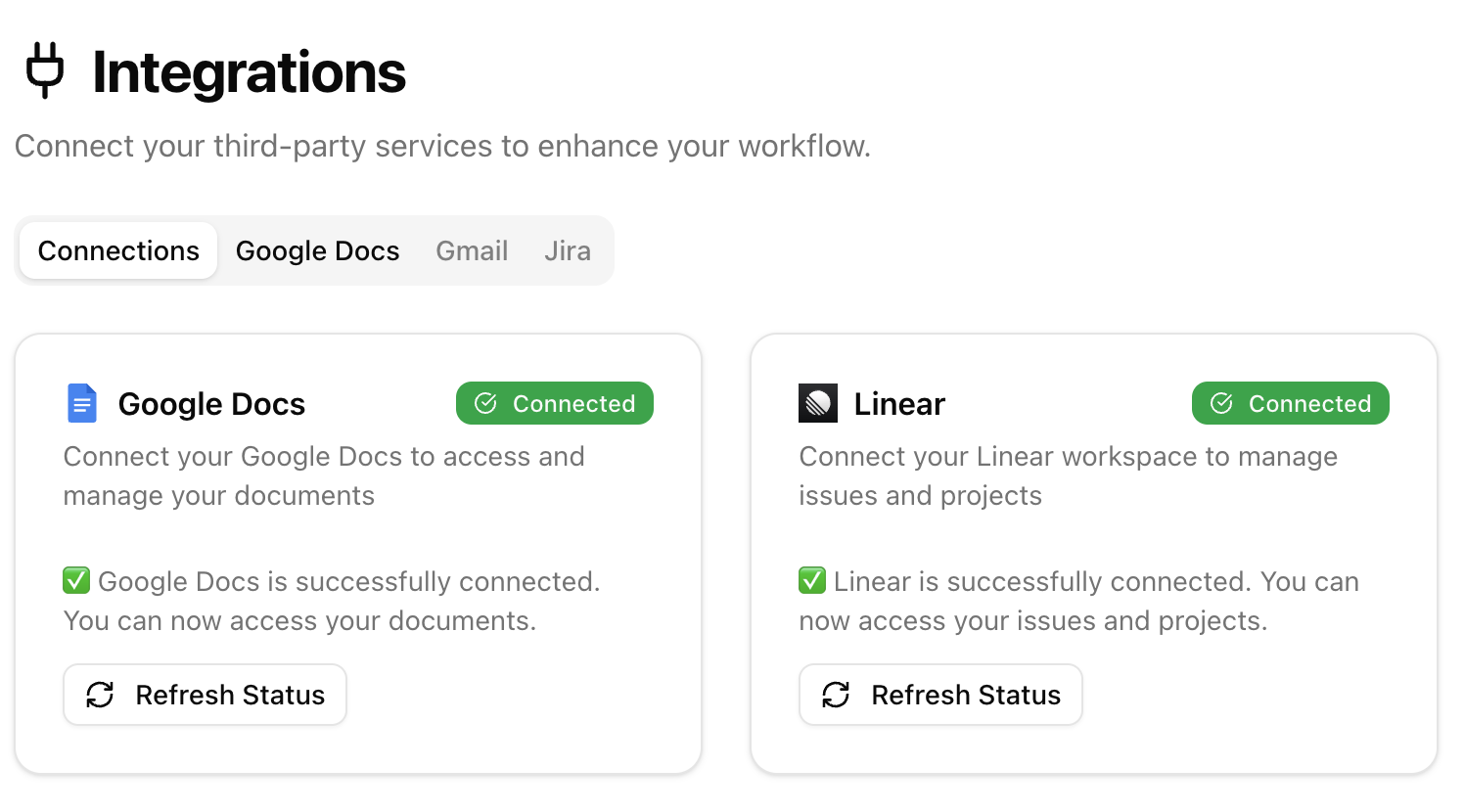
We used a combination of natural language processing and task-extraction pipelines to identify action items from documents. Once users connect to third-party providers like Google Docs and Linear, the backend extracts, parses, and reformats content into structured tasks. We then connect these tasks to AI agents capable of following instructions and providing outputs, creating a seamless workflow from document to tasks to execution.
Challenges we ran into
It was surprisingly hard to normalize raw Google Docs data into Markdown. After several failed deterministic attempts, we opted to offload this to GPT-5-nano, which struck an excellent balance between accuracy and latency.
Accomplishments that we're proud of
- Building a working prototype that successfully converts complex documents into clear task lists.
- Getting AI agents to actually execute tasks instead of just describing them.
- Designing an intuitive user flow that feels magical: connect your Google account, get a to-do list, see progress.
- Collaborating quickly and efficiently as a team under time pressure.
What we learned
We learned a lot about prompt design for reliable task extraction, document parsing pipelines, and how to scope a project so that the core value shines through. We also learned the importance of designing around user experience rather than just technical capability.
What's next for Better
We’d love to extend Better into new MCP integrations like Notion and GitHub so tasks flow naturally into people’s existing workflows. Another direction is collaborative agents that can handle multi-step projects, not just single tasks. Ultimately, we see Better evolving into a true “action engine” for knowledge work.
Built With
- agentmail
- composio
- fastapi
- google-docs
- linear
- next.js
- python
- supabase
- typescript

Log in or sign up for Devpost to join the conversation.