-
-
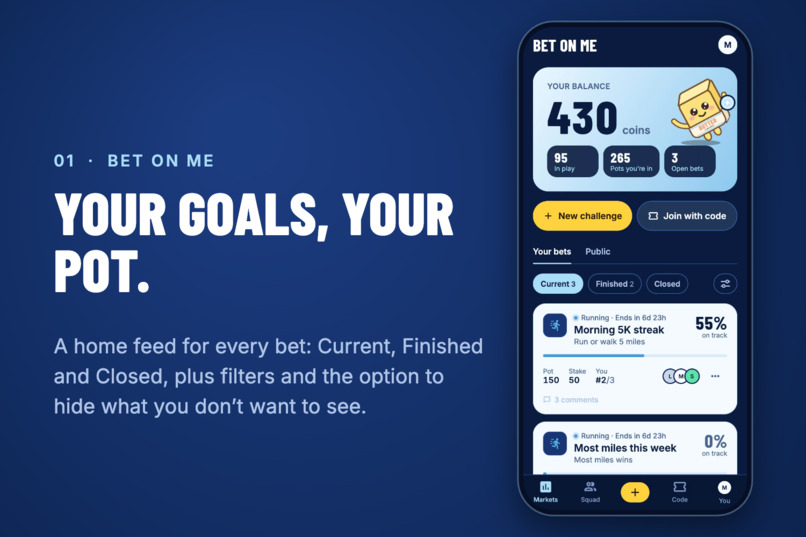
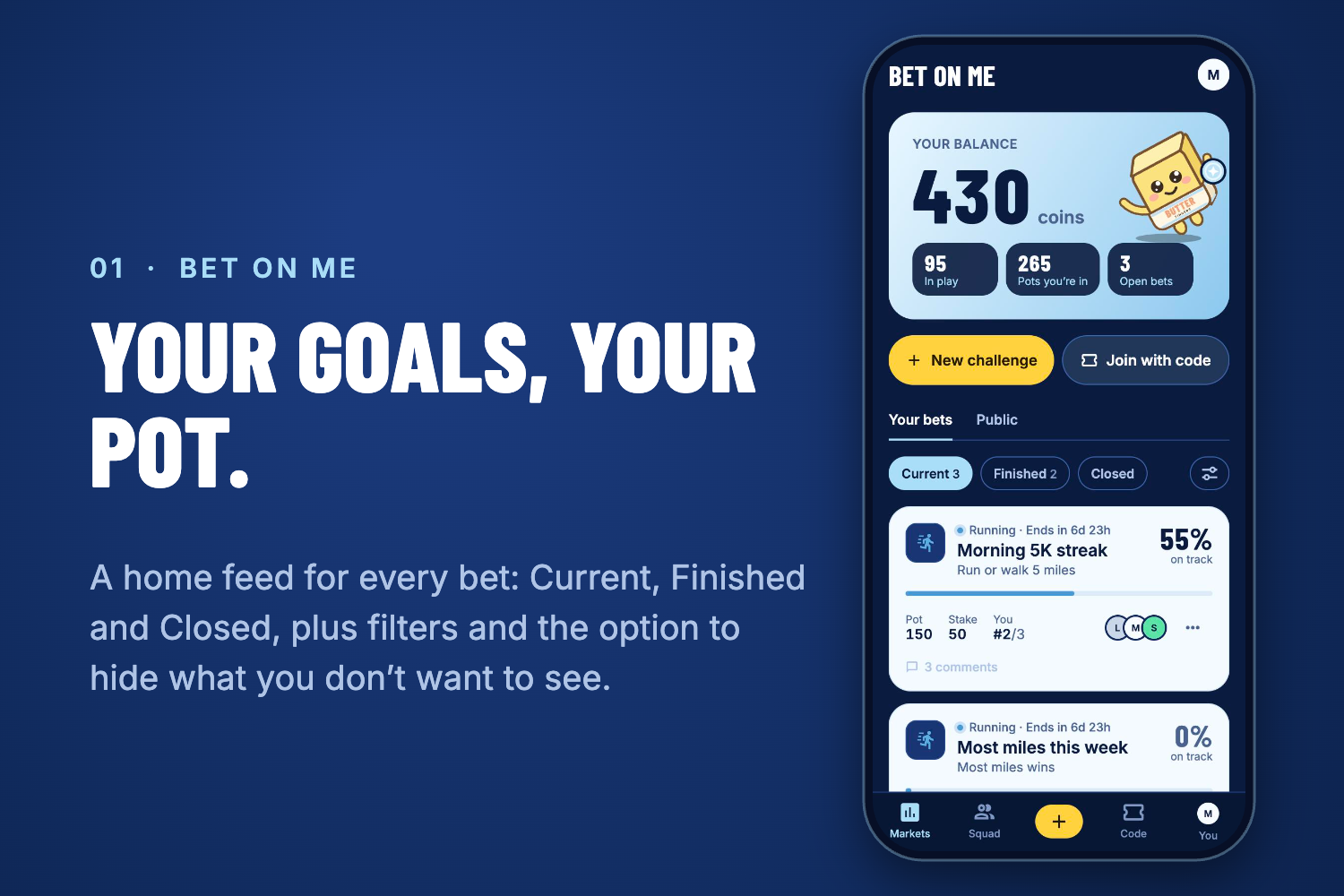
Your home feed
-
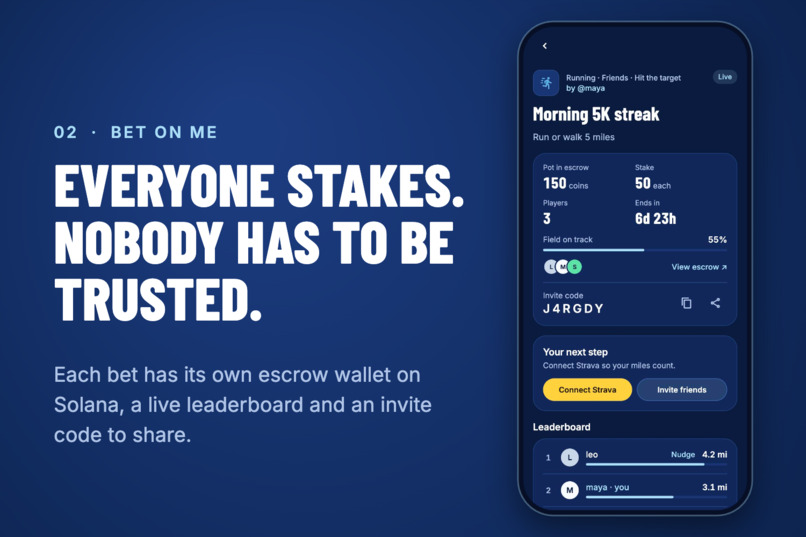
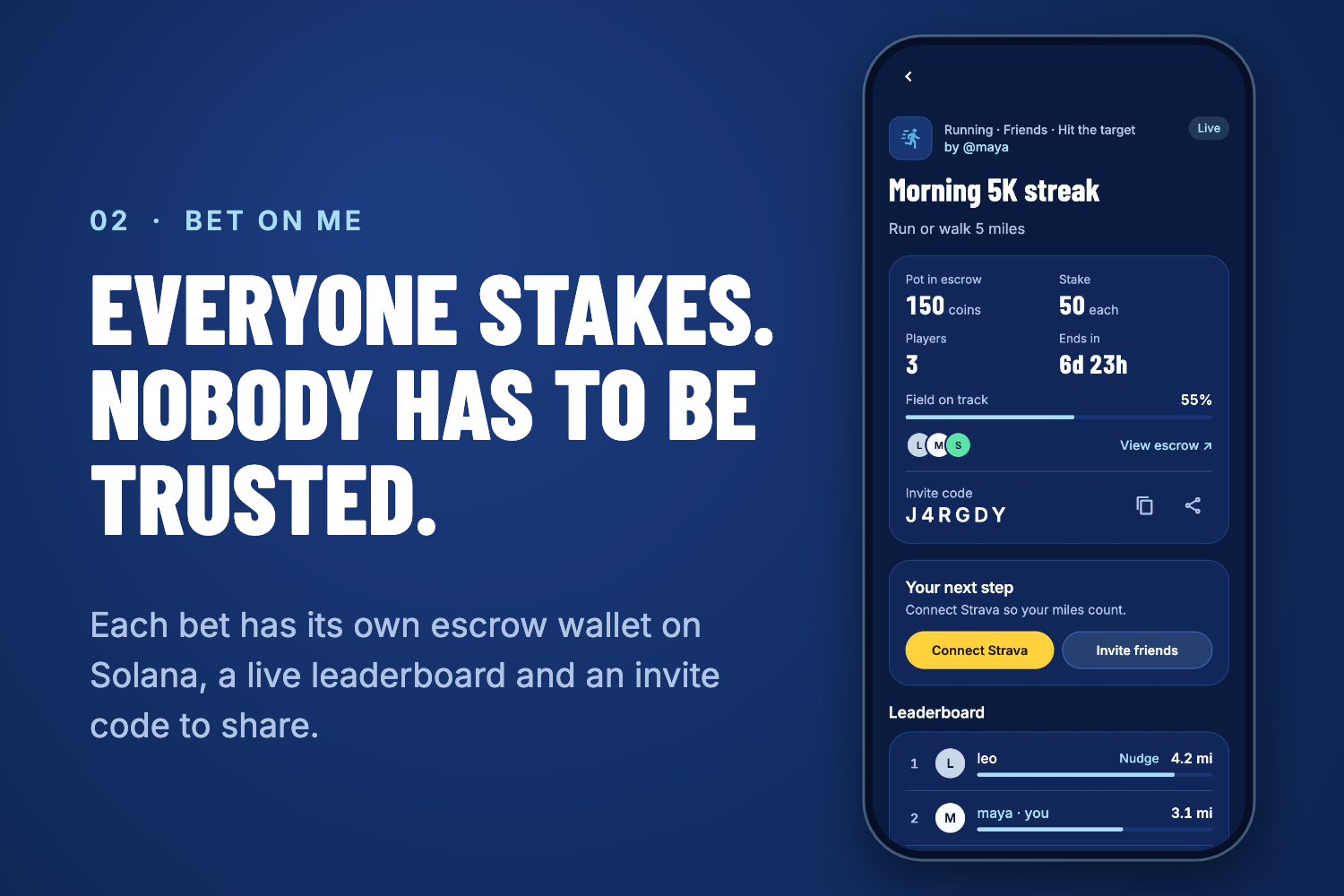
Escrow and leaderboard
-
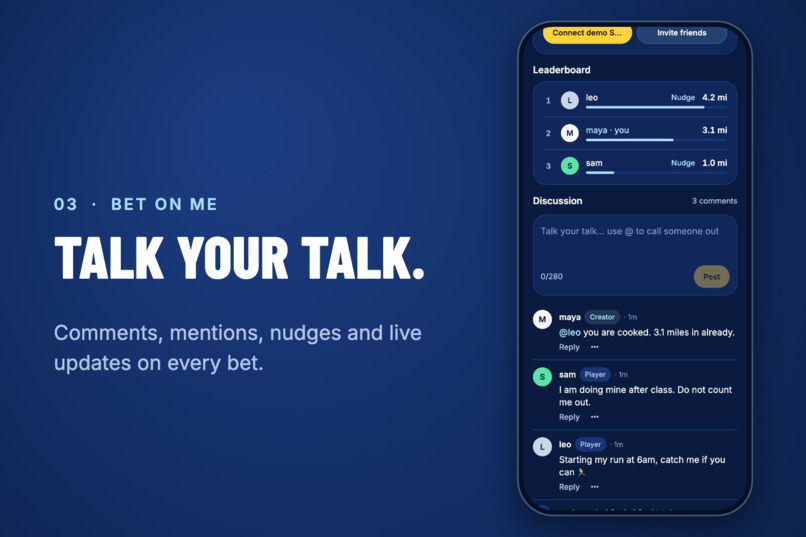
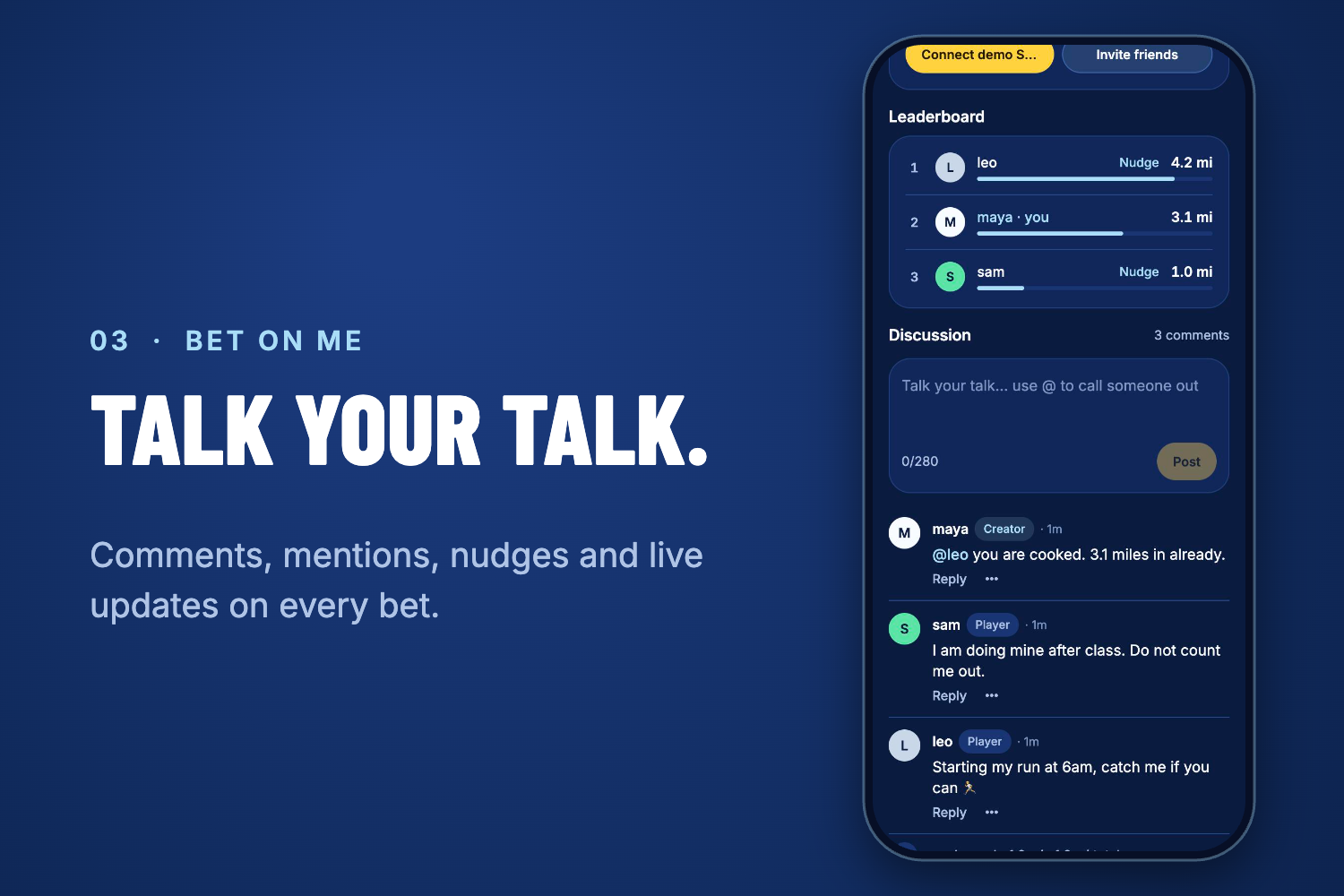
Talk your talk
-
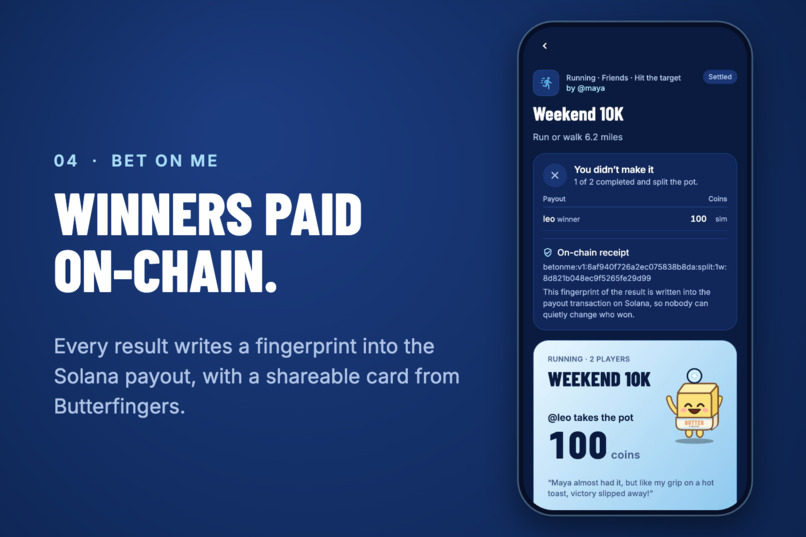
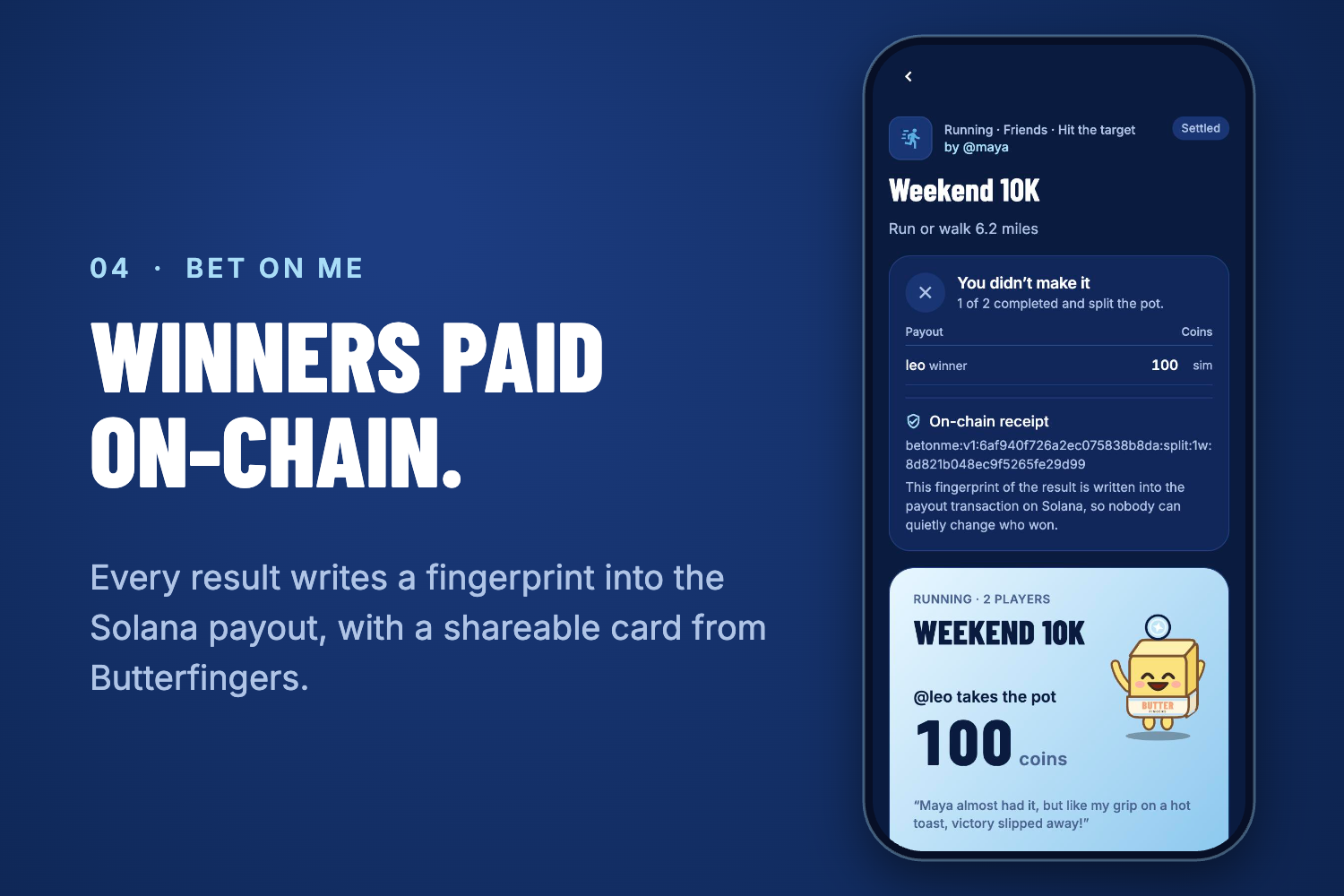
On-chain payout receipt
-
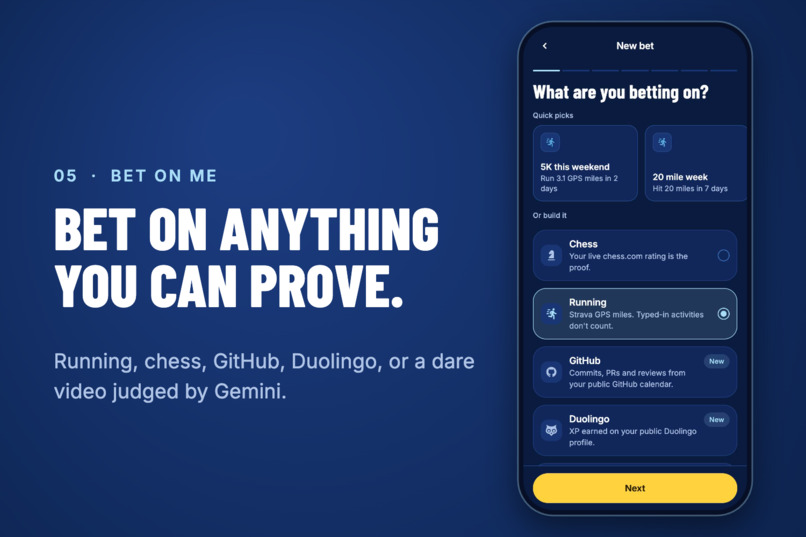
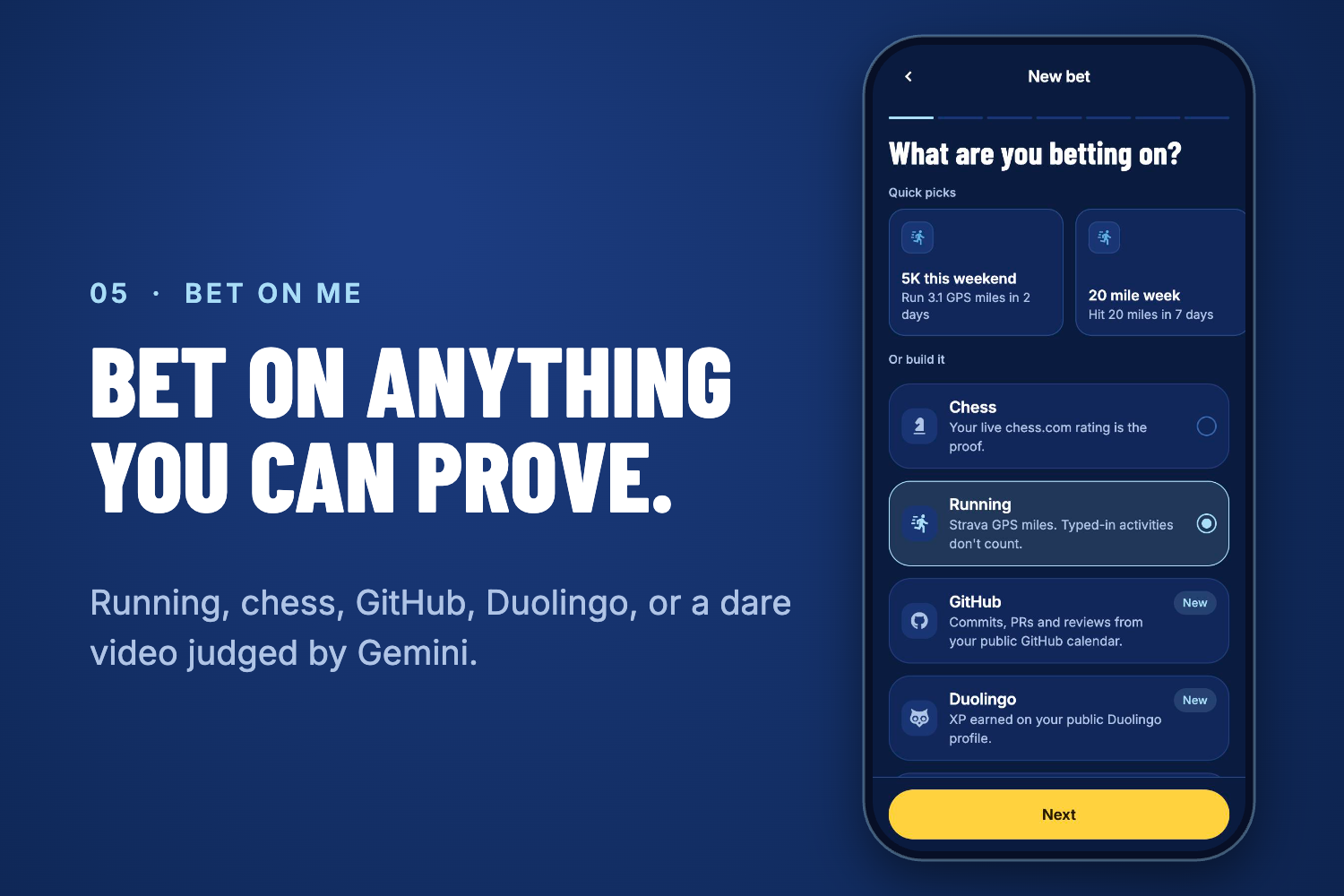
Bet on anything
-
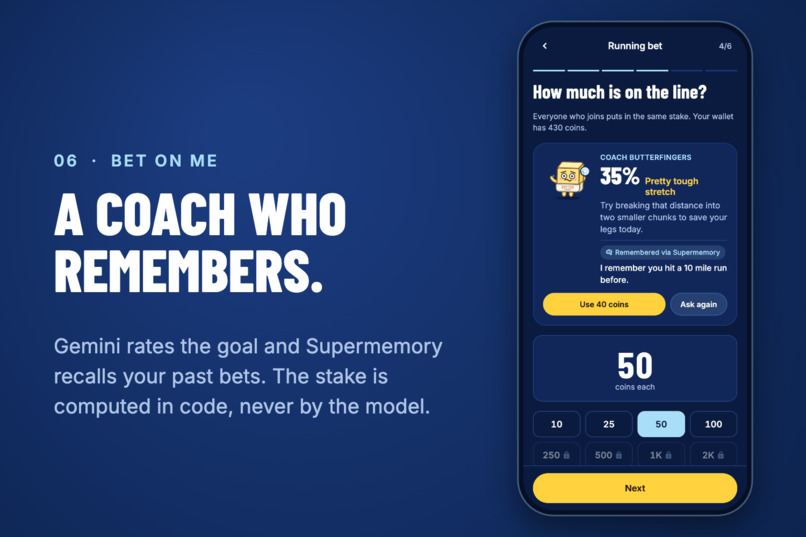
A coach who remembers
-
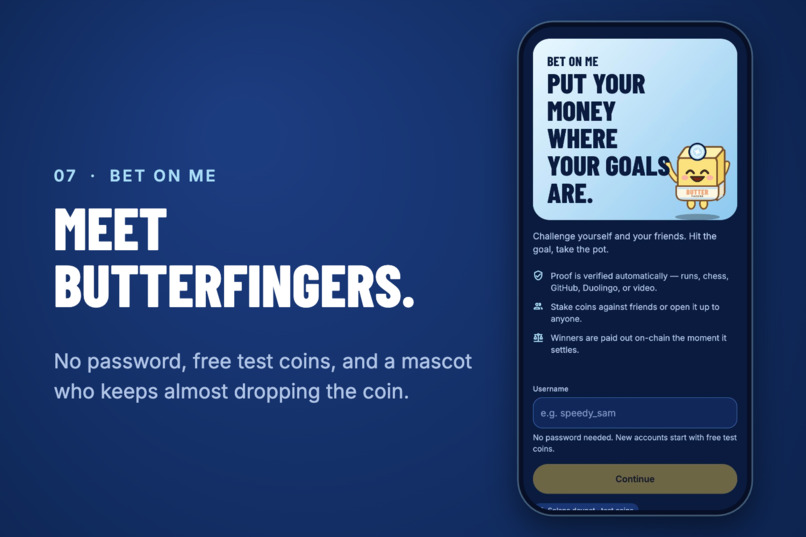
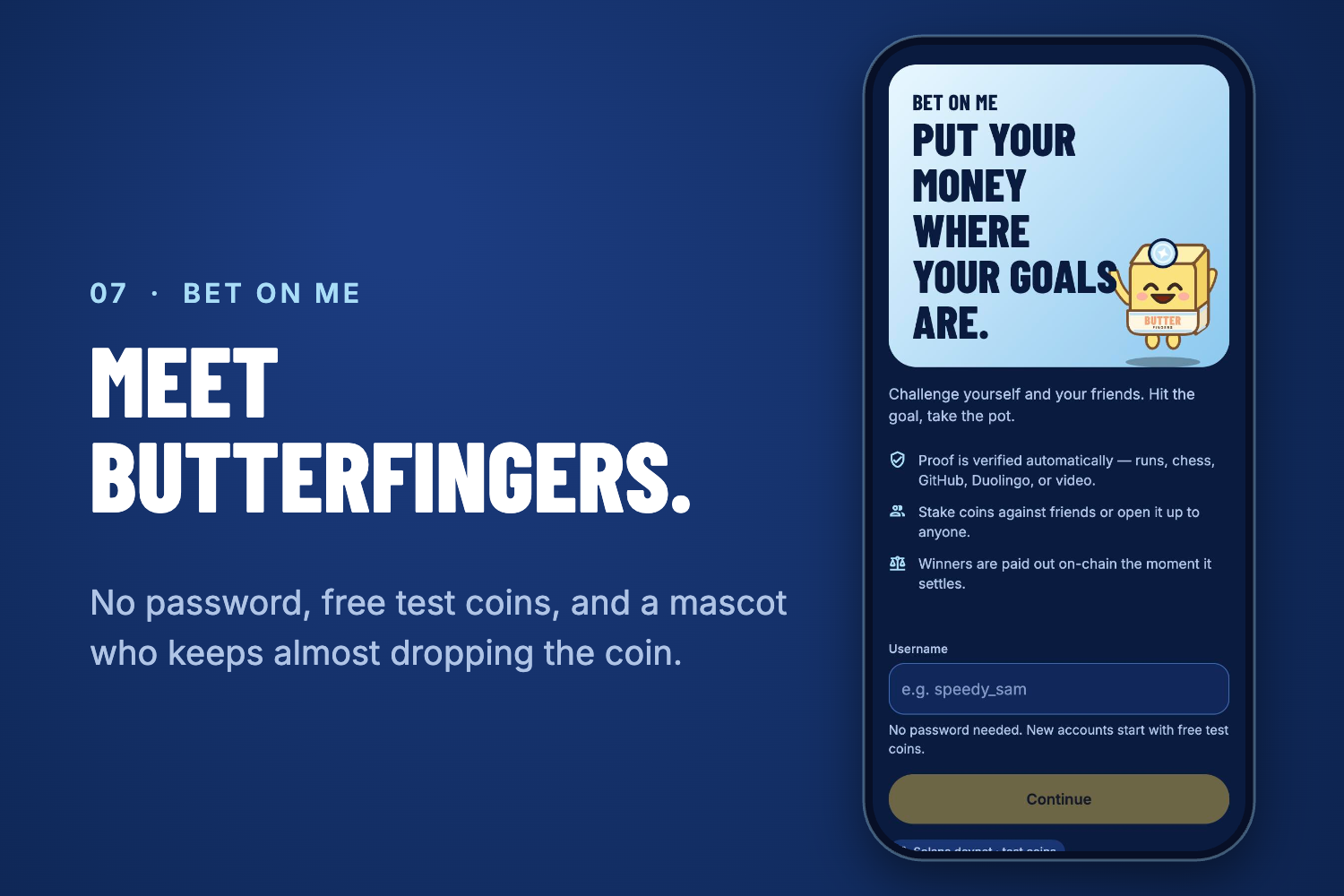
Meet Butterfingers
Inspiration
We all say "this week I'll actually run / study / ship." Nothing happens, because nothing is at stake and nobody checks. We wanted a goal tracker where friends put a little on the line, the app verifies the result without anyone having to be trusted, and the pot is paid out automatically.
The mascot came from the idea. Butterfingers is a nervous stick of butter who keeps almost dropping a coin. He coaches you, comments on results, and slips and falls on the home screen so losing a bet feels a bit less painful.
What it does
You create a challenge with a goal, a deadline and a stake. Friends (or the public) join and stake the same amount into an escrow wallet. When time is up, the app checks each player's proof and pays the winners.
Ways to prove a goal
- Running: miles from GPS-recorded activities (manual entries are ignored).
- Chess: live rating from chess.com.
- GitHub: contributions from the public contribution calendar.
- Duolingo: XP from the public profile.
- Dares: record a 15-second video while saying a random "liveness word". Gemini screens the dare against community guidelines and judges the video, and players can dispute or vote.
For GitHub, Duolingo and chess, only progress made after you join counts.
Around the bets
- Friends and public bets, invite codes and links, and public search.
- Discussion thread on every bet with mentions, nudges and backing.
- Home feed with Current / Finished / Closed tabs, a category filter, and the option to hide bets you don't want to see.
- Clout points unlock higher stakes.
- Shareable result cards that show the winner, the pot and an on-chain receipt.
Why it's a game
Bet on Me is a game you play against your friends in real life. Every challenge is a round with a goal, a clock, a pot and a leaderboard. You level up with Clout points that unlock bigger stakes, you can dare your friends with wild challenges, nudge and back each other in the thread, and Butterfingers cheers or slips depending on how you do. The "board" is your own week.
What's real and what's simulated
- Everything runs on Solana devnet with test coins. No real money is involved.
- Strava runs as a demo button in this build. We left it as a demo because getting access to Strava's API requires a Pro (paid) subscription, which we didn't have for the hackathon. The rest of the Strava flow (GPS-only miles, scoring, payouts) is built and works on the simulated runs.
- GitHub and Duolingo usernames are not ownership-checked.
Try it in 30 seconds
- Open the web app and enter any username. There is no password, and new accounts start with free test coins.
- Tap New challenge, pick a category, and set a goal and a stake.
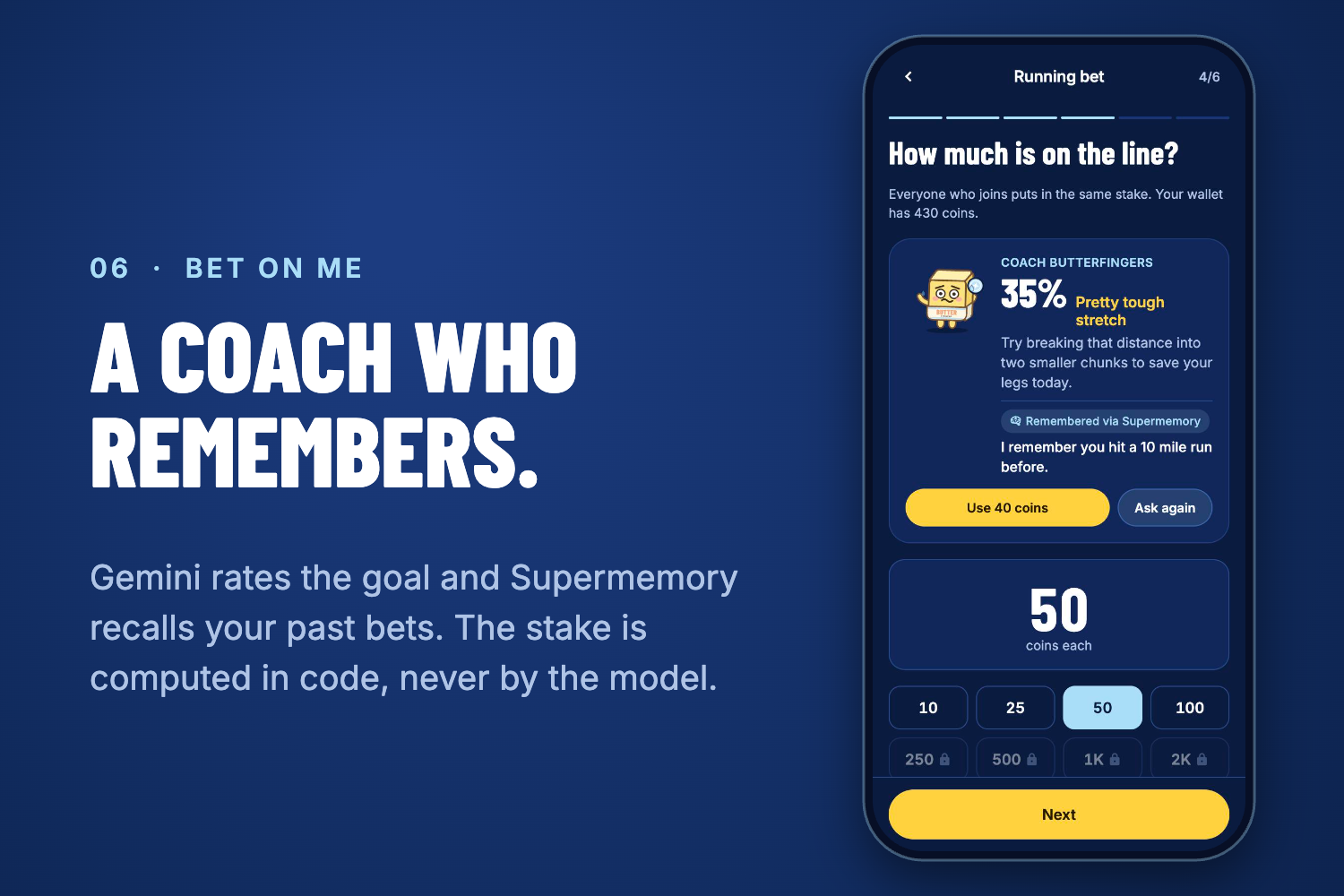
- Ask Butterfingers for advice on the stake step.
- Invite a friend with the invite code, or open a public bet to join.
How we built it
- App: Expo (SDK 58, expo-router, Reanimated, react-native-svg) for iOS, Android and the web. The mascot is drawn in SVG and animated in code.
- Backend: TypeScript on Vercel serverless functions.
- MongoDB Atlas: stores users, challenges, proofs and threads. Atlas Search powers typo-tolerant search of public bets and the "Bets like this" suggestions (
moreLikeThis). - Solana (devnet, test money only): every user has a wallet, and every challenge has its own escrow wallet. Settlement pays winners from escrow and writes a fingerprint of the result into the payout transaction with the Memo program, so the winner list can't be quietly changed. Every transfer links to Solana Explorer.
- Gemini API: screens dares, judges proof videos, rates how doable a goal is (Coach Butterfingers), and writes the winner/loser comment on result cards. Stake suggestions are computed in code from the model's odds, so the model can never move money.
- Supermemory: Butterfingers remembers each player's past bets, such as "I remember you missed your last running bet." If Supermemory is unavailable, the coach falls back to the history in MongoDB.
- Vercel Blob for proof videos, and EAS Update for shipping app updates.
Challenges we ran into
- Trusting nobody. A failed read from an outside service must never count as zero, or a player's whole history looks like progress. Create and join are refused if the starting number can't be read.
- Money safety. Settlement uses an atomic status flip as a lock and saves the payout plan before any money moves, so a crashed run can resume without paying anyone twice.
- Video on the web. The camera library can't record in a browser, so we built a separate web recorder.
- Sharing the app. Expo Go only opens projects for the owner's Expo account, so we shipped a full web version for everyone.
- Unofficial data sources. GitHub and Duolingo have no sign-in-free official API, so we read public pages with caching and clear failure handling.
Accomplishments that we're proud of
- Payouts and on-chain receipts that work end to end on Solana devnet.
- A coach that is useful but has no say over money.
- 35 automated server tests covering the money paths, plus live checks against the real services.
- A mascot with a personality.
What we learned
Put anything money-related in plain code with tests, and use AI only for words and judgment calls. Design for the failure of every outside service.
What's next for Bet on Me
- Real Strava connection, once we have the Strava API access that needs a Pro subscription (for now it's a demo button).
- Ownership checks for GitHub and Duolingo usernames (OAuth).
- Real-money rails after proper review.
- More categories, such as steps and study time.
Built With
- atlas-search
- chess.com-api
- claude
- claudecode
- duolingo
- eas-update
- expo-router
- expo.io
- gemini-api
- github
- mongodb
- mongodb-atlas
- node.js
- react-native
- react-native-reanimated
- solana
- solana-web3.js
- supermemory
- typescript
- vercel
- vercel-blob


