-
-
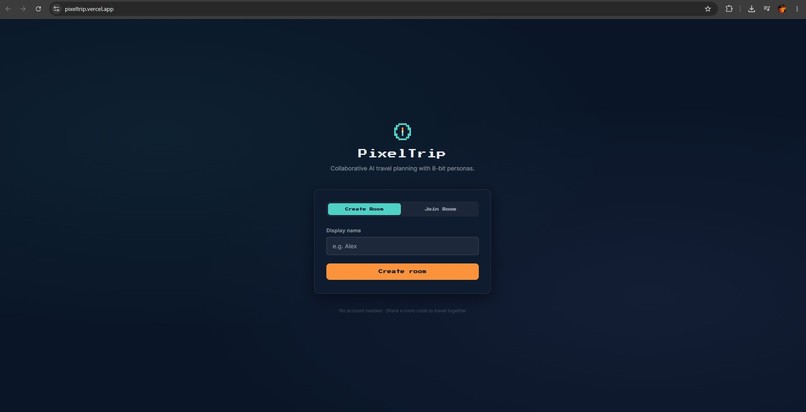
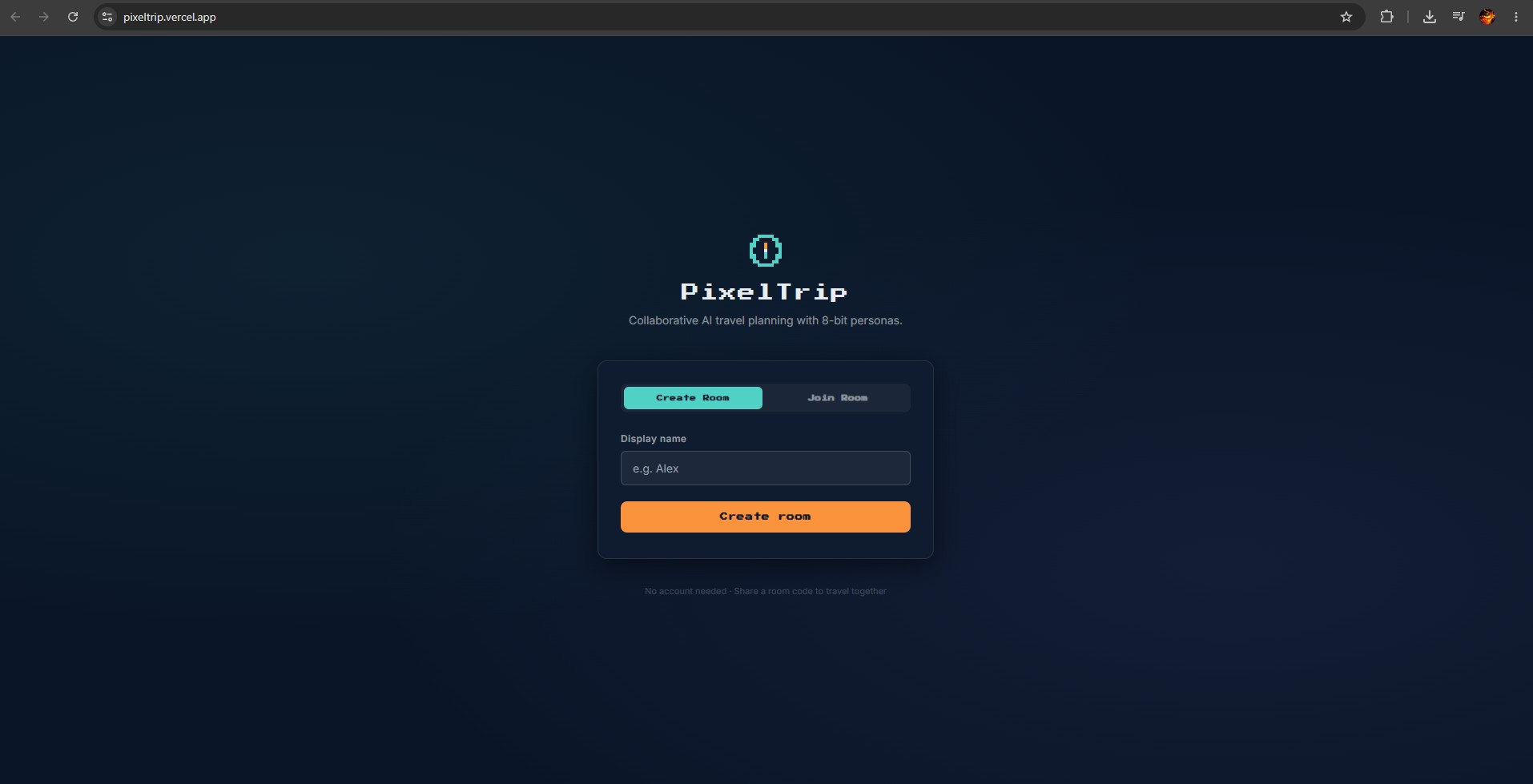
Start a collaborative AI travel room where friends can plan trips together using shared room codes.
-
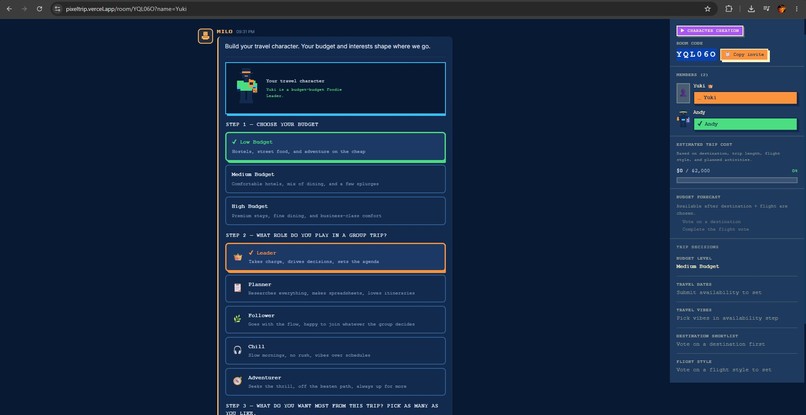
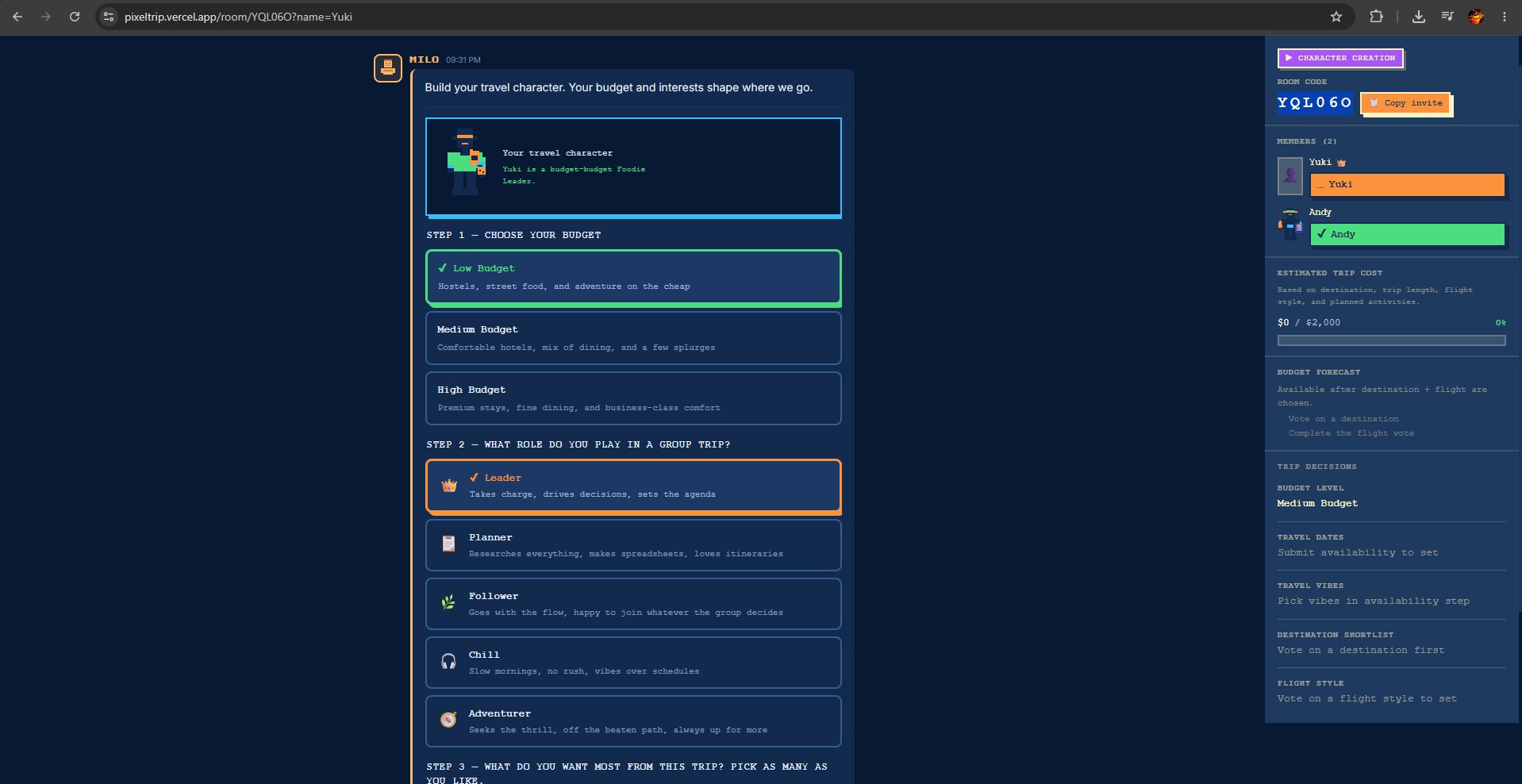
Create an 8-bit travel persona with budget, travel style, and interests that shape the AI planning flow.
-
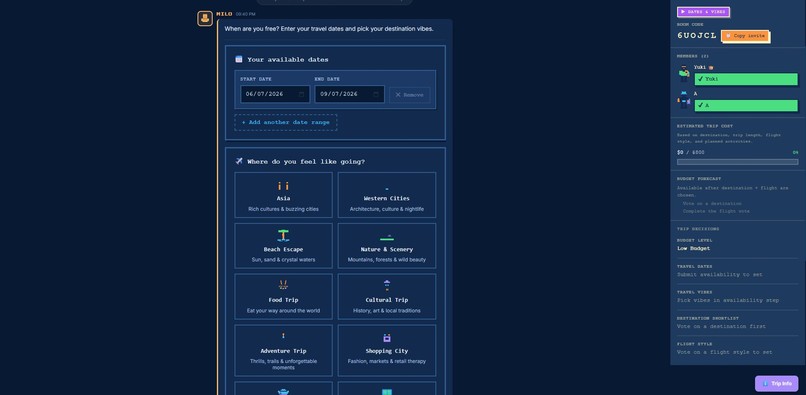
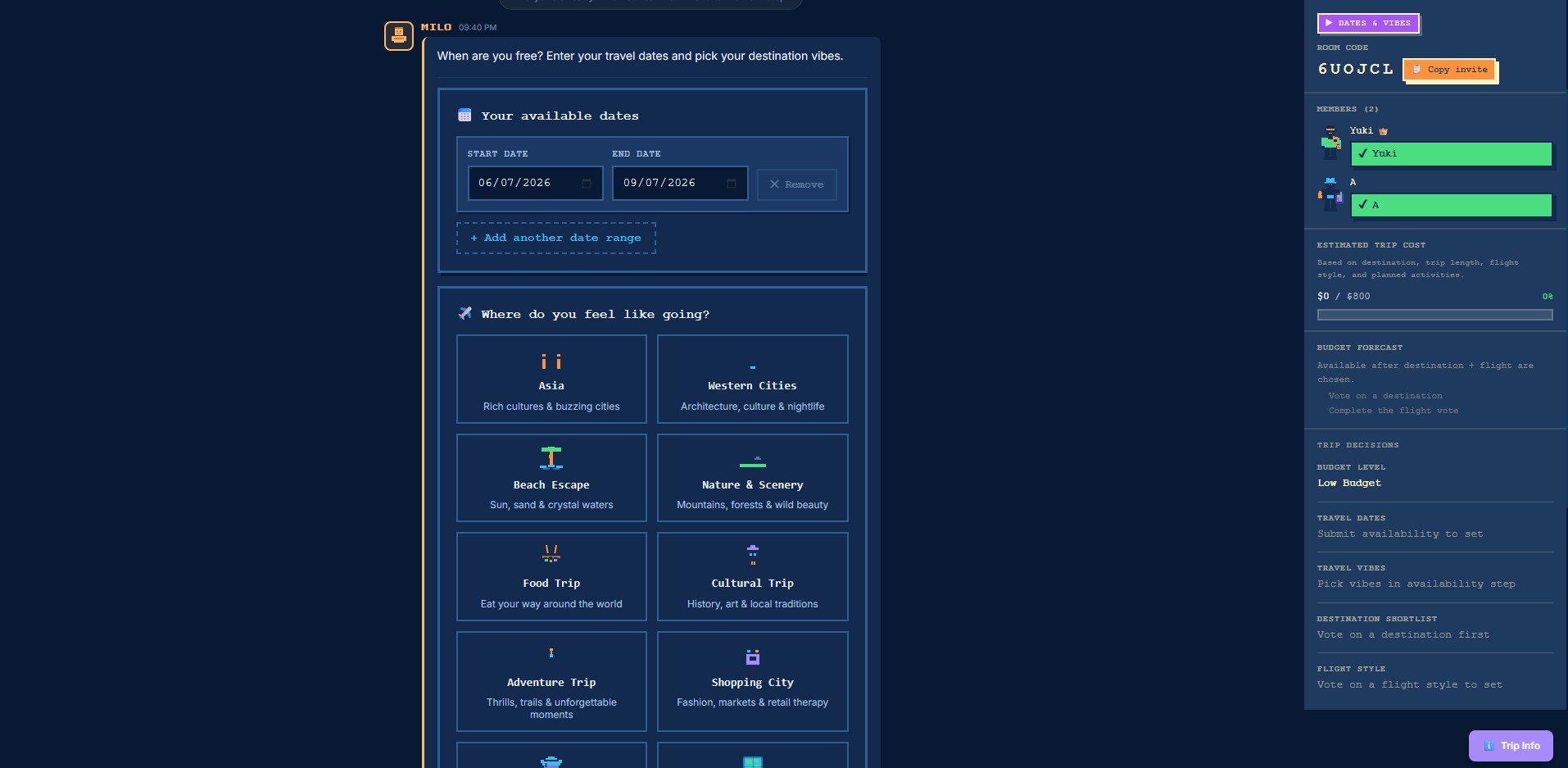
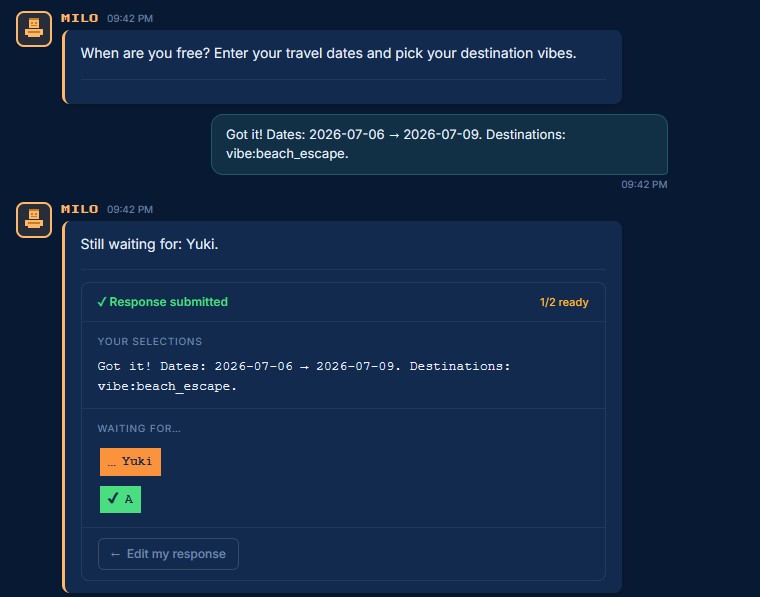
Pick travel dates and destination vibes through guided cards instead of messy free-text planning.
-
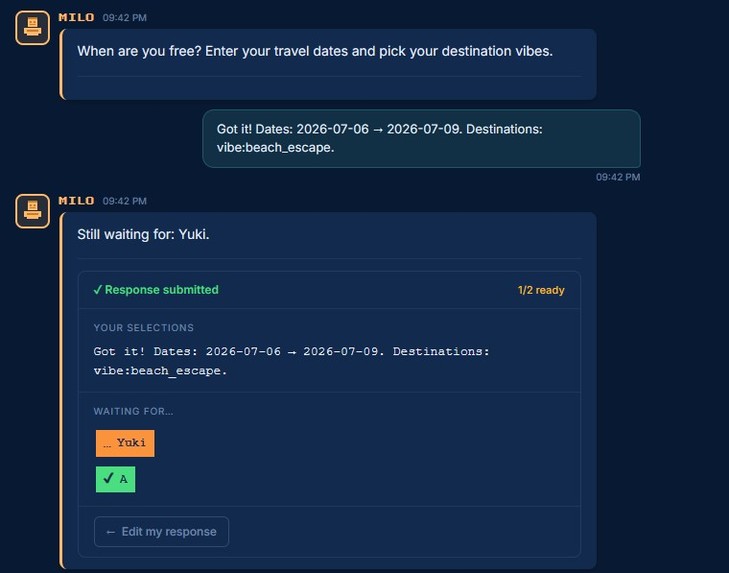
After submitting, users enter a holding state showing who is ready and who still needs to respond.
-
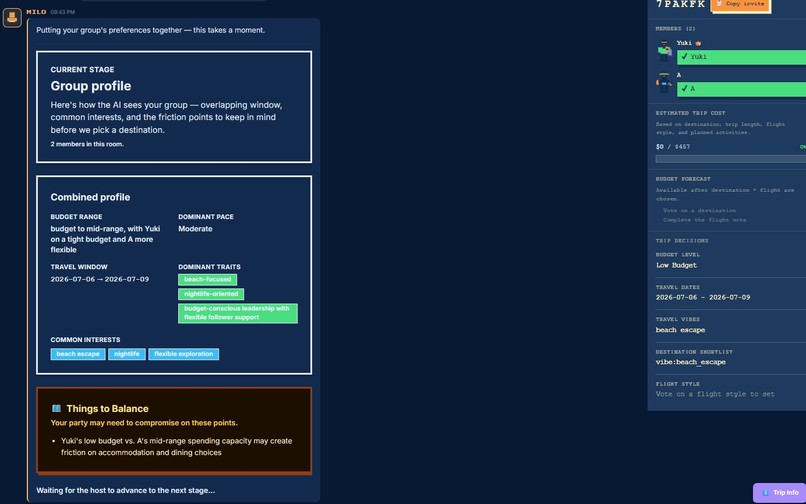
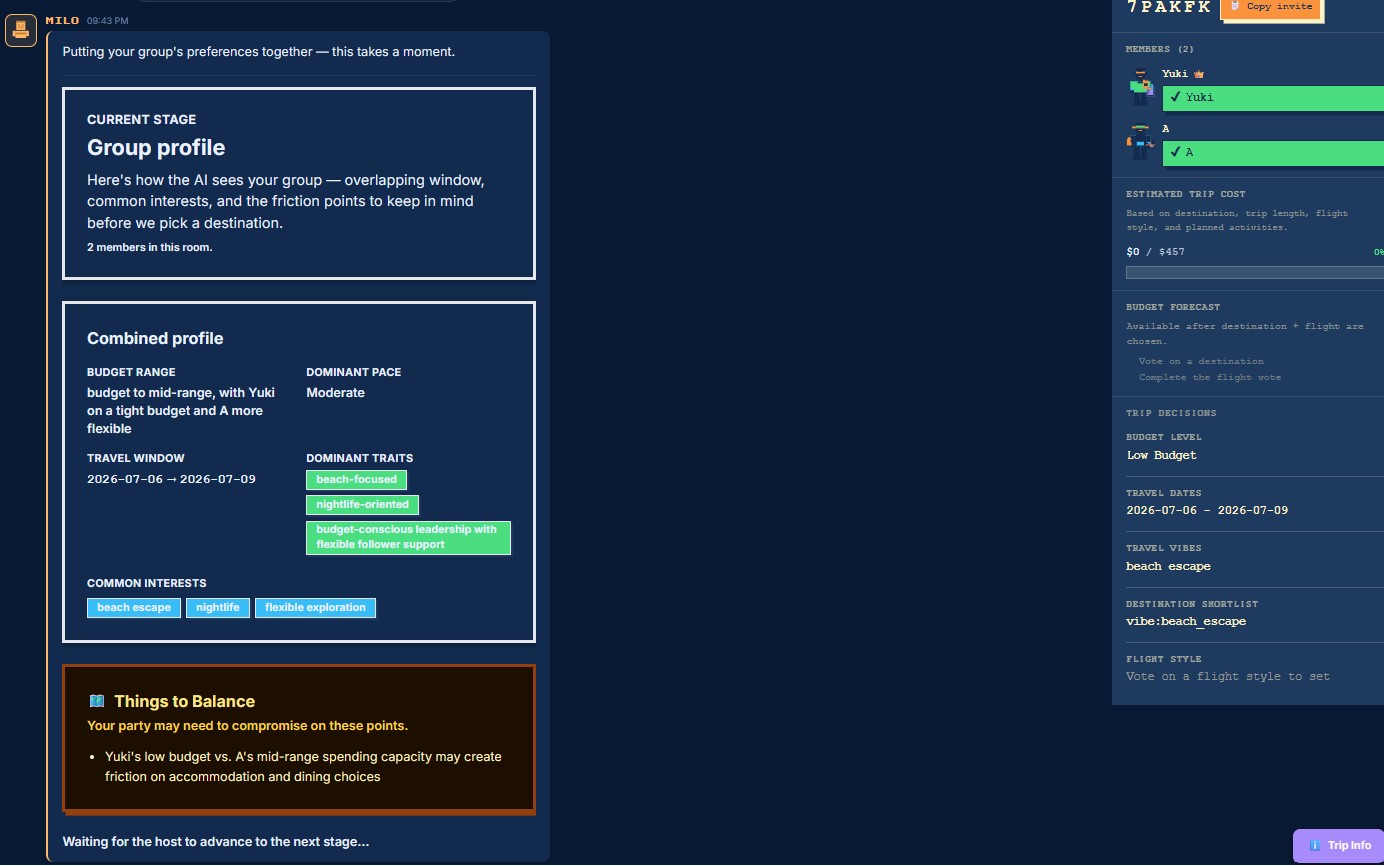
PixelTrip summarises the group’s budget, pace, interests, travel window, and tension points before planning.
-
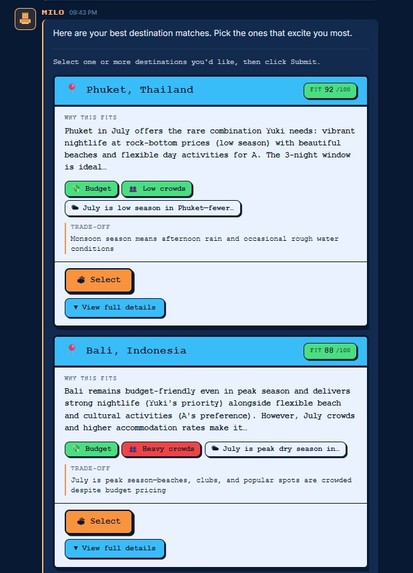
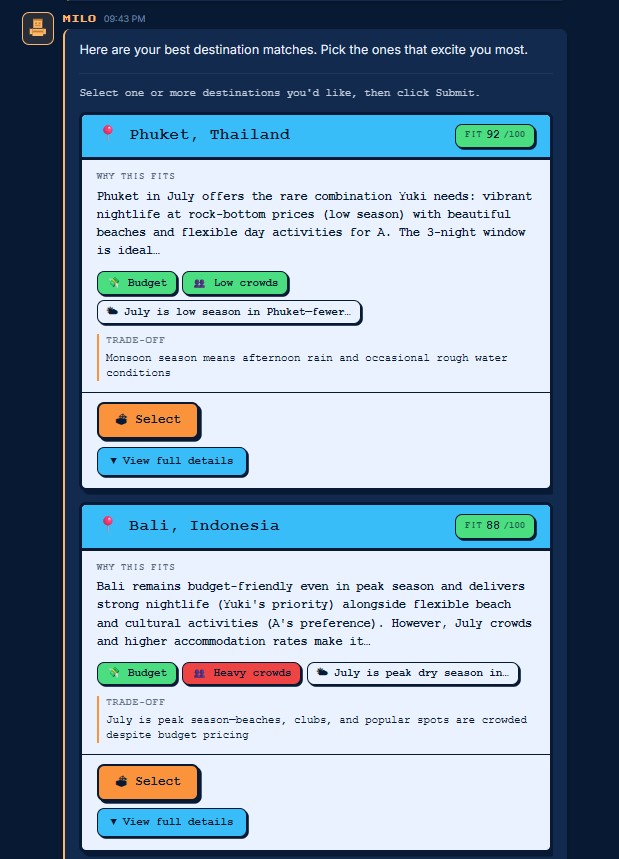
AI recommends destinations with fit scores, budget signals, crowd levels, trade-offs, and voteable cards.
-
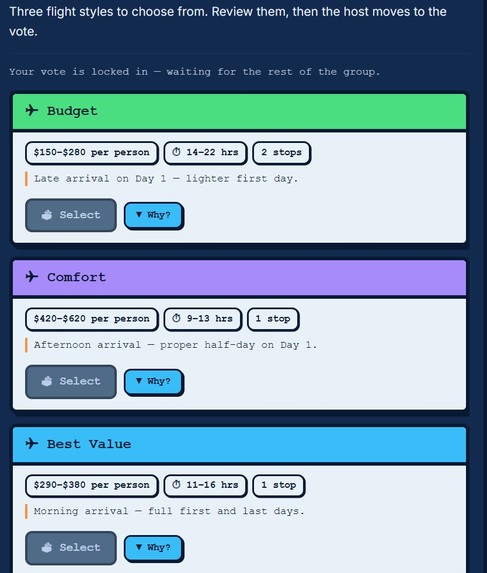
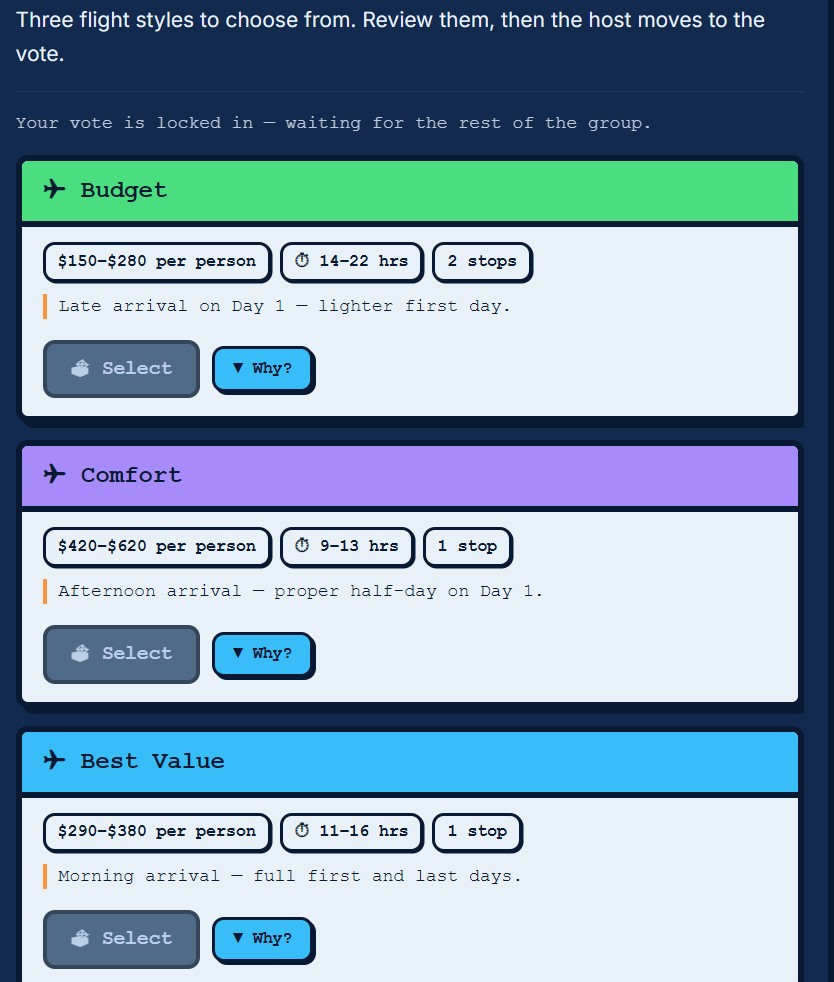
Compare Budget, Comfort, and Best Value flight styles with price, duration, stops, and itinerary impact before voting.
-
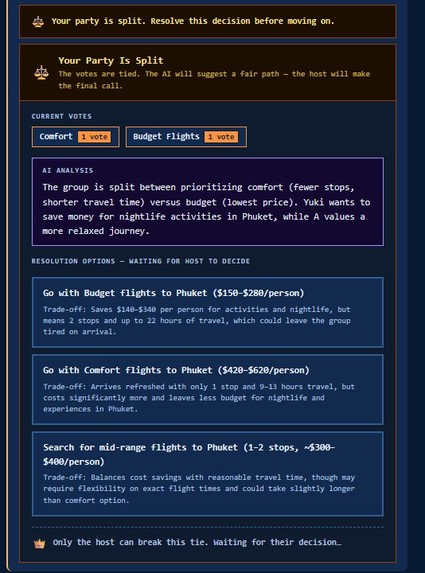
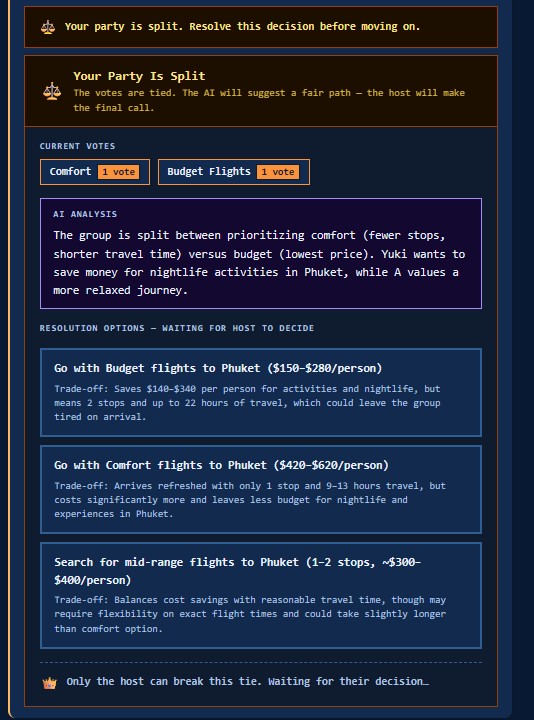
When votes are split, the AI explains the trade-offs and helps the host make the final decision.
-
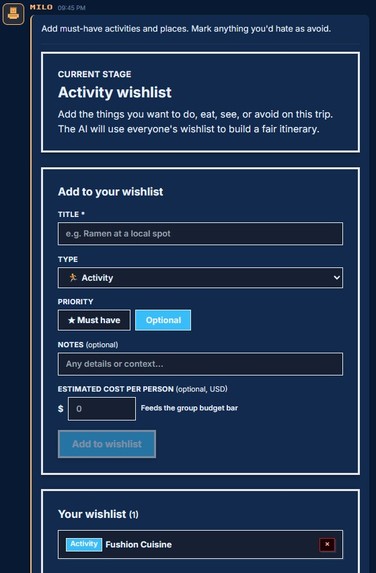
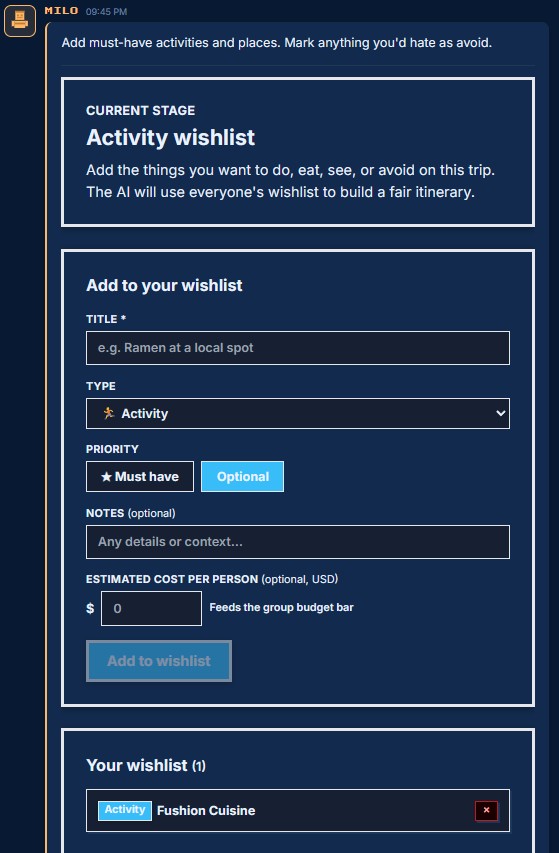
Users add must-have activities, places, costs, and avoids so the AI can build a fairer itinerary.
-
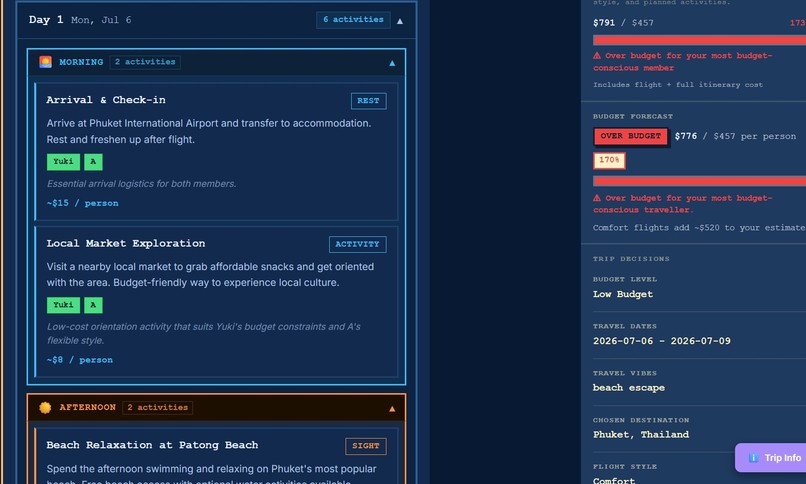
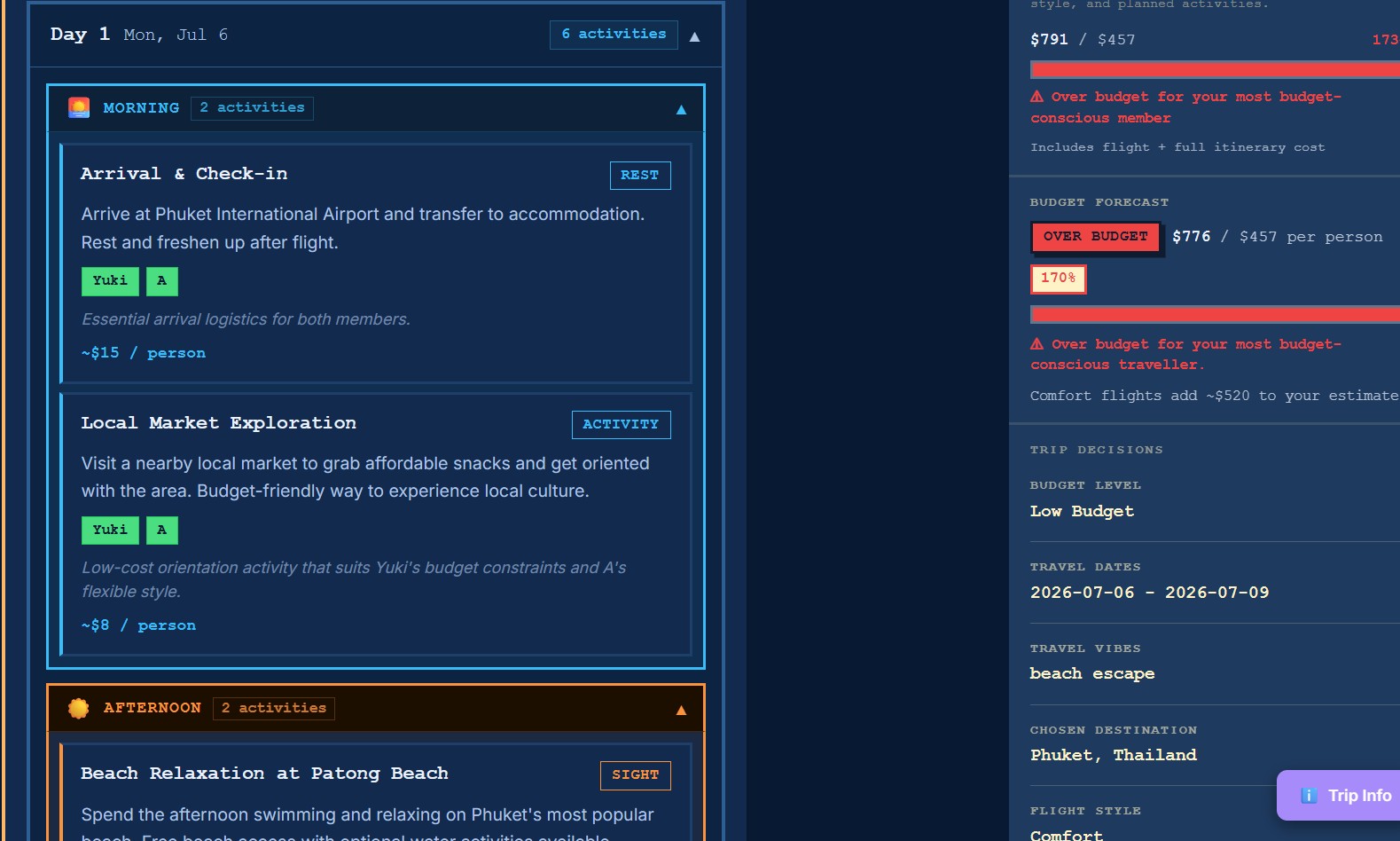
A day-by-day itinerary shows activities, estimated costs, persona benefits, and budget impact in one view.
-
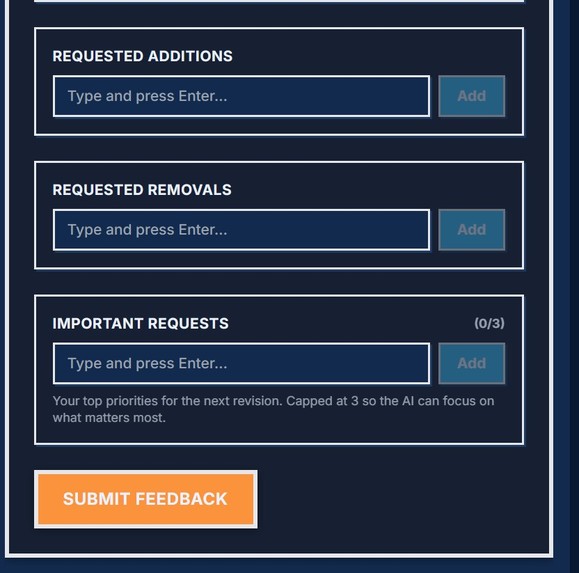
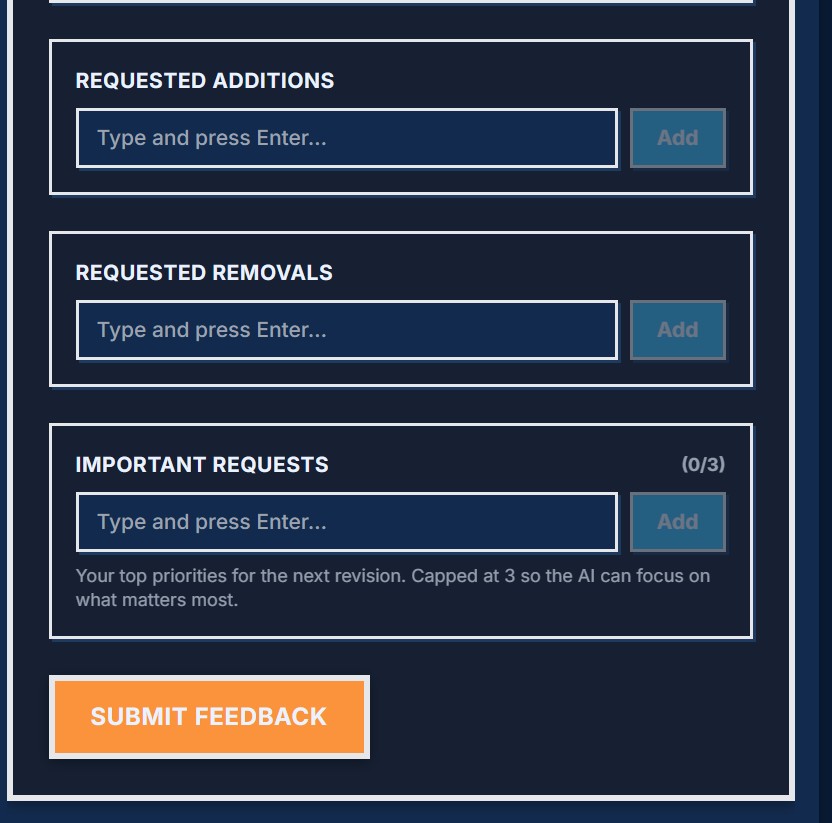
Users score the itinerary, request additions or removals, and highlight top priorities for the next AI revision.
-
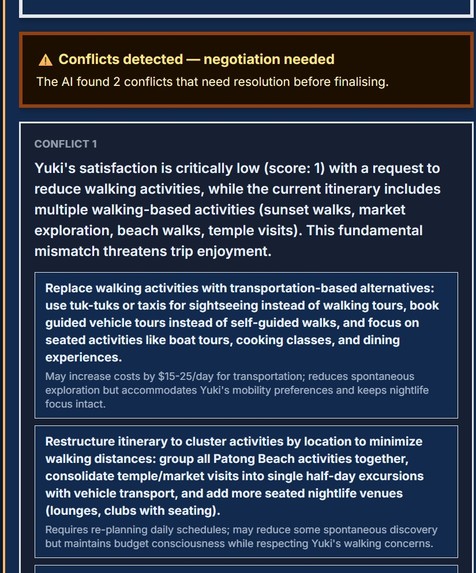
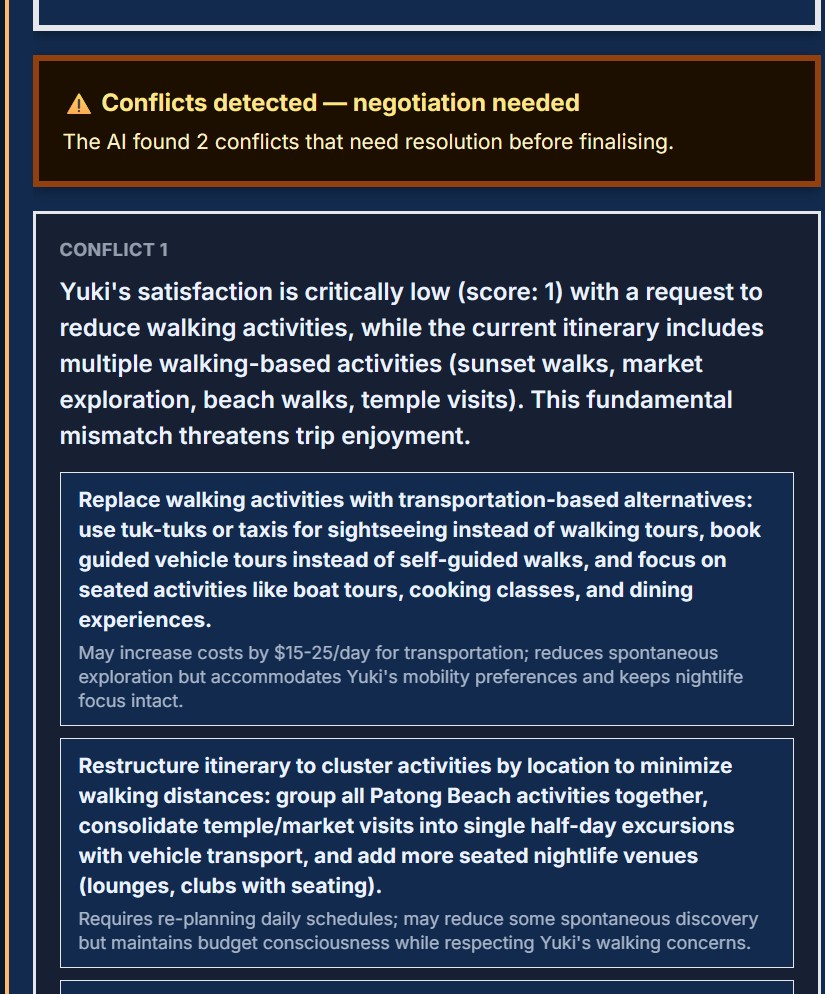
AI detects itinerary conflicts from user feedback and suggests resolution options before the trip is finalised.
-
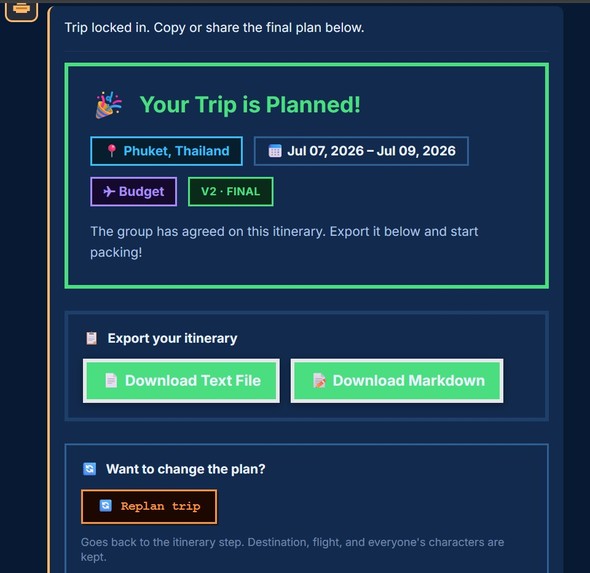
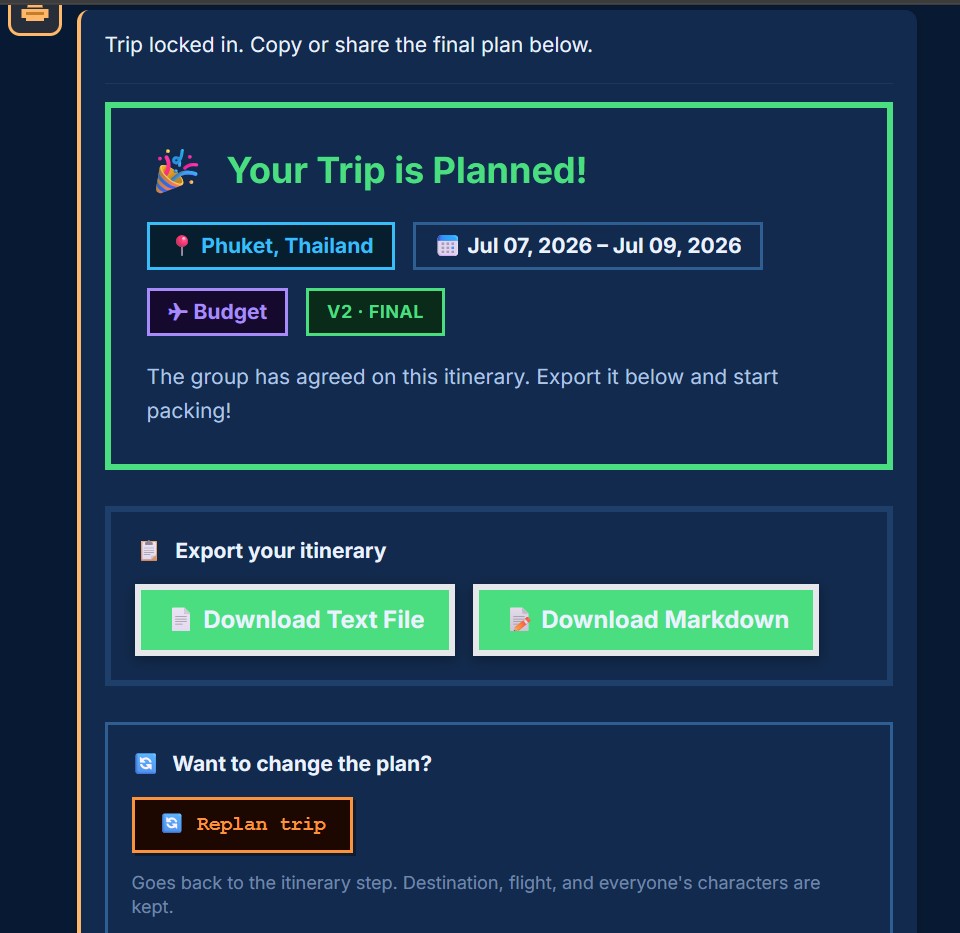
Once the group agrees, PixelTrip locks the itinerary and lets users download the final plan as text or Markdown.
PixelTrip
Inspiration
PixelTrip started from our own post-exchange trip after a University of Glasgow short exchange. Six of us wanted to travel through London, Paris, Florence, and Rome, but planning became messy. Everyone had different budgets, interests, energy levels, and involvement. We realised the hard part was not choosing places, but helping a group agree without anyone feeling priced out or ignored.
What it does
PixelTrip is a real-time collaborative AI travel planner for student groups. Users join a shared room, build an 8-bit pixel character based on their budget, travel style, and interests, then move through a guided planning flow together: availability, destination suggestions, voting, flights, activities, itinerary generation, feedback, negotiation, and final export.
Unlike a normal itinerary generator, PixelTrip explains why a destination fits this group, builds itineraries around each persona, and uses AI negotiation when someone is unhappy instead of blindly regenerating everything.
How we built it
PixelTrip runs on a 13-stage pipeline controlled by a room's currentStage. The frontend uses Next.js 14, React, TypeScript, and Tailwind CSS with a pixel-art design system. Supabase Postgres stores rooms, users, votes, itineraries, and feedback, while Supabase Realtime keeps everyone synced.
AI agents run server-side through Next.js API routes using Claude via Amazon Bedrock. Agents handle group profiles, destination reasoning, itinerary generation, feedback analysis, negotiation, and tiebreaks.
How we used Kiro
Kiro helped us manage the project’s large scope. We used .kiro/specs for requirements, design, and task planning across the MVP, UI/UX redesign, activities, negotiation flow, and export. Steering files kept our architecture, AI agent rules, and pixel-art direction consistent. We also explored AWS tooling and MCP-style workflows while configuring Bedrock.
What we learned
We learned that AI travel planning needs structure, not just generation. The system must understand people, budget limits, disagreements, and trade-offs.
Challenges we faced
Our biggest challenges were scope control, real-time stage synchronisation, structured JSON output from AI agents, and negotiation logic.
Accomplishments we're proud of
We are proud of building an end-to-end 13-stage collaborative planner with 8-bit personas, fairness-aware itineraries, voting, negotiation, and export.
What's next for PixelTrip
Next, we want live flight and hotel data, better budget estimates, stronger mobile polish, and smarter replanning when plans change.
Solution Write-Up
PixelTrip is a real-time collaborative AI travel planner for groups of 2–6 friends.
Each person joins a shared room, builds an 8-bit pixel character that represents their budget, travel style, and interests, and then moves through a guided planning flow together: availability, destination suggestions, voting, flights, activities, itinerary generation, feedback, negotiation, and final export.
The app is different from a normal itinerary generator because it focuses on group dynamics. The destination agent explains why a place fits this specific group, right now, with their travel window and budget mix.
The itinerary agent tags activities with persona benefits, reasons, and estimated costs, while the fairness summary shows whether everyone is represented. If someone scores the plan poorly, the feedback and negotiation agents identify the conflict, propose trade-offs, and update only the agreed parts of the itinerary instead of blindly regenerating everything.
Kiro shaped the build through spec-driven development.
Seven specs in .kiro/specs guided the MVP pipeline, UI/UX refactor, activities flow, negotiation logic, and export features, while steering files kept the architecture, AI agent rules, and pixel-art style consistent.
Amazon Bedrock powers the itinerary generation, and we explored AWS tooling and MCP-style workflows to stay AWS-aware while building.
Built With
- amazon-web-services
- bedrock
- github
- kiro
- next.js
- node.js
- postgresql
- react
- supabase
- typescript


Log in or sign up for Devpost to join the conversation.