Understanding Data Labeling: Tools, Process, and Its Importance in Machine Learning
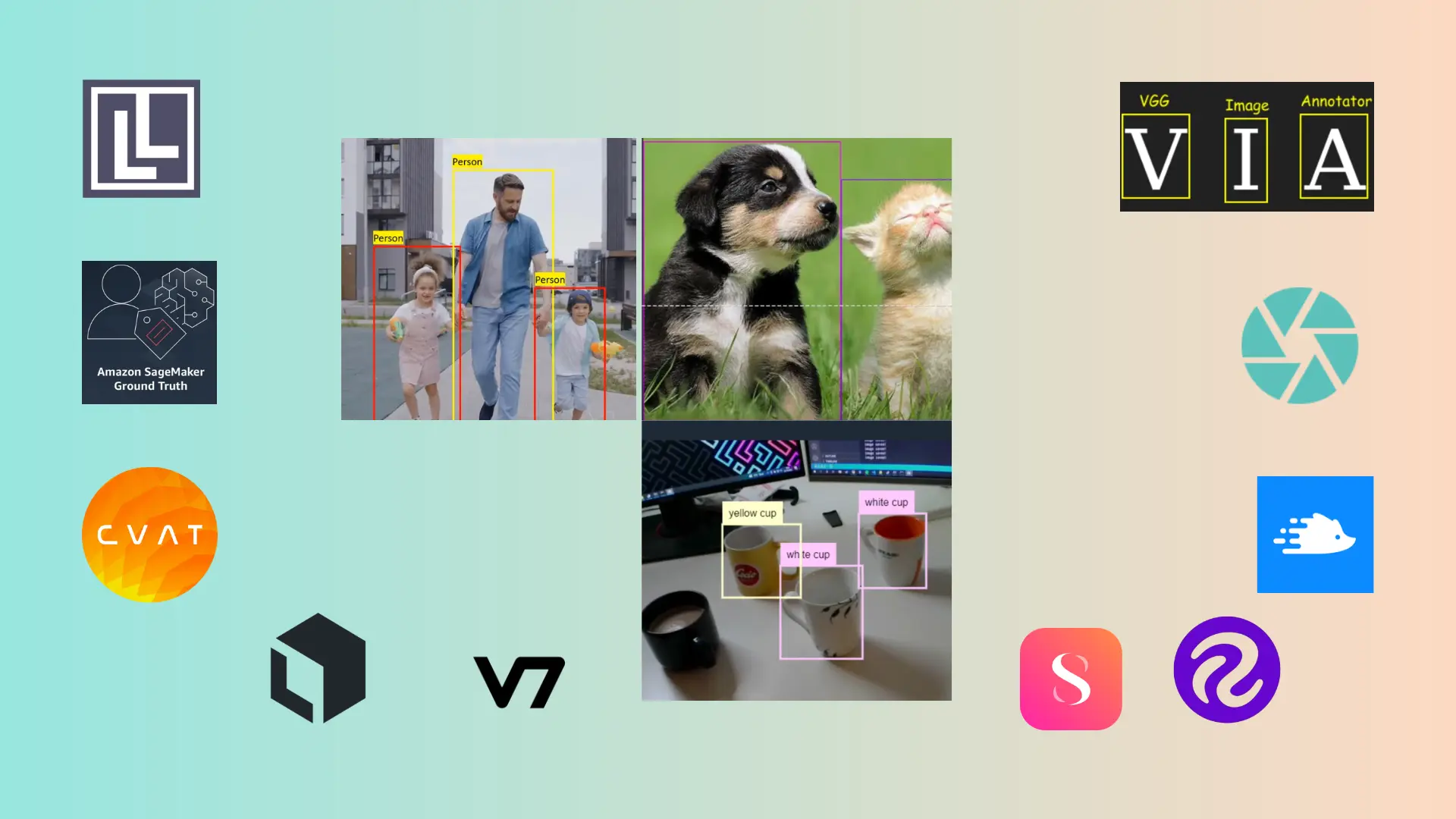
Data labeling is one of the most crucial steps in the machine learning (ML) workflow, helping systems understand and learn from raw data.
Whether you're building a computer vision model to classify images or training a natural language processing (NLP) system, labeled data is essential for model accuracy and efficiency.
In this article, we'll explore what data labeling is, why it’s important, the typical process involved, and introduce some of the best tools available to help automate and streamline data labeling tasks.
For a deeper dive into data labeling and its various types, check out this blog.
What is Data Labeling?

Data labeling refers to the process of annotating or tagging raw data (images, text, audio, or video) with appropriate labels.
These labels are often the target outputs that a machine learning model is supposed to predict or classify.
In simple terms, if you have a dataset with images of dogs and cats, you would "label" the images as either "dog" or "cat" so that a machine learning algorithm can learn to classify new, unseen images based on this information.
Why is Data Labeling Important?
In machine learning, supervised learning relies heavily on labeled data.
The accuracy of your model largely depends on the quality and quantity of labeled data.
Properly labeled data provides a foundation for training algorithms and can help them make accurate predictions or classifications.
Without sufficient labeled data, training models can become a guessing game, resulting in unreliable outputs.
This is where effective data labeling tools come into play, helping organizations scale the process efficiently and reduce manual effort.
The Data Labeling Process

Data Collection: The first step involves collecting the raw data, whether from images, videos, audio, or text. This data serves as the input to be labeled.
Label Assignment: Labelers (or algorithms) assign labels to the collected data. Labels could include categories like "dog" and "cat" for images, or "positive" and "negative" for text sentiment analysis.
Quality Control: Ensuring the quality of the labels is paramount. The labels should be accurate, consistent, and applied according to the project’s objectives. Quality control mechanisms like double-checking, validation, and cross-checking are essential to ensure reliable results.
Model Training: Once the data is labeled, it’s ready to be used in training a machine learning model. This step involves feeding the labeled data into algorithms to help them learn and generalize.
Testing and Iteration: After training, the model is tested on new, unlabeled data. If the model's predictions are inaccurate, it’s back to the drawing board, more labeled data may be required to improve accuracy.
Types of Data Labeling
Data labeling can take various forms, depending on the type of data you're working with. Some common types include:
Image Labeling: Tagging images with categories or bounding boxes for object detection.
Text Labeling: Assigning sentiment labels or categorizing text into topics.
Audio Labeling: Identifying spoken words, sounds, or speech sentiment in audio files.
Video Labeling: Annotating frames in video data to detect objects or actions.
Popular Data Labeling Tools
There are many data labeling tools available that automate and simplify the labeling process. These tools range from open-source solutions to enterprise-level software with advanced features. Here’s a summary of some of the most popular tools:
| Tool Name | Description | Type of Data | Key Features |
|---|---|---|---|
| Labellerr | A platform that uses AI to assist human annotators. | Images, Videos, Text | AI-assisted labeling, easy deployment, cost-effective for teams |
| Amazon SageMaker Ground Truth | An AWS service for building high-quality labeled datasets using machine learning. | Images, Videos, Text | Integration with AWS, semi-automated labeling, built-in quality control |
| SuperAnnotate | A comprehensive tool for image and video annotation. | Images, Videos | AI-assisted labeling, polygon annotations, real-time collaboration |
| MakeSense | A free, open-source tool for image annotation. | Images | Easy-to-use interface, supports various label formats |
| V7 Labs | A powerful platform for image and video annotation. | Images, Videos | AI-assisted labeling, data versioning, extensive annotation tools |
| Label Studio | Open-source data labeling software for any data type. | Images, Text, Audio, Video | Customizable workflows, support for multiple data types |
| Prodi.gy | A data annotation tool that focuses on NLP tasks. | Text | Active learning, pre-trained models for NLP, easy integration with Python |
| Labelbox | A scalable platform that combines human labeling and AI tools. | Images, Text, Videos | User-friendly interface, collaboration tools, API integration |
| Scale AI | A data labeling platform for enterprise-scale machine learning. | Images, Videos, Text | Enterprise-grade tools, high-quality human labeling, API support |
Each of these tools has unique strengths, depending on the type of data you're working with, the scale of the project, and the complexity of the annotations. The right tool for your project will depend on your specific needs, such as cost, ease of use, and integration with other ML tools.
Conclusion
Data labeling is an essential part of the machine learning pipeline. The quality of labeled data directly impacts the performance of machine learning models.
Fortunately, there are many powerful data labeling tools available that can help you annotate data faster, more accurately, and at scale. By choosing the right tools for your needs, you can significantly improve the efficiency of your ML projects.

Log in or sign up for Devpost to join the conversation.