-
-
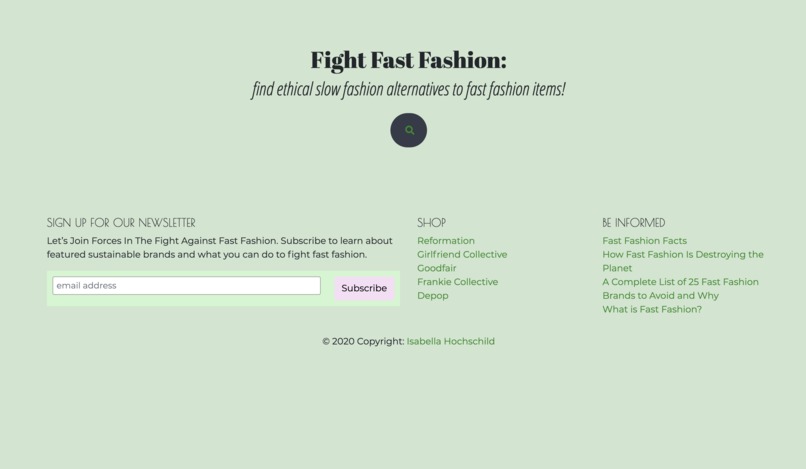
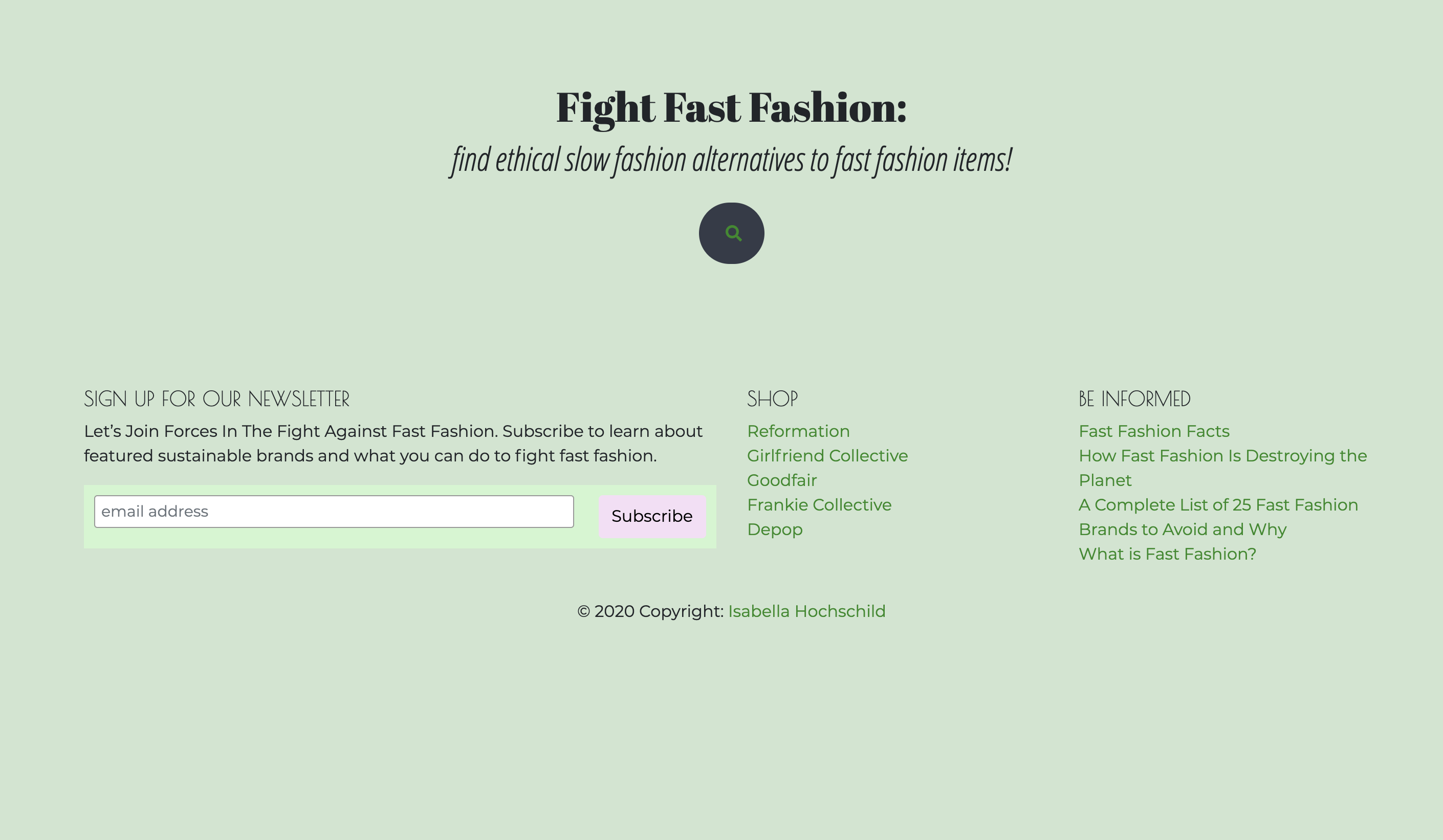
home page
-
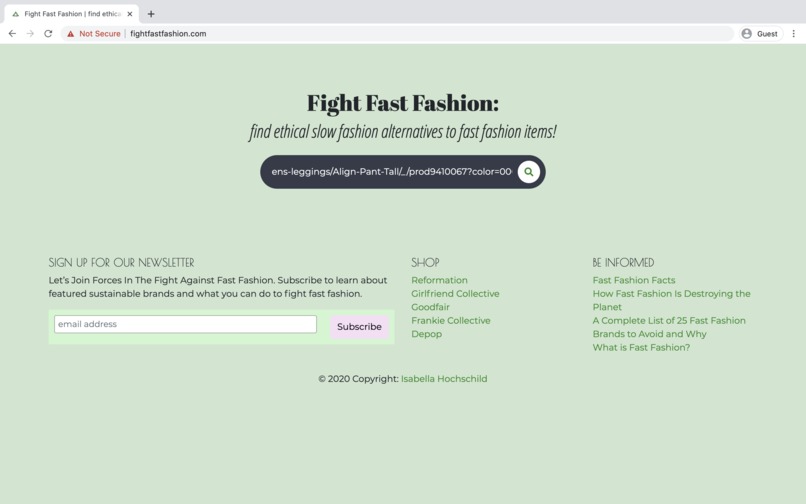
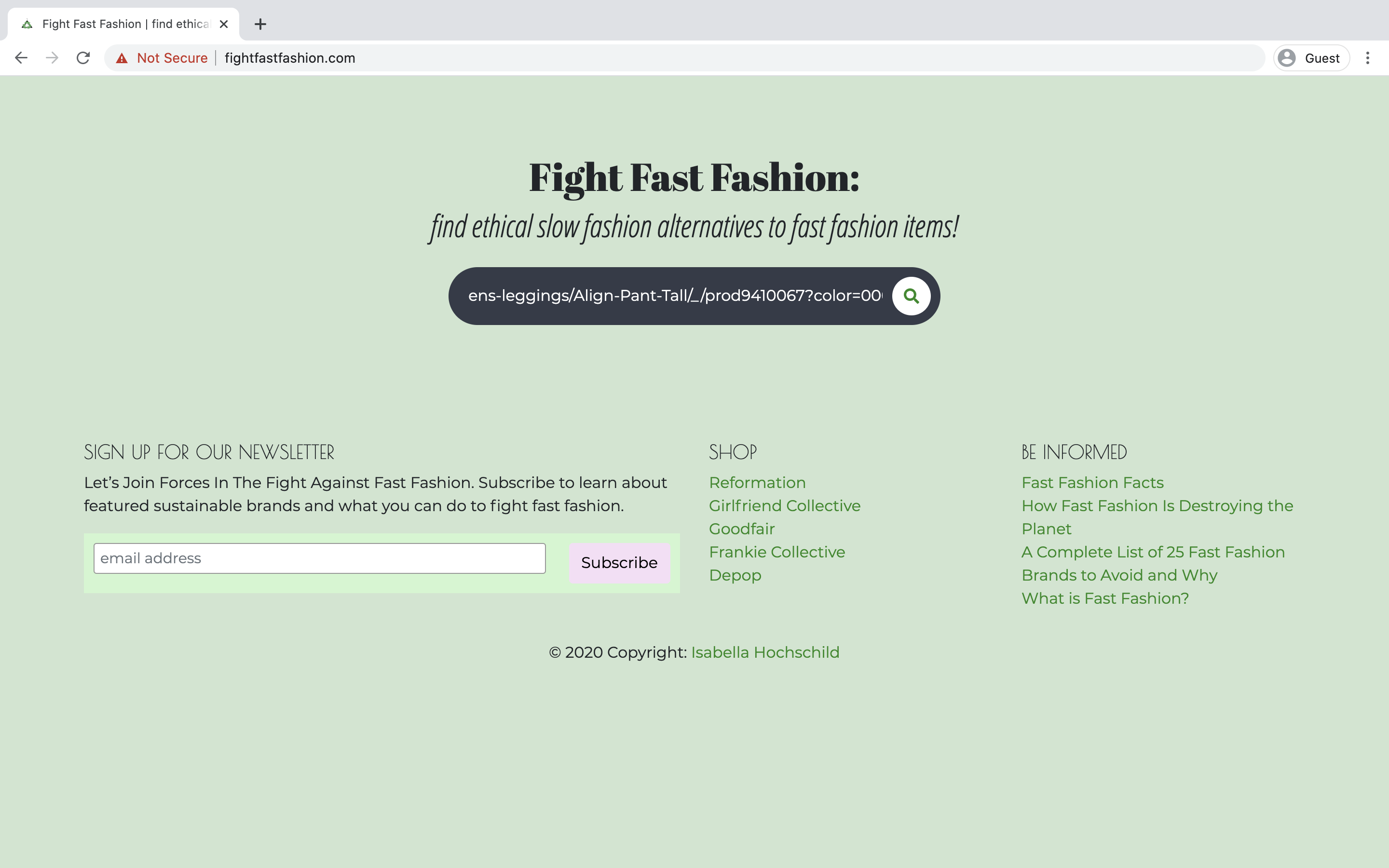
home page w/ search query
-
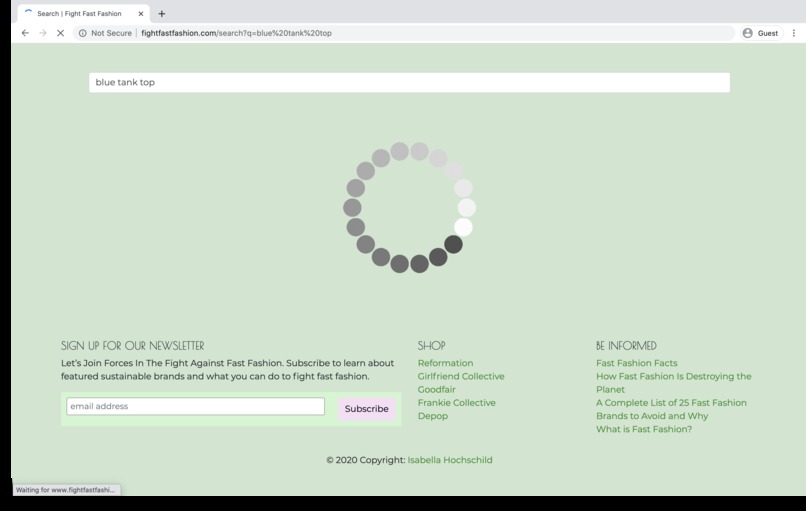
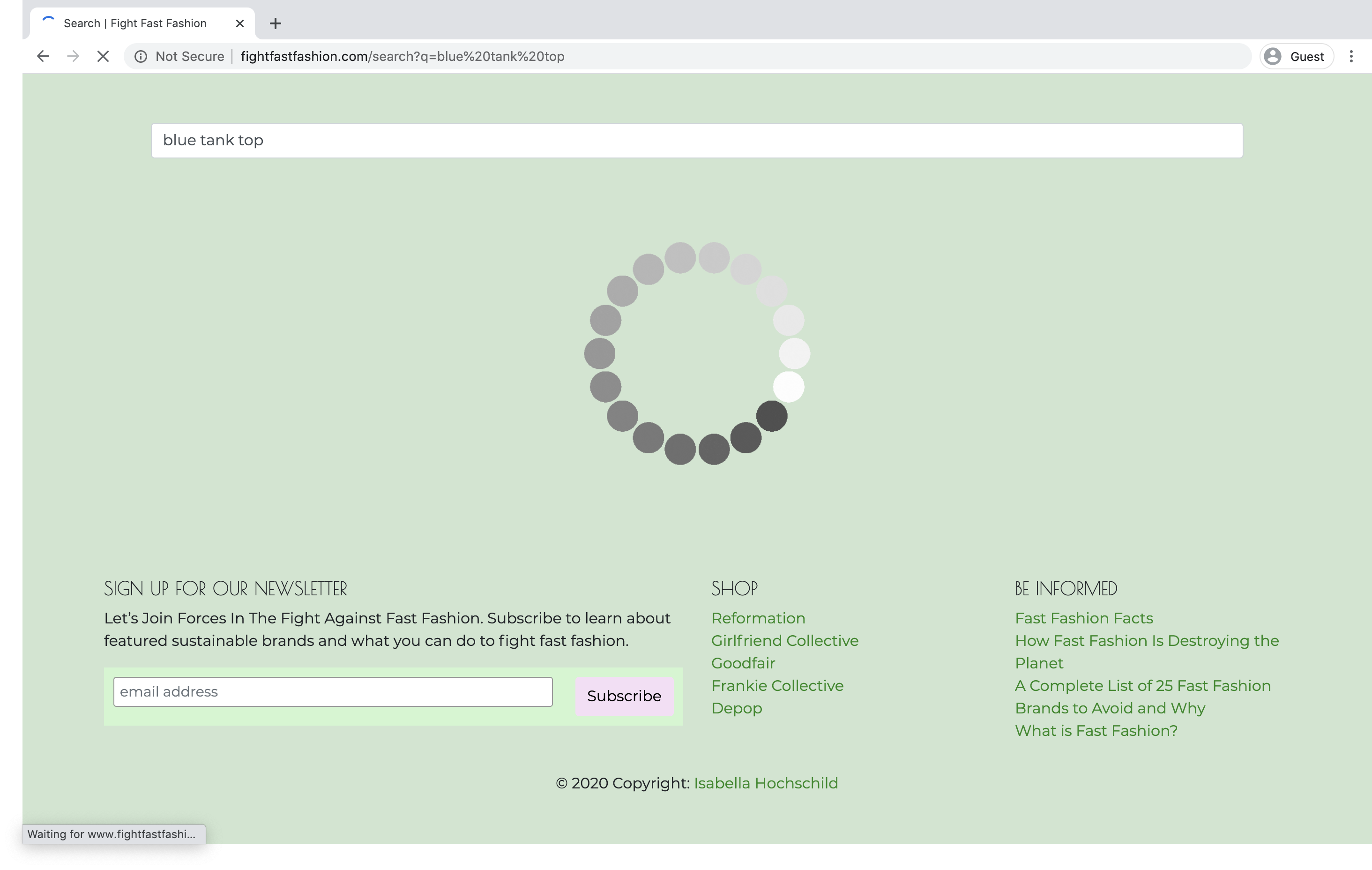
loading results
-
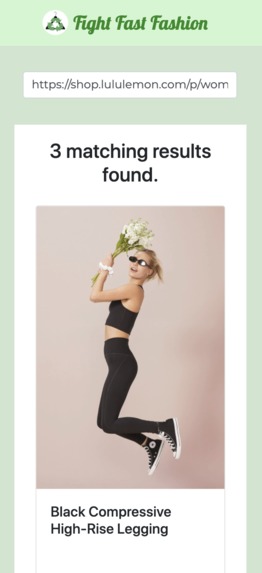
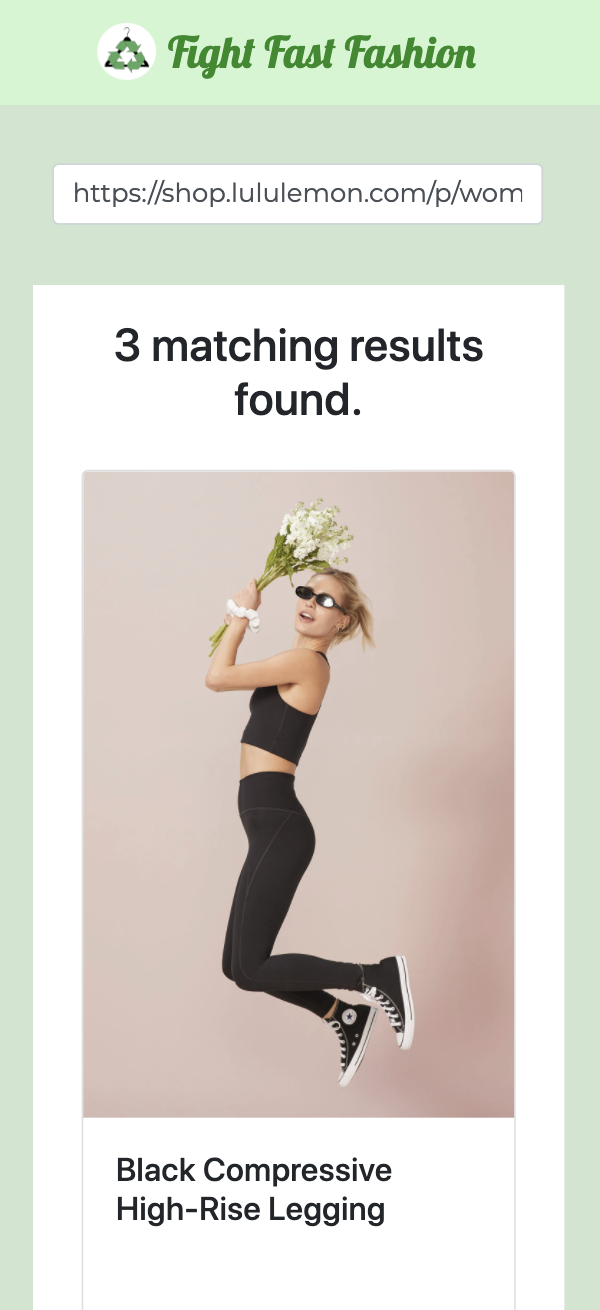
results on mobile device
-
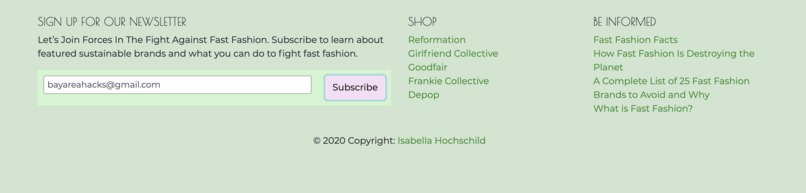
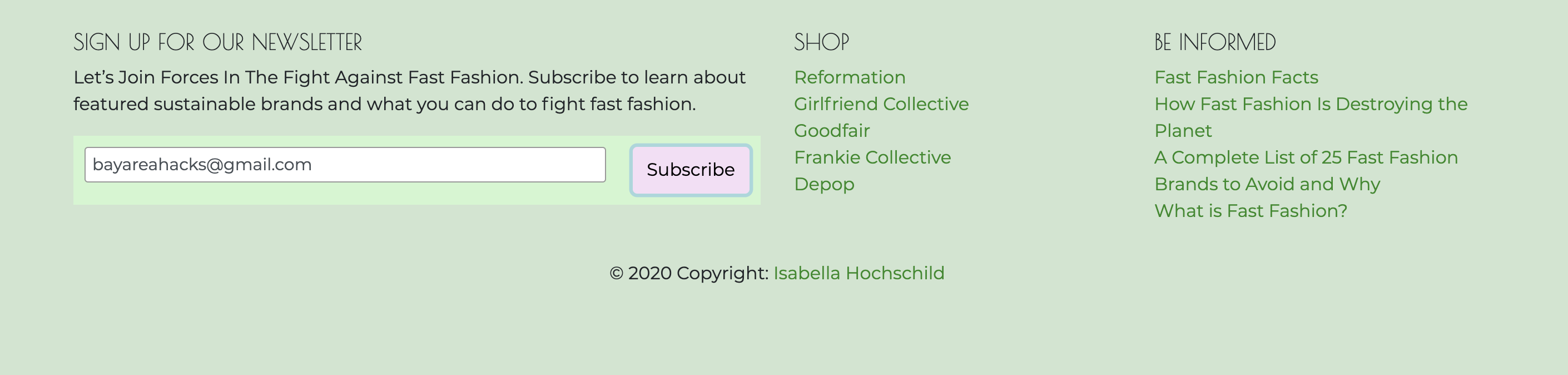
footer
Inspiration
I was inspired by the hackathon’s suggestion to use artificial intelligence to make environmental change. I’ve been reading a lot about how the fast fashion industry contributes to climate change recently (this article from the New York Times sums it up pretty well) and have wanted to shop more sustainably. Not only is the fast fashion industry harmful to the environment, it is also a social justice issue. People who work in or live near textile manufacturing facilities often receive a disproportionate burden of environmental health hazards. Employees of fast fashion companies are also often overworked and underpaid in bad working conditions to produce cheap clothing items. One of the best ways to avoid fast fashion is thrifting, which is also an affordable option. There are also many people in the fortunate position where price isn’t driving their purchases who are looking to shop more sustainably. Unfortunately, a typical search online will result in mass market options and I often have trouble finding sustainable alternatives. I wanted a resource that would highlight slow, sustainable fashion alternatives to fast fashion products. Thus, fightfastfashion.com was born!
What it does
When users visit fightfastfashion.com, they can search for sustainable products based on keywords or by inputting a link to a fast fashion item. They are then redirected to a search page that shows a loading screen before revealing sustainable products with links to the retailers that sell them. In the footer, there are also direct links to shop at some featured retailers and resources to get educated about the issue.
How I built it
I built this project using a Python Flask backend with HTML/CSS/JS templates. I used the BeautifulSoup web scraping tool to scrape the user-inputted fast fashion link to find keywords to input into my algorithm, and to scrape sustainable sites for matching products. I also set up an email newsletter with MailChimp. My project is hosted on Heroku with a domain purchased from Google Domains.
Challenges I ran into
I initially hoped to provide a lot of sample data to train my algorithm to find more precise matches. However, I ran out of time (I was working solo for this project and this week I have also been working a full-time job as an instructor assistant at Kode with Klossy) and couldn't get it to work the way I intended, so thought I could refine that feature as a part of version 2.0 of Fight Fast Fashion!
Accomplishments I'm proud of
I’m proud that my web app functions and looks quite polished with a good domain name. This was the first time I was able to successfully set up a domain for an app on my own. I’m also proud of the color palette and design because in past projects I have been more focused on the backend and less on the design, and I think the website looks nice as well. Although drawing and art doesn’t come easily to me (I consider myself to be more of a math/logic-oriented person), I’m pleased with my custom logo drawing. Also, I only participated in my first hackathon in January, and am pretty new to the coding world. This is only the second hackathon I have competed in on my own, and I'm proud that I was able to juggle all the different responsibilities without having to rely on other team members like I have in the past.
What I learned
My main takeaway from this hackathon was learning not to be overly ambitious and to simplify to an MVP whenever possible. In previous hackathons I’ve worked with a team so this was the first time when I’ve been the one doing everything. I’m also currently working full-time as an Instructor Assistant at Kode with Klossy, so my time was limited. This meant I had to really prioritize my work. I learned to be okay with including features in version 2.0 instead of trying to do everything, although I’m very happy with what I was able to accomplish and ultimately, I also learned that I am capable of more than I think.
What's next for FightFastFashion.com?
I would like to develop a chrome browser extension to automatically find sustainable alternatives when it recognizes a user is about to check out at a fast fashion website.
Built With
- A Python Flask backend
- HTML/CSS/JS templates
- BeautifulSoup
- Flask-WTF
- Heroku Hosting
- Google Drive API
Disclaimer
I had trouble deciding which prize track to submit to, because although I am a beginner I also did this project completely on my own so I debated submitting it to Best Solo Hack. I was rather proud of how it turned out too so I contemplated submitting to Best Main Prize as well, but then again the algorithm wasn't working as precisely as I had initially hoped so this track felt most appropriate.


Log in or sign up for Devpost to join the conversation.