Inspiration

The Spanish ARMada

What it does

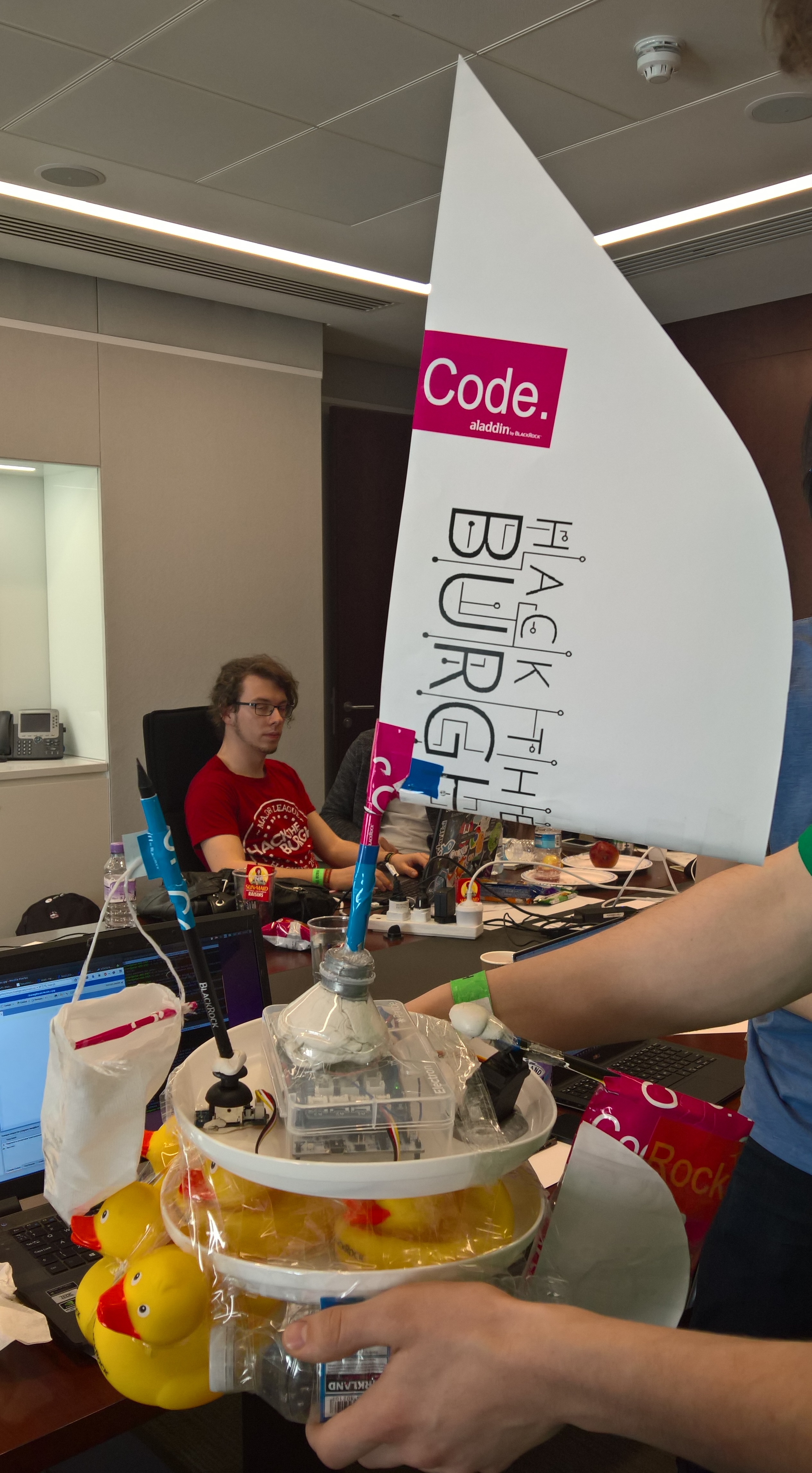
A self-sailing fleet of ducks powered by ARM mbed technology and swag

How we built it

With lots of ducks and tape and code

What's next for Best ARMada of Duck And Self-sailing Swag (BADASS)

Built With

Share this project:

Updates

posted an update

Our main file for the ARM mbed system looked a bit like this, very simple;

Serial pc (USBTX, USBRX);
//Device PIN specification
//SERIAL_TX=PA_2  I2C_SCL=PB_8  SPI_MOSI=PA_7  PWM_OUT=PB_3
//SERIAL_RX=PA_3  I2C_SDA=PB_9  SPI_MISO=PA_6
//                              SPI_SCK =PA_5
//                              SPI_CS  =PB_6

AnalogIn xAxis(A0);
AnalogIn yAxis(A1);
PwmOut pwm(PB_3);

int x,y,button;  // global variables to hold values
Ticker joystick; // recurring interrupt to get joystick data

void joystick_Int_Handler()
{
    x = xAxis.read() * 1000; // float (0->1) to int (0-1000)
    y = yAxis.read() * 1000;
    if ( (x > 900) || (y > 900) )
        button = 1;
    else
        button = 0;     
}

int main() 
{

    pwm.period(0.050);
    // init interrupt, call every .2s
    joystick.attach(joystick_Int_Handler,0.2);
    // Print out the variables

    while(1){

        if(x < 800 && 600 < x && y < 800 && 600 < y ){
            pwm.pulsewidth(0.0015);
        }
        else if(x > 800 && y > 800 ){
            pwm.pulsewidth(0.00175);
        }
        else if(x < 600 && y < 600 ){
            pwm.pulsewidth(0.00125);
        }
        else if(x > 800 && y < 600 ){
            pwm.pulsewidth(0.00125);
        }
        else if(x < 600 ){
            pwm.pulsewidth(0.0025);
        }
        else if(y < 600 ){
            pwm.pulsewidth(0.001);
        }
        else if(y > 800 ){
            pwm.pulsewidth(0.002);
        }
        else if(x > 800 ){
            pwm.pulsewidth(0.0015);
        }
        pc.printf("\rX=%3d,Y=%3d",x,y);
    }

}

Log in or sign up for Devpost to join the conversation.