-
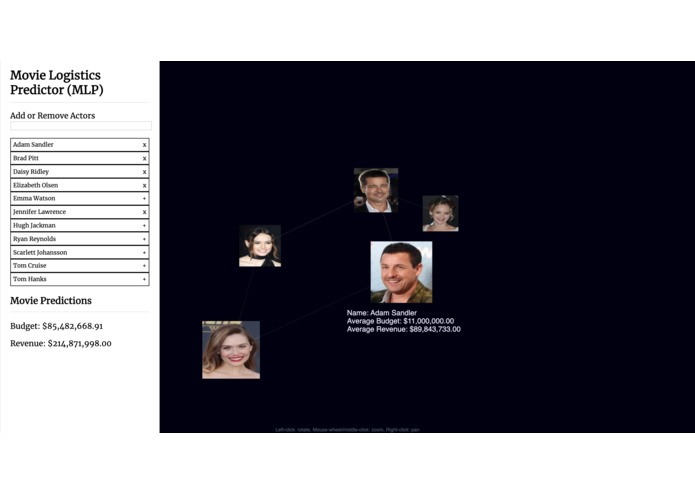
App in action
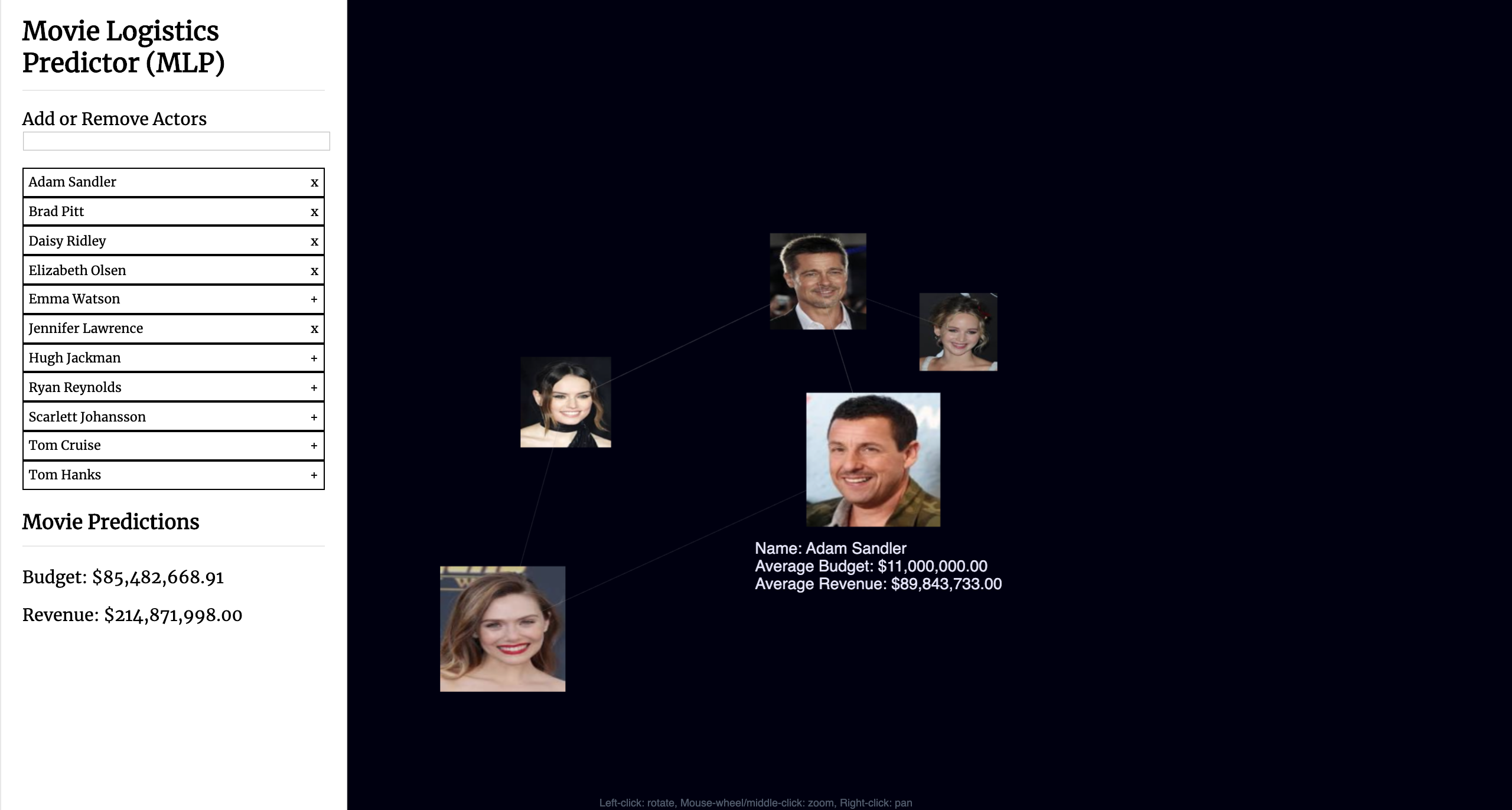
Inspiration
There are not many great visualizers for machine learning that have a really pleasant looking interface. We wanted to demonstrate it's power in an interactive and nice looking way.
What it does
From a pool of actors it's able to seek out the best actor from the relationships the actor has. Currently, it'll predict the budget/revenue based on the actors in the current movie pool. For the data, we have access to the IMDB backend, but because of the rate limit of the API, we decided to mock most of the data.
How I built it
ReactJS with D3.js. Python and scikit-learn for the AI Backend (in-progress)
Challenges
Some challenges we faced were the complexity of the packages we used. D3 and scikit-learn has deep learning curves to be able to use properly. Also because we have very minimal deep learning knowledge, jumping headfirst into how a Random Forest Regressor Algorithm would work on our data was challenging.
Accomplishments
- The cleanliness of the interface and feel.
- The use of D3.js with React.
- Random Forest Regressor model
- Pruning the data
- Accessing the IMDB database
What we learned
Learning D3 showed us the multitude of way that data is able to be represented, and also the learning curve of the library. We also took our first steps in to deep learning/AIs. It was fun to learn about the many different algorithms that can be used to represent data as well. we also learnt what Random Forest Algorithm does and how it fit with our use case.
What's next for MLP
- Connect the frontend with the backend ML model to make actual budget/revenue predictions.
- Query actor names and images automatically from an API.
- Enhance the user experience when interacting with the actor nodes.
- Place all actor metadata in the sidebar.
- Have a prettier interactive canvas rather than a black background.
Built With
- d3.js
- python
- react
- react-force-graph-3d
- react-vis
- scikit-learn
- three

Log in or sign up for Devpost to join the conversation.