-
-

icon
-
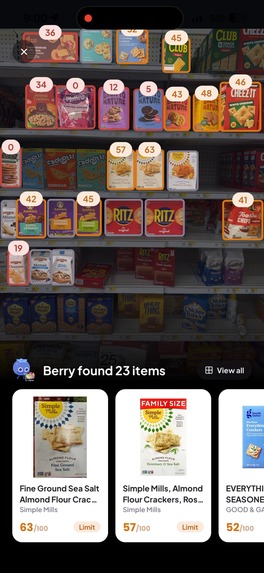
shelf scan
-
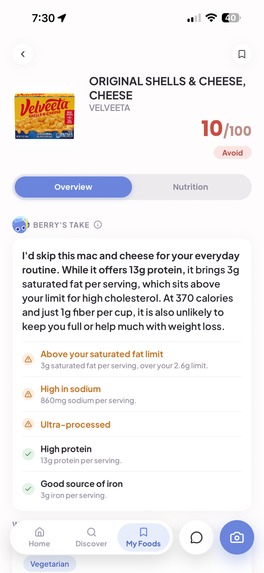
personalized product breakdown
-
-
-
-
-
-
-
-
-

Inspiration
As our parents got older, their doctors told them to start watching what they eat. But they didn't really know where to start. Everything online said something different: eat this, don't eat that. And at the store, every package says it's healthy: made with real fruit, natural flavors, 0 added sugars, dairy free. Oftentimes they picked something just because it claimed one or more of these labels and seemed healthy, but was it really? It was hard to know what to trust.
So we built Berry to cut through the noise, show you what matters for you, and help you find foods that are actually good for you, all based on nutrition guidelines and real data.
What it does
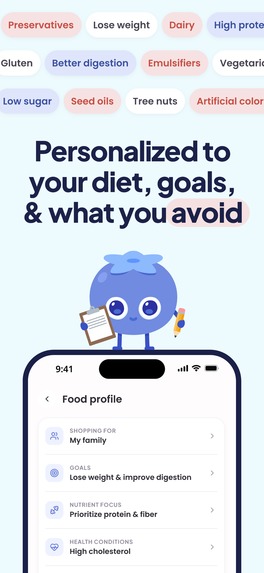
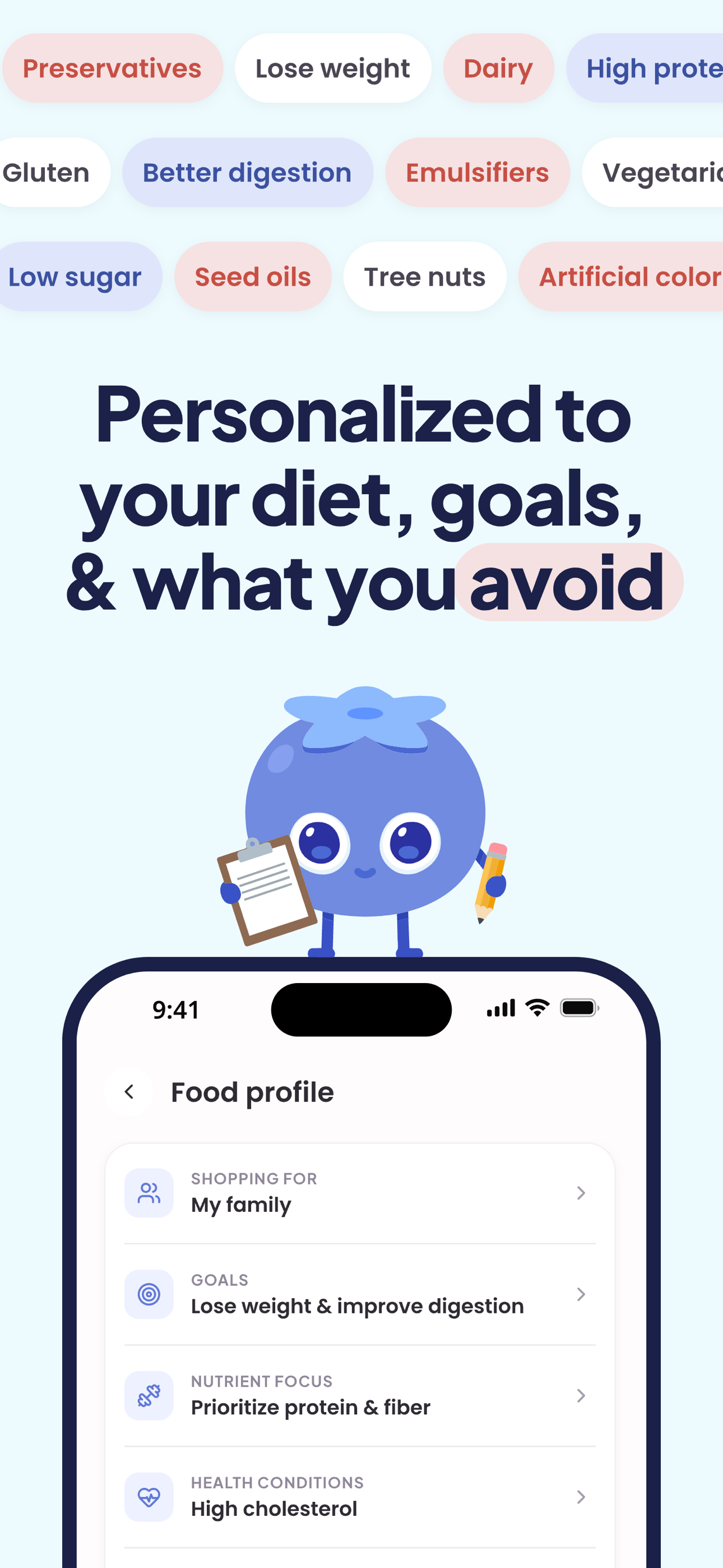
- Tell Berry about you. Allergies, diet, health conditions, ingredients you avoid, and what you're working toward. Then add anything the questions didn't cover in your own words, like "Training for my first marathon. Trying to stay away from artificial sweeteners," and Berry keeps it in mind with every answer.
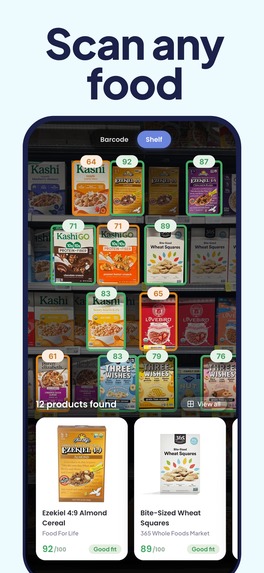
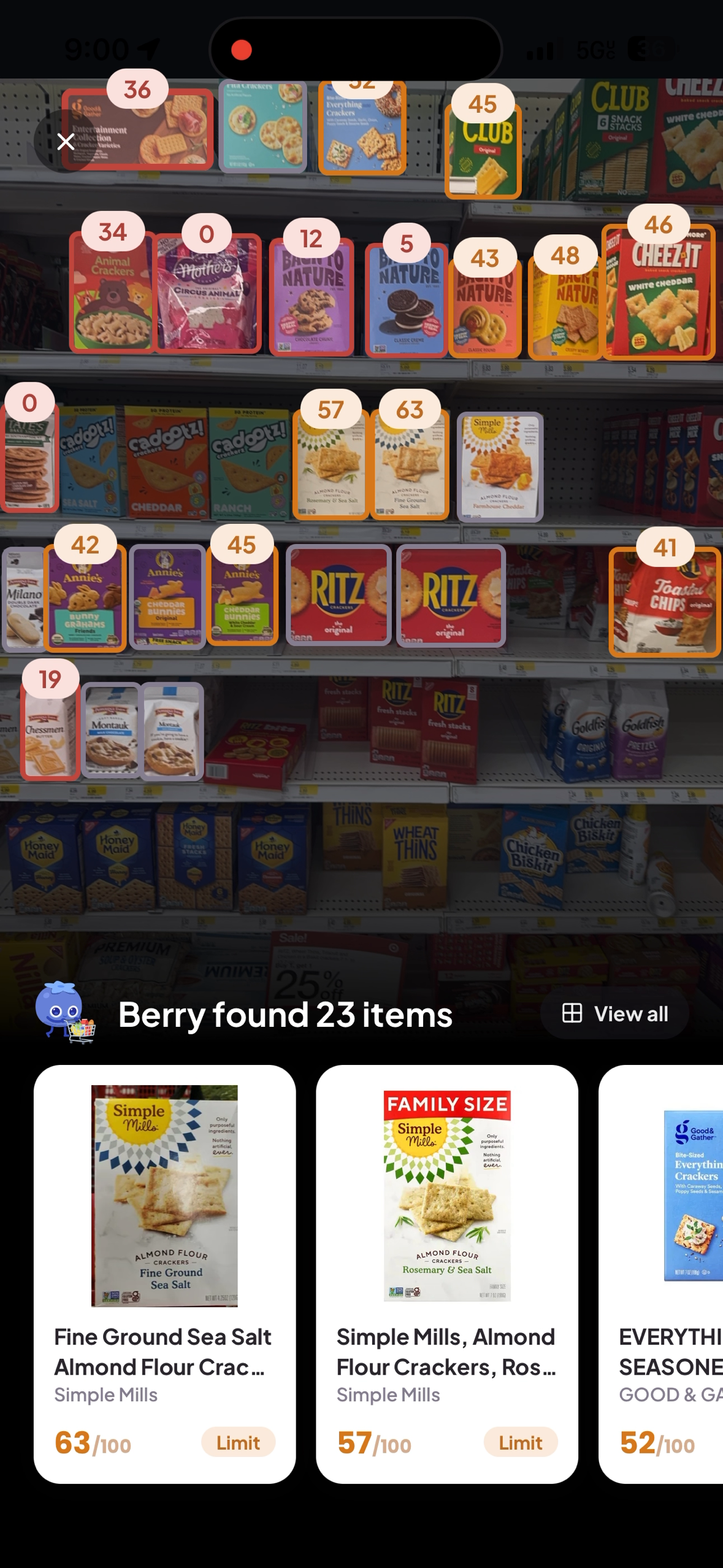
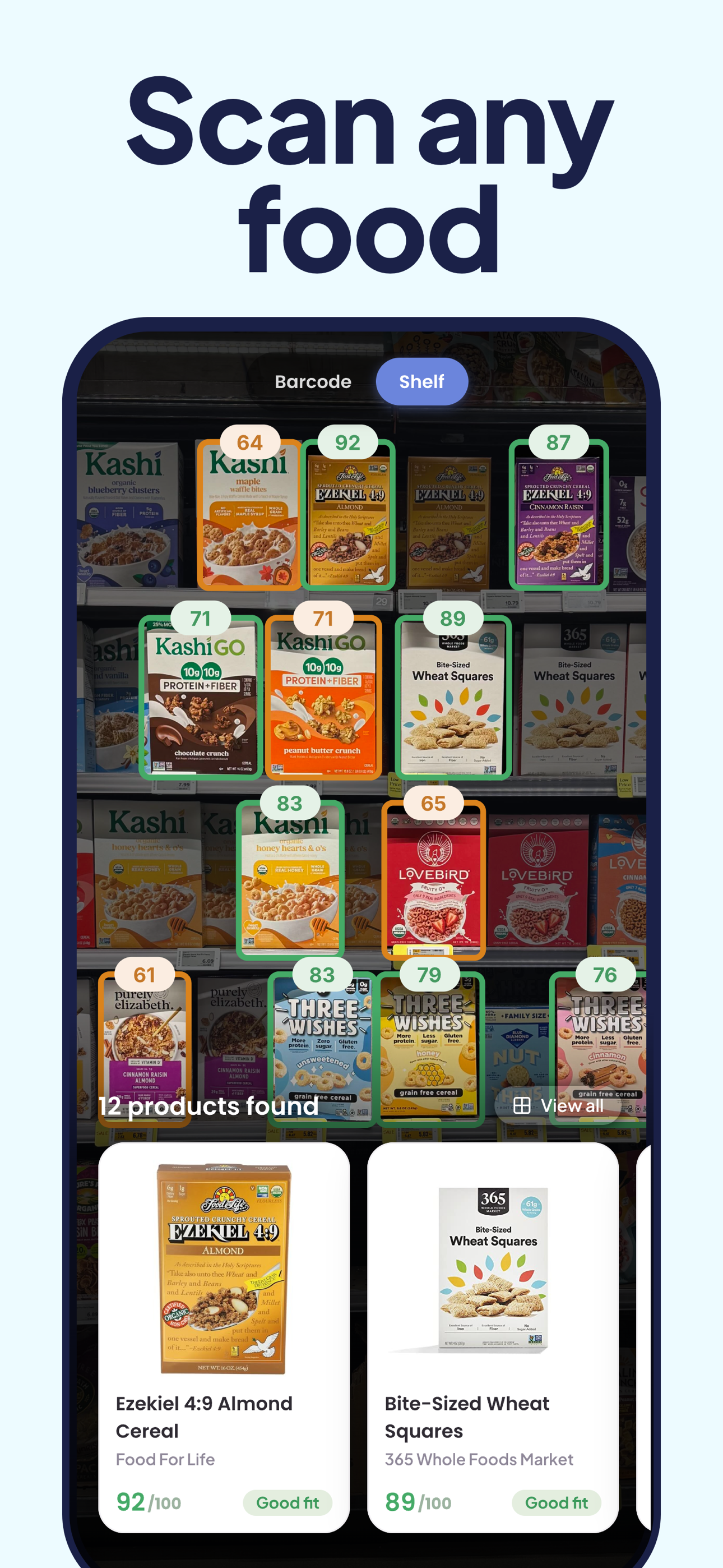
- Scan anything. A barcode, or a whole shelf in one photo, across more than 1 million US grocery products. If a product is missing, snap the front, Nutrition Facts and ingredients, and Berry analyzes it on the spot. Once it's checked, it's added for everyone.
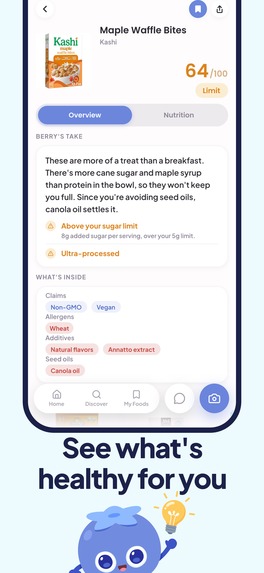
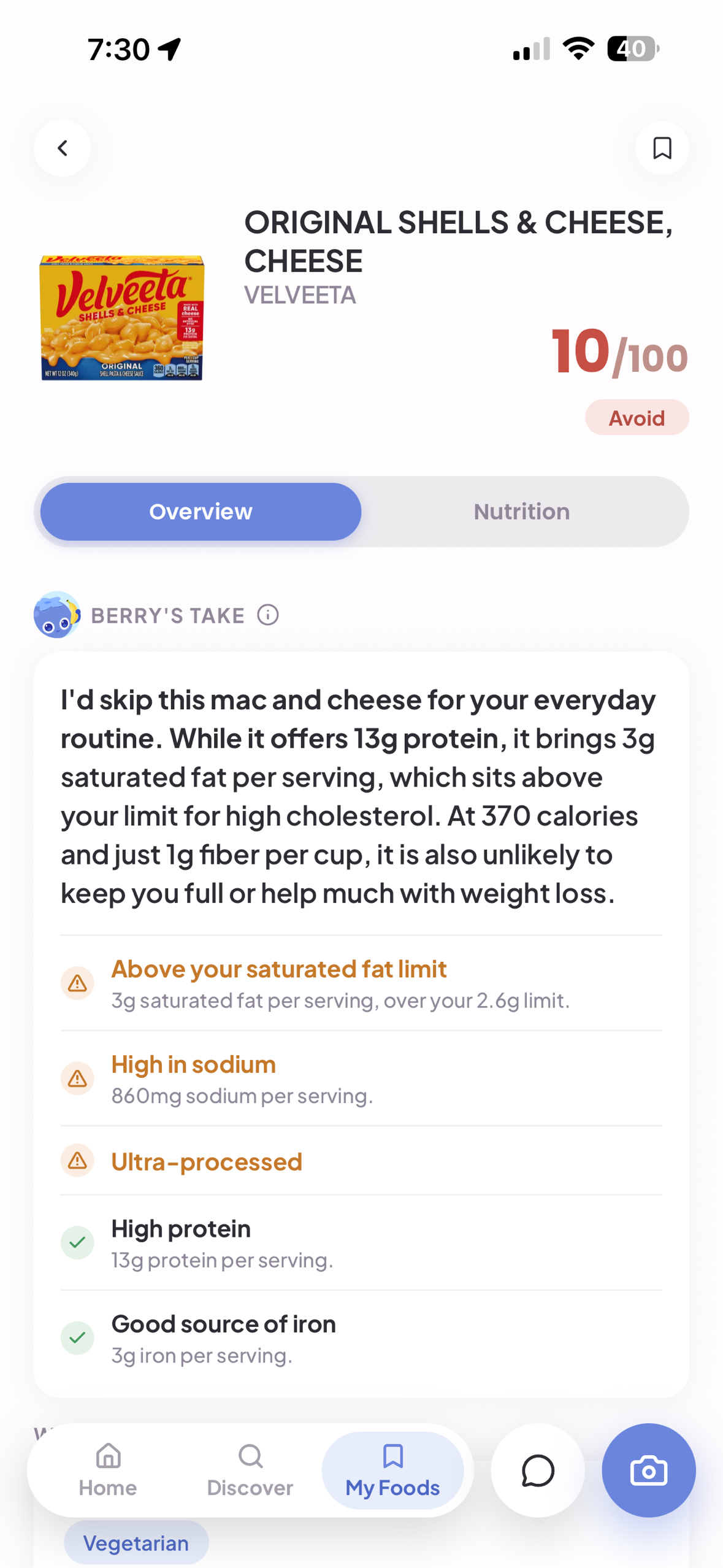
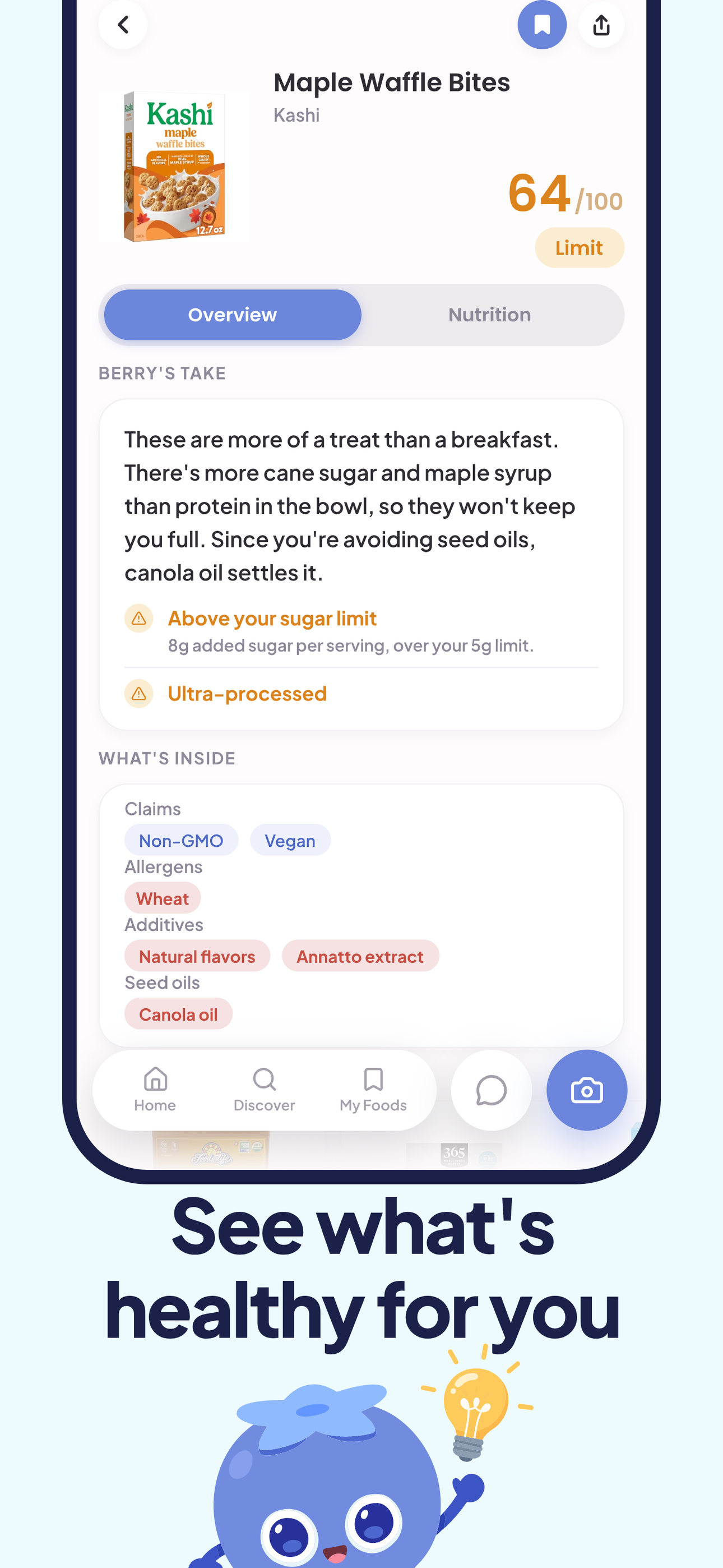
- Know what fits you, and why. Every product gets a breakdown and Berry's Take: what's good, what to watch out for, and why, checked against your profile.
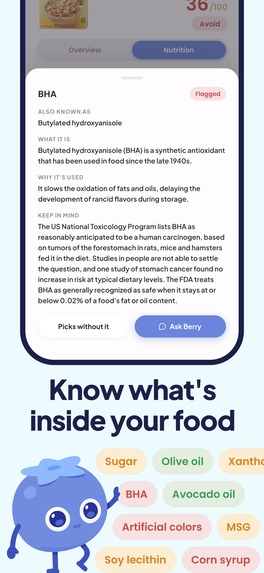
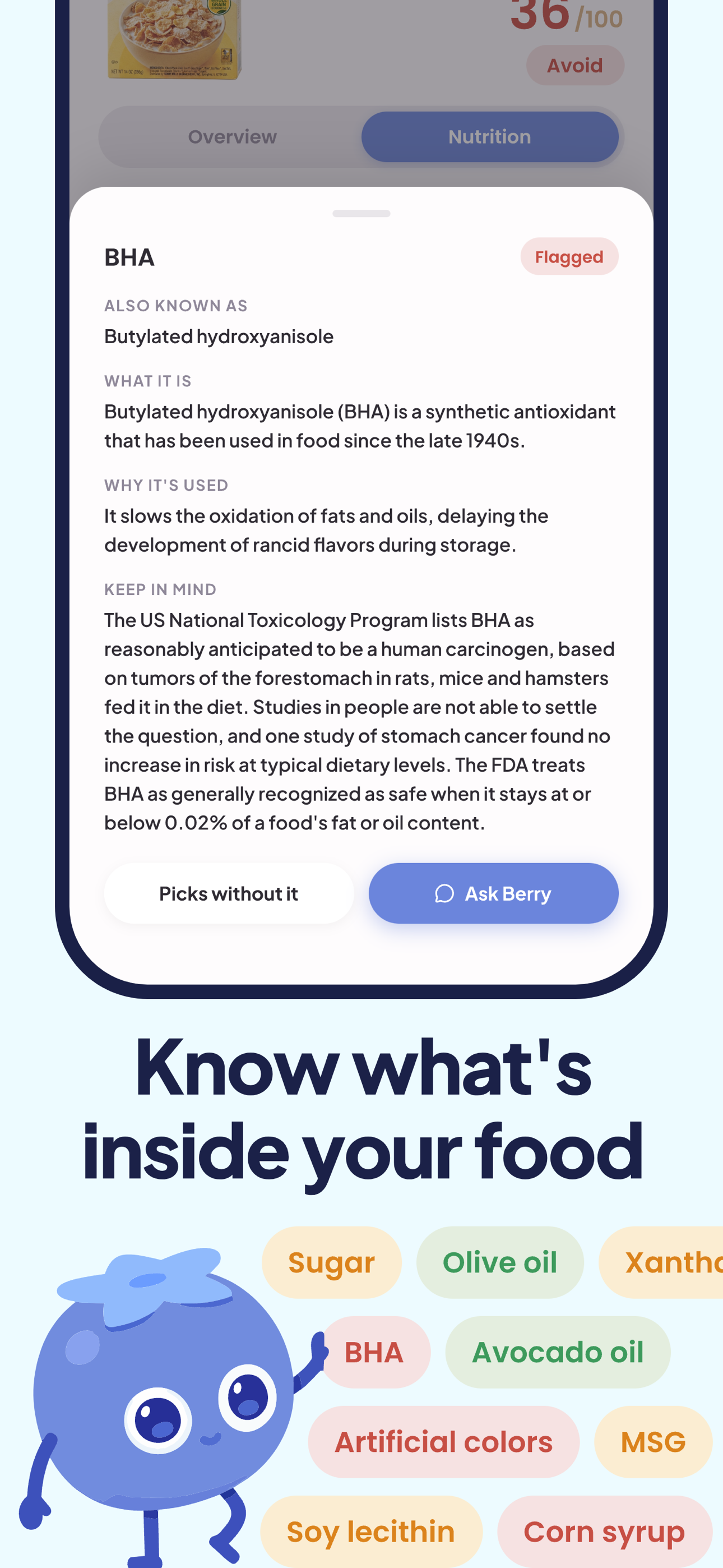
- Every ingredient, explained. Tap any highlighted ingredient and Berry tells you what it is, what it does in the food (emulsifier, preservative, sweetener and more) and why it's there. Ingredients you avoid, like seed oils, synthetic colors or sugar alcohols, are flagged in every product.
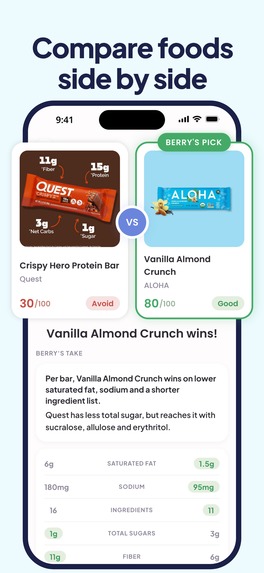
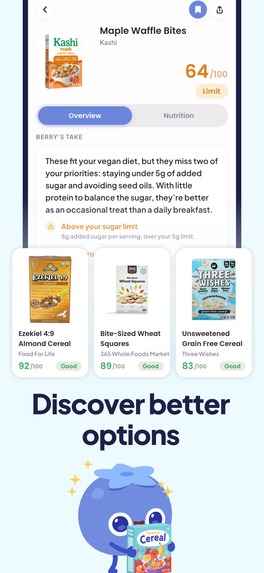
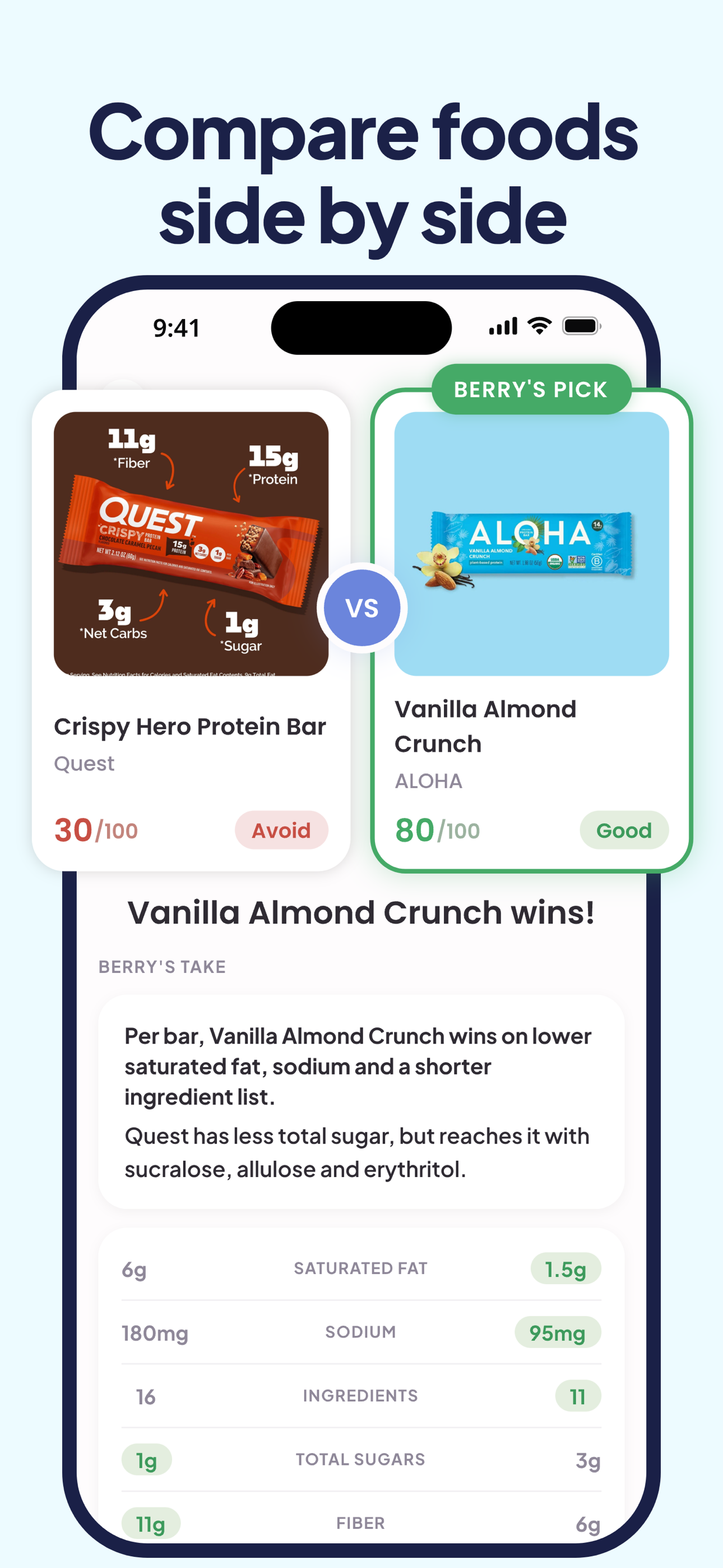
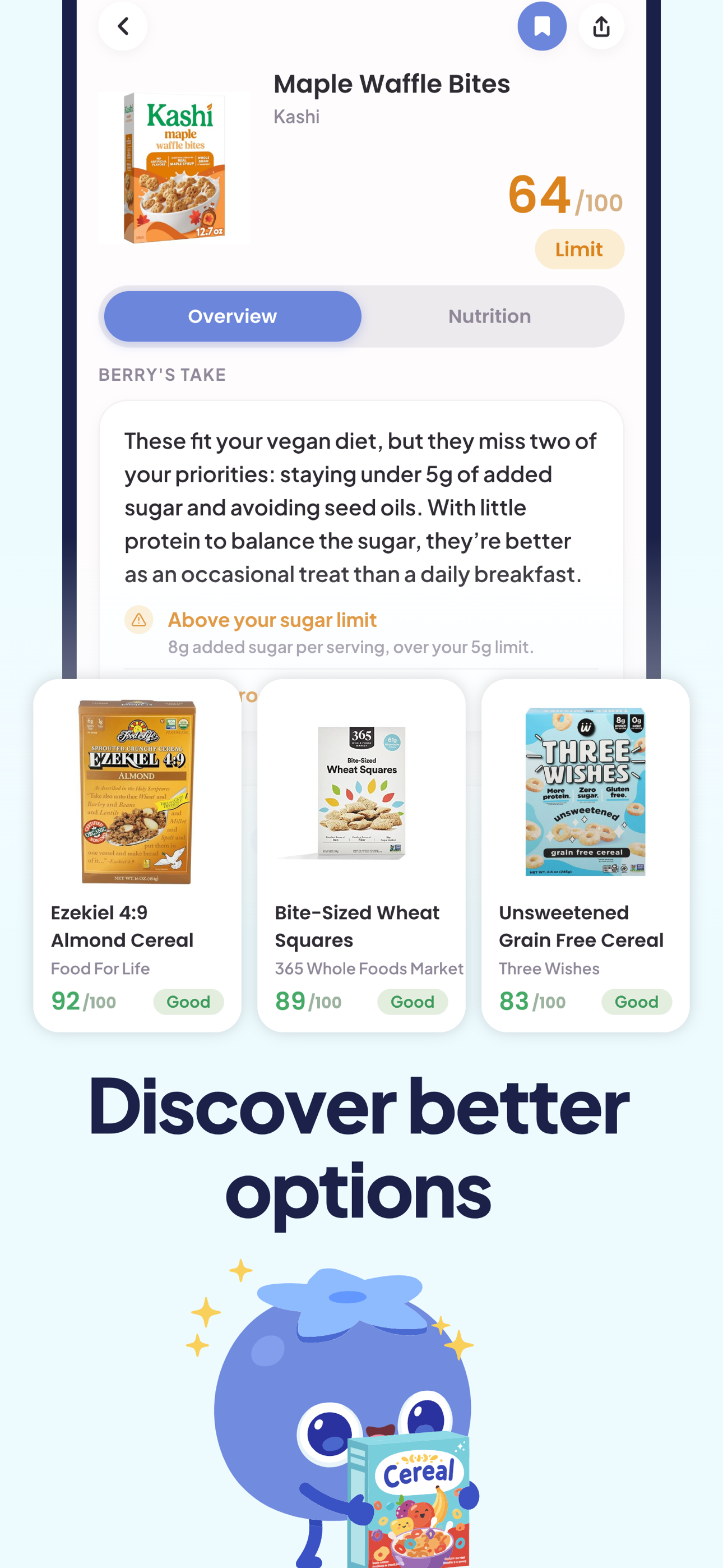
- Berry finds you something better. When another product fits you better, Better Picks suggests it and puts the two side by side. Or browse Discover by category, like cereal or snacks, to find better options before you shop.
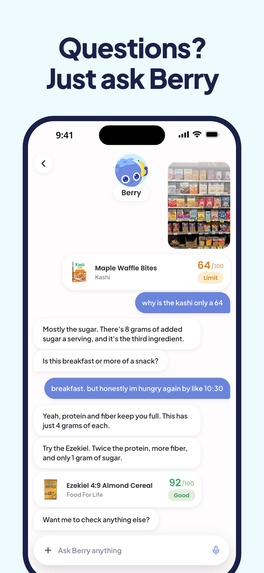
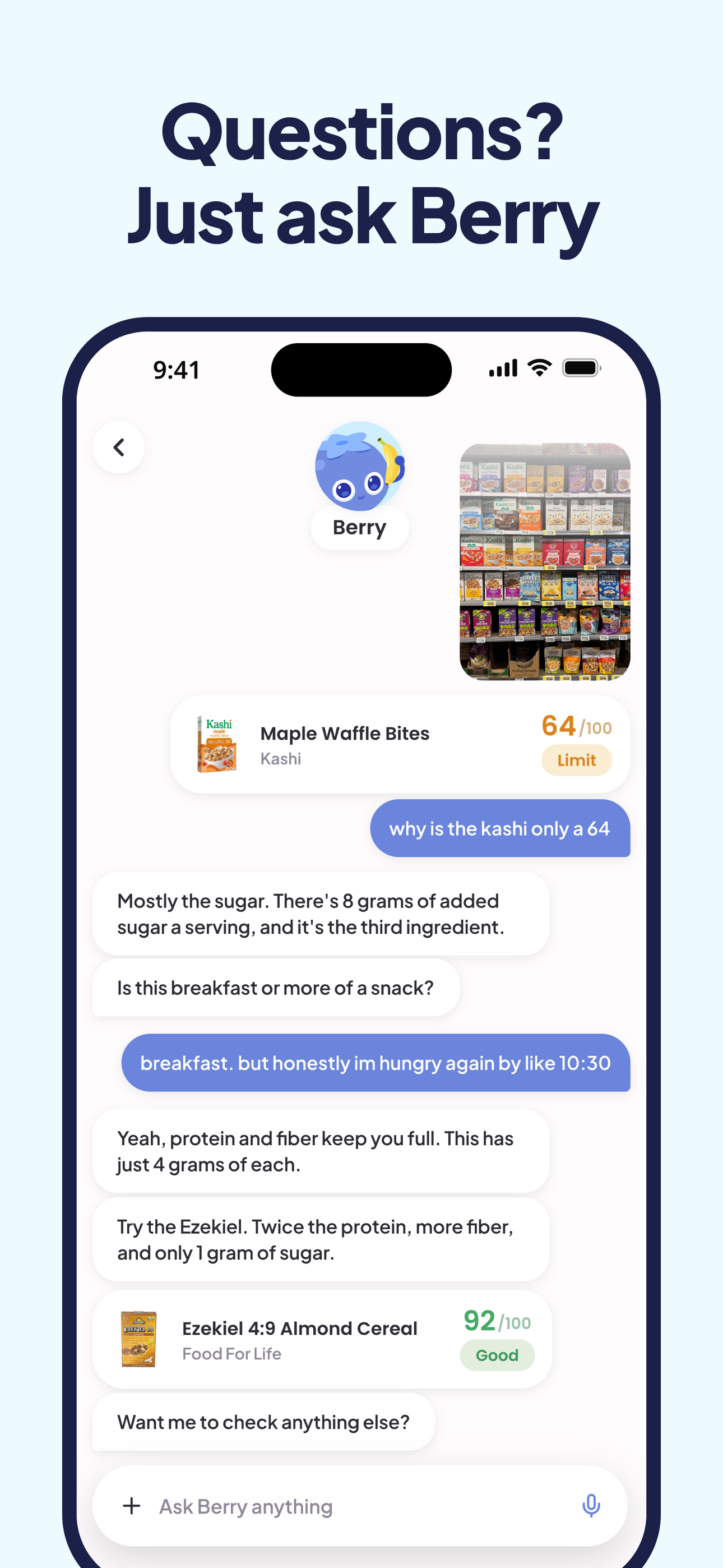
- Ask Berry anything. Chat with an AI food guide that knows your profile and can search more than a million products. Ask whether a snack works for your diet, which of two yogurts is better for you, what an ingredient does, or to find a high-protein cereal without seed oils. Berry remembers what you've scanned and saved, and saves products or builds collections for you when you ask.
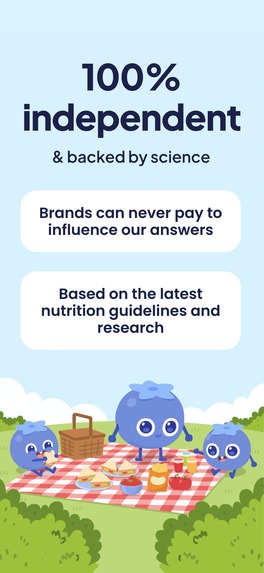
Berry is 100% independent: brands cannot pay to improve a score, get recommended, or shape an answer, and there are no ads or paid product placements.
How judges can try it
Download Berry from the App Store and go through setup, where you tell Berry about your allergies, diet and goals. Start the 7-day free trial when your plan is shown, which unlocks everything. Then scan any barcode, package or shelf. You can cancel any time in Settings > Apple Account > Subscriptions.
How we built it
Berry is a React Native app built with Expo, running on Cloudflare with a Postgres database. Its catalog covers more than 1 million US grocery products, built from USDA FoodData Central, Open Food Facts and manufacturer label data. We clean the sources, combine them into one record per product, and extend each record with our own allergen detection and health scoring. Multimodal AI reads packages and whole shelves from photos, and Berry's chat is an AI agent with tools that look up real products and the person's profile before answering. AI also helps us classify and clean the catalog at scale, and every AI feature is checked against our own evaluation sets before it ships. RevenueCat powers the subscriptions, paywall, restores and Customer Center. We worked alongside AI coding agents throughout, with automated tests and evaluation sets keeping quality high while we moved fast.
Challenges we ran into
- Reading a whole shelf in one photo, fast. A shelf photo is crowded, angled and full of half-hidden labels. Berry has to find every product, read what it can of each label, match it to the right product among more than a million, and check each match before showing it. Nobody waits a minute in a grocery aisle, so Berry reads each photo in the background the moment it's taken, which cut the wait from around 30 seconds to under 10.
- Building a catalog people can rely on. Food databases disagree on names, serving sizes, nutrition and ingredients, and many records are incomplete. We combined several sources into one clean record per product and detect allergens from the ingredient text itself, including "may contain" warnings. Package photos and reports people send from the app go back into the catalog, so every contribution fills a gap for everyone.
- Making ingredient lists understandable. The same ingredient appears under dozens of names, spellings and nested sub-lists. Berry recognizes more than 6,000 ingredients, sorts them into the groups people care about (seed oils, synthetic colors, sugar substitutes, preservatives, nitrites and more), and explains what each one does in plain words.
- Scoring every kind of food fairly. Olive oil is almost all fat, cheese is naturally salty, and a diet soda has almost nothing in it, but that doesn't make the soda the healthiest choice. Berry sorts products into more than 80 food categories so each one is judged in context, following public health guidelines and research from the FDA, WHO and EFSA.
- Personal, not universal. The same cereal can be a great fit for one person and a poor one for another. Every product is checked against the person's own allergies, diet, conditions and goals, and the warnings and Berry's Take speak to what matters to them. Berry also had to turn a note in someone's own words, like "training for my first marathon", into better answers on every product.
- Analyzing a product from its package. When a product is missing or incomplete, Berry reads photos of the front, Nutrition Facts and ingredients and combines them into one product it can analyze. Labels are curved, glossy, cropped and printed in tiny type, so making this accurate enough for a personal answer on the spot, especially for allergens, took a lot of work.
- AI that is grounded and calm. Berry's Take and chat answers have to come from the actual products in the catalog and the person's own profile, never from a guess. Berry never calls a food "safe", never scares, and always points back to the label, because a scan cannot see everything.
- Better options, not just verdicts. Telling someone a product is a poor fit is only half the job. Better Picks had to find real alternatives that suit the same person, and only appear when one is genuinely better, so a suggestion always means something.
Accomplishments that we're proud of
- One photo of a shelf finds, matches and rates every product on it, in under 10 seconds.
- A catalog of more than 1 million US grocery products, combined from several sources into one clean record each, with allergens detected from the ingredient text.
- More than 6,000 ingredients recognized and explained in plain words.
- No dead ends: a product that isn't in any database still gets a full answer from a few photos.
- Berry, our blueberry mascot, designed by hand so the app has a warm, friendly face that fits how it talks about food.
- Launched on the App Store on September 18.
What we learned
Our parents didn't need more information about food. They needed a clear answer about what mattered for them, and a better option to reach for. People don't want to be scared into eating well; they want to feel confident in what they pick.
What's next for Berry: AI Food Scanner
Grocery lists, household profiles for families with different needs, and recall alerts.

Log in or sign up for Devpost to join the conversation.