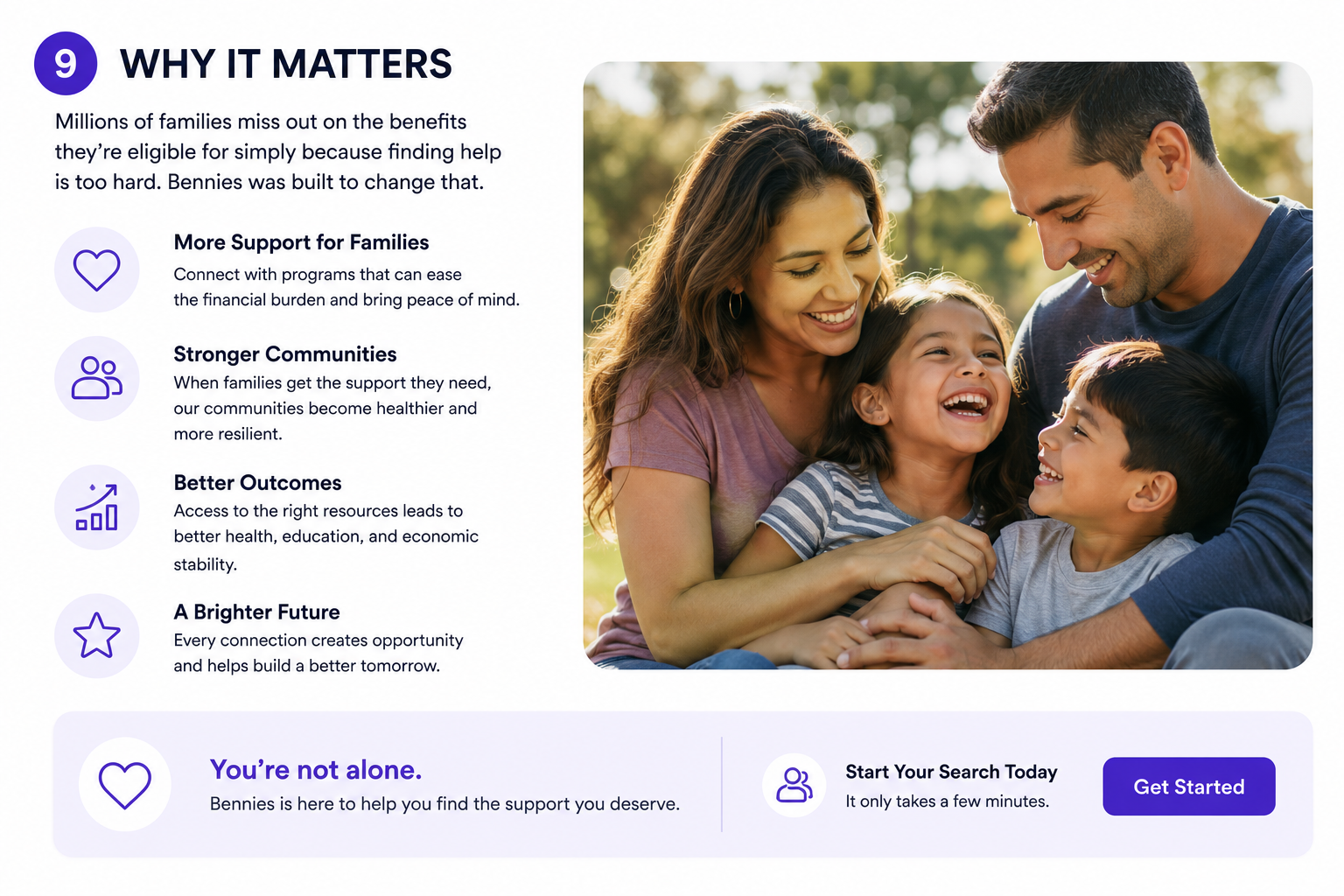
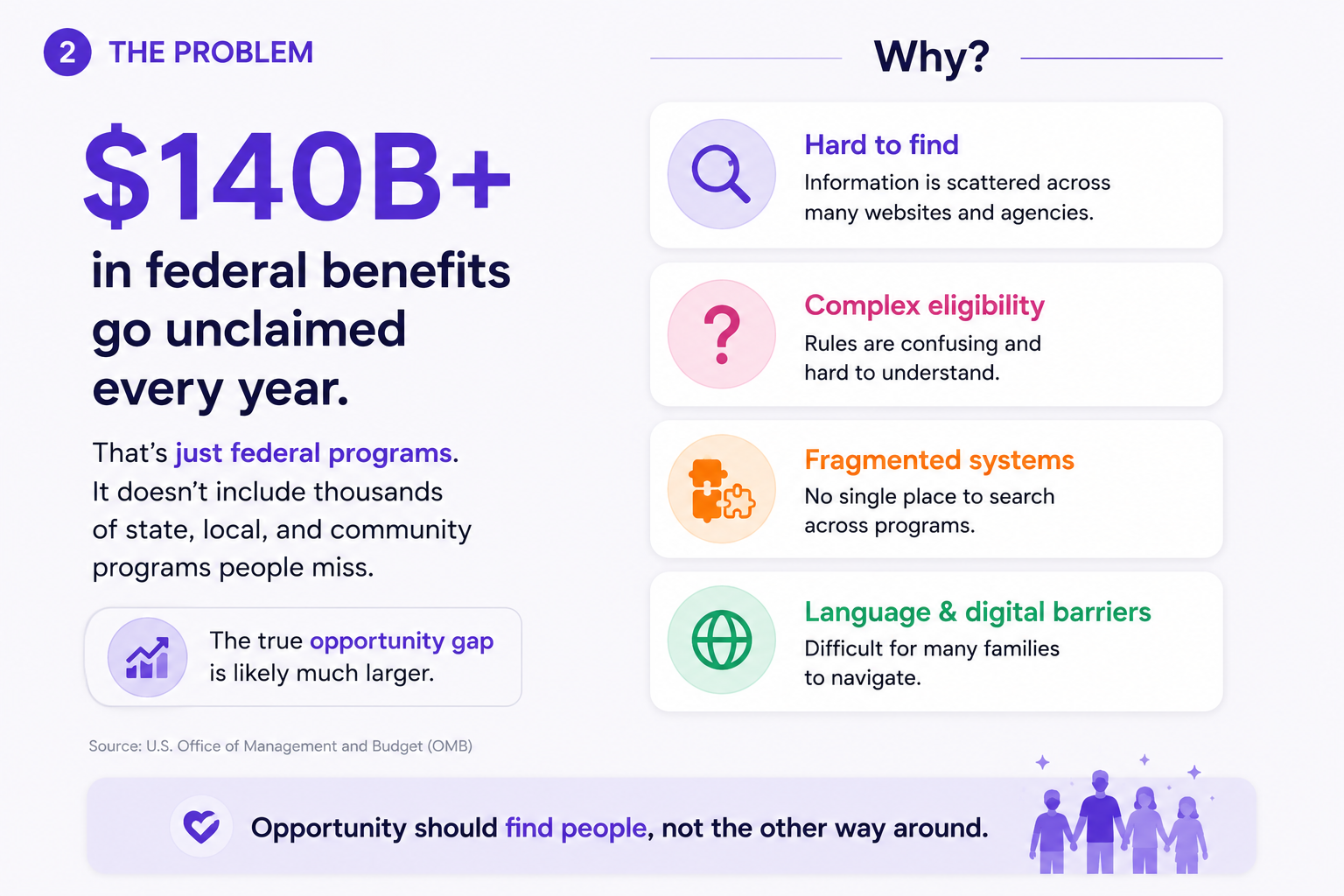
Inspiration According to the U.S. Office of Management and Budget, eligible Americans forgo more than $140 billion in federal benefits every year because they are unaware of available programs or face administrative barriers to accessing them. This estimate covers federal programs only and does not include the thousands of state, county, city, nonprofit, employer-sponsored, and community assistance programs that are also underutilized. The true opportunity gap is likely much larger.
The idea was further strengthened by teammate Maitri’s experience working with the New Jersey Innovation Authority in the civic technology space. Through her work, she has seen firsthand how difficult it can be for residents to discover and access the programs they’re eligible for, reinforcing the importance of designing solutions that truly reach the people who need them most.
Together, the team asked a simple question:
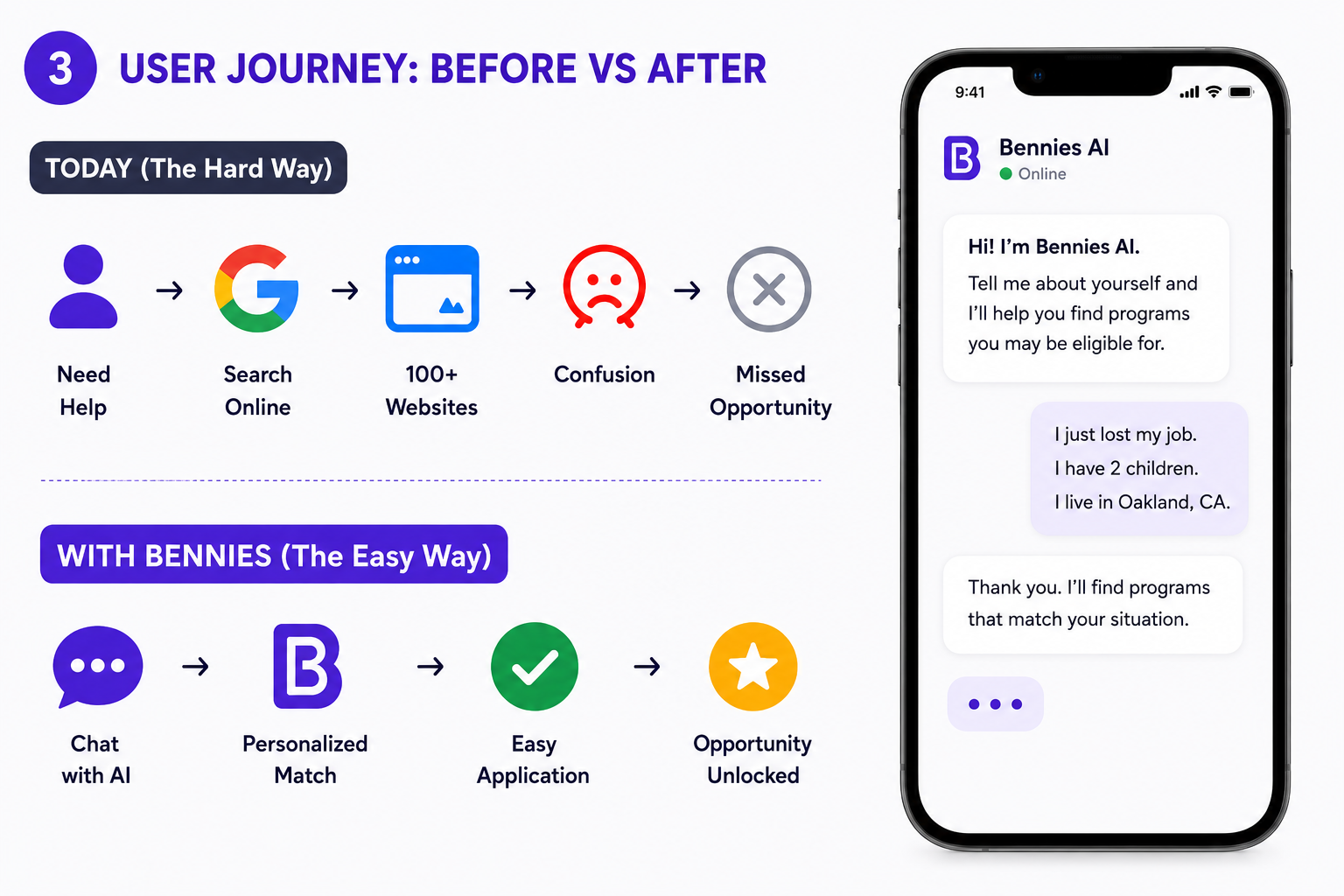
What if AI could make discovering life-changing opportunities as easy as having a conversation?
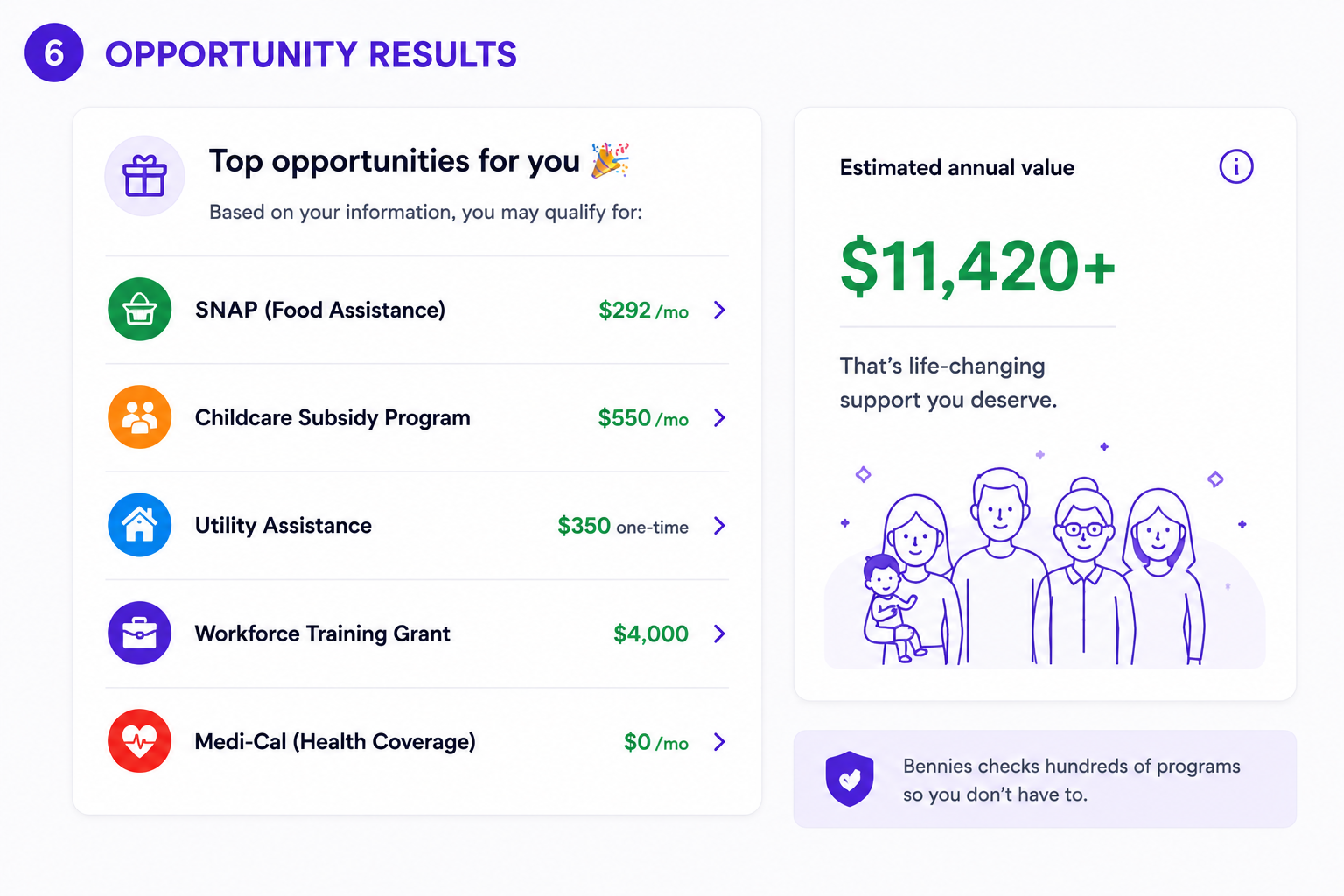
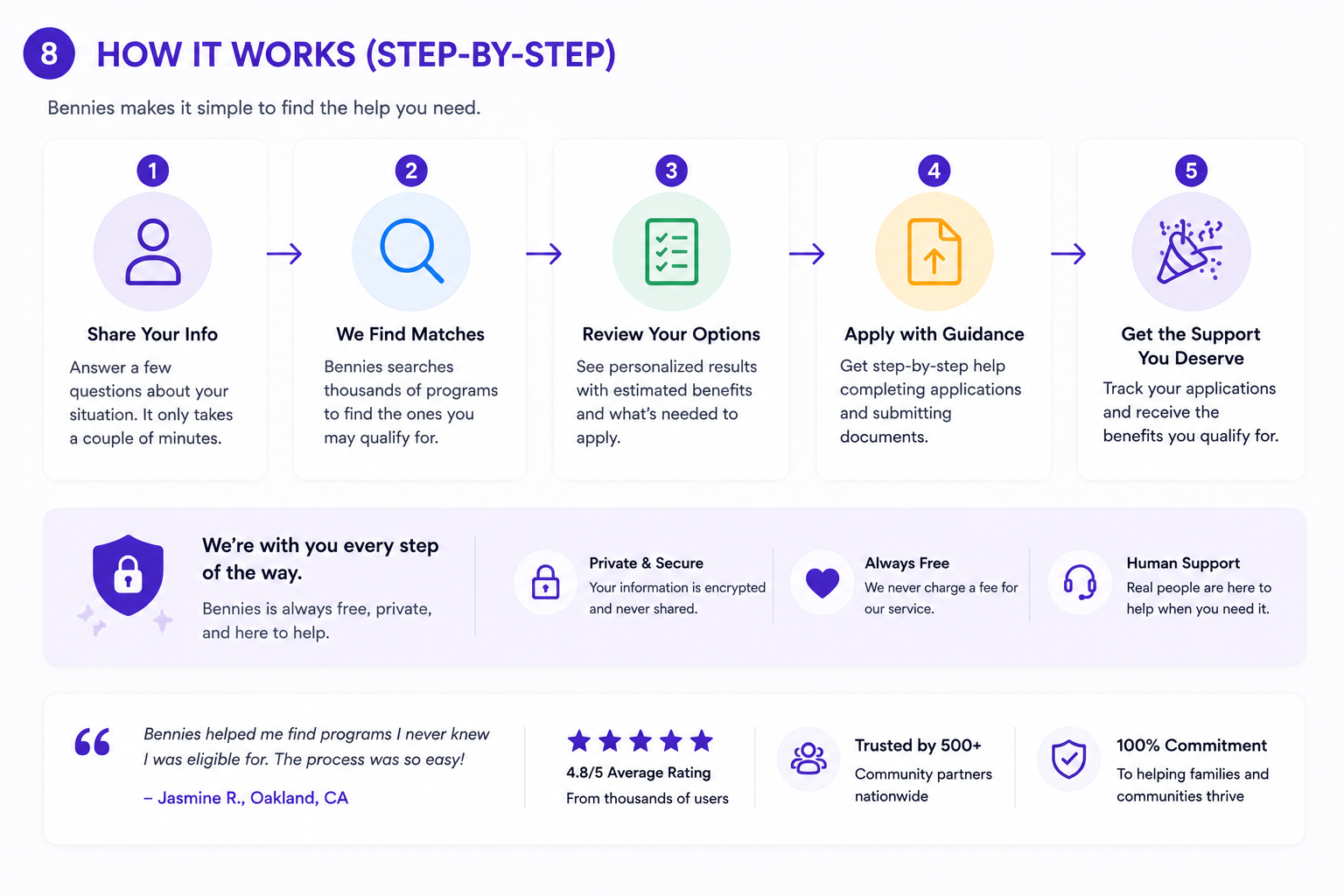
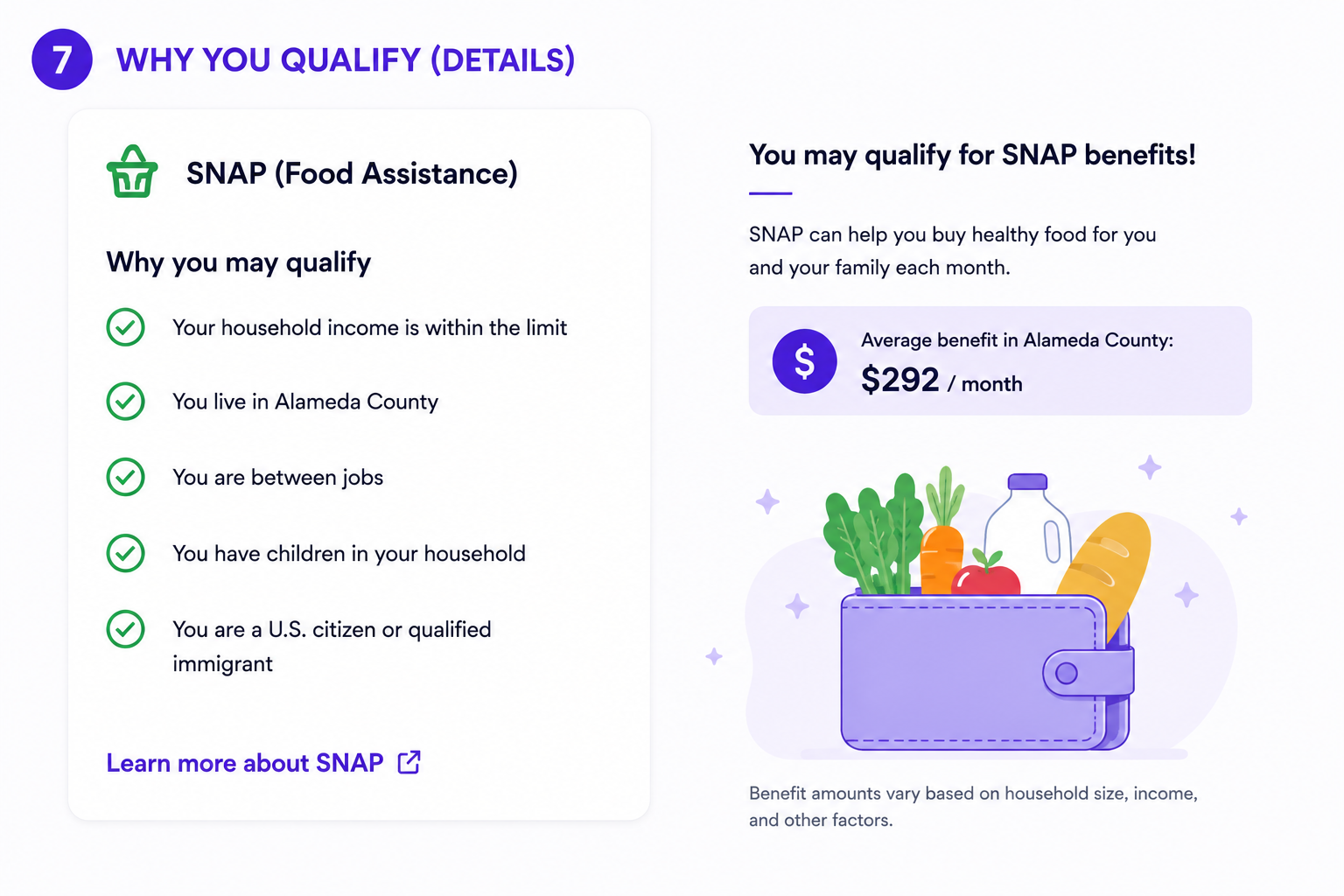
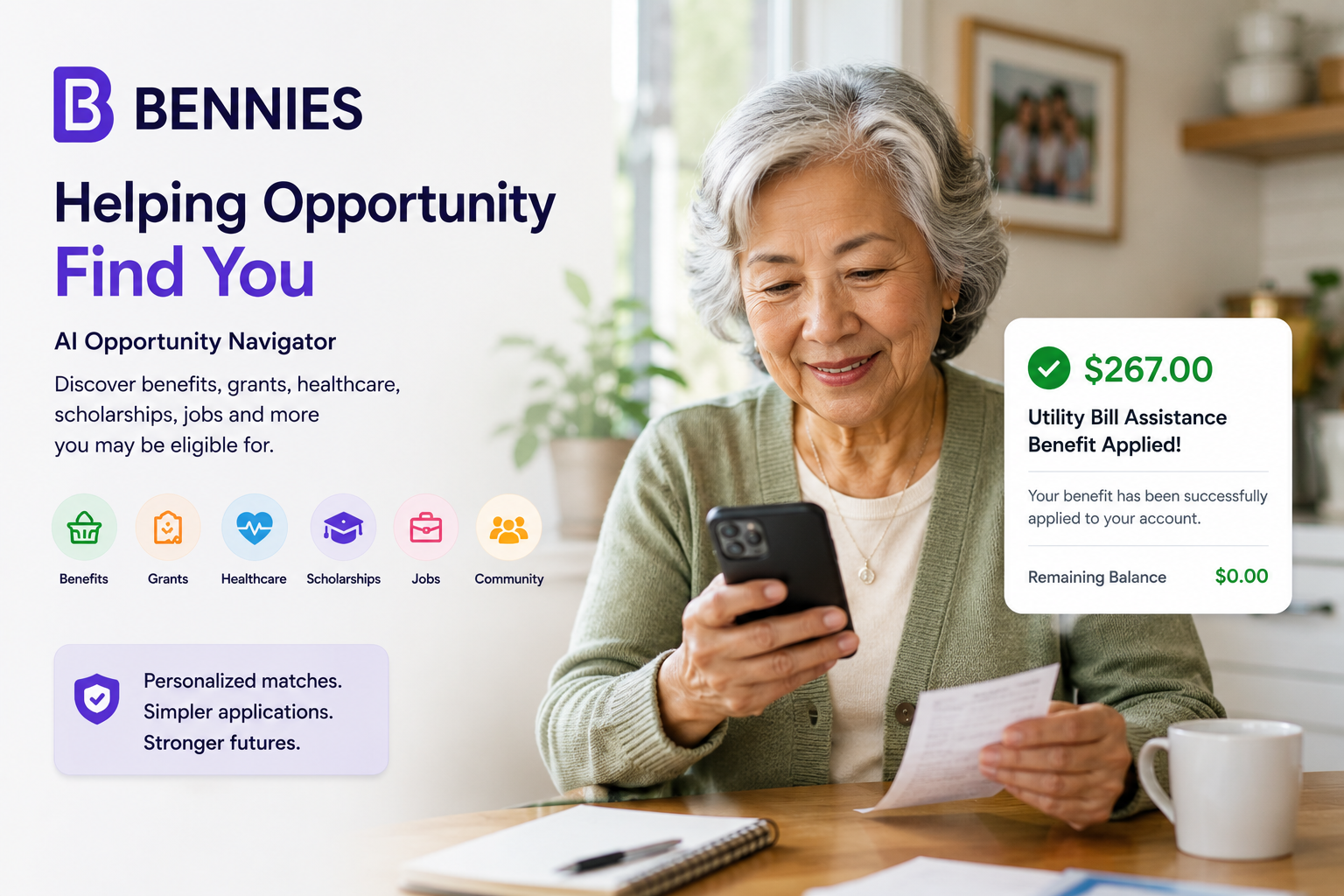
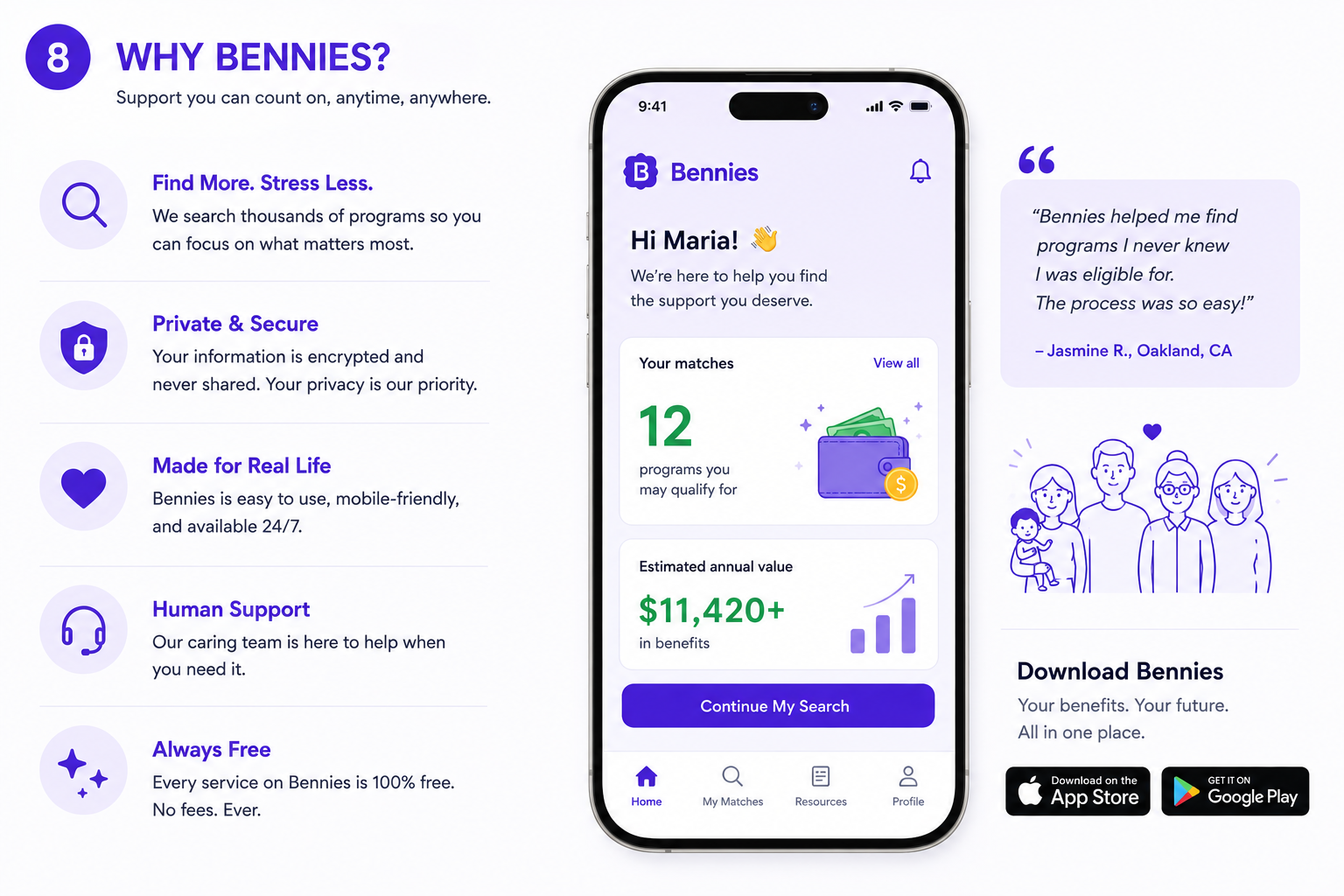
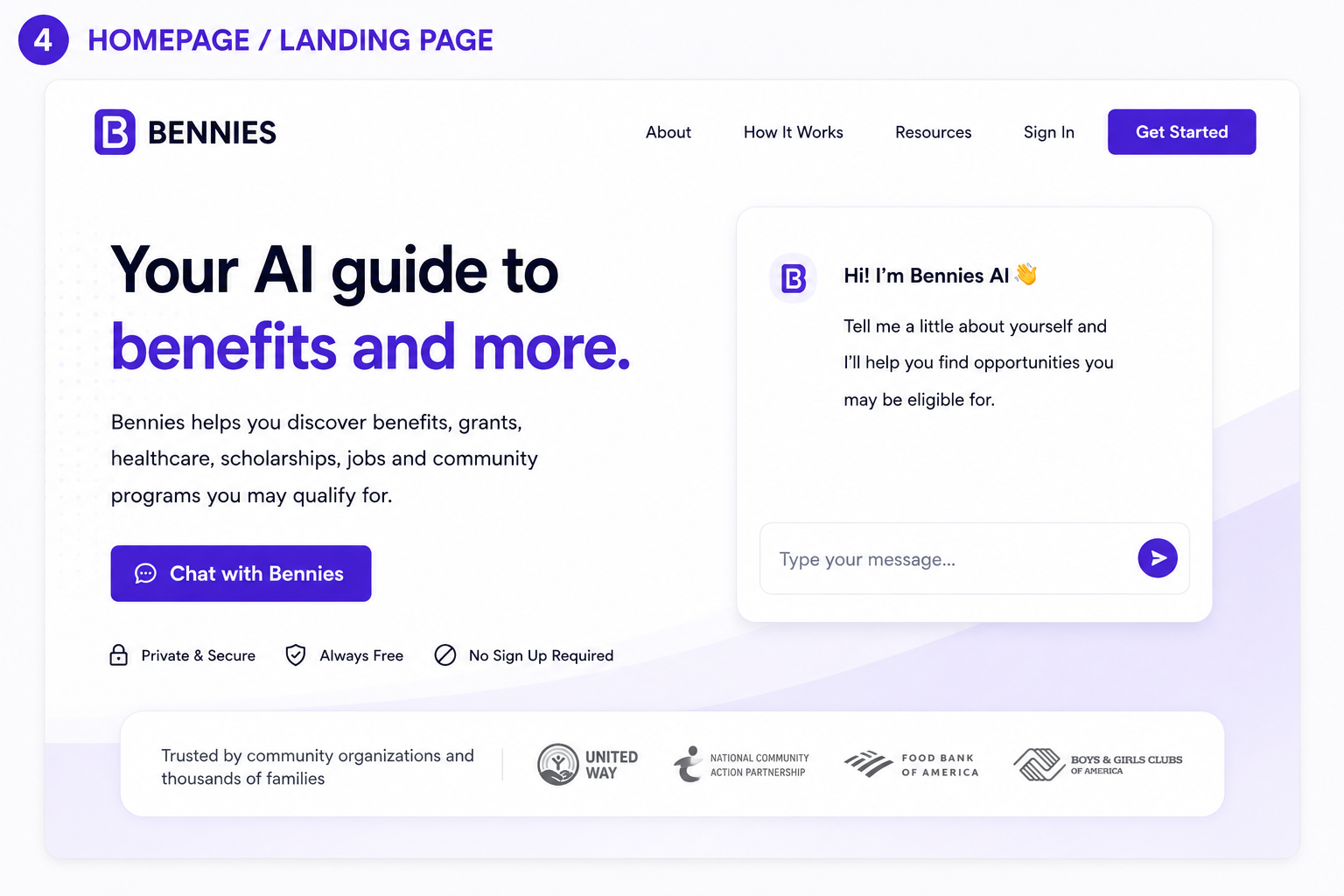
That question became the foundation for Bennies—an AI-powered Opportunity Navigator that helps people discover benefits, grants, scholarships, healthcare resources, employer benefits, workforce programs, and community services tailored to their unique circumstances.
⸻
How We Built It
Bennies was built through a collaborative effort that brought together expertise in AI, civic technology, product strategy, and human-centered design.
- Claude Code accelerated much of the development process, enabling rapid prototyping and iteration throughout the hackathon. Throughout development, the team prioritized simplicity, accessibility, and conversational AI to make the experience approachable for people of all backgrounds and levels of digital literacy.
⸻
Challenges We Faced
One of the team’s biggest challenges was forming as a brand-new team during the hackathon. Coming from different backgrounds and meeting for the first time, the team had to quickly build trust, align on a shared vision, and establish an effective way of collaborating.
Another challenge was narrowing an enormous societal problem into an MVP that could be built within a single weekend. The opportunity landscape—including government benefits, grants, scholarships, healthcare resources, employer benefits, and nonprofit services—is incredibly broad. The team constantly balanced ambition with feasibility to focus on the experience that could deliver the greatest value in the shortest amount of time.
From a technical perspective, the team navigated integrating multiple AI tools and development workflows while also migrating the application to DigitalOcean during development was a challenge. So we ended up just using GritHub.
Design presented another unique challenge. Civic technology products have a much higher standard for accessibility than traditional consumer applications. Bennies needed to serve people across different languages, ages, levels of digital literacy, and accessibility needs—including older adults, caregivers, individuals with visual impairments, and people with disabilities. Many government services are also used by children and their caregivers, making clarity, simplicity, and usability essential. Balancing these accessibility standards with a modern AI-powered experience required thoughtful design decisions throughout the project.
⸻
What We Learned
Building Bennies reinforced the idea that AI’s greatest impact isn’t simply automating tasks—it’s expanding access to opportunity.
Technology creates meaningful change only when people can actually benefit from it. The challenge isn’t that support doesn’t exist; it’s that the system is fragmented, difficult to navigate, and often inaccessible to the people who need it most. AI has the potential to dramatically reduce that administrative burden by understanding an individual’s unique circumstances, identifying relevant opportunities, and guiding them through the process in plain language.
While Bennies began as an AI-powered benefits navigator, the team quickly realized the vision was much bigger.
The team believes Bennies can become the foundation for the world’s first Opportunity Graph.
Just as Google built the Knowledge Graph to organize information, LinkedIn built the Economic Graph to connect professionals with careers, and Meta built the Social Graph to connect people, Bennies aims to build an Opportunity Graph that connects people with the opportunities they’re uniquely eligible for.
An Opportunity Graph is a living network that understands both people and opportunities. It continuously maps relationships between individuals and benefits, grants, scholarships, workforce development programs, healthcare resources, employer benefits, nonprofit services, and community organizations to create personalized pathways that help people improve their lives.
This represents the next evolution of Civic Tech.
Governments around the world are investing heavily in digital transformation and AI to modernize public services and improve accessibility. Yet most public services remain reactive—requiring residents to know what exists, determine whether they’re eligible, and navigate complex systems on their own.
Bennies flips that model. Instead of asking people to search through fragmented systems, the platform proactively surfaces relevant opportunities based on each person’s unique circumstances. Rather than becoming another search engine, Bennies has the potential to become the intelligent infrastructure that powers equitable access to opportunity.
Perhaps the team’s biggest takeaway was that meaningful innovation comes from diverse perspectives. Personal lived experience, civic technology expertise, AI engineering, product strategy, and inclusive design all contributed to shaping a solution that is both technically innovative and deeply human.
The team believes everyone deserves equal access to opportunity—not just those who know where to look.
This is only the beginning. The vision for Bennies is to build the AI-powered Opportunity Graph that helps ensure opportunity finds people—not the other way around.
Built With
- astro-framework
- claude
- digitalocean-hosting
- grit
- grithub
- node.js
- typescript

Log in or sign up for Devpost to join the conversation.