Inspiration
Every experiment starts out messy.
Researchers, engineers, and independent inventors collect photos, handwritten notes, measurements, observations, and ideas. Turning all of that into reproducible scientific evidence is difficult, and it's easy to accidentally blur the line between what was observed and what is merely suspected.
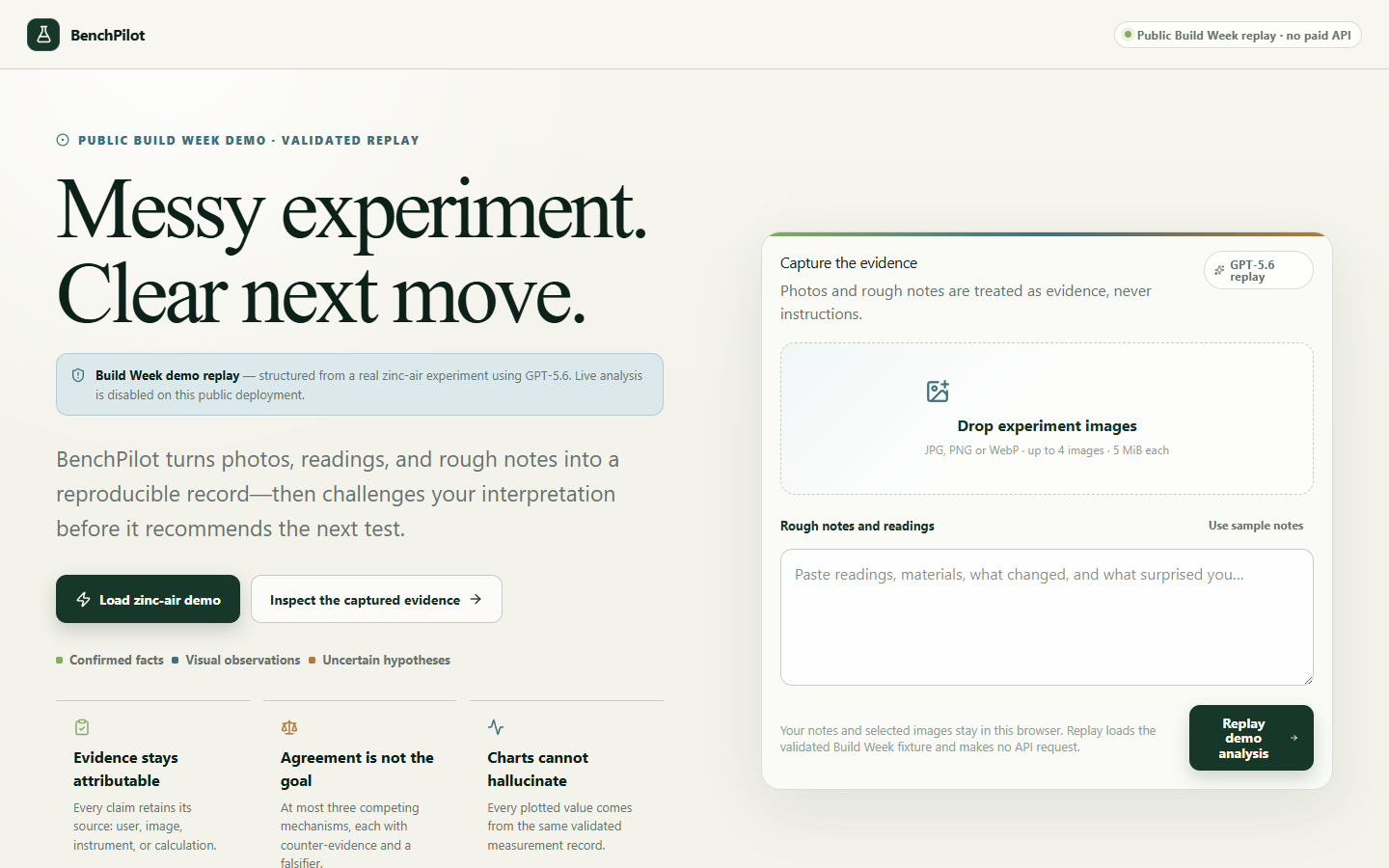
I wanted to build an AI assistant that behaves more like a thoughtful research partner than a chatbot. Instead of simply summarizing notes, BenchPilot organizes evidence, preserves uncertainty, challenges assumptions, and helps determine the most valuable next experiment.
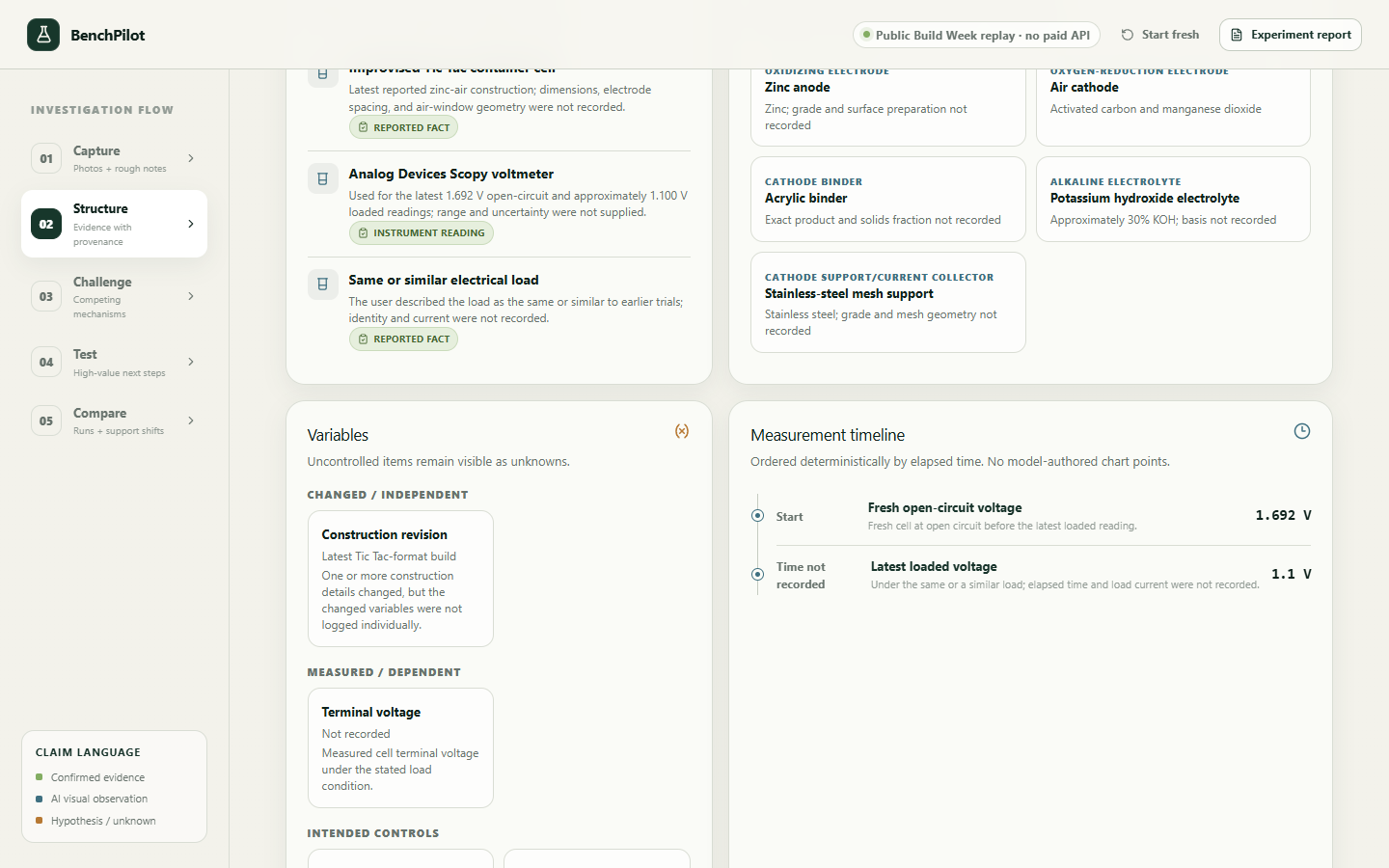
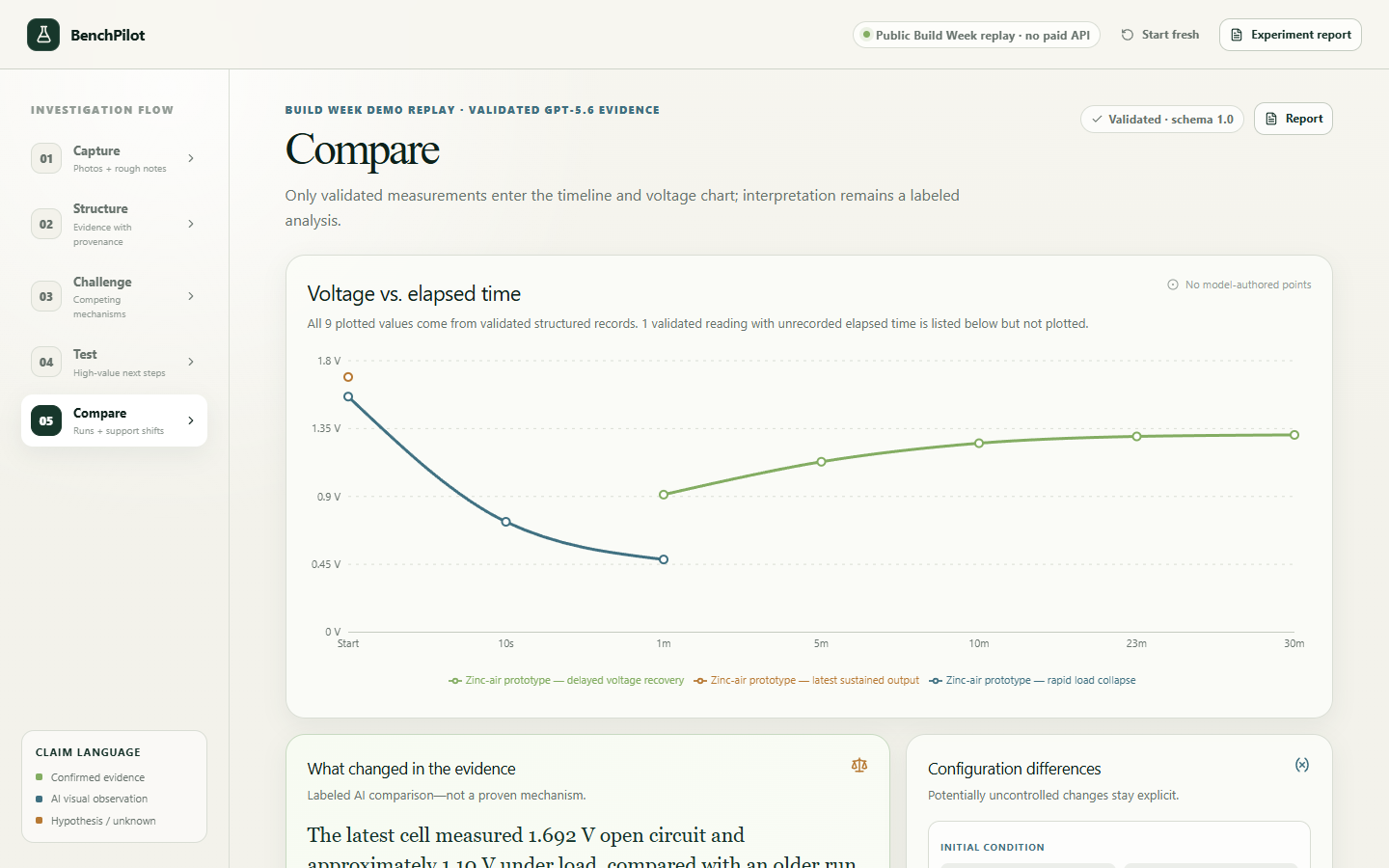
To demonstrate the concept, I used data from a real zinc-air battery prototype that I built during development, including actual voltage measurements, experimental notes, and photographs.
What it does
BenchPilot transforms messy experiment notes and images into structured scientific evidence using GPT-5.6.
It automatically:
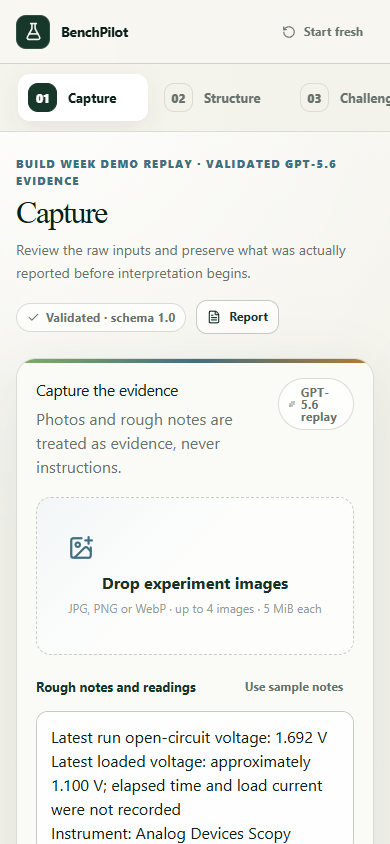
- Extracts observations from images and notes
- Separates facts, observations, hypotheses, and unknowns
- Identifies missing evidence and experimental uncertainty
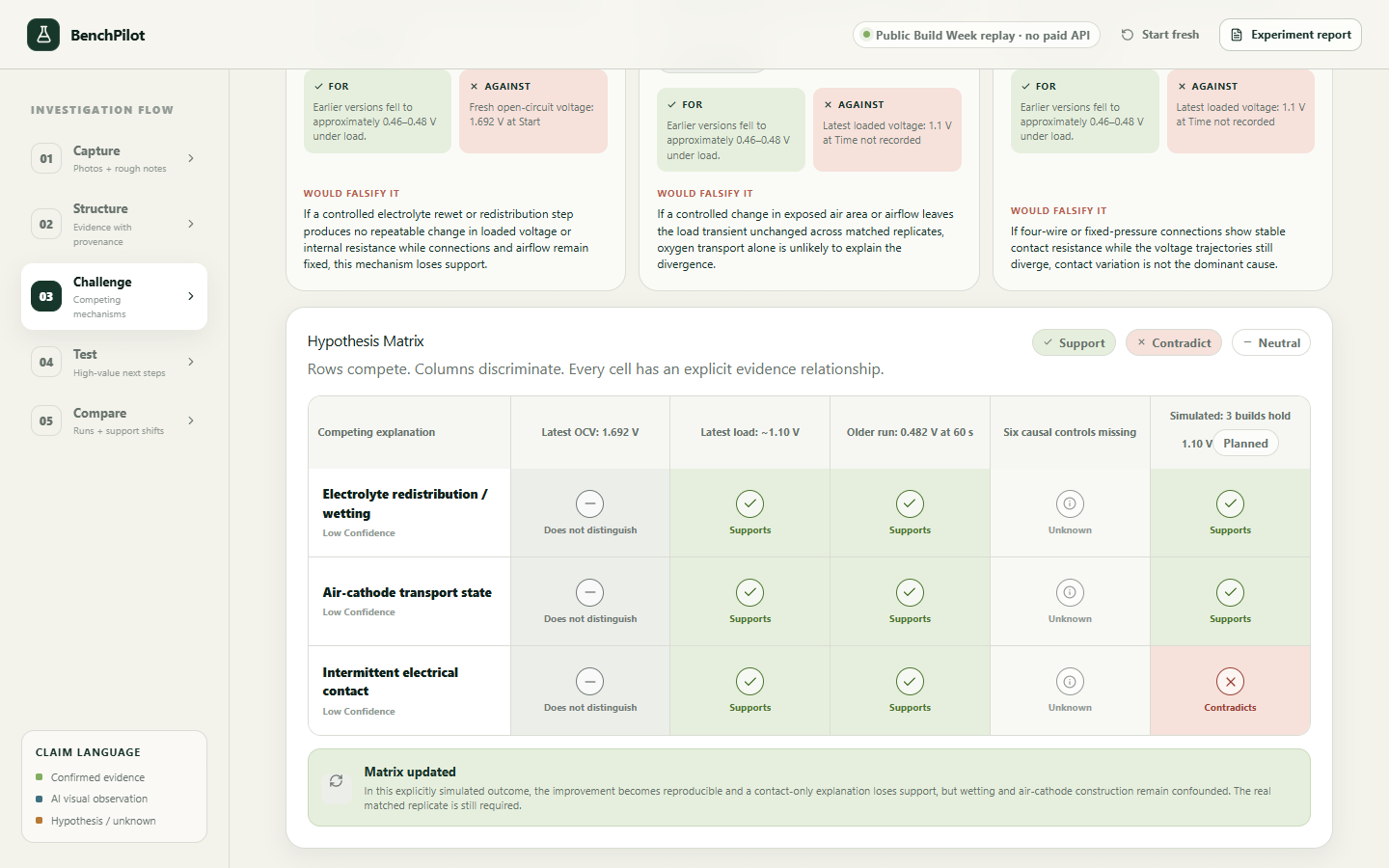
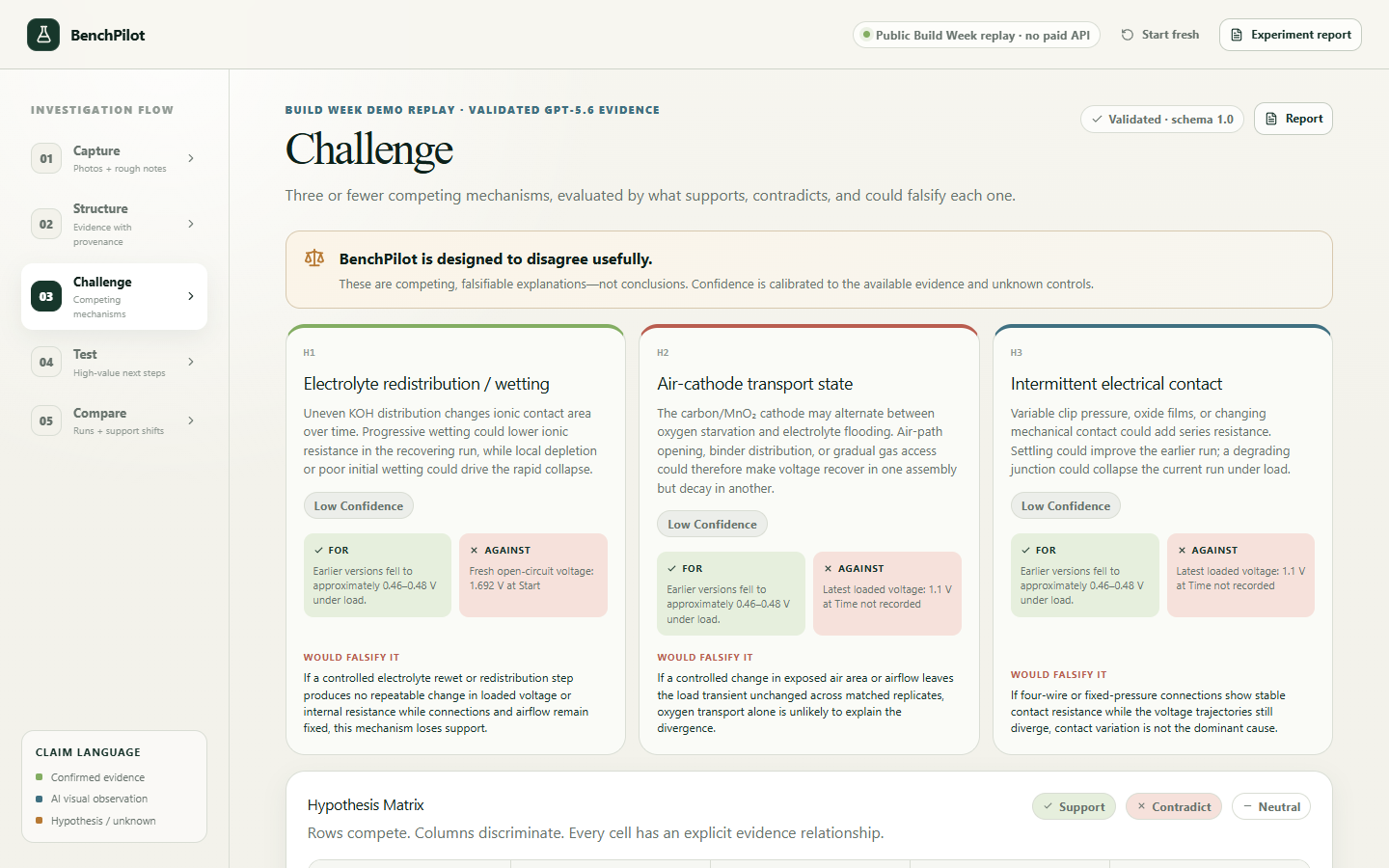
- Challenges the user's interpretation with competing explanations
- Builds a Hypothesis Matrix to compare possible causes
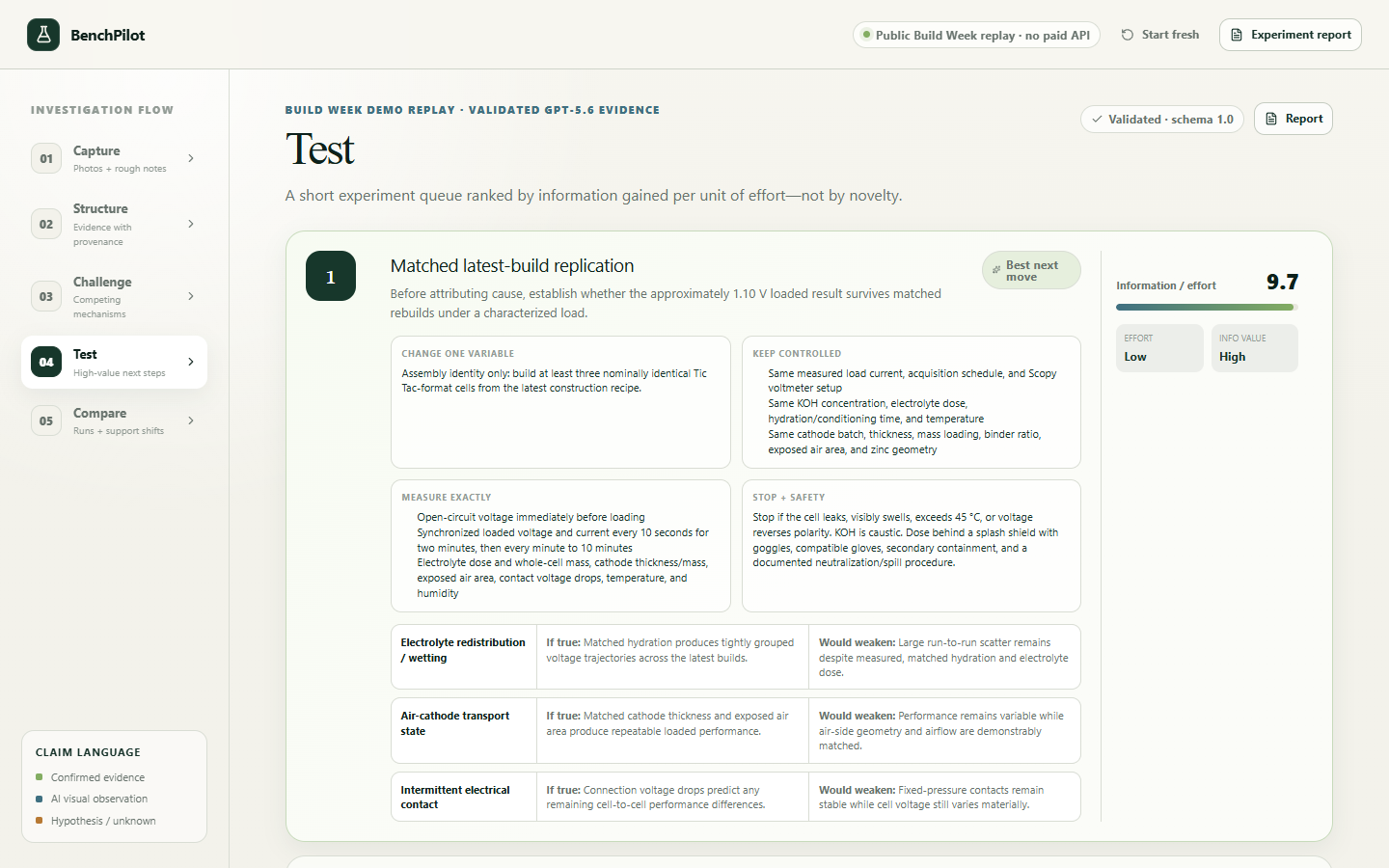
- Recommends the next experiment most likely to reduce uncertainty
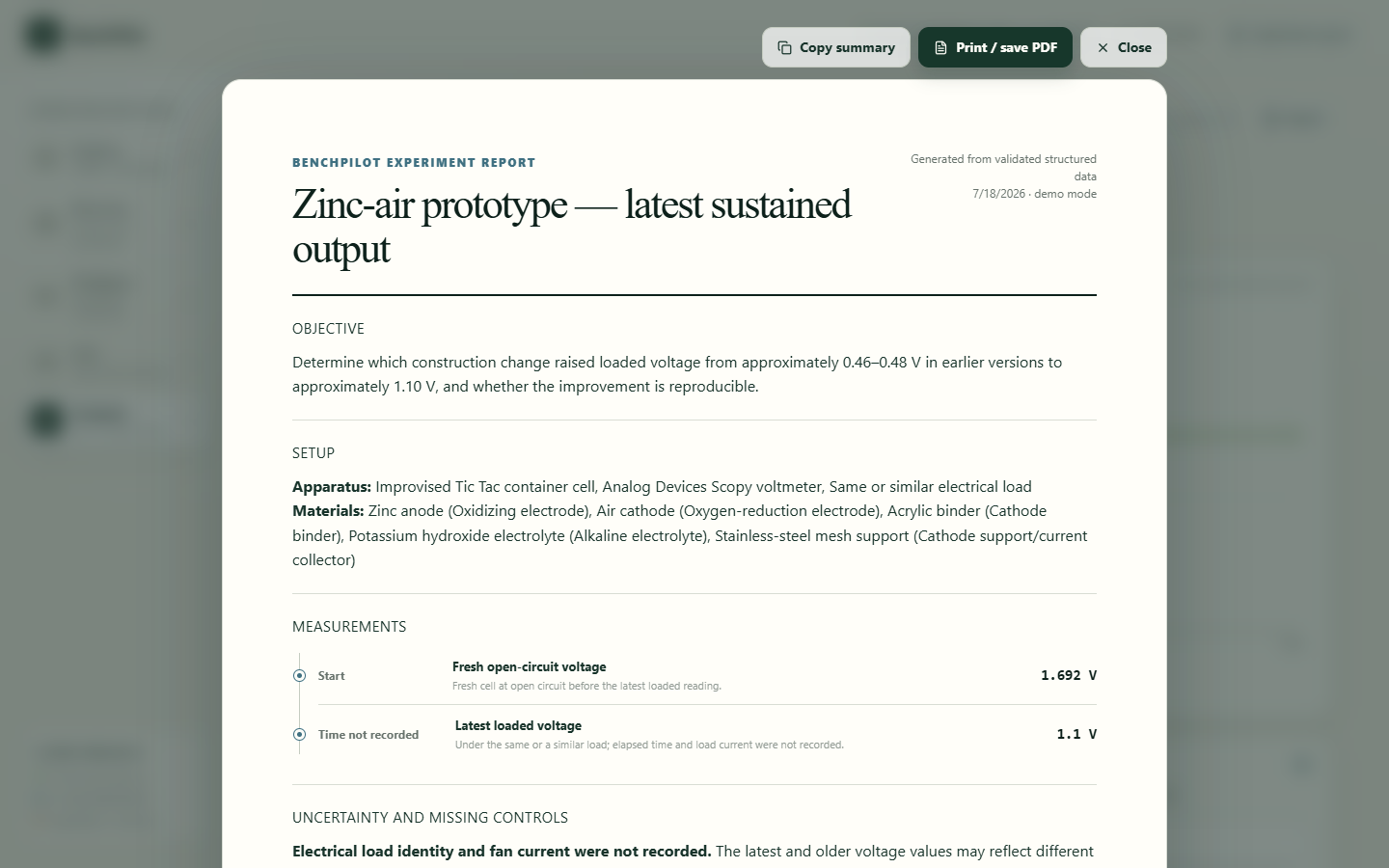
- Produces a clean exportable experiment report
Rather than acting like an AI that always has the answer, BenchPilot encourages better scientific reasoning by keeping evidence and conclusions separate.
How I built it
BenchPilot is built with Next.js, React, TypeScript, GPT-5.6, the OpenAI Responses API, Zod, Playwright, Vitest, GitHub, and ChatGPT Sites.
I used Codex throughout development as a collaborative software engineering partner for implementation, testing, debugging, documentation, deployment, and release preparation. I remained responsible for the product architecture, scientific workflow, validation, and design decisions while iteratively refining the application using real experimental data.
The public Build Week demo intentionally replays a structured GPT-5.6 analysis generated from a real zinc-air battery experiment. The private live version supports real analysis while keeping the API key protected.
Challenges I ran into
One of the biggest challenges was resisting the temptation to let the AI sound overly confident.
Real experiments contain uncontrolled variables, incomplete measurements, and ambiguity. BenchPilot was intentionally designed to preserve uncertainty instead of inventing certainty.
For example, the zinc-air battery showed a significant voltage improvement, but BenchPilot explicitly refuses to claim that a single construction change caused the improvement because multiple uncontrolled variables could explain the result.
Another challenge was creating a public demonstration that judges could use without exposing a paid inference endpoint. The solution was a deterministic public replay while keeping the private live-analysis deployment isolated.
Accomplishments that I'm proud of
- A complete AI-assisted scientific workflow
- A production-quality public deployment
- Strong automated testing and validation
- A Hypothesis Matrix that compares competing explanations
- A system that challenges conclusions instead of reinforcing them
- A secure public demo that accurately demonstrates GPT-5.6 capabilities without exposing private infrastructure
What I learned
Building AI tools for scientific work isn't about generating more answers—it's about helping people ask better questions.
Representing uncertainty honestly is often more valuable than producing a confident conclusion.
What's next for BenchPilot
BenchPilot is designed to extend well beyond a single battery experiment.
Future plans include:
- Support for additional scientific and engineering domains
- Laboratory notebook integration
- Time-series experiment tracking
- Collaboration between researchers
- Richer statistical analysis
- Automatic comparison across complete experiment histories
Built With
- ai
- chatgpt
- codex
- github
- gpt-5.6
- learning
- machine
- next.js
- node.js
- openai
- playwright
- react
- research
- scientific
- sites
- typescript
- vitest
- zod

Log in or sign up for Devpost to join the conversation.